
Mechatronics Engineer
Junior Mechatronics Technician
Explore CareerA Selenologist is a scientist specializing in the study of the Moon, its composition, structure, surface features, and history. Derived from "Selene," the Greek word for Moon, selenology is a sub-discipline of planetary science and geology, focusing on understanding lunar materials, crater formations, volcanic activity, and the Moon's role in the solar system. Selenologists work in academic institutions, space research organizations, and governmental agencies to analyze lunar data, often contributing to space exploration missions and future lunar colonization efforts. They combine expertise in geology, astronomy, and remote sensing with analytical skills to uncover insights about the Moon's origin and evolution, playing a vital role in advancing our understanding of planetary bodies and supporting space technology development.
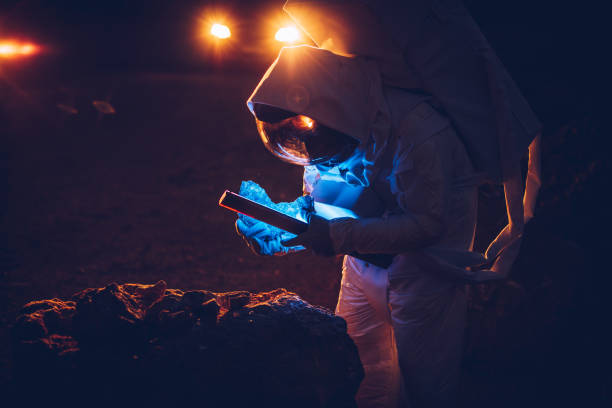
A Selenologist is a scientist specializing in the study of the Moon, its composition, structure, surface features, and history. Derived from "Selene," the Greek word for Moon, selenology is a sub-discipline of planetary science and geology, focusing on understanding lunar materials, crater formations, volcanic activity, and the Moon's role in the solar system. Selenologists work in academic institutions, space research organizations, and governmental agencies to analyze lunar data, often contributing to space exploration missions and future lunar colonization efforts. They combine expertise in geology, astronomy, and remote sensing with analytical skills to uncover insights about the Moon's origin and evolution, playing a vital role in advancing our understanding of planetary bodies and supporting space technology development.
Selenologists are dedicated to investigating the Moon through a combination of remote observations, data from lunar missions, and analysis of lunar samples such as those collected during the Apollo missions. Their work involves studying the Moon's surface features, subsurface structure, mineral composition, and geological history to understand its formation and interaction with Earth. They collaborate with astronomers, planetary scientists, engineers, and space mission teams to interpret data from orbiters, landers, and rovers, while also contributing to the planning of future lunar explorations. Selenologists focus on advancing scientific knowledge, supporting space policy, and exploring possibilities for lunar resource utilization, such as mining helium-3 for energy or establishing lunar bases, in research labs, observatories, and mission control environments.
Roles and Responsibilities
Study Route & Eligibility Criteria
| Route | Steps |
| Route 1 | 1. 10+2 with Physics, Chemistry, Mathematics (PCM) stream. 2. B.Sc. (3 yrs) in Physics, Astronomy, or Geology. 3. Research internships or observational training during undergraduate studies. 4. Optional M.Sc. (2 yrs) for specialization in Planetary Science or Astrophysics. |
| Route 2 | 1. 10+2 with Physics, Chemistry, Mathematics (PCM) stream. 2. B.Sc. (3 yrs) in Earth Sciences or Astronomy. 3. M.Sc. (2 yrs) in Geology, Planetary Science, or Astrophysics. 4. Research projects and practical lab experience in lunar studies. 5. Optional PhD (3-5 yrs) for advanced research and academic roles. |
| Route 3 | 1. 10+2 with Physics, Chemistry, Mathematics (PCM) stream. 2. B.Tech/B.E. (4 yrs) in Aerospace Engineering or related fields. 3. M.Tech/M.Sc. (2 yrs) specializing in Planetary Science or Remote Sensing. 4. Professional certifications and hands-on training in lunar data analysis. 5. Industry or academic research experience in space science. |
| Route 4 | 1. 10+2 with Physics, Chemistry, Mathematics (PCM) stream. 2. Bachelor's degree (3-4 yrs) in Science or Engineering (e.g., Geology, Aerospace Engineering). 3. Master's (2 yrs) in Planetary Science or Astrophysics. 4. PhD (3-5 yrs) in Selenology or Lunar Geology. 5. Postdoctoral research and advanced space science training. 6. Research publications and collaboration with lunar mission teams. |
Significant Observations
Internships & Practical Exposure
Courses & Specializations to Enter the Field
Top Institutes for Selenology Education and Research (India)
| Institute | Course/Program | Official Link |
| Indian Institute of Science (IISc), Bangalore | Physics, Astronomy, Earth Sciences | https://iisc.ac.in/ |
| Indian Institute of Technology (IIT) Bombay | Aerospace Engineering, Physics | https://www.iitb.ac.in/ |
| Indian Institute of Technology (IIT) Kanpur | Aerospace Engineering, Earth Sciences | https://www.iitk.ac.in/ |
| Tata Institute of Fundamental Research (TIFR), Mumbai | Astronomy, Astrophysics | https://www.tifr.res.in/ |
| Indian Institute of Astrophysics (IIA), Bangalore | Astronomy, Planetary Science | https://www.iiap.res.in/ |
| Physical Research Laboratory (PRL), Ahmedabad | Planetary Sciences, Astronomy | https://www.prl.res.in/ |
| National Centre for Radio Astrophysics (NCRA), Pune | Astronomy, Astrophysics | https://www.ncra.tifr.res.in/ |
| Jawaharlal Nehru University (JNU), Delhi | Environmental Science, Physics | https://www.jnu.ac.in/ |
| University of Pune | Astronomy, Space Science | https://www.unipune.ac.in/ |
| Birla Institute of Technology and Science (BITS) Pilani | Physics, Engineering | https://www.bits-pilani.ac.in/ |
Top International Institutes
| Institution | Course | Country | Official Link |
| Massachusetts Institute of Technology (MIT) | Planetary Science, Astronomy | USA | https://mit.edu/ |
| California Institute of Technology (Caltech) | Planetary Science, Geology | USA | https://www.caltech.edu/ |
| University of Arizona | Planetary Sciences, Astronomy | USA | https://www.arizona.edu/ |
| Johns Hopkins University | Earth and Planetary Sciences | USA | https://www.jhu.edu/ |
| University of California, Los Angeles (UCLA) | Earth, Planetary, and Space Sciences | USA | https://www.ucla.edu/ |
| University of Oxford | Astrophysics, Earth Sciences | UK | https://www.ox.ac.uk/ |
| University of Cambridge | Astronomy, Natural Sciences | UK | https://www.cam.ac.uk/ |
| ETH Zurich | Earth Sciences, Space Science | Switzerland | https://ethz.ch/ |
| University of Tokyo | Astronomy, Earth and Planetary Science | Japan | https://www.u-tokyo.ac.jp/ |
| Australian National University (ANU) | Astronomy, Planetary Science | Australia | https://www.anu.edu.au/ |
Entrance Tests Required
India
International
Ideal Progressing Career Path
Research Assistant → Junior Selenologist → Senior Selenologist → Principal Investigator (Lunar Studies) → Lunar Mission Scientist → Director of Planetary Research → Consultant/Professor
Major Areas of Employment
Prominent Employers
| India | International |
| Indian Space Research Organisation (ISRO) | NASA (National Aeronautics and Space Administration) |
| Physical Research Laboratory (PRL) | European Space Agency (ESA) |
| Indian Institute of Astrophysics (IIA) | Japan Aerospace Exploration Agency (JAXA) |
| Tata Institute of Fundamental Research (TIFR) | China National Space Administration (CNSA) |
| National Remote Sensing Centre (NRSC) | Roscosmos (Russian Space Agency) |
| Space Applications Centre (SAC) | Lunar and Planetary Institute (LPI) |
| Vikram Sarabhai Space Centre (VSSC) | Blue Origin |
| Indian National Space Promotion and Authorisation Centre (IN-SPACe) | SpaceX |
| Aryabhatta Research Institute of Observational Sciences (ARIES) | Lockheed Martin Space |
| National Atmospheric Research Laboratory (NARL) | Boeing Defense, Space & Security |
Pros and Cons of the Profession
| Pros | Cons |
| Opportunity to contribute to pioneering lunar exploration. | Limited job opportunities due to niche specialization. |
| High intellectual stimulation in planetary science. | Dependence on funding and space mission schedules. |
| Potential to impact future lunar colonization and resource use. | Often requires extensive education and training. |
| Collaborative work with international space communities. | Work may involve long periods of data analysis with slow results. |
| Involvement in cutting-edge space technology and missions. | Limited physical access to lunar samples or direct observation. |
Industry Trends and Future Outlook
Salary Expectations
| Career Level | India (₹ per annum) | International (US$ per annum) |
| Research Assistant / Trainee | 3,50,000 - 6,00,000 | $45,000 - $60,000 |
| Junior Selenologist | 6,00,000 - 12,00,000 | $60,000 - $80,000 |
| Senior Selenologist | 12,00,000 - 20,00,000 | $80,000 - $110,000 |
| Principal Investigator | 20,00,000 - 35,00,000 | $110,000 - $140,000 |
| Director of Planetary Research / Professor | 35,00,000 - 50,00,000+ | $140,000 - $200,000+ |
Key Software Tools
Professional Organizations and Networks
Notable Selenologists and Their Contributions (Top 10)
Advice for Aspiring Selenologists
A career as a Selenologist offers the extraordinary opportunity to explore humanity’s closest celestial neighbor, contributing to groundbreaking discoveries about the Moon’s history, structure, and potential for future exploration. From mapping lunar craters to analyzing samples for resource potential, Selenologists play a pivotal role in shaping space missions and the dream of lunar colonization. This field combines deep scientific inquiry with cutting-edge technology, offering diverse paths in research, mission planning, policy advising, and education. For those passionate about unraveling the mysteries of the Moon and supporting humanity’s next steps into space, Selenology provides a unique and rewarding career with significant potential in an era of renewed lunar exploration and international collaboration.

Lunar Geologists focus on the Moon's geological features, studying craters, lava flows, and regolith to understand its formation. They analyze...
0.0LPA
Planetary Scientists specializing in the Moon investigate its place in the solar system, studying orbital dynamics and interactions with Earth....
0.0LPA
Remote Sensing Specialists analyze lunar surface data using satellite imagery and spectrometry to study composition and topography. They develop...
0.0LPA
Take the next step and explore more about Selenologist.
Explore similar career paths that might interest you