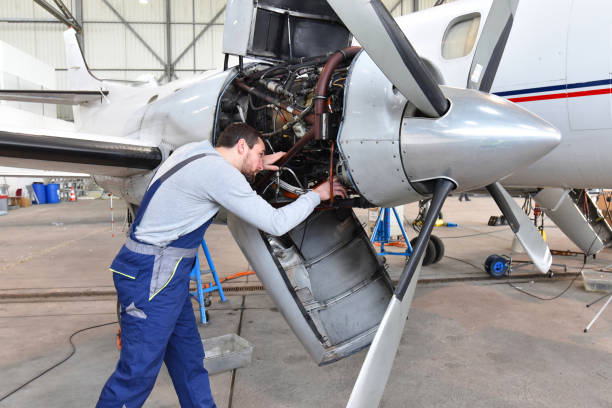
Aerospace Engineer
Junior Aerospace Engineer (Entry to Mid-Level)
Explore Career
Geotechnical Engineering is a specialized and essential field within engineering that focuses on the behavior of earth materials, such as soil and rock, and their interaction with structures, utilizing scientific principles and technology to ensure the stability and safety of infrastructure projects like buildings, bridges, and dams. In India, Geotechnical Engineering is a critical career path, propelled by the nation’s rapid infrastructure growth, urbanization, and the need for resilient construction in diverse geological conditions. With advancements in soil testing, ground improvement techniques, and geotechnical modeling software, this career plays a fundamental role in preventing structural failures and mitigating natural hazards. Geotechnical Engineers are indispensable for assessing subsurface conditions and designing foundations that withstand environmental and load stresses. This profession contributes to industry progress through trends like sustainable ground engineering, earthquake-resistant design, and innovative slope stabilization methods.
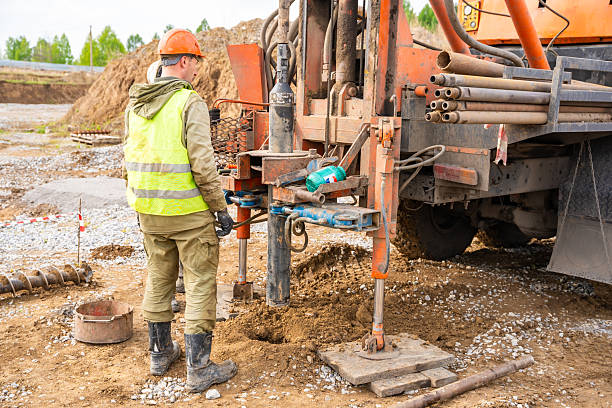
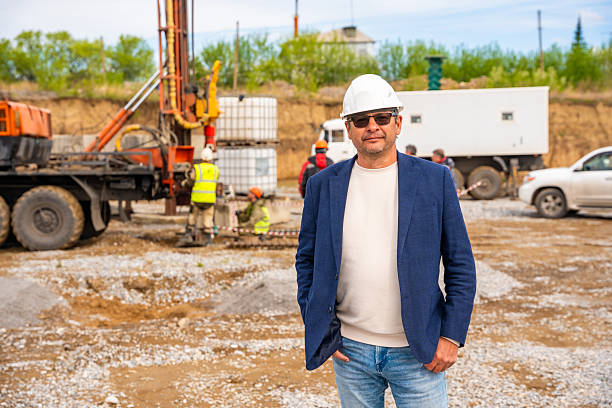
Geotechnical Engineers work in diverse environments such as construction sites, consulting firms, government infrastructure projects, or research labs, often collaborating with civil engineers, structural engineers, geologists, and project managers. Their responsibilities include conducting soil and rock investigations, designing stable foundations, and providing solutions for ground-related challenges in infrastructure development. They face challenges like addressing India’s varied terrain, managing risks in earthquake-prone zones, and delivering cost-effective solutions under tight project deadlines. By applying expertise in soil mechanics, rock mechanics, and geotechnical analysis, they ensure the safety and durability of critical structures. As key contributors to India’s infrastructure and technology sectors, they drive advancements through trends like geosynthetic applications, deep foundation technologies, and real-time ground monitoring systems.
| Route | Steps |
| Route 1: Bachelor’s in Geotechnical or Civil Engineering - Direct Entry | 1. Complete 10+2 in Science stream (Physics, Chemistry, Mathematics) with minimum 60% marks. 2. Pursue B.Tech/B.E. in Civil Engineering with Geotechnical focus (4 years) via entrance exams. 3. Gain experience in construction or consulting firms through entry roles. 4. Progress to Geotechnical Engineer with skills or higher studies. |
| Route 2: Bachelor’s to Master’s Pathway | 1. Complete 10+2 and enroll in B.Tech/B.E. in Civil Engineering. 2. Pursue M.Tech/M.E. in Geotechnical Engineering via entrance exams. 3. Build expertise through advanced projects or research. 4. Join specialized roles in geotechnical design or analysis with advanced qualifications. |
| Route 3: Master’s to Ph.D. Specialization | 1. Complete Bachelor’s and Master’s in Civil or Geotechnical Engineering. 2. Pursue Ph.D. in Geotechnical Engineering via entrance exams like UGC-NET or GATE. 3. Conduct research on soil mechanics or ground improvement. 4. Join senior roles in academia, R&D, or leading organizations. |
| Route 4: International Education Path | 1. Complete 10+2 and clear relevant entrance exams or language tests (e.g., IELTS, TOEFL). 2. Pursue degrees in Geotechnical Engineering from international universities (e.g., USA, UK). 3. Gain global exposure through international projects or internships. 4. Return to India or work internationally in geotechnical roles. |
| Route 5: Diploma to Degree Pathway | 1. Complete 10th standard and enroll in Diploma in Civil Engineering (3 years). 2. Transition to B.Tech/B.E. via lateral entry programs. 3. Work in assistant roles for practical learning. 4. Build expertise and network to secure engineer positions with experience. |
| Institute | Course/Program | Official Link |
| Indian Institute of Technology (IIT), Bombay | B.Tech/M.Tech in Civil Engineering with Geotechnical Focus | https://www.iitb.ac.in/ |
| Indian Institute of Technology (IIT), Delhi | B.Tech/M.Tech in Civil Engineering with Geotechnical Focus | https://www.iitd.ac.in/ |
| Indian Institute of Technology (IIT), Roorkee | B.Tech/M.Tech in Civil & Geotechnical Engineering | https://www.iitr.ac.in/ |
| Indian Institute of Technology (IIT), Kharagpur | B.Tech/M.Tech in Civil Engineering with Geotechnical Focus | https://www.iitkgp.ac.in/ |
| National Institute of Technology (NIT), Surathkal | B.Tech/M.Tech in Civil Engineering with Geotechnical Focus | https://www.nitk.ac.in/ |
| Anna University, Chennai | B.E./M.E. in Civil & Geotechnical Engineering | https://www.annauniv.edu/ |
| Vellore Institute of Technology (VIT), Vellore | B.Tech in Civil Engineering with Geotechnical Focus | https://www.vit.ac.in/ |
| Malaviya National Institute of Technology (MNIT), Jaipur | B.Tech/M.Tech in Civil Engineering with Geotechnical Focus | https://www.mnit.ac.in/ |
| Jadavpur University, Kolkata | B.E./M.E. in Civil Engineering with Geotechnical Focus | https://www.jaduniv.edu.in/ |
| College of Engineering, Pune (COEP) | B.Tech/M.Tech in Civil Engineering with Geotechnical Focus | https://www.coep.org.in/ |
| Institution | Course | Country | Official Link |
| Massachusetts Institute of Technology (MIT), Cambridge | B.S./M.S./Ph.D. in Civil Engineering & Geotechnical Focus | USA | https://www.mit.edu/ |
| Stanford University, Stanford | B.S./M.S./Ph.D. in Civil Engineering & Geotechnical Engineering | USA | https://www.stanford.edu/ |
| University of California, Berkeley | B.S./M.S./Ph.D. in Civil Engineering & Geotechnical Studies | USA | https://www.berkeley.edu/ |
| University of Cambridge, Cambridge | M.Eng./Ph.D. in Civil Engineering & Geotechnical Focus | UK | https://www.cam.ac.uk/ |
| Imperial College London, London | M.Eng./Ph.D. in Civil Engineering & Geotechnical Engineering | UK | https://www.imperial.ac.uk/ |
| ETH Zurich, Zurich | B.Sc./M.Sc./Ph.D. in Civil Engineering & Geotechnical Focus | Switzerland | https://www.ethz.ch/ |
| National University of Singapore (NUS), Singapore | B.Eng./M.Eng./Ph.D. in Civil Engineering & Geotechnical Focus | Singapore | https://www.nus.edu.sg/ |
| University of Melbourne, Melbourne | B.Eng./M.Eng./Ph.D. in Civil Engineering & Geotechnical Studies | Australia | https://www.unimelb.edu.au/ |
| Technical University of Munich (TUM), Munich | B.Sc./M.Sc./Ph.D. in Civil Engineering & Geotechnical Focus | Germany | https://www.tum.de/ |
| University of Toronto, Toronto | B.A.Sc./M.A.Sc./Ph.D. in Civil Engineering & Geotechnical Focus | Canada | https://www.utoronto.ca/ |
India:
International (for Relevant Studies or Exposure):
Geotechnical Engineer → Senior Geotechnical Engineer → Geotechnical Project Manager → Director of Geotechnical Engineering → Chief Geotechnical Consultant
| Indian Organizations | International Organizations |
| National Highways Authority of India (NHAI), Delhi | AECOM (Geotechnical Division), USA |
| Larsen & Toubro (L&T), Mumbai | Jacobs Engineering Group (Geotechnical), USA |
| Tata Projects, Mumbai | Arup (Geotechnical Services), UK |
| Hindustan Construction Company (HCC), Mumbai | Bechtel Corporation, USA |
| Gammon India, Mumbai | Fugro, Netherlands |
| Afcons Infrastructure, Mumbai | Golder Associates, Canada |
| Central Public Works Department (CPWD), Delhi | Mott MacDonald (Geotechnical), UK |
| Indian Railways (Geotechnical Division), Delhi | Keller Group, UK |
| GMR Infrastructure, Bangalore | Geosyntec Consultants, USA |
| Adani Enterprises (Infrastructure), Ahmedabad | CH2M (now part of Jacobs), USA |
| Pros | Cons |
| High impact through ensuring the safety and stability of critical infrastructure | High pressure due to responsibility for preventing catastrophic structural failures |
| Opportunity to work on diverse projects from skyscrapers to disaster mitigation | Long hours during field investigations or urgent project assessments |
| Key role in enabling safe construction in challenging geological conditions | Challenges in predicting complex subsurface behavior with absolute certainty |
| Growing demand in India’s booming infrastructure and urban development sectors | Stress from managing risks in earthquake-prone or unstable terrains |
| Potential for recognition through innovative ground engineering solutions | Risk of physical strain during extensive fieldwork in remote or harsh conditions |
| Career Level (Private/Public Sector Example) | India (₹ per annum) | International (USD per annum, Tentative) |
| Geotechnical Engineer (Entry to Mid-Level) | 3,50,000 - 7,00,000 | 35,000 - 50,000 |
| Senior Geotechnical Engineer (Mid-Level) | 7,00,000 - 12,00,000 | 50,000 - 75,000 |
| Geotechnical Project Manager (Senior Level) | 12,00,000 - 20,00,000 | 75,000 - 100,000 |
| Director of Geotechnical Engineering (Top Tier) | 20,00,000 - 30,00,000 | 100,000 - 130,000 |
| Chief Geotechnical Consultant (Elite Level) | 30,00,000 - 45,00,000+ | 130,000 - 160,000+ |
| Foundation Engineer (Specialized Role) | 4,00,000 - 8,50,000 | 40,000 - 60,000 |
| Slope Stability Engineer (Specialized Role) | 4,50,000 - 9,00,000 | 40,000 - 60,000 |
| Earthquake Geotechnical Engineer (Specialized Role) | 5,00,000 - 10,00,000 | 45,000 - 65,000 |
Note: Salaries are indicative and vary based on location (metro vs. non-metro for India; country/region for international roles), organization type, and project complexity (e.g., urban vs. rural infrastructure). Figures for India are updated estimates based on industry trends as of 2025, reflecting market growth, demand for geotechnical engineering expertise, and data from sources like Glassdoor and industry reports. International figures are approximate averages based on global geotechnical engineering trends in countries like the USA, UK, or Australia, sourced from recent job portals and market analyses.
A career in Geotechnical Engineering offers a unique chance to fortify the very ground on which societies stand by blending scientific rigor with practical innovation, designing solutions that anchor the world’s infrastructure, and safeguarding progress with every stable foundation engineered. Geotechnical Engineers emerge as the steadfast guardians of India’s structural integrity, leveraging their analytical prowess and inventive approaches to conquer the uncertainties of earth materials and ensure enduring safety. This discipline fuses technical depth with real-world impact, carving pathways in foundation design, slope stabilization, seismic resilience, and beyond. For those driven to build unyielding bases for civilization through engineering mastery, inspired by the mission to protect lives and investments from ground failures, and ready to tackle the intricate demands of subsurface analysis, environmental dynamics, and cutting-edge methodologies, a career as a Geotechnical Engineer delivers a profoundly impactful vocation. It equips individuals to address critical stability challenges, bolster infrastructural endurance, and contribute to a secure built environment through the exceptional craft of geotechnical engineering.
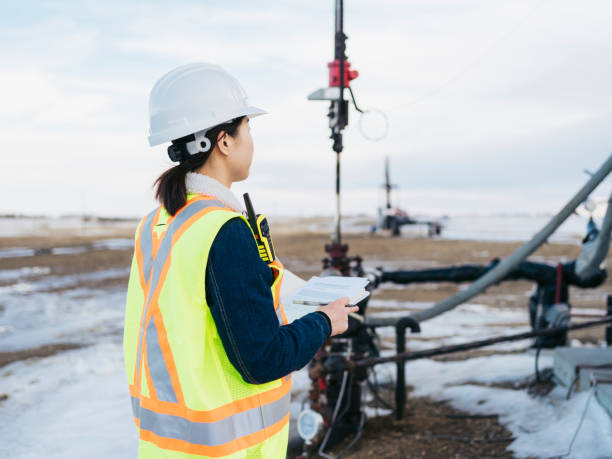
Geotechnical Engineers conduct soil investigations and design foundations for projects in cities like Bangalore and Delhi. They focus on ground...
0.0LPA
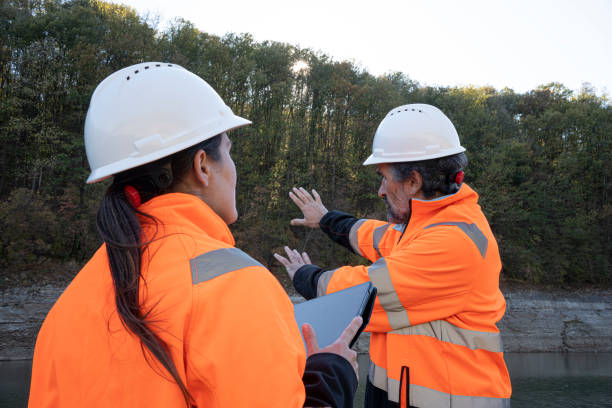
Senior Geotechnical Engineers lead complex ground engineering projects in hubs like Mumbai or Chennai, mentoring junior staff. They optimize...
0.0LPA
Geotechnical Project Managers oversee large-scale infrastructure projects in metro cities like Hyderabad or Pune, managing budgets and teams. They...
0.0LPA
Take the next step and explore more about Geotechnical Engineer.
Explore similar career paths that might interest you