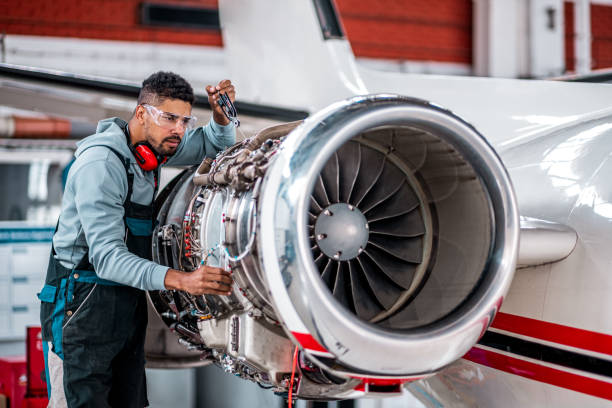
Aerospace Engineer

Aerospace Engineering is a highly specialized and innovative field within engineering that focuses on the design, development, testing, and maintenance of aircraft, spacecraft, and related systems, pushing the boundaries of technology to explore air and space travel. In India, Aerospace Engineering is a burgeoning career path, driven by the country’s growing aviation sector, ambitious space exploration programs, and increasing defense needs. With advancements in satellite technology, commercial aviation, and space missions, this career plays a crucial role in shaping the future of transportation and exploration. Aerospace Engineers are essential for creating efficient, safe, and cutting-edge solutions for flight and space systems. This profession contributes to industry progress through trends like sustainable aviation, unmanned aerial systems, and reusable spacecraft technology.
Share :
Career tree mind map (horizontal) — Aerospace Engineer
Colored branches, hub circles, and underlined topics — same style as counselor course classic (types 18–19 in admin).
Loading mind map…

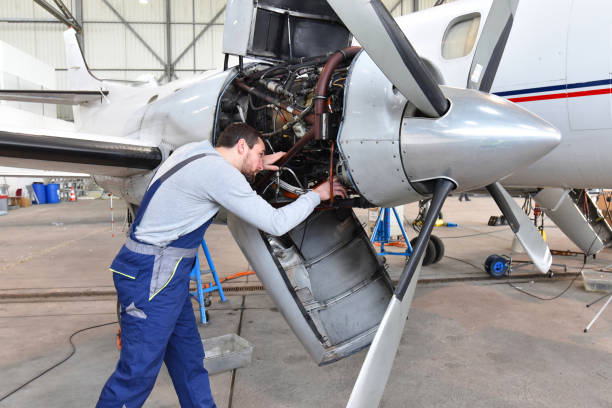
Aerospace Engineers work in diverse environments such as government space agencies, defence organizations, private aerospace companies, research institutions, or as consultants, often collaborating with mechanical engineers, software developers, material scientists, and project managers. Their responsibilities include designing aircraft and spacecraft components, conducting simulations and tests, and ensuring compliance with safety and regulatory standards. They face challenges like managing high-stakes projects, integrating advanced technologies, and addressing cost constraints in India’s competitive aerospace landscape. By leveraging expertise in aerodynamics, propulsion, and structural analysis, they innovate solutions for air and space travel. As key contributors to India’s aviation and space technology sectors, they drive progress through trends like electric aircraft development, space tourism, and advanced satellite systems.

  • Design and Development of Aerospace Systems
    • Create designs for aircraft, spacecraft, satellites, or missiles using engineering principles and software tools.
    • Develop prototypes and components like wings, engines, or control systems for optimal performance.
  • Simulation and Testing
    • Conduct simulations to test designs under various conditions like stress, temperature, or aerodynamic forces.
    • Perform physical tests on prototypes to ensure safety, reliability, and efficiency before production.
  • Research and Innovation
    • Research new materials, technologies, or methods to improve fuel efficiency, reduce emissions, or enhance durability.
    • Innovate solutions for emerging fields like drones, hypersonic travel, or space colonization.
  • Project Management and Collaboration
    • Manage aerospace projects, ensuring timelines, budgets, and quality standards are met.
    • Collaborate with multidisciplinary teams to integrate systems like avionics, propulsion, and structures.
  • Maintenance and Safety Compliance
    • Oversee maintenance and repair of aerospace systems to ensure operational safety and longevity.
    • Ensure designs and operations comply with national and international safety and regulatory standards.
  • Data Analysis and Problem Solving
    • Analyze performance data from tests or operations to identify issues or areas for improvement.
    • Solve complex engineering problems related to aerodynamics, thermal dynamics, or structural integrity.
  • Technical Documentation and Reporting
    • Prepare detailed technical reports, design specifications, and manuals for aerospace systems.
    • Communicate findings, updates, or recommendations to stakeholders, clients, or regulatory bodies.
  • Integration of Emerging Technologies
    • Incorporate cutting-edge technologies like AI, IoT, or robotics into aerospace designs for enhanced functionality.
    • Adapt systems for modern requirements like autonomous flight or sustainable fuel alternatives.

RouteSteps
Route 1: Bachelor’s in Aerospace Engineering - Direct Entry

1. Complete 10+2 in Science stream (Physics, Chemistry, Mathematics) with minimum 60% marks.

2. Pursue B.Tech/B.E. in Aerospace Engineering (4 years) via entrance exams.

3. Gain experience in aerospace firms or research through entry roles.

4. Progress to Aerospace Engineer with skills or higher studies.

Route 2: Bachelor’s to Master’s Pathway

1. Complete 10+2 and enroll in B.Tech/B.E. in Aerospace Engineering.

2. Pursue M.Tech/M.E. in Aerospace Engineering or specialization via entrance exams.

3. Build skills through advanced projects or research.

4. Join specialized aerospace roles in industry or research with advanced qualifications.

Route 3: Master’s to Ph.D. Specialization

1. Complete Bachelor’s and Master’s in Aerospace Engineering.

2. Pursue Ph.D. in Aerospace Engineering via entrance exams like UGC-NET or GATE.

3. Conduct original research on aerospace technologies.

4. Join senior roles in academia, R&D, or leading aerospace organizations.

Route 4: International Education Path

1. Complete 10+2 and clear relevant entrance exams or language tests (e.g., IELTS, TOEFL).

2. Pursue degrees in Aerospace Engineering from international universities (e.g., USA, UK).

3. Gain global exposure through international projects or internships.

4. Return to India or work internationally in aerospace engineering roles.

Route 5: Diploma to Degree Pathway

1. Complete 10th standard and enroll in Diploma in Aerospace Engineering (3 years).

2. Transition to B.Tech/B.E. via lateral entry programs.

3. Work in assistant roles for practical learning.

4. Build expertise and network to secure engineer positions with experience.

  • Bachelor of Technology (B.Tech) in Aerospace Engineering for foundational skills in aircraft and spacecraft design.
  • Bachelor of Engineering (B.E.) in Aerospace Engineering for a focus on engineering principles in aviation and space.
  • Master of Technology (M.Tech) in Aerospace Engineering for advanced expertise in specialized domains.
  • Master of Science (M.Sc.) in Aerospace Engineering for research-oriented skills in aerodynamics or propulsion.
  • Ph.D. in Aerospace Engineering for cutting-edge research and leadership roles in technology development.
  • Specialization in Aerodynamics, Propulsion Systems, Avionics, Structural Engineering, or Spacecraft Design.
  • Short-term courses on Computational Fluid Dynamics (CFD), Satellite Technology, and Drone Engineering.
  • Certifications in CAD/CAM, Finite Element Analysis (FEA), and Aerospace Safety Standards for professional credibility.

InstituteCourse/ProgramOfficial Link
Indian Institute of Technology (IIT), BombayB.Tech/M.Tech in Aerospace Engineeringhttps://www.iitb.ac.in/
Indian Institute of Technology (IIT), KanpurB.Tech/M.Tech in Aerospace Engineeringhttps://www.iitk.ac.in/
Indian Institute of Technology (IIT), MadrasB.Tech/M.Tech in Aerospace Engineeringhttps://www.iitm.ac.in/
Indian Institute of Technology (IIT), KharagpurB.Tech/M.Tech in Aerospace Engineeringhttps://www.iitkgp.ac.in/
Indian Institute of Space Science and Technology (IIST), ThiruvananthapuramB.Tech in Aerospace Engineeringhttps://www.iist.ac.in/
Birla Institute of Technology (BIT), MesraB.E. in Aerospace Engineeringhttps://www.bitmesra.ac.in/
Manipal Institute of Technology (MIT), ManipalB.Tech in Aeronautical Engineeringhttps://www.manipal.edu/
Hindustan Institute of Technology and Science (HITS), ChennaiB.Tech in Aerospace Engineeringhttps://www.hindustanuniv.ac.in/
Amrita Vishwa Vidyapeetham, CoimbatoreB.Tech in Aerospace Engineeringhttps://www.amrita.edu/
Lovely Professional University (LPU), PunjabB.Tech in Aerospace Engineeringhttps://www.lpu.in/

InstitutionCourseCountryOfficial Link
Massachusetts Institute of Technology (MIT), CambridgeB.S./M.S./Ph.D. in Aeronautics and AstronauticsUSAhttps://www.mit.edu/
Stanford University, StanfordB.S./M.S./Ph.D. in Aeronautics and AstronauticsUSAhttps://www.stanford.edu/
California Institute of Technology (Caltech), PasadenaB.S./M.S./Ph.D. in Aerospace EngineeringUSAhttps://www.caltech.edu/
University of Cambridge, CambridgeM.Eng./Ph.D. in Aerospace EngineeringUKhttps://www.cam.ac.uk/
Imperial College London, LondonM.Eng./Ph.D. in AeronauticsUKhttps://www.imperial.ac.uk/
ETH Zurich, ZurichM.Sc./Ph.D. in Mechanical and Aerospace EngineeringSwitzerlandhttps://www.ethz.ch/
University of Toronto, TorontoB.A.Sc./M.A.Sc./Ph.D. in Aerospace EngineeringCanadahttps://www.utoronto.ca/
Delft University of Technology, DelftM.Sc./Ph.D. in Aerospace EngineeringNetherlandshttps://www.tudelft.nl/
University of Melbourne, MelbourneM.Eng./Ph.D. in Mechanical (Aerospace) EngineeringAustraliahttps://www.unimelb.edu.au/
National University of Singapore (NUS), SingaporeB.Eng./M.Eng./Ph.D. in Mechanical (Aerospace) EngineeringSingaporehttps://www.nus.edu.sg/

India:

  • JEE Main (Joint Entrance Examination Main): Required for admission to B.Tech programs at NITs, IIITs, and other institutes (Written Test).
  • JEE Advanced: Required for admission to B.Tech programs at IITs after qualifying JEE Main (Written Test).
  • GATE (Graduate Aptitude Test in Engineering): Required for M.Tech admissions and PSU recruitments in Aerospace Engineering (Written Test).
  • BITSAT (Birla Institute of Technology and Science Admission Test): For admission to B.E. programs at BIT campuses (Written Test).
  • State-Level Entrance Exams (e.g., MHT-CET, KCET): For admission to state engineering colleges offering aerospace programs (Written Test).

International (for Relevant Studies or Exposure):

  • IELTS (International English Language Testing System): Minimum score of 6.5-7.0 for non-native speakers applying to programs in the UK, Canada, Australia, etc.
  • TOEFL (Test of English as a Foreign Language): Minimum score of 90-100 for programs in English-speaking countries like the USA.
  • SAT (Scholastic Assessment Test): Often required for undergraduate programs in the USA or Canada (Written Test).
  • GRE (Graduate Record Examination): Often required for postgraduate programs in aerospace engineering at international universities (Quantitative, Verbal, Analytical Writing).
  • Interview/Portfolio: Some advanced programs may require interviews or project portfolios to assess technical fit and preparedness.

Junior Aerospace Engineer → Aerospace Engineer → Senior Aerospace Engineer → Aerospace Project Manager → Chief Aerospace Engineer

  • Government Space Agencies for designing and developing spacecraft, satellites, and space exploration technologies.
  • Defense Organizations for working on military aircraft, missiles, and defense-related aerospace systems.
  • Private Aerospace Companies for creating commercial aircraft, drones, and space travel solutions.
  • Research Institutions for conducting advanced research on aerodynamics, propulsion, and space technologies.
  • Aviation Industry for designing, testing, and maintaining civilian and cargo aircraft systems.
  • Consulting Firms for providing technical expertise on aerospace projects to industries or governments.
  • Academic Institutions for teaching and researching aerospace engineering theories and innovations.

Indian OrganizationsInternational Organizations
Indian Space Research Organisation (ISRO), BangaloreNational Aeronautics and Space Administration (NASA), USA
Hindustan Aeronautics Limited (HAL), BangaloreEuropean Space Agency (ESA), France
Defence Research and Development Organisation (DRDO), DelhiBoeing, USA
National Aerospace Laboratories (NAL), BangaloreAirbus, France
Bharat Dynamics Limited (BDL), HyderabadLockheed Martin, USA
Tata Advanced Systems Limited (TASL), HyderabadSpaceX, USA
Mahindra Aerospace, BangaloreNorthrop Grumman, USA
Godrej Aerospace, MumbaiRolls-Royce, UK
Larsen & Toubro (L&T) Defence, MumbaiBlue Origin, USA
Reliance Aerospace, MumbaiThales Group, France

ProsCons
High impact through contributing to cutting-edge aviation and space technologiesHigh pressure due to critical safety requirements and tight project deadlines
Opportunity to work on prestigious projects with global organizationsLong hours during design, testing, or launch phases of aerospace projects
Key role in advancing national defense, space exploration, and commercial travelChallenges in managing high costs and complex technical integration
Growing demand in India’s expanding aerospace and defense sectorsStress from working on high-stakes projects with potential for failure
Potential for global recognition through innovative designs or technological breakthroughsNeed for continuous learning to keep up with rapidly evolving technologies

Career Level (Private/Public Sector Example)India (₹ per annum)International (USD per annum, Tentative)
Junior Aerospace Engineer (Entry to Mid-Level)5,00,000 - 10,00,00040,000 - 60,000
Aerospace Engineer (Mid-Level)10,00,000 - 18,00,00060,000 - 90,000
Senior Aerospace Engineer (Senior Level)18,00,000 - 30,00,00090,000 - 130,000
Aerospace Project Manager (Top Tier)30,00,000 - 50,00,000130,000 - 170,000
Chief Aerospace Engineer (Elite Level)50,00,000 - 80,00,000+170,000 - 250,000+
Avionics Engineer (Specialized Role)12,00,000 - 22,00,00070,000 - 110,000
Propulsion Engineer (Specialized Role)12,00,000 - 25,00,00070,000 - 120,000

Note: Salaries are indicative and vary based on location (metro vs. non-metro for India; country/region for international roles), organization type, and project scale. Figures for India are updated estimates based on industry trends as of 2025, reflecting market growth, demand for aerospace expertise, and data from sources like Glassdoor and industry reports. International figures are approximate averages based on global aerospace engineering trends in countries like the USA, UK, or Canada, sourced from recent job portals and market analyses.

  • CATIA: For 3D modeling and design of complex aerospace components and assemblies.
  • SolidWorks: For creating detailed designs and simulations of aircraft and spacecraft parts.
  • ANSYS: For finite element analysis (FEA) and computational fluid dynamics (CFD) in aerospace design.
  • MATLAB: For mathematical modeling, simulation, and analysis of aerospace systems.
  • Autodesk AutoCAD: For 2D and 3D drafting of aerospace engineering designs.
  • NASTRAN: For structural analysis and simulation of aerospace components under stress.
  • Simulink: For modeling and simulating dynamic systems like flight control or propulsion.
  • LabVIEW: For developing test systems and data acquisition in aerospace testing.
  • OpenFOAM: For computational fluid dynamics simulations in aerodynamic analysis.
  • Creo: For parametric modeling and design optimization of aerospace structures.

  • Aeronautical Society of India (AeSI), India.
  • Indian Society for Advancement of Materials and Process Engineering (ISAMPE), India.
  • Society of Indian Aerospace Technologies and Industries (SIATI), India.
  • Indian Space Research Organisation (ISRO) Alumni Network, India.
  • American Institute of Aeronautics and Astronautics (AIAA), Global.
  • Royal Aeronautical Society (RAeS), Global.
  • International Astronautical Federation (IAF), Global.
  • Society of Automotive Engineers (SAE) Aerospace Division, Global.
  • International Council of the Aeronautical Sciences (ICAS), Global.

  • A.P.J. Abdul Kalam (India, Historical): Former President and aerospace engineer, known as the “Missile Man” for contributions to India’s missile and space programs at ISRO and DRDO. His vision inspired millions. His legacy drives innovation.
     
  • Satish Dhawan (India, Historical): Pioneering aerospace engineer and former ISRO chairman, instrumental in India’s space program development. His leadership launched satellites. His impact shaped ISRO.
     
  • K. Sivan (India, Contemporary): Former ISRO chairman, leading key missions like Chandrayaan-2, advancing India’s space engineering. His strategies propel exploration. His work inspires progress.
     
  • Tessy Thomas (India, Contemporary): Aerospace engineer at DRDO, known as the “Missile Woman” for contributions to Agni missile systems. Her innovations strengthen defense. Her role breaks barriers.
     
  • Elon Musk (South Africa/USA, Contemporary): Founder of SpaceX, revolutionizing aerospace with reusable rockets and space travel ambitions. His vision redefines space. His impact is transformative.
     
  • Kelly Johnson (USA, Historical): Legendary aerospace engineer at Lockheed Martin, designing iconic aircraft like the SR-71 Blackbird. His designs set records. His legacy inspires engineers.
     
  • Wernher von Braun (Germany/USA, Historical): Key figure in rocket technology, instrumental in NASA’s Apollo program for moon landings. His innovations launched humanity. His influence is historic.
     
  • Burt Rutan (USA, Contemporary): Aerospace engineer known for designing innovative aircraft and SpaceShipOne for private spaceflight. His creativity pushes boundaries. His work pioneers tourism.
     
  • Gwynne Shotwell (USA, Contemporary): President of SpaceX, driving operational success in commercial spaceflight and rocket engineering. Her leadership scales missions. Her impact shapes industries.
     
  • Mary Jackson (USA, Historical): NASA engineer and first African-American female engineer, contributing to aerospace research. Her perseverance broke barriers. Her legacy empowers diversity.
     

  • Build a strong foundation in physics, mathematics, and engineering principles for a solid skill set in aerospace technology.
  • Pursue early exposure through projects, workshops, or competitions in aerospace design to understand real-world applications.
  • Create a portfolio showcasing impactful designs, simulations, or research projects to attract opportunities in the field.
  • Stay updated on aerospace innovations, safety standards, and software tools through continuous learning and industry events.
  • Develop proficiency in CAD, simulation software, and testing methodologies for a competitive edge in technical roles.
  • Join reputed institutes like IITs or international programs for quality education and professional networking.
  • Work on resilience to handle high-pressure projects, technical failures, and rigorous safety requirements.
  • Explore opportunities in smaller aerospace startups or research labs to gain experience if larger roles are initially unavailable.
  • Network with aerospace engineers, researchers, and industry leaders at conferences to expand professional connections.
  • Cultivate adaptability to address evolving technologies, regulatory changes, and global aerospace challenges.
  • Focus on societal impact by promoting safe, sustainable, and innovative aerospace solutions in your contributions.

A career in Aerospace Engineering offers an extraordinary opportunity to shape the future of flight and exploration by mastering technical design and innovation, propelling progress through groundbreaking aviation and space technologies, and inspiring humanity with every pioneering achievement. Aerospace Engineers stand as the visionary builders of India’s air and space frontiers, harnessing their technical prowess and dedication to create transformative solutions across diverse domains. This field combines rigorous engineering with a passion for discovery, providing pathways in aircraft design, spacecraft development, defense technology, and cutting-edge research. For those driven to push the limits of human capability through engineering excellence, fueled by the ambition to innovate with aerospace solutions, and eager to tackle the dynamic challenges of flight and space exploration, a career as an Aerospace Engineer is a deeply fulfilling journey. It enables individuals to address critical technological and societal needs, advance engineering frontiers, and contribute to global progress through the remarkable power of aerospace expertise.


Knowledge & Skills You Will Learn
1
Aerodynamic Analysis Proficiency for designing systems that optimize airflow and reduce drag in aircraft or spacecraft
2
Structural Engineering Expertise to ensure aerospace components withstand stress, vibration, and environmental conditions
3
Propulsion System Knowledge to develop and test engines or thrusters for efficient and powerful performance
4
Avionics and Control Systems Skills to design and integrate electronic systems for navigation and communication
5
Simulation and Testing Abilities to model and test aerospace designs under various conditions using software and physical tests
6
CAD and Engineering Software Mastery for using tools like CATIA, SolidWorks, or ANSYS in design and analysis
7
Project Management Skills to oversee aerospace projects, ensuring timelines, budgets, and quality standards are met
8
Critical Thinking to solve complex engineering challenges in design, safety, or performance optimization
9
Communication and Documentation to present technical designs and reports clearly to teams, clients, or regulators
10
Adaptability to navigate evolving aerospace technologies, regulatory changes, and innovative industry trends
Junior Aerospace Engineer (Entry to Mid-Level)

Junior Aerospace Engineer (Entry to Mid-Level)

Early-career engineers assisting in the design and testing of aircraft or spacecraft components for companies in cities like Bangalore and...

0.0LPA
Aerospace Engineer (Mid-Level)

Aerospace Engineer (Mid-Level)

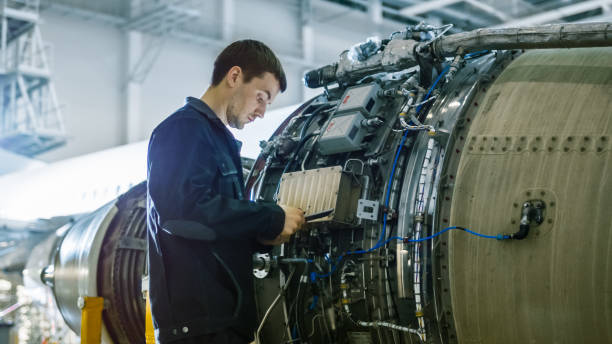
Engineers designing and developing aerospace systems like satellites or drones for organizations in hubs like Chennai, focusing on independent...

0.0LPA
Senior Aerospace Engineer (Senior Level)

Senior Aerospace Engineer (Senior Level)

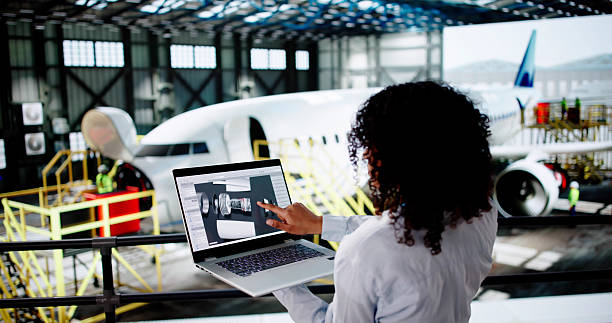
Experienced engineers leading design teams and overseeing critical projects for space agencies or defense firms in metro cities like Delhi,...

0.0LPA

Interested in this career?

Take the next step and explore more about Aerospace Engineer.