Aerospace Engineer
Junior Aerospace Engineer (Entry to Mid-Level)
Explore Career
Automobile Engineering is a dynamic and innovative field within engineering that centers on the design, development, manufacturing, and maintenance of vehicles, harnessing technology to enhance performance, safety, and sustainability in transportation. In India, Automobile Engineering is a thriving career path, propelled by the country’s booming automotive industry, growing demand for electric vehicles, and advancements in smart mobility solutions. With rapid shifts toward eco-friendly technologies and autonomous systems, this career plays a vital role in shaping the future of transportation. Automobile Engineers are indispensable for creating efficient, safe, and cutting-edge vehicles that meet modern needs. This profession contributes to industry progress through trends like electric and hybrid vehicle development, connected car technologies, and lightweight material innovations.

Automobile Engineers operate in diverse settings such as automotive manufacturing companies, research and development centers, design firms, or service industries, frequently collaborating with mechanical engineers, software developers, material scientists, and production teams. Their responsibilities include designing vehicle components, testing prototypes for performance and safety, and integrating new technologies to improve efficiency. They encounter challenges like meeting stringent emission standards, reducing production costs, and adapting to India’s varied road conditions while innovating for global markets. By applying expertise in vehicle dynamics, manufacturing processes, and emerging technologies, they revolutionize mobility solutions. As essential contributors to India’s automotive and technology sectors, they drive advancements through trends like autonomous driving systems, vehicle electrification, and smart manufacturing processes.
| Route | Steps |
| Route 1: Bachelor’s in Automobile Engineering - Direct Entry | 1. Complete 10+2 in Science stream (Physics, Chemistry, Mathematics) with minimum 60% marks. 2. Pursue B.Tech/B.E. in Automobile Engineering (4 years) via entrance exams. 3. Gain experience in automotive firms through entry roles. 4. Progress to Automobile Engineer with skills or higher studies. |
| Route 2: Bachelor’s to Master’s Pathway | 1. Complete 10+2 and enroll in B.Tech/B.E. in Automobile or Mechanical Engineering. 2. Pursue M.Tech/M.E. in Automobile Engineering via entrance exams. 3. Build expertise through advanced projects or research. 4. Join specialized roles in industry or R&D with advanced qualifications. |
| Route 3: Master’s to Ph.D. Specialization | 1. Complete Bachelor’s and Master’s in Automobile or Mechanical Engineering. 2. Pursue Ph.D. in Automobile Engineering via entrance exams like UGC-NET or GATE. 3. Conduct research on automotive technologies. 4. Join senior roles in academia, R&D, or leading organizations. |
| Route 4: International Education Path | 1. Complete 10+2 and clear relevant entrance exams or language tests (e.g., IELTS, TOEFL). 2. Pursue degrees in Automobile Engineering from international universities (e.g., USA, Germany). 3. Gain global exposure through international projects or internships. 4. Return to India or work internationally in automotive roles. |
| Route 5: Diploma to Degree Pathway | 1. Complete 10th standard and enroll in Diploma in Automobile Engineering (3 years). 2. Transition to B.Tech/B.E. via lateral entry programs. 3. Work in assistant roles for practical learning. 4. Build expertise and network to secure engineer positions with experience. |
| Institute | Course/Program | Official Link |
| Indian Institute of Technology (IIT), Madras | B.Tech/M.Tech in Mechanical (Automobile Focus) | https://www.iitm.ac.in/ |
| Indian Institute of Technology (IIT), Delhi | B.Tech/M.Tech in Mechanical (Automobile Electives) | https://www.iitd.ac.in/ |
| National Institute of Technology (NIT), Warangal | B.Tech/M.Tech in Mechanical (Automobile Focus) | https://www.nitw.ac.in/ |
| Vellore Institute of Technology (VIT), Vellore | B.Tech in Automobile Engineering | https://www.vit.ac.in/ |
| Manipal Institute of Technology (MIT), Manipal | B.Tech in Automobile Engineering | https://www.manipal.edu/ |
| SRM Institute of Science and Technology, Chennai | B.Tech in Automobile Engineering | https://www.srmist.edu.in/ |
| Amity University, Noida | B.Tech in Automobile Engineering | https://www.amity.edu/ |
| Lovely Professional University (LPU), Punjab | B.Tech in Automobile Engineering | https://www.lpu.in/ |
| Hindustan Institute of Technology and Science (HITS), Chennai | B.Tech in Automobile Engineering | https://www.hindustanuniv.ac.in/ |
| PSG College of Technology, Coimbatore | B.E. in Automobile Engineering | https://www.psgtech.edu/ |
| Institution | Course | Country | Official Link |
| Massachusetts Institute of Technology (MIT), Cambridge | B.S./M.S./Ph.D. in Mechanical Engineering (Automotive Focus) | USA | https://www.mit.edu/ |
| Stanford University, Stanford | B.S./M.S./Ph.D. in Mechanical Engineering (Automotive Focus) | USA | https://www.stanford.edu/ |
| University of Michigan, Ann Arbor | B.S.E./M.S.E./Ph.D. in Automotive Engineering | USA | https://www.umich.edu/ |
| Technical University of Munich (TUM), Munich | B.Sc./M.Sc./Ph.D. in Automotive Engineering | Germany | https://www.tum.de/ |
| RWTH Aachen University, Aachen | B.Sc./M.Sc. in Automotive Engineering | Germany | https://www.rwth-aachen.de/ |
| University of Stuttgart, Stuttgart | M.Sc. in Automotive Engineering | Germany | https://www.uni-stuttgart.de/ |
| Cranfield University, Cranfield | M.Sc. in Automotive Engineering | UK | https://www.cranfield.ac.uk/ |
| University of Toronto, Toronto | B.A.Sc./M.A.Sc. in Mechanical (Automotive Focus) | Canada | https://www.utoronto.ca/ |
| University of New South Wales (UNSW), Sydney | B.Eng./M.Eng. in Mechanical (Automotive Focus) | Australia | https://www.unsw.edu.au/ |
| Nanyang Technological University (NTU), Singapore | B.Eng./M.Eng. in Mechanical (Automotive Focus) | Singapore | https://www.ntu.edu.sg/ |
India:
International (for Relevant Studies or Exposure):
Automobile Design Engineer → Senior Automobile Engineer → Automotive Project Manager → Chief Engineer (Automotive) → Director of Engineering (Automotive)
| Indian Organizations | International Organizations |
| Tata Motors, Mumbai | Tesla, USA |
| Mahindra & Mahindra, Mumbai | Toyota, Japan |
| Maruti Suzuki India Limited, Delhi | Volkswagen, Germany |
| Hyundai Motor India Limited, Chennai | Ford Motor Company, USA |
| Ashok Leyland, Chennai | General Motors, USA |
| Hero MotoCorp, Delhi | BMW, Germany |
| Bajaj Auto, Pune | Mercedes-Benz, Germany |
| TVS Motor Company, Chennai | Honda Motor Company, Japan |
| Eicher Motors (Royal Enfield), Gurugram | Nissan, Japan |
| Force Motors, Pune | Stellantis (formerly FCA), Netherlands/Italy |
| Pros | Cons |
| High impact through shaping the future of transportation with innovative vehicles | High pressure due to tight project deadlines and evolving industry standards |
| Opportunity to work on cutting-edge technologies like electric and autonomous vehicles | Long hours during design, testing, or production phases of vehicle development |
| Key role in addressing global challenges like sustainability and fuel efficiency | Challenges in balancing cost, quality, and innovation under budget constraints |
| Growing demand in India’s expanding automotive sector with diverse job roles | Stress from meeting stringent safety and emission regulations globally |
| Potential for recognition through groundbreaking designs or technological advancements | Need for continuous upskilling to keep pace with rapid technological shifts |
| Career Level (Private/Public Sector Example) | India (₹ per annum) | International (USD per annum, Tentative) |
| Automobile Design Engineer (Entry to Mid-Level) | 4,00,000 - 8,00,000 | 35,000 - 50,000 |
| Senior Automobile Engineer (Mid-Level) | 8,00,000 - 15,00,000 | 50,000 - 80,000 |
| Automotive Project Manager (Senior Level) | 15,00,000 - 25,00,000 | 80,000 - 110,000 |
| Chief Engineer (Automotive) (Top Tier) | 25,00,000 - 40,00,000 | 110,000 - 150,000 |
| Director of Engineering (Automotive) (Elite Level) | 40,00,000 - 60,00,000+ | 150,000 - 200,000+ |
| Automotive Research Engineer (Specialized Role) | 10,00,000 - 18,00,000 | 60,000 - 90,000 |
| Vehicle Testing Engineer (Specialized Role) | 8,00,000 - 14,00,000 | 50,000 - 80,000 |
| Automotive Systems Integration Engineer (Specialized Role) | 9,00,000 - 16,00,000 | 55,000 - 85,000 |
Note: Salaries are indicative and vary based on location (metro vs. non-metro for India; country/region for international roles), organization type, and project scope. Figures for India are updated estimates based on industry trends as of 2025, reflecting market growth, demand for automotive engineering expertise, and data from sources like Glassdoor and industry reports. International figures are approximate averages based on global automotive engineering trends in countries like the USA, Germany, or Japan, sourced from recent job portals and market analyses.
A career in Automobile Engineering offers a remarkable platform to transform the world of transportation by excelling in vehicle innovation and technological integration, fueling progress through sustainable and efficient mobility solutions, and redefining how society moves with every groundbreaking design. Automobile Engineers emerge as the visionary creators of India’s automotive future, applying their technical mastery and passion to craft impactful advancements across diverse vehicle segments. This discipline fuses rigorous engineering with a drive for innovation, paving the way for opportunities in vehicle design, electric mobility, manufacturing excellence, and research leadership. For individuals eager to innovate within the realm of transportation through technical expertise, motivated by the prospect of engineering cutting-edge vehicles, and prepared to navigate the intricate demands of automotive technology and market needs, a career as an Automobile Engineer provides an immensely rewarding trajectory. It enables one to address pressing mobility challenges, push the boundaries of vehicle engineering, and contribute to a connected, sustainable world through the dynamic power of automotive ingenuity.

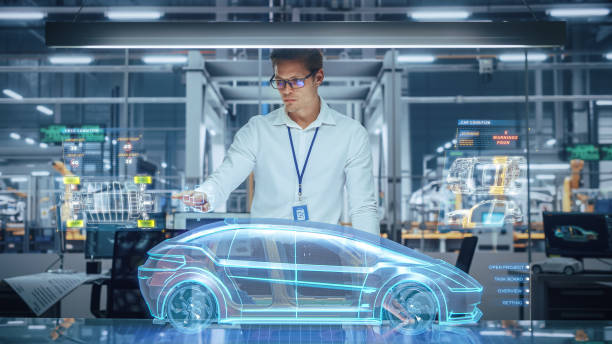
Automobile Design Engineers focus on creating and refining vehicle components like engines, suspensions, or body structures for manufacturers in...
0.0LPA

Senior Automobile Engineers oversee the development and testing of vehicle systems for automotive firms in hubs like Bangalore or Gurugram. They...
0.0LPA

Automotive Project Managers coordinate large-scale vehicle development projects for companies in metro cities like Mumbai or Delhi, managing...
0.0LPA
Take the next step and explore more about Automobile Engineer.
Explore similar career paths that might interest you