Aerospace Engineer
Junior Aerospace Engineer (Entry to Mid-Level)
Explore Career
Space Technology Specialist is a cutting-edge and highly specialized field within engineering that focuses on the design, development, and operation of technologies for space exploration, satellite systems, and aerospace applications, harnessing advanced engineering and scientific principles to push the boundaries of human discovery. In India, Space Technology is a prestigious career path, propelled by the nation’s ambitious space programs, growing satellite communication needs, and contributions to global space research through organizations like ISRO. With advancements in reusable launch vehicles, space robotics, and interplanetary missions, this career plays a pivotal role in expanding humanity’s reach into the cosmos. Space Technology Specialists are essential for innovating solutions that enable space missions, improve communication systems, and monitor Earth’s environment from orbit. This profession contributes to industry progress through trends like small satellite technology, space sustainability, and artificial intelligence in space operations.
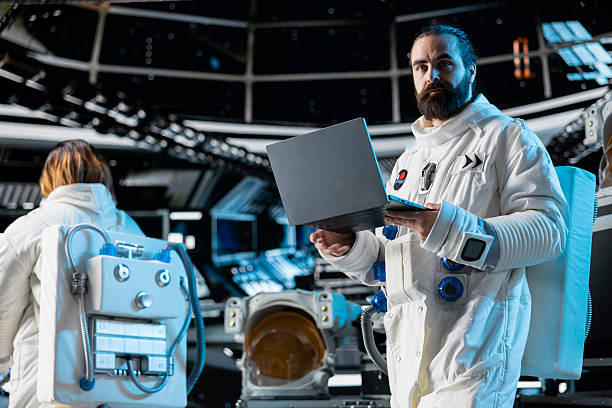
Space Technology Specialists work in diverse environments such as space research organizations, aerospace companies, government agencies, or academic institutions, often collaborating with aerospace engineers, scientists, software developers, and mission planners. Their responsibilities include designing spacecraft components, developing satellite systems, and ensuring the reliability of space missions through rigorous testing and analysis. They face challenges like addressing India’s resource constraints for space projects, managing the complexities of space environment conditions, and achieving precision under stringent timelines. By applying expertise in propulsion systems, orbital mechanics, and space electronics, they enable groundbreaking achievements in space exploration. As vital contributors to India’s technology and space sectors, they drive advancements through trends like CubeSat development, space debris mitigation, and deep-space communication technologies.
| Route | Steps |
| Route 1: Bachelor’s in Aerospace or Related Engineering - Direct Entry | 1. Complete 10+2 in Science stream (Physics, Chemistry, Mathematics) with minimum 60% marks. 2. Pursue B.Tech/B.E. in Aerospace Engineering or related fields (4 years) via entrance exams. 3. Gain experience in space or aerospace firms through entry roles. 4. Progress to Space Technology Specialist with skills or higher studies. |
| Route 2: Bachelor’s to Master’s Pathway | 1. Complete 10+2 and enroll in B.Tech/B.E. in Aerospace, Mechanical, or Electronics Engineering. 2. Pursue M.Tech/M.E. in Space Technology or Aerospace Engineering via entrance exams. 3. Build expertise through advanced projects or research. 4. Join specialized roles in space systems with advanced qualifications. |
| Route 3: Master’s to Ph.D. Specialization | 1. Complete Bachelor’s and Master’s in Space Technology or Aerospace Engineering. 2. Pursue Ph.D. in Space Technology or Astrodynamics via entrance exams like UGC-NET or GATE. 3. Conduct research on space systems or interplanetary missions. 4. Join senior roles in academia, R&D, or leading organizations. |
| Route 4: International Education Path | 1. Complete 10+2 and clear relevant entrance exams or language tests (e.g., IELTS, TOEFL). 2. Pursue degrees in Space Technology or Aerospace Engineering from international universities (e.g., USA, UK). 3. Gain global exposure through international space projects or internships. 4. Return to India or work internationally in space technology roles. |
| Route 5: Diploma to Degree Pathway | 1. Complete 10th standard and enroll in Diploma in Aerospace or Mechanical Engineering (3 years). 2. Transition to B.Tech/B.E. via lateral entry programs. 3. Work in assistant roles for practical learning. 4. Build expertise and network to secure specialist positions with experience. |
| Institute | Course/Program | Official Link |
| Indian Institute of Technology (IIT), Bombay | B.Tech/M.Tech in Aerospace Engineering | https://www.iitb.ac.in/ |
| Indian Institute of Technology (IIT), Madras | B.Tech/M.Tech in Aerospace Engineering | https://www.iitm.ac.in/ |
| Indian Institute of Technology (IIT), Kanpur | B.Tech/M.Tech in Aerospace Engineering | https://www.iitk.ac.in/ |
| Indian Institute of Technology (IIT), Kharagpur | B.Tech/M.Tech in Aerospace Engineering | https://www.iitkgp.ac.in/ |
| Indian Institute of Space Science and Technology (IIST), Thiruvananthapuram | B.Tech/M.Tech in Aerospace Engineering & Space Technology | https://www.iist.ac.in/ |
| National Institute of Technology (NIT), Surathkal | B.Tech/M.Tech in Mechanical Engineering with Aerospace Focus | https://www.nitk.ac.in/ |
| Birla Institute of Technology (BIT), Mesra | B.Tech/M.Tech in Aerospace Engineering | https://www.bitmesra.ac.in/ |
| Anna University, Chennai | B.E./M.E. in Aeronautical Engineering | https://www.annauniv.edu/ |
| Vellore Institute of Technology (VIT), Vellore | B.Tech in Aerospace Engineering | https://www.vit.ac.in/ |
| Manipal Institute of Technology (MIT), Manipal | B.Tech in Aeronautical Engineering | https://www.manipal.edu/ |
| Institution | Course | Country | Official Link |
| Massachusetts Institute of Technology (MIT), Cambridge | B.S./M.S./Ph.D. in Aeronautics and Astronautics | USA | https://www.mit.edu/ |
| Stanford University, Stanford | B.S./M.S./Ph.D. in Aeronautics and Astronautics | USA | https://www.stanford.edu/ |
| California Institute of Technology (Caltech), Pasadena | B.S./M.S./Ph.D. in Aerospace Engineering | USA | https://www.caltech.edu/ |
| University of Cambridge, Cambridge | M.Eng./Ph.D. in Aerospace Engineering | UK | https://www.cam.ac.uk/ |
| Imperial College London, London | M.Eng./Ph.D. in Aeronautics | UK | https://www.imperial.ac.uk/ |
| ETH Zurich, Zurich | B.Sc./M.Sc./Ph.D. in Mechanical & Aerospace Engineering | Switzerland | https://www.ethz.ch/ |
| National University of Singapore (NUS), Singapore | B.Eng./M.Eng./Ph.D. in Mechanical & Aerospace Engineering | Singapore | https://www.nus.edu.sg/ |
| University of Melbourne, Melbourne | B.Eng./M.Eng./Ph.D. in Mechanical & Aerospace Engineering | Australia | https://www.unimelb.edu.au/ |
| Technical University of Munich (TUM), Munich | B.Sc./M.Sc./Ph.D. in Aerospace Engineering | Germany | https://www.tum.de/ |
| University of Toronto, Toronto | B.A.Sc./M.A.Sc./Ph.D. in Aerospace Engineering | Canada | https://www.utoronto.ca/ |
India:
International (for Relevant Studies or Exposure):
Space Technology Specialist → Senior Space Technology Specialist → Space Systems Engineer → Space Project Manager → Director of Space Technology
| Indian Organizations | International Organizations |
| Indian Space Research Organisation (ISRO), Bangalore | NASA (National Aeronautics and Space Administration), USA |
| Antrix Corporation Limited, Bangalore | SpaceX, USA |
| Hindustan Aeronautics Limited (HAL), Bangalore | European Space Agency (ESA), France |
| Defence Research and Development Organisation (DRDO), Delhi | Roscosmos, Russia |
| Bharat Electronics Limited (BEL), Bangalore | Blue Origin, USA |
| NewSpace India Limited (NSIL), Bangalore | Lockheed Martin (Space Division), USA |
| Tata Advanced Systems Limited (TASL), Hyderabad | Boeing (Space and Launch), USA |
| Godrej Aerospace, Mumbai | Airbus Defence and Space, France |
| Skyroot Aerospace, Hyderabad | Northrop Grumman (Space Systems), USA |
| Agnikul Cosmos, Chennai | JAXA (Japan Aerospace Exploration Agency), Japan |
| Pros | Cons |
| High impact through contributing to groundbreaking space exploration | High pressure due to mission-critical responsibilities and tight deadlines |
| Opportunity to work on prestigious national and international space projects | Long hours during mission planning, testing phases, or launch operations |
| Key role in advancing humanity’s understanding of space and technology | Challenges in managing complex systems with high risk of failure |
| Growing demand in India’s expanding space sector and private industry | Stress from ensuring precision in high-stakes, costly space missions |
| Potential for recognition through successful missions or innovations | Limited job openings due to the niche and highly specialized nature of the field |
| Career Level (Private/Public Sector Example) | India (₹ per annum) | International (USD per annum, Tentative) |
| Space Technology Specialist (Entry to Mid-Level) | 5,00,000 - 10,00,000 | 50,000 - 80,000 |
| Senior Space Technology Specialist (Mid-Level) | 10,00,000 - 18,00,000 | 80,000 - 110,000 |
| Space Systems Engineer (Senior Level) | 18,00,000 - 25,00,000 | 110,000 - 140,000 |
| Space Project Manager (Top Tier) | 25,00,000 - 35,00,000 | 140,000 - 180,000 |
| Director of Space Technology (Elite Level) | 35,00,000 - 50,00,000+ | 180,000 - 250,000+ |
| Satellite Engineer (Specialized Role) | 6,00,000 - 12,00,000 | 60,000 - 90,000 |
| Propulsion Engineer (Specialized Role) | 6,50,000 - 13,00,000 | 65,000 - 95,000 |
| Space Robotics Engineer (Specialized Role) | 7,00,000 - 14,00,000 | 70,000 - 100,000 |
Note: Salaries are indicative and vary based on location (metro vs. non-metro for India; country/region for international roles), organization type (government vs. private), and project scope (e.g., national vs. commercial missions). Figures for India are updated estimates based on industry trends as of 2025, reflecting market growth, demand for space technology expertise, and data from sources like Glassdoor and industry reports. International figures are approximate averages based on global space technology trends in countries like the USA, UK, or Germany, sourced from recent job portals and market analyses.
A career in Space Technology Specialist presents an extraordinary opportunity to venture beyond earthly limits by fusing technical brilliance with a quest for the unknown, engineering solutions that propel humanity into the stars, and expanding our cosmic horizons with every innovative breakthrough achieved. Space Technology Specialists emerge as the trailblazing architects of India’s celestial aspirations, leveraging their analytical expertise and pioneering spirit to design systems that conquer the challenges of space and unlock new frontiers. This field integrates engineering mastery with exploratory ambition, offering domains in spacecraft design, satellite engineering, propulsion technology, and mission orchestration. For those captivated by the allure of crafting pathways to the cosmos through engineering ingenuity, inspired by the dream of connecting Earth to distant worlds, and ready to embrace the formidable intricacies of space environments, mission precision, and technological innovation, a career as a Space Technology Specialist offers a uniquely inspiring pursuit. It equips individuals to solve profound space challenges, enhance global connectivity, and contribute to humanity’s stellar journey through the exceptional realm of space technology.

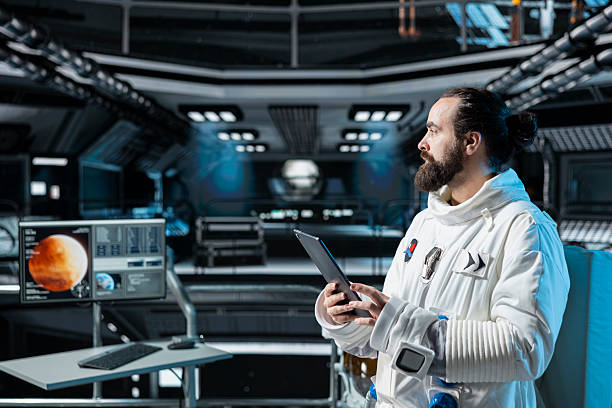
Space Technology Specialists design and test spacecraft components, often with ISRO or private firms. They focus on system reliability. Their role...
0.0LPA
Senior Space Technology Specialists lead complex space projects in hubs like Ahmedabad or Hyderabad, mentoring junior staff. They optimize...
0.0LPA

Space Systems Engineers manage entire spacecraft or satellite systems in key space centers, integrating hardware and software. They ensure mission...
0.0LPA
Take the next step and explore more about Space Technology Specialist.
Explore similar career paths that might interest you