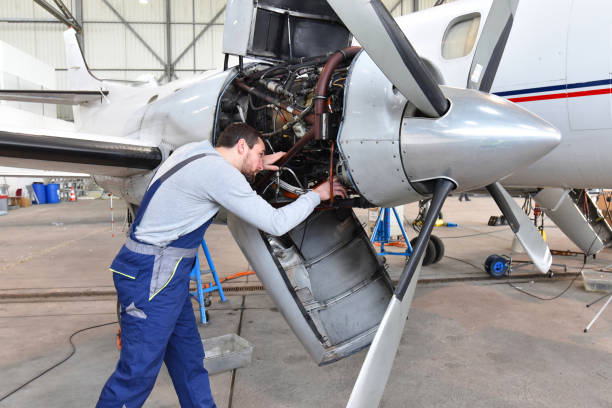
Aerospace-Materials Specialist

An Aerospace-Materials Specialist is an expert who focuses on the development, testing, and application of materials used in the aerospace industry. These specialists work with advanced metals, composites, ceramics, and polymers to design materials that meet the rigorous demands of aerospace environments, including extreme temperatures, high stresses, and corrosive conditions. Their work ensures the safety, efficiency, and durability of aircraft, spacecraft, and related systems.
Share :
Career tree mind map (horizontal) — Aerospace-Materials Specialist
Colored branches, hub circles, and underlined topics — same style as counselor course classic (types 18–19 in admin).
Loading mind map…

Aerospace-Materials Specialists play a critical role in selecting and engineering materials that optimize performance and safety in aerospace applications. They analyze material properties, conduct failure analysis, and develop new materials with enhanced strength, lightweight characteristics, and resistance to fatigue and corrosion. Their expertise supports manufacturing processes, quality control, and innovation in aerospace design. These specialists collaborate with engineers, designers, and manufacturers to improve aircraft and spacecraft components, contributing to advancements in propulsion, structural integrity, and thermal protection systems.

  1. Material Selection and Testing
    • Identify appropriate materials for aerospace components based on mechanical, thermal, and chemical properties.
    • Conduct laboratory tests such as tensile strength, fatigue, corrosion resistance, and thermal stability.
  2. Research and Development
    • Develop new aerospace materials including composites, alloys, and nanomaterials.
    • Innovate lightweight and high-performance materials to improve fuel efficiency and durability.
  3. Failure Analysis and Quality Assurance
    • Investigate material failures and recommend corrective actions.
    • Ensure compliance with aerospace standards and specifications.
  4. Process Optimization
    • Improve manufacturing processes such as casting, forging, welding, and additive manufacturing.
    • Collaborate with production teams to implement material handling and treatment protocols.
  5. Documentation and Reporting
    • Prepare technical reports, material specifications, and certification documents.
    • Communicate findings and recommendations to engineering and management teams.
  6. Compliance and Standards
    • Ensure materials meet regulatory requirements such as FAA, EASA, and NASA standards.
    • Stay updated with industry standards and technological advancements.
  7. Collaboration and Consultation
    • Work closely with aerospace engineers, designers, and suppliers.
    • Provide expert advice on material-related challenges and innovations.
  8. Sustainability Initiatives
    • Explore eco-friendly and recyclable materials for aerospace applications.
    • Support initiatives to reduce environmental impact of material usage.

RouteSteps
Route 1: Materials Science / Metallurgical Engineering Degree1. Bachelor’s degree in Materials Science, Metallurgical Engineering, or Aerospace Engineering with materials specialization.
2. Master’s degree focusing on Aerospace Materials or Composite Materials.
3. Internships or research projects in aerospace materials labs or manufacturing units.
4. Employment in aerospace companies, research institutes, or government agencies.
Route 2: Mechanical Engineering + Specialization in Materials1. Bachelor’s degree in Mechanical Engineering.
2. Postgraduate specialization in Materials Engineering or Aerospace Materials.
3. Practical experience in material testing and aerospace manufacturing.
4. Career advancement through technical and managerial roles in aerospace materials.
Route 3: Chemical Engineering + Materials Science1. Degree in Chemical Engineering with coursework in materials science.
2. Advanced training in polymer science, composites, and nanomaterials.
3. Exposure to aerospace industry standards and material certification processes.
4. Roles in R&D, quality assurance, and process development.
Route 4: Professional Experience + Certifications1. Industry experience in aerospace manufacturing or materials testing.
2. Certifications in materials testing, non-destructive testing (NDT), and quality management.
3. Continuous skill development in emerging aerospace materials technologies.
4. Progression to senior specialist or consultant positions.

  • Entrance Exams: Admission to materials science and aerospace engineering programs often requires exams such as JEE, GATE, or institute-specific tests.
  • Interdisciplinary Foundation: A strong understanding of physics, chemistry, and engineering principles is essential to master material behaviors under aerospace conditions.
  • Laboratory and Practical Skills: Hands-on experience with material characterization techniques and testing equipment is critical.
  • Regulatory Knowledge: Familiarity with aerospace material standards (e.g., ASTM, SAE, FAA) and certification processes is important.
  • Innovation Focus: The field demands continuous innovation to develop lighter, stronger, and more durable materials.
  • Sustainability Awareness: Growing emphasis on environmentally sustainable materials and recycling in aerospace.

  • Aerospace manufacturing companies (e.g., HAL, Boeing, Lockheed Martin)
  • Research laboratories specializing in materials science and aerospace engineering
  • National Aerospace Laboratories (NAL), India
  • Defence Research and Development Organisation (DRDO) materials divisions
  • Material testing and certification agencies
  • Universities and academic research centers with aerospace materials labs
  • Composite material manufacturing firms
  • Quality assurance and non-destructive testing (NDT) service providers
  • Additive manufacturing and 3D printing technology centers
  • International aerospace research collaborations and internships

  • Undergraduate Degrees: Materials Science, Metallurgical Engineering, Aerospace Engineering, Chemical Engineering
  • Postgraduate Programs: MSc/ME in Aerospace Materials, Composite Materials, Nanomaterials, Materials Engineering
  • Certifications: Non-Destructive Testing (NDT), Quality Management (ISO 9001), Failure Analysis
  • Online Courses: Composite Materials, Advanced Metallurgy, Additive Manufacturing
  • Workshops: Material Characterization Techniques, Aerospace Material Standards, Testing and Certification

InstituteCourseOfficial Link
Indian Institute of Science (IISc), BangaloreM.Tech Materials Engineeringhttps://iisc.ac.in/
Indian Institute of Technology (IIT) MadrasM.Tech Materials Science and Engineeringhttps://iitm.ac.in/
Indian Institute of Technology (IIT) BombayM.Tech Metallurgical Engineeringhttps://iitb.ac.in/
National Aerospace Laboratories (NAL), BangaloreResearch and Training in Aerospace Materialshttps://nal.res.in/
Defence Institute of Advanced Technology (DIAT), PuneM.Tech Aerospace Materialshttps://diat.ac.in/
Indian Institute of Technology (IIT) KharagpurM.Tech Materials Science & Engineeringhttps://iitkgp.ac.in/
Birla Institute of Technology and Science (BITS), PilaniM.E. Materials Sciencehttps://bits-pilani.ac.in/
Indian Institute of Technology (IIT) KanpurM.Tech Materials Sciencehttps://iitk.ac.in/
Indian Institute of Technology (IIT) DelhiM.Tech Materials Science and Engineeringhttps://iitd.ac.in/
Indian Institute of Technology (IIT) GuwahatiM.Tech Materials Engineeringhttps://iitg.ac.in/

International

InstitutionCourseCountryOfficial Link
Massachusetts Institute of Technology (MIT)MSc Materials Science and EngineeringUSAhttps://mit.edu/
Stanford UniversityMS Materials Science and EngineeringUSAhttps://stanford.edu/
University of CambridgeMPhil Materials Science and MetallurgyUKhttps://cam.ac.uk/
ETH ZurichMSc Materials ScienceSwitzerlandhttps://ethz.ch/
Imperial College LondonMSc Advanced Materials Science and EngineeringUKhttps://imperial.ac.uk/
Technical University of Munich (TUM)MSc Materials ScienceGermanyhttps://tum.de/
National University of Singapore (NUS)MSc Materials Science and EngineeringSingaporehttps://nus.edu.sg/
University of TokyoMSc Materials ScienceJapanhttps://u-tokyo.ac.jp/
Delft University of TechnologyMSc Materials Science and EngineeringNetherlandshttps://tudelft.nl/
University of California, BerkeleyMSc Materials Science and EngineeringUSAhttps://berkeley.edu/

India

  • IIT JEE Advanced: For admission to undergraduate programs in Materials Science and Engineering at IITs.
  • GATE (Graduate Aptitude Test in Engineering): For admission to postgraduate programs in Materials Science, Metallurgical Engineering, and Aerospace Engineering with materials specialization.
  • BITSAT: For admission to BITS Pilani’s Materials Science and Engineering programs.
  • National Institute of Technology (NIT) Entrance Exams: For admission to Materials Engineering programs at various NITs.
  • IISc Bangalore Admission Process: For admission to M.Tech Materials Engineering programs.
  • DIAT Pune Admission Process: For admission to Defence Institute of Advanced Technology’s Aerospace Materials programs.
  • UPSC Engineering Services Exam: For government roles related to aerospace materials and research.
  • Private University Entrance Tests: For institutions offering specialized aerospace materials courses.

International

  • GRE (Graduate Record Examination): Required for admission to many US and international postgraduate programs in Materials Science and Aerospace Engineering.
  • TOEFL / IELTS: English proficiency tests for international students.
  • MIT Application Process: For admission to MIT’s Materials Science and Engineering programs.
  • Stanford University Application: For admission to Stanford’s Materials Science graduate programs.
  • University of Cambridge Application: For admission to Cambridge’s MPhil Materials Science and Metallurgy program.
  • ETH Zurich Application Process: For admission to MSc Materials Science.
  • Imperial College London Application: For admission to MSc Advanced Materials Science and Engineering.
  • Technical University of Munich Application: For admission to MSc Materials Science.
  • National University of Singapore Application: For admission to MSc Materials Science and Engineering.
  • University of Tokyo Application: For admission to MSc Materials Science.

Materials Engineer → Aerospace Materials Specialist → Senior Materials Engineer → Materials Research Scientist → Materials Development Manager → Aerospace Materials Consultant → Director of Materials Engineering → Chief Materials Scientist

  • Aerospace manufacturing companies
  • Defence research organizations
  • Materials testing and certification labs
  • Research and development institutes
  • Aviation and space agencies
  • Composite material manufacturers
  • Quality assurance and inspection firms
  • Additive manufacturing and 3D printing companies
  • Universities and academic research centers
  • Environmental and sustainability consultancies

IndiaInternational
Hindustan Aeronautics Limited (HAL)Boeing
National Aerospace Laboratories (NAL)Lockheed Martin
Defence Research and Development Organisation (DRDO)Airbus
Tata Advanced Materials Ltd.NASA
Indian Space Research Organisation (ISRO)Rolls-Royce
Bharat Electronics Limited (BEL)Raytheon Technologies
Larsen & Toubro (Aerospace Division)Northrop Grumman
Godrej AerospaceGeneral Electric Aviation
Mahindra AerospaceSafran
Indian Institute of Science (Materials Research)BAE Systems

ProsCons
Work with cutting-edge materials and technologiesRequires continuous learning to keep pace with rapid innovations
High demand in aerospace and defense sectorsCan involve working under strict regulatory and safety standards
Opportunities to contribute to high-impact aerospace projectsOften requires rigorous testing and quality assurance procedures
Involvement in research and development of novel materialsMay involve exposure to hazardous materials requiring safety precautions
Collaboration with multidisciplinary teamsProject deadlines can be demanding and stressful
Potential for international career opportunitiesRequires strong attention to detail and precision

Career LevelIndia (₹ per annum)International (US$ per annum)
Entry-Level Aerospace Materials Specialist5,00,000 - 9,00,000$60,000 - $95,000
Mid-Level Materials Engineer9,00,000 - 18,00,000$95,000 - $150,000
Senior Materials Specialist / Engineer18,00,000 - 35,00,000$150,000 - $250,000
Materials Research Scientist / Consultant30,00,000 - 50,00,000$220,000 - $350,000
Director / Chief Materials Scientist45,00,000 - 75,00,000+$300,000 - $500,000+

  • ANSYS: Engineering simulation software for stress, thermal, and materials analysis.
  • MATLAB: Numerical computing and materials modelling.
  • AutoCAD / CATIA: CAD software for designing aerospace components.
  • COMSOL Multiphysics: Simulation platform for materials and structural analysis.
  • ABAQUS: Finite element analysis software for material behaviour.
  • Minitab: Statistical analysis for quality control and testing.
  • Thermo-Calc: Software for thermodynamic calculations in materials science.
  • SolidWorks: 3D CAD design and simulation.
  • LIMS (Laboratory Information Management System): For managing material testing data.
  • Non-Destructive Testing (NDT) Software: Tools for ultrasonic, radiographic, and other NDT methods.

  • The Minerals, Metals & Materials Society (TMS)
  • American Society for Materials (ASM International)
  • Society for the Advancement of Material and Process Engineering (SAMPE)
  • Indian Institute of Metals (IIM)
  • Aerospace Materials Division of SAE International
  • International Metallographic Society (IMS)
  • ASTM International (Materials Standards)
  • European Materials Research Society (E-MRS)
  • Indian Society for Non-Destructive Testing (ISNT)
  • Materials Research Society (MRS)

  • Maxwell Hunter II (1922-2001, United States): Contributed to composite materials for early spacecraft in the 1950s and 1960s, influencing durability standards.

     
  • Stephanie Kwolek (1923-2014, United States): Invented Kevlar in 1965, a lightweight, high-strength material critical for aerospace components.

     
  • Robert H. Goddard (1882-1945, United States): Experimented with lightweight alloys for rocket structures, foundational for aerospace propulsion materials.

     
  • Jeanne L. Crews (Dates unavailable, United States): Developed ablative materials for spacecraft heat shields during the Apollo program in the 1960s.

     
  • John W. Cahn (1928-2016, United States): Influenced high-performance metals for aerospace through research on alloys and phase transitions in the 1950s-1970s.

     
  • Linda Sapochak (Dates unavailable, United States): Worked on advanced polymers and composites for aerospace at NASA since the 1990s.

     
  • Alan J. Hurd (Dates unavailable, United States): Contributed to nanomaterials for aerospace with lightweight, high-strength coatings since the 2000s.

     
  • Mary L. Good (1931-2019, United States): Advanced ceramics and composites for high-temperature aerospace applications in the 1970s-1990s.

     
  • Ravi Silva (Dates unavailable, United Kingdom/Sri Lanka): Known for carbon nanotubes and graphene research since the 1990s, impacting aerospace structures.

     
  • Dr. Anil K. Bhowmick (Dates unavailable, India): Specialized in polymer science and nanocomposites for aerospace since the 1980s, collaborating with ISRO.


  • Develop a strong foundation in materials science, metallurgy, and aerospace fundamentals.
  • Gain hands-on experience with material testing and characterization techniques.
  • Pursue internships in aerospace manufacturing, research labs, or materials testing facilities.
  • Stay updated on aerospace material standards and emerging technologies.
  • Build proficiency in relevant software tools for simulation and data analysis.
  • Engage in research projects and publish findings to establish expertise.
  • Network with professionals through conferences and professional societies.
  • Cultivate problem-solving and critical thinking skills.
  • Be prepared for rigorous quality assurance and safety requirements.
  • Demonstrate passion for innovation and sustainability in aerospace materials.


A career as an Aerospace-Materials Specialist offers exciting opportunities to work with advanced materials that are fundamental to the aerospace industry’s success. These specialists ensure the safety, performance, and innovation of aircraft and spacecraft by developing and testing materials that meet stringent aerospace demands. With rapid technological advancements and growing environmental considerations, aerospace-materials specialists are vital contributors to the future of aviation and space exploration. This career path promises intellectual challenge, professional growth, and the chance to impact cutting-edge aerospace projects globally.


Knowledge & Skills You Will Learn
1
Deep knowledge of materials science, metallurgy, and composite materials
2
Expertise in material characterization and testing methods
3
Familiarity with aerospace industry standards and certification processes
4
Strong analytical and problem-solving skills
5
Proficiency in CAD and materials modelling software
6
Knowledge of manufacturing processes and quality control
7
Ability to conduct failure analysis and root cause investigations
8
Effective communication and teamwork skills
9
Adaptability to new materials and emerging technologies
10
Commitment to safety and environmental sustainability
Materials Engineer

Materials Engineer

Materials Engineers design, test, and improve materials used across various industries, including aerospace. They work on developing new alloys,...

0.0LPA
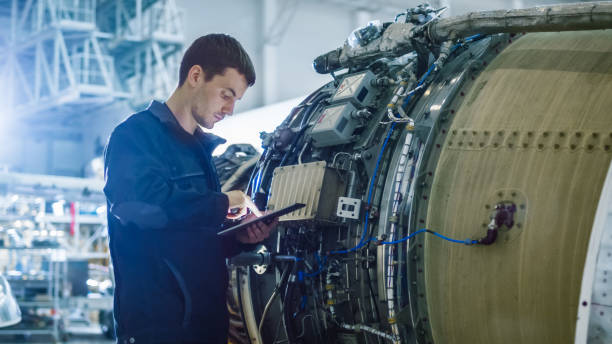
Metallurgical Engineer

Metallurgical Engineer

Metallurgical Engineers specialize in the physical and chemical behavior of metals and alloys. In aerospace, they focus on developing...

0.0LPA
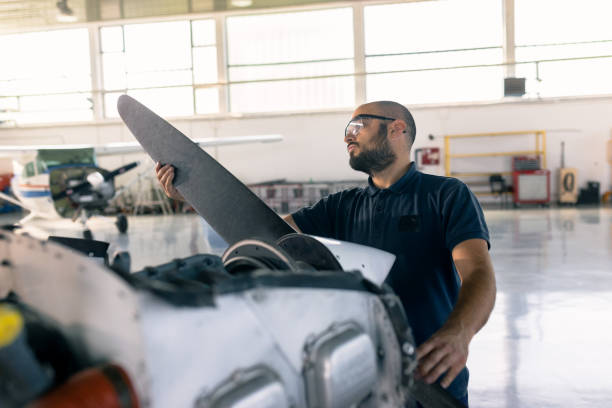
Composite Materials Engineer

Composite Materials Engineer

Composite Materials Engineers develop and apply composite materials, which combine two or more constituent materials to achieve superior...

0.0LPA

Interested in this career?

Take the next step and explore more about Aerospace-Materials Specialist.