Air-Traffic Controller

Air Traffic Control is a critical and high-stakes field within the aviation sector that focuses on managing the safe and efficient movement of aircraft in the skies and at airports, ensuring the prevention of collisions and maintaining orderly traffic flow. In India, Air Traffic Control is a vital career path, driven by the country’s expanding aviation industry, increasing air traffic, and the need for robust safety protocols. With advancements in radar technology, automation, and air traffic management systems, this career plays an essential role in supporting global connectivity and aviation safety. Air Traffic Controllers are indispensable for coordinating aircraft movements, providing real-time guidance to pilots, and managing emergency situations. This profession contributes to industry progress through trends like digital air traffic systems, satellite-based navigation, and enhanced safety protocols.

Share :
Career tree mind map (horizontal) — Air-Traffic Controller
Colored branches, hub circles, and underlined topics — same style as counselor course classic (types 18–19 in admin).
Loading mind map…

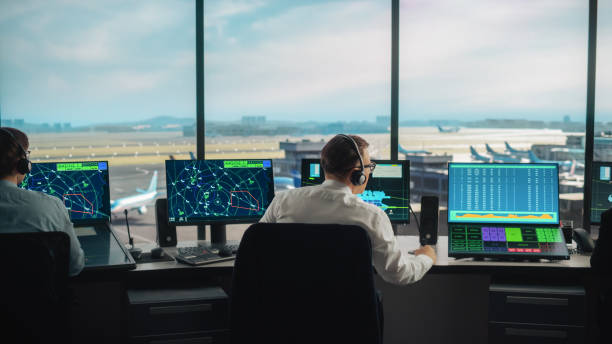
Air Traffic Controllers work in high-pressure environments such as airport control towers, area control centers, or approach control facilities, often collaborating with pilots, airline dispatchers, meteorologists, and other aviation professionals. Their responsibilities include monitoring aircraft via radar, issuing takeoff and landing clearances, and ensuring safe separation between aircraft during flight. They face challenges like handling peak traffic volumes, responding to adverse weather conditions, and maintaining intense focus in a role where errors can have catastrophic consequences, especially in India’s busy airspace. By leveraging expertise in communication, radar systems, and aviation regulations, they ensure the safety of millions of passengers. As key contributors to India’s aviation and transportation sectors, they drive progress through trends like NextGen air traffic control systems, automation in traffic management, and real-time data integration.

  • Aircraft Movement Coordination
    • Monitor and direct the movement of aircraft on the ground and in the air using radar and communication systems.
    • Ensure safe separation distances between aircraft to prevent collisions during takeoff, landing, and en-route phases.
  • Issuance of Clearances and Instructions
    • Provide pilots with takeoff, landing, and taxiing clearances based on traffic and weather conditions.
    • Issue precise instructions for altitude, speed, and route adjustments to maintain orderly flow in congested airspace.
  • Weather Monitoring and Reporting
    • Analyze weather data and updates to inform pilots of turbulence, storms, or visibility issues that could impact flights.
    • Coordinate with meteorological teams to ensure accurate and timely weather advisories for safe operations.
  • Emergency Response and Management
    • Respond swiftly to in-flight emergencies, such as mechanical failures or medical issues, by prioritizing affected aircraft.
    • Coordinate with emergency services and other controllers to manage diversions or emergency landings effectively.
  • Traffic Flow Optimization
    • Manage high volumes of air traffic to minimize delays while maintaining safety and efficiency in busy airports.
    • Implement traffic sequencing and spacing techniques to optimize runway usage during peak hours.
  • Communication with Aviation Stakeholders
    • Maintain constant communication with pilots, ground crew, and other controllers to ensure seamless operations.
    • Relay critical information regarding flight plans, airspace restrictions, or operational changes to relevant parties.
  • Use of Technology and Radar Systems
    • Operate advanced radar, navigation, and communication systems to track aircraft positions in real-time.
    • Utilize automation tools and software to predict traffic patterns and enhance decision-making accuracy.
  • Compliance with Aviation Regulations
    • Adhere to national and international aviation regulations, such as those set by the DGCA (India) and ICAO, to ensure safety.
    • Document and report incidents, deviations, or irregularities for regulatory review and operational improvement.

RouteSteps
Route 1: Diploma/Certificate in Air Traffic Control - Direct Entry

1. Complete 10+2 in Science stream (Physics, Mathematics) with minimum 60% marks.

2. Enroll in a DGCA-approved Air Traffic Control training program or diploma (1-2 years).

3. Clear required licensing exams and medical tests.

4. Join as a Trainee Controller with organizations like AAI.

Route 2: Bachelor’s Degree Pathway

1. Complete 10+2 in Science stream and pursue B.Sc. in Aviation or B.Tech in related fields (3-4 years).

2. Enroll in specialized ATC training programs post-degree.

3. Obtain ATC license through DGCA exams and training.

4. Start as a Junior Controller and progress with experience.

Route 3: International Training Path

1. Complete 10+2 and clear language tests (e.g., IELTS, TOEFL) for international programs.

2. Pursue ATC training from globally recognized institutes (e.g., USA, UK).

3. Gain international certification and return to India for licensing.

4. Join aviation authorities or private firms with global exposure.

Route 4: Government Recruitment via AAI

1. Complete 10+2 and a degree/diploma in Science/Engineering.

2. Apply for Air Traffic Controller positions through Airports Authority of India (AAI) recruitment exams.

3. Undergo AAI-provided training and licensing process.

4. Start career as Junior Executive (ATC) in Indian airports.

Route 5: Military to Civilian Transition

1. Serve in military aviation roles (e.g., Indian Air Force) with air traffic control training.

2. Transition to civilian ATC roles post-service with relevant experience.

3. Obtain DGCA licensing through additional exams if required.

4. Join civilian airports or control centers with military expertise.

  • Diploma in Air Traffic Control for foundational training in aircraft coordination and radar operation.
  • Certificate in Air Traffic Management for focused skills in managing airspace and traffic flow.
  • Bachelor of Science (B.Sc.) in Aviation for broader knowledge of aviation operations with an ATC focus.
  • Bachelor of Technology (B.Tech) in Electronics or Communication Engineering for technical grounding relevant to ATC systems.
  • Advanced Training Programs in Air Traffic Control from DGCA-approved or international institutes for licensing and certification.
  • Specialization in Tower Control, Approach Control, En-Route Control, or Oceanic Control for specific operational domains.
  • Short-term courses on Aviation Safety, Radar Technology, and Emergency Response in Air Traffic Management.
  • Certifications in Air Traffic Controller License (DGCA/ICAO), Aviation English Proficiency, and Stress Management for professional credibility.

InstituteCourse/ProgramOfficial Link
Civil Aviation Training College (CATC), AllahabadAir Traffic Control Training Programhttps://www.aai.aero/
Indira Gandhi Rashtriya Uran Akademi (IGRUA), RaebareliATC Training and Certificationhttps://www.igrua.gov.in/
Airports Authority of India (AAI) Training Centers, Various LocationsATC Licensing and Refresher Courseshttps://www.aai.aero/
Rajiv Gandhi Academy for Aviation Technology, ThiruvananthapuramAviation and ATC Training Programshttps://www.rajivgandhiacademy.in/
Amity University, NoidaB.Sc. in Aviation (ATC Electives)https://www.amity.edu/
Lovely Professional University (LPU), PunjabB.Sc. in Aviation with ATC Focushttps://www.lpu.in/
Hindustan Institute of Technology and Science (HITS), ChennaiB.Tech in Aeronautical (ATC Electives)https://www.hindustanuniv.ac.in/
University of Petroleum and Energy Studies (UPES), DehradunB.Sc. in Aviation Operations (ATC Focus)https://www.upes.ac.in/
Bombay Flying Club, MumbaiAviation and ATC Foundation Courseshttps://www.thebombayflyingclub.com/
Frankfinn Institute of Air Hostess Training, Multiple LocationsAviation and ATC Basics (Entry-Level)https://www.frankfinn.com/

InstitutionCourseCountryOfficial Link
Embry-Riddle Aeronautical University, Daytona BeachB.S./M.S. in Air Traffic ManagementUSAhttps://www.erau.edu/
University of North Dakota, Grand ForksB.S. in Air Traffic ManagementUSAhttps://www.und.edu/
Sheffield School of Aeronautics, Fort LauderdaleAir Traffic Control Training ProgramUSAhttps://www.sheffield.com/
Airways Aviation, Multiple LocationsAir Traffic Control Training and CertificationUK/Australiahttps://www.airwaysaviation.com/
University of Surrey, GuildfordM.Sc. in Air Transport Management (ATC Focus)UKhttps://www.surrey.ac.uk/
Cranfield University, CranfieldM.Sc. in Air Transport Management (ATC Electives)UKhttps://www.cranfield.ac.uk/
University of New South Wales (UNSW), SydneyB.Av./M.Av. in Aviation (ATC Focus)Australiahttps://www.unsw.edu.au/
Seneca College, TorontoDiploma in Aviation Operations (ATC Focus)Canadahttps://www.senecacollege.ca/
Eurocontrol Training Institute, LuxembourgAir Traffic Controller Training ProgramLuxembourghttps://www.eurocontrol.int/
Airservices Australia, Multiple LocationsAir Traffic Control Training and LicensingAustraliahttps://www.airservicesaustralia.com/

India:

  • AAI Junior Executive (ATC) Exam: Conducted by Airports Authority of India for recruitment of Air Traffic Controllers (Written Test, Voice Test, Interview).
  • DGCA ATC Licensing Exam: Mandatory for obtaining an Air Traffic Controller license after training, including written and practical assessments.
  • JEE Main (Joint Entrance Examination Main): Required for admission to B.Tech programs in related fields at NITs or other institutes (Written Test).
  • ICAR AIEEA (if applicable for Aviation-related courses): For admission to certain aviation or technology programs at agricultural universities (Written Test).
  • Institute-Specific Entrance Tests: Some training centers like CATC or IGRUA may conduct their own selection tests (Written Test, Interview).

International (for Relevant Studies or Exposure):

  • IELTS (International English Language Testing System): Minimum score of 6.5-7.0 for non-native speakers applying to programs in the UK, Canada, Australia, etc.
  • TOEFL (Test of English as a Foreign Language): Minimum score of 90-100 for programs in English-speaking countries like the USA.
  • SAT (Scholastic Assessment Test): Often required for undergraduate programs in the USA or Canada (Written Test).
  • GRE (Graduate Record Examination): Often required for postgraduate programs in aviation or related fields at international universities (Quantitative, Verbal, Analytical Writing).
  • Aviation English Proficiency Test (ICAO Level 4 or above): Mandatory for international ATC roles to ensure clear communication skills (Speaking and Listening).

Trainee Air Traffic Controller → Junior Air Traffic Controller → Senior Air Traffic Controller → Air Traffic Control Supervisor → Air Traffic Control Manager

  • Government Aviation Authorities for managing national airspace and airport traffic through agencies like AAI.
  • Airport Control Towers for coordinating aircraft movements during takeoff, landing, and ground operations.
  • Area Control Centers for overseeing en-route traffic across large regions of airspace.
  • Military Air Traffic Control for managing defense-related air operations and restricted airspace.
  • Private Aviation Firms for supporting air traffic services at private or smaller regional airports.
  • International Aviation Organizations for contributing to global air traffic management and safety standards.
  • Training Institutes for teaching and mentoring aspiring air traffic controllers in simulation and live environments.

Indian OrganizationsInternational Organizations
Airports Authority of India (AAI), DelhiFederal Aviation Administration (FAA), USA
Directorate General of Civil Aviation (DGCA), DelhiEurocontrol, Belgium
Indian Air Force (IAF), Various LocationsInternational Civil Aviation Organization (ICAO), Canada
GMR Airports Limited, HyderabadAirservices Australia, Australia
Adani Airports Holdings Limited, AhmedabadNAV CANADA, Canada
Bangalore International Airport Limited (BIAL), BangaloreNATS (National Air Traffic Services), UK
Mumbai International Airport Limited (MIAL), MumbaiDFS Deutsche Flugsicherung, Germany
Cochin International Airport Limited (CIAL), KochiCivil Aviation Authority (CAA), UK
Hyderabad International Airport Limited (HIAL), HyderabadENAV, Italy
Delhi International Airport Limited (DIAL), DelhiSkyguide, Switzerland

ProsCons
High impact through ensuring aviation safety and preventing accidentsExtreme pressure due to high-stakes decisions with no margin for error
Opportunity to work in a dynamic, technology-driven aviation environmentLong and irregular shifts, including night and weekend duties, causing fatigue
Key role in managing the growing air traffic in India and globallyIntense stress from managing emergencies or heavy traffic in real-time
Strong demand due to expanding aviation sector and new airports in IndiaStrict medical and mental health requirements, with risk of disqualification
Potential for recognition through exceptional performance in critical situationsLimited work-life balance due to demanding schedules and constant vigilance

Career Level (Private/Public Sector Example)India (₹ per annum)International (USD per annum, Tentative)
Trainee Air Traffic Controller (Entry Level)4,00,000 - 7,00,00025,000 - 40,000
Junior Air Traffic Controller (Mid-Level)7,00,000 - 12,00,00040,000 - 60,000
Senior Air Traffic Controller (Senior Level)12,00,000 - 20,00,00060,000 - 90,000
Air Traffic Control Supervisor (Top Tier)20,00,000 - 30,00,00090,000 - 120,000
Air Traffic Control Manager (Elite Level)30,00,000 - 45,00,000+120,000 - 160,000+
Approach Control Specialist (Specialized Role)10,00,000 - 18,00,00050,000 - 80,000

Note: Salaries are indicative and vary based on location (metro vs. non-metro for India; country/region for international roles), organization type, and workload. Figures for India are updated estimates based on industry trends as of 2025, reflecting market growth, demand for air traffic control expertise, and data from sources like Glassdoor and industry reports. International figures are approximate averages based on global aviation trends in countries like the USA, UK, or Canada, sourced from recent job portals and market analyses.

  • RadarScope: For real-time radar tracking and monitoring of aircraft positions in controlled airspace.
  • SkyRadar: For simulation and training in air traffic control radar operation and traffic management.
  • AeroTrac: For managing flight data and coordinating air traffic operations across multiple sectors.
  • Thales TopSky: For advanced air traffic management with integrated surveillance and automation features.
  • Raytheon ATCoach: For simulation-based training to prepare controllers for complex traffic scenarios.
  • Eurocontrol ARTAS: For processing and displaying surveillance data in large-scale air traffic systems.
  • FlightAware: For real-time flight tracking and data integration to assist in traffic flow management.
  • SITA Aircom: For communication and data exchange between air traffic controllers and pilots.
  • MATLAB: For modeling and analyzing air traffic patterns or optimizing airspace capacity.
  • Custom ATC Simulators: For training and operational readiness in realistic air traffic control environments.

  • Air Traffic Controllers’ Guild (India), India.
  • Airports Authority of India (AAI) Professional Network, India.
  • Directorate General of Civil Aviation (DGCA) Forums, India.
  • Indian Air Force (IAF) Aviation Network, India.
  • Civil Aviation Safety Advisory Council (CASAC), India.
  • International Federation of Air Traffic Controllers’ Associations (IFATCA), Global.
  • International Civil Aviation Organization (ICAO), Global.
  • Civil Air Navigation Services Organisation (CANSO), Global.
  • Air Traffic Control Association (ATCA), Global.
  • European Organisation for the Safety of Air Navigation (Eurocontrol), Europe.

  • Margaret T. Wright (USA, Historical): Margaret T. Wright was one of the first female air traffic controllers in the United States, breaking gender barriers in the 1940s during World War II. Her pioneering work paved the way for diversity in the profession, demonstrating exceptional skill in managing military air traffic. Her legacy continues to inspire inclusivity in aviation safety roles.
     
  • Paul Rinaldi (USA, Contemporary): Paul Rinaldi is the former president of the National Air Traffic Controllers Association (NATCA) in the USA, known for advocating modernization of air traffic systems. His leadership has driven improvements in working conditions and technology adoption for controllers. His efforts have significantly enhanced aviation safety standards globally.
     
  • Peter Curran (UK, Contemporary): Peter Curran is a prominent figure in air traffic management, associated with NATS (UK), focusing on implementing digital and remote tower technologies. His innovative approaches have optimized airspace capacity in one of the busiest regions. His contributions shape modern air traffic control practices worldwide.
     
  • K.N. Shrivastava (India, Contemporary): K.N. Shrivastava, a former Director General of Civil Aviation in India, played a key role in enhancing air traffic management systems during his tenure. His policies strengthened safety protocols and infrastructure at Indian airports. His work continues to influence aviation regulation and control in the country.
     
  • Susan Norman (Australia, Contemporary): Susan Norman is a respected leader in air traffic control with Airservices Australia, known for integrating satellite-based navigation systems. Her efforts have improved precision and safety in Australian airspace management. Her innovations serve as a model for global air traffic advancements.
     
  • Jackie Smith (USA, Historical): Jackie Smith was a trailblazing air traffic controller during the 1981 PATCO strike in the USA, highlighting the critical role of controllers in aviation. Her resilience under pressure brought attention to the profession’s challenges and importance. Her story remains a significant chapter in ATC history.
     
  • Eamonn Brennan (Ireland, Contemporary): Eamonn Brennan, former Director General of Eurocontrol, has been instrumental in harmonizing European air traffic management. His leadership in adopting NextGen technologies has reduced delays and enhanced safety across the continent. His strategies influence international ATC collaboration.
     
  • V.Somasundaram (India, Contemporary): V.Somasundaram, a senior executive at Airports Authority of India (AAI), has contributed to modernizing air traffic control infrastructure in India. His initiatives in training and technology adoption have improved traffic handling at major airports. His work supports India’s growing aviation sector.
     
  • Teri Bristol (USA, Contemporary): Teri Bristol, former COO of the FAA’s Air Traffic Organization, oversaw significant upgrades in US air traffic systems, including ADS-B implementation. Her strategic vision enhanced safety and efficiency in one of the world’s busiest airspaces. Her impact shapes modern ATC policies globally.
     
  • Karen Bolton (Canada, Contemporary): Karen Bolton, a leader at NAV CANADA, has driven advancements in air traffic surveillance and automation in Canadian airspace. Her focus on sustainable flight path optimization has reduced environmental impact. Her contributions set benchmarks for innovative air traffic management.
     

  • Build a strong foundation in mathematics, physics, and communication skills for a solid skill set in managing air traffic.
  • Pursue early exposure through aviation workshops, simulation training, or mentorship to understand real-world ATC challenges.
  • Create a portfolio or record of training achievements, certifications, or simulated scenarios to demonstrate readiness for roles.
  • Stay updated on aviation regulations, safety protocols, and technological advancements through continuous learning and industry events.
  • Develop proficiency in radar systems, communication tools, and stress management techniques for a competitive edge in operations.
  • Join reputed training institutes like CATC or international programs for quality education and professional networking.
  • Work on resilience to handle high-pressure environments, long shifts, and critical decision-making scenarios.
  • Explore opportunities in smaller airports or regional centers to gain experience if larger roles are initially unavailable.
  • Network with aviation professionals, pilots, and regulatory officials at industry forums to expand professional connections.
  • Cultivate adaptability to manage evolving technologies, increasing air traffic, and unexpected operational challenges.
  • Focus on societal impact by prioritizing safety, efficiency, and reliability in air traffic management for public welfare.

A career in Air Traffic Control offers a unique opportunity to safeguard the skies by mastering precision coordination and cutting-edge technology, advancing aviation safety through meticulous traffic management, and protecting countless lives with every critical decision. Air Traffic Controllers stand as the vigilant guardians of India’s airspace, employing their sharp focus and expertise to ensure seamless air travel across diverse regions. This field combines intense responsibility with a passion for aviation, unlocking pathways in tower control, en-route management, emergency response, and technological innovation. For those driven to excel in high-stakes environments through unwavering vigilance, inspired by the chance to innovate with air traffic solutions, and prepared to tackle the demanding challenges of aviation safety and efficiency, a career as an Air Traffic Controller presents a profoundly impactful journey. It empowers individuals to address vital safety and operational needs, enhance aviation frameworks, and contribute to global connectivity through the exceptional application of air traffic expertise.


Knowledge & Skills You Will Learn
1
Sustainability in Aviation: Focus on optimizing flight paths to reduce fuel consumption and carbon emissions.
Junior Air Traffic Controller (Mid-Level)

Junior Air Traffic Controller (Mid-Level)

Junior Air Traffic Controllers are licensed professionals who independently manage air traffic in less complex sectors or smaller airports across...

0.0LPA

Senior Air Traffic Controller (Senior Level)

Senior Air Traffic Controller (Senior Level)

Senior Air Traffic Controllers are experienced professionals who handle high-traffic airports or critical en-route sectors in metro hubs like...

0.0LPA
Air Traffic Control Supervisor (Top Tier)

Air Traffic Control Supervisor (Top Tier)

Air Traffic Control Supervisors oversee operations at major control towers or regional centers in cities like Kolkata or Hyderabad, ensuring...

0.0LPA

Interested in this career?

Take the next step and explore more about Air-Traffic Controller.