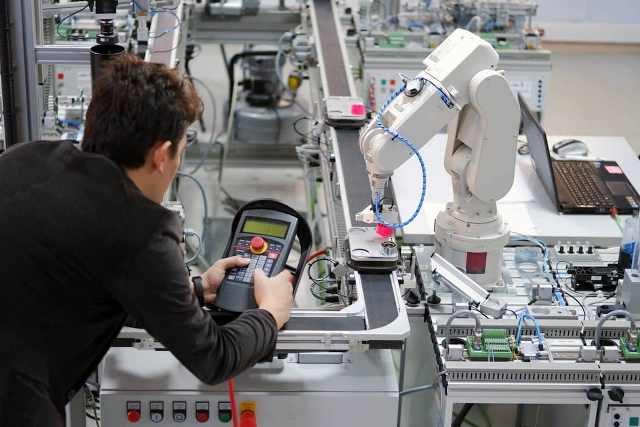
Electronics & Communication Engineer

An Electronics & Communication Engineer designs, develops, tests, and maintains electronic devices and communication systems. They work on a broad range of technologies including telecommunications, satellite systems, embedded systems, signal processing, and networking. Their expertise enables the transmission and processing of information across various platforms, contributing to advancements in communication, computing, and automation.

Share :
✨ Radial Mind Map - Electronics & Communication Engineer
Nodes arranged in concentric circles

Loading radial mind map...

Overview

An Electronics & Communication Engineer designs, develops, tests, and maintains electronic devices and communication systems. They work on a broad range of technologies including telecommunications, satellite systems, embedded systems, signal processing, and networking. Their expertise enables the transmission and processing of information across various platforms, contributing to advancements in communication, computing, and automation.

Electronics & Communication Engineers (ECE) apply principles of electronics, signal processing, and communication theory to design and optimize hardware and software systems that enable information exchange. They work on the development of circuits, microprocessors, communication networks, wireless systems, and digital signal processors. ECE professionals are involved in research, product development, system integration, testing, and maintenance across industries like telecommunications, consumer electronics, aerospace, defence, and IT. Their work is pivotal in enabling modern communication technologies such as 5G, IoT, satellite communication, and embedded systems in smart devices.

Roles and Responsibilities

💼
Electronics & Communication Engineer
Roles and Responsibilities
Circuit Design and Development
Design analogue and digital circuits for communication devices and systems.
Signal Processing
Develop algorithms and hardware for processing audio, video, and data signals.
Communication System Design
Design and optimize wired and wireless communication networks and protocols.
Embedded Systems Development
Develop firmware and hardware for embedded applications in consumer and industrial products.
Testing and Troubleshooting
Test electronic components and systems; diagnose and fix faults.
Research and Innovation
Conduct research to improve communication technologies and electronic devices.
Project Management
Plan, execute, and manage engineering projects ensuring quality and timelines.
Collaboration and Documentation
Work with cross-functional teams and document designs, test results, and technical reports.
JEE Advanced:
For admission to IITs and other premier institutes.
GATE:
For postgraduate admissions and jobs in public sector units.
State-level engineering entrance exams (e.g., MHT-CET, KCET).
University-specific entrance tests and interviews.
GRE:
For graduate programs in engineering and technology.
TOEFL / IELTS:
For English language proficiency.
University-specific assessments and interviews.
Electronics Engineer:
Designs and develops electronic circuits, devices, and systems for communication, computing, and consumer electronics.
Communication Engineer:
Specializes in designing and managing communication systems including wireless networks and satellite communication.
Embedded Systems Engineer:
Designs hardware and software for embedded devices in automotive, medical, and IoT applications.
VLSI Design Engineer:
Focuses on designing and testing integrated circuits and microchips using hardware description languages.
Signal Processing Engineer:
Develops algorithms and systems for analyzing and processing signals like audio and video.
Network Engineer:
Designs, implements, and manages data communication networks ensuring security and performance.
Test and Validation Engineer:
Develops test plans to verify functionality and reliability of electronic and communication systems.
Research Scientist (Electronics & Communication):
Conducts research to innovate in areas like quantum communication and nanotechnology.
Technical Project Manager:
Oversees engineering projects, coordinating teams and ensuring timely delivery.
Systems Architect:
Designs complex electronic and communication systems, integrating hardware and software components.
John Bardeen (1908-1991, United States):
Co-invented the transistor in 1947, earning the Nobel Prize in Physics (1956), foundational for modern electronics.
Claude Shannon (1916-2001, United States):
Known as the "Father of Information Theory," established principles of digital communication in 1948.
Jack Kilby (1923-2005, United States):
Invented the integrated circuit (IC) in 1958, earning the Nobel Prize in Physics (2000), revolutionizing electronics.
Marconi Guglielmo (1874-1937, Italy):
Pioneered wireless communication with the first practical radio telegraph system in the late 1890s, earning the Nobel Prize (1909).
Andrew Viterbi (1935-, United States):
Developed the Viterbi Algorithm in 1967 for error correction in digital communication, essential for mobile and satellite systems.
Dr. A. P. J. Abdul Kalam (1931-2015, India):
Contributed to communication systems for defense and space through DRDO and ISRO, advancing India's infrastructure.
Martin Cooper (1928-, United States):
Led the development of the first handheld cellular phone in 1973, transforming personal communication.
Dr. Sam Pitroda (1942-, India):
Played a key role in India's telecommunications revolution in the 1980s, modernizing networks through C-DOT.
Robert Noyce (1927-1990, United States):
Co-invented the integrated circuit and co-founded Intel, enabling advanced communication devices.
Dr. Arogyaswami Paulraj (1944-, India/United States):
Pioneered MIMO technology in the 1990s, foundational to Wi-Fi and 4G/5G networks, earning the Marconi Prize (2014).

Roles and Responsibilities

  1. Circuit Design and Development
    • Design analogue and digital circuits for communication devices and systems.
  2. Signal Processing
    • Develop algorithms and hardware for processing audio, video, and data signals.
  3. Communication System Design
    • Design and optimize wired and wireless communication networks and protocols.
  4. Embedded Systems Development
    • Develop firmware and hardware for embedded applications in consumer and industrial products.
  5. Testing and Troubleshooting
    • Test electronic components and systems; diagnose and fix faults.
  6. Research and Innovation
    • Conduct research to improve communication technologies and electronic devices.
  7. Project Management
    • Plan, execute, and manage engineering projects ensuring quality and timelines.
  8. Collaboration and Documentation
    • Work with cross-functional teams and document designs, test results, and technical reports.


Study Route & Eligibility Criteria

Alternate Routes

RouteSteps
Route 1: Bachelor’s in Electronics & Communication Engineering1. Complete a Bachelor’s degree in Electronics & Communication Engineering.
2. Pursue Master’s or specialized certifications in communication, embedded systems, or VLSI.
3. Gain internships or industrial training in telecom or electronics companies.
4. Seek employment in R&D, manufacturing, or service sectors.
Route 2: Electrical Engineering + Specialization in Communications1. Obtain a degree in Electrical Engineering.
2. Specialize in communication systems through electives or postgraduate studies.
3. Gain practical experience in communication hardware and software.
4. Advance through research or technical roles.
Route 3: Computer Science + Embedded Systems1. Earn a degree in Computer Science or Information Technology.
2. Focus on embedded systems, networking, and communication protocols.
3. Participate in internships related to IoT or telecom.
4. Pursue advanced studies or certifications.
Route 4: Physics + Electronics1. Complete a degree in Physics with electronics electives.
2. Gain knowledge of semiconductor devices and communication theory.
3. Engage in research projects and internships.
4. Pursue graduate education in electronics and communication.


Significant Observations

  • Field combines hardware and software skills with strong theoretical foundations.
  • Rapidly evolving with emerging technologies like 5G, IoT, and AI integration.
  • Offers diverse career paths in telecom, consumer electronics, aerospace, and IT.
  • Requires proficiency in circuit design, programming, and communication protocols.
  • Strong emphasis on innovation, problem-solving, and system integration.
  • Collaboration with multidisciplinary teams including software developers and product managers.
  • Continuous learning essential due to fast-paced technological advancements.
  • Opportunities available in both core engineering and research roles.


Internships & Practical Exposure

  • Industrial internships in telecom companies, electronics manufacturing, or R&D labs.
  • Hands-on training in circuit design, PCB fabrication, and embedded programming.
  • Projects involving wireless communication, signal processing, or IoT device development.
  • Exposure to software tools like MATLAB, Simulink, and VHDL/Verilog simulators.
  • Participation in technical workshops, hackathons, and innovation challenges.
  • Collaboration on multidisciplinary projects integrating hardware and software.
  • Experience with testing and troubleshooting electronic systems.
  • Familiarity with communication standards and protocols (LTE, Wi-Fi, Bluetooth).
  • Training in network simulation and protocol analysis tools.
  • Engagement in academic research or industry-sponsored projects.


Courses & Specializations to Enter the Field

  • Bachelor’s degrees in Electronics & Communication Engineering, Electrical Engineering, or related fields.
  • Master’s and PhD programs specializing in Communication Systems, Signal Processing, VLSI Design, Embedded Systems.
  • Courses in Analogue and Digital Electronics, Microprocessors, and Microcontrollers.
  • Training in Wireless Communication, Optical Fibre Communication, and Satellite Communication.
  • Programming courses in C, C++, Python, and HDL languages (VHDL, Verilog).
  • Courses on Network Protocols, IoT, and Cyber-Physical Systems.
  • Signal Processing and Digital Communication techniques.
  • Embedded Systems design and Real-Time Operating Systems (RTOS).
  • Research methodology and technical writing.
  • Industry certification courses (Cisco CCNA, Certified Embedded Systems Engineer).


Top Institutes for Electronics & Communication Engineering

In India

InstituteCourse / ProgramOfficial Link
Indian Institute of Technology (IIT) BombayB.Tech / M.Tech in ECEhttps://www.iitb.ac.in/
Indian Institute of Technology (IIT) DelhiElectronics and Communication Engineeringhttps://www.iitd.ac.in/
Indian Institute of Technology (IIT) MadrasECE Programshttps://www.iitm.ac.in/
Indian Institute of Technology (IIT) KharagpurECE Departmenthttps://www.iitkgp.ac.in/
National Institute of Technology (NIT) TrichyElectronics & Communication Engineeringhttps://www.nitt.edu/
Birla Institute of Technology and Science (BITS) PilaniECE Programshttps://www.bits-pilani.ac.in/
Delhi Technological University (DTU)Electronics and Communicationhttps://dtu.ac.in/
Vellore Institute of Technology (VIT)ECE Departmenthttps://vit.ac.in/
Manipal Institute of TechnologyElectronics and Communication Engineeringhttps://manipal.edu/
Punjab Engineering College (PEC)ECE Programshttps://pec.ac.in/


International

InstitutionCourseCountryOfficial Link
Massachusetts Institute of Technology (MIT)Electrical Engineering and Computer ScienceUSAhttps://mit.edu/
Stanford UniversityElectrical EngineeringUSAhttps://stanford.edu/
University of California, BerkeleyElectrical Engineering and Computer SciencesUSAhttps://berkeley.edu/
University of CambridgeEngineering (Electrical and Electronic)UKhttps://cam.ac.uk/
ETH ZurichElectrical Engineering and Information TechnologySwitzerlandhttps://ethz.ch/
National University of Singapore (NUS)Electrical EngineeringSingaporehttps://nus.edu.sg/
Technical University of Munich (TUM)Electrical and Computer EngineeringGermanyhttps://www.tum.de/
Imperial College LondonElectrical and Electronic EngineeringUKhttps://www.imperial.ac.uk/
University of TokyoElectrical EngineeringJapanhttps://www.u-tokyo.ac.jp/
Tsinghua UniversityElectronic EngineeringChinahttps://www.tsinghua.edu.cn/


Entrance Tests Required

India

  • JEE Advanced: For admission to IITs and other premier institutes.
  • GATE: For postgraduate admissions and jobs in public sector units.
  • State-level engineering entrance exams (e.g., MHT-CET, KCET).
  • University-specific entrance tests and interviews.


International

  • GRE: For graduate programs in engineering and technology.
  • TOEFL / IELTS: For English language proficiency.
  • University-specific assessments and interviews.


Ideal Progressing Career Path

Undergraduate Student → Graduate Student (M.Tech / MSc / PhD) → Junior Engineer / Design Engineer → Systems Engineer / Communication Engineer → Senior Engineer / Project Lead → Technical Manager / R&D Manager → Director / Chief Technology Officer (CTO)


Leading Professions in Electronics & Communication Engineering Career

  • Electronics Engineer: Designs and develops electronic circuits, devices, and systems for communication, computing, and consumer electronics.
  • Communication Engineer: Specializes in designing and managing communication systems including wireless networks and satellite communication.
  • Embedded Systems Engineer: Designs hardware and software for embedded devices in automotive, medical, and IoT applications.
  • VLSI Design Engineer: Focuses on designing and testing integrated circuits and microchips using hardware description languages.
  • Signal Processing Engineer: Develops algorithms and systems for analyzing and processing signals like audio and video.
  • Network Engineer: Designs, implements, and manages data communication networks ensuring security and performance.
  • Test and Validation Engineer: Develops test plans to verify functionality and reliability of electronic and communication systems.
  • Research Scientist (Electronics & Communication): Conducts research to innovate in areas like quantum communication and nanotechnology.
  • Technical Project Manager: Oversees engineering projects, coordinating teams and ensuring timely delivery.
  • Systems Architect: Designs complex electronic and communication systems, integrating hardware and software components.


Major Areas of Employment

  • Telecommunications companies and service providers
  • Consumer electronics manufacturers
  • Semiconductor and microelectronics industry
  • IT and networking firms
  • Aerospace and defence organizations
  • Research and development laboratories
  • Embedded systems and IoT companies
  • Broadcasting and satellite communication firms
  • Government and public sector units
  • Academic and technical education institutions


Prominent Employers

IndiaInternational
Bharat Electronics Limited (BEL)Qualcomm
Tata Consultancy Services (TCS)Intel Corporation
Larsen & Toubro (L&T)Cisco Systems
Reliance Jio InfocommEricsson
Wipro TechnologiesNokia
Infosys TechnologiesSamsung Electronics
Tech MahindraTexas Instruments
HCL TechnologiesBroadcom Inc.
Indian Space Research Organisation (ISRO)IBM
Bharti AirtelHuawei Technologies


Pros and Cons of the Profession

ProsCons
Diverse career opportunities across industriesRequires continuous learning due to fast-changing technology
Work on cutting-edge communication and electronic technologiesCan involve long hours and project deadlines
High demand for skilled engineers globallyComplex problem-solving and troubleshooting required
Opportunities for innovation and researchCompetitive job market in some sectors
Potential for lucrative salaries and career growthWork may require balancing hardware and software skills
Ability to impact daily communication and technology useSometimes requires managing multidisciplinary teams


Skills Required

  • Strong fundamentals in electronics, communication theory, and digital systems
  • Proficiency in circuit design, microprocessors, and embedded systems
  • Programming skills in C, C++, Python, and HDL languages
  • Knowledge of communication protocols and network architectures
  • Expertise in signal processing and data analysis
  • Problem-solving and analytical thinking abilities
  • Project management and teamwork skills
  • Familiarity with testing and debugging tools and techniques
  • Good communication and documentation skills
  • Adaptability to new technologies and industry trends


Industry Trends and Future Outlook

  • Expansion of 5G and development of 6G wireless technologies.
  • Growth of Internet of Things (IoT) and smart device ecosystems.
  • Advances in semiconductor technology and nanotechnology.
  • Integration of AI and machine learning in communication systems.
  • Increasing focus on cybersecurity in communication networks.
  • Development of quantum communication and photonic technologies.
  • Rise of edge computing and cloud-based communication services.
  • Enhanced demand for low-power and energy-efficient electronics.
  • Growing importance of satellite communication and space technologies.
  • Continuous innovation in embedded systems and wearable electronics.


Salary Expectations

Career LevelIndia (₹ per annum)International (US$ per annum)
Entry-Level Engineer3,00,000 - 6,00,000$50,000 - $70,000
Mid-Level Engineer / Specialist6,00,000 - 12,00,000$70,000 - $100,000
Senior Engineer / Project Lead12,00,000 - 25,00,000$100,000 - $140,000
Technical Manager / R&D Manager20,00,000 - 40,00,000$130,000 - $180,000
Director / Chief Technology Officer30,00,000 - 60,00,000+$160,000 - $220,000+


Key Software Tools

  • MATLAB & Simulink – for simulation and modeling of electronic and communication systems
  • Cadence / Mentor Graphics / Synopsys – for VLSI and PCB design
  • LabVIEW – for instrument control and data acquisition
  • Python / C / C++ – programming languages for embedded systems and algorithm development
  • Wireshark – for network protocol analysis
  • HFSS / CST Microwave Studio – for electromagnetic simulation
  • Xilinx Vivado / Altera Quartus – for FPGA design and development
  • NS3 / OPNET – network simulation tools
  • Multisim / Proteus – circuit simulation and testing
  • Git / SVN – version control and collaborative software development


Professional Organizations and Networks

  • Institute of Electrical and Electronics Engineers (IEEE) – Communications and Electron Devices Societies
  • International Telecommunication Union (ITU)
  • Indian Society for Technical Education (ISTE)
  • Electronics and Telecommunication Engineers’ Association (ETA)
  • Association of Radio Industries and Businesses (ARIB)
  • Society of Indian Telecom Manufacturers (SITM)
  • International Association for Wireless Communications (IAWC)
  • VLSI Society of India
  • Telecommunications Industry Association (TIA)
  • Optical Society of America (OSA)


Notable Electronics & Communication Engineers and Their Contributions

  • John Bardeen (1908-1991, United States): Co-invented the transistor in 1947, earning the Nobel Prize in Physics (1956), foundational for modern electronics.
     
  • Claude Shannon (1916-2001, United States): Known as the "Father of Information Theory," established principles of digital communication in 1948.
     
  • Jack Kilby (1923-2005, United States): Invented the integrated circuit (IC) in 1958, earning the Nobel Prize in Physics (2000), revolutionizing electronics.
     
  • Marconi Guglielmo (1874-1937, Italy): Pioneered wireless communication with the first practical radio telegraph system in the late 1890s, earning the Nobel Prize (1909).
     
  • Andrew Viterbi (1935-, United States): Developed the Viterbi Algorithm in 1967 for error correction in digital communication, essential for mobile and satellite systems.
     
  • Dr. A. P. J. Abdul Kalam (1931-2015, India): Contributed to communication systems for defense and space through DRDO and ISRO, advancing India's infrastructure.
     
  • Martin Cooper (1928-, United States): Led the development of the first handheld cellular phone in 1973, transforming personal communication.
     
  • Dr. Sam Pitroda (1942-, India): Played a key role in India's telecommunications revolution in the 1980s, modernizing networks through C-DOT.
     
  • Robert Noyce (1927-1990, United States): Co-invented the integrated circuit and co-founded Intel, enabling advanced communication devices.
     
  • Dr. Arogyaswami Paulraj (1944-, India/United States): Pioneered MIMO technology in the 1990s, foundational to Wi-Fi and 4G/5G networks, earning the Marconi Prize (2014).


Advice for Aspiring Electronics & Communication Engineers

  • Build a strong foundation in mathematics, physics, and electronics.
  • Gain hands-on experience through internships and practical projects.
  • Develop programming and simulation skills relevant to electronics and communication.
  • Stay updated on emerging technologies like 5G, IoT, and AI integration.
  • Participate in technical workshops, hackathons, and professional societies.
  • Focus on interdisciplinary learning combining hardware and software expertise.
  • Pursue advanced degrees or certifications to enhance career prospects.
  • Cultivate problem-solving and teamwork skills.
  • Network with industry professionals and attend conferences.
  • Maintain curiosity and adaptability in this rapidly evolving field.


A career as an Electronics & Communication Engineer offers vast opportunities to work with cutting-edge technologies that shape the way the world communicates and processes information. This dynamic and multidisciplinary field blends hardware design, software development, and communication theory to create innovative solutions across industries. For those passionate about technology, problem-solving, and innovation, electronics and communication engineering provides a rewarding and impactful career path with global demand and continuous growth.


Study Route & Eligibility Criteria

Study Route & Eligibility Criteria
Electronics & Communication Engineer
Bachelor’s in Electronics & Communication Engineering
🏛️
1
Complete a Bachelor’s degree in Electronics & Communication Engineering.
🎓
2
Pursue Master’s or specialized certifications in communication, embedded systems, or VLSI.
💼
3
Gain internships or industrial training in telecom or electronics companies.
💼
4
Seek employment in R&D, manufacturing, or service sectors.
Electrical Engineering + Specialization in Communications
🏛️
1
Obtain a degree in Electrical Engineering.
🎓
2
Specialize in communication systems through electives or postgraduate studies.
💼
3
Gain practical experience in communication hardware and software.
💼
4
Advance through research or technical roles.
Computer Science + Embedded Systems
🏛️
1
Earn a degree in Computer Science or Information Technology.
💼
2
Focus on embedded systems, networking, and communication protocols.
💼
3
Participate in internships related to IoT or telecom.
💼
4
Pursue advanced studies or certifications.
Physics + Electronics
🏛️
1
Complete a degree in Physics with electronics electives.
🏛️
2
Gain knowledge of semiconductor devices and communication theory.
💼
3
Engage in research projects and internships.
💼
4
Pursue graduate education in electronics and communication.
🎯 Electronics & Communication Engineer - Professional

Significant Observations (Academic Related Points)

💡
Electronics & Communication Engineer
Academic Related Points
1
JEE Advanced:
For admission to IITs and other premier institutes.
2
GATE:
For postgraduate admissions and jobs in public sector units.
3
State-level engineering entrance exams (e.g., MHT-CET, KCET).
4
University-specific entrance tests and interviews.
5
GRE:
For graduate programs in engineering and technology.
6
TOEFL / IELTS:
For English language proficiency.
7
University-specific assessments and interviews.
8
Electronics Engineer:
Designs and develops electronic circuits, devices, and systems for communication, computing, and consumer electronics.
9
Communication Engineer:
Specializes in designing and managing communication systems including wireless networks and satellite communication.
10
Embedded Systems Engineer:
Designs hardware and software for embedded devices in automotive, medical, and IoT applications.
11
VLSI Design Engineer:
Focuses on designing and testing integrated circuits and microchips using hardware description languages.
12
Signal Processing Engineer:
Develops algorithms and systems for analyzing and processing signals like audio and video.
13
Network Engineer:
Designs, implements, and manages data communication networks ensuring security and performance.
14
Test and Validation Engineer:
Develops test plans to verify functionality and reliability of electronic and communication systems.
15
Research Scientist (Electronics & Communication):
Conducts research to innovate in areas like quantum communication and nanotechnology.
16
Technical Project Manager:
Oversees engineering projects, coordinating teams and ensuring timely delivery.
17
Systems Architect:
Designs complex electronic and communication systems, integrating hardware and software components.
18
John Bardeen (1908-1991, United States):
Co-invented the transistor in 1947, earning the Nobel Prize in Physics (1956), foundational for modern electronics.
19
Claude Shannon (1916-2001, United States):
Known as the "Father of Information Theory," established principles of digital communication in 1948.
20
Jack Kilby (1923-2005, United States):
Invented the integrated circuit (IC) in 1958, earning the Nobel Prize in Physics (2000), revolutionizing electronics.
21
Marconi Guglielmo (1874-1937, Italy):
Pioneered wireless communication with the first practical radio telegraph system in the late 1890s, earning the Nobel Prize (1909).
22
Andrew Viterbi (1935-, United States):
Developed the Viterbi Algorithm in 1967 for error correction in digital communication, essential for mobile and satellite systems.
23
Dr. A. P. J. Abdul Kalam (1931-2015, India):
Contributed to communication systems for defense and space through DRDO and ISRO, advancing India's infrastructure.
24
Martin Cooper (1928-, United States):
Led the development of the first handheld cellular phone in 1973, transforming personal communication.
25
Dr. Sam Pitroda (1942-, India):
Played a key role in India's telecommunications revolution in the 1980s, modernizing networks through C-DOT.
26
Robert Noyce (1927-1990, United States):
Co-invented the integrated circuit and co-founded Intel, enabling advanced communication devices.
27
Dr. Arogyaswami Paulraj (1944-, India/United States):
Pioneered MIMO technology in the 1990s, foundational to Wi-Fi and 4G/5G networks, earning the Marconi Prize (2014).

Internships & Practical Exposure

💼
Electronics & Communication Engineer
Internships & Practical Experience
1
Industrial internships in telecom companies, electronics manufacturing, or R&D labs.
2
Hands-on training in circuit design, PCB fabrication, and embedded programming.
3
Projects involving wireless communication, signal processing, or IoT device development.
4
Exposure to software tools like MATLAB, Simulink, and VHDL/Verilog simulators.
5
Participation in technical workshops, hackathons, and innovation challenges.
6
Collaboration on multidisciplinary projects integrating hardware and software.
7
Experience with testing and troubleshooting electronic systems.
8
Familiarity with communication standards and protocols (LTE, Wi-Fi, Bluetooth).
9
Training in network simulation and protocol analysis tools.
10
Engagement in academic research or industry-sponsored projects.
11
Bachelor’s degrees in Electronics & Communication Engineering, Electrical Engineering, or related fields.
12
Master’s and PhD programs specializing in Communication Systems, Signal Processing, VLSI Design, Embedded Systems.
13
Courses in Analogue and Digital Electronics, Microprocessors, and Microcontrollers.
14
Training in Wireless Communication, Optical Fibre Communication, and Satellite Communication.
15
Programming courses in C, C++, Python, and HDL languages (VHDL, Verilog).
16
Courses on Network Protocols, IoT, and Cyber-Physical Systems.
17
Signal Processing and Digital Communication techniques.
18
Embedded Systems design and Real-Time Operating Systems (RTOS).
19
Research methodology and technical writing.
20
Industry certification courses (Cisco CCNA, Certified Embedded Systems Engineer).
21
JEE Advanced:For admission to IITs and other premier institutes.
22
GATE:For postgraduate admissions and jobs in public sector units.
23
State-level engineering entrance exams (e.g., MHT-CET, KCET).
24
University-specific entrance tests and interviews.
25
GRE:For graduate programs in engineering and technology.
26
TOEFL / IELTS:For English language proficiency.
27
University-specific assessments and interviews.
28
Electronics Engineer:Designs and develops electronic circuits, devices, and systems for communication, computing, and consumer electronics.
29
Communication Engineer:Specializes in designing and managing communication systems including wireless networks and satellite communication.
30
Embedded Systems Engineer:Designs hardware and software for embedded devices in automotive, medical, and IoT applications.
31
VLSI Design Engineer:Focuses on designing and testing integrated circuits and microchips using hardware description languages.
32
Signal Processing Engineer:Develops algorithms and systems for analyzing and processing signals like audio and video.
33
Network Engineer:Designs, implements, and manages data communication networks ensuring security and performance.
34
Test and Validation Engineer:Develops test plans to verify functionality and reliability of electronic and communication systems.
35
Research Scientist (Electronics & Communication):Conducts research to innovate in areas like quantum communication and nanotechnology.
36
Technical Project Manager:Oversees engineering projects, coordinating teams and ensuring timely delivery.
37
Systems Architect:Designs complex electronic and communication systems, integrating hardware and software components.
38
Telecommunications companies and service providers
39
Consumer electronics manufacturers
40
Semiconductor and microelectronics industry
41
IT and networking firms
42
Aerospace and defence organizations
43
Research and development laboratories
44
Embedded systems and IoT companies
45
Broadcasting and satellite communication firms
46
Government and public sector units
47
Academic and technical education institutions
48
Strong fundamentals in electronics, communication theory, and digital systems
49
Proficiency in circuit design, microprocessors, and embedded systems
50
Programming skills in C, C++, Python, and HDL languages
51
Knowledge of communication protocols and network architectures
52
Expertise in signal processing and data analysis
53
Problem-solving and analytical thinking abilities
54
Project management and teamwork skills
55
Familiarity with testing and debugging tools and techniques
56
Good communication and documentation skills
57
Adaptability to new technologies and industry trends
58
Expansion of 5G and development of 6G wireless technologies.
59
Growth of Internet of Things (IoT) and smart device ecosystems.
60
Advances in semiconductor technology and nanotechnology.
61
Integration of AI and machine learning in communication systems.
62
Increasing focus on cybersecurity in communication networks.
63
Development of quantum communication and photonic technologies.
64
Rise of edge computing and cloud-based communication services.
65
Enhanced demand for low-power and energy-efficient electronics.
66
Growing importance of satellite communication and space technologies.
67
Continuous innovation in embedded systems and wearable electronics.
68
MATLAB & Simulink – for simulation and modeling of electronic and communication systems
69
Cadence / Mentor Graphics / Synopsys – for VLSI and PCB design
70
LabVIEW – for instrument control and data acquisition
71
Python / C / C++ – programming languages for embedded systems and algorithm development
72
Wireshark – for network protocol analysis
73
HFSS / CST Microwave Studio – for electromagnetic simulation
74
Xilinx Vivado / Altera Quartus – for FPGA design and development
75
NS3 / OPNET – network simulation tools
76
Multisim / Proteus – circuit simulation and testing
77
Git / SVN – version control and collaborative software development
78
Institute of Electrical and Electronics Engineers (IEEE) – Communications and Electron Devices Societies
79
International Telecommunication Union (ITU)
80
Indian Society for Technical Education (ISTE)
81
Electronics and Telecommunication Engineers’ Association (ETA)
82
Association of Radio Industries and Businesses (ARIB)
83
Society of Indian Telecom Manufacturers (SITM)
84
International Association for Wireless Communications (IAWC)
85
VLSI Society of India
86
Telecommunications Industry Association (TIA)
87
Optical Society of America (OSA)
88
John Bardeen (1908-1991, United States):Co-invented the transistor in 1947, earning the Nobel Prize in Physics (1956), foundational for modern electronics.
89
Claude Shannon (1916-2001, United States):Known as the "Father of Information Theory," established principles of digital communication in 1948.
90
Jack Kilby (1923-2005, United States):Invented the integrated circuit (IC) in 1958, earning the Nobel Prize in Physics (2000), revolutionizing electronics.
91
Marconi Guglielmo (1874-1937, Italy):Pioneered wireless communication with the first practical radio telegraph system in the late 1890s, earning the Nobel Prize (1909).
92
Andrew Viterbi (1935-, United States):Developed the Viterbi Algorithm in 1967 for error correction in digital communication, essential for mobile and satellite systems.
93
Dr. A. P. J. Abdul Kalam (1931-2015, India):Contributed to communication systems for defense and space through DRDO and ISRO, advancing India's infrastructure.
94
Martin Cooper (1928-, United States):Led the development of the first handheld cellular phone in 1973, transforming personal communication.
95
Dr. Sam Pitroda (1942-, India):Played a key role in India's telecommunications revolution in the 1980s, modernizing networks through C-DOT.
96
Robert Noyce (1927-1990, United States):Co-invented the integrated circuit and co-founded Intel, enabling advanced communication devices.
97
Dr. Arogyaswami Paulraj (1944-, India/United States):Pioneered MIMO technology in the 1990s, foundational to Wi-Fi and 4G/5G networks, earning the Marconi Prize (2014).
98
Build a strong foundation in mathematics, physics, and electronics.
99
Gain hands-on experience through internships and practical projects.
100
Develop programming and simulation skills relevant to electronics and communication.
101
Stay updated on emerging technologies like 5G, IoT, and AI integration.
102
Participate in technical workshops, hackathons, and professional societies.
103
Focus on interdisciplinary learning combining hardware and software expertise.
104
Pursue advanced degrees or certifications to enhance career prospects.
105
Cultivate problem-solving and teamwork skills.
106
Network with industry professionals and attend conferences.
107
Maintain curiosity and adaptability in this rapidly evolving field.

Courses & Specializations to Enter the Field

📚
Electronics & Communication Engineer
Courses & Specializations
📖
Bachelor’s degrees in Electronics & Communication Engineering, Electrical Engineering, or related fields.
📖
Master’s and PhD programs specializing in Communication Systems, Signal Processing, VLSI Design, Embedded Systems.
📖
Courses in Analogue and Digital Electronics, Microprocessors, and Microcontrollers.
📖
Training in Wireless Communication, Optical Fibre Communication, and Satellite Communication.
📖
Programming courses in C, C++, Python, and HDL languages (VHDL, Verilog).
📖
Courses on Network Protocols, IoT, and Cyber-Physical Systems.
📖
Signal Processing and Digital Communication techniques.
📖
Embedded Systems design and Real-Time Operating Systems (RTOS).
📖
Research methodology and technical writing.
📖
Industry certification courses (Cisco CCNA, Certified Embedded Systems Engineer).
📖
JEE Advanced:For admission to IITs and other premier institutes.
📖
GATE:For postgraduate admissions and jobs in public sector units.
📖
State-level engineering entrance exams (e.g., MHT-CET, KCET).
📖
University-specific entrance tests and interviews.
📖
GRE:For graduate programs in engineering and technology.
📖
TOEFL / IELTS:For English language proficiency.
📖
University-specific assessments and interviews.
📖
Electronics Engineer:Designs and develops electronic circuits, devices, and systems for communication, computing, and consumer electronics.
📖
Communication Engineer:Specializes in designing and managing communication systems including wireless networks and satellite communication.
📖
Embedded Systems Engineer:Designs hardware and software for embedded devices in automotive, medical, and IoT applications.
📖
VLSI Design Engineer:Focuses on designing and testing integrated circuits and microchips using hardware description languages.
📖
Signal Processing Engineer:Develops algorithms and systems for analyzing and processing signals like audio and video.
📖
Network Engineer:Designs, implements, and manages data communication networks ensuring security and performance.
📖
Test and Validation Engineer:Develops test plans to verify functionality and reliability of electronic and communication systems.
📖
Research Scientist (Electronics & Communication):Conducts research to innovate in areas like quantum communication and nanotechnology.
📖
Technical Project Manager:Oversees engineering projects, coordinating teams and ensuring timely delivery.
📖
Systems Architect:Designs complex electronic and communication systems, integrating hardware and software components.
📖
Telecommunications companies and service providers
📖
Consumer electronics manufacturers
📖
Semiconductor and microelectronics industry
📖
IT and networking firms
📖
Aerospace and defence organizations
📖
Research and development laboratories
📖
Embedded systems and IoT companies
📖
Broadcasting and satellite communication firms
📖
Government and public sector units
📖
Academic and technical education institutions
📖
Strong fundamentals in electronics, communication theory, and digital systems
📖
Proficiency in circuit design, microprocessors, and embedded systems
📖
Programming skills in C, C++, Python, and HDL languages
📖
Knowledge of communication protocols and network architectures
📖
Expertise in signal processing and data analysis
📖
Problem-solving and analytical thinking abilities
📖
Project management and teamwork skills
📖
Familiarity with testing and debugging tools and techniques
📖
Good communication and documentation skills
📖
Adaptability to new technologies and industry trends
📖
Expansion of 5G and development of 6G wireless technologies.
📖
Growth of Internet of Things (IoT) and smart device ecosystems.
📖
Advances in semiconductor technology and nanotechnology.
📖
Integration of AI and machine learning in communication systems.
📖
Increasing focus on cybersecurity in communication networks.
📖
Development of quantum communication and photonic technologies.
📖
Rise of edge computing and cloud-based communication services.
📖
Enhanced demand for low-power and energy-efficient electronics.
📖
Growing importance of satellite communication and space technologies.
📖
Continuous innovation in embedded systems and wearable electronics.
📖
MATLAB & Simulink – for simulation and modeling of electronic and communication systems
📖
Cadence / Mentor Graphics / Synopsys – for VLSI and PCB design
📖
LabVIEW – for instrument control and data acquisition
📖
Python / C / C++ – programming languages for embedded systems and algorithm development
📖
Wireshark – for network protocol analysis
📖
HFSS / CST Microwave Studio – for electromagnetic simulation
📖
Xilinx Vivado / Altera Quartus – for FPGA design and development
📖
NS3 / OPNET – network simulation tools
📖
Multisim / Proteus – circuit simulation and testing
📖
Git / SVN – version control and collaborative software development
📖
Institute of Electrical and Electronics Engineers (IEEE) – Communications and Electron Devices Societies
📖
International Telecommunication Union (ITU)
📖
Indian Society for Technical Education (ISTE)
📖
Electronics and Telecommunication Engineers’ Association (ETA)
📖
Association of Radio Industries and Businesses (ARIB)
📖
Society of Indian Telecom Manufacturers (SITM)
📖
International Association for Wireless Communications (IAWC)
📖
VLSI Society of India
📖
Telecommunications Industry Association (TIA)
📖
Optical Society of America (OSA)
📖
John Bardeen (1908-1991, United States):Co-invented the transistor in 1947, earning the Nobel Prize in Physics (1956), foundational for modern electronics.
📖
Claude Shannon (1916-2001, United States):Known as the "Father of Information Theory," established principles of digital communication in 1948.
📖
Jack Kilby (1923-2005, United States):Invented the integrated circuit (IC) in 1958, earning the Nobel Prize in Physics (2000), revolutionizing electronics.
📖
Marconi Guglielmo (1874-1937, Italy):Pioneered wireless communication with the first practical radio telegraph system in the late 1890s, earning the Nobel Prize (1909).
📖
Andrew Viterbi (1935-, United States):Developed the Viterbi Algorithm in 1967 for error correction in digital communication, essential for mobile and satellite systems.
📖
Dr. A. P. J. Abdul Kalam (1931-2015, India):Contributed to communication systems for defense and space through DRDO and ISRO, advancing India's infrastructure.
📖
Martin Cooper (1928-, United States):Led the development of the first handheld cellular phone in 1973, transforming personal communication.
📖
Dr. Sam Pitroda (1942-, India):Played a key role in India's telecommunications revolution in the 1980s, modernizing networks through C-DOT.
📖
Robert Noyce (1927-1990, United States):Co-invented the integrated circuit and co-founded Intel, enabling advanced communication devices.
📖
Dr. Arogyaswami Paulraj (1944-, India/United States):Pioneered MIMO technology in the 1990s, foundational to Wi-Fi and 4G/5G networks, earning the Marconi Prize (2014).
📖
Build a strong foundation in mathematics, physics, and electronics.
📖
Gain hands-on experience through internships and practical projects.
📖
Develop programming and simulation skills relevant to electronics and communication.
📖
Stay updated on emerging technologies like 5G, IoT, and AI integration.
📖
Participate in technical workshops, hackathons, and professional societies.
📖
Focus on interdisciplinary learning combining hardware and software expertise.
📖
Pursue advanced degrees or certifications to enhance career prospects.
📖
Cultivate problem-solving and teamwork skills.
📖
Network with industry professionals and attend conferences.
📖
Maintain curiosity and adaptability in this rapidly evolving field.

Prominent Employers

🏢
Electronics & Communication Engineer
🌟 Top Companies & Organizations
🇮🇳 India
🏛️
Bharat Electronics Limited (BEL)
🏛️
Tata Consultancy Services (TCS)
🏛️
Larsen & Toubro (L&T)
🏛️
Reliance Jio Infocomm
🏛️
Wipro Technologies
🏛️
Infosys Technologies
🏛️
Tech Mahindra
🏛️
HCL Technologies
🏛️
Indian Space Research Organisation (ISRO)
🏛️
Bharti Airtel
🌍 International
🌐
Qualcomm
🌐
Intel Corporation
🌐
Cisco Systems
🌐
Ericsson
🌐
Nokia
🌐
Samsung Electronics
🌐
Texas Instruments
🌐
Broadcom Inc.
🌐
IBM
🌐
Huawei Technologies

Advice for Aspiring Electronics & Communication Engineers

💡
Electronics & Communication Engineer
🌟 Tips for Students & Parents
1
Build a strong foundation in mathematics, physics, and electronics.
2
Gain hands-on experience through internships and practical projects.
3
Develop programming and simulation skills relevant to electronics and communication.
4
Stay updated on emerging technologies like 5G, IoT, and AI integration.
5
Participate in technical workshops, hackathons, and professional societies.
6
Focus on interdisciplinary learning combining hardware and software expertise.
7
Pursue advanced degrees or certifications to enhance career prospects.
8
Cultivate problem-solving and teamwork skills.
9
Network with industry professionals and attend conferences.
10
Maintain curiosity and adaptability in this rapidly evolving field.
🎓 Final Message
Advice for Aspiring Electronics & Communication Engineers
🎓 Final Message
A career as an Electronics & Communication Engineer offers vast opportunities to work with cutting-edge technologies that shape the way the world communicates and processes information. This dynamic and multidisciplinary field blends hardware design, software development, and communication theory to create innovative solutions across industries. For those passionate about technology, problem-solving, and innovation, electronics and communication engineering provides a rewarding and impactful career path with global demand and continuous growth.
Knowledge & Skills You Will Learn
1
Proficiency in circuit design, microprocessors, and embedded systems
2
Programming skills in C, C++, Python, and HDL languages
3
Knowledge of communication protocols and network architectures
4
Expertise in signal processing and data analysis
5
Project management and teamwork skills
6
Good communication and documentation skills
7
Adaptability to new technologies and industry trends
8
Develop programming and simulation skills relevant to electronics and communication.
9
Focus on interdisciplinary learning combining hardware and software expertise.
10
Cultivate problem-solving and teamwork skills.
11
Maintain curiosity and adaptability in this rapidly evolving field.
Electronics Engineer

Electronics Engineer

• : Electronics Engineers design and develop electronic circuits, devices, and systems used in communication, computing, and consumer electronics....

0.0LPA

Communication Engineer

Communication Engineer

• : Communication Engineers specialize in designing and managing communication systems including wireless networks, satellite communication, and...

0.0LPA

Embedded Systems Engineer

Embedded Systems Engineer

• : Embedded Systems Engineers design hardware and software for embedded devices that perform dedicated functions within larger systems. They...

0.0LPA

Interested in this career?

Take the next step and explore more about Electronics & Communication Engineer.