Mechatronics Engineer
Junior Mechatronics Technician
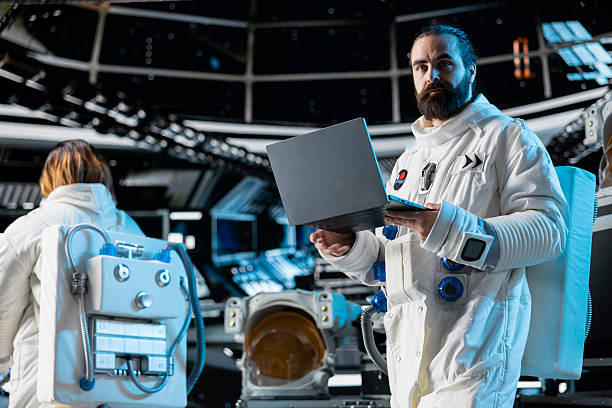
Explore CareerAn Astronaut is a highly trained professional who travels into space to conduct scientific research, operate spacecraft, and perform missions that advance human knowledge of space and technology. Astronauts work aboard space stations, spacecraft, and sometimes on planetary surfaces, carrying out experiments, maintenance, and exploration tasks. They undergo rigorous physical and technical training to prepare for the challenges of spaceflight and living in microgravity environments.
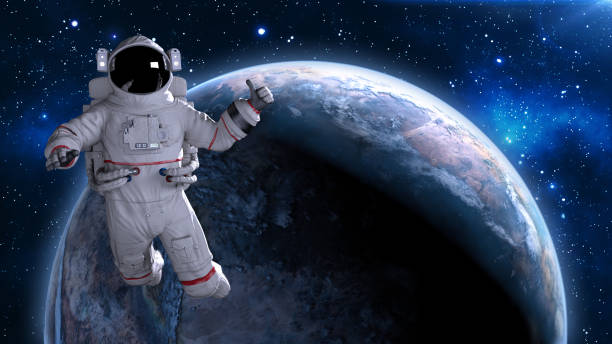
An Astronaut is a highly trained professional who travels into space to conduct scientific research, operate spacecraft, and perform missions that advance human knowledge of space and technology. Astronauts work aboard space stations, spacecraft, and sometimes on planetary surfaces, carrying out experiments, maintenance, and exploration tasks. They undergo rigorous physical and technical training to prepare for the challenges of spaceflight and living in microgravity environments.
Astronauts are pioneers of human space exploration, tasked with conducting scientific research, testing new technologies, and performing complex operations in space. Their duties include piloting spacecraft, conducting extravehicular activities (spacewalks), maintaining space station systems, and collaborating with international teams. The role requires a blend of physical fitness, technical expertise, problem-solving skills, and adaptability to extreme environments. Astronauts contribute to advancements in science, technology, and international cooperation, helping to pave the way for future space missions to the Moon, Mars, and beyond.
Roles and Responsibilities
Study Route & Eligibility Criteria
Alternate Routes
| Route | Steps |
|---|---|
| Route 1: Military Pilot / Engineer + Astronaut Training | 1. Obtain a degree in engineering, physical sciences, or related fields. 2. Gain experience as a military pilot or engineer. 3. Apply to astronaut candidate programs (e.g., NASA, ESA, ISRO). 4. Complete astronaut training including physical, technical, and survival training. 5. Participate in space missions. |
| Route 2: Scientist / Researcher + Astronaut Selection | 1. Earn advanced degrees (Master’s/PhD) in science, medicine, or engineering. 2. Conduct relevant research or work in space-related fields. 3. Apply to astronaut programs as mission specialists or payload specialists. 4. Complete astronaut candidate training. 5. Fly on space missions. |
| Route 3: Commercial Spaceflight Pathway | 1. Obtain relevant technical or pilot qualifications. 2. Gain experience in commercial spaceflight or aerospace industries. 3. Apply for commercial astronaut roles or space tourism missions. 4. Undergo commercial astronaut training. 5. Participate in commercial spaceflights. |
| Route 4: Medical Doctor + Space Medicine Specialist | 1. Complete medical degree and specialize in aerospace or space medicine. 2. Gain experience in research or clinical practice related to human spaceflight. 3. Apply to astronaut corps as medical specialists. 4. Complete astronaut training. 5. Conduct medical research and missions in space. |
Significant Observations
Internships & Practical Exposure
Courses & Specializations to Enter the Field
Top Institutes for Astronaut Education and Training
In India
| Institute | Course / Program | Official Link |
|---|---|---|
| Indian Space Research Organisation (ISRO) | Astronaut Training and Selection | https://www.isro.gov.in/ |
| Indian Institute of Science (IISc) | Aerospace Engineering | https://iisc.ac.in/ |
| Indian Institute of Technology (IIT) | Aerospace Engineering | https://www.iitb.ac.in/ |
| Space Application Centre (SAC) | Space Science and Technology | https://www.sac.gov.in/ |
| Indian National Space Promotion and Authorization Center (IN-SPACe) | Space Technology Programs | https://www.inspace.gov.in/ |
International
| Institute | Course / Program | Country | Official Link |
|---|---|---|---|
| NASA Johnson Space Center | Astronaut Candidate Training Program | USA | https://www.nasa.gov/centers/johnson/home/index.html |
| European Astronaut Centre (ESA) | Astronaut Training | Germany | https://www.esa.int/About_Us/EAC |
| Russian Space Agency (Roscosmos) | Cosmonaut Training | Russia | https://www.roscosmos.ru/ |
| United States Air Force Test Pilot School | Flight and Space Training | USA | https://www.edwards.af.mil/ |
| Massachusetts Institute of Technology (MIT) | Aerospace Engineering | USA | https://aeroastro.mit.edu/ |
| Stanford University | Aeronautics and Astronautics | USA | https://aa.stanford.edu/ |
| University of Colorado Boulder | Aerospace Engineering Sciences | USA | https://www.colorado.edu/aerospace/ |
| University of Texas at Austin | Aerospace Engineering | USA | https://www.ae.utexas.edu/ |
| Embry-Riddle Aeronautical University | Aerospace Engineering and Pilot Training | USA | https://erau.edu/ |
| Technical University of Munich | Aerospace Engineering | Germany | https://tum.de/ |
Entrance Tests Required
India
International
Ideal Progressing Career Path
Military Pilot / Engineer / Scientist → Astronaut Candidate → Trained Astronaut → Mission Specialist / Pilot → Commander / Mission Leader → Senior Astronaut / Instructor → Space Program Manager / Consultant → Space Policy Advisor / Public Speaker
Major Areas of Employment
Prominent Employers
| India | International |
|---|---|
| Indian Space Research Organisation (ISRO) | NASA |
| Defence Research and Development Organisation (DRDO) | European Space Agency (ESA) |
| Indian Air Force | Roscosmos |
| Hindustan Aeronautics Limited (HAL) | SpaceX |
| Tata Advanced Systems | Blue Origin |
| Indian Institute of Science (IISc) | Virgin Galactic |
| Defence Services Staff College | Boeing |
| Indian Institute of Technology (IIT) | Lockheed Martin |
| Space Application Centre (SAC) | Northrop Grumman |
| Indian National Space Promotion and Authorization Center (IN-SPACe) | Sierra Nevada Corporation |
Pros and Cons of the Profession
| Pros | Cons |
|---|---|
| Unique opportunity to travel and work in space | Extremely competitive and physically demanding selection process |
| Participate in cutting-edge scientific research and exploration | High risk associated with space missions |
| Work with advanced technology and international teams | Long training and preparation periods |
| High prestige and public recognition | Extended time away from family and Earth |
| Opportunities for leadership and career advancement | Exposure to microgravity-related health issues |
| Potential to inspire and educate future generations | Psychological challenges of isolation and confinement |
Industry Trends and Future Outlook
Salary Expectations
| Career Level | India (₹ per annum) | International (US$ per annum) |
|---|---|---|
| Entry-Level Astronaut Candidate | 15,00,000 - 30,00,000 | $80,000 - $120,000 |
| Trained Astronaut / Mission Specialist | 30,00,000 - 60,00,000 | $120,000 - $180,000 |
| Senior Astronaut / Mission Commander | 50,00,000 - 90,00,000 | $180,000 - $250,000+ |
| Astronaut Trainer / Program Manager | 60,00,000 - 1,00,00,000+ | $200,000 - $300,000+ |
Key Software Tools
Professional Organizations and Networks
Notable Astronauts and Their Contributions
Advice for Aspiring Astronauts
A career as an Astronaut offers a rare and extraordinary opportunity to explore space, conduct pioneering research, and contribute to humanity’s understanding of the universe. It demands exceptional physical and mental capabilities, advanced technical knowledge, and a commitment to teamwork and continuous learning. With the rapid growth of both government and commercial space sectors, the role of astronauts is evolving, providing new pathways and exciting prospects. For those dedicated to pushing the boundaries of human exploration, becoming an astronaut is among the most prestigious and rewarding careers imaginable.

• : Pilot Astronauts are responsible for flying and navigating spacecraft. They have extensive flight experience, often as military or test...
0.0LPA
• : Mission Specialists focus on scientific experiments, payload operations, and technical tasks during space missions. They typically have...
0.0LPA
• : Payload Specialists are experts brought on board for specific experiments or equipment. They may be scientists or engineers with specialized...
0.0LPA
Take the next step and explore more about Astronaut.
Explore similar career paths that might interest you