Conservation Scientist
Trainee
Explore Career
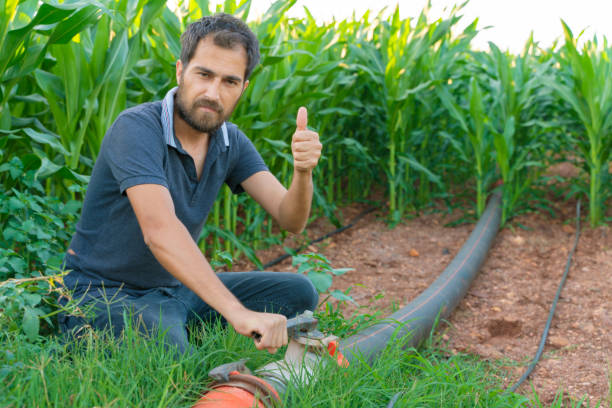
An Irrigation Engineer is a professional who designs, develops, and manages systems for the efficient distribution and application of water to agricultural lands, landscapes, and other areas requiring controlled hydration. They work in agricultural sectors, government agencies, consulting firms, and environmental organizations, collaborating with farmers, agronomists, and water resource managers. Irrigation Engineers play a crucial role in sustainable agriculture and water management by ensuring optimal water usage, enhancing crop productivity, and addressing environmental challenges in a sector focused on resource conservation and technological innovation.

An Irrigation Engineer is a professional who designs, develops, and manages systems for the efficient distribution and application of water to agricultural lands, landscapes, and other areas requiring controlled hydration. They work in agricultural sectors, government agencies, consulting firms, and environmental organizations, collaborating with farmers, agronomists, and water resource managers. Irrigation Engineers play a crucial role in sustainable agriculture and water management by ensuring optimal water usage, enhancing crop productivity, and addressing environmental challenges in a sector focused on resource conservation and technological innovation.
Irrigation Engineers are technical experts responsible for planning and implementing irrigation systems such as drip, sprinkler, and surface irrigation to support agricultural production and landscaping needs. Their role involves assessing water requirements, designing infrastructure, ensuring system efficiency, and often working in field settings, offices, or project sites. They combine engineering principles with knowledge of hydrology and agronomy to tackle issues like water scarcity, soil erosion, and climate variability. As key contributors to water management, they help shape sustainable practices in an industry increasingly focused on conservation, precision agriculture, and environmental responsibility.
Roles and Responsibilities
Study Route & Eligibility Criteria
| Route | Steps |
| Route 1 | 1. 10+2 with Physics, Chemistry, Mathematics (PCM) 2. Bachelor’s degree in Agricultural Engineering or Civil Engineering (3-4 years) 3. Internship or field training (3-6 months) 4. Practice as Junior Irrigation Engineer |
| Route 2 | 1. 10+2 with PCM 2. Bachelor’s degree in Agricultural Engineering or Water Resources Engineering (3-4 years) 3. Master’s degree in Irrigation Engineering or Water Management (2 years) 4. Work as Irrigation Engineer |
| Route 3 | 1. 10+2 with PCM 2. Bachelor’s degree in Agricultural Engineering or Environmental Engineering (3-4 years) 3. Master’s degree in Irrigation and Drainage Engineering (2 years) 4. Ph.D. in Water Resources or Irrigation Engineering (3-5 years) 5. Practice as Senior Researcher or Academic |
| Route 4 | 1. 10+2 with PCM 2. Advanced international training or certification in Irrigation Engineering (1-2 years) 3. Master’s or Ph.D. as per country requirements 4. Practice abroad or in India |
Significant Observations (Academic Related Points)
Internships & Practical Exposure
Courses & Specializations to Enter the Field
Top Institutes for Irrigation Engineer Education (India)
| Institute | Course/Program | Official Link |
| Indian Institute of Technology (IIT), Kharagpur | B.Tech/M.Tech in Agricultural Engineering | https://www.iitkgp.ac.in/ |
| Indian Institute of Technology (IIT), Roorkee | B.Tech/M.Tech in Civil Engineering (Water Resources) | https://www.iitr.ac.in/ |
| National Institute of Technology (NIT), Warangal | B.Tech/M.Tech in Civil Engineering (Water Resources) | https://www.nitw.ac.in/ |
| University of Agricultural Sciences (UAS), Bangalore | B.Tech/M.Tech in Agricultural Engineering | https://www.uasbangalore.edu.in/ |
| Tamil Nadu Agricultural University (TNAU), Coimbatore | B.Tech/M.Tech in Agricultural Engineering | https://www.tnau.ac.in/ |
| Punjab Agricultural University (PAU), Ludhiana | B.Tech/M.Tech in Agricultural Engineering | https://www.pau.edu/ |
| Anand Agricultural University (AAU), Gujarat | B.Tech/M.Tech in Agricultural Engineering | https://www.aau.in/ |
| Indian Agricultural Research Institute (IARI), New Delhi | M.Sc./Ph.D. in Water Science and Technology | https://www.iari.res.in/ |
| Kerala Agricultural University (KAU), Thrissur | B.Tech/M.Tech in Agricultural Engineering | https://www.kau.in/ |
| Banaras Hindu University (BHU), Varanasi | B.Tech/M.Tech in Agricultural Engineering | https://www.bhu.ac.in/ |
Top International Institutes
| Institution | Course | Country | Official Link |
| University of California, Davis | Agricultural and Water Resources Engineering Programs | USA | https://www.ucdavis.edu/ |
| Wageningen University & Research | Water Resources and Irrigation Engineering Programs | Netherlands | https://www.wur.nl/ |
| Cornell University | Agricultural Engineering and Water Management Programs | USA | https://www.cornell.edu/ |
| University of Illinois at Urbana-Champaign | Agricultural and Biological Engineering Programs | USA | https://www.illinois.edu/ |
| University of Queensland | Water Resources and Agricultural Engineering Programs | Australia | https://www.uq.edu.au/ |
| ETH Zurich | Environmental Engineering and Water Management Programs | Switzerland | https://www.ethz.ch/ |
| University of Guelph | Water Resources and Agricultural Engineering Programs | Canada | https://www.uoguelph.ca/ |
| Swedish University of Agricultural Sciences (SLU) | Water Management and Agricultural Engineering Programs | Sweden | https://www.slu.se/ |
| University of Copenhagen | Environmental and Water Resources Programs | Denmark | https://www.ku.dk/ |
| Delft University of Technology | Water Management and Hydraulic Engineering Programs | Netherlands | https://www.tudelft.nl/ |
Entrance Tests Required
India:
International:
Ideal Progressing Career Path
Trainee → Junior Irrigation Engineer → Senior Irrigation Engineer → Irrigation Project Manager → Water Resources Specialist → Irrigation System Designer → Research and Development Lead → Water Management Consultant
Major Areas of Employment
Prominent Employers
| India | International |
| Central Water Commission (CWC), India | International Water Management Institute (IWMI) |
| National Irrigation Administration (NIA) | U.S. Bureau of Reclamation, USA |
| Indian Council of Agricultural Research (ICAR) | Food and Agriculture Organization (FAO), UN |
| State Irrigation Departments | World Bank (Water Resources Division) |
| Jain Irrigation Systems Ltd. | Netafim, Israel |
| Mahindra EPC Irrigation Ltd. | Rain Bird Corporation, USA |
| Finolex Plasson Industries Pvt. Ltd. | Hunter Industries, USA |
| NaanDanJain Irrigation Ltd. (India) | Toro Company, USA |
| Premier Irrigation Adritec Pvt. Ltd. | Lindsay Corporation, USA |
| Kothari Agritech Pvt. Ltd. | Valmont Industries, USA |
Pros and Cons of the Profession
| Pros | Cons |
| Opportunity to contribute to sustainable agriculture and water conservation | Physically demanding fieldwork with exposure to harsh environmental conditions |
| High demand for engineers due to global water scarcity and food security needs | Limited funding for irrigation projects in some regions or countries |
| Rewarding impact on crop productivity and rural development through efficient systems | Risk of project delays due to regulatory or environmental challenges |
| Diverse career paths across agriculture, government, and consulting | Limited public recognition compared to other engineering fields |
| Strong potential for growth with increasing focus on precision and smart irrigation | Dependency on fluctuating water policies and climate conditions |
Industry Trends and Future Outlook
Salary Expectations
| Career Level | India (₹ per annum) | International (USD per annum) |
| Trainee/Junior Irrigation Engineer (Early Career) | 3,00,000 - 5,00,000 | 30,000 - 45,000 |
| Senior Irrigation Engineer (Mid-Career) | 5,00,000 - 8,00,000 | 45,000 - 70,000 |
| Irrigation Project Manager | 8,00,000 - 12,00,000 | 70,000 - 90,000 |
| Water Resources Specialist/System Designer | 12,00,000 - 16,00,000 | 90,000 - 120,000 |
| Research and Development Lead/Water Management Consultant | 16,00,000+ | 120,000+ |
| Note: Salaries may vary based on location, employer, experience, and specialization. |
Key Software Tools
Professional Organizations and Networks
Notable Irrigation Engineers and Industry Leaders (Top 10)
Advice for Aspiring Irrigation Engineers
A career as an Irrigation Engineer offers a unique opportunity to contribute to sustainable agriculture and water management by designing and optimizing systems that ensure efficient water use for crop production and environmental conservation. From implementing precision irrigation to addressing global water scarcity, Irrigation Engineers play a pivotal role in modern agriculture and resource management. This field combines engineering expertise, practical application, and a commitment to sustainability, offering diverse paths in agriculture, government, and consulting. For those passionate about shaping water usage trends, adapting to global environmental challenges, and addressing critical conservation needs in an era of evolving agricultural demands, a career as an Irrigation Engineer provides an intellectually stimulating and professionally rewarding journey with the potential to make significant contributions to society by enhancing the quality of water distribution and industry standards worldwide.


Entry-level individuals undergo basic training in irrigation design under supervision. They acquire practical skills through field and project...
0.0LPA
Early-career professionals handle basic system designs with increasing autonomy. They hone skills in water assessment and installation while...
0.0LPA

Experienced professionals manage complex irrigation projects with high accuracy, using advanced methodologies. They offer technical expertise in...
0.0LPA
Take the next step and explore more about Irrigation Engineer.
Explore similar career paths that might interest you