Apiculturist

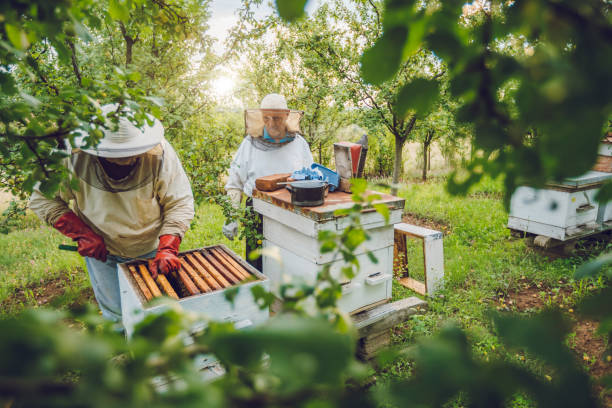
An Apiculturist, also known as a Beekeeper or Bee Scientist, is a specialized professional who manages and studies honey bee colonies to produce honey, beeswax, and other bee-related products while contributing to pollination and agricultural sustainability. They work on apiaries (bee farms), in research institutions, agricultural sectors, and environmental organizations, collaborating with farmers, researchers, and conservationists. Apiculturists play a vital role in modern agriculture by supporting crop pollination and maintaining bee populations in an era where pollinator decline and environmental challenges are critical issues.

Share :
Career tree mind map (horizontal) — Apiculturist
Colored branches, hub circles, and underlined topics — same style as counselor course classic (types 18–19 in admin).
Loading mind map…

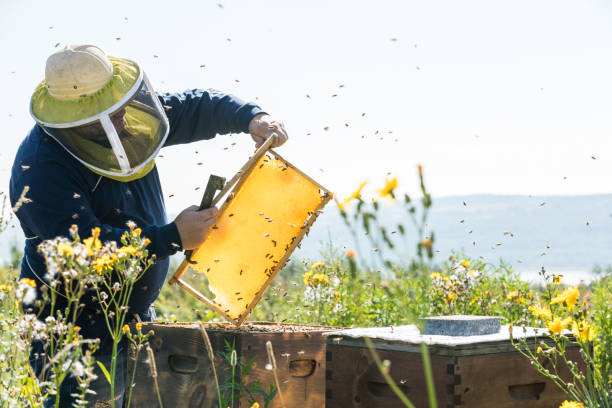
Apiculturists are hands-on experts responsible for the care and management of bee colonies, ensuring their health and productivity for honey production, pollination services, and other hive products like royal jelly and propolis. Their role includes monitoring bee health, preventing diseases, harvesting hive products, and conducting research on bee behavior and genetics, often under varying outdoor conditions. They combine practical skills with scientific knowledge, working in apiaries and laboratories to sustain bee populations. As key contributors to food security, they enable pollination for crops in a landscape increasingly focused on biodiversity and sustainable agriculture.

  • Bee Colony Management
    • Maintain and monitor bee hives to ensure colony health and productivity
    • Relocate hives for pollination services or seasonal nectar availability
  • Hive Product Harvesting
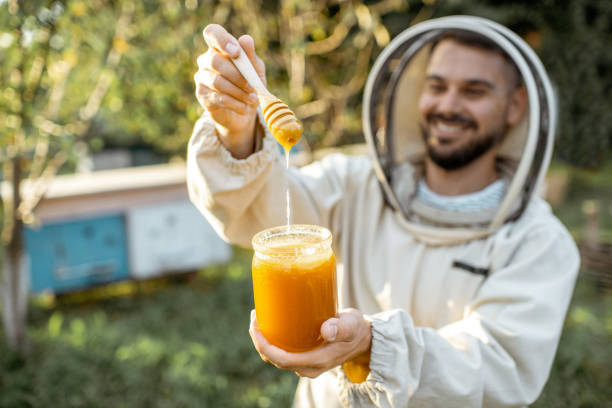
    • Extract honey, beeswax, royal jelly, and other products from hives safely
    • Process and package hive products for commercial or personal use
  • Bee Health Monitoring
    • Inspect hives for diseases, pests like Varroa mites, and other threats
    • Administer treatments or implement preventive measures to protect bee colonies
  • Pollination Services
    • Provide hives to farmers for crop pollination to enhance agricultural yields
    • Coordinate hive placement and timing with agricultural cycles
  • Breeding and Queen Rearing
    • Breed bees to develop strong, disease-resistant, or high-yielding colonies
    • Rear queen bees for hive expansion or sale to other beekeepers
  • Research and Data Collection
    • Study bee behavior, genetics, and environmental impacts on colonies
    • Record data on hive productivity, health, and pollination efficiency
  • Environmental Conservation
    • Promote bee-friendly habitats by planting nectar-rich flora
    • Educate communities on the importance of bees for biodiversity
  • Training and Advisory
    • Train aspiring beekeepers on hive management and safety practices
    • Advise farmers and policymakers on bee conservation and pollination strategies

RouteSteps
Route 1

1. 10th/12th with any stream or vocational training 

2. Certificate in Apiculture or Beekeeping (3-6 months) 

3. Internship or on-the-job training (1-3 months) 

4. Practice as Apiculturist

Route 2

1. 10+2 with Physics, Chemistry, Biology (PCB) or Agriculture stream 

2. Diploma in Apiculture or Agricultural Science (1-2 years) 

3. Hands-on training or internship 

4. Work as Apiculturist

Route 3

1. 10+2 with PCB or Agriculture stream 

2. Bachelor’s degree in Entomology, Agriculture, or Apiculture (3-4 years) 

3. Field training or internship 

4. Practice as Senior Apiculturist or Researcher

Route 4

1. 10+2 with any stream or vocational training 

2. Advanced certification or international training in Apiculture (1-2 years) 

3. Licensure as per country regulations if applicable 

4. Practice abroad or in India

  • Mandatory field training during certificate or diploma programs in apiaries
  • Rotations in commercial beekeeping operations for hands-on hive management
  • Internships under senior apiculturists for exposure to real-time bee care tasks
  • Observerships in research stations for experience in bee studies and data collection
  • Participation in mock hive management activities for practical skill development
  • Training in pollination services through real-world agricultural collaborations
  • Exposure to bee disease control protocols during internships
  • Field projects on hive productivity or bee breeding during training
  • Community beekeeping initiatives for assisting in local pollination programs
  • International apiculture attachments for global exposure to bee management practices

  • Certificate in Apiculture or Beekeeping
  • Diploma in Apiculture or Agricultural Science
  • Bachelor’s in Entomology, Apiculture, or Agricultural Science
  • Training in Queen Bee Rearing and Breeding
  • Specialization in Bee Disease Management
  • Certification in Pollination Services
  • Workshops on Sustainable Beekeeping Practices
  • Training in Hive Product Processing
  • Specialization in Migratory Beekeeping
  • Certification in Organic Beekeeping Techniques

InstituteCourse/ProgramOfficial Link
Indian Agricultural Research Institute (IARI), New DelhiCertificate/Diploma in Apiculturehttps://www.iari.res.in/
Tamil Nadu Agricultural University (TNAU), CoimbatoreDiploma in Apiculturehttps://www.tnau.ac.in/
Punjab Agricultural University (PAU), LudhianaCertificate/Diploma in Beekeepinghttps://www.pau.edu/
University of Agricultural Sciences (UAS), BangaloreDiploma in Apiculturehttps://www.uasbangalore.edu.in/
G.B. Pant University of Agriculture & Technology, PantnagarDiploma in Beekeepinghttps://www.gbpuat.ac.in/
Chaudhary Charan Singh Haryana Agricultural University (CCSHAU), HisarDiploma in Apiculturehttps://www.hau.ac.in/
Acharya N.G. Ranga Agricultural University (ANGRAU), GunturDiploma in Beekeepinghttps://www.angrau.ac.in/
Mahatma Phule Krishi Vidyapeeth (MPKV), RahuriDiploma in Apiculturehttps://www.mpkv.ac.in/
Kerala Agricultural University (KAU), ThrissurDiploma in Beekeepinghttps://www.kau.in/
Banaras Hindu University (BHU), VaranasiDiploma in Apiculturehttps://www.bhu.ac.in/

InstitutionCourseCountryOfficial Link
Wageningen University & ResearchApiculture and Pollination ProgramsNetherlandshttps://www.wur.nl/
University of California, Davis (UC Davis)Entomology and Beekeeping TrainingUSAhttps://www.ucdavis.edu/
Cornell UniversityApiculture and Bee Research CoursesUSAhttps://www.cornell.edu/
University of ReadingBeekeeping and Pollination StudiesUKhttps://www.reading.ac.uk/
University of QueenslandApiculture and Entomology ProgramsAustraliahttps://www.uq.edu.au/
Iowa State UniversityBeekeeping and Pollination TrainingUSAhttps://www.iastate.edu/
University of CopenhagenApiculture and Entomology CoursesDenmarkhttps://www.ku.dk/
Swedish University of Agricultural Sciences (SLU)Beekeeping and Pollination ProgramsSwedenhttps://www.slu.se/
University of HohenheimApiculture and Entomology TrainingGermanyhttps://www.uni-hohenheim.de/
Purdue UniversityBeekeeping and Entomology ProgramsUSAhttps://www.purdue.edu/

Entrance Tests RequiredIndia:

  • ICAR AIEEA (All India Entrance Examination for Admission): Conducted by the Indian Council of Agricultural Research for undergraduate and postgraduate admissions in agriculture-related programs including apiculture.
  • State-Level Agricultural Entrance Exams (e.g., EAMCET, KCET): For admission to diploma or degree programs in agricultural sciences or entomology in various states.
  • University-Specific Entrance Tests (e.g., BHU UET): Conducted by specific agricultural universities like Banaras Hindu University for relevant courses.
  • Vocational Training Board Exams: For certificate courses in apiculture offered by state agricultural boards or vocational institutes.

International:

  • TOEFL (Test of English as a Foreign Language): Minimum score of 80-100 required for non-native speakers applying to programs in English-speaking countries.
  • IELTS (International English Language Testing System): Minimum score of 6.0-7.0 required for admission to universities in the UK, Australia, and other English-speaking regions.
  • PTE Academic (Pearson Test of English Academic): Accepted by many international institutes as an alternative to TOEFL or IELTS for English proficiency.
  • Duolingo English Test: Accepted by some institutions as a convenient alternative for English language proficiency testing.

Trainee → Junior Apiculturist → Senior Apiculturist → Apiary Manager → Bee Breeder → Research Scientist → Beekeeping Trainer → Apiculture Consultant

  • Commercial apiaries for honey and hive product production
  • Agricultural farms for pollination services and crop support
  • Government agricultural departments for bee conservation and extension services
  • Research institutions for bee health and genetic studies
  • Non-governmental organizations (NGOs) for biodiversity and pollinator initiatives
  • Vocational training centers for teaching future apiculturists
  • Food processing units for hive product packaging and distribution
  • Environmental agencies for habitat restoration and bee conservation roles
  • Private beekeeping consultancies for apiary management services
  • International agricultural projects for global pollination and bee health programs

IndiaInternational
Indian Council of Agricultural Research (ICAR)Food and Agriculture Organization (FAO), Italy
National Bee Board (NBB), IndiaInternational Fund for Agricultural Development (IFAD), Italy
Khadi and Village Industries Commission (KVIC)World Bank (Agriculture Division), USA
Dabur India Ltd (Honey Division)Honey Bee Network, Global
Patanjali Ayurved (Honey Production)Apimondia (International Federation of Beekeepers’ Associations)
Godrej AgrovetBee Culture Magazine, USA
Tata Rallis IndiaMann Lake Ltd., USA
UPL LimitedDadant & Sons, USA
Jain Irrigation SystemsBrushy Mountain Bee Farm, USA
Kaveri Seed CompanyAustralian Honey Bee Industry Council

ProsCons
Opportunity to contribute to pollination and food securityPhysically demanding work with risk of bee stings
High demand for apiculturists in agriculture and conservationExposure to harsh weather during hive management
Rewarding impact on biodiversity and sustainable farmingRisk of colony loss due to diseases or pesticides
Diverse career paths across apiaries, research, and trainingLimited public recognition compared to other agricultural roles
Strong potential for growth with increasing focus on pollinatorsDependency on seasonal cycles and environmental factors

Career LevelIndia (₹ per annum)International (USD per annum)
Trainee/Junior Apiculturist (Early Career)1,50,000 - 3,00,00020,000 - 30,000
Senior Apiculturist (Mid-Career)3,00,000 - 5,00,00030,000 - 45,000
Apiary Manager5,00,000 - 7,00,00045,000 - 60,000
Bee Breeder/Research Scientist7,00,000 - 10,00,00060,000 - 80,000
Trainer/Apiculture Consultant10,00,000+80,000+
Note: Salaries vary based on location, experience, employer, and specialization. International figures are approximate and depend on the country and agricultural sector.  

  • Hive Management Software for tracking colony health and productivity
  • Geographic Information Systems (GIS) for mapping hive locations
  • Bee Health Monitoring Apps for detecting pests and diseases
  • Weather Forecasting Tools for planning hive tasks and migrations
  • Equipment Diagnostic Software for beekeeping tool maintenance
  • Teleconferencing tools like Zoom for training and team coordination
  • Agricultural mobile apps for pollination scheduling and data logging
  • Microsoft Office Suite for documentation and report preparation
  • Data collection tools for recording hive observations
  • Inventory management software for tracking hive supplies and equipment

  • National Bee Board (NBB), India
  • Apimondia (International Federation of Beekeepers’ Associations)
  • Indian Beekeeping Association (IBA)
  • American Beekeeping Federation (ABF)
  • British Beekeepers Association (BBKA)
  • European Professional Beekeepers Association (EPBA)
  • Australian Honey Bee Industry Council (AHBIC)
  • Honey Bee Network, Global
  • International Bee Research Association (IBRA)
  • Asian Apicultural Association (AAA)

  • Dr. Nicola Bradbear (Contemporary, UK): Renowned for her work with Bees for Development since the 1990s. Her initiatives promote sustainable beekeeping in developing countries. Her contributions impact global apiculture.
     
  • Dr. M.S. Swaminathan (Contemporary, India): Pioneer of the Green Revolution in India since the 1960s. His advocacy for pollinator conservation supports apiculture indirectly. His legacy influences agricultural sustainability worldwide.
     
  • Dr. Deepak Pental (Contemporary, India): Known for agricultural biotechnology since the 1990s. His work on crop improvement highlights the role of pollination by bees. His research impacts apiculture nationally.
     
  • Dr. Eva Crane (Historical, UK): Founder of the International Bee Research Association in the 1940s. Her extensive research on bees shaped modern apiculture. Her contributions enhance beekeeping globally.
     
  • Dr. Roger Morse (Historical, USA): A leading apiculturist and author since the 1960s. His work on bee biology and management is foundational to the field. His impact continues to guide beekeepers worldwide.
     
  • Dr.AnandPrakash (Contemporary, India): Expert in entomology and bee research since the 1980s. His studies on Indian bee species contribute to local apiculture. His work influences regional beekeeping practices.
     
  • Dr. Jeff Pettis (Contemporary, USA): Specialist in bee health since the 2000s. His research on colony collapse disorder addresses critical apicultural challenges. His efforts improve bee survival globally.
     
  • Dr. Uma Shankar (Contemporary, India): Known for promoting beekeeping in rural India since the 1990s. His initiatives through training programs empower local apiculturists. His impact strengthens community beekeeping.
     
  • Dr. Marla Spivak (Contemporary, USA): Leader in bee health research since the 1990s. Her work on hygienic bee behavior combats disease in hives. Her insights advance apicultural science internationally.
     
  • Dr. Peter Neumann (Contemporary, Switzerland): Expert in bee pathology since the 2000s. His research on pests like Varroa mites shapes global bee health strategies. His contributions protect apiaries worldwide.

  • Build a strong foundation in bee biology and hive management to understand apicultural systems.
  • Seek early exposure to apiaries through volunteer programs to confirm interest in the field.
  • Prepare thoroughly for entrance exams or certification requirements specific to your chosen program or region.
  • Pursue advanced certifications in queen rearing or bee health to gain expertise.
  • Stay updated on advancements in beekeeping technology by attending workshops and training sessions.
  • Develop hands-on skills in hive management through practical training in apiaries.
  • Engage in rural beekeeping or community projects to build real-world experience.
  • Join professional associations like the National Bee Board (NBB) for networking and resources.
  • Work on precision and problem-solving to ensure accurate hive tasks and bee health monitoring.
  • Explore international training programs for exposure to diverse apicultural practices and standards.
  • Volunteer in apiaries or with beekeeping teams to understand operational needs and build experience.
  • Cultivate adaptability to handle unpredictable environmental and seasonal challenges.
  • Attend continuing education programs to stay abreast of evolving bee health and management methods.
  • Build a network with farmers, apiculturists, and conservationists for collaborative efforts.
  • Develop physical and mental resilience to manage the demanding nature of fieldwork.
  • Balance hive tasks with continuous learning to adapt to rapid advancements in apicultural technology.

A career as an Apiculturist offers a unique opportunity to contribute to food security and biodiversity by managing bee colonies and supporting pollination for sustainable agriculture. From maintaining hive health to providing pollination services, Apiculturists play a pivotal role in modern farming and environmental conservation. This field combines practical expertise, hands-on application, and a commitment to ecological balance, offering diverse paths in apiaries, research, and training roles. For those passionate about supporting pollinators, adapting to environmental challenges, and aiding agriculture in an era of increasing biodiversity loss and climate change, a career as an Apiculturist provides an intellectually stimulating and professionally rewarding journey with the potential to make significant contributions to society by enhancing the quality of crop production and pollinator conservation worldwide.
Knowledge & Skills You Will Learn
1
Expansion of organic beekeeping requiring specialized expertise
2
Growing need for continuous skill development to address emerging bee health threats
Junior Apiculturist

Junior Apiculturist

Early-career professionals manage small apiaries with increasing autonomy. They hone skills in hive maintenance and honey extraction while...

0.0LPA
Senior Apiculturist

Senior Apiculturist

Experienced professionals manage large apiaries with high accuracy, using specialized beekeeping techniques. They offer technical expertise in...

0.0LPA
Apiary Manager

Apiary Manager

Specialists oversee multiple apiaries and beekeeping teams with exceptional competence. They integrate deep practical knowledge with expertise in...

0.0LPA

Interested in this career?

Take the next step and explore more about Apiculturist.