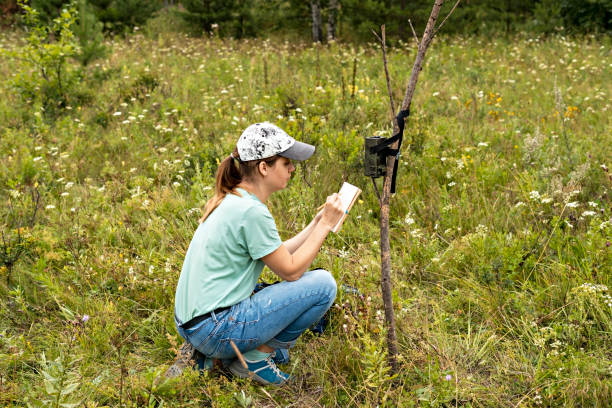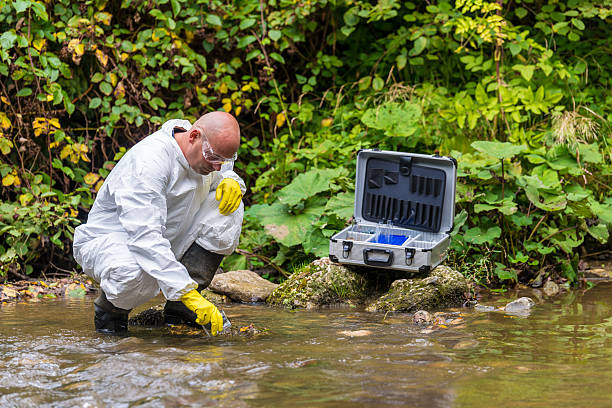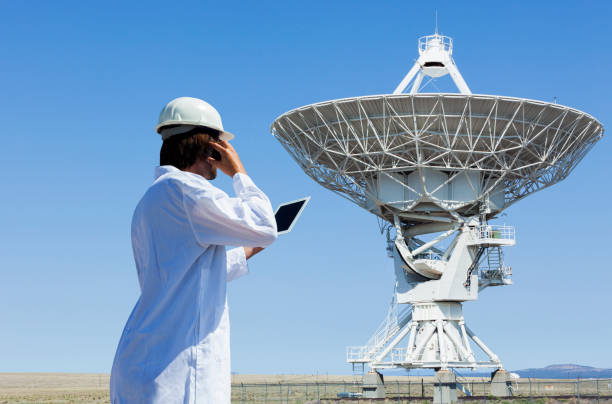

Conservation Scientists are research-oriented experts responsible for assessing and protecting natural environments, including forests, wetlands, and wildlife habitats, through scientific analysis and policy recommendations. Their role includes conducting field studies, monitoring environmental changes, developing conservation plans, and educating communities, often under diverse outdoor and office conditions. They combine scientific expertise with practical application, working to balance human needs with ecological preservation. As key contributors to environmental sustainability, they help mitigate the impact of human activity in a landscape increasingly focused on climate resilience and biodiversity protection.
- Environmental Research and Monitoring
- Conduct field surveys to assess ecosystem health and biodiversity levels
- Monitor changes in natural resources like soil, water, and wildlife populations
- Conservation Planning
- Develop and implement plans to protect and restore natural habitats
- Recommend sustainable land-use practices to minimize environmental impact
- Data Collection and Analysis
- Gather data on environmental conditions using tools like GIS and remote sensing
- Analyze data to identify trends and threats to ecosystems
- Policy Development and Advocacy
- Advise governments and organizations on conservation policies and regulations
- Advocate for protective measures through reports and public outreach
- Wildlife and Habitat Management
- Manage protected areas to ensure the survival of endangered species
- Restore degraded habitats through reforestation or wetland rehabilitation
- Community Engagement
- Educate local communities on sustainable practices and conservation importance
- Collaborate with stakeholders to resolve conflicts over resource use
- Grant Writing and Funding
- Prepare proposals to secure funding for conservation projects
- Manage budgets and resources for research and restoration initiatives
- Interdisciplinary Collaboration
- Work with ecologists, hydrologists, and social scientists on integrated projects
- Coordinate with industries to implement environmentally friendly practices
| Route | Steps |
| Route 1 | 1. 10+2 with Physics, Chemistry, Biology (PCB) or Environmental Science 2. Bachelor’s degree in Environmental Science or Conservation Biology (3-4 years) 3. Internship or field training (3-6 months) 4. Practice as Junior Conservation Scientist |
| Route 2 | 1. 10+2 with PCB or Environmental Science 2. Bachelor’s degree in Environmental Science or Forestry (3-4 years) 3. Master’s degree in Conservation Science or related field (2 years) 4. Work as Conservation Scientist |
| Route 3 | 1. 10+2 with PCB or Environmental Science 2. Bachelor’s degree in Environmental Science or Biology (3-4 years) 3. Master’s degree in Conservation Biology (2 years) 4. Ph.D. in Conservation Science or Ecology (3-5 years) 5. Practice as Senior Researcher or Academic |
| Route 4 | 1. 10+2 with PCB or Environmental Science 2. Advanced international training or certification in Conservation Science (1-2 years) 3. Master’s or Ph.D. as per country requirements 4. Practice abroad or in India |
- Mandatory field training during degree programs in natural reserves or protected areas
- Rotations in conservation organizations for hands-on experience with habitat management
- Internships under senior conservationists for exposure to real-time environmental projects
- Observerships in wildlife research stations for experience in biodiversity studies
- Participation in mock conservation activities for practical skill development
- Training in ecological surveys through real-world data collection in diverse ecosystems
- Exposure to sustainable land-use protocols during internships
- Field projects on habitat restoration or species conservation during training
- Community conservation initiatives for assisting in local environmental programs
- International conservation attachments for global exposure to biodiversity practices
- Certificate in Wildlife Conservation or Environmental Management
- Bachelor’s in Environmental Science, Conservation Biology, or Forestry
- Master’s in Conservation Science, Ecology, or Natural Resource Management
- Ph.D. in Conservation Biology or Environmental Science
- Specialization in Wildlife Management
- Certification in Geographic Information Systems (GIS) for Conservation
- Workshops on Climate Change Adaptation Strategies
- Training in Habitat Restoration Techniques
- Specialization in Marine Conservation
- Certification in Sustainable Resource Management
| Institute | Course/Program | Official Link |
| Wildlife Institute of India (WII), Dehradun | M.Sc./Ph.D. in Wildlife Science | https://www.wii.gov.in/ |
| Indian Institute of Science (IISc), Bangalore | M.Sc./Ph.D. in Ecological Sciences | https://www.iisc.ac.in/ |
| Jawaharlal Nehru University (JNU), New Delhi | M.Sc./Ph.D. in Environmental Science | https://www.jnu.ac.in/ |
| Forest Research Institute (FRI), Dehradun | M.Sc./Ph.D. in Forestry/Environment | https://www.fri.icfre.gov.in/ |
| University of Delhi, Delhi | M.Sc./Ph.D. in Environmental Studies | https://www.du.ac.in/ |
| Banaras Hindu University (BHU), Varanasi | M.Sc./Ph.D. in Environmental Science | https://www.bhu.ac.in/ |
| University of Hyderabad, Hyderabad | M.Sc./Ph.D. in Environmental Science | https://www.uohyd.ac.in/ |
| Tata Institute of Social Sciences (TISS), Mumbai | M.A./M.Sc. in Climate and Sustainability | https://www.tiss.edu/ |
| TERI School of Advanced Studies, New Delhi | M.Sc./Ph.D. in Environmental Studies | https://www.terisas.ac.in/ |
| Amity University, Noida | M.Sc./Ph.D. in Environmental Science | https://www.amity.edu/ |
| Institution | Course | Country | Official Link |
| Yale University (School of the Environment) | Conservation and Environmental Programs | USA | https://www.yale.edu/ |
| Stanford University | Environmental Science Programs | USA | https://www.stanford.edu/ |
| University of Oxford | Biodiversity and Conservation Programs | UK | https://www.ox.ac.uk/ |
| University of Cambridge | Conservation Science Programs | UK | https://www.cam.ac.uk/ |
| Wageningen University & Research | Environmental and Conservation Programs | Netherlands | https://www.wur.nl/ |
| University of California, Berkeley | Environmental Science Programs | USA | https://www.berkeley.edu/ |
| Australian National University (ANU) | Conservation Biology Programs | Australia | https://www.anu.edu.au/ |
| University of British Columbia (UBC) | Natural Resource Conservation Programs | Canada | https://www.ubc.ca/ |
| ETH Zurich | Environmental Sciences Programs | Switzerland | https://www.ethz.ch/ |
| University of Copenhagen | Conservation and Ecology Programs | Denmark | https://www.ku.dk/ |
India:
- JNU Entrance Exam (JNUEE): Conducted by Jawaharlal Nehru University for admission to M.Sc. programs in Environmental Science.
- CSIR-UGC NET (National Eligibility Test): For postgraduate research roles, junior research fellowships, and lectureship in environmental sciences.
- ICAR AIEEA (All India Entrance Examination for Admission): Conducted by the Indian Council of Agricultural Research for admissions in environmental and forestry programs.
International:
- TOEFL (Test of English as a Foreign Language): Minimum score of 80-100 required for non-native speakers applying to programs in English-speaking countries.
- IELTS (International English Language Testing System): Minimum score of 6.0-7.0 required for admission to universities in the UK, Australia, and other English-speaking regions.
- PTE Academic (Pearson Test of English Academic): Accepted by many international institutes as an alternative to TOEFL or IELTS for English proficiency.
- Duolingo English Test: Accepted by some institutions as a convenient alternative for English language proficiency testing.
Trainee → Junior Conservation Scientist → Senior Conservation Scientist → Conservation Project Manager → Wildlife Ecologist → Policy Advisor → Conservation Director → Environmental Consultant
- Government environmental agencies for policy and resource management
- Wildlife reserves and national parks for habitat and species protection
- Non-governmental organizations (NGOs) for biodiversity and conservation projects
- Research institutions for ecological and environmental studies
- International development agencies for global sustainability initiatives
- Forestry departments for sustainable land and timber management
- Private environmental consultancies for impact assessments and advisory
- Universities for academic research and teaching in conservation science
- Corporate sustainability divisions for green practices and compliance
- Community-based organizations for local conservation and outreach programs
| India | International |
| Ministry of Environment, Forest and Climate Change, India | World Wildlife Fund (WWF), Global |
| Wildlife Institute of India (WII) | International Union for Conservation of Nature (IUCN), Switzerland |
| Indian Council of Forestry Research and Education (ICFRE) | United Nations Environment Programme (UNEP), Kenya |
| National Biodiversity Authority (NBA) | Conservation International, USA |
| Bombay Natural History Society (BNHS) | The Nature Conservancy, USA |
| Ashoka Trust for Research in Ecology and the Environment (ATREE) | Greenpeace International, Global |
| Centre for Science and Environment (CSE) | Wildlife Conservation Society (WCS), USA |
| TERI - The Energy and Resources Institute | Rainforest Foundation, Global |
| Wildlife Trust of India (WTI) | Fauna & Flora International, UK |
| Sanctuary Nature Foundation | Environmental Defense Fund (EDF), USA |
| Pros | Cons |
| Opportunity to contribute to environmental sustainability and biodiversity | Physically demanding fieldwork with exposure to harsh conditions |
| High demand for conservation scientists due to global environmental challenges | Limited funding and resources for conservation projects |
| Rewarding impact on ecosystems and future generations | Risk of conflict with industries or communities over land use |
| Diverse career paths across research, policy, and advocacy | Limited public recognition compared to other scientific fields |
| Strong potential for growth with increasing focus on climate change | Dependency on government policies and fluctuating support |
- Technological Integration: Growing use of Geographic Information Systems (GIS), drones, and remote sensing for precise monitoring of ecosystems and wildlife populations, enhancing data accuracy in conservation efforts.
- Rising Demand: Increasing need for conservation scientists due to escalating climate change impacts, habitat loss, and biodiversity decline, with a projected employment growth for conservation scientists and foresters.
- Restoration Ecology: Advancements in restoration techniques for degraded ecosystems, focusing on reforestation and wetland rehabilitation as key strategies for carbon sequestration and biodiversity recovery.
- Policy and Regulation Focus: Heightened emphasis on sustainable development, with stricter environmental regulations and international agreements driving conservation initiatives.
- Community-Based Conservation: Expansion of participatory approaches involving local communities in conservation planning, ensuring sustainable resource use and conflict resolution.
- Digital Tools Development: Emergence of real-time environmental monitoring apps and platforms for tracking species and habitat health, aiding rapid response to ecological threats.
- Training Emphasis: Increased focus on specialized training programs for conservation scientists to address modern challenges like invasive species and climate adaptation.
- Interdisciplinary Collaboration: Enhanced partnerships between conservation scientists, policymakers, and industries to integrate environmental goals into urban planning and corporate practices.
- Skill Development Needs: Growing necessity for continuous education in emerging fields like climate modelling and data analytics to tackle complex environmental issues.
- Global Standards Alignment: Focus on aligning conservation practices with international frameworks like the Convention on Biological Diversity to ensure cohesive global efforts.
| Career Level | India (₹ per annum) | International (USD per annum) |
| Trainee/Junior Conservation Scientist (Early Career) | 3,00,000 - 5,00,000 | 30,000 - 46,700 |
| Senior Conservation Scientist (Mid-Career) | 5,00,000 - 8,00,000 | 46,700 - 67,950 |
| Conservation Project Manager | 8,00,000 - 12,00,000 | 67,950 - 80,060 |
| Wildlife Ecologist/Policy Advisor | 12,00,000 - 16,00,000 | 80,060 - 88,966 |
| Conservation Director/Environmental Consultant | 16,00,000+ | 88,966+ |
| Note: Salaries may vary based on location, employer, experience, and specialization. |
- Geographic Information Systems (GIS) for mapping and analyzing ecosystems
- Remote Sensing Software for monitoring environmental changes
- Data Analysis Tools like R or SPSS for statistical ecological research
- Wildlife Monitoring Apps for tracking species populations
- Climate Modeling Software for predicting environmental impacts
- Teleconferencing tools like Zoom for stakeholder meetings and training
- Environmental Databases for accessing conservation research (e.g., IUCN Red List)
- Microsoft Office Suite for documentation and report preparation
- Project Management Tools for coordinating conservation initiatives
- Simulation Software for modelling ecosystem dynamics and conservation scenarios
- Indian Society of Agroforestry (ISAF)
- International Union for Conservation of Nature (IUCN)
- Wildlife Society of India (WSI)
- Society for Conservation Biology (SCB)
- Indian Science Congress Association (ISCA)
- World Wildlife Fund (WWF)
- Ecological Society of America (ESA)
- Conservation International
- Association for Tropical Biology and Conservation (ATBC)
- Global Environment Facility (GEF)
- Dr. Jane Goodall (Contemporary, UK): Renowned for her chimpanzee research since the 1960s. Her work on primatology and conservation inspires global efforts. Her contributions impact biodiversity protection worldwide.
- Dr. M.S. Swaminathan (Contemporary, India): Pioneer of the Green Revolution since the 1960s. His advocacy for sustainable agriculture supports conservation indirectly. His legacy influences environmental sustainability globally.
- Dr.UllasKaranth (Contemporary, India): Known for tiger conservation research since the 1980s. His studies on big cats shape wildlife protection in India. His impact strengthens regional conservation efforts.
- Dr. Rachel Carson (Historical, USA): Author of "Silent Spring" in the 1960s. Her work on pesticide impacts sparked the modern environmental movement. Her contributions shape conservation awareness globally.
- Dr. George Schaller (Contemporary, USA): Pioneer in wildlife conservation since the 1950s. His research on pandas and big cats advances species protection. His efforts improve conservation strategies internationally.
- Dr.MadhavGadgil (Contemporary, India): Known for ecological research in the Western Ghats since the 1970s. His work on biodiversity hotspots guides conservation policy. His impact influences environmental protection in India.
- Dr. Sylvia Earle (Contemporary, USA): Marine biologist and ocean conservationist since the 1970s. Her advocacy for marine ecosystems shapes global ocean policies. Her contributions advance marine conservation worldwide.
- Dr. Romulus Whitaker (Contemporary, India): Known as the "Snake Man of India" since the 1970s. His work on reptile conservation educates and protects species. His impact strengthens wildlife efforts regionally.
- Dr. David Attenborough (Contemporary, UK): Renowned naturalist and broadcaster since the 1950s. His documentaries raise global awareness for conservation. His insights inspire environmental action internationally.
- Dr. E.O. Wilson (Historical, USA): Known as the "Father of Biodiversity" since the 1970s. His research on species diversity shaped conservation science. His contributions drive ecological protection globally.
- Build a strong foundation in ecology, biology, and environmental science to understand conservation systems.
- Seek early exposure to field research through volunteer programs to confirm interest in the field.
- Prepare thoroughly for entrance exams or certification requirements specific to your chosen program or region.
- Pursue advanced certifications in GIS or wildlife management to gain expertise.
- Stay updated on advancements in conservation technology by attending workshops and seminars.
- Develop hands-on skills in field surveys through practical training in natural settings.
- Engage in community conservation or habitat restoration projects to build real-world experience.
- Join professional associations like the Society for Conservation Biology (SCB) for networking and resources.
- Work on precision and problem-solving to ensure accurate environmental assessments and solutions.
- Explore international conservation programs for exposure to diverse ecological practices and standards.
- Volunteer in wildlife reserves or environmental NGOs to understand conservation challenges and build experience.
- Cultivate adaptability to handle unpredictable field conditions and policy challenges.
- Attend continuing education programs to stay abreast of evolving conservation methods and climate science.
- Build a network with ecologists, policymakers, and community leaders for collaborative efforts.
- Develop resilience to manage the physical and funding demands of conservation work.
- Balance fieldwork with continuous learning to adapt to rapid advancements in environmental science.
A career as a Conservation Scientist offers a unique opportunity to contribute to environmental sustainability and biodiversity protection by managing and preserving natural resources for future generations. From restoring habitats to shaping environmental policies, Conservation Scientists play a pivotal role in modern ecological management and climate resilience. This field combines scientific rigor, field application, and a commitment to sustainability, offering diverse paths in research, policy, and community engagement. For those passionate about protecting ecosystems, adapting to global environmental challenges, and addressing critical sustainability needs in an era of rapid climate change, a career as a Conservation Scientist provides an intellectually stimulating and professionally rewarding journey with the potential to make significant contributions to society by enhancing the quality of natural environments and ecological balance worldwide.