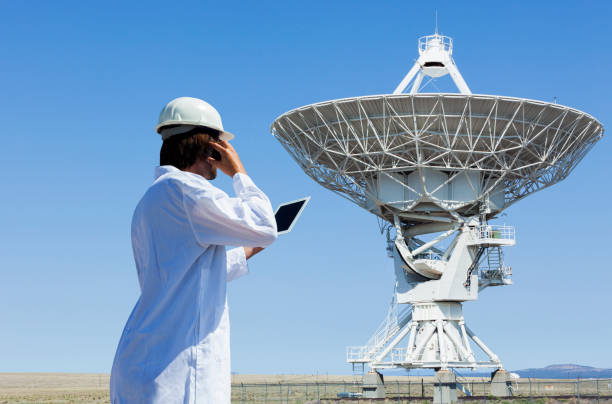
Atmospheric Scientists are analytical researchers who investigate the complex interactions within the Earth’s atmosphere, employing advanced tools such as satellite data, computer models, and ground-based sensors to analyze weather phenomena, climate trends, and air quality. Their work involves collecting and interpreting vast datasets, forecasting weather events, and studying long-term climate shifts to inform strategies for mitigation and adaptation. Operating in settings ranging from research labs to field stations, they combine precision, innovative technology, and specialized expertise to unravel atmospheric mysteries. As vital contributors to pure sciences and research, Atmospheric Scientists drive progress in a landscape shaped by the urgent need for climate solutions, accurate weather predictions, and environmental protection.
- Data Collection and Monitoring:
- Gather atmospheric data using instruments like weather balloons, radar, and satellites to monitor temperature, humidity, and wind patterns.
- Conduct field campaigns to collect air samples or measure atmospheric pollutants in specific regions.
- Weather and Climate Analysis:
- Analyze meteorological data to forecast short-term weather events like storms, heatwaves, or rainfall.
- Study long-term climate trends to understand global warming, ozone depletion, or monsoon variability.
- Modeling and Simulation:
- Develop and utilize computer models to simulate atmospheric processes and predict future weather or climate scenarios.
- Refine models with observational data to improve accuracy in predictions and climate projections.
- Collaboration with Research Teams:
- Work with meteorologists, oceanographers, and environmental scientists to integrate atmospheric data into broader Earth system studies.
- Partner on interdisciplinary projects addressing issues like climate adaptation or disaster risk reduction.
- Publication and Communication:
- Publish research findings in scientific journals and prepare grant proposals to fund atmospheric studies.
- Present results at conferences or to policymakers to influence environmental strategies or public safety measures.
- Environmental Impact Assessment:
- Assess the impact of atmospheric changes on ecosystems, agriculture, and human health, such as air pollution or UV radiation effects.
- Provide recommendations for reducing greenhouse gas emissions or improving air quality standards.
- Public Safety and Forecasting Services:
- Issue warnings for severe weather events like hurricanes or floods to protect communities and infrastructure.
- Collaborate with emergency services to develop response plans based on atmospheric predictions.
- Technological Innovation in Research:
- Use or develop advanced tools like remote sensing or AI-driven models to enhance atmospheric data collection and analysis.
- Stay updated on emerging technologies to improve forecasting precision and climate monitoring.
| Route | Steps |
| Route 1 | 1. 10+2 in Science stream (Physics, Mathematics mandatory; Chemistry or Geography preferred) |
| 2. Bachelor’s in Atmospheric Science, Meteorology, or Earth Sciences (3-4 years) | |
| 3. Start as a Junior Research Assistant or Weather Analyst in research or meteorological centers | |
| Route 2 | 1. 10+2 in Science stream (Physics, Mathematics mandatory; Chemistry or Geography preferred) |
| 2. Bachelor’s in Atmospheric Science, Meteorology, or Earth Sciences (3-4 years) | |
| 3. Master’s in Atmospheric Science, Meteorology, or Climate Science (2 years) | |
| 4. Work as an Atmospheric Scientist in academic, government, or industry settings | |
| Route 3 | 1. 10+2 in Science stream (Physics, Mathematics mandatory; Chemistry or Geography preferred) |
| 2. Bachelor’s in Atmospheric Science, Meteorology, or Earth Sciences (3-4 years) | |
| 3. Master’s in Atmospheric Science, Meteorology, or Climate Science (2 years) | |
| 4. Ph.D. in Atmospheric Science or related discipline (3-5 years) | |
| 5. Pursue roles as a Senior Atmospheric Scientist or Principal Investigator | |
| Route 4 | 1. 10+2 in Science stream (Physics, Mathematics mandatory; Chemistry or Geography preferred) |
| 2. Bachelor’s in Atmospheric Science, Meteorology, or Earth Sciences (3-4 years) | |
| 3. Master’s in Atmospheric Science, Meteorology, or Climate Science (2 years) | |
| 4. Ph.D. in Atmospheric Science or related discipline (3-5 years) | |
| 5. Postdoctoral Research (1-3 years) | |
| 6. Serve as a Lead Researcher, Professor, or Climate Policy Advisor |
- Participation in meteorological field campaigns during or after academic programs for hands-on experience with weather data collection and analysis.
- Involvement in university research projects focusing on climate modeling or air quality studies for practical learning.
- Assisting senior researchers in government or academic projects to gain insights into atmospheric data interpretation and forecasting.
- Observerships with weather bureaus or environmental agencies for exposure to applied atmospheric science in real-time forecasting.
- Participation in scientific conferences or climate workshops for skill development and professional networking.
- Training through collaborative projects like ozone monitoring or storm tracking for diverse technical exposure.
- Exposure to industry-standard practices such as using weather radar systems or satellite data processing tools.
- Project-based learning in specialized areas like tropical meteorology, atmospheric chemistry, or paleoclimatology for focused experience.
- Community or environmental initiatives to apply atmospheric knowledge in practical settings like air pollution monitoring.
- International research programs or online atmospheric science courses for exposure to global climate challenges and methodologies.
- Bachelor of Science (B.Sc.) in Atmospheric Science, Meteorology, or Earth Sciences.
- Master of Science (M.Sc.) in Atmospheric Science, Meteorology, or Climate Science.
- Ph.D. in Atmospheric Science or related disciplines.
- Specialization in Climatology or Weather Forecasting.
- Certification in Remote Sensing or Atmospheric Modeling.
- Training in Atmospheric Chemistry or Air Quality Analysis.
- Workshops on Numerical Weather Prediction (NWP).
- Short Courses in Satellite Meteorology and Data Assimilation.
- Advanced Training in Paleoclimatology.
- Courses in Climate Change Mitigation and Adaptation.
| Institute | Course/Program | Official Link |
| Indian Institute of Technology (IIT), Delhi | B.Tech, M.Tech, Ph.D. in Atmospheric Sciences | https://www.iitd.ac.in/ |
| Indian Institute of Science (IISc), Bangalore | B.Sc., M.Sc., Ph.D. in Atmospheric Sciences | https://iisc.ac.in/ |
| University of Pune, Pune | M.Sc., Ph.D. in Atmospheric and Space Sciences | https://www.unipune.ac.in/ |
| Jawaharlal Nehru University (JNU), Delhi | M.Sc., Ph.D. in Environmental Sciences | https://www.jnu.ac.in/ |
| University of Delhi, Delhi | B.Sc., M.Sc., Ph.D. in Environmental Studies | https://www.du.ac.in/ |
| Indian Institute of Tropical Meteorology (IITM), Pune | Research Programs in Atmospheric Science | https://www.tropmet.res.in/ |
| Anna University, Chennai | B.E., M.E. in Environmental Engineering | https://www.annauniv.edu/ |
| Cochin University of Science and Technology (CUSAT), Kochi | M.Sc. in Meteorology | https://www.cusat.ac.in/ |
| Banaras Hindu University (BHU), Varanasi | B.Sc., M.Sc., Ph.D. in Environmental Science | https://www.bhu.ac.in/ |
| National Centre for Medium Range Weather Forecasting (NCMRWF), Noida | Short Courses in Weather Modeling | https://www.ncmrwf.gov.in/ |
| Institution | Course | Country | Official Link |
| Massachusetts Institute of Technology (MIT), Cambridge | B.S., Ph.D. in Atmospheric Science | USA | https://www.mit.edu/ |
| Stanford University, Stanford | B.S., M.S., Ph.D. in Earth System Science | USA | https://www.stanford.edu/ |
| University of Reading, Reading | B.Sc., M.Sc., Ph.D. in Meteorology | UK | https://www.reading.ac.uk/ |
| University of Colorado Boulder, Boulder | B.A., M.S., Ph.D. in Atmospheric Science | USA | https://www.colorado.edu/ |
| University of Oxford, Oxford | B.A., D.Phil. in Atmospheric Physics | UK | https://www.ox.ac.uk/ |
| University of Toronto, Toronto | B.Sc., M.Sc., Ph.D. in Atmospheric Science | Canada | https://www.utoronto.ca/ |
| Australian National University, Canberra | B.Sc., M.Sc., Ph.D. in Climate Science | Australia | https://www.anu.edu.au/ |
| ETH Zurich, Zurich | B.Sc., M.Sc., Ph.D. in Atmospheric Science | Switzerland | https://ethz.ch/en.html |
| University of Tokyo, Tokyo | B.Sc., M.Sc., Ph.D. in Atmospheric Science | Japan | https://www.u-tokyo.ac.jp/en/ |
| Stockholm University, Stockholm | B.Sc., M.Sc., Ph.D. in Meteorology | Sweden | https://www.su.se/english/ |
India:
- JEE (Joint Entrance Examination): For admission to IITs offering atmospheric science or earth sciences programs.
- GATE (Graduate Aptitude Test in Engineering): For postgraduate programs in atmospheric science or related fields at premier institutes.
- CSIR-UGC NET: For research fellowships and Ph.D. programs in atmospheric science and environmental sciences.
- University-Specific Exams: Institutes like JNU, University of Pune, or BHU conduct their own entrance tests for M.Sc. or Ph.D. programs.
- No Mandatory National-Level Entrance for Undergraduates: Admission to B.Sc. programs often based on 10+2 merit or institution-specific criteria.
International:
- SAT (Scholastic Assessment Test): Required for undergraduate admissions in the USA and some other countries.
- ACT (American College Testing): Alternative to SAT for undergraduate admissions in the USA.
- GRE (Graduate Record Examination): Required for postgraduate and Ph.D. programs in atmospheric science globally.
- TOEFL (Test of English as a Foreign Language): Minimum score of 80-100 required for non-native speakers applying to programs in English-speaking countries.
- IELTS (International English Language Testing System): Minimum score of 6.5-7.0 required for admission to universities in the UK, Australia, and other English-speaking regions.
Junior Research Assistant → Atmospheric Scientist → Senior Atmospheric Scientist → Lead Research Scientist → Climate Program Director → Academic Professor → Policy Advisor on Climate and Weather
- Academic institutions for teaching and conducting atmospheric research.
- Government meteorological agencies for weather forecasting and climate monitoring.
- Environmental organizations for studying atmospheric impacts on ecosystems and air quality.
- Private weather services for providing specialized forecasts to industries like agriculture or aviation.
- Research institutes for advanced studies on climate change or atmospheric chemistry.
- Non-profit organizations for advocacy and research on climate mitigation and adaptation.
- Energy sectors for assessing weather impacts on renewable energy systems like wind or solar.
- Public health agencies for studying atmospheric effects on respiratory or environmental health.
- International collaborations for global atmospheric monitoring and climate modeling projects.
- Defense and disaster management sectors for weather-related risk assessment and planning.
| India | International |
| India Meteorological Department (IMD) | National Oceanic and Atmospheric Administration (NOAA), USA |
| Indian Institute of Tropical Meteorology (IITM), Pune | European Centre for Medium-Range Weather Forecasts (ECMWF), UK |
| National Centre for Medium Range Weather Forecasting (NCMRWF) | World Meteorological Organization (WMO), Global |
| Indian Space Research Organisation (ISRO) | National Center for Atmospheric Research (NCAR), USA |
| Ministry of Earth Sciences, India | Met Office, UK |
| National Institute of Oceanography (NIO) | NASA (Atmospheric Research Divisions), USA |
| Indian National Centre for Ocean Information Services (INCOIS) | Australian Bureau of Meteorology, Australia |
| Centre for Science and Environment (CSE), Delhi | Environment and Climate Change Canada, Canada |
| Indian Institute of Science (IISc), Bangalore | Japan Meteorological Agency (JMA), Japan |
| The Energy and Resources Institute (TERI), Delhi | Deutscher Wetterdienst (DWD), Germany |
| Pros | Cons |
| Opportunity to contribute to vital research on climate change and weather prediction | Long educational path often requiring advanced degrees for impactful research roles |
| Potential for societal impact through improved disaster preparedness and environmental policies | Competitive field with limited funding for pure research outside government or industry |
| Intellectually stimulating career addressing complex atmospheric and climate challenges | Physically demanding fieldwork in extreme weather conditions or remote locations |
| Diverse career paths across academia, government, environmental sectors, and private industry | Slow career progression in academia, dependent on publications or grant success |
| Growing demand due to increasing focus on climate crises and sustainable development | High pressure to deliver accurate forecasts or models with significant public safety implications |
- Growing use of AI and machine learning for enhanced weather forecasting and climate modeling accuracy.
- Increasing demand for Atmospheric Scientists to address climate change impacts and extreme weather events.
- Advancements in satellite technology for real-time atmospheric monitoring and global data collection.
- Rising focus on atmospheric chemistry to study air pollution and its health or environmental effects.
- Expansion of interdisciplinary research combining atmospheric science with oceanography and public health.
- Development of high-resolution climate models to predict localized impacts of global warming.
- Heightened interest in renewable energy weather assessments for optimizing wind and solar power systems.
- Enhanced collaboration between Atmospheric Scientists and tech industries for big data-driven climate solutions.
- Growing need for training in emerging tools like drone-based atmospheric sampling for detailed observations.
- Focus on global atmospheric networks to improve early warning systems for disasters and climate anomalies.
(Figures are approximate and based on latest available data as of 2026, subject to change. Salaries vary based on location, experience, sector (academic vs. industry), and specialization.)
| Career Level | India (₹ per annum) | International (USD per annum) |
| Junior Research Assistant (Early Career) | 3,50,000 - 7,00,000 | 30,000 - 50,000 |
| Atmospheric Scientist (Mid-Career) | 7,00,000 - 14,00,000 | 50,000 - 75,000 |
| Senior Atmospheric Scientist (Established) | 14,00,000 - 22,00,000 | 75,000 - 100,000 |
| Lead Research Scientist/Climate Program Director | 22,00,000 - 35,00,000 | 100,000 - 130,000 |
| Academic Professor/Policy Advisor | 35,00,000+ | 130,000+ |
- Weather Modeling Software like WRF (Weather Research and Forecasting) for atmospheric simulations.
- Climate Modeling Tools like CMIP (Coupled Model Intercomparison Project) for global climate projections.
- Geographic Information Systems (GIS) like ArcGIS for mapping atmospheric data and weather patterns.
- Statistical Tools like R or Python for analyzing large meteorological datasets.
- Satellite Data Processing Software like ENVI for interpreting remote sensing atmospheric data.
- Air Quality Analysis Tools like CMAQ (Community Multiscale Air Quality) for pollution studies.
- Data Visualization Tools like Tableau or MATLAB for presenting atmospheric research findings.
- Numerical Weather Prediction (NWP) Software like GFS (Global Forecast System) for forecasting.
- Online Research Databases like NOAA Data Catalog or PubMed for accessing atmospheric science literature.
- Collaboration Platforms like Slack or Microsoft Teams for coordinating research and forecasting teams.
- Indian Meteorological Society (IMS), India.
- American Meteorological Society (AMS), USA.
- Royal Meteorological Society (RMetS), UK.
- World Meteorological Organization (WMO), Global.
- Indian National Science Academy (INSA), India.
- European Meteorological Society (EMS), Europe.
- Australian Meteorological and Oceanographic Society (AMOS), Australia.
- Canadian Meteorological and Oceanographic Society (CMOS), Canada.
- International Association of Meteorology and Atmospheric Sciences (IAMAS), Global.
- Society for Environmental Geochemistry and Health (SEGH), Global.
- Anna Mani (India, Historical): Atmospheric Scientist from the 1930s to 1970s, known for pioneering work in meteorological instrumentation and solar radiation studies at the India Meteorological Department until her retirement.
- P.R. Pisharoty (India, Historical): Atmospheric Scientist from the 1940s to 1980s, recognized for contributions to monsoon dynamics and satellite meteorology in India, foundational to weather forecasting until his death in 2002.
- C.R.V. Raman (India, Historical): Physicist and Atmospheric Scientist from the 1920s to 1970s, awarded the Nobel Prize in Physics (1930), also studied atmospheric scattering (Raman Effect), impacting meteorology until his passing in 1970.
- Ravi S. Nanjundiah (India, Contemporary): Atmospheric Scientist since the 1980s, noted for research on monsoon modeling and climate dynamics at the Indian Institute of Science, Bangalore.
- Madhavan Nair Rajeevan (India, Contemporary): Atmospheric Scientist since the 1980s, known for advancements in weather prediction and climate services as former Secretary of the Ministry of Earth Sciences, India.
- Susan Solomon (USA, Contemporary): Atmospheric Scientist since the 1980s, celebrated for identifying the cause of the Antarctic ozone hole, shaping global environmental policy on CFCs.
- James Hansen (USA, Contemporary): Atmospheric Scientist since the 1960s, renowned for early warnings on global warming and climate modeling at NASA, influencing climate advocacy.
- Syukuro Manabe (Japan/USA, Contemporary): Atmospheric Scientist since the 1950s, Nobel Prize winner in Physics (2021) for pioneering climate models, foundational to understanding global warming.
- Kerry Emanuel (USA, Contemporary): Atmospheric Scientist since the 1970s, known for research on tropical cyclones and climate interactions, advancing hurricane prediction models.
- VeerabhadranRamanathan (India/USA, Contemporary): Atmospheric Scientist since the 1970s, recognized for studies on greenhouse gases and black carbon’s role in climate change, influencing global mitigation efforts.
- Establish a strong foundation in physics, mathematics, and earth sciences to navigate complex atmospheric research.
- Seek early exposure through field campaigns or university projects to confirm passion for atmospheric science.
- Prepare diligently for entrance exams like JEE, GATE, or GRE to access top-tier academic programs.
- Pursue specialized training in areas like climatology or weather modeling for a distinct professional edge.
- Keep informed on scientific advancements by attending conferences and reviewing atmospheric science journals.
- Build technical skills by assisting in small-scale weather data collection or analysis roles.
- Engage in community or environmental initiatives to apply atmospheric expertise in practical contexts.
- Join professional networks like AMS or IMS for valuable connections and access to industry resources.
- Develop resilience to manage fieldwork challenges, funding constraints, or forecasting uncertainties.
- Explore international research opportunities to tackle diverse atmospheric and climate issues.
- Volunteer in meteorological stations or climate projects to understand real-world research dynamics.
- Enhance analytical capabilities to address intricate questions about weather patterns and climate shifts.
- Participate in continuing education to stay updated on innovative atmospheric tools and methodologies.
- Forge ties with researchers, forecasters, and policy experts for collaborative and impactful opportunities.
- Maintain perseverance to handle the unpredictability of research outcomes and funding availability.
- Balance academic rigor with ongoing learning to adapt to swift progress in atmospheric science.
Stepping into a career as an Atmospheric Scientist offers a profound chance to explore the invisible forces shaping our skies, harnessing scientific inquiry to protect lives and ecosystems through weather prediction and climate understanding. From forecasting storms to combating global warming, Atmospheric Scientists stand as guardians of environmental foresight. This field merges rigorous analysis, cutting-edge technology, and a steadfast dedication to deciphering atmospheric complexities, providing diverse routes in research, forecasting, and policy. For those captivated by the dance of weather and climate, eager to adopt advancing scientific innovations, and committed to solving pressing environmental dilemmas, a career as an Atmospheric Scientist delivers a deeply engaging and significantly meaningful professional path, holding the power to transform how we prepare for and respond to the planet’s ever-changing atmosphere.