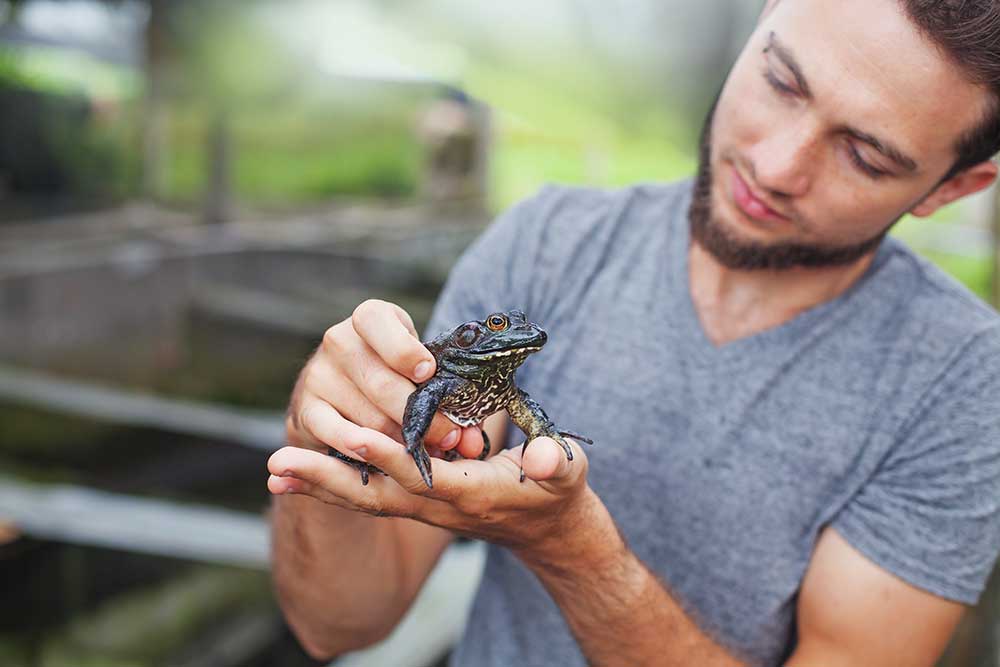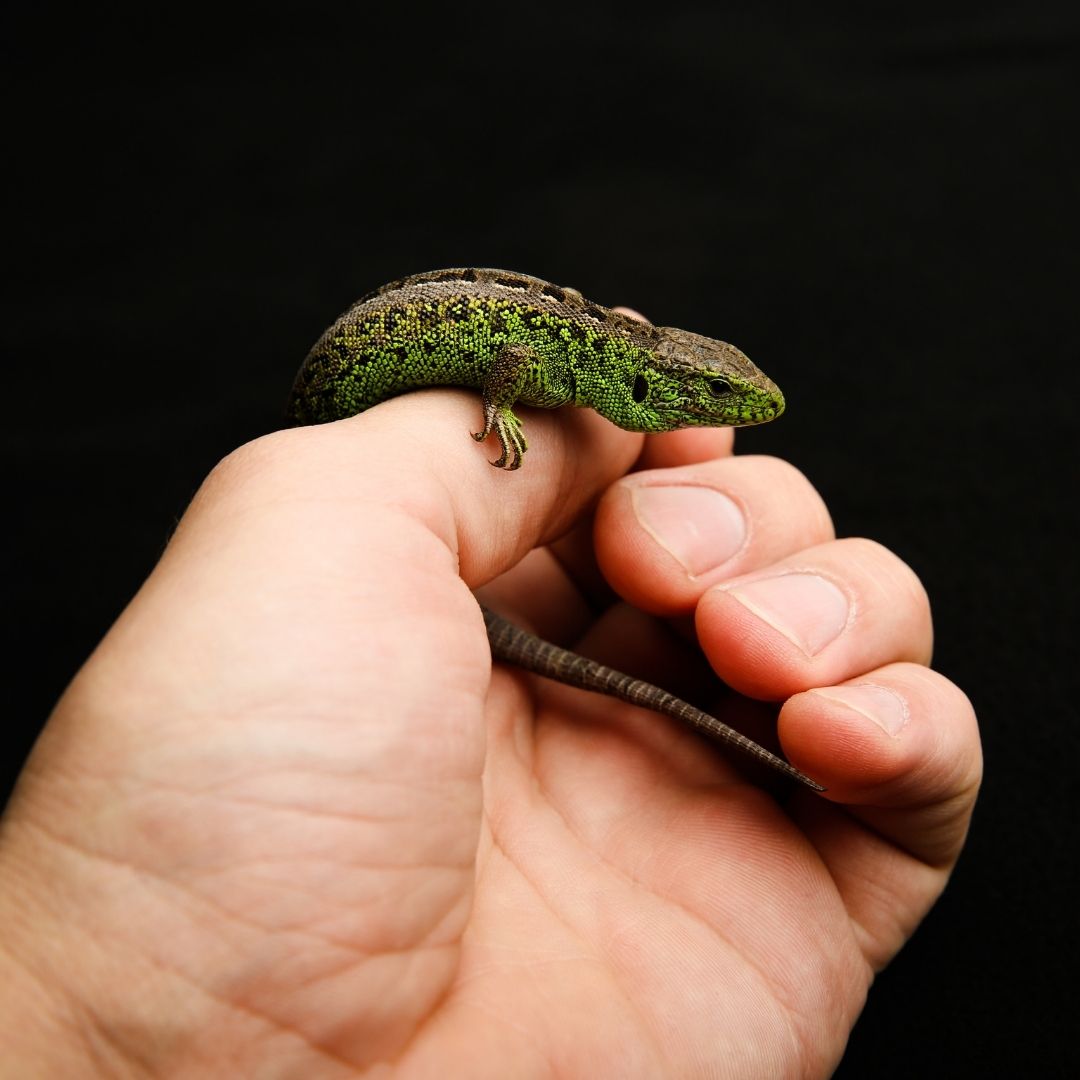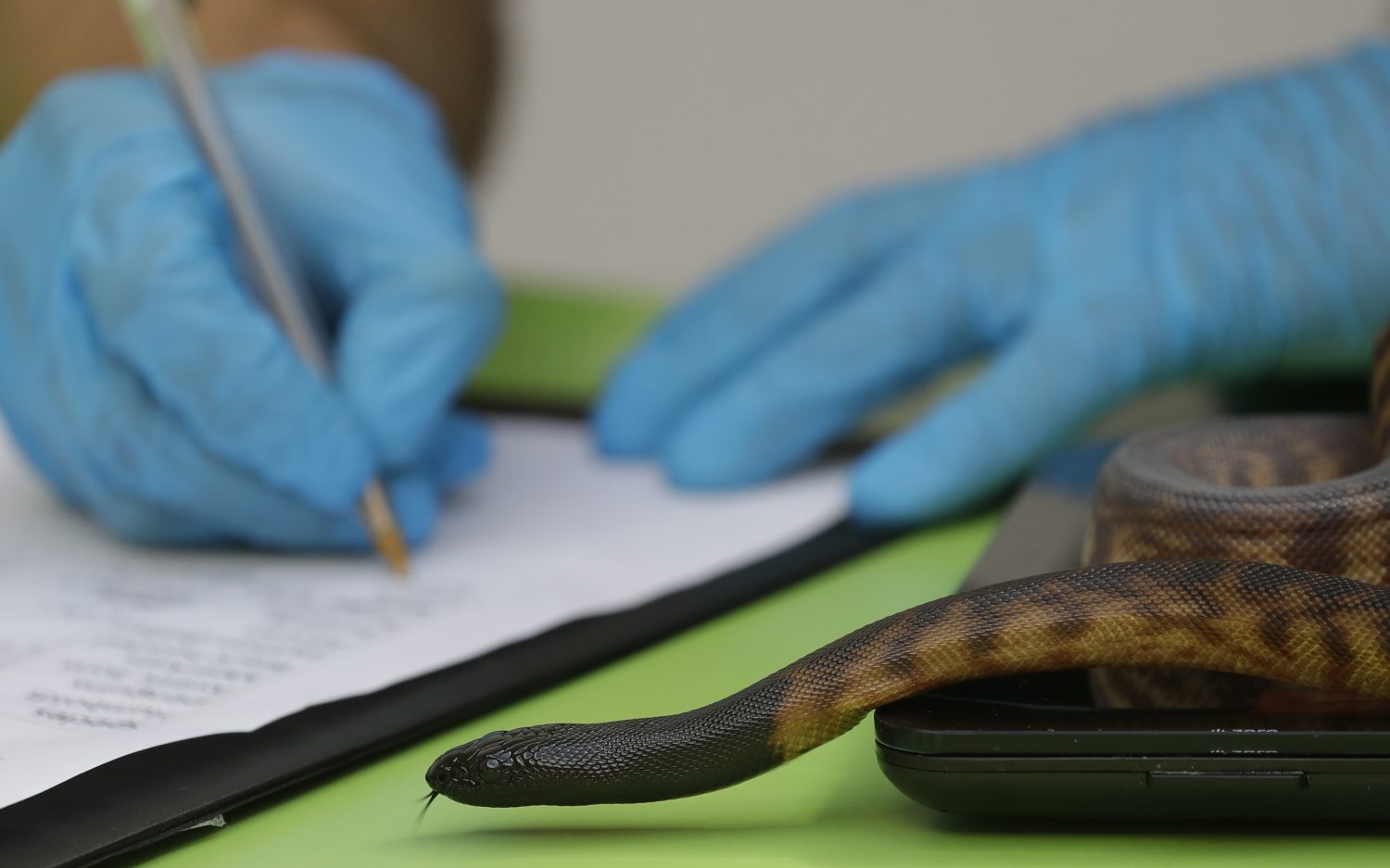

Herpetologists are scientifically trained individuals tasked with researching the physiology, behaviour, and habitats of reptiles (such as snakes, lizards, turtles, and crocodiles) and amphibians (such as frogs, toads, and salamanders) to address ecological and conservation challenges. Their role includes conducting field studies, managing species populations, and advocating for habitat protection. They combine expertise in biology, ecology, and environmental science, working in diverse settings such as wetlands, forests, laboratories, and academic institutions. As key contributors to biodiversity science, Herpetologists drive progress in a landscape increasingly focused on species preservation, ecosystem balance, and global environmental health.
- Species Research and Classification
- Study the anatomy, genetics, behaviour, and life cycles of reptiles and amphibians to classify species and understand their ecological roles.
- Document biodiversity through field surveys and taxonomic studies.
- Habitat and Population Monitoring
- Assess the health and distribution of herpetofauna populations in natural habitats.
- Monitor environmental factors like temperature, humidity, and pollution that impact their survival.
- Conservation and Restoration
- Develop and implement conservation strategies to protect endangered reptiles and amphibians from threats like habitat destruction and climate change.
- Restore degraded habitats and manage reintroduction programs for threatened species.
- Disease and Health Research
- Investigate diseases affecting herpetofauna, such as chytridiomycosis in amphibians, and develop mitigation strategies.
- Study the impact of environmental toxins on species health.
- Public Health and Safety
- Research venomous reptiles to develop antivenoms and educate communities on safety protocols.
- Assess the role of amphibians and reptiles in disease transmission (e.g., as hosts for pathogens).
- Ecological Impact Studies
- Analyze the role of reptiles and amphibians in food webs as predators, prey, or indicators of environmental health.
- Study their contributions to pest control and ecosystem balance.
- Education and Outreach
- Educate the public, students, and policymakers about the importance of herpetofauna and the threats they face.
- Develop programs or materials to dispel myths and promote conservation awareness.
- Regulatory Compliance and Documentation
- Ensure compliance with wildlife protection laws and ethical guidelines during research.
- Maintain detailed records of field observations, research findings, and conservation outcomes.
| Route | Steps |
| Route 1 | 1. 10+2 in Science stream (Biology preferred) |
| 2. Bachelor’s in Zoology, Biology, or related field (3-4 years) | |
| 3. Start as a Junior Herpetologist in research or wildlife organizations | |
| Route 2 | 1. 10+2 in Science stream (Biology preferred) |
| 2. Bachelor’s in Zoology, Biology, or related field (3-4 years) | |
| 3. Master’s in Herpetology, Zoology, or related field (2 years) | |
| 4. Work as a Herpetologist in research, conservation, or wildlife management | |
| Route 3 | 1. 10+2 in Science stream (Biology preferred) |
| 2. Bachelor’s in Zoology, Biology, or related field (3-4 years) | |
| 3. Master’s in Herpetology, Zoology, or related field (2 years) | |
| 4. Certification or Short Courses in Wildlife Conservation (6 months-1 year) | |
| 5. Pursue Roles as a Senior Herpetologist or Consultant | |
| Route 4 | 1. 10+2 in Science stream (Biology preferred) |
| 2. Bachelor’s in Zoology, Biology, or related field (3-4 years) | |
| 3. Master’s in Herpetology, Zoology, or related field (2 years) | |
| 4. Ph.D. in Herpetology or Wildlife Biology (3-5 years) | |
| 5. Serve as a Lead Researcher, Professor, or Herpetology Industry Expert |
- Participation in internships at wildlife reserves or research labs during or after academic programs for hands-on experience.
- Involvement in student-led herpetofauna surveys or field studies for practical exposure.
- Assisting senior Herpetologists in species monitoring or conservation projects for real-world insights.
- Observerships at zoos, sanctuaries, or research stations for advanced learning and mentorship.
- Participation in scientific conferences or workshops for skill development and visibility.
- Training through collaborative projects like habitat mapping or disease research for diverse exposure.
- Exposure to industry-standard practices like non-invasive tracking or venom extraction.
- Project-based learning focusing on varied areas like amphibian decline or reptile behaviour.
- Community wildlife programs to build practical experience in local herpetofauna studies.
- International herpetology training programs or online courses for exposure to global challenges.
- Bachelor of Science (B.Sc.) in Zoology or Biology.
- Master of Science (M.Sc.) in Herpetology or Wildlife Biology.
- Ph.D. in Herpetology or Ecology.
- Diploma in Wildlife Conservation and Management.
- Specialization in Reptile and Amphibian Ecology.
- Certification in Herpetological Field Techniques.
- Training in Venomous Snake Handling and Antivenom Research.
- Workshops on Amphibian Disease Management.
- Short Courses in Habitat Restoration for Herpetofauna.
- Advanced Training in Herpetological Taxonomy.
| Institute | Course/Program | Official Link |
| University of Delhi, Delhi |
| https://www.du.ac.in/ |
| Banaras Hindu University (BHU), Varanasi |
| https://www.bhu.ac.in/ |
| University of Calcutta, Kolkata |
| https://www.caluniv.ac.in/ |
| Aligarh Muslim University (AMU), Aligarh |
| https://www.amu.ac.in/ |
| University of Madras, Chennai |
| https://www.unom.ac.in/ |
| Jawaharlal Nehru University (JNU), New Delhi |
| https://www.jnu.ac.in/ |
| Indian Institute of Science (IISc), Bangalore | Ph.D. in Ecological Sciences (Herpetology Focus) | https://iisc.ac.in/ |
| Wildlife Institute of India (WII), Dehradun |
| https://wii.gov.in/ |
| National Centre for Biological Sciences (NCBS), Bangalore | Ph.D. in Ecology (Herpetology Focus) | https://www.ncbs.res.in/ |
| Zoological Survey of India (ZSI), Kolkata | Research and Training in Herpetology | https://zsi.gov.in/ |
| Institution | Course | Country | Official Link |
| University of Florida, Gainesville |
| USA | https://www.ufl.edu/ |
| University of California, Berkeley |
| USA | https://www.berkeley.edu/ |
| University of Oxford, Oxford |
| UK | https://www.ox.ac.uk/ |
| University of Queensland, Brisbane |
| Australia | https://www.uq.edu.au/ |
| Cornell University, Ithaca |
| USA | https://www.cornell.edu/ |
| University of Toronto, Toronto |
| Canada | https://www.utoronto.ca/ |
| University of Costa Rica, San José |
| Costa Rica | https://www.ucr.ac.cr/ |
| James Cook University, Townsville |
| Australia | https://www.jcu.edu.au/ |
| University of São Paulo (USP), São Paulo |
| Brazil | https://www5.usp.br/ |
| University of Cape Town, Cape Town |
| South Africa | https://www.uct.ac.za/ |
India:
- University-Specific Exams: Many institutes like DU, BHU, or JNU conduct their own entrance tests for zoology or life science programs.
- GATE (Graduate Aptitude Test in Engineering): For postgraduate programs in life sciences (optional for some institutes).
- UGC NET (University Grants Commission National Eligibility Test): For research fellowships and Ph.D. programs in herpetology or zoology.
- CSIR NET (Council of Scientific and Industrial Research National Eligibility Test): For research fellowships in life sciences.
- ICAR AIEEA (All India Entrance Examination for Admission): For programs related to wildlife or ecological sciences at affiliated institutes.
International:
- SAT (Scholastic Assessment Test): Required for undergraduate admissions in the USA and some other countries.
- ACT (American College Testing): Alternative to SAT for undergraduate admissions in the USA.
- GRE (Graduate Record Examination): Required for postgraduate and Ph.D. programs in herpetology or life sciences globally.
- TOEFL (Test of English as a Foreign Language): Minimum score of 80-100 required for non-native speakers applying to programs in English-speaking countries.
- IELTS (International English Language Testing System): Minimum score of 6.5-7.0 required for admission to universities in the UK, Australia, and other English-speaking regions.
Aspiring Herpetologist → Junior Herpetologist → Herpetologist → Senior Herpetologist → Herpetology Research Scientist → Herpetology Program Manager → Herpetology Consultant → Herpetology Policy Advisor → Professor → Global Herpetology Expert
- Universities and colleges for teaching and research in herpetology.
- Wildlife research institutes for ecological and behavioural studies.
- Conservation organizations for species protection and habitat management.
- Zoos and reptile parks for species care and public education.
- Government agencies for wildlife policy and environmental protection.
- Non-profit organizations for herpetofauna conservation advocacy.
- Public health organizations for venom research and disease control.
- Environmental consultancies for advising on habitat impact assessments.
- Museums and taxonomic institutions for species classification.
- International conservation bodies for global herpetology projects.
| India | International |
| Wildlife Institute of India (WII), Dehradun | World Wildlife Fund (WWF), Global |
| Zoological Survey of India (ZSI), Kolkata | International Union for Conservation of Nature (IUCN), Global |
| Indian Institute of Science (IISc), Bangalore | Smithsonian Institution, USA |
| National Centre for Biological Sciences (NCBS), Bangalore | Amphibian and Reptile Conservation (ARC), Global |
| Bombay Natural History Society (BNHS), Mumbai | Turtle Survival Alliance (TSA), Global |
| Madras Crocodile Bank Trust (MCBT), Chennai | Society for the Study of Amphibians and Reptiles (SSAR), USA |
| Wildlife Conservation Society - India (WCS-India) | International Herpetological Society (IHS), Global |
| Ashoka Trust for Research in Ecology and the Environment (ATREE), Bangalore | San Diego Zoo Wildlife Alliance, USA |
| State Wildlife Departments | Australian Reptile Park, Australia |
| Local Research and Conservation Groups | National Geographic Society, USA |
| Pros | Cons |
| Opportunity to contribute to biodiversity through reptile and amphibian conservation | Fieldwork can be physically demanding and involve exposure to harsh or dangerous conditions |
| Potential for societal impact by protecting endangered species and ecosystems | High responsibility to manage species declines or conservation failures |
| Rewarding impact through understanding uniquebehaviours and aiding ecological balance | Often requires long hours during field research or emergency responses to threats |
| Diverse career paths across research, conservation, education, and policy | Limited funding for pure herpetological research in some regions |
| Strong potential for growth with increasing focus on biodiversity globally | Risk of burnout due to intensive fieldwork or emotional investment in species survival |
- Growing adoption of genetic tools like DNA barcoding for species identification and conservation planning.
- Rising demand for Herpetologists due to increasing threats from habitat loss and climate change.
- Advancements in non-invasive monitoring technologies like remote cameras and acoustic sensors for field studies.
- Heightened focus on amphibian conservation due to global declines from diseases like chytridiomycosis.
- Expansion of interdisciplinary approaches combining herpetology with climate science and toxicology.
- Development of captive breeding programs for endangered herpetofauna species.
- Increased emphasis on specialized training for niche areas like venom research or tropical herpetology.
- Enhanced focus on public education to reduce human-wildlife conflict involving reptiles.
- Growing need for continuous skill development to master emerging research tools.
- Focus on global biodiversity standards to address disparities in herpetofauna conservation efforts.
| Career Level | India (₹ per annum) | International (USD per annum) |
| Junior Herpetologist (Early Career) | 2,50,000 - 5,00,000 | 30,000 - 50,000 |
| Herpetologist (Mid-Career) | 5,00,000 - 10,00,000 | 50,000 - 80,000 |
| Senior Herpetologist (Established) | 10,00,000 - 15,00,000 | 80,000 - 110,000 |
| Herpetology Research Scientist/Program Manager | 15,00,000 - 25,00,000 | 110,000 - 150,000 |
| Professor/Global Herpetology Expert | 25,00,000+ | 150,000+ |
Note: Salaries vary widely based on location, experience, sector (government vs. private vs. research), and region. International figures are approximate and depend on the country and funding. High-profile consultancy or policy roles often yield significantly higher earnings based on impact and demand.
- Species Population Modelling Software like Vortex for conservation planning.
- Geographic Information Systems (GIS) like ArcGIS for mapping herpetofauna habitats.
- Statistical Analysis Tools like R or SPSS for processing research data.
- Genetic Analysis Software like MEGA for studying herpetofauna phylogenetics.
- Acoustic Monitoring Software for tracking amphibian calls in the field.
- Remote Sensing Tools for habitat analysis in inaccessible areas.
- Research Management Tools like EndNote for organizing scientific literature.
- Data Visualization Software like Tableau for presenting population trends.
- Field Data Collection Apps like iNaturalist for recording species sightings.
- Collaboration Platforms like Microsoft Teams for team communication in research settings.
- Indian Herpetological Society (IHS), India.
- Society for the Study of Amphibians and Reptiles (SSAR), USA.
- Herpetologists’ League (HL), USA.
- International Herpetological Society (IHS), Global.
- Amphibian and Reptile Conservation (ARC), Global.
- Turtle Survival Alliance (TSA), Global.
- Zoological Society of India (ZSI), India.
- Wildlife Conservation Society (WCS), Global.
- World Wildlife Fund (WWF) Networks, Global.
- Edward Drinker Cope (Historical, USA): Herpetologist since the 1800s. Known for extensive work on North American reptiles and amphibians, describing numerous species. His vision shapes taxonomy. His impact influences early herpetology.
- Archie Carr (Historical, USA): Herpetologist since the mid-1900s. Known for pioneering sea turtle conservation and research on migration patterns. His expertise drives marine herpetology. His contributions influence global turtle protection.
- Laurence Monroe Klauber (Historical, USA): Herpetologist since the early 1900s. Known as the "Father of Rattlesnake Research" for studies on venomous snakes. His leadership fosters venom science. His work impacts safety protocols.
- Romulus Whitaker (Contemporary, India): Herpetologist since the 1970s. Known for founding the Madras Crocodile Bank Trust and conserving Indian reptiles. His creativity drives regional conservation. His impact shapes Indian herpetology.
- Harry W. Greene (Contemporary, USA): Herpetologist since the 1970s. Known for research on snake ecology and venomous species behaviour at Cornell University. His expertise fosters ecological understanding. His contributions influence snake studies.
- David Wake (Contemporary, USA): Herpetologist since the 1960s. Known for amphibian taxonomy and research on salamander evolution at UC Berkeley. His vision shapes amphibian science. His work impacts biodiversity studies.
- Karen Lips (Contemporary, USA): Herpetologist since the 1990s. Known for research on amphibian declines due to chytridiomycosis at the University of Maryland. Her leadership drives disease studies. Her contributions influence conservation.
- J. Whitfield Gibbons (Contemporary, USA): Herpetologist since the 1960s. Known for long-term studies on turtles and snakes at the Savannah River Ecology Laboratory. His expertise fosters population research. His work impacts ecology.
- VaradGiri (Contemporary, India): Herpetologist since the 2000s. Known for discovering new gecko and snake species in India, associated with BNHS. His vision shapes regional taxonomy. His contributions influence Indian biodiversity.
- Jonathan Campbell (Contemporary, USA): Herpetologist since the 1980s. Known for studies on Central American herpetofauna and venomous snakes at the University of Texas. His leadership drives tropical research. His work impacts species classification.
- Build a strong foundation in biology and ecology to handle diverse research challenges.
- Seek early exposure to field research or wildlife projects to confirm interest in a herpetologist career.
- Prepare thoroughly for entrance exams like UGC NET or university-specific tests to secure admission to top programs.
- Pursue training in specialties like venom research or amphibian conservation for versatility.
- Stay updated on herpetological trends by attending conferences and following research journals.
- Develop practical skills through consistent participation in internships or field surveys.
- Engage in community or local wildlife programs to build real-world herpetofauna study experience.
- Join professional associations like SSAR or TSA for networking and resources.
- Work on problem-solving skills to manage species declines and conservation challenges.
- Explore international herpetology opportunities for exposure to diverse research practices.
- Volunteer with local wildlife groups or sanctuaries for practical industry exposure.
- Cultivate adaptability to handle varying field conditions and unexpected research issues.
- Attend continuing education programs to stay abreast of new research technologies.
- Build a network with researchers, conservationists, and environmental experts for collaborative opportunities.
- Develop persistence to manage the uncertainty of research outcomes and conservation barriers.
- Balance scientific pursuits with passion for herpetology to adapt to demanding work environments.
A career as a Herpetologist offers a unique opportunity to contribute to science, conservation, and biodiversity by navigating complex challenges related to reptiles and amphibians for diverse needs. From conducting transformative research to managing conservation initiatives and improving species survival, Herpetologists play a pivotal role in scientific and environmental ecosystems. This field combines scientific expertise, practical skill, and a commitment to solving critical challenges, offering diverse paths in research, conservation, education, and beyond. For those passionate about herpetofauna, adapting to dynamic industry trends, and addressing global needs in an era of rising environmental concerns, a career as a Herpetologist provides an intellectually stimulating and professionally rewarding journey with the potential to make significant contributions to society by advancing the science and application of herpetological knowledge worldwide.