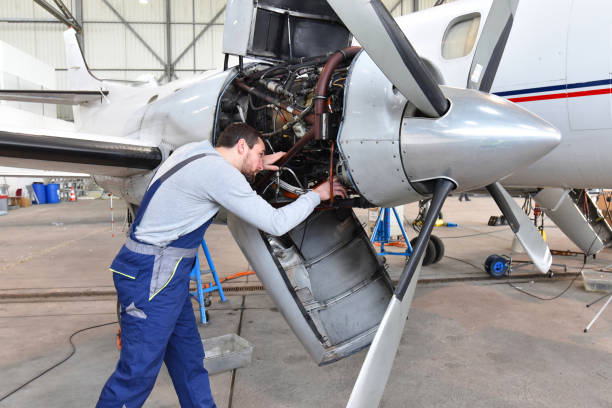
Geologist

Geology is a fascinating and essential field within the Engineering and Technology career cluster that focuses on the study of the Earth’s physical structure, composition, and processes to understand natural resources, geological hazards, and environmental impacts through scientific and technological approaches. In India, Geology is a significant career path, driven by the country’s vast mineral resources, infrastructure development needs, and increasing focus on disaster management and sustainability. With advancements in geospatial technologies, remote sensing, and data analysis, this career plays a crucial role in resource exploration and environmental protection. Geologists are vital for identifying mineral deposits, assessing geological risks, and supporting sustainable development. This profession contributes to industry progress through trends like digital geological mapping, renewable energy exploration, and climate change impact studies.
Share :
Career tree mind map (horizontal) — Geologist
Colored branches, hub circles, and underlined topics — same style as counselor course classic (types 18–19 in admin).
Loading mind map…

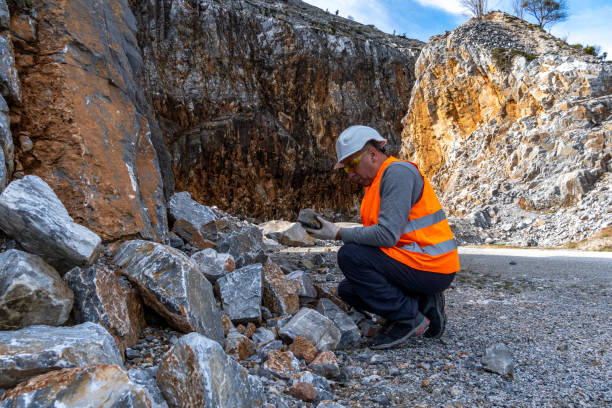
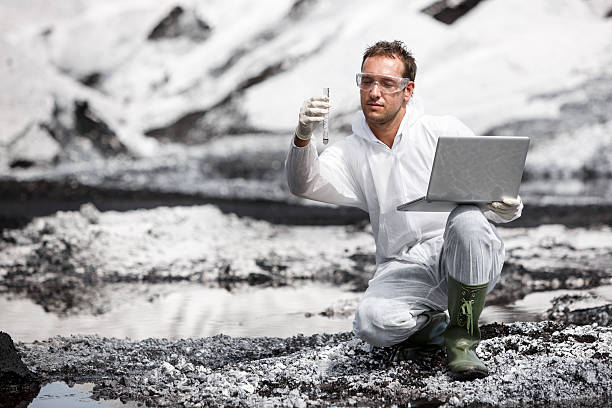
Geologists work in diverse environments such as mining sites, research institutions, government agencies, or environmental consultancies, often collaborating with engineers, environmental scientists, hydrologists, and urban planners. Their responsibilities include conducting field surveys, analyzing rock and soil samples, and mapping geological formations to inform resource extraction or hazard mitigation. They face challenges like navigating India’s complex geological terrains, managing limited exploration budgets, and addressing environmental concerns during resource exploitation. By applying expertise in mineralogy, geophysics, and geospatial analysis, they uncover insights into the Earth’s history and resources. As key contributors to India’s resource and technology sectors, they drive advancements through trends like seismic risk assessment, groundwater mapping, and sustainable mining practices.

  • Field Surveys and Data Collection
    • Conduct geological fieldwork to collect rock, soil, and water samples from diverse terrains for analysis.
    • Map geological formations and structures to identify resource deposits or potential hazards.
  • Resource Exploration and Assessment
    • Identify and evaluate mineral, oil, or gas deposits for extraction feasibility and economic viability.
    • Use geophysical and geochemical techniques to locate underground resources with precision.
  • Geological Hazard Analysis
    • Assess risks of natural disasters like earthquakes, landslides, or volcanic activity in vulnerable regions.
    • Provide recommendations for infrastructure safety and disaster preparedness based on geological data.
  • Environmental Impact Studies
    • Evaluate the environmental impact of mining, drilling, or construction projects on ecosystems and groundwater.
    • Develop mitigation strategies to minimize ecological damage during resource extraction.
  • Geotechnical Support for Engineering
    • Analyze soil and rock stability to support foundation design for infrastructure like dams, roads, or buildings.
    • Advise on safe construction practices in geologically sensitive areas to prevent structural failures.
  • Data Analysis and Modeling
    • Use software to analyze geological data and create 3D models of subsurface structures or resource zones.
    • Interpret seismic, magnetic, or gravitational data to understand Earth’s internal processes.
  • Research and Reporting
    • Conduct research on geological phenomena, tectonic movements, or climate change impacts on landscapes.
    • Prepare detailed reports and maps for stakeholders, policymakers, or industrial applications.
  • Policy and Resource Management
    • Collaborate with government bodies to formulate policies for sustainable mining and resource conservation.
    • Monitor and manage groundwater resources to ensure long-term availability and prevent over-extraction.

RouteSteps
Route 1: Bachelor’s in Geology - Direct Entry

1. Complete 10+2 in Science stream (Physics, Chemistry, Mathematics/Biology) with minimum 60% marks.

2. Pursue B.Sc. in Geology (3 years) via university admissions or entrance exams.

3. Gain experience in geological surveys or mining through entry roles.

4. Progress to Geologist with skills or higher studies.

Route 2: Bachelor’s to Master’s Pathway

1. Complete 10+2 and enroll in B.Sc. in Geology.

2. Pursue M.Sc. in Geology or Applied Geology via entrance exams.

3. Build expertise through advanced fieldwork or research.

4. Join specialized roles in industry or R&D with advanced qualifications.

Route 3: Master’s to Ph.D. Specialization

1. Complete Bachelor’s and Master’s in Geology.

2. Pursue Ph.D. in Geology via entrance exams like UGC-NET or CSIR-NET.

3. Conduct research on geological processes or resources.

4. Join senior roles in academia, R&D, or leading organizations.

Route 4: International Education Path

1. Complete 10+2 and clear relevant entrance exams or language tests (e.g., IELTS, TOEFL).

2. Pursue degrees in Geology from international universities (e.g., USA, UK).

3. Gain global exposure through international projects or internships.

4. Return to India or work internationally in geology roles.

Route 5: Integrated Degree Pathway

1. Complete 10+2 and enroll in integrated B.Sc.-M.Sc. programs in Geology (5 years) at select institutes.

2. Gain practical experience through field projects during studies.

3. Work in assistant roles for hands-on learning.

4. Build expertise to secure geologist positions with experience.

  • Bachelor of Science (B.Sc.) in Geology for foundational skills in Earth sciences and mineral exploration.
  • Master of Science (M.Sc.) in Geology or Applied Geology for advanced expertise in geological analysis and research.
  • Integrated B.Sc.-M.Sc. in Geology for a comprehensive academic pathway combining undergraduate and postgraduate studies.
  • Ph.D. in Geology for cutting-edge research and leadership roles in geoscientific innovation.
  • Specialization in Hydrogeology, Petroleum Geology, Engineering Geology, or Environmental Geology.
  • Short-term courses on Remote Sensing, GIS for Geology, and Seismic Data Interpretation.
  • Certifications in Geospatial Analysis, Geological Mapping, and Certified Professional Geologist (CPG) for professional credibility.

InstituteCourse/ProgramOfficial Link
Indian Institute of Technology (IIT), KharagpurB.Sc./M.Sc. in Applied Geologyhttps://www.iitkgp.ac.in/
Indian Institute of Technology (IIT), BombayM.Sc. in Applied Geologyhttps://www.iitb.ac.in/
Indian Institute of Science (IISc), BangaloreResearch Programs in Earth Scienceshttps://www.iisc.ac.in/
Banaras Hindu University (BHU), VaranasiB.Sc./M.Sc. in Geologyhttps://www.bhu.ac.in/
University of Delhi, DelhiB.Sc./M.Sc. in Geologyhttps://www.du.ac.in/
Jadavpur University, KolkataB.Sc./M.Sc. in Geological Scienceshttps://www.jaduniv.edu.in/
Presidency University, KolkataB.Sc./M.Sc. in Geologyhttps://www.presiuniv.ac.in/
Savitribai Phule Pune University, PuneB.Sc./M.Sc. in Geologyhttps://www.unipune.ac.in/
Anna University, ChennaiM.Sc. in Applied Geologyhttps://www.annauniv.edu/
Aligarh Muslim University (AMU), AligarhB.Sc./M.Sc. in Geologyhttps://www.amu.ac.in/

InstitutionCourseCountryOfficial Link
Massachusetts Institute of Technology (MIT), CambridgeB.S./M.S./Ph.D. in Earth SciencesUSAhttps://www.mit.edu/
Stanford University, StanfordB.S./M.S./Ph.D. in Geological SciencesUSAhttps://www.stanford.edu/
University of California, BerkeleyB.A./M.A./Ph.D. in Earth and Planetary ScienceUSAhttps://www.berkeley.edu/
University of Oxford, OxfordB.A./M.Sc./D.Phil. in Earth SciencesUKhttps://www.ox.ac.uk/
University of Cambridge, CambridgeB.A./M.Phil./Ph.D. in Earth SciencesUKhttps://www.cam.ac.uk/
ETH Zurich, ZurichB.Sc./M.Sc./Ph.D. in Earth SciencesSwitzerlandhttps://www.ethz.ch/
University of Toronto, TorontoB.Sc./M.Sc./Ph.D. in Earth SciencesCanadahttps://www.utoronto.ca/
Australian National University (ANU), CanberraB.Sc./M.Sc./Ph.D. in Earth SciencesAustraliahttps://www.anu.edu.au/
University of Melbourne, MelbourneB.Sc./M.Sc./Ph.D. in Earth SciencesAustraliahttps://www.unimelb.edu.au/
University of British Columbia (UBC), VancouverB.Sc./M.Sc./Ph.D. in Earth SciencesCanadahttps://www.ubc.ca/

India:

  • IIT JAM (Joint Admission Test for M.Sc.): Required for admission to M.Sc. programs in Geology at IITs and other institutes (Written Test).
  • BHU UET/PET (Banaras Hindu University Entrance Test): For admission to B.Sc. and M.Sc. programs in Geology at BHU (Written Test).
  • DUET (Delhi University Entrance Test): For admission to postgraduate programs in Geology at University of Delhi (Written Test).
  • JEST (Joint Entrance Screening Test): For admission to integrated Ph.D. or research programs in Earth Sciences at select institutes (Written Test).
  • State/University-Level Entrance Exams (e.g., PUCET, AUCET): For admission to geology programs at state or regional universities (Written Test).

International (for Relevant Studies or Exposure):

  • IELTS (International English Language Testing System): Minimum score of 6.5-7.0 for non-native speakers applying to programs in the UK, Canada, Australia, etc.
  • TOEFL (Test of English as a Foreign Language): Minimum score of 90-100 for programs in English-speaking countries like the USA.
  • SAT (Scholastic Assessment Test): Often required for undergraduate programs in the USA or Canada (Written Test).
  • GRE (Graduate Record Examination): Often required for postgraduate programs in geology at international universities (Quantitative, Verbal, Analytical Writing).
  • Interview/Portfolio: Some advanced programs or research roles may require interviews or research portfolios to assess technical fit and preparedness.

Geologist → Senior Geologist → Geological Project Manager → Chief Geologist → Director of Geological Research

  • Mining and Mineral Exploration Companies for identifying and assessing mineral and metal deposits.
  • Oil and Gas Industry for exploring and extracting petroleum and natural gas resources.
  • Government Agencies for geological surveys, hazard assessment, and resource policy development.
  • Environmental Consulting Firms for assessing and mitigating the impact of projects on ecosystems.
  • Infrastructure and Construction Sector for providing geotechnical support for building projects.
  • Water Resource Management Firms for exploring and managing groundwater and surface water resources.
  • Research and Academic Institutions for studying geological phenomena and educating future geologists.

Indian OrganizationsInternational Organizations
Geological Survey of India (GSI), KolkataUnited States Geological Survey (USGS), USA
Oil and Natural Gas Corporation (ONGC), DehradunBritish Geological Survey (BGS), UK
Coal India Limited, KolkataSchlumberger, USA/France
National Mineral Development Corporation (NMDC), HyderabadHalliburton, USA
Hindustan Zinc Limited, UdaipurChevron, USA
Tata Steel, JamshedpurExxonMobil, USA
Vedanta Resources, MumbaiBP (British Petroleum), UK
Indian Bureau of Mines (IBM), NagpurShell, Netherlands/UK
Mineral Exploration Corporation Limited (MECL), NagpurTotalEnergies, France
Bharat Gold Mines Limited (BGML), KolarBHP, Australia

ProsCons
High impact through discovering resources and mitigating geological risksHigh physical demand due to extensive fieldwork in remote or harsh terrains
Opportunity to work on critical projects like mineral exploration and disaster managementLong periods away from home during geological surveys or expeditions
Key role in supporting sustainable resource use and environmental safetyChallenges in balancing resource extraction with ecological preservation
Growing demand in India’s mining, energy, and infrastructure sectorsStress from unpredictable natural conditions or project uncertainties
Potential for recognition through significant discoveries or hazard prevention strategiesNeed for continuous learning to adapt to new geological technologies

Career Level (Private/Public Sector Example)India (₹ per annum)International (USD per annum, Tentative)
Geologist (Entry to Mid-Level)3,00,000 - 6,00,00030,000 - 50,000
Senior Geologist (Mid-Level)6,00,000 - 10,00,00050,000 - 75,000
Geological Project Manager (Senior Level)10,00,000 - 18,00,00075,000 - 100,000
Chief Geologist (Top Tier)18,00,000 - 30,00,000100,000 - 130,000
Director of Geological Research (Elite Level)30,00,000 - 45,00,000+130,000 - 160,000+
Hydrogeologist (Specialized Role)5,00,000 - 9,00,00040,000 - 65,000
Petroleum Geologist (Specialized Role)8,00,000 - 15,00,00060,000 - 100,000
Engineering Geologist (Specialized Role)5,50,000 - 10,00,00045,000 - 70,000
Environmental Geologist (Specialized Role)4,50,000 - 8,50,00040,000 - 60,000

Note: Salaries are indicative and vary based on location (metro vs. non-metro for India; country/region for international roles), organization type, and project scope. Figures for India are updated estimates based on industry trends as of 2025, reflecting market growth, demand for geological expertise, and data from sources like Glassdoor and industry reports. International figures are approximate averages based on global geology trends in countries like the USA, UK, or Australia, sourced from recent job portals and market analyses.

  • ArcGIS: For creating geological maps and analyzing spatial data related to Earth’s surface and subsurface.
  • Surfer: For contouring and 3D modeling of geological data like mineral deposits or groundwater levels.
  • Petrel: For subsurface modeling and reservoir analysis in petroleum geology and resource exploration.
  • RockWorks: For visualizing geological data and creating cross-sections or borehole logs in exploration projects.
  • GeoGraphix: For integrating geological and geophysical data to support oil and gas exploration.
  • MATLAB: For numerical analysis and modeling of geological processes like seismic wave propagation.
  • ENVI: For processing remote sensing data to monitor geological features or environmental changes.
  • SeisVision: For interpreting seismic data to identify subsurface structures or fault lines.
  • Google Earth Pro: For preliminary geological mapping and reconnaissance using satellite imagery.
  • Leapfrog Geo: For 3D geological modeling to visualize mineral deposits or structural geology.

  • Geological Society of India (GSI), India.
  • Indian Geophysical Union (IGU), India.
  • Association of Exploration Geophysicists (AEG), India.
  • Indian Society of Applied Geochemists (ISAG), India.
  • Mining, Geological & Metallurgical Institute of India (MGMI), India.
  • Geological Society of America (GSA), Global.
  • European Association of Geoscientists and Engineers (EAGE), Global.
  • Society of Exploration Geophysicists (SEG), Global.
  • American Association of Petroleum Geologists (AAPG), Global.
  • International Union of Geological Sciences (IUGS), Global.

  • M. S. Krishnan (India, Historical): M. S. Krishnan, a pioneering Indian geologist, contributed to the understanding of India’s mineral resources and Precambrian geology through his work at the Geological Survey of India. His research shaped national resource policies. His legacy inspires Indian geoscientists.
     
  • James Hutton (Scotland, Historical): James Hutton, often called the "Father of Modern Geology," introduced the concept of deep time and uniformitarianism, revolutionizing geological thought. His theories underpin Earth science. His impact remains foundational to the field.
     
  • R. N. Athavale (India, Contemporary): R. N. Athavale, a renowned Indian geophysicist, advanced groundwater exploration and tectonic studies through innovative research. His work aids water resource management. His contributions influence geological research in India.
     
  • Marie Tharp (USA, Historical): Marie Tharp, a pioneering geologist, mapped the ocean floor and co-discovered the Mid-Atlantic Ridge, proving plate tectonics. Her visualizations transformed marine geology. Her legacy champions women in science.
     
  • Harry Hess (USA, Historical): Harry Hess developed the theory of seafloor spreading, a cornerstone of plate tectonics, reshaping modern geology. His ideas explained continental drift. His work remains central to Earth science.
     
  • Sudipta Sengupta (India, Contemporary): Sudipta Sengupta, a distinguished Indian geologist, contributed to structural geology and Himalayan tectonics through extensive fieldwork and research. Her studies enhance geological understanding. Her mentorship shapes future geologists.
     
  • Alfred Wegener (Germany, Historical): Alfred Wegener proposed the theory of continental drift, a precursor to plate tectonics, revolutionizing geological science. His vision faced initial skepticism but proved transformative. His legacy drives tectonic research.
     
  • Tanya Atwater (USA, Contemporary): Tanya Atwater, a leading geologist, advanced plate tectonics through her research on oceanic plate movements and fault systems. Her work clarifies Earth’s dynamics. Her contributions inspire global geological studies.
     
  • D. N. Wadia (India, Historical): D. N. Wadia, often called the "Father of Indian Geology," pioneered Himalayan geology and resource mapping at the Geological Survey of India. His discoveries shaped national exploration. His legacy endures in Indian Earth sciences.
     
  • Marcia McNutt (USA, Contemporary): Marcia McNutt, former USGS director, has led geophysical research on ocean floors and Earth’s crust, influencing geological policy and science. Her leadership bridges research and application. Her impact guides modern geoscience.
     

  • Build a strong foundation in Earth sciences, physics, and chemistry to excel in understanding geological processes and resources.
  • Pursue early exposure through field trips, internships, or geological surveys to grasp real-world exploration and hazard challenges.
  • Create a portfolio showcasing field reports, geological maps, or research projects to demonstrate your capabilities to potential employers.
  • Stay updated on geological technologies, environmental regulations, and resource trends through continuous learning and professional events.
  • Develop proficiency in geospatial software, field mapping techniques, and data analysis tools for a competitive edge.
  • Join reputed institutes like IITs or international programs for high-quality education and valuable industry connections.
  • Work on resilience to manage physically demanding fieldwork, remote expeditions, and project uncertainties effectively.
  • Explore opportunities in smaller geological firms or government surveys to gain hands-on experience if larger roles are initially out of reach.
  • Network with geoscientists, mining professionals, and environmental experts at conferences to expand career prospects.
  • Cultivate adaptability to handle diverse geological environments, technological advancements, and evolving resource demands with confidence.
  • Focus on societal impact by uncovering resources, mitigating hazards, and promoting sustainable practices that benefit communities and ecosystems.

A career in Geology presents an extraordinary chance to explore the Earth’s mysteries by mastering scientific inquiry and cutting-edge technologies, contributing to societal progress through resource discovery and hazard prevention, and preserving our planet’s legacy with every geological insight gained. Geologists emerge as the dedicated stewards of India’s natural wealth, employing their analytical prowess and curiosity to reveal the Earth’s hidden treasures and safeguard against its dangers. This discipline merges rigorous science with a passion for discovery, offering opportunities in mineral exploration, environmental protection, petroleum geology, and disaster management. For individuals captivated by the quest to understand the Earth through scientific expertise, motivated by the potential to impact resource sustainability and safety, and ready to embrace the demanding challenges of fieldwork and geological analysis, a career as a Geologist delivers a profoundly fulfilling path. It empowers one to address critical natural resource needs, protect vulnerable regions, and contribute to global knowledge through the remarkable pursuit of geological science.

Knowledge & Skills You Will Learn
1
Urban Geotechnical Challenges: Rising need for geological expertise in infrastructure development amid rapid urbanization.
Geologist (Entry to Mid-Level)

Geologist (Entry to Mid-Level)

Geologists conduct field surveys and analyze geological samples to identify resources or hazards in regions like Rajasthan or Jharkhand. They map...

0.0LPA
Senior Geologist (Mid-Level)

Senior Geologist (Mid-Level)

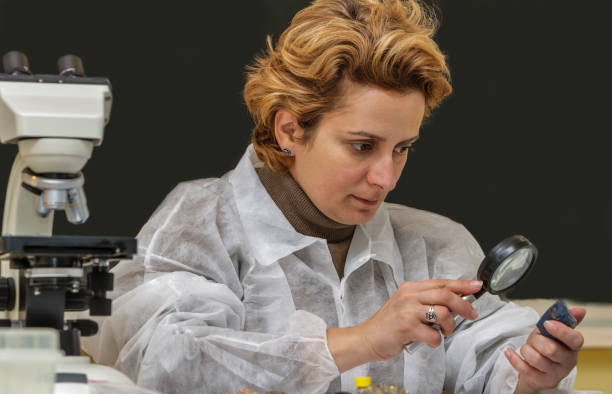
Senior Geologists lead exploration projects and interpret complex geological data in hubs like Kolkata or Hyderabad, mentoring junior staff. They...

0.0LPA
Geological Project Manager (Senior Level)

Geological Project Manager (Senior Level)

Geological Project Managers oversee large-scale exploration or hazard mitigation projects in cities like Delhi or Mumbai, managing budgets,...

0.0LPA

Interested in this career?

Take the next step and explore more about Geologist.