Environmental GIS Specialist

An Environmental GIS Specialist is a professional dedicated to using Geographic Information Systems (GIS) technology to analyze, map, and manage environmental data for conservation, resource management, and policy-making to support sustainable environmental practices. They work in government agencies, environmental consultancies, research institutions, non-profit organizations, and private sectors, collaborating with ecologists, urban planners, and policymakers. Environmental GIS Specialists play a critical role in addressing environmental challenges like habitat loss, climate change, and pollution through spatial data analysis in a world increasingly focused on data-driven environmental solutions, sustainability, and ecological resilience.
Share :
✨ Radial Mind Map - Environmental GIS Specialist
Nodes arranged in concentric circles

Loading radial mind map...

Overview

An Environmental GIS Specialist is a professional dedicated to using Geographic Information Systems (GIS) technology to analyze, map, and manage environmental data for conservation, resource management, and policy-making to support sustainable environmental practices. They work in government agencies, environmental consultancies, research institutions, non-profit organizations, and private sectors, collaborating with ecologists, urban planners, and policymakers. Environmental GIS Specialists play a critical role in addressing environmental challenges like habitat loss, climate change, and pollution through spatial data analysis in a world increasingly focused on data-driven environmental solutions, sustainability, and ecological resilience.

Environmental GIS Specialists are experts in geospatial technologies and environmental science, responsible for collecting, analyzing, and visualizing spatial data to support environmental monitoring, planning, and decision-making. Their role involves creating detailed maps, modeling environmental trends, and assessing spatial impacts, often working in diverse settings such as offices with GIS software, field sites for data collection, or collaborative project environments. They combine expertise in GIS tools, remote sensing, and ecological knowledge to address issues like deforestation, urban sprawl, and natural disaster risks. As key contributors to environmental sustainability, they help inform strategies for ecosystem protection in an era prioritizing spatial analytics, climate adaptation, and global conservation efforts.

Roles and Responsibilities

💼
Environmental GIS Specialist
Roles and Responsibilities
Spatial Data Collection and Management
Gather environmental data through field surveys, remote sensing, and existing databases for GIS integration.
Manage and maintain spatial databases to ensure data accuracy and accessibility for environmental projects.
Environmental Mapping and Visualization
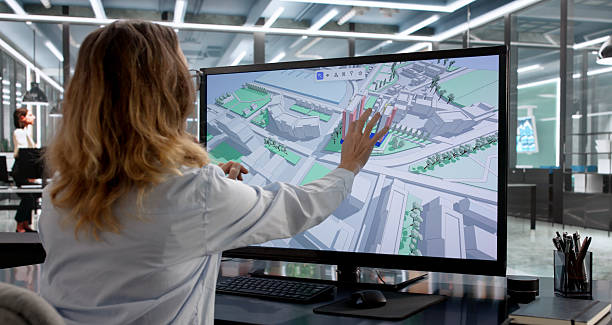
Create detailed maps and visualizations of environmental features like land use, vegetation cover, and pollution zones.
Use GIS software to produce thematic maps for stakeholder presentations and reports.
Spatial Analysis and Modeling
Analyze spatial data to identify environmental trends, such as habitat fragmentation or flood risk areas.
Develop models to predict environmental changes, like urban expansion impacts on ecosystems.
Impact Assessment Support
Assist in environmental impact assessments by mapping project areas and analyzing potential ecological effects.
Provide spatial insights for infrastructure projects to minimize environmental disruption.
Conservation and Resource Planning
Support conservation efforts by mapping biodiversity hotspots, protected areas, and wildlife corridors.
Aid in natural resource management by analyzing spatial distribution of resources like water or forests.
Policy and Decision Support
Provide GIS-based reports and recommendations to policymakers for environmental planning and zoning.
Collaborate with government bodies to develop spatial strategies for sustainable development.
Disaster Risk Mapping
Map areas prone to natural disasters like landslides or floods to support mitigation planning.
Integrate real-time data for emergency response and environmental crisis management.
Training and Collaboration
Train colleagues or stakeholders in GIS tools and spatial data interpretation for environmental projects.
Work with interdisciplinary teams to integrate GIS data into broader environmental research or initiatives.

Roles and Responsibilities

  • Spatial Data Collection and Management
    • Gather environmental data through field surveys, remote sensing, and existing databases for GIS integration.
    • Manage and maintain spatial databases to ensure data accuracy and accessibility for environmental projects.
  • Environmental Mapping and Visualization
    • Create detailed maps and visualizations of environmental features like land use, vegetation cover, and pollution zones.
    • Use GIS software to produce thematic maps for stakeholder presentations and reports.
  • Spatial Analysis and Modeling
    • Analyze spatial data to identify environmental trends, such as habitat fragmentation or flood risk areas.
    • Develop models to predict environmental changes, like urban expansion impacts on ecosystems.
  • Impact Assessment Support
    • Assist in environmental impact assessments by mapping project areas and analyzing potential ecological effects.
    • Provide spatial insights for infrastructure projects to minimize environmental disruption.
  • Conservation and Resource Planning
    • Support conservation efforts by mapping biodiversity hotspots, protected areas, and wildlife corridors.
    • Aid in natural resource management by analyzing spatial distribution of resources like water or forests.
  • Policy and Decision Support
    • Provide GIS-based reports and recommendations to policymakers for environmental planning and zoning.
    • Collaborate with government bodies to develop spatial strategies for sustainable development.
  • Disaster Risk Mapping
    • Map areas prone to natural disasters like landslides or floods to support mitigation planning.
    • Integrate real-time data for emergency response and environmental crisis management.
  • Training and Collaboration
    • Train colleagues or stakeholders in GIS tools and spatial data interpretation for environmental projects.
    • Work with interdisciplinary teams to integrate GIS data into broader environmental research or initiatives.


Study Route & Eligibility Criteria

Study Route & Eligibility Criteria
Environmental GIS Specialist
Route 1
🎓
1
10+2 with Physics, Chemistry, Mathematics or Biology .
🏛️
2
Bachelor’s degree in Environmental Science, Geography, or Geoinformatics .
3-4 years
💼
3
Gain practical experience through internships or training in GIS-focused environmental organizations .
3-6 months
💼
4
Pursue entry-level roles like GIS Technician or Environmental Data Assistant .
1-2 years
Route 2
🎓
1
10+2 with PCM or PCB.
🏛️
2
Bachelor’s degree in Earth Sciences, Remote Sensing, or Computer Science .
3-4 years
🏛️
3
Master’s degree in Geoinformatics, Environmental GIS, or Spatial Data Science .
💼
4
Work in GIS mapping or environmental data analysis roles to gain experience .
1-2 years
🌍
5
Transition to Environmental GIS Specialist roles with enhanced skills and knowledge.
Route 3
🎓
1
10+2 with PCM or PCB.
🏛️
2
Bachelor’s degree in Geography, Environmental Science, or related field .
3-4 years
🌍
3
Pursue professional certifications like Certified GIS Professional or Environmental Spatial Analyst .
1-2 years
💼
4
Gain hands-on experience through roles in environmental mapping or spatial analysis .
1-2 years
🌍
5
Establish a career as an Environmental GIS Specialist in government agencies or NGOs.
Route 4
🎓
1
10+2 with PCM or PCB.
🏛️
2
Bachelor’s degree from India in Geoinformatics, Environmental Science, or related field .
3-4 years
🏛️
3
Pursue international GIS certifications or advanced degrees abroad .
1-2 years
🌍
4
Gain exposure through roles in global environmental GIS projects or international organizations .
1-2 years
💼
5
Work as an Environmental GIS Specialist in international markets or global NGOs.
🎯 Environmental GIS Specialist - Professional

Significant Observations (Academic Related Points)

💡
Environmental GIS Specialist
Academic Related Points
1
Scientific Foundation
Strong knowledge of environmental science, geography, and geospatial technologies is essential for GIS applications.
2
Technical Skills
Practical training in GIS software and spatial data analysis builds core competencies in mapping.
3
Specialized Certifications
Credentials in GIS or remote sensing enhance professional credibility in environmental contexts.
4
Data Expertise
Proficiency in handling large spatial datasets is crucial for environmental trend analysis.
5
Policy Knowledge
Familiarity with environmental regulations and land-use planning ensures relevant GIS outputs.
6
Certification Relevance
Some positions may mandate specific GIS certifications from recognized bodies.
7
Continuous Learning
Regular training is needed to keep up with evolving GIS technologies and environmental challenges.
8
Global Awareness
Understanding international geospatial standards opens opportunities for cross-border projects.
9
Precision Focus
Attention to detail is vital for accurate spatial data collection and map production.
10
Entrance Exam Preparation
Admission to certain programs may require clearing competitive entrance tests.
11
International Standards
For global roles, qualifications or certifications from international GIS organizations may be required.

Internships & Practical Exposure

💼
Environmental GIS Specialist
Internships & Practical Experience
1
Mandatory field training during degree programs in environmental data collection for GIS applications.
2
Rotations in GIS-focused environmental organizations for hands-on experience in spatial mapping and analysis.
3
Internships under senior GIS specialists for exposure to real-time environmental mapping and modeling projects.
4
Observerships in government environmental or urban planning departments for insights into GIS policy applications.
5
Participation in GIS-based environmental surveys and mapping simulations for practical skill development.
6
Training in spatial data collection techniques through real-world field engagements.
7
Exposure to GIS tools like ArcGIS, QGIS, and remote sensing software during internships.
8
Field projects on environmental impact mapping or resource distribution analysis during training.
9
Community outreach programs to educate locals on GIS-based environmental monitoring and planning.
10
International GIS project attachments for global exposure to diverse environmental spatial analysis challenges.

Courses & Specializations to Enter the Field

📚
Environmental GIS Specialist
Courses & Specializations
📖
Certificate in Geographic Information Systems (GIS) for Environmental Applications
📖
Bachelor’s in Geoinformatics, Environmental Science, or Geography
📖
Master’s in Geoinformatics, Environmental GIS, or Spatial Data Science
📖
Ph.D. in Environmental Spatial Analysis or Geospatial Technologies
📖
Specialization in Environmental Impact Mapping
📖
Certification in Remote Sensing for Environmental Monitoring
📖
Workshops on GIS Modeling for Climate Change Analysis
📖
Training in Spatial Data Management for Natural Resources
📖
Specialization in Urban Environmental GIS
📖
Certification in GIS for Biodiversity and Conservation Planning

Prominent Employers

🏢
Environmental GIS Specialist
🌟 Top Companies & Organizations
🇮🇳 India
🏛️
Ministry of Environment, Forest and Climate Change (MoEFCC)
🏛️
Indian Institute of Remote Sensing (IIRS), Dehradun
🏛️
Forest Survey of India (FSI)
🏛️
National Remote Sensing Centre (NRSC), Hyderabad
🏛️
Survey of India
🏛️
WWF-India
🏛️
Centre for Science and Environment (CSE), New Delhi
🏛️
TERI - The Energy and Resources Institute, New Delhi
🏛️
State Environment and Urban Development Departments (e.g., Tamil Nadu, Maharashtra)
🏛️
Wildlife Institute of India (WII), Dehradun
🌍 International
🌐
World Wildlife Fund (WWF), Global
🌐
International Union for Conservation of Nature (IUCN), Global
🌐
World Resources Institute (WRI), Global
🌐
The Nature Conservancy, USA
🌐
United Nations Environment Programme (UNEP), Global
🌐
Greenpeace International, Global
🌐
Esri (Environmental Systems Research Institute), USA
🌐
European Environment Agency (EEA), Europe
🌐
Global Land Analysis & Discovery (GLAD), USA
🌐
NASA Earth Science Division, USA

Advice for Aspiring Environmental GIS Specialists

💡
Environmental GIS Specialist
🌟 Tips for Students & Parents
1
Build a strong foundation in environmental science, geography, and geospatial technologies to understand GIS applications.
2
Seek early exposure to GIS software and environmental data projects through internships to confirm interest in the field.
3
Prepare thoroughly for entrance exams or certification requirements specific to your chosen program or region.
4
Pursue certifications in GIS, remote sensing, or spatial data analysis to gain expertise in environmental contexts.
5
Stay updated on advancements in GIS tools and environmental mapping by attending industry conferences and workshops.
6
Develop hands-on skills in spatial data collection, mapping, and analysis through practical training.
7
Engage in GIS-based environmental research or mapping projects to build real-world experience.
8
Join professional associations like the Indian Society of Remote Sensing (ISRS) for resources and networking.
9
Work on precision and technical skills to ensure accurate spatial data and environmental map outputs.
10
Explore international GIS projects for exposure to diverse environmental spatial challenges and global standards.
11
Volunteer in community environmental mapping or awareness programs to understand local spatial data needs.
12
Cultivate adaptability to handle technical and data-related challenges in diverse environmental settings.
13
Attend continuing education programs to stay abreast of evolving GIS technologies and environmental issues.
14
Build a network with GIS experts, environmental scientists, and policymakers for collaborative efforts.
15
Develop resilience to manage the technical and logistical pressures of GIS-based environmental work.
16
Balance technical GIS skills with environmental knowledge to adapt to rapid changes in spatial data priorities.
🎓 Final Message
A career as an Environmental GIS Specialist offers a unique opportunity to contribute to environmental protection and global sustainability by leveraging geospatial technologies to analyze and manage ecological data across diverse landscapes. From mapping biodiversity hotspots to shaping data-driven environmental policies, Environmental GIS Specialists play a pivotal role in modern environmental stewardship and sustainable planning. This field combines technical expertise, spatial analysis, and a commitment to ecological and societal well-being, offering diverse paths in research, policy support, and technology-driven conservation. For those passionate about merging technology with nature, adapting to global environmental challenges, and addressing critical spatial data needs in an era of increasing environmental urgency, a career as an Environmental GIS Specialist provides an intellectually stimulating and professionally rewarding journey with the potential to make significant contributions to society by enhancing ecosystem health and sustainability worldwide.
Knowledge & Skills You Will Learn
1
Technological Advancements: Adoption of AI, machine learning, and cloud-based GIS platforms for enhanced spatial analysis, creating new skill demands.
2
Skill Development Needs: Demand for training in advanced GIS tools, drone mapping, and interdisciplinary environmental applications.
GIS Technician

GIS Technician

Entry-level professionals assist in spatial data collection, basic mapping, and database management under supervision in organizations like the...

0.0LPA

Environmental GIS Analyst

Environmental GIS Analyst

Mid-level specialists analyze spatial data to map environmental trends, such as deforestation or pollution spread, working in entities like the...

0.0LPA

Senior Environmental GIS Specialist

Senior Environmental GIS Specialist

Experienced specialists lead complex GIS projects, oversee spatial analysis, and mentor junior staff in research bodies like the Forest Survey of...

0.0LPA

Interested in this career?

Take the next step and explore more about Environmental GIS Specialist.