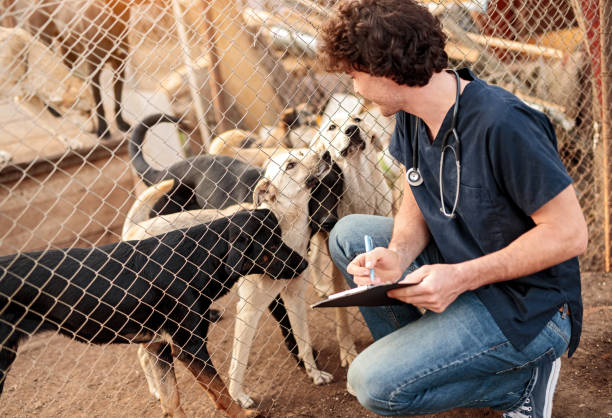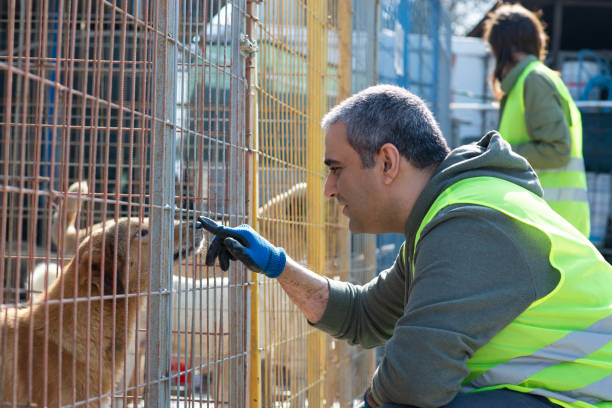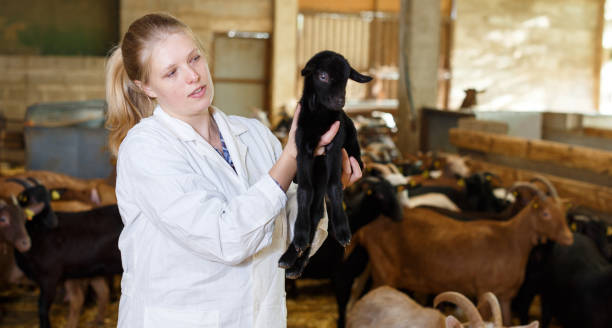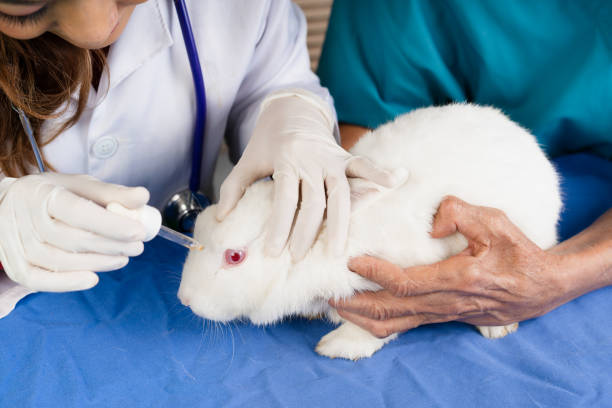
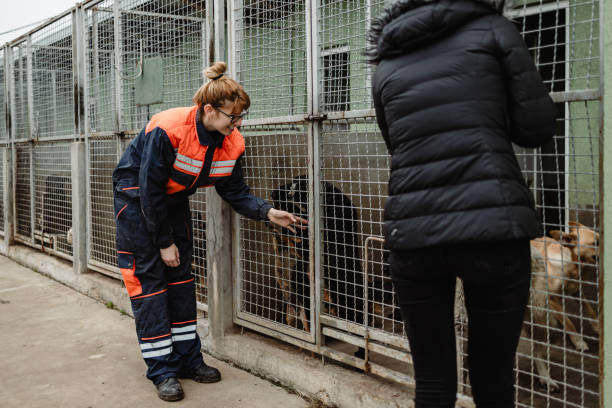
Animal Welfare Officers are committed advocates who monitor and enforce animal welfare laws, investigate cases of abuse or neglect, and implement programs to enhance the quality of life for animals. Their duties include inspecting facilities to ensure compliance with welfare regulations, educating the public on responsible animal care, and rescuing or rehabilitating animals in distress. Operating in field settings, offices, or community outreach programs, they combine a deep passion for animal protection with a strong understanding of legal and ethical frameworks to address challenges related to animal cruelty and exploitation. As key contributors to the Veterinary & Fishery Sciences career cluster, Animal Welfare Officers advance the cause of animal well-being in a landscape increasingly focused on ethical standards, sustainable practices, and the prevention of cruelty across domestic, farm, and wild animal populations.
- Inspection and Compliance Monitoring:
- Conduct regular inspections of animal facilities such as shelters, farms, zoos, and research labs to ensure adherence to welfare laws and standards.
- Assess living conditions, handling practices, and care protocols to identify violations or areas needing improvement.
- Investigation of Cruelty and Neglect:
- Respond to reports of animal abuse or neglect, conducting thorough investigations to gather evidence and document cases.
- Collaborate with law enforcement or legal authorities to take action against offenders, including rescues or prosecutions when necessary.
- Animal Rescue and Rehabilitation:
- Coordinate or participate in the rescue of animals from harmful situations, ensuring their safe transfer to shelters or rehabilitation centers.
- Oversee or support rehabilitation efforts, working with veterinarians to provide medical care and behavioral support for traumatized animals.
- Public Education and Advocacy:
- Educate communities, pet owners, and stakeholders on animal welfare laws, responsible ownership, and humane treatment practices through workshops or campaigns.
- Advocate for stronger animal protection policies by engaging with policymakers, media, and the public to raise awareness of welfare issues.
- Policy Development and Enforcement:
- Assist in drafting or updating animal welfare regulations and guidelines at local, regional, or national levels to strengthen protections.
- Ensure enforcement of existing laws by issuing warnings, fines, or other penalties to non-compliant individuals or organizations.
- Collaboration with Organizations:
- Work with animal welfare NGOs, veterinary teams, and government bodies to develop programs for spay/neuter initiatives, adoption drives, or disaster response for animals.
- Partner with international agencies to align local practices with global animal welfare standards and address cross-border issues like illegal trade.
- Documentation and Reporting:
- Maintain detailed records of inspections, investigations, and interventions to ensure transparency and support legal or administrative actions.
- Prepare reports for authorities, organizations, or funders to document progress, challenges, and outcomes of welfare initiatives.
- Crisis and Emergency Response:
- Respond to emergencies such as natural disasters or large-scale cruelty cases, coordinating efforts to rescue, shelter, and care for affected animals.
- Develop contingency plans to protect animals during crises, ensuring rapid and effective welfare interventions.
| Route | Steps |
| Route 1 | 1. 10+2 in any stream (Science with Biology preferred) |
| 2. Bachelor’s Degree in Veterinary Science and Animal Husbandry (BVSc & AH) (5-5.5 years, including internship) or Bachelor’s in Animal Science/Zoology (3-4 years) | |
| 3. Gain experience through volunteer work or entry-level roles in animal welfare organizations after graduation | |
| 4. Work as an Animal Welfare Officer in NGOs, government, or private sectors | |
| Route 2 | 1. 10+2 in any stream (Science with Biology preferred) |
| 2. Bachelor’s Degree in Veterinary Science and Animal Husbandry (BVSc & AH) (5-5.5 years) or Bachelor’s in Animal Science/Zoology (3-4 years) | |
| 3. Master’s Degree in Animal Welfare, Veterinary Science, or related field (2 years) | |
| 4. Pursue certifications in Animal Welfare or Humane Law Enforcement | |
| 5. Establish as an Animal Welfare Officer in specialized or leadership roles | |
| Route 3 | 1. 10+2 in any stream (Science with Biology preferred) |
| 2. Bachelor’s Degree in Veterinary Science and Animal Husbandry (BVSc & AH) (5-5.5 years) or Bachelor’s in Animal Science/Zoology (3-4 years) | |
| 3. Master’s Degree in Animal Welfare or related field (2 years) | |
| 4. Ph.D. in Animal Welfare or Veterinary Science (3-5 years) for research or policy roles | |
| 5. Serve as an Animal Welfare Officer or Academician in high-level advocacy or research positions | |
| Route 4 | 1. 10+2 in any stream (Science with Biology preferred) |
| 2. Bachelor’s Degree in Social Work, Environmental Science, or related field (3-4 years) | |
| 3. Certificate or Diploma in Animal Welfare (6 months-1 year) from recognized organizations | |
| 4. Gain hands-on experience through NGOs or animal shelters | |
| 5. Build a career as an Animal Welfare Officer in community or organizational roles |
- Participation in internships or volunteer programs at animal shelters or NGOs for initial exposure to welfare issues and rescue operations.
- Involvement in university-affiliated veterinary or zoology projects to assist in animal care and welfare assessments under supervision during academic training.
- Assisting in animal welfare organizations like PETA India or Blue Cross to learn investigation techniques, public outreach, and rehabilitation processes.
- Observerships at zoos or wildlife rehabilitation centers for exposure to welfare challenges of exotic or wild animals in captivity or recovery.
- Participation in animal welfare workshops or training programs on cruelty prevention and humane law enforcement for skill enhancement and networking.
- Training through collaborative projects like community spay/neuter drives or anti-cruelty campaigns to apply welfare principles in real-world settings.
- Exposure to field practices such as facility inspections or emergency rescues during placements with government or non-profit welfare bodies.
- Project-based learning in specialized areas like farm animal welfare or disaster response for animals to build focused expertise.
- Community service initiatives to advocate for stray animal protection or responsible pet ownership in local areas.
- International volunteering or online courses for exposure to global animal welfare standards and innovative advocacy practices.
- Bachelor of Veterinary Science and Animal Husbandry (BVSc & AH).
- Bachelor’s in Animal Science, Zoology, or Social Work.
- Master’s in Animal Welfare, Veterinary Science, or Environmental Science.
- Ph.D. in Animal Welfare or related fields for research and policy roles.
- Certificate or Diploma in Animal Welfare and Behavior.
- Specialization in Farm Animal Welfare, Companion Animal Protection, or Wildlife Welfare Advocacy.
- Certification in Humane Law Enforcement or Animal Cruelty Investigation.
- Training in Animal Rescue and Rehabilitation Techniques.
- Workshops on Animal Welfare Legislation and Policy Development.
- Short Courses in Disaster Response and Emergency Animal Care.
| Institute | Course/Program | Official Link |
| Indian Veterinary Research Institute (IVRI), Izatnagar | BVSc & AH, MVSc in Veterinary Science | https://www.ivri.nic.in/ |
| Guru Angad Dev Veterinary and Animal Sciences University (GADVASU), Ludhiana | BVSc & AH, MVSc in Veterinary Science | https://www.gadvasu.in/ |
| Tamil Nadu Veterinary and Animal Sciences University (TANUVAS), Chennai | BVSc & AH, MVSc in Veterinary Science | https://www.tanuvas.ac.in/ |
| Maharashtra Animal and Fishery Sciences University (MAFSU), Nagpur | BVSc & AH, MVSc in Veterinary Science | https://www.mafsu.in/ |
| West Bengal University of Animal and Fishery Sciences (WBUAFS), Kolkata | BVSc & AH, MVSc in Veterinary Science | https://wbuafscl.ac.in/ |
| Rajasthan University of Veterinary and Animal Sciences (RAJUVAS), Bikaner | BVSc & AH, MVSc in Veterinary Science | https://rajuvas.org/ |
| Kerala Veterinary and Animal Sciences University (KVASU), Pookode | BVSc & AH, MVSc in Veterinary Science | https://www.kvasu.ac.in/ |
| Assam Agricultural University (AAU), Jorhat | BVSc & AH, MVSc in Veterinary Science | https://www.aau.ac.in/ |
| Lala Lajpat Rai University of Veterinary and Animal Sciences (LUVAS), Hisar | BVSc & AH, MVSc in Veterinary Science | https://www.luvas.edu.in/ |
| National Institute of Animal Welfare (NIAW), Ballabhgarh | Certificate/Diploma in Animal Welfare | https://moef.gov.in/ |
| Institution | Course | Country | Official Link |
| Royal Veterinary College (RVC), London | BVetMed, MSc in Animal Welfare | UK | https://www.rvc.ac.uk/ |
| University of Bristol, School of Veterinary Sciences | BVSc, MSc in Animal Welfare | UK | https://www.bristol.ac.uk/vetscience/ |
| University of California, Davis School of Veterinary Medicine | DVM, MS in Animal Welfare | USA | https://www.vetmed.ucdavis.edu/ |
| University of Melbourne, School of Veterinary Science | DVM, MVSc in Animal Welfare | Australia | https://www.unimelb.edu.au/ |
| University of Guelph, Ontario Veterinary College | DVM, MSc in Animal Welfare | Canada | https://www.uoguelph.ca/ovc/ |
| Utrecht University, Faculty of Veterinary Medicine | DVM, MSc in Animal Welfare | Netherlands | https://www.uu.nl/en |
| University of Edinburgh, Royal (Dick) School of Veterinary Studies | BVMS, MSc in Animal Welfare | UK | https://www.ed.ac.uk/vet |
| Massey University, School of Veterinary Medicine, Palmerston North | BVSc, MSc in Animal Welfare | New Zealand | https://www.massey.ac.nz/ |
| University of Pretoria, Faculty of Veterinary Science, Onderstepoort | BVSc, MMedVet in Animal Welfare | South Africa | https://www.up.ac.za/ |
| Tufts University, Cummings School of Veterinary Medicine | DVM, MS in Animals and Public Policy | USA | https://vet.tufts.edu/ |
India:
- NEET (National Eligibility cum Entrance Test): Mandatory for admission to BVSc & AH programs at most veterinary colleges in India.
- AIPVT (All India Pre-Veterinary Test): Previously used, now integrated with NEET for undergraduate veterinary admissions.
- State-Level Veterinary Entrance Exams: Some states like Tamil Nadu or Kerala conduct separate exams or counseling based on NEET scores.
- ICAR AIEEA (All India Entrance Examination for Admission): For admission to central universities or specific veterinary programs under ICAR.
- University-Specific Exams: Certain institutes like IVRI or GADVASU may have additional tests or interviews for postgraduate programs.
International:
- SAT (Scholastic Assessment Test): Required for undergraduate admissions in the USA and some other countries for pre-veterinary or related programs.
- ACT (American College Testing): Alternative to SAT for undergraduate admissions in the USA.
- GRE (Graduate Record Examination): Required for postgraduate programs in animal welfare or related fields globally.
- TOEFL (Test of English as a Foreign Language): Minimum score of 80-100 required for non-native speakers applying to programs in English-speaking countries.
- IELTS (International English Language Testing System): Minimum score of 6.5-7.0 required for admission to universities in the UK, Australia, and other English-speaking regions.
Animal Welfare Officer → Senior Animal Welfare Officer → Animal Welfare Program Manager → Animal Welfare Policy Advisor → Director of Animal Welfare Organization
- Non-governmental organizations (NGOs) focused on animal welfare for advocacy, rescue, and rehabilitation programs.
- Government agencies for enforcing animal welfare laws and conducting inspections in farms, shelters, or research facilities.
- Animal shelters for managing care, adoption, and welfare standards for rescued or stray animals.
- Zoos and wildlife sanctuaries for ensuring ethical treatment and welfare of captive or rehabilitated wild animals.
- Research institutions for overseeing ethical treatment of animals in scientific studies and promoting alternative testing methods.
- Veterinary clinics or hospitals for collaborating on welfare cases and educating pet owners on humane care.
- Corporate sectors like pet food or livestock industries for ensuring welfare compliance in supply chains or product development.
- Educational institutions for teaching animal welfare principles and conducting outreach programs.
- Farm animal welfare organizations for improving conditions in agricultural settings and promoting humane farming practices.
- International animal protection organizations for contributing to global welfare standards and cross-border rescue initiatives.
| India | International |
| People for Animals (PFA), Multiple Locations | World Organisation for Animal Health (OIE), France |
| Blue Cross of India, Chennai | Humane Society International (HSI), Global |
| Wildlife SOS, Multiple Locations | World Society for the Protection of Animals (WSPA), Global |
| Animal Welfare Board of India (AWBI), Multiple Locations | American Society for the Prevention of Cruelty to Animals (ASPCA), USA |
| PETA India, Multiple Locations | Royal Society for the Prevention of Cruelty to Animals (RSPCA), UK |
| Humane Society International - India, Multiple Locations | International Fund for Animal Welfare (IFAW), Global |
| Federation of Indian Animal Protection Organisations (FIAPO), Multiple Locations | World Wildlife Fund (WWF), Global |
| Stray Relief and Animal Welfare (STRAW), Delhi | Compassion in World Farming (CIWF), UK |
| Bombay Society for the Prevention of Cruelty to Animals (BSPCA), Mumbai | The Brooke (for working equines), UK |
| Help in Suffering (HIS), Jaipur | Born Free Foundation, Global |
| Pros | Cons |
| Opportunity to make a direct impact on animal lives by preventing cruelty and improving welfare conditions | Emotionally taxing due to frequent exposure to cases of animal abuse, neglect, or suffering |
| Potential for significant societal change by advocating for stronger animal protection laws and ethical practices | Physically demanding with fieldwork, often involving long hours in challenging or hazardous conditions |
| Rewarding career through rescuing animals and fostering humane treatment, creating a lasting difference | High stress from dealing with legal confrontations, resistant stakeholders, or limited resources for interventions |
| Diverse opportunities across NGOs, government roles, wildlife care, research, and international advocacy | Limited funding or support in some regions, making it challenging to implement large-scale welfare programs |
| Growing demand driven by increasing public awareness of animal rights and ethical treatment globally | Potential safety risks during investigations or rescues, especially in cases involving aggressive individuals or animals |
- Increasing public awareness and activism for animal rights, driving demand for Animal Welfare Officers in advocacy and enforcement roles.
- Growing adoption of technology, such as drones or apps, for monitoring animal welfare conditions and reporting cruelty in remote areas.
- Advancements in global welfare standards, with more countries adopting stricter laws against cruelty, creating opportunities for policy roles.
- Rising focus on farm animal welfare, driven by consumer demand for ethical and sustainable food production practices.
- Expansion of wildlife protection initiatives, increasing the need for welfare officers in conservation and anti-poaching efforts.
- Development of alternative testing methods in research, pushing welfare officers to advocate for reduced animal use in experiments.
- Heightened emphasis on disaster preparedness for animals, with welfare officers playing key roles in emergency response planning.
- Enhanced collaboration between Animal Welfare Officers and tech platforms for innovations like online cruelty reporting or adoption systems.
- Growing need for welfare education in schools and communities, expanding opportunities in outreach and training roles.
- Focus on international animal welfare treaties and collaborations, with officers contributing to cross-border rescue and protection efforts.
(Figures are approximate and based on latest available data as of 2026, subject to change. Salaries vary based on location, experience, specialization, and type of employment.)
| Career Level | India (₹ per annum) | International (USD per annum) |
| Animal Welfare Officer (Early to Mid-Career) | 3,00,000 - 6,00,000 | 30,000 - 50,000 |
| Senior Animal Welfare Officer (Mid-Career) | 6,00,000 - 10,00,000 | 50,000 - 75,000 |
| Animal Welfare Program Manager (Established) | 10,00,000 - 15,00,000 | 75,000 - 100,000 |
| Animal Welfare Policy Advisor | 15,00,000 - 20,00,000 | 100,000 - 130,000 |
| Director of Animal Welfare Organization | 20,00,000+ | 130,000+ |
- Case Management Software like ShelterBuddy for tracking animal welfare cases, rescues, and rehabilitation progress.
- Reporting Tools like cruelty reporting apps or custom databases for documenting investigations and inspections.
- Geographic Information Systems (GIS) for mapping animal welfare issues or planning rescue operations in specific regions.
- Communication Platforms like Slack for coordinating with welfare teams, volunteers, or government agencies.
- Telemedicine Platforms like Vetster for remote consultations with veterinarians on welfare-related health concerns.
- Data Analysis Tools like SPSS for research-focused welfare officers studying cruelty trends or program impacts.
- Client and Community Outreach Apps like PetDesk for educating owners or updating stakeholders on welfare initiatives.
- Inventory Management Software for tracking supplies like food or medical kits used in rescue or shelter operations.
- Social Media Management Tools like Hootsuite for advocacy campaigns and raising awareness on animal welfare issues.
- Collaboration Tools like Microsoft Teams for working with multi-disciplinary teams on welfare projects or policy development.
- Indian Veterinary Association (IVA), India.
- World Veterinary Association (WVA), Global.
- Animal Welfare Board of India (AWBI), India.
- Humane Society International (HSI), Global.
- Federation of Indian Animal Protection Organisations (FIAPO), India.
- Royal Society for the Prevention of Cruelty to Animals (RSPCA), UK.
- American Society for the Prevention of Cruelty to Animals (ASPCA), USA.
- World Animal Protection (WAP), Global.
- Compassion in World Farming (CIWF), UK.
- International Fund for Animal Welfare (IFAW), Global.
- Maneka Gandhi (India, Contemporary): A prominent animal rights activist since the 1980s, founder of People for Animals (PFA), she has championed welfare laws and rescue initiatives in India as a politician and advocate.
- Dr.Chinny Krishna (India, Contemporary): A leading figure since the 1960s, co-founder of Blue Cross of India, he pioneered animal birth control programs and welfare advocacy in India.
- AmalaAkkineni (India, Contemporary): A dedicated animal welfare activist since the 1990s, associated with Blue Cross of India, she focuses on rescue and rehabilitation efforts in Hyderabad.
- Norma Alvares (India, Contemporary): A notable advocate since the 1990s, associated with People for Animals, she works on legal battles for animal rights and welfare enforcement in India.
- GeetaSeshamani (India, Contemporary): A key welfare leader since the 1990s, co-founder of Wildlife SOS, she has driven rescue and rehabilitation projects for bears and elephants in India.
- Wayne Pacelle (USA, Contemporary): A renowned animal welfare leader since the 1990s, former CEO of Humane Society of the US, he has influenced global welfare policies and campaigns against cruelty.
- Jane Goodall (UK, Contemporary): A legendary primatologist and welfare advocate since the 1960s, founder of the Jane Goodall Institute, she promotes ethical treatment of animals worldwide.
- Philip Wollen (Australia, Contemporary): A prominent activist since the 2000s, founder of Winsome Constance Kindness Trust, he advocates for animal rights and veganism globally.
- Ingrid Newkirk (USA/UK, Contemporary): A leading figure since the 1980s, co-founder of PETA, she has shaped international animal welfare movements through advocacy and campaigns.
- Joyce D’Silva (UK, Contemporary): A notable welfare advocate since the 1980s, associated with Compassion in World Farming, she focuses on farm animal welfare and policy reform globally.
- Build a solid foundation in animal science, veterinary studies, or social work to understand welfare needs and advocacy approaches.
- Seek early field exposure through volunteering at shelters or NGOs to develop practical skills in rescue and welfare enforcement.
- Prepare diligently for relevant entrance exams or certifications to gain admission into programs focused on animal welfare or veterinary science.
- Pursue specialized training in animal welfare laws and humane enforcement to stand out in this impactful field.
- Stay informed about welfare advancements by attending seminars and following global trends in animal rights and protection.
- Develop hands-on expertise by assisting in real-world investigations, rescues, or community outreach programs.
- Engage in university projects or local welfare initiatives to apply ethical principles in diverse practical settings.
- Join professional networks like HSI or AWBI for connections and access to critical animal welfare resources.
- Cultivate emotional strength to manage the challenges of witnessing animal suffering while maintaining professional focus.
- Explore international opportunities or wildlife welfare roles to understand varied protection needs across species and regions.
- Volunteer at local animal care events or rural campaigns to gain experience in advocating for diverse animal populations.
- Sharpen investigative and communication skills to address welfare violations and educate communities effectively.
- Participate in ongoing learning to keep pace with evolving welfare laws, technologies, and advocacy strategies.
- Build relationships with welfare organizations and stakeholders to foster trust and collaborative progress in protection efforts.
- Maintain perseverance to navigate the emotionally intense and often under-resourced landscape of animal welfare advocacy.
- Balance academic preparation with extensive field experience to adapt to the dynamic challenges of animal protection work.
Pursuing a career as an Animal Welfare Officer opens a deeply meaningful and transformative path to champion the rights and well-being of animals, ensuring they are treated with the dignity and care they deserve. From rescuing creatures in distress to shaping policies that prevent cruelty across pets, livestock, and wildlife, Animal Welfare Officers stand as steadfast guardians of ethical treatment in a world awakening to animal rights. This vocation melds a profound commitment to living beings, a robust understanding of welfare principles, and a focused drive for advocacy, unlocking significant roles in enforcement, education, and global protection efforts. For those inspired by the mission to shield animals from harm, equipped to tackle challenges with innovative and compassionate strategies, and determined to forge a lasting legacy in humane practices, a career as an Animal Welfare Officer presents an extraordinarily fulfilling and influential professional expedition, holding the power to reshape societal perspectives on animal care for generations to come.