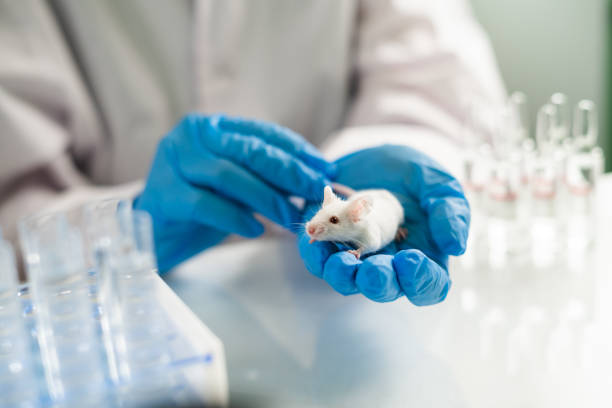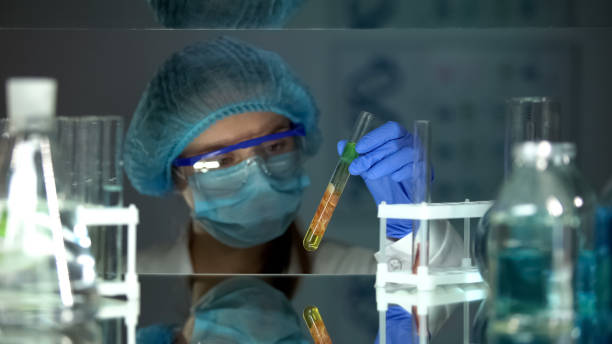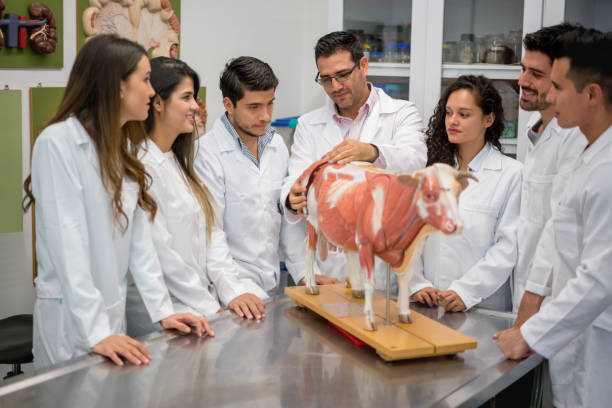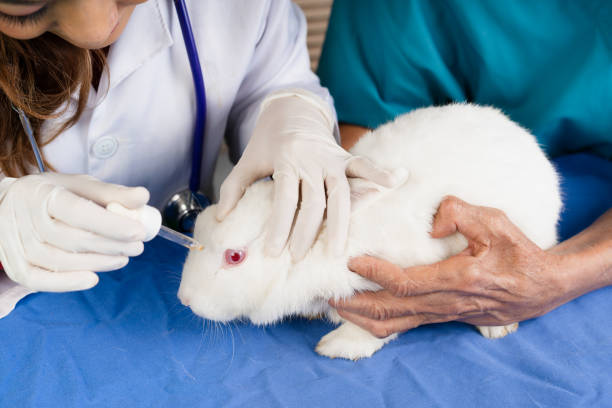

Veterinary Scientists are analytical and dedicated professionals who operate in laboratories, field settings, or policy environments, using tools such as diagnostic equipment, molecular biology techniques, and data analysis software. Their role involves researching animal diseases, developing vaccines, and ensuring livestock safety, often facing challenges like emerging pathogens or funding constraints. They combine expertise in biology, pathology, and epidemiology to address animal and public health needs. As key contributors to science and agriculture, they help shape the future of veterinary medicine, food security, and zoonotic disease prevention in an industry increasingly driven by biotechnology, global health concerns, and sustainable practices.
- Animal Disease Research
- Investigate the causes, transmission, and progression of diseases in animals.
- Develop diagnostic tools and methods to identify pathogens in livestock and wildlife.
- Vaccine and Treatment Development
- Design and test vaccines or therapeutics to prevent or treat animal diseases.
- Collaborate with pharmaceutical companies to bring solutions to market.
- Public Health and Zoonotic Disease Prevention
- Study diseases transmissible between animals and humans to protect public health.
- Advise on biosecurity measures to prevent outbreaks like avian flu or rabies.
- Food Safety and Inspection
- Ensure the safety of animal-derived food products through pathogen testing.
- Develop protocols to minimize contamination in meat, dairy, and poultry industries.
- Data Analysis and Reporting
- Analyze research data to identify trends in animal health or disease patterns.
- Publish findings in scientific journals and present at veterinary conferences.
- Policy and Regulatory Support
- Provide scientific input for animal health regulations and government policies.
- Work with agencies to implement standards for animal welfare and trade.
- Field Research and Surveillance
- Conduct field studies to monitor animal populations for emerging health threats.
- Collect samples from diverse environments to study disease ecology.
- Education and Training
- Teach veterinary science concepts to students or train professionals in new techniques.
- Mentor junior researchers in lab methodologies and field research practices.
- Interdisciplinary Collaboration
- Work with ecologists, epidemiologists, and farmers on projects like sustainable livestock management.
- Contribute to global initiatives addressing antimicrobial resistance in animals.
| Route | Steps |
| Route 1 | 1. 10+2 in Science stream (with Biology, Chemistry, and Physics) 2. Bachelor’s degree in Veterinary Science (BVSc) or Animal Husbandry (5 years) 3. Internship or assistant role in veterinary research labs 4. Practice as Junior Veterinary Scientist or Research Associate |
| Route 2 | 1. 10+2 in Science stream with Biology 2. Bachelor’s degree in Veterinary Science or Biotechnology (3-5 years) 3. Master’s degree in Veterinary Science or related field (2 years) 4. Gain practical experience through research projects 5. Work as Veterinary Scientist or Research Specialist |
| Route 3 | 1. 10+2 in Science with Biology and Chemistry 2. Bachelor’s degree in Life Sciences or Animal Science (3-4 years) 3. Certification or short-term course in Veterinary Research or Pathology (3-6 months) 4. Internship in veterinary labs or government agencies 5. Practice as Veterinary Research Technician or Field Scientist |
| Route 4 | 1. 10+2 in Science stream 2. Bachelor’s degree in Veterinary Science or related field (3-5 years) 3. Ph.D. in Veterinary Science or specialized area (3-5 years) 4. Post-doctoral research or industry leadership role 5. Practice as Senior Veterinary Scientist or Consultant |
- Mandatory internships during degree programs at veterinary clinics or research labs for real-world experience.
- Rotations in animal pathology or epidemiology teams for hands-on exposure to disease research.
- Internships under experienced Veterinary Scientists for training in advanced techniques like molecular diagnostics.
- Observerships at livestock farms or government agencies for applied veterinary insights.
- Participation in mock research projects for skill development in disease surveillance and analysis.
- Training in biotechnology tools through real-world projects like vaccine development.
- Exposure to regulatory documentation during internships for skills in compliance and policy.
- Volunteer roles in animal welfare organizations or wildlife conservation to build a portfolio.
- Community engagement projects for promoting animal health awareness in rural or agricultural sectors.
- International research attachments for global exposure to cutting-edge veterinary science practices.
- Certificate in Veterinary Pathology or Epidemiology.
- Bachelor’s in Veterinary Science (BVSc) or Animal Husbandry.
- Master’s in Veterinary Science, Animal Biotechnology, or Public Health.
- Specialization in Veterinary Microbiology, Parasitology, or Pharmacology.
- Ph.D. in Veterinary Science for advanced research leadership roles.
- Workshops on Molecular Diagnostics or Vaccine Development.
- Training in Food Safety or Zoonotic Disease Research.
- Specialization in Wildlife Medicine or Livestock Health Management.
- Certification in Animal Welfare Science or Veterinary Public Health.
- Short courses in Bioinformatics for Veterinary Applications.
| Institute | Course/Program | Official Link |
| Indian Veterinary Research Institute (IVRI), Izatnagar | MVSc/Ph.D. in Veterinary Science | https://www.ivri.nic.in/ |
| National Dairy Research Institute (NDRI), Karnal | MVSc/Ph.D. in Animal Biotechnology | https://www.ndri.res.in/ |
| Guru Angad Dev Veterinary and Animal Sciences University (GADVASU), Ludhiana | BVSc/MVSc/Ph.D. in Veterinary Science | https://www.gadvasu.in/ |
| Tamil Nadu Veterinary and Animal Sciences University (TANUVAS), Chennai | BVSc/MVSc/Ph.D. in Veterinary Science | https://www.tanuvas.ac.in/ |
| Maharashtra Animal and Fishery Sciences University (MAFSU), Nagpur | BVSc/MVSc in Veterinary Science | https://www.mafsu.in/ |
| West Bengal University of Animal and Fishery Sciences, Kolkata | BVSc/MVSc/Ph.D. in Veterinary Science | https://www.wbuafscl.ac.in/ |
| Rajasthan University of Veterinary and Animal Sciences (RAJUVAS), Bikaner | BVSc/MVSc in Veterinary Science | https://rajuvas.org/ |
| Kerala Veterinary and Animal Sciences University (KVASU), Pookode | BVSc/MVSc/Ph.D. in Veterinary Science | https://www.kvasu.ac.in/ |
| Assam Agricultural University, Jorhat | BVSc/MVSc in Veterinary Science | https://www.aau.ac.in/ |
| University of Agricultural Sciences, Bangalore | BVSc/MVSc in Veterinary Science | https://www.uasbangalore.edu.in/ |
| Institution | Course | Country | Official Link |
| Cornell University College of Veterinary Medicine | DVM/MS/Ph.D. in Veterinary Science | USA | https://www.vet.cornell.edu/ |
| University of California, Davis School of Veterinary Medicine | DVM/MS/Ph.D. in Veterinary Science | USA | https://www.vetmed.ucdavis.edu/ |
| Royal Veterinary College (RVC), University of London | BVetMed/MS/Ph.D. in Veterinary Science | UK | https://www.rvc.ac.uk/ |
| University of Edinburgh, Royal (Dick) School of Veterinary Studies | BVMS/MS/Ph.D. in Veterinary Science | UK | https://www.ed.ac.uk/vet |
| University of Guelph, Ontario Veterinary College | DVM/MS/Ph.D. in Veterinary Science | Canada | https://ovc.uoguelph.ca/ |
| University of Sydney, School of Veterinary Science | DVM/MS/Ph.D. in Veterinary Science | Australia | https://www.sydney.edu.au/ |
| Utrecht University, Faculty of Veterinary Medicine | MS/Ph.D. in Veterinary Science | Netherlands | https://www.uu.nl/ |
| University of Melbourne, School of Veterinary Science | DVM/MS/Ph.D. in Veterinary Science | Australia | https://www.unimelb.edu.au/ |
| Ludwig Maximilian University of Munich, Veterinary Faculty | Dr.med.vet./Ph.D. in Veterinary Science | Germany | https://www.en.vetmed.uni-muenchen.de/ |
| University of Copenhagen, Faculty of Health and Medical Sciences | MS/Ph.D. in Veterinary Science | Denmark | https://www.ku.dk/ |
India:
- NEET (National Eligibility cum Entrance Test): For admission to BVSc and Animal Husbandry programs at most veterinary colleges in India.
- AIPVT (All India Pre-Veterinary Test): Previously used for veterinary admissions, now largely replaced by NEET for national-level entry.
- ICAR AIEEA (All India Entrance Examination for Admission): For admission to BVSc and MVSc programs at agricultural universities under ICAR.
- State-Level Veterinary Entrance Exams (e.g., RPVT in Rajasthan): For admission to state veterinary colleges like RAJUVAS.
- GATE (Graduate Aptitude Test in Engineering): For admission to MVSc or related postgraduate programs in biotechnology at some institutes.
- University-Specific Tests (e.g., TANUVAS Entrance Exam): For admission to specific veterinary universities like TANUVAS.
International:
- GRE (Graduate Record Examination): Required for MS or Ph.D. admissions in Veterinary Science or related fields at universities in the USA, Canada, and other countries.
- GRE Subject Test (Biology): Often required for graduate programs in Veterinary Science or Life Sciences in the USA.
- TOEFL (Test of English as a Foreign Language): Minimum score of 80-100 required for non-native speakers applying to programs in English-speaking countries like the USA, Canada, or Australia.
- IELTS (International English Language Testing System): Minimum score of 6.0-7.0 required for admission to universities in the UK, Australia, and other English-speaking regions for Veterinary Science courses.
- SAT (Scholastic Aptitude Test): Often required for undergraduate admissions in the USA or Canada for programs leading to Veterinary Science studies.
- MCAT (Medical College Admission Test): Occasionally required for combined veterinary or pre-vet programs in the USA or Canada.
Ideal Progressing Career Path
Veterinary Science Intern → Junior Veterinary Scientist → Veterinary Research Associate → Veterinary Scientist → Senior Veterinary Scientist → Veterinary Research Project Manager → Director of Veterinary Research → Chief Veterinary Science Officer → Veterinary Science Consultant → Veterinary Science Professor
- Government agencies for animal health policy and disease control.
- Research institutes for veterinary science and pathology studies.
- Pharmaceutical companies for veterinary drug and vaccine development.
- Agricultural sectors for livestock health and food safety research.
- Academic institutions for teaching and veterinary research.
- Wildlife conservation organizations for health studies of endangered species.
- Veterinary diagnostic laboratories for disease testing and surveillance.
- Biotechnology firms for genetic research in animal health.
- Food safety organizations for ensuring quality in animal-derived products.
- Freelance consulting for specialized veterinary science advisory services.
| India | International |
| Indian Veterinary Research Institute (IVRI) | Zoetis, Global |
| National Dairy Research Institute (NDRI) | Merck Animal Health, Global |
| Department of Animal Husbandry and Dairying | Elanco Animal Health, Global |
| Indian Council of Agricultural Research (ICAR) | Bayer Animal Health, Global |
| National Institute of Veterinary Epidemiology and Disease Informatics (NIVEDI) | IDEXX Laboratories, Global |
| Central Institute for Research on Buffaloes (CIRB) | Boehringer Ingelheim Animal Health, Global |
| Wildlife Institute of India (WII) | Virbac, Global |
| Serum Institute of India (Veterinary Division) | Ceva Animal Health, Global |
| Hester Biosciences Limited | VCA Animal Hospitals, USA |
| Venkateshwara Hatcheries Pvt. Ltd. (Venky’s) | World Organisation for Animal Health (OIE), Global |
| Pros | Cons |
| Opportunity to contribute to animal welfare and public health advancements | Often involves working in challenging field or lab conditions |
| High personal satisfaction in improving treatments for animals and food safety | Can face slow progress due to experimental failures or funding issues |
| Rewarding impact on agriculture, veterinary care, and zoonotic disease prevention | May require continuous learning to keep up with emerging pathogens |
| Diverse career paths across research, industry, and government | Risk of emotional stress when dealing with animal suffering or euthanasia |
| Strong potential for growth with increasing demand in sustainable agriculture | Uncertainty in outcomes due to the unpredictable nature of animal diseases |
- Digital Transformation: Increasing focus on precision livestock farming and digital health monitoring.
- Rising Demand: Growing need for Veterinary Scientists skilled in biotechnology and epidemiology.
- Technology Impact: Enhanced use of genomics and AI for disease prediction in animals.
- Interdisciplinary Focus: Emergence of collaboration with public health experts and data scientists.
- AI and Veterinary Tools: Adoption of AI for diagnostic imaging and health trend analysis.
- Global Market Needs: Development of solutions for antimicrobial resistance and zoonotic threats.
- Compliance-Centric Market: Use of data to enhance transparency in animal health regulations.
- Skill Development Needs: Growing necessity for training in bioinformatics and remote sensing.
- Sustainability Focus: Increased efforts to apply veterinary science in sustainable farming practices.
- Hybrid Research Models: Blending lab-based research with field surveillance for comprehensive insights.
| Career Level | India (₹ per annum) | International (USD per annum) |
| Veterinary Science Intern (Early Career) | 2,00,000 - 4,00,000 | 25,000 - 40,000 |
| Junior Veterinary Scientist (Mid-Career) | 4,00,000 - 8,00,000 | 40,000 - 60,000 |
| Veterinary Scientist | 8,00,000 - 15,00,000 | 60,000 - 80,000 |
| Senior Veterinary Scientist/Project Manager | 15,00,000 - 25,00,000 | 80,000 - 110,000 |
| Chief Veterinary Science Officer/Expert | 25,00,000+ | 110,000+ |
| Note: Salaries may vary based on location, employer, experience, and specialization. |
- Diagnostic Software (e.g., VetScan, IDEXX Cornerstone) for animal health analysis.
- Data Analysis Tools (e.g., R, MATLAB) for processing veterinary research data.
- Genomic Analysis Platforms (e.g., BLAST, Galaxy) for animal genetic studies.
- Disease Surveillance Software (e.g., EMPRES-i by FAO) for outbreak tracking.
- Statistical Software (e.g., SPSS, SAS) for research data interpretation.
- Lab Management Software (e.g., LabArchives) for experiment tracking.
- Geographic Information Systems (GIS) (e.g., ArcGIS) for mapping disease spread.
- Programming Languages (e.g., Python) for research automation and modelling.
- Cloud Collaboration Platforms (e.g., Google Workspace) for team projects.
- Veterinary Imaging Software (e.g., VetPACS) for diagnostic visualization.
- World Veterinary Association (WVA), Global.
- Indian Veterinary Association (IVA), India.
- American Veterinary Medical Association (AVMA), USA.
- European Association of Establishments for Veterinary Education (EAEVE), Europe.
- Australian Veterinary Association (AVA), Australia.
- Canadian Veterinary Medical Association (CVMA), Canada.
- British Veterinary Association (BVA), UK.
- Federation of Veterinarians of Europe (FVE), Europe.
- International Veterinary Biosafety Workgroup (IVBW), Global.
- World Organisation for Animal Health (OIE), Global.
- Louis Pasteur (France): Developed the first rabies vaccine for dogs and humans, pioneering veterinary science. His innovation saved lives. His impact drives immunology.
- Robert Koch (Germany): Identified pathogens like anthrax in livestock, shaping veterinary microbiology. His discoveries clarified disease causes. His impact advances diagnostics.
- Daniel E. Salmon (USA): Discovered Salmonella, linking animal and human health in veterinary research. His work improved food safety. His impact shapes public health.
- James Herriot (UK): Veterinarian and author who popularized veterinary science through his books on animal care. His stories inspired careers. His impact boosts awareness.
- John McFadyean (UK): Known as the father of veterinary pathology, advanced disease understanding in animals. His research set standards. His impact drives pathology.
- Mary Ross (USA): Early female veterinary scientist who contributed to livestock disease control in the USDA. Her work protected agriculture. Her impact inspires diversity.
- Calvin Schwabe (USA): Coined "One Health," linking veterinary and human health research. His concept reshaped policy. His impact fosters collaboration.
- Patricia Conrad (USA): Renowned for research on parasitic diseases in animals, improving veterinary diagnostics. Her findings aid treatment. Her impact advances parasitology.
- G. Balakrish Nair (India): Contributed to veterinary and public health research on zoonotic diseases like cholera. His work bridged gaps. His impact boosts zoonosis control.
- Sarah Cleaveland (UK/Tanzania): Known for rabies control research in Africa, advancing veterinary public health. Her efforts save lives. Her impact drives global health.
- M.S. Swaminathan (India): Renowned agricultural scientist whose work on livestock and crop integration indirectly advanced veterinary science through sustainable farming. His vision transformed agriculture. His impact supports animal health.
- VergheseKurien (India): Known as the "Father of the White Revolution," he revolutionized dairy farming in India, impacting veterinary science through improved livestock health practices. His initiatives boosted milk production. His impact drives dairy research.
- R.S. Sharma (India): Prominent veterinary scientist who contributed to research on animal parasitology and disease control at IVRI, shaping veterinary public health in India. His studies improved interventions. His impact advances parasitology.
- Build a strong foundation in biology and animal science to understand veterinary principles.
- Seek early exposure to lab or field roles through internships to confirm interest in veterinary science.
- Prepare thoroughly for competitive exams like NEET or GRE with structured study plans.
- Pursue short courses in veterinary diagnostics or epidemiology to gain expertise in emerging areas.
- Stay updated on industry trends by following journals like Veterinary Record or Journal of Veterinary Science.
- Develop hands-on skills in experimental techniques and animal monitoring through projects.
- Engage in practical internships at research institutes or farms for real-world experience.
- Join professional associations like WVA or IVA for networking and resources.
- Work on precision in experiments and documentation to ensure credible research outcomes.
- Explore international research opportunities for exposure to global veterinary advancements.
- Volunteer in animal welfare initiatives to understand practical veterinary challenges.
- Cultivate adaptability to handle rapid changes in technology and disease patterns.
- Attend continuing education programs to stay abreast of veterinary tools and trends.
- Build a network with researchers, veterinarians, and policymakers for collaborative efforts.
- Develop resilience to manage the high-pressure demands of research and animal care.
- Balance scientific rigor with ethical integrity to adapt to evolving veterinary landscapes.
A career as a Veterinary Scientist offers a profound opportunity to safeguard animal and human health, driving progress through rigorous research and compassionate expertise, fostering global well-being with every discovery. Veterinary Scientists are the architects of animal welfare, using their skills to develop transformative health solutions, address zoonotic threats, and advance sustainable agriculture across industries. This profession blends scientific curiosity with practical impact, providing pathways in research, agriculture, education, and beyond. For those passionate about animals, driven by a desire to solve complex health challenges, and Sino eager to embrace the evolving landscape of biotechnology and global collaboration, becoming a Veterinary Scientist is a deeply rewarding journey. It empowers individuals to shape veterinary and public health outcomes, address critical global issues, and advance progress through the transformative power of veterinary science.