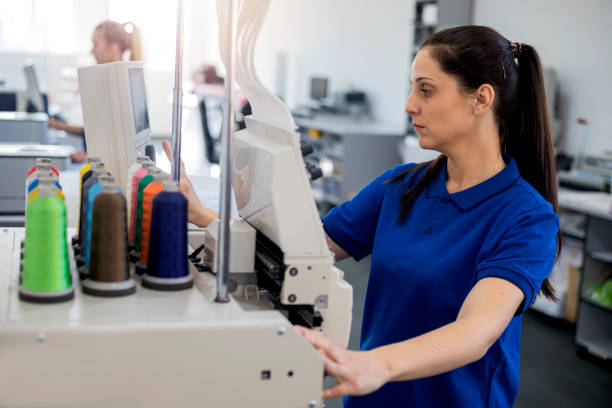
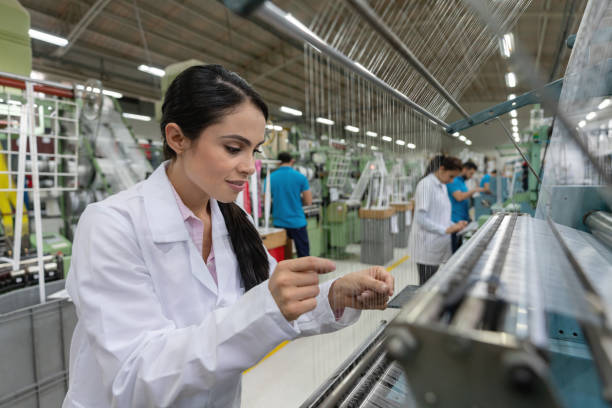
Textile Technologists operate in varied settings such as textile mills, research laboratories, fashion brands, technical textile firms, or as independent consultants, frequently collaborating with designers, engineers, and quality assurance teams. Their responsibilities include researching new materials, optimizing production techniques, ensuring fabric quality, and innovating for specialized applications like medical or automotive textiles. They confront challenges such as adapting to rapid technological shifts, managing production costs, and meeting sustainability demands in India’s competitive textile landscape. By applying proficiency in fiber science, textile engineering, and market analysis, they deliver fabrics that balance performance with aesthetics. As essential contributors to India’s textile and apparel industry, they advance progress through trends like nanotechnology in fabrics, zero-waste production, and digital weaving technologies.
- Material Research and Development
- Investigate and develop new fibers, yarns, and fabrics, including smart textiles and sustainable alternatives.
- Conduct experiments to enhance fabric properties like strength, flexibility, or moisture resistance.
- Production Process Enhancement
- Design and improve manufacturing processes such as spinning, weaving, knitting, and finishing to boost efficiency.
- Integrate automation and advanced technologies to minimize defects and optimize output in textile mills.
- Quality Testing and Assurance
- Test textiles for durability, colorfastness, shrinkage, and other performance metrics to meet industry standards.
- Ensure compliance with client specifications and international quality norms during production cycles.
- Innovation in Technical Textiles
- Create specialized fabrics for non-apparel uses, such as medical bandages, automotive upholstery, or protective gear.
- Collaborate with interdisciplinary teams to embed functionalities like conductivity or antimicrobial properties into textiles.
- Sustainability and Environmental Focus
- Promote eco-friendly practices by using biodegradable materials, reducing chemical usage, and recycling textile waste.
- Ensure adherence to environmental certifications like GOTS (Global Organic Textile Standard) in production.
- Trend Analysis and Product Customization
- Study global textile trends and consumer preferences to guide fabric development for fashion or industrial sectors.
- Customize textile solutions to meet specific client needs or seasonal market demands.
- Technical Documentation and Reporting
- Document research findings, production processes, and quality reports for internal records and client submissions.
- Contribute to patents or industry publications to advance textile technology knowledge.
- Training and Industry Collaboration
- Train production staff and junior technologists on innovative techniques, machinery, and safety measures.
- Partner with research institutes, fashion brands, and tech firms to drive cutting-edge textile solutions.
| Route | Steps |
| Route 1: Bachelor’s in Textile Technology - Direct Entry | 1. Complete 10+2 in Science stream (Physics, Chemistry, Math preferred) with minimum 50% marks. 2. Pursue B.Tech/B.E. in Textile Technology or Engineering (4 years). 3. Join textile firms or manufacturing units after gaining initial experience. 4. Progress to Textile Technologist through technical and research roles. |
| Route 2: Diploma to Degree Pathway | 1. Complete 10+2 and enroll in a 1-3 year Diploma in Textile Technology or Textile Engineering. 2. Gain lateral entry into degree programs (if eligible) or start working in technical roles. 3. Build skills through hands-on projects or certifications. 4. Join firms or pursue advanced studies for career advancement. |
| Route 3: Master’s Specialization (M.Tech/M.Sc) | 1. Complete Bachelor’s in Textile Technology, Textile Engineering, or related field. 2. Pursue M.Tech in Textile Technology or M.Sc in Textile Science via entrance exams like GATE. 3. Gain advanced skills through postgraduate research or industry exposure. 4. Join senior roles in textile innovation or start own ventures. |
| Route 4: International Education Path | 1. Complete 10+2 and clear relevant entrance exams or language tests (e.g., IELTS, TOEFL). 2. Pursue textile technology or engineering degree from international universities (e.g., USA, UK). 3. Gain global exposure through international internships or projects. 4. Return to India or work internationally with textile brands. |
| Route 5: Short-Term Courses and Practical Entry | 1. Complete 10+2 or basic education in any stream. 2. Enroll in short-term certificate courses (3-6 months) in Textile Technology or Fabric Testing. 3. Work as assistants in textile labs or production units for hands-on learning. 4. Build experience and network to establish roles in firms or freelance work. |
- Bachelor of Technology (B.Tech) in Textile Technology for comprehensive training in textile engineering.
- Bachelor of Engineering (B.E.) in Textile Engineering for technical expertise in fabric production.
- Master of Technology (M.Tech) in Textile Technology for advanced research and innovation skills.
- Master of Science (M.Sc) in Textile Science for in-depth material and process studies.
- Diploma in Textile Technology for entry-level practical roles in manufacturing.
- Specialization in Smart Textiles, Sustainable Textile Production, or Technical Textiles.
- Short-term courses on Textile Testing, Fabric Dyeing Techniques, and Digital Textile Design.
- Certifications in Quality Control for Textiles, Textile Chemistry, and Eco-Friendly Production for professional credibility.
| Institute | Course/Program | Official Link |
| Indian Institute of Technology (IIT), Delhi | B.Tech/M.Tech in Textile & Fibre Engineering | https://www.iitd.ac.in/ |
| National Institute of Fashion Technology (NIFT), Delhi | B.FTech in Apparel Production (Textile Focus) | https://www.nift.ac.in/ |
| National Institute of Technology (NIT), Jalandhar | B.Tech in Textile Technology | https://www.nitj.ac.in/ |
| Anna University, Chennai | B.E./M.E. in Textile Technology | https://www.annauniv.edu/ |
| Veermata Jijabai Technological Institute (VJTI), Mumbai | B.Tech in Textile Technology | https://www.vjti.ac.in/ |
| PSG College of Technology, Coimbatore | B.E./M.E. in Textile Technology | https://www.psgtech.edu/ |
| Government College of Engineering & Textile Technology, Berhampore | B.Tech in Textile Technology | https://www.gcetts.org/ |
| DKTE Society’s Textile & Engineering Institute, Ichalkaranji | B.Tech in Textile Technology | https://www.dktes.com/ |
| Sardar Vallabhbhai Patel Institute of Textile Management, Coimbatore | MBA in Textile Management (Tech Focus) | https://svpitm.ac.in/ |
| Man Made Textile Research Association (MANTRA), Surat | Certificate in Textile Technology | https://www.mantrasurat.org/ |
| Institution | Course | Country | Official Link |
| North Carolina State University, Raleigh | BS/MS in Textile Technology | USA | https://www.ncsu.edu/ |
| University of Manchester, Manchester | BSc/MSc in Textile Science & Technology | UK | https://www.manchester.ac.uk/ |
| Royal Melbourne Institute of Technology (RMIT), Melbourne | Bachelor of Fashion (Technology) | Australia | https://www.rmit.edu.au/ |
| Hong Kong Polytechnic University, Hong Kong | BA/MA in Fashion & Textile Technology | Hong Kong | https://www.polyu.edu.hk/ |
| Technical University of Dresden, Dresden | MSc in Textile Machinery & High-Performance Material Technology | Germany | https://tu-dresden.de/ |
| University of Leeds, Leeds | BSc/MSc in Textile Innovation & Sustainability | UK | https://www.leeds.ac.uk/ |
| Fashion Institute of Technology (FIT), New York | BS in Textile Development & Marketing | USA | https://www.fitnyc.edu/ |
| Politecnico di Milano, Milan | MS in Materials Engineering (Textile Focus) | Italy | https://www.polimi.it/ |
| Aalto University, Espoo | MA in Fashion, Clothing & Textile Design (Tech Focus) | Finland | https://www.aalto.fi/ |
| Shinshu University, Nagano | MS in Textile Science & Technology | Japan | https://www.shinshu-u.ac.jp/ |
India:
- Joint Entrance Examination (JEE Main): Required for B.Tech programs in Textile Technology at IITs and NITs (Written Test).
- NIFT Entrance Exam: Required for B.FTech programs with textile focus at National Institute of Fashion Technology (Written Test, Situation Test).
- State-Level Engineering Entrance Exams (e.g., TNEA, MHT CET): Conducted by respective state authorities for admission to B.E./B.Tech programs in Textile Technology at state universities (Written Test).
- GATE (Graduate Aptitude Test in Engineering): Conducted by IITs for admission to M.Tech programs in Textile Technology or recruitment in PSUs (Written Test).
- University-Specific Entrance Exams (e.g., Anna University TANCET): For admission to postgraduate programs in Textile Technology at specific universities (Written Test).
International (for Relevant Studies or Exposure):
- IELTS (International English Language Testing System): Minimum score of 6.0-6.5 for non-native speakers applying to programs in the UK, Canada, Australia, etc.
- TOEFL (Test of English as a Foreign Language): Minimum score of 80-90 for programs in English-speaking countries like the USA.
- SAT (Scholastic Aptitude Test): May be required for undergraduate programs in the USA (e.g., FIT, NC State).
- GRE (Graduate Record Examination): Required for MS or postgraduate programs in textile technology at international universities (e.g., NC State, University of Manchester).
- Portfolio Submission or Interview: Some international and Indian programs may require a portfolio of prior technical or design projects, along with interviews to assess fit.
Junior Textile Technician → Textile Technologist → Senior Textile Technologist → Textile Production Specialist → Textile Research Lead → Director of Textile Innovation
- Textile Mills for developing and producing fabrics for apparel and industrial uses.
- Fashion Brands for innovating textiles that align with design and market trends.
- Technical Textile Firms for creating specialized fabrics for medical, automotive, or defense sectors.
- Research Laboratories for pioneering new materials, smart textiles, and sustainable solutions.
- Export Companies for ensuring textile quality and compliance for international markets.
- Freelance Consultancy for offering expertise in textile innovation to smaller firms or startups.
- Quality Control Agencies for testing and certifying textiles to meet industry standards.
| India (Firms/Brands) | International Collaborations |
| Arvind Limited, Ahmedabad | Global Textile Tech Partnerships (e.g., Levi’s, USA) |
| Welspun India Limited, Mumbai | Smart Textile Collaborations, Japan (e.g., Toray Industries) |
| Raymond Limited, Mumbai | Luxury Fabric Innovation, Europe (e.g., LVMH) |
| Reliance Industries Limited (Textile Division), Mumbai | Sustainable Textile Tech, USA (e.g., DuPont) |
| Aditya Birla Group (Grasim Industries), Mumbai | International Textile Solutions (e.g., Birla Cellulose Global) |
| Vardhman Textiles Limited, Ludhiana | Global Yarn and Fabric Supply Chains (e.g., IKEA) |
| Trident Group, Ludhiana | International Home Textile Networks (e.g., Walmart) |
| International (Firms/Brands) | Focus Area |
| DuPont, Wilmington (USA) | Advanced Textile Materials (e.g., Kevlar, Nomex) |
| Toray Industries, Tokyo (Japan) | High-Performance Fabrics and Composites |
| Teijin Limited, Tokyo (Japan) | Technical Textiles for Automotive and Medical Uses |
| Lenzing AG, Lenzing (Austria) | Sustainable Fibers (e.g., Tencel) |
| Gore-Tex (W.L. Gore & Associates), Newark (USA) | Performance Fabrics for Outdoor Gear |
| Invista, Wichita (USA) | Synthetic Fibers (e.g., Lycra, Nylon) |
| Albini Group, Albino (Italy) | Premium Cotton Fabrics for Fashion |
| Pros | Cons |
| High impact through innovating textiles for diverse applications in fashion and industry | High pressure due to tight production schedules and quality expectations |
| Opportunity to pioneer futuristic materials like smart fabrics and sustainable fibers | High costs of research and adopting cutting-edge technologies for innovation |
| Significant role in enhancing fabric functionality and environmental responsibility | Challenges in balancing cost, quality, and sustainability in competitive markets |
| Growing demand in India’s robust textile sector and global export markets | Need for continuous learning to stay abreast of evolving textile technologies |
| Potential for global exposure by collaborating with international firms and research bodies | Exposure to chemical or industrial environments requiring strict safety measures |
- Smart Textile Revolution: Rising development of fabrics with embedded sensors, conductivity, or health-monitoring capabilities for lifestyle and medical uses.
- Sustainable Textile Practices: Growing focus on biodegradable fibers, recycled materials, and low-impact dyeing to reduce environmental harm.
- Digital Textile Design: Adoption of 3D simulation and AI-driven tools for faster prototyping and fabric customization.
- Nanotechnology in Textiles: Use of nano-coatings for enhanced fabric properties like water resistance or antibacterial effects.
- Automation in Manufacturing: Implementation of robotics and IoT to streamline textile production and improve precision.
- Technical Textile Expansion: Increasing demand for specialized fabrics in healthcare, automotive, and defense sectors globally.
- Circular Economy Models: Emphasis on textile recycling and upcycling to create sustainable production loops.
- Global Textile Trade: Indian textile innovations gaining traction in international markets for cost-effective and quality solutions.
- Personalized Fabrics: Leveraging data and technology to offer customized textile solutions for niche markets.
| Career Level (Private Sector Example) | India (₹ per annum) | International (USD per annum, Tentative) |
| Junior Textile Technician (Entry) | 2,50,000 - 4,00,000 | 20,000 - 30,000 |
| Textile Technologist (Early-Mid) | 4,00,000 - 6,50,000 | 30,000 - 45,000 |
| Senior Textile Technologist (Mid-Level) | 6,50,000 - 9,50,000 | 45,000 - 60,000 |
| Textile Production Specialist (Senior) | 9,50,000 - 13,00,000 | 60,000 - 80,000 |
| Textile Research Lead (Top Tier) | 13,00,000 - 17,00,000 | 80,000 - 100,000 |
| Director of Textile Innovation and Above | 17,00,000 - 22,00,000+ | 100,000 - 150,000+ |
Note: Salaries are indicative and vary based on location (metro vs. non-metro for India; country/region for international roles), firm size, and project scale. Figures for India are updated estimates based on industry trends as of 2025, reflecting inflation and market variations. International figures are approximate averages based on global textile technology trends in countries like the USA, UK, or Japan, sourced from industry reports and job portals.
- Textronics: For designing textile patterns and simulating fabric structures digitally.
- Lectra: For pattern making and optimizing textile production processes.
- QGIS/Bhuvan: For geographic mapping of textile resources or supply chain logistics.
- Datacolor: For color matching and ensuring consistency in textile dyeing and finishing.
- SAP Textile: For enterprise resource planning and managing textile production workflows.
- Microsoft Excel/SPSS: For analyzing production data, quality metrics, and research statistics.
- CLO 3D: For virtual prototyping of textile applications in apparel design.
- Higg Index Tools: For assessing environmental sustainability in textile production.
- Trello/Asana: For project management and collaboration in textile research and production.
- Autodesk Fusion 360: For integrating technical components into textile designs for specialized uses.
- Textile Association of India (TAI), India.
- Confederation of Indian Textile Industry (CITI), India.
- Southern India Mills’ Association (SIMA), India.
- Northern India Textile Research Association (NITRA), India.
- Ahmedabad Textile Industry’s Research Association (ATIRA), India.
- International Textile Manufacturers Federation (ITMF), Global.
- Sustainable Apparel Coalition (SAC), Global (Textile Sustainability Focus).
- European Textile and Apparel Confederation (EURATEX), Global.
- World Textile Information Network (WTiN), Global.
- Federation of Indian Chambers of Commerce & Industry (FICCI), India (Textile Innovation Collaboration).
- Kumar Mangalam Birla (India, Contemporary): Chairman of Aditya Birla Group, known for textile innovation through Grasim Industries. His vision drives progress. His impact scales sustainability.
- Sanjay Lalbhai (India, Contemporary): Chairman of Arvind Limited, known for denim and textile technology advancements. His strategies ensure quality. His impact transforms production.
- William E. Heinecke (USA, Contemporary): Leader at DuPont, known for pioneering advanced textile materials like Kevlar. His innovation protects lives. His impact sets standards.
- Masayoshi Son (Japan, Contemporary): Chairman of SoftBank, with investments in textile tech via Toray partnerships. His leadership shapes markets. His impact fosters innovation.
- R.K. Dalmia (India, Contemporary): Chairman of Century Textiles, known for sustainable textile production. His vision enhances ethics. His impact boosts exports.
- Stefan Seidel (Germany, Contemporary): Leader at Puma, known for integrating textile tech in sportswear. His business acumen scales output. His impact influences performance.
- Gautam Hari Singhania (India, Contemporary): Chairman of Raymond Limited, known for premium fabric technology. His strategies optimize quality. His impact elevates branding.
- Saburo Mitarai (Japan, Contemporary): Leader at Canon, with textile tech applications via Teijin collaborations. His leadership builds capacity. His impact redefines applications.
- Pawan Kumar Goenka (India, Contemporary): Former MD of Mahindra, known for technical textile applications in automotive. His vision strengthens trade. His impact globalizes solutions.
- François-Henri Pinault (France, Contemporary): CEO of Kering, known for sustainable textile initiatives in luxury fashion. His innovation transforms ethics. His impact reshapes high-end markets.
- Build a strong foundation in textile science, material engineering, and production technology for academic and professional success.
- Pursue early exposure through lab experiments or industry projects to gain practical experience in fabric development.
- Create a detailed portfolio showcasing textile innovations, quality testing, or research outcomes.
- Stay updated on textile technology trends like smart fabrics and sustainability through industry journals and webinars.
- Develop proficiency in textile software, testing equipment, and data analysis for a competitive advantage.
- Join reputed institutes like IIT Delhi or international universities for quality education and global connections.
- Work on resilience to handle rigorous research timelines and high-pressure production environments.
- Explore entry-level or contract roles in smaller textile units to build experience if corporate positions are delayed.
- Network with textile professionals and researchers at trade fairs to stay informed and inspired.
- Cultivate adaptability to manage diverse textile challenges, emerging technologies, and market demands.
- Focus on societal impact by innovating sustainable and functional textiles that address global needs.
A career in Textile Technology offers a unique opportunity to shape the future of materials by mastering scientific innovation and practical application, fostering progress through cutting-edge textile solutions, and empowering industries with every fabric developed. Textile Technologists are the innovators of India’s textile landscape, using their expertise and passion to ensure advanced material creation across diverse contexts. This profession blends technical mastery with creative exploration, providing pathways in fabric development, quality enhancement, technical textiles, and sustainable production practices. For those passionate about transforming materials through technology, driven by a desire to innovate through functionality, and eager to embrace the evolving landscape of textile challenges, a career as a Textile Technologist is a deeply rewarding journey. It empowers individuals to address performance and environmental needs, enhance material experiences, and advance societal progress through the transformative power of well-engineered textiles.