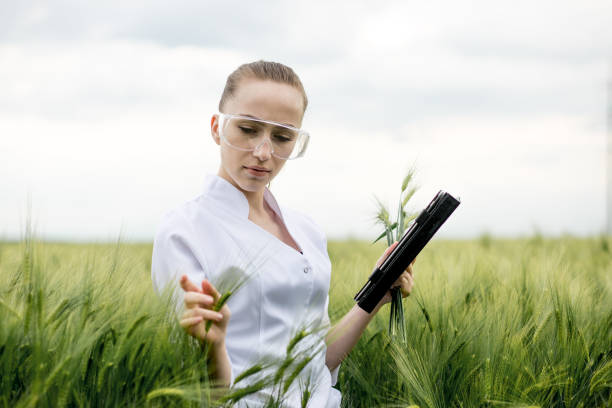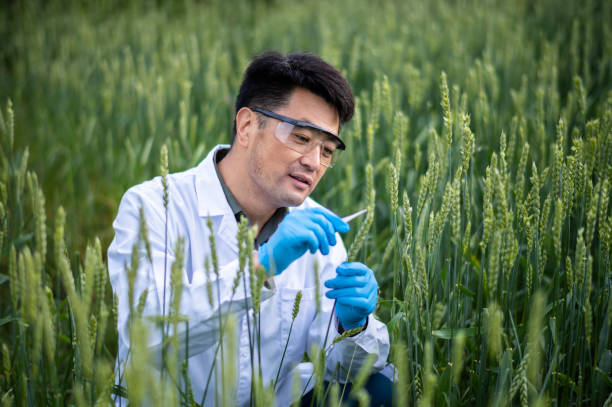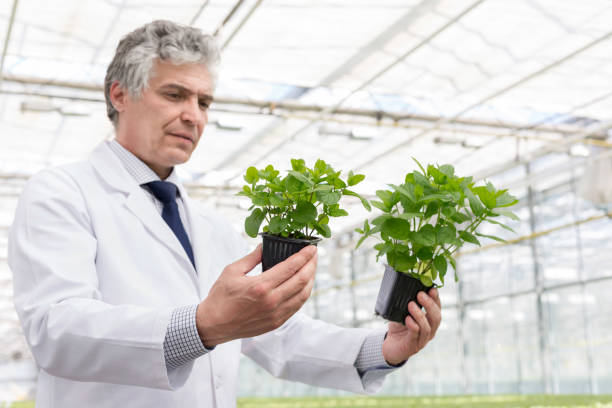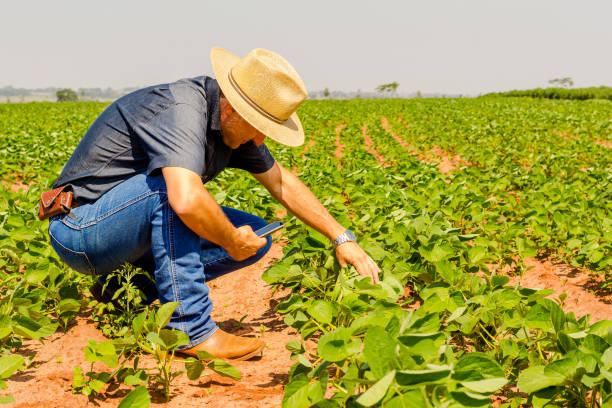
Agricultural Biotechnologists work in diverse settings such as research laboratories, agricultural companies, universities, and government agencies, often collaborating with geneticists, agronomists, farmers, and policymakers. Their roles include conducting genetic research, developing biotech solutions for farming, ensuring regulatory compliance, and addressing ethical concerns related to biotechnology. They face challenges like public skepticism about GMOs, high research costs, and complex regulatory frameworks. By leveraging expertise in molecular biology, genetics, and bioinformatics, Agricultural Biotechnologists enhance food production and environmental sustainability. As key contributors to agricultural innovation, they drive progress through trends like genome editing, microbial biotechnology, and sustainable bio-solutions.
- Genetic Engineering and Modification
- Develop genetically modified crops or livestock with desirable traits like pest resistance or higher yield.
- Use techniques like CRISPR-Cas9 to edit genes for specific agricultural outcomes.
- Biotech Product Development
- Create biofertilizers, biopesticides, and other biotechnological inputs to support sustainable farming.
- Test and refine products for efficacy and safety in agricultural applications.
- Molecular Biology Research
- Study plant and animal genomes to identify genes responsible for growth, disease resistance, and adaptability.
- Conduct experiments to understand genetic interactions and their impact on agriculture.
- Field Trials and Validation
- Design and oversee field trials to evaluate the performance of biotech crops or livestock under real-world conditions.
- Analyze data to assess the effectiveness and environmental impact of biotech solutions.
- Regulatory Compliance and Safety Assessment
- Ensure biotechnology products meet national and international safety and ethical standards.
- Prepare documentation for regulatory approvals and address biosafety concerns.
- Bioinformatics and Data Analysis
- Use computational tools to analyze genetic data and predict outcomes of genetic modifications.
- Develop databases and models to support agricultural biotech research.
- Collaboration and Advisory Services
- Work with farmers, agribusinesses, and policymakers to implement biotech solutions in agriculture.
- Provide expertise on the benefits and risks of biotechnology to stakeholders.
- Innovation and Patent Development
- Innovate new biotechnological methods or products to address agricultural challenges.
- File patents for novel discoveries to protect intellectual property in the field.
| Route | Steps |
| Route 1: Undergraduate Degree |
1. 10+2 in Science (Physics, Chemistry, Biology/Biotechnology) with minimum 50-60% marks 2. Pursue a B.Sc. in Biotechnology, Agricultural Biotechnology, or Life Sciences (3-4 years) 3. Gain practical exposure through internships in biotech labs or agricultural firms 4. Start as a Junior Research Assistant or Lab Technician |
| Route 2: Postgraduate Specialization |
1. Complete a Bachelor’s degree in Biotechnology, Agriculture, or related field 2. Pursue an M.Sc. in Agricultural Biotechnology, Molecular Biology, or Genetics (1-2 years) 3. Engage in research projects focused on genetic engineering or crop improvement 4. Work as a Research Associate or Biotech Analyst |
| Route 3: Doctoral Research for Advanced Roles |
1. Hold an M.Sc. in Agricultural Biotechnology or related field 2. Pursue a Ph.D. in Agricultural Biotechnology or Genetic Engineering (3-5 years) 3. Conduct cutting-edge research on GMOs or biotech solutions 4. Work as a Senior Scientist, Professor, or R&D Lead |
| Route 4: Integrated Programs for Comprehensive Training |
1. 10+2 in Science with minimum 50-60% marks 2. Enroll in an integrated B.Tech./M.Tech. in Biotechnology or Agricultural Biotechnology (5 years) 3. Participate in industry internships for hands-on skills 4. Work as a Biotech Engineer or Product Developer |
| Route 5: Short-Term Certifications with Experience |
1. Hold a basic education (B.Sc. or equivalent) or relevant work experience in biotechnology 2. Pursue short-term certifications in Genetic Engineering or Bioinformatics (3-6 months) 3. Leverage lab or field experience to transition into specialized roles 4. Work as a Biotech Consultant or Technical Specialist |
- Internships with biotech research institutes for experience in genetic engineering and lab techniques.
- Training in agricultural companies to learn about biotech product development and testing.
- Rotations in molecular biology labs for exposure to DNA sequencing and gene editing.
- Observerships with regulatory bodies to understand biosafety and GMO approval processes.
- Participation in field trials of biotech crops for practical application skills.
- Exposure to bioinformatics tools during training for data-driven agricultural research.
- Workshops on CRISPR and synthetic biology for cutting-edge technical knowledge.
- Volunteer roles in agricultural innovation projects to build professional networks.
- Collaborative initiatives with biotech startups for real-world problem-solving experience.
- B.Sc. in Biotechnology, Agricultural Biotechnology, or Life Sciences for foundational knowledge.
- M.Sc. in Agricultural Biotechnology, Molecular Biology, or Genetic Engineering for advanced expertise.
- Ph.D. in Agricultural Biotechnology or Genomics for research and academic roles.
- B.Tech./M.Tech. in Biotechnology or Agricultural Biotechnology for engineering-focused skills.
- Specialization in Plant Biotechnology, Animal Biotechnology, or Microbial Biotechnology.
- Short-term courses on CRISPR Gene Editing and Genetic Modification Techniques.
- Training in Bioinformatics for Agricultural Applications and Data Analysis.
- Certifications in Biosafety and Regulatory Affairs for Biotechnology.
| Institute | Course/Program | Official Link |
| Indian Agricultural Research Institute (IARI), New Delhi | M.Sc./Ph.D. in Agricultural Biotechnology | https://www.iari.res.in/ |
| Tamil Nadu Agricultural University, Coimbatore | B.Tech./M.Tech./Ph.D. in Agricultural Biotechnology | https://www.tnau.ac.in/ |
| Punjab Agricultural University, Ludhiana | B.Sc./M.Sc./Ph.D. in Biotechnology (Agricultural Focus) | https://www.pau.edu/ |
| University of Agricultural Sciences, Bangalore | B.Tech./M.Tech. in Agricultural Biotechnology | https://www.uasbangalore.edu.in/ |
| Anand Agricultural University, Gujarat | B.Tech./M.Tech. in Agricultural Biotechnology | https://www.aau.in/ |
| Chaudhary Charan Singh Haryana Agricultural University, Hisar | M.Sc./Ph.D. in Biotechnology (Agricultural Focus) | https://www.hau.ac.in/ |
| Banaras Hindu University, Institute of Science, Varanasi | M.Sc. in Agricultural Biotechnology | https://www.bhu.ac.in/ |
| Indira Gandhi Krishi Vishwavidyalaya, Raipur | B.Tech./M.Tech. in Agricultural Biotechnology | https://www.igau.edu.in/ |
| Kerala Agricultural University, Thrissur | B.Tech./M.Tech. in Agricultural Biotechnology | https://www.kau.in/ |
| National Institute of Plant Genome Research (NIPGR), New Delhi | Ph.D. in Plant Biotechnology | https://www.nipgr.ac.in/ |
| Institution | Course | Country | Official Link |
| Cornell University, College of Agriculture and Life Sciences | BS/MS/Ph.D. in Agricultural Biotechnology | USA | https://www.cornell.edu/ |
| University of California, Davis, Department of Plant Sciences | BS/MS/Ph.D. in Plant Biotechnology | USA | https://www.ucdavis.edu/ |
| Wageningen University & Research, Biotechnology Program | MSc/Ph.D. in Agricultural Biotechnology | Netherlands | https://www.wur.nl/ |
| University of Reading, School of Biological Sciences | MSc in Biotechnology (Agricultural Focus) | UK | https://www.reading.ac.uk/ |
| University of Melbourne, School of BioSciences | Master of Biotechnology (Agricultural Focus) | Australia | https://www.unimelb.edu.au/ |
| Purdue University, Department of Agronomy and Biotechnology | BS/MS/Ph.D. in Agricultural Biotechnology | USA | https://www.purdue.edu/ |
| University of Saskatchewan, College of Agriculture and Bioresources | BSc/MSc in Biotechnology (Agricultural Focus) | Canada | https://www.usask.ca/ |
| Massey University, Institute of Natural and Mathematical Sciences | Bachelor/Master of Biotechnology | New Zealand | https://www.massey.ac.nz/ |
| Technical University of Munich, School of Life Sciences | MSc in Agricultural Biosciences | Germany | https://www.tum.de/en/ |
| University of Copenhagen, Department of Plant and Environmental Sciences | MSc in Agricultural Biotechnology | Denmark | https://www.ku.dk/english/ |
India:
- ICAR AIEEA (All India Entrance Examination for Admission): For admission to B.Sc./M.Sc./Ph.D. programs in Agricultural Biotechnology at agricultural universities.
- JEE Main (Joint Entrance Examination): For admission to B.Tech. programs in Biotechnology at select institutes.
- GATE (Graduate Aptitude Test in Engineering): For M.Tech. programs in Biotechnology at premier institutes.
- State-Level Entrance Exams: Conducted by state universities for undergraduate and postgraduate programs in biotechnology.
- University-Specific Tests: Institutions like IARI or NIPGR may conduct their own exams or interviews for postgraduate and doctoral programs.
International:
- IELTS (International English Language Testing System): Minimum score of 6.5-7.0 for non-native speakers applying to programs in the UK, Canada, etc.
- TOEFL (Test of English as a Foreign Language): Minimum score of 90-100 for programs in English-speaking countries like the USA.
- SAT (Scholastic Assessment Test): Required for undergraduate biotechnology programs in the USA at universities like Cornell.
- GRE (Graduate Record Examination): Needed for postgraduate programs (MSc/MS/Ph.D.) in countries like the USA or Canada.
- Program-Specific Assessments: Some universities may require essays, portfolios, or interviews for biotechnology programs.
Junior Research Assistant → Biotech Research Associate → Agricultural Biotechnologist → Senior Biotech Scientist → Director of Agricultural Biotechnology R&D
- Agricultural research institutes for genetic engineering and crop improvement studies.
- Biotech companies for developing GMOs, biofertilizers, and biopesticides.
- Universities and academic institutions for teaching and research in agricultural biotechnology.
- Government agricultural departments for policy formulation and biosafety regulation.
- Private agribusiness firms for biotech product development and commercialization.
- Non-governmental organizations (NGOs) for sustainable agriculture and food security projects.
- International organizations for global agricultural biotech initiatives and collaborations.
| India | International |
| Indian Council of Agricultural Research (ICAR), New Delhi | Monsanto (Bayer), USA |
| National Institute of Plant Genome Research (NIPGR), New Delhi | Syngenta, Switzerland |
| Department of Biotechnology (DBT), Government of India | DuPont Pioneer, USA |
| Tata Institute of Fundamental Research (TIFR), Mumbai | BASF Agricultural Solutions, Germany |
| International Crops Research Institute for the Semi-Arid Tropics (ICRISAT), Hyderabad | Corteva Agriscience, USA |
| Biocon (Agricultural Division), Bangalore | Nestlé Research (Agricultural Biotech), Switzerland |
| Mahyco (Maharashtra Hybrid Seeds Company), Jalna | International Rice Research Institute (IRRI), Philippines |
| Pros | Cons |
| High societal impact through improved food security and sustainability | Public skepticism and ethical debates over GMOs |
| Cutting-edge work with technologies like CRISPR and synthetic biology | High research costs and long development timelines |
| Diverse career paths in research, industry, and policy | Stringent regulatory hurdles for biotech products |
| Opportunity to address global challenges like climate change | Risk of intellectual property disputes over innovations |
| Contribution to agricultural innovation and farmer empowerment | Need for continuous learning to keep up with biotech advancements |
- CRISPR Gene Editing: Precision tools for creating targeted modifications in crops and livestock.
- Synthetic Biology: Designing artificial biological systems for agricultural applications.
- Precision Agriculture Integration: Combining biotech with IoT and AI for optimized farming.
- Sustainable Biotech Solutions: Focus on eco-friendly biofertilizers and biopesticides.
- Microbial Biotechnology: Using microbes to enhance soil health and crop resistance.
- GMO Regulation Reforms: Evolving policies to balance innovation with safety concerns.
- Climate-Resilient Crops: Developing biotech crops to withstand drought and extreme weather.
- Animal Biotechnology Growth: Enhancing livestock traits through genetic engineering.
- Global Biotech Collaborations: Partnerships to address food security on a worldwide scale.
| Career Level | India (₹ per annum) | International (USD per annum) |
| Junior Research Assistant (Early Career) | 3,00,000 - 5,00,000 | 30,000 - 45,000 |
| Biotech Research Associate (Mid-Career) | 5,00,000 - 8,00,000 | 45,000 - 60,000 |
| Agricultural Biotechnologist | 8,00,000 - 12,00,000 | 60,000 - 80,000 |
| Senior Biotech Scientist | 12,00,000 - 18,00,000 | 80,000 - 100,000 |
| Director of Agricultural Biotechnology R&D | 18,00,000+ | 100,000 - 150,000+ |
| Note: Salaries may vary based on employer, location, experience, and sector (government, private, or academic). |
- Bioinformatics Software (e.g., BLAST, GenBank) for genetic sequence analysis.
- Gene Editing Tools (e.g., CRISPR Design Software) for precise genetic modifications.
- Genomic Data Platforms for storing and analyzing large-scale genetic information.
- Molecular Modeling Software for predicting gene interactions and protein structures.
- Statistical Analysis Tools (e.g., R, SPSS) for interpreting experimental data.
- Laboratory Information Management Systems (LIMS) for managing biotech research data.
- Field Trial Management Apps for tracking performance of biotech crops or livestock.
- Biotechnology Industry Organization (BIO), Global.
- Indian Society of Agricultural Biotechnology (ISAB), India.
- Department of Biotechnology (DBT), Government of India.
- International Society for Plant Biotechnology (ISPB), Global.
- American Society of Plant Biologists (ASPB), USA.
- European Federation of Biotechnology (EFB), Europe.
- Association of Agricultural Biotechnologists (AAB), India.
- Dr. Norman Borlaug (USA, 1914-2009): Father of the Green Revolution, pioneered agricultural biotechnology for high-yield crops, saving millions from hunger. His innovations transformed farming. His impact earned a Nobel Prize.
- Dr. M.S. Swaminathan (India, 1925-2023): Indian agronomist who supported biotech research for sustainable agriculture during the Green Revolution. His vision enhanced food security. His impact shaped policies.
- Dr. Robert T. Fraley (USA, 1953-): Biotech pioneer at Monsanto, instrumental in developing genetically modified crops like Roundup Ready soybeans. His work revolutionized agriculture. His impact scaled production.
- Dr. Mary-Dell Chilton (USA, 1939-): Key figure in plant biotechnology, co-developed Agrobacterium-mediated gene transfer for GM plants. Her discovery enabled modifications. Her impact advanced science.
- Dr.Gurdev Khush (India, 1935-): Rice biotechnologist at IRRI, developed high-yield, disease-resistant rice varieties through biotech approaches. His varieties fed billions. His impact alleviated poverty.
- Dr. Ingo Potrykus (Switzerland, 1933-): Co-inventor of Golden Rice, a GM crop fortified with Vitamin A to combat malnutrition. His innovation addressed health. His impact saved lives.
- Dr. Marc Van Montagu (Belgium, 1933-): Co-discovered Agrobacterium gene transfer, foundational to plant biotechnology and GM crop development. His research opened doors. His impact transformed farming.
- Dr.Channapatna S. Prakash (India/USA, 1950s-): Advocate for agricultural biotechnology, promoting GM crops for food security in developing nations. His outreach educated millions. His impact bridged gaps.
- Dr. Jennifer Doudna (USA, 1964-): Co-developer of CRISPR-Cas9, revolutionizing gene editing in agriculture for precise crop improvements. Her tool changed science. Her impact won a Nobel Prize.
- Dr.Sanjaya Rajaram (India/Mexico, 1943-2021): Wheat breeder who integrated biotech in developing disease-resistant varieties, boosting global wheat production. His strains sustained food. His impact fed nations.
- Build a strong foundation in biology and chemistry to excel in biotech research.
- Seek early exposure through internships in molecular biology labs to confirm interest.
- Prepare thoroughly for entrance exams like ICAR AIEEA or GATE for top programs.
- Develop technical skills in gene editing, bioinformatics, and lab protocols for expertise.
- Stay updated on biotech trends by following resources like BIO or DBT publications.
- Engage in research projects focused on GMOs or sustainable agriculture for experience.
- Join professional associations like ISAB or EFB for networking and resources.
- Work on communication skills to address public concerns about biotechnology.
- Explore international opportunities for exposure to global biotech advancements.
- Volunteer in agricultural innovation initiatives to build a professional portfolio.
- Cultivate adaptability to handle evolving technologies and regulatory challenges.
- Focus on ethical considerations to balance innovation with societal and environmental impact.
A career as an Agricultural Biotechnologist offers a unique opportunity to revolutionize agriculture by harnessing the power of biology and technology, fostering sustainable food systems through innovative solutions, and empowering communities with every breakthrough achieved. Agricultural Biotechnologists are the architects of modern farming, using their expertise and dedication to ensure food security, enhance crop resilience, and combat global challenges across diverse sectors. This profession blends science with innovation, providing pathways in research, product development, regulation, and policy. For those passionate about agriculture and technology, driven by a desire to transform food production through biotechnology, and eager to embrace the evolving landscape of genetic engineering, becoming an Agricultural Biotechnologist is a deeply rewarding journey. It empowers individuals to address critical global needs, maintain agricultural excellence, and advance human well-being through the transformative power of biotech innovation.