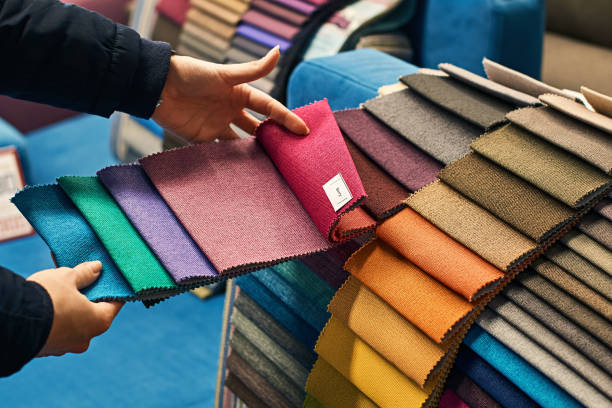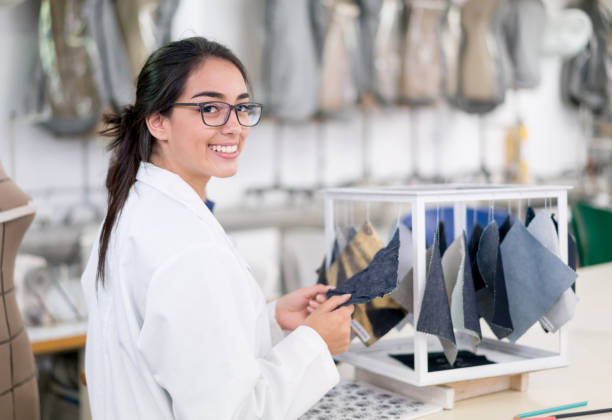

Sustainable Fashion Technologists apply scientific and technological knowledge to develop sustainable fabrics, dyes, and production techniques that minimize waste, water usage, and carbon footprint in the fashion industry. They conduct research on biodegradable and recycled materials, implement sustainable manufacturing processes, and ensure compliance with environmental regulations. Their role involves collaboration across departments to innovate product development, enhance supply chain transparency, and promote ethical sourcing. They also analyze lifecycle impacts and help brands meet sustainability certifications and consumer expectations.
- Research & Development
- Developing and testing sustainable textiles, fibers, and dyes.
- Innovating eco-friendly production technologies and materials.
- Process Optimization
- Designing efficient manufacturing processes that reduce waste and energy use.
- Implementing water-saving and chemical-free dyeing techniques.
- Sustainability Compliance
- Ensuring adherence to environmental regulations and industry standards.
- Supporting brands in achieving sustainability certifications (e.g., GOTS, OEKO-TEX).
- Lifecycle Analysis & Reporting
- Conducting environmental impact assessments of products from raw materials to disposal.
- Preparing sustainability reports and data for stakeholders.
- Collaboration & Training
- Working with designers, suppliers, and manufacturers to integrate sustainable practices.
- Training teams on sustainable technologies and environmental best practices.
- Innovation & Trend Monitoring
- Keeping abreast of emerging sustainable fashion technologies and materials.
- Advising on adoption of circular economy principles and zero-waste designs.
- Supply Chain Management
- Enhancing transparency and traceability of sustainable materials.
- Coordinating with sourcing teams to procure eco-friendly inputs.
- Consumer & Market Research
- Analyzing consumer trends towards sustainability and ethical fashion.
- Advising marketing teams on communicating sustainability credentials.
| Route | Steps |
|---|---|
| Route 1: Fashion Technology / Textile Science Degree | 1. Bachelor's degree in Fashion Technology, Textile Science, or Environmental Science. 2. Specialized courses or certifications in sustainable fashion and materials. 3. Internships in fashion R&D or sustainability departments. 4. Entry-level sustainable fashion technologist or analyst roles. |
| Route 2: Environmental Engineering / Chemistry Background | 1. Degree in Environmental Engineering, Chemistry, or Material Science. 2. Training in textile applications and sustainable manufacturing. 3. Experience in environmental compliance or product development. 4. Transition into fashion technology roles focused on sustainability. |
| Route 3: Self-Taught / Professional Development | 1. Passion for sustainability and fashion innovation. 2. Online courses and workshops on sustainable textiles and eco-friendly processes. 3. Building a project portfolio or consulting experience. 4. Networking to enter sustainable fashion technology roles. |
- Increasing global demand for sustainable and ethical fashion products.
- Rapid innovation in bio-based and recycled textile materials.
- Growing regulatory pressure on environmental compliance in fashion manufacturing.
- Expansion of circular economy models and zero-waste design principles.
- Integration of digital tools (e.g., blockchain) for supply chain transparency.
- Sustainable Fashion Brands: Assisting in R&D and sustainability audits.
- Textile Research Institutes: Working on eco-friendly fabric development.
- Environmental Compliance Firms: Supporting certification and audit processes.
- Fashion Technology Labs: Testing sustainable manufacturing techniques.
- NGOs and Advocacy Groups: Promoting sustainable fashion awareness.
- Supply Chain and Sourcing Teams: Evaluating sustainable material suppliers.
- Undergraduate Degrees: Fashion Technology, Textile Engineering, Environmental Science.
- Postgraduate Courses: Sustainable Fashion, Textile Chemistry, Environmental Management.
- Certifications: GOTS (Global Organic Textile Standard), OEKO-TEX, LEED, ISO 14001.
- Online Courses: Sustainable Fashion Design, Circular Economy, Life Cycle Assessment.
- Workshops: Eco-friendly Dyeing, Waste Reduction Techniques, Sustainable Material Innovation.
| Institute | Course | Official Link |
|---|---|---|
| National Institute of Fashion Technology (NIFT) | Fashion Technology with Sustainability Focus | https://www.nift.ac.in |
| Indian Institute of Technology (IIT) Delhi | Textile Engineering | https://home.iitd.ac.in |
| SNDT Women’s University | Textile Science and Fashion Technology | https://www.sndt.ac.in |
| Pearl Academy | Sustainable Fashion | https://www.pearlacademy.com |
| National Institute of Design (NID) | Sustainable Product Design | https://www.nid.edu |
| Amity University | Fashion Technology | https://www.amity.edu |
| Indian Institute of Science (IISc) | Materials Science | https://www.iisc.ac.in |
International
| Institution | Course | Country | Official Link |
|---|---|---|---|
| London College of Fashion | MSc Sustainable Fashion | UK | https://www.arts.ac.uk/colleges/london-college-of-fashion |
| Royal College of Art | Sustainable Design | UK | https://www.rca.ac.uk |
| Fashion Institute of Technology (FIT) | Textile Development and Marketing | USA | https://www.fitnyc.edu |
| Copenhagen Business School | Sustainable Fashion Management | Denmark | https://www.cbs.dk |
| Polimoda | Sustainable Fashion | Italy | https://www.polimoda.com |
| Parsons School of Design | Strategic Design and Management | USA | https://www.newschool.edu/parsons |
| University of Leeds | Sustainable Textile Futures | UK | https://www.leeds.ac.uk |
India
- NIFT Entrance Exam: For Fashion Technology and related programs.
- IIT Joint Entrance or GATE: For Textile Engineering and Material Science.
- University-specific entrance exams: For postgraduate courses in sustainability.
- Pearl Academy Admission Test: For sustainable fashion courses.
International
- Portfolio Submission: For design-related sustainable fashion programs.
- Standardized Tests (TOEFL/IELTS, GRE): For international admissions.
- FIT and RCA Application: Including interview and portfolio.
- Parsons and Polimoda Admissions: Based on academic credentials and portfolio.
Junior Fashion Technologist → Sustainable Fashion Technologist → R&D Specialist → Sustainability Manager → Supply Chain Sustainability Lead → Circular Economy Consultant → Sustainable Fashion Innovation Director → Industry Thought Leader / Entrepreneur
- Sustainable Fashion Brands and Labels
- Textile and Material Research Institutes
- Fashion Technology and Innovation Labs
- Environmental Certification Bodies
- Supply Chain and Sourcing Companies
- Corporate Sustainability Departments
- NGOs and Advocacy Organizations
- Fashion Consulting Firms
- Educational and Research Institutions
- Government and Regulatory Agencies
| India | International |
|---|---|
| Fabindia | Patagonia |
| B Label | Eileen Fisher |
| Arvind Limited | Everlane |
| Raymond Group | Reformation |
| Wills Lifestyle | H&M Conscious |
| Good Earth | Levi’s |
| Doodlage | Pangaia |
| Anita Dongre | Toms |
| Eco Tasar | Outerknown |
| Shahi Exports | Gucci (Sustainability) |
| Pros | Cons |
|---|---|
| Contributing to environmental preservation and ethical fashion | Challenges in balancing sustainability with cost and scalability |
| Opportunity to innovate with cutting-edge materials and technologies | Requires continual learning due to rapidly evolving tech and standards |
| Growing demand and support for sustainable fashion globally | Possible resistance from traditional manufacturing sectors |
| Diverse career paths in science, design, and management | Complex regulatory and certification processes |
| Collaboration with multidisciplinary teams and industries | Pressure to meet both sustainability and fashion trends |
| Potential to influence industry-wide change | Initial slower adoption of sustainable practices in some markets |
| Work that combines creativity, science, and business | May involve travel and fieldwork in supply chain locations |
| Increasing consumer awareness driving demand for expertise | Requires strong problem-solving and adaptability skills |
- Expansion of bio-based and recycled textiles replacing conventional materials.
- Integration of digital tools like blockchain for supply chain transparency.
- Increased adoption of circular fashion models and zero-waste design.
- Rising consumer demand for transparency and ethical production.
- Regulatory tightening on environmental impact and chemical use.
- Growth of sustainable fashion tech startups and innovation hubs.
- Collaboration between brands, scientists, and technologists for breakthrough solutions.
- Use of AI and data analytics to optimize sustainable production.
- Focus on local sourcing and reducing transportation emissions.
- Expansion of sustainable fashion education and research programs.
- Stella McCartney (United Kingdom, 1971-): A pioneer in sustainable fashion since the early 2000s, McCartney integrates technology by using eco-friendly materials like vegan leather and recycled fabrics.
- Kate Fletcher (United Kingdom): Active since the 2000s, Fletcher is a thought leader in sustainable fashion technology, known for her research on slow fashion and digital tools.
- Suzanne Lee (United Kingdom): Since the 2010s, Lee has innovated with biofabrication through her BioCouture project, developing microbial cellulose as a sustainable textile alternative.
- Aniela Hoitink (Netherlands): Founder of NEFFA, Hoitink has worked since the 2010s on biodegradable textiles using 3D printing and microbial processes.
- Natsai Audrey Chieza (Zimbabwe/United Kingdom): Since the mid-2010s, Chieza’s work with Faber Futures explores bio-pigments and bacterial dyeing techniques.
- Anupama Dayal (India): Active since the 2000s, Dayal incorporates sustainable practices and technology in her designs, using digital tools for zero-waste pattern making.
- Neha Lad (India): Since the late 2010s, Lad has focused on integrating wearable technology with sustainable materials, creating smart fashion pieces.
- Ruchita Bansal (India): Founder of iZHA, Bansal has worked since the 2010s on upcycling and digital design technologies to create sustainable fashion.
- Danit Peleg (Israel): Since the 2010s, Peleg has pioneered 3D-printed fashion, creating fully wearable garments using sustainable printing techniques.
- Amanda Parkes (United States): As Chief Innovation Officer at Pangaia since the 2010s, Parkes drives sustainable fashion tech by developing plant-based materials.
| Career Level | India (₹ per annum) | International (US$ per annum) |
|---|---|---|
| Entry-Level Technologist | 3,00,000 - 6,00,000 | $40,000 - $60,000 |
| Sustainable Fashion Technologist | 6,00,000 - 12,00,000 | $60,000 - $90,000 |
| Senior Technologist / R&D Specialist | 12,00,000 - 20,00,000 | $90,000 - $130,000 |
| Sustainability Manager | 20,00,000 - 35,00,000 | $130,000 - $180,000 |
| Director / Consultant / Entrepreneur | Variable, potentially high | Variable, potentially very high |
- Adobe Illustrator and Photoshop (for design collaboration)
- Lifecycle Assessment Software (SimaPro, GaBi)
- Data Analytics Tools (Excel, Tableau)
- Supply Chain Management Systems
- Material Testing Software
- Environmental Compliance Tools
- CAD Software for textile design
- Project Management Tools (Asana, Trello)
- Blockchain Platforms for traceability
- Research Databases and Scientific Journals
- Sustainable Apparel Coalition (SAC)
- Global Organic Textile Standard (GOTS)
- Textile Exchange
- Ellen MacArthur Foundation (Circular Economy)
- Fashion Revolution
- International Textile and Apparel Association (ITAA)
- Zero Waste International Alliance
- Indian Sustainable Fashion Forum
- Eco-Age
- International Society of Sustainability Professionals (ISSP)
- Develop a strong foundation in textile science and environmental sustainability.
- Stay updated on emerging sustainable materials and technologies.
- Gain practical experience through internships and projects in sustainable fashion.
- Build interdisciplinary skills combining science, design, and business.
- Network with industry experts and participate in sustainability forums.
- Pursue relevant certifications to enhance credibility.
- Be adaptable to evolving regulations and consumer expectations.
- Advocate for sustainability in all aspects of fashion production.
- Collaborate effectively across departments and supply chains.
- Maintain passion and commitment to environmental and social impact.
Sustainable Fashion Technologist is a vital and forward-looking career that bridges innovation, science, and ethics to transform the fashion industry. As sustainability becomes central to consumer choices and corporate responsibility, these professionals lead the development of eco-friendly materials, processes, and products that reduce environmental impact while maintaining fashion appeal. With opportunities spanning research, production, and management, sustainable fashion technologists are key drivers of positive change toward a more responsible and resilient fashion future.