Indian Railway Service of Mechanical Engineers (IRSME)
Assistant Divisional Mechanical Engineer (Entry Level)
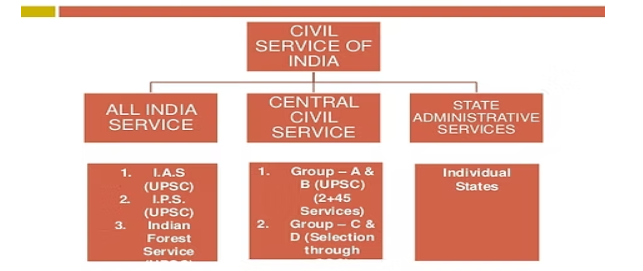
Explore CareerThe State Administrative Service (SAS) is a prestigious civil service under various state governments in India, categorized as a Group A or Group B service depending on the state. SAS officers are responsible for the administration, policy implementation, and governance at the state and district levels, ensuring the effective delivery of public services and development programs. With India’s focus on decentralized governance—evident in initiatives like the Aspirational Districts Programme and a growing emphasis on state-specific schemes like Tamil Nadu’s Kalaignar Magalir Urimai Thittam (2023) or Maharashtra’s Ladki Bahin Yojana (2024)—the demand for competent SAS officers remains crucial. Rooted in public administration, law, and socio-economic development principles, and driven by modern trends such as e-governance, data-driven decision-making, and citizen-centric services, this career is central to India’s governance framework. SAS professionals play a vital role in state secretariats, district administrations, and various departments, contributing to policy execution, public welfare, and developmental projects. This career drives progress through trends like digital administration, sustainable development goals (SDGs), and inclusive governance.
The State Administrative Service (SAS) is a prestigious civil service under various state governments in India, categorized as a Group A or Group B service depending on the state. SAS officers are responsible for the administration, policy implementation, and governance at the state and district levels, ensuring the effective delivery of public services and development programs. With India’s focus on decentralized governance—evident in initiatives like the Aspirational Districts Programme and a growing emphasis on state-specific schemes like Tamil Nadu’s Kalaignar Magalir Urimai Thittam (2023) or Maharashtra’s Ladki Bahin Yojana (2024)—the demand for competent SAS officers remains crucial. Rooted in public administration, law, and socio-economic development principles, and driven by modern trends such as e-governance, data-driven decision-making, and citizen-centric services, this career is central to India’s governance framework. SAS professionals play a vital role in state secretariats, district administrations, and various departments, contributing to policy execution, public welfare, and developmental projects. This career drives progress through trends like digital administration, sustainable development goals (SDGs), and inclusive governance.
State Administrative Service officers work in diverse environments, including state capitals, district headquarters, rural blocks, and field offices across their respective states. They collaborate with central government officials, local bodies, NGOs, and citizens within the state governance ecosystem. Their roles include managing government schemes, ensuring law and order, overseeing development projects, and addressing challenges like bureaucratic inefficiencies, resource constraints, and public grievances. They face issues such as political pressure, the need to balance diverse stakeholder interests, and adapting to evolving governance technologies amidst increasing public expectations. By leveraging expertise in administration, policy analysis, and interpersonal skills, they ensure effective governance and public service delivery. As key contributors to state-level progress, they propel development through trends like smart governance, participatory planning, and digital service delivery.
Roles and Responsibilities
Study Route & Eligibility Criteria
| Route | Steps |
| Route 1: Undergraduate Degree with State PSC Exam | 1. Complete 10+2 in any stream with minimum passing marks. 2. Pursue a Bachelor’s degree in any discipline (Arts/Science/Commerce) (3-4 years). 3. Prepare for and clear the State Public Service Commission (PSC) Exam (varies by state, e.g., UPPSC, MPSC) with SAS as preference. 4. Undergo training at state training institutes (e.g., ATI Maharashtra), starting as Assistant Collector or equivalent. |
| Route 2: Postgraduate Degree with State PSC Exam | 1. Complete a Bachelor’s degree in any discipline. 2. Pursue a Master’s degree in Public Administration, Law, or related fields (1-2 years) for deeper expertise. 3. Clear the State PSC Exam with SAS as preferred service. 4. Join SAS after training at state institutes. |
| Route 3: Specialized Degree with State PSC Exam | 1. Complete 10+2 in any stream with minimum 50-60% marks. 2. Pursue a specialized degree like LLB, B.A. in Public Administration, or Sociology (3-5 years). 3. Prepare for and clear the State PSC Exam with SAS as choice. 4. Start SAS career post-training. |
| Route 4: Diploma to Degree with State PSC Exam (Limited Scope) | 1. Complete 10+2 in any stream. 2. Pursue a Diploma in relevant fields (if applicable), followed by a lateral entry to a Bachelor’s program. 3. Clear the State PSC Exam opting for SAS. 4. Begin SAS career after training. |
| Route 5: Lower-Level State Services to SAS (Limited Scope) | 1. Hold a Bachelor’s degree in any discipline. 2. Join lower-level state services through state PSC exams (e.g., clerical or junior roles). 3. Gain experience and attempt promotion to SAS through departmental exams or seniority. 4. Transition to SAS roles after selection and training. |
Significant Observations (Academic Related Points)
Internships & Practical Exposure
Courses & Specializations to Enter the Field
Top Institutes for SAS Preparation and Related Studies (India)
| Institute | Course/Program | Official Link |
| Lal Bahadur Shastri National Academy of Administration (LBSNAA), Mussoorie (for cross-training) | Occasional Training for State Service Officers | https://www.lbsnaa.gov.in/ |
| Administrative Training Institute (ATI), Maharashtra, Mumbai | SAS Initial Training for Maharashtra PSC Selectees | https://ati.maharashtra.gov.in/ |
| Uttar Pradesh Academy of Administration & Management (UPAAM), Lucknow | SAS Training for UPPSC Selectees | https://upaam.up.nic.in/ |
| Vajiram & Ravi, Delhi | State PSC Coaching and Preparation | https://www.vajiramandravi.com/ |
| Chanakya IAS Academy, Delhi | State PSC Preparation and Mentorship | https://chanakyaiasacademy.com/ |
| Drishti IAS, Delhi | State PSC Coaching (Focus on Hindi Belt States) | https://www.drishtiias.com/ |
| University of Delhi, Delhi | B.A./M.A. in Public Administration/Political Science | https://www.du.ac.in/ |
| Jawaharlal Nehru University (JNU), Delhi | M.A. in Public Policy and Administration | https://www.jnu.ac.in/ |
| Tata Institute of Social Sciences (TISS), Mumbai | M.A. in Social Work/Public Policy | https://www.tiss.edu/ |
| IGNOU, Delhi | Diploma/Master’s in Public Administration | https://www.ignou.ac.in/ |
Entrance Tests Required
India:
Ideal Progressing Career Path (for SAS)
Assistant Collector/SDM/BDO (Entry Level) → Deputy Collector/Additional District Magistrate (Early Level) → Joint Secretary/Director in State Secretariat (Early-Mid Level) → District Collector/District Magistrate (Mid-Level) → Divisional Commissioner (Mid-Senior Level) → Secretary in State Government (Senior Level) → Principal Secretary/Chief Secretary (Apex Level, in some states)
Major Areas of Employment
Prominent Employers/Associated Organizations
| India (Government Bodies/Organizations) | Key Roles/Areas |
| State Public Service Commissions (e.g., UPPSC, MPSC, TNPSC) | Recruitment and Selection for SAS |
| State Governments (e.g., Uttar Pradesh, Maharashtra, Tamil Nadu) | Policy Formulation and Governance Oversight |
| District Collectorates, Nationwide | District-Level Administration and Development |
| State Administrative Training Institutes (e.g., ATI Mumbai, UPAAM Lucknow) | SAS Training in Public Administration |
| State Disaster Management Authorities | Crisis Management and Relief Coordination |
| State Election Commissions | Electoral Process Management |
| Panchayati Raj Departments | Rural Governance and Development Schemes |
| State Urban Development Departments | Urban Planning and Municipal Administration |
| State Revenue Departments | Land Records and Revenue Collection |
| State Welfare Departments (e.g., Women & Child Development) | Implementation of Social Welfare Schemes |
Pros and Cons of the Profession
| Pros | Cons |
| High societal impact through direct public service and development initiatives | High stress due to political pressure and public scrutiny |
| Prestigious state government role with job security and benefits like pension | Frequent transfers and postings, often to remote areas |
| Diverse responsibilities across administration, policy, and crisis management | Bureaucratic delays and resource constraints can hinder progress |
| Opportunity to work on state-specific flagship schemes and grassroots projects | Work-life balance issues due to long hours and emergency duties |
| Contribution to inclusive governance through citizen-centric policies | Risk of criticism during governance failures or public unrest |
Industry Trends and Future Outlook
Salary Expectations
| Career Level (SAS - Public Sector) | India (₹ per annum, Approx., varies by state) |
| Assistant Collector/SDM/BDO (Entry Level) | 5,00,000 - 7,00,000 (including allowances) |
| Deputy Collector/Additional DM (Early Level) | 7,00,000 - 9,00,000 |
| Joint Secretary/Director (Early-Mid Level) | 9,00,000 - 12,00,000 |
| District Collector/DM (Mid-Level) | 12,00,000 - 15,00,000 |
| Divisional Commissioner (Mid-Senior Level) | 15,00,000 - 18,00,000 |
| Secretary in State Government (Senior Level) | 18,00,000 - 22,00,000 |
| Principal Secretary/Chief Secretary (Apex Level, in some states) | 22,00,000 - 25,00,000+ |
| Note: Salaries include basic pay, dearness allowance (DA), house rent allowance (HRA), and other benefits; they vary based on state pay scales, posting location, and seniority. |
Key Software Tools and Resources
Professional Organizations and Networks
Notable State Administrative Service Officers and Leaders
Advice for Aspiring State Administrative Service Officers
A career in the State Administrative Service offers a transformative opportunity to shape state-level governance by managing, implementing, and monitoring critical public policies and development initiatives. SAS officers are the backbone of state administration, using their administrative expertise, policy analysis skills, and commitment to build a robust foundation for public welfare, support sustainable growth, and enhance governance across diverse regions. This profession blends a passion for public service with administrative leadership, providing diverse pathways in district governance, policy execution, crisis management, citizen engagement, and beyond. For those passionate about state-level development, driven by a desire to serve communities through effective governance, and eager to navigate the evolving landscape of digital and inclusive administration, becoming an SAS officer is a deeply rewarding journey. It empowers individuals to address critical public needs, maintain administrative integrity, and advance state well-being through the transformative power of responsible, impactful, and accessible governance.

Entry-level SAS officers handling local administration, revenue, and development tasks, focusing on grassroots operations. They build foundational...
0.0LPA
Early-level officers overseeing larger administrative units, focusing on law and order and scheme implementation. They focus on operational...
0.0LPA
Early-to-mid-level officers managing state department portfolios, supervising policy execution, and handling audits. They balance oversight roles....
0.0LPA
Take the next step and explore more about State Administrative Service (SAS).
Explore similar career paths that might interest you
Assistant Divisional Mechanical Engineer (Entry Level)
Explore CareerJunior Legal Officer/Assistant Legal Advisor (Junior Level - Entry Level)
Explore CareerAssistant Divisional Railway Manager (ADRM) (Traffic/Operations):
Explore Career