Armed Forces Medical Services (AFMS)
Medical Officer (Lieutenant/Captain)
Explore Career
The Indian Audit and Accounts Service (IA&AS) is a prestigious civil service under the Government of India, categorized as a Central Civil Service (Group A), dedicated to ensuring transparency, accountability, and fiscal discipline in public expenditure and revenue management. IA&AS officers serve as the guardians of public finance, auditing government accounts and providing critical oversight to maintain financial integrity across central and state government entities. With India’s public expenditure crossing ₹45 lakh crore in the 2023-24 Union Budget and increasing focus on digital governance, the role of IA&AS officers is more vital than ever. Rooted in auditing standards, financial regulations, and public accountability, and fueled by modern trends such as e-auditing, data analytics, and performance audits, this career is at the forefront of safeguarding India’s economic governance. IA&AS professionals work under the Comptroller and Auditor General of India (CAG), contributing to audits of government departments, public sector undertakings (PSUs), and autonomous bodies. This career drives progress through trends like digital financial oversight, anti-corruption measures, and policy impact assessments.
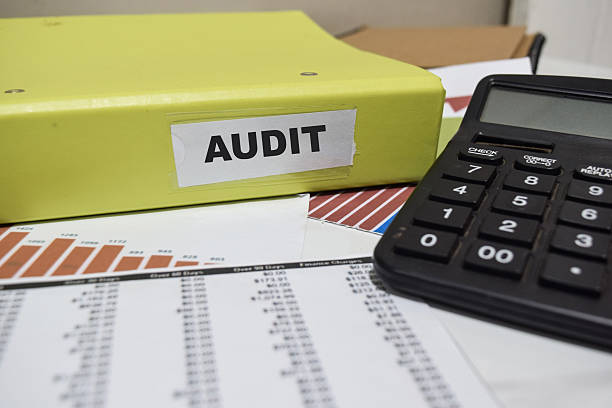
Indian Audit and Accounts Service officers operate in diverse environments, including offices of the CAG, state Accountant General (AG) offices, and field audit units across India. They collaborate with government departments, PSUs, state administrations, and financial regulators within the national ecosystem. Their roles encompass auditing public funds, ensuring compliance with financial rules, and reporting on fiscal irregularities while tackling challenges like bureaucratic resistance, complex financial systems, and the need for continuous adaptation to evolving accounting standards. They face issues such as public scrutiny, pressure to uncover financial mismanagement, and balancing technical audits with policy recommendations amidst changing governance demands. By leveraging expertise in auditing, financial analysis, and public administration, they ensure accountability and efficiency in public spending. As key contributors to India’s fiscal transparency, they propel progress through trends like digital audit systems, performance evaluations, and anti-fraud mechanisms.
| Route | Steps |
| Route 1: Undergraduate Degree with UPSC Exam | 1. Complete 10+2 in any stream with minimum passing marks. 2. Pursue a Bachelor’s degree in any discipline (3-4 years). 3. Prepare for and clear the UPSC Civil Services Examination (CSE) with IA&AS as preference. 4. Undergo training at Lal Bahadur Shastri National Academy of Administration (LBSNAA) and National Academy of Audit and Accounts (NAAA), starting as Assistant Accountant General or equivalent. |
| Route 2: Postgraduate Degree with UPSC Exam | 1. Complete a Bachelor’s degree in any discipline. 2. Pursue a Master’s degree in Commerce, Economics, or related fields (1-2 years) for deeper knowledge. 3. Clear the UPSC CSE with IA&AS as preferred service. 4. Join IA&AS after training at LBSNAA and NAAA. |
| Route 3: Professional Degree with UPSC Exam | 1. Complete 10+2 in relevant stream with minimum 50-60% marks. 2. Pursue a professional degree like B.Com, CA, CMA, or MBA (3-5 years). 3. Prepare for and clear the UPSC CSE with IA&AS as choice. 4. Start IA&AS career post-training at LBSNAA and NAAA. |
| Route 4: Commerce/Economics Focus with UPSC Exam | 1. Complete 10+2 in Commerce or related stream with minimum 50-60% marks. 2. Pursue a B.Com or B.A. Economics (3 years). 3. Clear the UPSC CSE opting for IA&AS. 4. Begin IA&AS career after training. |
| Route 5: State Audit Services to Central Services (Limited Scope) | 1. Hold a Bachelor’s degree in any discipline. 2. Join State Audit/Accounts Services through state-level exams (varies by state). 3. Gain experience and attempt promotion to IA&AS through limited competitive exams by UPSC. 4. Transition to IA&AS roles after selection and training. |
India:
Assistant Accountant General (Entry Level) → Deputy Accountant General → Senior Deputy Accountant General → Accountant General → Principal Accountant General → Additional Deputy CAG → Deputy CAG → Director General of Audit (Top Tier - Field) / Member of Audit Board (Top Tier - Headquarters)
| India (Government Bodies/Organizations) | Key Roles/Areas |
| Union Public Service Commission (UPSC), Delhi | Recruitment and Selection for IA&AS |
| Comptroller and Auditor General of India (CAG), Delhi | Audit Policy and Oversight |
| National Academy of Audit and Accounts (NAAA), Shimla | IA&AS Training in Auditing and Accounts |
| Lal Bahadur Shastri National Academy of Administration (LBSNAA), Mussoorie | Initial IA&AS Training |
| Accountant General (AG) Offices (State-Level Nationwide) | State Accounts and Audit Functions |
| Director General of Audit Offices (Sector-Specific Nationwide) | Specialized Sectoral Audits |
| Ministry of Finance, Department of Expenditure, Delhi | Financial Policy Coordination |
| Public Accounts Committee (PAC), Parliament of India | Legislative Scrutiny of Audit Reports |
| National Institute of Financial Management (NIFM), Faridabad | Training in Public Finance |
| State Legislative Assemblies (PACs at State Level) | State-Level Audit Report Discussions |
| Pros | Cons |
| High societal impact through ensuring transparency in public funds | Limited public recognition compared to other civil services like IAS |
| Prestigious government role with job security and benefits like pension | Frequent transfers and postings, often to remote or smaller cities |
| Diverse responsibilities across financial audits, performance reviews, and policy advisory | High workload during audit cycles with tight reporting deadlines |
| Opportunity to combat corruption and inefficiency in public expenditure | Bureaucratic resistance and delays in implementing audit recommendations |
| Contribution to fiscal discipline and governance reforms in India | Work-life balance issues due to extensive fieldwork and detailed reporting |
| Career Level (IA&AS - Public Sector) | India (₹ per annum, Approx. as per 7th Pay Commission) |
| Assistant Accountant General (Entry Level) | 6,00,000 - 8,00,000 (including allowances) |
| Deputy Accountant General (Early Level) | 8,00,000 - 10,00,000 |
| Senior Deputy Accountant General (Early-Mid Level) | 10,00,000 - 14,00,000 |
| Accountant General (Mid-Level) | 14,00,000 - 18,00,000 |
| Principal Accountant General (Mid-Senior Level) | 18,00,000 - 22,00,000 |
| Additional Deputy CAG (Senior Level) | 22,00,000 - 27,00,000 |
| Deputy CAG / Director General of Audit (Top Tier) | 27,00,000 - 30,00,000+ |
| Note: Salaries include basic pay, dearness allowance (DA), house rent allowance (HRA), and other benefits; they vary based on posting location and seniority. |
A career in the Indian Audit and Accounts Service offers a transformative opportunity to safeguard India’s public finances by ensuring transparency, accountability, and efficiency in government expenditure and revenue management. IA&AS officers are the custodians of fiscal discipline, using their expertise, analytical skills, and commitment to maintain integrity across central and state entities, support national development, and enhance governance. This profession blends a passion for financial oversight with strategic auditing, providing diverse pathways in compliance audits, performance evaluations, state accounts management, policy advisory, and beyond. For those passionate about public finance, driven by a desire to serve the nation through fiscal accountability, and eager to navigate the evolving landscape of governance, becoming an IA&AS officer is a deeply rewarding journey. It empowers individuals to address critical financial needs, maintain public trust, and advance national well-being through the transformative power of responsible, impactful, and accessible audit and accounts governance.

Entry-level IA&AS officers handling basic audits, account maintenance, or entitlement functions at state AG offices. They build foundational...
0.0LPA
Early-level officers overseeing specific audit sectors or state accounts, focusing on compliance and reporting. They focus on detailed duties....
0.0LPA
Early-to-mid-level officers managing larger audit portfolios or entitlement divisions, supervising junior staff. They balance oversight roles....
0.0LPA
Take the next step and explore more about Indian Audit and Accounts Service (IA&AS).
Explore similar career paths that might interest you