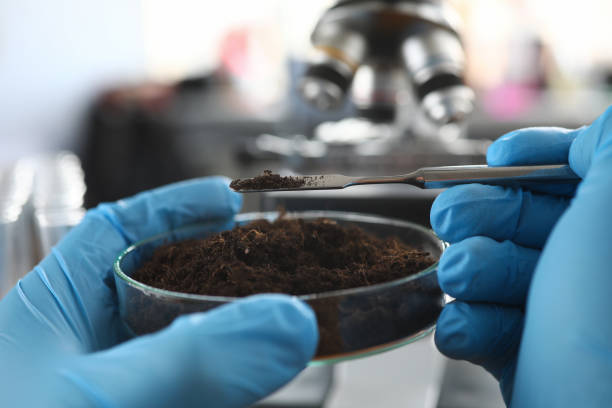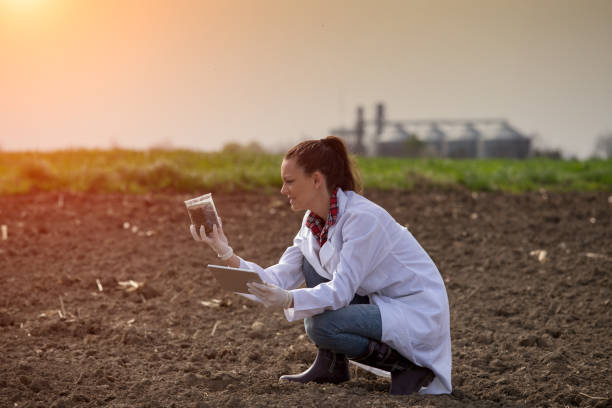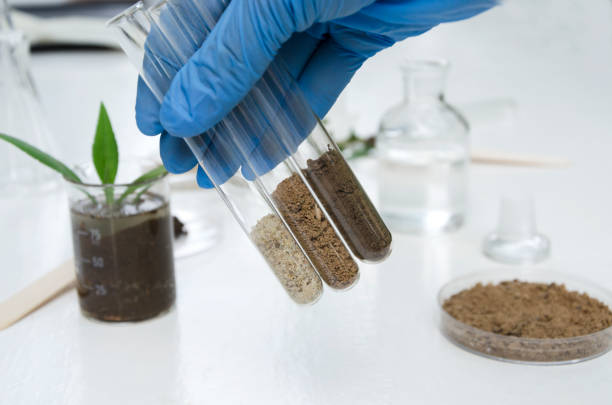
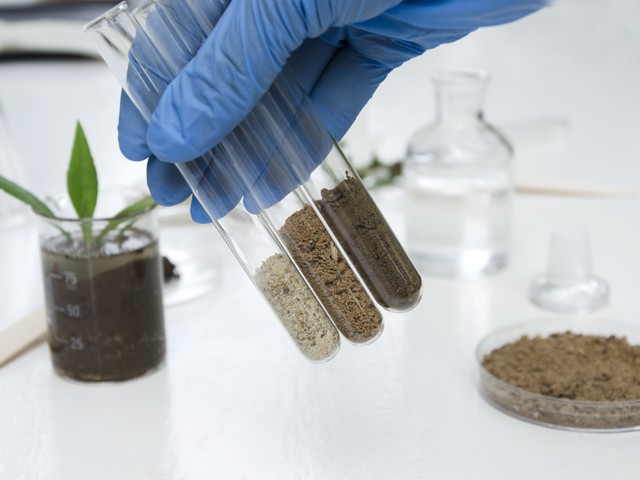
Soil Scientists work in diverse settings such as agricultural research institutes, environmental agencies, universities, and private consultancies, often collaborating with farmers, agronomists, policymakers, and ecologists. Their roles include conducting soil surveys, analyzing soil samples, developing land management plans, and researching soil conservation techniques. They face challenges like addressing soil erosion, managing nutrient depletion, and adapting to changing climatic conditions. By leveraging expertise in soil chemistry, biology, and geology, Soil Scientists enhance agricultural productivity and environmental health. As key contributors to sustainable land use, they drive innovations through trends like digital soil mapping, regenerative agriculture, and soil health monitoring technologies
- Soil Sampling and Analysis
- Collect soil samples from various locations and analyze them for chemical, physical, and biological properties.
- Assess soil fertility, pH levels, nutrient content, and contamination risks.
- Soil Classification and Mapping
- Classify soils based on texture, structure, and composition using standardized systems.
- Create detailed soil maps to guide land use planning and agricultural practices.
- Soil Fertility and Nutrient Management
- Recommend fertilizers, amendments, and crop management practices to optimize soil fertility.
- Develop strategies to prevent nutrient leaching and improve soil health.
- Soil Conservation and Erosion Control
- Design and implement practices like contour plowing and cover cropping to prevent soil erosion.
- Advise on sustainable land management to combat soil degradation.
- Environmental Impact Assessment
- Evaluate the impact of agricultural practices, construction, or pollution on soil quality.
- Provide recommendations to mitigate environmental damage and restore soil ecosystems.
- Research and Development
- Conduct experiments to study soil behavior under different conditions and management practices.
- Develop innovative solutions for soil remediation and carbon sequestration.
- Consulting and Advisory Services
- Advise farmers, landowners, and policymakers on soil management and sustainable practices.
- Collaborate with agricultural extension services to educate communities on soil health.
- Policy and Regulation Support
- Assist in formulating soil conservation policies and land use regulations.
- Ensure compliance with environmental standards related to soil protection.
| Route | Steps |
| Route 1: Undergraduate Degree |
1. 10+2 in Science (Physics, Chemistry, Biology) with minimum 50-60% marks 2. Pursue a B.Sc. in Soil Science, Agriculture, or Environmental Science (3-4 years) 3. Gain practical exposure through internships in soil labs or agricultural projects 4. Start as a Junior Soil Scientist or Field Assistant |
| Route 2: Postgraduate Specialization |
1. Complete a Bachelor’s degree in Soil Science, Agriculture, or related field 2. Pursue an M.Sc. in Soil Science, Soil Fertility, or Environmental Soil Science (1-2 years) 3. Engage in research projects or fieldwork focused on soil analysis 4. Work as a Soil Scientist or Research Associate |
| Route 3: Doctoral Research for Advanced Roles |
1. Hold an M.Sc. in Soil Science or related field 2. Pursue a Ph.D. in Soil Science or Pedology (3-5 years) 3. Conduct in-depth research on soil conservation or fertility 4. Work as a Senior Soil Scientist, Professor, or Policy Advisor |
| Route 4: Diploma/Certification for Entry-Level Roles |
1. 10+2 pass with minimum 45-50% marks in Science stream 2. Complete a Diploma in Agriculture or Soil Management (1-2 years) 3. Build skills through hands-on training in soil testing labs 4. Work in entry-level roles like Soil Lab Technician or Field Worker |
| Route 5: Short-Term Certifications with Experience |
1. Hold a basic education (10th/12th pass) or relevant work experience in agriculture 2. Pursue short-term certifications in Soil Testing or Conservation (3-6 months) 3. Leverage field experience to transition into specialized roles 4. Work as a Soil Testing Assistant or Consultant |
- Internships with agricultural research institutes for experience in soil sampling and analysis.
- Training in soil testing laboratories to learn analytical techniques and equipment use.
- Rotations in soil conservation projects for exposure to erosion control and land management.
- Observerships with environmental agencies to understand soil policy and regulation.
- Participation in soil survey programs for practical mapping and classification skills.
- Exposure to precision agriculture technologies during training for modern soil management.
- Workshops on soil fertility and remediation for technical expertise.
- Volunteer roles in community agriculture projects to build professional networks.
- Collaborative initiatives with sustainability startups for real-world problem-solving experience.
- B.Sc. in Soil Science, Agriculture, or Environmental Science for foundational knowledge.
- M.Sc. in Soil Science, Soil Fertility, or Pedology for advanced expertise.
- Ph.D. in Soil Science or Environmental Soil Management for research and academic roles.
- Diploma in Agriculture or Soil Management for entry-level technical skills.
- Specialization in Soil Conservation, Soil Chemistry, or Soil Microbiology.
- Short-term courses on Digital Soil Mapping and Soil Health Assessment.
- Training in Soil Carbon Sequestration and Climate-Smart Agriculture.
- Certifications in Soil Testing Techniques and Land Use Planning.
| Institute | Course/Program | Official Link |
| Indian Agricultural Research Institute (IARI), New Delhi | M.Sc./Ph.D. in Soil Science and Agricultural Chemistry | https://www.iari.res.in/ |
| Punjab Agricultural University, Ludhiana | B.Sc./M.Sc./Ph.D. in Soil Science | https://www.pau.edu/ |
| Tamil Nadu Agricultural University, Coimbatore | B.Sc./M.Sc./Ph.D. in Soil Science | https://www.tnau.ac.in/ |
| University of Agricultural Sciences, Bangalore | B.Sc./M.Sc./Ph.D. in Soil Science | https://www.uasbangalore.edu.in/ |
| Anand Agricultural University, Gujarat | B.Sc./M.Sc. in Soil Science | https://www.aau.in/ |
| Chaudhary Charan Singh Haryana Agricultural University, Hisar | B.Sc./M.Sc./Ph.D. in Soil Science | https://www.hau.ac.in/ |
| Banaras Hindu University, Institute of Agricultural Sciences, Varanasi | B.Sc./M.Sc. in Soil Science | https://www.bhu.ac.in/ |
| Indira Gandhi Krishi Vishwavidyalaya, Raipur | B.Sc./M.Sc. in Soil Science | https://www.igau.edu.in/ |
| Kerala Agricultural University, Thrissur | B.Sc./M.Sc. in Soil Science | https://www.kau.in/ |
| Bidhan Chandra Krishi Viswavidyalaya, West Bengal | B.Sc./M.Sc./Ph.D. in Soil Science | https://www.bckv.edu.in/ |
| Institution | Course | Country | Official Link |
| Cornell University, College of Agriculture and Life Sciences | BS/MS/Ph.D. in Soil Science | USA | https://www.cornell.edu/ |
| University of California, Davis, Department of Land, Air and Water Resources | BS/MS/Ph.D. in Soil Science | USA | https://www.ucdavis.edu/ |
| Wageningen University & Research, Soil Science Program | MSc/Ph.D. in Soil Science | Netherlands | https://www.wur.nl/ |
| University of Reading, School of Agriculture, Policy and Development | MSc in Soil Science | UK | https://www.reading.ac.uk/ |
| University of Melbourne, School of Agriculture and Food | Master of Agricultural Science (Soil Focus) | Australia | https://www.unimelb.edu.au/ |
| Purdue University, Department of Agronomy | BS/MS/Ph.D. in Soil Science | USA | https://www.purdue.edu/ |
| University of Saskatchewan, College of Agriculture and Bioresources | BSc/MSc in Soil Science | Canada | https://www.usask.ca/ |
| Massey University, School of Agriculture and Environment | Bachelor/Master of Soil Science | New Zealand | https://www.massey.ac.nz/ |
| Technical University of Munich, School of Life Sciences | MSc in Soil and Plant Sciences | Germany | https://www.tum.de/en/ |
| University of Copenhagen, Department of Plant and Environmental Sciences | MSc in Soil Science | Denmark | https://www.ku.dk/english/ |
India:
- ICAR AIEEA (All India Entrance Examination for Admission): For admission to B.Sc./M.Sc./Ph.D. programs in Soil Science at agricultural universities.
- GATE (Graduate Aptitude Test in Engineering): For M.Tech. programs related to soil and water conservation at select institutes.
- State-Level Agricultural Entrance Exams: Conducted by state universities for undergraduate programs in agriculture or soil science.
- University-Specific Tests: Institutions like IARI may conduct their own entrance exams or interviews for postgraduate programs.
International:
- IELTS (International English Language Testing System): Minimum score of 6.5-7.0 for non-native speakers applying to programs in the UK, Canada, etc.
- TOEFL (Test of English as a Foreign Language): Minimum score of 90-100 for programs in English-speaking countries like the USA.
- SAT (Scholastic Assessment Test): Required for undergraduate soil science programs in the USA at universities like Cornell.
- GRE (Graduate Record Examination): Needed for postgraduate programs (MSc/MS/Ph.D.) in countries like the USA or Canada.
- Program-Specific Assessments: Some universities may require essays, portfolios, or interviews for soil science programs.
Junior Soil Scientist → Soil Analyst → Soil Scientist → Senior Soil Scientist → Director of Soil Research and Conservation
- Agricultural research institutes for soil fertility and productivity studies.
- Environmental agencies for soil conservation and pollution assessment roles.
- Universities and academic institutions for teaching and research in soil science.
- Government agricultural departments for policy formulation and extension services.
- Private consultancies for advising farmers and landowners on soil management.
- Agribusiness firms for soil testing and crop optimization services.
- Non-governmental organizations (NGOs) for sustainable land use and conservation projects.
| India | International |
| Indian Council of Agricultural Research (ICAR), New Delhi | USDA Natural Resources Conservation Service, USA |
| National Bureau of Soil Survey and Land Use Planning (NBSS&LUP), Nagpur | FAO (Food and Agriculture Organization), Italy |
| Central Soil and Water Conservation Research and Training Institute, Dehradun | CSIRO (Commonwealth Scientific and Industrial Research Organisation), Australia |
| Soil and Land Use Survey of India (SLUSI), New Delhi | European Soil Data Centre (ESDAC), Germany |
| State Agricultural Departments, Various Locations | Soil Science Society of America (SSSA), USA |
| Krishi Vigyan Kendras (KVKs), Nationwide | International Soil Reference and Information Centre (ISRIC), Netherlands |
| Tata Chemicals (Agricultural Division), Mumbai | World Agroforestry Centre (ICRAF), Kenya |
| Pros | Cons |
| High societal impact through sustainable agriculture and food security | Fieldwork can be physically demanding and weather-dependent |
| Growing demand for soil expertise in environmental conservation | Slow career progression in academic or government roles |
| Diverse career paths in research, consulting, and policy | Limited public awareness of the importance of soil science |
| Opportunity to address global challenges like climate change | Funding constraints for soil research in some regions |
| Contribution to ecosystem health and land restoration | Need for continuous adaptation to new technologies and methods |
- Precision Agriculture: Use of technology for targeted soil management and fertilizer application.
- Soil Carbon Sequestration: Focus on soils as a tool to combat climate change by storing carbon.
- Digital Soil Mapping: Adoption of GIS and remote sensing for accurate soil data collection.
- Regenerative Agriculture: Emphasis on practices that restore soil health and biodiversity.
- Soil Health Monitoring: Development of sensors and apps for real-time soil condition tracking.
- Sustainable Land Use Policies: Growing governmental focus on soil conservation regulations.
- Soil Remediation Technologies: Innovations in cleaning contaminated soils for reuse.
- Urban Soil Science: Managing soils in urban agriculture and green infrastructure projects.
- Global Soil Partnerships: Collaborative efforts to address soil degradation worldwide.
| Career Level | India (₹ per annum) | International (USD per annum) |
| Junior Soil Scientist (Early Career) | 3,00,000 - 5,00,000 | 30,000 - 45,000 |
| Soil Analyst (Mid-Career) | 5,00,000 - 8,00,000 | 45,000 - 60,000 |
| Soil Scientist | 8,00,000 - 12,00,000 | 60,000 - 80,000 |
| Senior Soil Scientist | 12,00,000 - 18,00,000 | 80,000 - 100,000 |
| Director of Soil Research and Conservation | 18,00,000+ | 100,000 - 150,000+ |
| Note: Salaries may vary based on employer, location, experience, and sector (government, private, or academic). |
- GIS Software (e.g., ArcGIS) for digital soil mapping and spatial analysis.
- Soil Modeling Tools (e.g., SWAT) for predicting soil behavior under different conditions.
- Remote Sensing Platforms for assessing soil properties over large areas.
- Data Analysis Software (e.g., R, SPSS) for interpreting soil test results.
- Soil Health Apps for real-time monitoring of soil conditions in the field.
- Laboratory Information Management Systems (LIMS) for managing soil sample data.
- Climate Modeling Tools for studying soil-climate interactions and adaptation strategies.
- Indian Society of Soil Science (ISSS), India.
- Soil Science Society of America (SSSA), USA.
- International Union of Soil Sciences (IUSS), Global.
- National Bureau of Soil Survey and Land Use Planning (NBSS&LUP), India.
- British Society of Soil Science (BSSS), UK.
- Global Soil Partnership (GSP), FAO, Global.
- Dr. M.S. Swaminathan (India, 1925-2023): Renowned agronomist who contributed to soil fertility research during the Green Revolution in India. His work boosted agriculture. His impact fed millions.
- Dr. Hans Jenny (Switzerland/USA, 1899-1992): Pioneered modern soil science with his theory of soil formation factors, influencing global pedology. His framework shaped studies. His impact defined soil theory.
- Dr. Rattan Lal (India/USA, 1944-): World-renowned soil scientist known for research on soil carbon sequestration and sustainable agriculture. His findings combat climate change. His impact won global awards.
- Dr.Nyle C. Brady (USA, 1920-2015): Co-author of the seminal textbook "The Nature and Properties of Soils," shaping soil science education worldwide. His teachings inspired generations. His impact standardized learning.
- Dr. Pedro Sanchez (Cuba/USA, 1940-): Soil scientist who advanced tropical soil fertility management, improving agriculture in Africa and Latin America. His solutions uplifted farmers. His impact transformed regions.
- Dr. B.B. Roy (India, 1930s-2010s): Indian soil scientist who contributed to soil survey and classification systems for agricultural planning. His maps guided land use. His impact enhanced productivity.
- Dr. Mary Beth Kirkham (USA, 1940s-): Expert in soil-plant-water relations, contributing to drought-resistant agriculture through soil research. Her studies aided resilience. Her impact supported sustainability.
- Dr. Eugene W. Hilgard (USA, 1833-1916): Early soil scientist who laid foundations for soil chemistry and fertility studies in the USA. His research pioneered analysis. His impact built science.
- Dr. Winfried E.H. Blum (Austria, 1940s-): Influential in soil classification and sustainable land management, shaping European soil policies. His policies protected resources. His impact influenced laws.
- Dr. Johan Bouma (Netherlands, 1940-): Soil scientist known for integrating soil science with hydrology for sustainable agriculture globally. His integration solved challenges. His impact advanced practices.
- Build a strong foundation in science subjects like chemistry and biology for soil expertise.
- Seek early exposure through internships in soil labs or agricultural projects to confirm interest.
- Prepare thoroughly for entrance exams like ICAR AIEEA for admission to top programs.
- Develop analytical skills for soil testing, data interpretation, and problem-solving.
- Stay updated on soil science trends by following resources like IUSS or SSSA publications.
- Engage in research projects focused on soil conservation or fertility for hands-on experience.
- Join professional associations like ISSS or GSP for networking and resources.
- Work on communication skills to translate complex soil data for farmers and policymakers.
- Explore international opportunities for exposure to global soil management practices.
- Volunteer in soil conservation or community agriculture programs to build a professional portfolio.
- Cultivate adaptability to handle diverse field conditions and evolving research technologies.
- Focus on sustainability to address pressing issues like soil degradation and climate change.
A career as a Soil Scientist offers a unique opportunity to safeguard the foundation of life by enhancing soil health, fostering sustainable agricultural and environmental practices through scientific innovation, and empowering communities with every insight gained. Soil Scientists are the custodians of the earth’s foundation, using their expertise and dedication to ensure food security, protect ecosystems, and combat global challenges across diverse sectors. This profession blends science with stewardship, providing pathways in research, consulting, conservation, and policy. For those passionate about the environment, driven by a desire to preserve the planet through soil management, and eager to embrace the evolving landscape of soil science, becoming a Soil Scientist is a deeply rewarding journey. It empowers individuals to address critical global needs, maintain ecological balance, and advance human well-being through the transformative power of soil knowledge.