
Seismologist

A Seismologist is a specialized scientist who studies earthquakes and the Earth's internal structure, focusing on the causes, effects, and prediction of seismic activity through the analysis of seismic waves. They work in research institutions, universities, government agencies, environmental organizations, and the energy sector. Seismologists apply geophysical, mathematical, and computational techniques to understand tectonic processes, assess earthquake risks, and develop mitigation strategies, contributing to public safety, infrastructure resilience, and geological exploration. Combining expertise in geology, physics, and data analysis, they play a crucial role in advancing fields like disaster preparedness, resource exploration, and planetary science in a world where seismic events impact millions of lives, economies, and environments.
Share :
Career tree mind map (horizontal) — Seismologist
Colored branches, hub circles, and underlined topics — same style as counselor course classic (types 18–19 in admin).
Loading mind map…

Seismologists are experts who focus on the study of earthquakes and the Earth's subsurface dynamics, exploring mechanisms like tectonic plate movements, fault behaviour, and seismic wave propagation, and applying their findings to solve problems related to disaster risk reduction, resource discovery, and environmental monitoring. Their work involves analyzing seismic data in laboratories, conducting field surveys, and translating research into practical applications for industries like construction, energy, and public safety. They often operate in academic, governmental, or industrial settings, balancing technical research with real-world impact and interdisciplinary collaboration. Seismologists are essential to fields like earthquake engineering, geophysical exploration, and hazard assessment, serving as experts in seismic science, contributing to solutions for global challenges, advancing technological innovations, and ensuring scientific integrity. They address critical issues through rigorous research and improve outcomes through evidence-based strategies in a scientific landscape where seismology's relevance continues to grow due to increasing urbanization and climate-related geological changes.

  • Seismic Data Analysis
    • Analyze seismic waves using instruments like seismographs to study earthquake magnitude, location, and depth.
    • Interpret data to understand fault mechanics and tectonic processes for scientific and applied purposes.
  • Earthquake Prediction and Monitoring
    • Monitor seismic activity to identify patterns or precursors that may indicate potential earthquakes.
    • Develop models and simulations to assess earthquake probability and risk in vulnerable regions.
  • Hazard Assessment and Mitigation
    • Evaluate seismic risks for urban planning, infrastructure design, and disaster preparedness programs.
    • Provide recommendations for building codes and safety measures to minimize earthquake damage.
  • Geophysical Exploration
    • Use seismic techniques to explore subsurface structures for oil, gas, and mineral resources.
    • Apply seismic imaging to study the Earth's crust and mantle for academic and industrial purposes.
  • Environmental Seismology
    • Study the impact of seismic activity on natural environments, including landslides and tsunamis.
    • Research human-induced seismicity caused by activities like fracking or reservoir impoundment.
  • Planetary Seismology
    • Analyze seismic data from other planets or moons to understand their internal structures (e.g., Mars missions).
    • Contribute to space exploration by studying geological activity beyond Earth.
  • Public Safety and Communication
    • Collaborate with emergency services to develop early warning systems for earthquakes.
    • Communicate seismic risks and safety protocols to policymakers and the public.
  • Education and Outreach
    • Teach courses on seismology, geophysics, or earth sciences in academic institutions.
    • Educate communities and officials on earthquake preparedness and risk reduction.
  • Policy and Regulation
    • Advise on regulations related to seismic safety, land use, and infrastructure development.
    • Contribute to guidelines for disaster response and recovery in earthquake-prone areas.
  • Interdisciplinary Collaboration
    • Work with geologists, engineers, and climatologists to integrate seismic data into broader projects.
    • Collaborate with industry to apply research in practical contexts like energy exploration or urban planning.

RouteSteps
Route 11. 10+2 with Physics, Chemistry, and Mathematics (PCM).
2. Bachelor's degree in Geology, Geophysics, or Earth Sciences (3-4 years).
3. Master's degree in Seismology or Geophysics (2 years).
4. PhD in Seismology or related field (3-5 years, optional).
5. Postdoctoral research or field experience in seismic studies (optional).
Route 21. 10+2 with Physics, Chemistry, and Mathematics (PCM).
2. Bachelor's degree in Physics or Applied Mathematics (3-4 years).
3. Master's degree in Geophysics or Seismology with specialization in earthquake studies (2 years).
4. Specialized training in seismic data analysis techniques (6 months-1 year).
5. Practical experience in seismology labs or field surveys.
Route 31. 10+2 with Physics, Chemistry, and Mathematics (PCM).
2. Bachelor's degree in Environmental Science or Geoscience (3-4 years).
3. Master's degree in Seismology or Earthquake Engineering (2 years).
4. Internship or fellowship in seismology research labs (1-2 years).
5. Certification in advanced seismic monitoring techniques (optional).
Route 41. 10+2 with Physics, Chemistry, and Mathematics (PCM).
2. Bachelor's degree from India in relevant field (3-4 years).
3. Master's or PhD in Seismology abroad (2-5 years).
4. Training or postdoctoral research in international seismology programs (1-3 years).
5. Certification or licensure for international practice (if applicable).

  • Lab internships in seismology focusing on seismic wave analysis and data interpretation.
  • Research apprenticeships with geological survey organizations for earthquake monitoring.
  • Observerships in geophysical labs studying tectonic movements and fault behavior.
  • Participation in environmental projects assessing seismic impacts on landscapes.
  • Training in advanced seismic monitoring technologies like seismographs under supervision.
  • Experience in energy companies applying seismology to resource exploration.
  • Involvement in data collection for earthquake risk assessments in vulnerable regions.
  • Attendance at seismology or geophysics conferences and workshops.
  • Exposure to interdisciplinary projects with geologists or civil engineers.
  • Collaborative research in international seismology labs for global exposure.

  • Bachelor’s in Geology, Geophysics, or Earth Sciences.
  • Bachelor’s in Physics or Applied Mathematics.
  • Master’s in Seismology or Geophysics.
  • PhD in Seismology or Earthquake Engineering.
  • Certification courses in Seismic Hazard Analysis and Data Interpretation.
  • Training in Environmental Seismology and Induced Seismicity Studies.
  • Specialized courses in Planetary Seismology.
  • Master’s in Geoscience with Seismology focus.
  • Continuing Education courses in Tectonic Processes and Seismic Wave Analysis.
  • Short-term courses in Earthquake Engineering and Disaster Mitigation.

InstituteCourse/ProgramOfficial Link
Indian Institute of Science (IISc), BangaloreMSc/PhD in Earth Scienceshttps://www.iisc.ac.in/
Jawaharlal Nehru University (JNU), New DelhiMSc/PhD in Environmental Scienceshttps://www.jnu.ac.in/
University of Delhi, DelhiMSc/PhD in Geologyhttps://www.du.ac.in/
Banaras Hindu University (BHU), VaranasiMSc/PhD in Geophysicshttps://www.bhu.ac.in/
University of Hyderabad, HyderabadMSc/PhD in Earth Scienceshttps://www.uohyd.ac.in/
Savitribai Phule Pune University, PuneMSc/PhD in Geologyhttps://www.unipune.ac.in/
Indian Institute of Technology (IIT), RoorkeeMSc/PhD in Geophysicshttps://www.iitr.ac.in/
National Geophysical Research Institute (NGRI), HyderabadResearch in Seismologyhttps://www.ngri.res.in/
Indian Institute of Technology (IIT), BombayMSc/PhD in Earth Scienceshttps://www.iitb.ac.in/
Tata Institute of Fundamental Research (TIFR), MumbaiResearch in Geophysicshttps://www.tifr.res.in/

InstitutionCourseCountryOfficial Link
California Institute of Technology (Caltech)MSc/PhD in SeismologyUSAhttps://www.caltech.edu/
University of OxfordDPhil in Earth SciencesUKhttps://www.ox.ac.uk/
ETH ZurichMSc/PhD in GeophysicsSwitzerlandhttps://www.ethz.ch/
University of TokyoMSc/PhD in Earthquake ScienceJapanhttps://www.u-tokyo.ac.jp/en/
University of California, BerkeleyMSc/PhD in Earth and Planetary ScienceUSAhttps://www.berkeley.edu/
Imperial College LondonMSc/PhD in GeophysicsUKhttps://www.imperial.ac.uk/
Stanford UniversityMSc/PhD in GeophysicsUSAhttps://www.stanford.edu/
University of Western AustraliaMSc/PhD in Earth SciencesAustraliahttps://www.uwa.edu.au/
University of CopenhagenMSc/PhD in GeophysicsDenmarkhttps://www.ku.dk/english/
Massachusetts Institute of Technology (MIT)MSc/PhD in Earth SciencesUSAhttps://www.mit.edu/

India:

  • Graduate Aptitude Test in Engineering (GATE) for Master's programs in Geophysics at IITs and other institutes.
  • Council of Scientific and Industrial Research (CSIR) NET for research fellowships and PhD programs.
  • University-specific entrance exams for Master's and PhD programs in Geophysics or Earth Sciences (e.g., JNU CEEB, DUET).
  • State-level entrance examinations for postgraduate programs in Earth Sciences.
  • Indian Institute of Science Entrance Test (IISc) for research programs.


International:

  • Graduate Record Examination (GRE) for postgraduate programs in Earth Sciences in the USA and Canada.
  • International English Language Testing System (IELTS) with a minimum score of 6.5-7.0 for international programs.
  • Test of English as a Foreign Language (TOEFL) with a minimum score of 90-100 for programs in English-speaking countries.
  • University-specific entrance exams for international Master's or PhD programs in related fields.
  • Australian Education Assessment Services for programs in Australia.
  • Specific fellowship or scholarship exams for international research opportunities.

Undergraduate Student → Graduate Trainee (Master's) → Junior Seismologist → Established Seismologist → Senior Seismologist/Research Lead → Program Director/Professor

  • Academic institutions conducting research and teaching in seismology and geophysics.
  • Government agencies focused on disaster preparedness and earthquake monitoring.
  • Energy companies using seismic techniques for oil, gas, and mineral exploration.
  • Environmental organizations assessing seismic impacts on ecosystems.
  • Construction and engineering firms ensuring seismic safety in infrastructure projects.
  • Research institutions studying tectonic processes and earthquake mechanisms.
  • Space agencies exploring planetary seismology for missions to other planets.
  • International collaborations addressing global seismic hazards and disaster response.
  • Non-governmental organizations (NGOs) working on earthquake relief and recovery.
  • Insurance companies evaluating seismic risks for policy underwriting.

IndiaInternational
National Geophysical Research Institute (NGRI)United States Geological Survey (USGS), USA
India Meteorological Department (IMD)European-Mediterranean Seismological Centre (EMSC)
Geological Survey of India (GSI)International Seismological Centre (ISC), UK
Ministry of Earth Sciences, Government of IndiaNational Earthquake Information Center (NEIC), USA
Indian Institute of Technology (IIT)Japan Meteorological Agency (JMA), Japan
Council of Scientific and Industrial Research (CSIR)GeoScience Australia, Australia
National Disaster Management Authority (NDMA)Institute of Earth Sciences, Switzerland
Indian Space Research Organisation (ISRO)Incorporated Research Institutions for Seismology (IRIS), USA
Oil and Natural Gas Corporation (ONGC)Schlumberger (Oilfield Services), Global
National Centre for Seismology (NCS)British Geological Survey (BGS), UK

ProsCons
Significant contribution to public safety through earthquake research and mitigation.Requires continuous learning to keep up with rapidly evolving seismic technologies.
Intellectually stimulating work combining geology, physics, and mathematics in seismic analysis.Competitive field for academic positions, often requiring extensive research and publications.
High impact on disaster preparedness by contributing to early warning systems and risk assessments.Fieldwork-intensive role with potential exposure to hazardous conditions during surveys.
Opportunities for innovation in geophysical exploration, planetary science, and environmental monitoring.Limited public awareness of seismology as a career, leading to fewer mainstream opportunities in some regions.
Growing relevance due to increasing urbanization and seismic risks in populated areas.Funding constraints for research projects can limit scope and career progression in academia or disaster studies.

Career LevelIndia (₹ per annum)International (US$ per annum)
Trainee/Graduate Student2,00,000 - 4,00,000$20,000 - $30,000
Junior Seismologist4,00,000 - 7,00,000$35,000 - $50,000
Established Seismologist7,00,000 - 12,00,000$50,000 - $70,000
Senior Seismologist/Research Lead12,00,000 - 20,00,000$70,000 - $90,000
Program Director/Professor20,00,000 - 35,00,000$90,000 - $130,000

  • Seismic Analysis Tools: Software like SeisComP for real-time earthquake monitoring and data processing.
  • Computational Modeling Platforms: Programs for simulating seismic wave propagation, such as SPECFEM3D.
  • Statistical Analysis Tools: Software like R and MATLAB for processing large datasets from seismic research.
  • Seismic Imaging Software: Tools such as Seismic Unix for subsurface imaging and fault analysis.
  • Geographic Information Systems (GIS): For mapping seismic hazards and earthquake-prone zones.
  • Data Visualization Tools: Software like GMT (Generic Mapping Tools) for presenting seismological data graphically.
  • Earthquake Simulation Software: Tools such as OpenQuake for modeling seismic risk and impact scenarios.
  • Database Management Platforms: For organizing extensive records of seismic events and experimental results.
  • Field Data Collection Apps: Mobile tools for real-time data entry during seismic surveys.
  • Collaboration Platforms: For interdisciplinary teamwork and data sharing with geophysicists and engineers.

  • International Association of Seismology and Physics of the Earth's Interior (IASPEI)
  • Seismological Society of America (SSA)
  • European Seismological Commission (ESC)
  • American Geophysical Union (AGU)
  • Geological Society of India (GSI)
  • Indian Geophysical Union (IGU)
  • Asia Oceania Geosciences Society (AOGS)
  • Earthquake Engineering Research Institute (EERI)
  • International Society for Earthquake Engineering (ISEE)
  • Global Earthquake Model (GEM) Foundation

  • Dr. Charles Francis Richter (Historical, USA): Renowned for developing the Richter Scale for measuring earthquake magnitude, active from the 1930s to 1970s at Caltech.
     
  • Dr.Inge Lehmann (Historical, Denmark): Known for discovering the Earth's inner core through seismic wave analysis, active from the 1920s to 1970s.
     
  • Dr.HirooKanamori (Contemporary, Japan/USA): Noted for contributions to earthquake energy measurement and moment magnitude scale, active since the 1960s at Caltech.
     
  • Dr. Susan Hough (Contemporary, USA): Recognized for research on earthquake ground motion and historical seismicity, active since the 1980s at USGS.
     
  • Dr. John Vidale (Contemporary, USA): Known for work on earthquake early warning systems and seismic imaging, active since the 1980s at University of Southern California.
     
  • Dr.Vinod K. Gaur (Contemporary, India): Noted for contributions to Indian seismology and tectonic studies, active since the 1960s, associated with NGRI and CSIR.
     
  • Dr. Ross Stein (Contemporary, USA): Recognized for research on earthquake triggering and fault interactions, active since the 1970s at USGS and Temblor, Inc.
     
  • Dr. Emily Brodsky (Contemporary, USA): Known for studies on earthquake physics and fluid dynamics in faults, active since the 2000s at UC Santa Cruz.
     
  • Dr. Harsh K. Gupta (Contemporary, India): Noted for research on reservoir-induced seismicity and earthquake prediction, active since the 1970s, former director of NGRI.
     
  • Dr. Kerry Sieh (Contemporary, USA): Recognized for work on paleoseismology and fault behavior, active since the 1970s at Nanyang Technological University, Singapore.
     

  • Build a strong foundation in physics, mathematics, and geology during undergraduate studies to prepare for specialized learning.
  • Seek early exposure through internships or fieldwork in seismology to gain practical experience in seismic data collection and analysis.
  • Develop technical skills in seismic instrumentation, data processing, and modeling during Master's or PhD programs for a competitive edge.
  • Engage in interdisciplinary learning by exploring geophysics, earthquake engineering, and environmental science alongside seismology.
  • Pursue research opportunities or fellowships to deepen expertise in niche areas like earthquake prediction or planetary seismology.
  • Cultivate mentoring relationships with established seismologists for career guidance and networking opportunities.
  • Stay updated with advancements in seismic monitoring technologies, hazard assessment, and global seismic research.
  • Publish research findings or seismic studies in scientific journals to establish credibility and contribute to the field.
  • Consider international exposure through collaborative projects, conferences, or advanced research abroad to broaden perspectives.
  • Balance technical expertise with practical applications to address real-world challenges like disaster preparedness and resource exploration.


A career as a Seismologist offers a unique opportunity to impact public safety, environmental sustainability, and scientific discovery by studying the dynamic processes of the Earth. From conducting detailed laboratory and field research to developing solutions for earthquake mitigation, resource exploration, and planetary studies, Seismologists play a pivotal role in addressing some of the world's most pressing challenges related to natural disasters, energy needs, and geological understanding. This field combines rigorous scientific inquiry, interdisciplinary collaboration, and technological innovation, offering diverse paths in academia, industry, and applied research. For those passionate about earth sciences, disaster prevention, and scientific exploration, a career as a Seismologist provides a deeply rewarding journey with significant potential for making meaningful contributions to society in an era where seismic research continues to shape safety protocols, infrastructure resilience, and global scientific priorities.
Knowledge & Skills You Will Learn
1
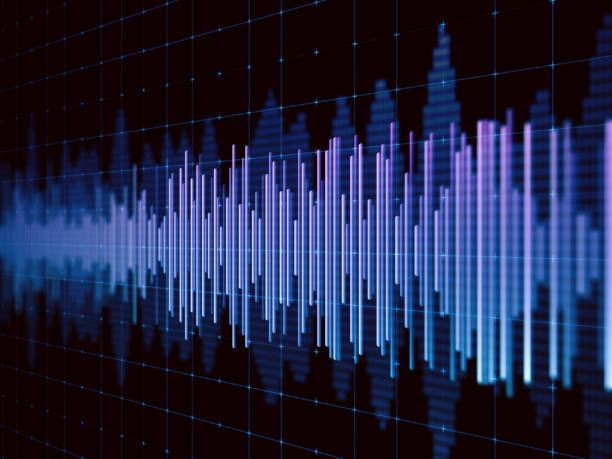
Technical expertise in using seismic instruments like seismographs and software for data analysis with precision
2
Observational accuracy in assessing seismic wave patterns, earthquake locations, and tectonic movements
3
In-depth knowledge of geology, physics, and mathematics related to Earth’s internal dynamics
4
Critical thinking to solve complex problems related to earthquake prediction and hazard mitigation
5
Attention to detail to ensure compliance with scientific standards and data accuracy in seismological experiments
6
Time management to handle multiple research projects and prioritize urgent seismic monitoring tasks
7
Adaptability to learn and implement new seismological technologies and research methods
8
Interpersonal skills for effective collaboration with geologists, engineers, and disaster management experts
9
Problem-solving ability to address challenges in seismic data interpretation and risk assessment
10
Ethical awareness to manage sensitive issues like public safety and accurate communication of seismic risks
Junior Seismologist

Junior Seismologist

Early-career seismologists establish roles in research labs, government agencies, or energy firms while developing their expertise and project...

0.0LPA
Senior Seismologist/Research Lead

Senior Seismologist/Research Lead

Experienced seismologists often take leadership roles, overseeing research teams or seismic monitoring programs while mentoring junior staff and...

0.0LPA
Earthquake Seismologist (Specialized Role)

Earthquake Seismologist (Specialized Role)

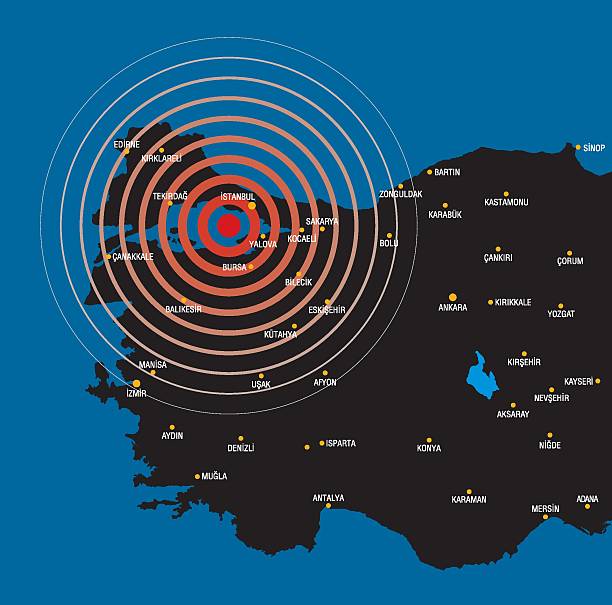
Specialists focus exclusively on earthquake mechanisms, developing expertise in prediction models and risk assessment strategies. They focus on...

0.0LPA

Interested in this career?

Take the next step and explore more about Seismologist.