Robotics Engineer

Robotics Engineering is a cutting-edge and interdisciplinary field within engineering that focuses on the design, development, and implementation of robotic systems, integrating mechanical, electrical, and computer engineering to create automated solutions for diverse industries. In India, Robotics Engineering is a rapidly growing career path, fueled by the rise of automation, industrial digitization, and advancements in artificial intelligence (AI). With innovations in collaborative robots, autonomous systems, and machine learning, this career plays a transformative role in manufacturing, healthcare, agriculture, and beyond. Robotics Engineers are crucial for developing intelligent machines that enhance productivity, safety, and efficiency. This profession contributes to industry progress through trends like Industry 4.0, human-robot collaboration, and robotic process automation (RPA).
Share :
Career tree mind map (horizontal) — Robotics Engineer
Colored branches, hub circles, and underlined topics — same style as counselor course classic (types 18–19 in admin).
Loading mind map…

Robotics Engineers work in diverse environments such as manufacturing plants, research labs, tech startups, or healthcare facilities, often collaborating with software developers, mechanical engineers, AI specialists, and industrial designers. Their responsibilities include designing robotic hardware and software, programming autonomous systems, and integrating robots into real-world applications. They face challenges like addressing India’s skill gap in automation, ensuring cost-effective solutions for small-scale industries, and navigating ethical concerns in AI-driven robotics. By applying expertise in mechanics, electronics, and programming, they build machines that redefine human capabilities. As vital contributors to India’s technological and industrial sectors, they drive advancements through trends like swarm robotics, soft robotics, and autonomous vehicle development.

  • Robotic System Design and Development
    • Design mechanical structures, electronic circuits, and control systems for robots using CAD and simulation tools.
    • Develop prototypes to test robotic functionality, durability, and performance in various environments.
  • Programming and Software Integration
    • Write and debug code for robot control, autonomy, and interaction using languages like Python, C++, or ROS.
    • Integrate AI and machine learning algorithms to enable robots to learn and adapt to tasks.
  • Automation and Process Optimization
    • Implement robotic systems in industries to automate repetitive tasks and improve production efficiency.
    • Optimize robotic workflows to reduce downtime and enhance precision in manufacturing or logistics.
  • Testing and Validation
    • Conduct rigorous testing of robotic systems to ensure reliability, safety, and compliance with standards.
    • Validate robot performance through simulations and real-world trials to address design flaws.
  • Human-Robot Interaction (HRI) Design
    • Develop interfaces and safety protocols for robots to interact seamlessly with humans in collaborative settings.
    • Ensure robots are user-friendly and safe for applications in healthcare, education, or public spaces.
  • Maintenance and Troubleshooting
    • Maintain and upgrade robotic systems to ensure consistent operation and adapt to evolving needs.
    • Diagnose and resolve hardware or software issues in robots during deployment or operation.
  • Project Management and Collaboration
    • Manage robotics projects, ensuring adherence to budgets, timelines, and technical specifications.
    • Collaborate with cross-functional teams to align robotic solutions with industry or client requirements.
  • Research and Innovation
    • Research emerging technologies like swarm intelligence, bio-inspired robotics, or autonomous navigation.
    • Contribute to innovations that expand robotic applications in areas like disaster response or space exploration.

RouteSteps
Route 1: Bachelor’s in Robotics Engineering - Direct Entry

1. Complete 10+2 in Science stream (Physics, Chemistry, Mathematics) with minimum 60% marks.

2. Pursue B.Tech/B.E. in Robotics Engineering or related fields like Mechanical/Electronics (4 years) via entrance exams.

3. Gain experience in robotics firms or labs through entry roles.

4. Progress to Robotics Engineer with skills or higher studies.

Route 2: Bachelor’s to Master’s Pathway

1. Complete 10+2 and enroll in B.Tech/B.E. in Robotics or related Engineering.

2. Pursue M.Tech/M.E. in Robotics Engineering or Automation via entrance exams.

3. Build expertise through advanced projects or research.

4. Join specialized roles in industry or R&D with advanced qualifications.

Route 3: Master’s to Ph.D. Specialization

1. Complete Bachelor’s and Master’s in Robotics or related Engineering.

2. Pursue Ph.D. in Robotics Engineering via entrance exams like UGC-NET or GATE.

3. Conduct research on robotic systems or AI integration.

4. Join senior roles in academia, R&D, or leading organizations.

Route 4: International Education Path

1. Complete 10+2 and clear relevant entrance exams or language tests (e.g., IELTS, TOEFL).

2. Pursue degrees in Robotics Engineering from international universities (e.g., USA, UK).

3. Gain global exposure through international projects or internships.

4. Return to India or work internationally in robotics engineering roles.

Route 5: Diploma to Degree Pathway

1. Complete 10th standard and enroll in Diploma in Robotics or Mechanical Engineering (3 years).

2. Transition to B.Tech/B.E. via lateral entry programs.

3. Work in assistant roles for practical learning.

4. Build expertise and network to secure engineer positions with experience.

  • Bachelor of Technology (B.Tech) in Robotics Engineering for foundational skills in robotic design and automation.
  • Bachelor of Engineering (B.E.) in Mechatronics or Electronics Engineering with a focus on robotics applications.
  • Master of Technology (M.Tech) in Robotics Engineering for advanced expertise in autonomous systems and AI integration.
  • Master of Science (M.Sc.) in Robotics for research-oriented skills in robotic control and human-robot interaction.
  • Ph.D. in Robotics Engineering for cutting-edge research and leadership roles in automation innovation.
  • Specialization in Industrial Robotics, Medical Robotics, Autonomous Systems, or Swarm Robotics.
  • Short-term courses on Robot Operating System (ROS), Machine Learning for Robotics, and Sensor Integration.
  • Certifications in Robotics Process Automation (RPA), Certified Robotics System Architect (CRSA), and AI for Robotics for professional credibility.

InstituteCourse/ProgramOfficial Link
Indian Institute of Technology (IIT), BombayB.Tech/M.Tech in Mechanical Engineering with Robotics Focushttps://www.iitb.ac.in/
Indian Institute of Technology (IIT), DelhiB.Tech/M.Tech in Mechanical/Electrical Engineering with Roboticshttps://www.iitd.ac.in/
Indian Institute of Technology (IIT), KanpurB.Tech/M.Tech in Robotics & Automationhttps://www.iitk.ac.in/
Indian Institute of Technology (IIT), MadrasB.Tech/M.Tech in Mechanical Engineering with Robotics Focushttps://www.iitm.ac.in/
National Institute of Technology (NIT), WarangalB.Tech/M.Tech in Mechanical/Electronics with Robotics Focushttps://www.nitw.ac.in/
Birla Institute of Technology and Science (BITS), PilaniB.E./M.E. in Mechatronics & Roboticshttps://www.bits-pilani.ac.in/
Vellore Institute of Technology (VIT), VelloreB.Tech in Robotics & Automationhttps://www.vit.ac.in/
Amrita Vishwa Vidyapeetham, CoimbatoreB.Tech/M.Tech in Robotics & Automationhttps://www.amrita.edu/
Manipal Institute of Technology (MIT), ManipalB.Tech in Mechatronics with Robotics Focushttps://www.manipal.edu/
SRM Institute of Science and Technology, ChennaiB.Tech in Robotics & Automationhttps://www.srmist.edu.in/

InstitutionCourseCountryOfficial Link
Massachusetts Institute of Technology (MIT), CambridgeB.S./M.S./Ph.D. in Robotics & Mechanical EngineeringUSAhttps://www.mit.edu/
Carnegie Mellon University, PittsburghB.S./M.S./Ph.D. in RoboticsUSAhttps://www.cmu.edu/
Stanford University, StanfordB.S./M.S./Ph.D. in Mechanical Engineering & RoboticsUSAhttps://www.stanford.edu/
University of Oxford, OxfordM.Eng./Ph.D. in Engineering Science with Robotics FocusUKhttps://www.ox.ac.uk/
ETH Zurich, ZurichB.Sc./M.Sc./Ph.D. in Robotics, Systems & ControlSwitzerlandhttps://www.ethz.ch/
University of Tokyo, TokyoB.Eng./M.Eng./Ph.D. in Robotics & Mechanical EngineeringJapanhttps://www.u-tokyo.ac.jp/
National University of Singapore (NUS), SingaporeB.Eng./M.Eng./Ph.D. in Robotics & AutomationSingaporehttps://www.nus.edu.sg/
University of Sydney, SydneyB.Eng./M.Eng./Ph.D. in Mechatronics & RoboticsAustraliahttps://www.sydney.edu.au/
Technical University of Munich (TUM), MunichB.Sc./M.Sc./Ph.D. in Robotics & MechatronicsGermanyhttps://www.tum.de/
University of Toronto, TorontoB.A.Sc./M.A.Sc./Ph.D. in Robotics & Mechanical EngineeringCanadahttps://www.utoronto.ca/

India:

  • JEE Main (Joint Entrance Examination Main): Required for admission to B.Tech programs at NITs, IIITs, and other institutes (Written Test).
  • JEE Advanced: Required for admission to B.Tech programs at IITs after qualifying JEE Main (Written Test).
  • GATE (Graduate Aptitude Test in Engineering): Required for M.Tech admissions in Robotics or related fields (Written Test).
  • BITSAT (Birla Institute of Technology and Science Admission Test): For admission to B.E. programs at BITS campuses (Written Test).
  • State-Level Entrance Exams (e.g., MHT-CET, KCET, AP EAMCET): For admission to state engineering colleges offering robotics or related programs (Written Test).

International (for Relevant Studies or Exposure):

  • IELTS (International English Language Testing System): Minimum score of 6.5-7.0 for non-native speakers applying to programs in the UK, Canada, Australia, etc.
  • TOEFL (Test of English as a Foreign Language): Minimum score of 90-100 for programs in English-speaking countries like the USA.
  • SAT (Scholastic Assessment Test): Often required for undergraduate programs in the USA or Canada (Written Test).
  • GRE (Graduate Record Examination): Often required for postgraduate programs in robotics engineering at international universities (Quantitative, Verbal, Analytical Writing).
  • Interview/Portfolio: Some advanced programs may require interviews or project portfolios to assess technical and creative fit.

Robotics Engineer → Senior Robotics Engineer → Robotics Project Manager → Chief Robotics Engineer → Director of Robotics Innovation

  • Manufacturing Industries for automating production lines and enhancing efficiency with industrial robots.
  • Healthcare Sector for developing surgical robots, prosthetics, and rehabilitation devices.
  • Automotive Industry for designing autonomous vehicles and robotic assembly systems.
  • Logistics and Warehousing for implementing robots in supply chain automation and inventory management.
  • Defense and Aerospace for creating robots for surveillance, bomb disposal, and space exploration.
  • Research and Academic Institutions for innovating robotic technologies and educating future engineers.
  • Tech Startups and Consultancies for pioneering consumer robotics and customized automation solutions.

Indian OrganizationsInternational Organizations
Tata Motors, MumbaiABB Robotics, Switzerland
Larsen & Toubro (L&T), MumbaiFanuc Corporation, Japan
Bharat Heavy Electricals Limited (BHEL), DelhiKUKA Robotics, Germany
Infosys (Automation Division), BangaloreBoston Dynamics, USA
Wipro (Automation Solutions), BangaloreUniversal Robots, Denmark
HCL Technologies, NoidaiRobot Corporation, USA
Mahindra & Mahindra, MumbaiYaskawa Electric Corporation, Japan
GreyOrange, GurugramRethink Robotics, USA
Addverb Technologies, NoidaSoftBank Robotics, Japan
Systemantics India Pvt. Ltd., BangaloreIntuitive Surgical, USA

ProsCons
High impact through transforming industries with automation and roboticsHigh pressure due to complex technical challenges and tight project deadlines
Opportunity to work on futuristic technologies like AI and autonomous systemsLong hours during design iterations, testing phases, or system deployments
Key role in driving innovation across manufacturing, healthcare, and moreChallenges in staying updated with rapidly evolving robotics and AI tools
Growing demand in India’s expanding automation and tech-driven sectorsStress from ensuring safety and reliability in human-robot interactions
Potential for recognition through groundbreaking robotic designs or solutionsRisk of limited funding or resources for robotics R&D in smaller firms

Career Level (Private/Public Sector Example)India (₹ per annum)International (USD per annum, Tentative)
Robotics Engineer (Entry to Mid-Level)4,00,000 - 8,00,00040,000 - 60,000
Senior Robotics Engineer (Mid-Level)8,00,000 - 15,00,00060,000 - 90,000
Robotics Project Manager (Senior Level)15,00,000 - 25,00,00090,000 - 120,000
Chief Robotics Engineer (Top Tier)25,00,000 - 40,00,000120,000 - 160,000
Director of Robotics Innovation (Elite Level)40,00,000 - 55,00,000+160,000 - 200,000+
Robotics Software Engineer (Specialized Role)5,00,000 - 10,00,00045,000 - 70,000
Robotics Hardware Engineer (Specialized Role)4,50,000 - 9,00,00040,000 - 65,000
Automation Specialist (Specialized Role)5,50,000 - 11,00,00050,000 - 75,000
Medical Robotics Engineer (Specialized Role)6,00,000 - 12,00,00055,000 - 80,000
Autonomous Systems Engineer (Specialized Role)6,50,000 - 13,00,00060,000 - 85,000

Note: Salaries are indicative and vary based on location (metro vs. non-metro for India; country/region for international roles), organization type, and project complexity. Figures for India are updated estimates based on industry trends as of 2025, reflecting market growth, demand for robotics engineering expertise, and data from sources like Glassdoor and industry reports. International figures are approximate averages based on global robotics engineering trends in countries like the USA, UK, or Japan, sourced from recent job portals and market analyses.

  • Robot Operating System (ROS): For developing and simulating robotic software with modular frameworks.
  • MATLAB: For numerical analysis, control system design, and simulation of robotic movements.
  • SolidWorks: For 3D CAD design of robotic hardware components and mechanical structures.
  • Gazebo: For simulating robotic systems in virtual environments to test functionality and interactions.
  • Python: For programming robot control algorithms, AI integration, and data processing.
  • C++: For high-performance coding of robotic control systems and real-time applications.
  • Simulink (MATLAB): For modeling and simulating dynamic systems and control algorithms in robotics.
  • AutoCAD: For creating precise 2D and 3D technical drawings of robotic components.
  • TensorFlow: For integrating machine learning and deep learning models into robotic systems.
  • LabVIEW: For designing and testing robotic control systems and hardware interfaces.

  • Robotics Society of India (RSI), India.
  • Indian Robotics and Automation Association (IRAA), India.
  • National Centre for Robotics and Automation (NCRA), India.
  • AI & Robotics Technology Park (ARTPARK), India.
  • Institute of Electrical and Electronics Engineers (IEEE) Robotics and Automation Society, Global.
  • International Federation of Robotics (IFR), Global.
  • Robotics Industries Association (RIA), USA.
  • European Robotics Association (euRobotics), Europe.
  • Japan Robot Association (JRA), Japan.

  • P. K. Kelkar (India, Historical): P. K. Kelkar, a pioneering engineer and educator, laid the foundation for technical education in India at IIT Kanpur, indirectly fostering robotics through engineering innovation. His vision shaped academia. His legacy inspires Indian engineers.
     
  • Vijay Kumar (India, Contemporary): Vijay Kumar, a renowned roboticist, contributed to swarm robotics and aerial robots, with roots in India and impactful work at UPenn. His innovations redefine automation. His work influences global robotics.
     
  • Ashish Dutta (India, Contemporary): Ashish Dutta, a professor at IIT Kanpur, has advanced robotics research in India, focusing on humanoid robots and automation for societal needs. His leadership drives innovation. His contributions shape Indian robotics.
     
  • Subir Kumar Saha (India, Contemporary): Subir Kumar Saha, a robotics expert at IIT Delhi, pioneered research in robotic mechanisms and industrial automation, mentoring future engineers in India. His work enhances productivity. His impact strengthens robotics education.
     
  • Santanu Chaudhury (India, Contemporary): Santanu Chaudhury, director of IIT Jodhpur, has contributed to robotics through AI and vision systems, promoting interdisciplinary tech development in India. His vision fosters innovation. His efforts advance Indian automation.
     
  • Rodney Brooks (Australia/USA, Contemporary): Rodney Brooks, co-founder of iRobot and Rethink Robotics, revolutionized consumer and collaborative robotics with creations like Roomba. His innovations transformed industries. His legacy drives modern robotics.
     
  • Hiroshi Ishiguro (Japan, Contemporary): Hiroshi Ishiguro, a robotics pioneer, developed lifelike humanoid robots like Geminoid, advancing human-robot interaction research at Osaka University. His creations blur reality. His impact shapes HRI globally.
     
  • Cynthia Breazeal (USA, Contemporary): Cynthia Breazeal, an MIT professor, pioneered social robotics with robots like Kismet, focusing on emotional human-robot connections. Her work inspires empathy. Her contributions redefine robotics applications.
     
  • Marc Raibert (USA, Contemporary): Marc Raibert, founder of Boston Dynamics, advanced dynamic robotics with machines like Atlas and Spot, pushing mobility and balance boundaries. His vision redefines capability. His innovations influence global tech.
     
  • Sebastian Thrun (Germany/USA, Contemporary): Sebastian Thrun, a robotics and AI expert, led Google’s self-driving car project and founded Udacity, shaping autonomous systems and education. His leadership drives autonomy. His impact transforms transportation tech.
     

  • Build a strong foundation in mathematics, physics, and computer science to excel in designing and programming robotic systems.
  • Pursue early exposure through internships at robotics labs, automation firms, or tech startups to understand practical challenges.
  • Create a portfolio showcasing robot designs, programming projects, or automation solutions to demonstrate your abilities to potential employers.
  • Stay updated on AI advancements, sensor technologies, and industrial automation trends through continuous learning and professional events.
  • Develop proficiency in ROS, programming languages, and simulation tools for a competitive edge in the robotics field.
  • Join reputed institutes like IITs or international programs for high-quality education and valuable industry connections.
  • Work on resilience to manage complex technical issues, tight deadlines, and iterative design processes effectively.
  • Explore opportunities in smaller robotics startups or research labs to gain hands-on experience if larger roles are initially inaccessible.
  • Network with AI specialists, mechanical engineers, and automation experts at conferences to broaden career prospects.
  • Cultivate adaptability to handle fast-evolving technologies, diverse industrial applications, and ethical challenges with confidence.
  • Focus on societal impact by creating robotic solutions that enhance productivity, safety, and quality of life across various sectors.

A career in Robotics Engineering presents an extraordinary chance to shape the future of automation by blending technical mastery with innovative design, revolutionizing industries through intelligent machines, and building a smarter world with every robotic system engineered. Robotics Engineers stand as the visionary creators of India’s technological frontier, harnessing their analytical skills and inventive spirit to craft robots that redefine efficiency and human potential. This discipline merges engineering precision with forward-thinking creativity, unlocking opportunities in industrial automation, healthcare robotics, autonomous systems, and beyond. For individuals passionate about pioneering the next generation of machines through engineering brilliance, motivated by the potential to transform how we work and live, and prepared to meet the intricate demands of system integration, technological evolution, and ethical considerations, a career as a Robotics Engineer offers a profoundly inspiring quest. It enables one to tackle pressing automation challenges, elevate industrial and societal capabilities, and contribute to global innovation through the remarkable power of robotics engineering.

Knowledge & Skills You Will Learn
1
Robotic System Design Proficiency for creating mechanical and electronic components of robots using CAD tools
2
Programming Expertise to develop and debug control software for robots using languages like Python, C++, and ROS
3
AI and Machine Learning Knowledge to integrate intelligent algorithms for robot autonomy and adaptability
4
Control Systems Skills to design feedback mechanisms for precise robot movement and task execution
5
Sensor Integration Abilities to incorporate vision, proximity, and tactile sensors for robot perception and interaction
6
Software Mastery for using tools like MATLAB, SolidWorks, and Gazebo for simulation and design of robotic systems
7
Problem-Solving Capabilities to address hardware failures, software bugs, or integration challenges in robotics
8
Project Management Skills to oversee robotics projects, ensuring timelines, budgets, and quality standards are met
9
Human-Robot Interaction (HRI) Focus to design safe, user-friendly interfaces for collaborative robotic applications
10
Adaptability to keep pace with emerging technologies, industrial automation trends, and diverse application domains
Robotics Engineer (Entry to Mid-Level)

Robotics Engineer (Entry to Mid-Level)

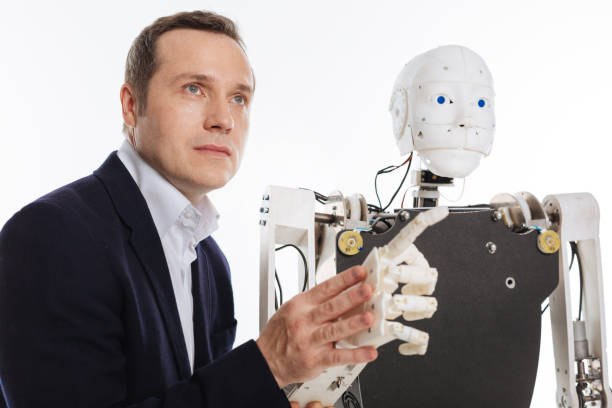
Robotics Engineers design and program robotic systems for industrial or consumer use in cities like Bangalore and Pune. They focus on hardware and...

0.0LPA
Senior Robotics Engineer (Mid-Level)

Senior Robotics Engineer (Mid-Level)

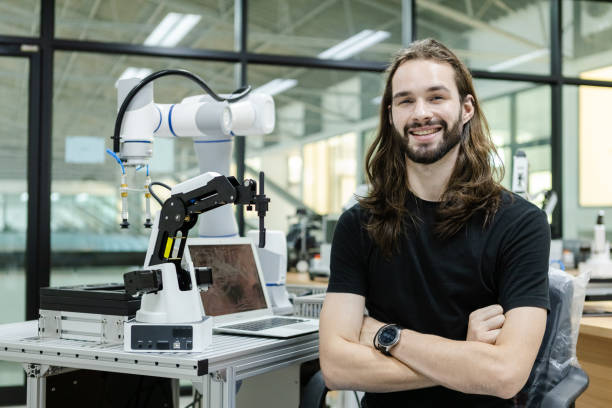
Senior Robotics Engineers lead complex robot design projects in hubs like Hyderabad or Chennai, mentoring junior staff. They develop advanced...

0.0LPA
Robotics Project Manager (Senior Level)

Robotics Project Manager (Senior Level)

Robotics Project Managers oversee large-scale automation projects in metro cities like Mumbai or Delhi, managing budgets and teams. They ensure...

0.0LPA

Interested in this career?

Take the next step and explore more about Robotics Engineer.