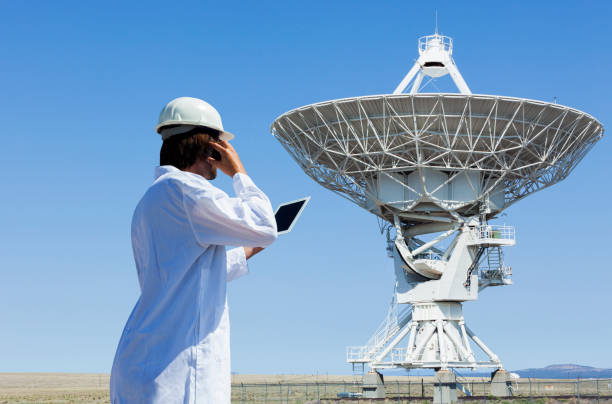

Quantum Information Scientists are experts who focus on harnessing quantum phenomena such as superposition, entanglement, and quantum interference to create novel methods for information processing, encryption, and simulation, applying their findings to address challenges in technology, security, and scientific discovery. Their work involves conducting theoretical research, developing quantum algorithms, and collaborating with interdisciplinary teams to translate quantum concepts into practical applications. They often operate in academic, industrial, or governmental settings, balancing rigorous scientific investigation with real-world impact. Quantum Information Scientists are essential to fields like quantum computing, quantum cryptography, and quantum sensing, serving as key contributors to science-driven solutions for complex computational problems, advancing technological innovations, and ensuring digital security. They tackle critical issues through methodical research and improve outcomes through evidence-based strategies in a landscape where quantum technologies are rapidly emerging as transformative forces due to global demand for faster, safer systems.
- Quantum Research and Theory
- Conduct theoretical studies on quantum systems to understand information processing at the quantum level.
- Develop mathematical models to describe quantum states, entanglement, and decoherence.
- Quantum Algorithm Development
- Design and test quantum algorithms for applications like optimization, machine learning, and cryptography.
- Simulate quantum processes to predict performance and scalability of quantum systems.
- Quantum Hardware and Software
- Collaborate on the development of quantum hardware such as qubits and quantum gates.
- Create software frameworks for programming and controlling quantum computers.
- Reporting and Communication
- Prepare scientific papers, grants, and presentations to share research findings with the scientific community.
- Communicate complex quantum concepts to engineers, policymakers, and the public.
- Quantum Cryptography and Security
- Develop secure communication protocols using quantum key distribution (QKD) and other quantum techniques.
- Analyze vulnerabilities in classical encryption systems and propose quantum-resistant solutions.
- Laboratory Management and Safety
- Oversee laboratory operations, ensuring compliance with safety and ethical standards.
- Maintain protocols for handling sensitive quantum hardware and experimental setups.
- Consulting and Advisory
- Advise technology companies, organizations, or governments on quantum technology adoption.
- Offer insights on emerging trends in quantum computing and security threats.
- Research and Development
- Innovate new techniques for quantum error correction and noise mitigation in quantum systems.
- Contribute to academic publications or industry advancements in quantum information science.
- Technology Integration
- Use simulation tools to model quantum systems and predict real-world performance.
- Leverage classical computing to support hybrid quantum-classical solutions.
- Interdisciplinary Collaboration
- Work with physicists, computer scientists, and engineers to integrate quantum research into broader technological initiatives.
- Partner with global research organizations for coordinated efforts in quantum technology development.
| Route | Steps |
| Route 1 | 1. 10+2 with Physics, Mathematics, and Chemistry as core subjects. 2. Bachelor's degree in Physics, Computer Science, or Engineering (3-4 years). 3. Master's degree in Quantum Information Science, Quantum Physics, or Computer Science (2 years). 4. PhD in Quantum Information or related field (3-5 years, optional). 5. Postdoctoral research or industry experience in quantum technologies (optional). |
| Route 2 | 1. 10+2 with Physics and Mathematics. 2. Bachelor's degree in Applied Physics or Mathematics (3-4 years). 3. Master's degree in Quantum Computing or Theoretical Physics (2 years). 4. Specialized training in quantum information techniques (6 months-1 year). 5. Practical experience in quantum labs or internships. |
| Route 3 | 1. 10+2 with Physics and Mathematics. 2. Bachelor's degree in Electrical Engineering or Computer Engineering (4 years). 3. Master's degree in Quantum Engineering or Quantum Information Science (2 years). 4. Certification or short-term training in quantum programming (6 months-1 year). 5. Industry experience in quantum technology firms. |
| Route 4 | 1. 10+2 with Physics and Mathematics. 2. Bachelor's degree from India in relevant field (3-4 years). 3. Master's or PhD in Quantum Information Science or Quantum Computing abroad (2-5 years). 4. Training or postdoctoral research in international quantum programs (1-3 years). 5. Certification or licensure for international practice (if applicable). |
- Internships in quantum research labs focusing on quantum algorithms and hardware.
- Research apprenticeships with academic or industrial teams for applied quantum projects.
- Observerships in technology firms developing quantum computing solutions.
- Participation in quantum cryptography projects analyzing secure communication protocols.
- Training in quantum programming tools like Qiskit and Cirq under supervision.
- Experience in quantum simulation units conducting computational experiments.
- Involvement in collaborative studies for quantum sensing and metrology.
- Attendance at quantum computing or information science conferences and workshops.
- Exposure to interdisciplinary projects with physicists and computer scientists.
- Collaborative research in international quantum labs for global exposure.
- Bachelor’s in Physics, Computer Science, or Engineering.
- Bachelor’s in Applied Mathematics or Electrical Engineering.
- Master’s in Quantum Information Science, Quantum Computing, or Theoretical Physics.
- PhD in Quantum Information or Quantum Engineering.
- Certification courses in Quantum Programming and Cryptography.
- Training in Quantum Machine Learning and Quantum Hardware Design.
- Specialized courses in Quantum Simulation and Error Correction.
- Master’s in Computer Science with Quantum focus.
- Continuing Education courses in Emerging Quantum Technologies.
- Short-term courses in Quantum Algorithm Development.
| Institute | Course/Program | Official Link |
| Indian Institute of Science (IISc), Bangalore | MSc/PhD in Physics (Quantum focus) | https://www.iisc.ac.in/ |
| Indian Institute of Technology (IIT), Bombay | MSc/PhD in Physics and Engineering | https://www.iitb.ac.in/ |
| Indian Institute of Technology (IIT), Madras | MSc/PhD in Quantum Science | https://www.iitm.ac.in/ |
| University of Hyderabad, Hyderabad | MSc/PhD in Physics (Quantum focus) | https://www.uohyd.ac.in/ |
| Tata Institute of Fundamental Research (TIFR), Mumbai | PhD in Quantum Information | https://www.tifr.res.in/ |
| Indian Institute of Technology (IIT), Kanpur | MSc/PhD in Quantum Computing | https://www.iitk.ac.in/ |
| University of Delhi, Delhi | MSc/PhD in Physics | https://www.du.ac.in/ |
| Indian Institute of Technology (IIT), Delhi | MSc/PhD in Quantum Technologies | https://home.iitd.ac.in/ |
| Jawaharlal Nehru University (JNU), New Delhi | MSc/PhD in Computational Physics | https://www.jnu.ac.in/ |
| Amity University, Noida | MSc in Quantum Science | https://www.amity.edu/ |
| Institution | Course | Country | Official Link |
| Massachusetts Institute of Technology (MIT) | PhD in Quantum Information Science | USA | https://www.mit.edu/ |
| University of Oxford | MSc/DPhil in Quantum Computing | UK | https://www.ox.ac.uk/ |
| California Institute of Technology (Caltech) | PhD in Quantum Science and Engineering | USA | https://www.caltech.edu/ |
| University of Cambridge | MPhil/PhD in Quantum Information | UK | https://www.cam.ac.uk/ |
| University of California, Berkeley | PhD in Physics (Quantum focus) | USA | https://www.berkeley.edu/ |
| ETH Zurich | MSc/PhD in Quantum Engineering | Switzerland | https://ethz.ch/en.html |
| University of Waterloo | MSc/PhD in Quantum Information | Canada | https://uwaterloo.ca/ |
| Australian National University (ANU) | MSc/PhD in Quantum Science | Australia | https://www.anu.edu.au/ |
| National University of Singapore (NUS) | MSc/PhD in Quantum Technologies | Singapore | https://www.nus.edu.sg/ |
| Technical University of Munich (TUM) | MSc/PhD in Quantum Science | Germany | https://www.tum.de/en/ |
India:
- Joint Entrance Examination (JEE) for undergraduate programs at IITs.
- Graduate Aptitude Test in Engineering (GATE) for Master's programs in Physics and Engineering at IITs and other institutes.
- Council of Scientific and Industrial Research (CSIR) NET for research fellowships and PhD programs.
- Joint Admission Test for MSc (JAM) for postgraduate programs in Physics and related fields.
- University-specific entrance exams for Master's and PhD programs in Quantum Science (e.g., TIFR Entrance, IISc Entrance).
International:
- Graduate Record Examination (GRE) for postgraduate programs in Quantum Information Science in the USA and Canada.
- International English Language Testing System (IELTS) with a minimum score of 6.5-7.0 for international programs.
- Test of English as a Foreign Language (TOEFL) with a minimum score of 90-100 for programs in English-speaking countries.
- University-specific entrance exams for international Master's or PhD programs in related fields.
- Australian Education Assessment Services for programs in Australia.
- Specific fellowship or scholarship exams for international research opportunities.
Undergraduate Student → Graduate Trainee (Master's) → Junior Quantum Information Scientist → Established Quantum Information Scientist → Senior Quantum Information Scientist/Research Lead → Program Director/Professor
- Academic institutions conducting quantum research and teaching.
- Government agencies focusing on quantum technology for security and defense.
- Technology companies developing quantum computing hardware and software.
- Research institutes studying quantum information theory and applications.
- Cybersecurity firms innovating quantum-resistant encryption methods.
- Telecommunications companies exploring quantum communication networks.
- Financial sectors applying quantum algorithms for optimization and risk analysis.
- Pharmaceutical industries using quantum simulations for drug discovery.
- International research organizations addressing global quantum challenges.
- Non-profit organizations advocating for quantum technology development.
| India | International |
| Indian Institute of Science (IISc), Bangalore | IBM Quantum, Global |
| Tata Institute of Fundamental Research (TIFR) | Google Quantum AI, USA |
| Indian Institute of Technology (IIT), Bombay | Microsoft Quantum, Global |
| Department of Science and Technology (DST), India | Intel (Quantum Division), USA |
| QuNu Labs, Bangalore | Amazon Braket, USA |
| Indian Space Research Organisation (ISRO) | D-Wave Systems, Canada |
| Indian Institute of Technology (IIT), Madras | Rigetti Computing, USA |
| QpiAI Tech, Bangalore | IonQ, USA |
| National Physical Laboratory (NPL), New Delhi | Honeywell Quantum Solutions, USA |
| Centre for Development of Advanced Computing (C-DAC) | Quantum Machines, Israel |
| Pros | Cons |
| Significant contribution to future technologies through research on quantum computing and security. | Highly theoretical and complex field, requiring deep mathematical and physics knowledge. |
| Intellectually stimulating work combining physics, mathematics, and computer science in quantum research. | Limited immediate practical applications, as quantum technology is still in early stages. |
| High demand due to the potential of quantum technologies to revolutionize industries. | Competitive field with few established positions, often requiring advanced degrees. |
| Opportunities for innovation in quantum algorithms, hardware, and cryptography. | Requires access to expensive, specialized equipment and infrastructure for research. |
| Growing relevance due to global interest in secure communication and computational power. | Rapidly evolving field demands constant learning to stay updated with new developments. |
- Quantum Computing Scalability: Increasing focus on building scalable quantum computers with more stable qubits to solve real-world problems.
- Quantum Cryptography Adoption: Growing emphasis on quantum key distribution (QKD) and post-quantum cryptography to secure data against future quantum threats.
- Quantum Networking: Development of quantum internet for ultra-secure, long-distance communication using entangled particles.
- Hybrid Quantum-Classical Systems: Rising integration of quantum and classical computing to address current limitations in quantum hardware.
- Quantum Machine Learning: Exploration of quantum algorithms to accelerate machine learning tasks like optimization and data classification.
- Quantum Simulation: Enhanced use of quantum systems to simulate complex molecular structures for drug discovery and materials science.
- Government and Industry Investment: Significant funding from governments and tech giants to accelerate quantum technology research and commercialization.
- Quantum Sensing and Metrology: Growing applications of quantum technologies in high-precision measurements for navigation, medical imaging, and environmental monitoring.
- Standardization Efforts: Global initiatives to establish standards and protocols for quantum hardware, software, and security systems.
- Workforce Development: Increasing demand for skilled professionals, leading to more educational programs and training in quantum information science.
| Career Level | India (₹ per annum) | International (US$ per annum) |
| Trainee/Graduate Student | 2,00,000 - 5,00,000 | $30,000 - $40,000 |
| Junior Quantum Information Scientist | 5,00,000 - 10,00,000 | $50,000 - $70,000 |
| Established Quantum Information Scientist | 10,00,000 - 18,00,000 | $70,000 - $100,000 |
| Senior Quantum Information Scientist/Research Lead | 18,00,000 - 30,00,000 | $100,000 - $130,000 |
| Program Director/Professor | 30,00,000 - 50,00,000 | $130,000 - $180,000 |
- Quantum Programming Frameworks: Tools like Qiskit (IBM), Cirq (Google), and QuTiP for developing quantum algorithms and simulations.
- Simulation Software: Platforms like MATLAB and Mathematica for modeling quantum systems and behaviors.
- Quantum Hardware Control Tools: Software for interfacing with quantum hardware, such as LabVIEW and custom SDKs from hardware providers.
- Mathematical Analysis Tools: Software like Maple and Wolfram Alpha for solving complex quantum equations and linear algebra problems.
- Data Visualization Tools: Tools like Matplotlib and Seaborn for presenting quantum research data and results.
- Cloud Quantum Platforms: Services like IBM Quantum Experience and Amazon Braket for accessing quantum hardware remotely.
- Cryptography Software: Tools for designing and testing quantum-resistant encryption protocols and QKD systems.
- Machine Learning Libraries: Libraries like TensorFlow Quantum for integrating quantum computing with machine learning applications.
- Collaboration Platforms: Tools like GitHub and Slack for interdisciplinary teamwork and code sharing in quantum projects.
- High-Performance Computing Tools: Software for leveraging classical supercomputers to support quantum simulations and hybrid systems.
- International Quantum Information Society (IQIS)
- Quantum Economic Development Consortium (QEDC), USA
- European Quantum Industry Consortium (QuIC)
- Indian Quantum Technology Forum (IQTF)
- Institute of Electrical and Electronics Engineers (IEEE) Quantum Initiative
- American Physical Society (APS) Division of Quantum Information
- Quantum Computing Report Community
- Quantum Industry Canada (QIC)
- Australian Quantum Alliance (AQA)
- Global Quantum Technology Network (GQTN)
- Dr. John Preskill (Contemporary, USA): Known for contributions to quantum information theory and quantum error correction, active since the 1980s at Caltech.
- Dr. Peter Shor (Contemporary, USA): Recognized for Shor’s algorithm for quantum factorization, active since the 1990s at MIT.
- Dr. David Deutsch (Historical, UK): Noted for pioneering quantum computing theory and the Deutsch-Jozsa algorithm, active since the 1980s at University of Oxford.
- Dr. Richard Feynman (Historical, USA): Known for early concepts of quantum computing and simulation, active from the 1940s to 1980s at Caltech, Nobel Prize winner in 1965.
- Dr. Alain Aspect (Contemporary, France): Recognized for experiments on quantum entanglement, active since the 1970s at Institut d’Optique, Nobel Prize winner in 2022.
- Dr. Anton Zeilinger (Contemporary, Austria): Noted for work on quantum teleportation and entanglement, active since the 1970s at University of Vienna, Nobel Prize winner in 2022.
- Dr. Michele Mosca (Contemporary, Canada): Known for contributions to quantum cryptography and algorithms, active since the 1990s at University of Waterloo.
- Dr.KrystaSvore (Contemporary, USA): Recognized for leadership in quantum software development, active since the 2000s at Microsoft Quantum.
- Dr. Jay Gambetta (Contemporary, USA): Noted for advancements in quantum hardware and cloud quantum computing, active since the 2000s at IBM Quantum.
- Dr. Vijay Balasubramanian (Contemporary, India/USA): Known for research in quantum information theory and theoretical physics, active since the 1990s at University of Pennsylvania.
- Build a strong foundation in physics, mathematics, and computer science during undergraduate studies to prepare for specialized learning.
- Seek early exposure through internships or lab projects to gain practical experience in quantum research techniques.
- Develop technical skills in quantum programming tools like Qiskit and Cirq during Master's or PhD programs for a competitive edge.
- Engage in interdisciplinary learning by exploring quantum mechanics, information theory, and cryptography alongside quantum science.
- Pursue research opportunities or fellowships to deepen expertise in niche areas like quantum algorithms or hardware design.
- Cultivate mentoring relationships with established quantum scientists for career guidance and networking opportunities.
- Stay updated with advancements in quantum computing, cryptography, and hardware technologies.
- Publish research findings or quantum studies in scientific journals to establish credibility and contribute to the field.
- Consider international exposure through collaborative projects, conferences, or advanced research abroad to broaden perspectives.
- Balance technical expertise with communication skills to present complex quantum concepts to non-scientific stakeholders effectively.
A career as a Quantum Information Scientist offers a unique opportunity to impact global technology, scientific discovery, and societal well-being by harnessing the power of quantum mechanics. From developing quantum algorithms to building secure communication systems, Quantum Information Scientists play a pivotal role in addressing some of the world's most pressing challenges in computing and security. This field combines rigorous scientific inquiry, interdisciplinary collaboration, and technological innovation, offering diverse paths in research, industry application, and policy roles. For those passionate about physics, problem-solving, and shaping the future of technology, a career as a Quantum Information Scientist provides a deeply rewarding journey with significant potential for making meaningful contributions to society in an era where quantum advancements continue to shape technological strategies, digital innovations, and global responses across all sectors.