Plastic Engineer

A Plastic Engineer applies principles of materials science, chemistry, and engineering to design, develop, and optimize plastic materials and manufacturing processes. They work with polymers, composites, and advanced plastic materials to create products for automotive, aerospace, medical, packaging, consumer goods, and industrial applications. Plastic Engineers combine theoretical knowledge of polymer chemistry and material properties with practical engineering skills to solve complex problems involving plastic material selection, processing, manufacturing, and quality control.
Share :
Career tree mind map (horizontal) — Plastic Engineer
Colored branches, hub circles, and underlined topics — same style as counselor course classic (types 18–19 in admin).
Loading mind map…

Plastic Engineers design and develop plastic materials and products ranging from simple packaging containers to complex automotive components, medical devices, and aerospace parts. Their work involves analyzing polymer properties, designing manufacturing processes, optimizing product performance, and ensuring cost-effectiveness and sustainability. They collaborate with design engineers, manufacturing teams, and quality control specialists to integrate plastic materials into various products. Plastic Engineers also conduct testing, troubleshooting, and process optimization to ensure plastic products meet performance specifications, regulatory requirements, and industry standards.

  1. Material Selection and Development
    • Select appropriate plastic materials based on application requirements and performance criteria.
    • Develop new polymer formulations and composite materials for specific applications.
  2. Product Design and Analysis
    • Design plastic components and products using CAD software and engineering principles.
    • Perform structural analysis, stress testing, and failure mode analysis.
  3. Manufacturing Process Development
    • Design and optimize plastic manufacturing processes including injection molding, extrusion, and blow molding.
    • Develop process parameters for temperature, pressure, and cycle time optimization.
  4. Quality Control and Testing
    • Establish quality control procedures and testing protocols for plastic materials and products.
    • Conduct mechanical, thermal, and chemical property testing.
  5. Mould and Tooling Design
    • Design injection moulds, extrusion dies, and other manufacturing tooling.
    • Optimize mould design for part quality, cycle time, and cost efficiency.
  6. Process Optimization and Troubleshooting
    • Analyze and solve manufacturing problems related to plastic processing.
    • Implement process improvements to reduce waste and increase efficiency.
  7. Sustainability and Environmental Compliance
    • Develop environmentally friendly plastic materials and recycling processes.
    • Ensure compliance with environmental regulations and sustainability standards.
  8. Technical Support and Documentation
    • Provide technical support to production teams and customers.
    • Create technical specifications, process documentation, and material data sheets.

RouteSteps
Route 11. 10+2 with Physics, Chemistry, Mathematics (PCM) stream.
2. B.Tech/B.E. (4 yrs) in Plastic Engineering, Polymer Engineering, or Chemical Engineering.
3. Internships in plastic manufacturing companies or polymer research labs.
Route 21. 10+2 with PCM stream.
2. B.Sc. (3 yrs) in Chemistry, Materials Science, or Applied Chemistry.
3. M.Tech/M.Sc. (2 yrs) in Plastic Engineering, Polymer Science, or Materials Engineering.
4. Industry internships and research projects in polymer technology.
Route 31. 10+2 with PCM stream.
2. B.Tech (4 yrs) in Mechanical Engineering or Materials Engineering.
3. M.Tech/M.S. (2 yrs) specializing in Polymer Engineering or Plastic Technology.
4. Professional certifications and hands-on training in plastic processing.
Route 41. Bachelor's degree in Engineering, Chemistry, or Materials Science.
2. Master's/PhD in Polymer Engineering, Plastic Technology, or Materials Science (2-5 yrs).
3. Research experience and publications in polymer science and plastic engineering.
4. Advanced internships in specialized plastic technology companies.

  • Entrance Exam Requirements: JEE Advanced mandatory for IIT admission, GATE essential for postgraduate programs, and specialized entrance tests for polymer engineering courses.
  • Strong Chemistry Foundation: Requires excellent understanding of organic chemistry, polymer chemistry, and materials science principles.
  • Manufacturing Knowledge Essential: Hands-on experience with plastic processing equipment and manufacturing techniques is crucial.
  • Software Proficiency Required: Mastery of CAD software, simulation tools, and process optimization software is industry standard.
  • Industry Experience Valued: Practical experience in plastic manufacturing significantly enhances career opportunities.
  • Interdisciplinary Knowledge: Combines chemistry, mechanical engineering, materials science, and increasingly environmental science.
  • Continuous Learning Necessity: Rapidly evolving field with new materials and sustainable technologies requiring ongoing education.
  • Regulatory Awareness Important: Understanding of safety, environmental, and industry regulations is essential for career success.

  • Internships in plastic manufacturing companies and polymer processing facilities
  • Research projects in polymer chemistry and materials science laboratories
  • Hands-on experience with injection molding, extrusion, and blow molding equipment
  • Industrial training in quality control and testing procedures
  • Participation in product development and prototype manufacturing projects
  • Exposure to mold design and tooling manufacturing processes
  • Collaboration with multidisciplinary engineering and production teams
  • Attendance at plastics industry trade shows and technical conferences
  • Training in environmental compliance and sustainability practices
  • Involvement in cost analysis and process optimization projects

  • Bachelor's degrees in Plastic Engineering, Polymer Engineering, Chemical Engineering, Materials Engineering
  • Master's and PhD programs in Polymer Science, Plastic Technology, Materials Science
  • Courses in Polymer Chemistry, Plastic Processing, Mold Design, Materials Testing
  • Training in CAD Software (SolidWorks, AutoCAD, Moldflow)
  • Manufacturing Processes and Quality Control courses
  • Environmental Engineering and Sustainability Studies
  • Business and Economics courses for cost analysis
  • Advanced Materials and Composites Engineering
  • Industrial Training and Cooperative Education Programs
  • Professional Development and Certification Courses

InstituteCourse / ProgramOfficial Link
Indian Institute of Technology (IIT) DelhiChemical Engineering with Polymer Specializationhttps://www.iitd.ac.in/
Indian Institute of Technology (IIT) BombayMaterials Science and Engineeringhttps://www.iitb.ac.in/
Central Institute of Plastics Engineering & Technology (CIPET)Plastic Engineeringhttps://www.cipet.gov.in/
Anna University, ChennaiPolymer Technologyhttps://www.annauniv.edu/
Cochin University of Science and TechnologyPolymer Science and Rubber Technologyhttps://www.cusat.ac.in/
University of PunePolymer Sciencehttps://www.unipune.ac.in/
Birla Institute of Technology and Science (BITS) PilaniChemical Engineeringhttps://www.bits-pilani.ac.in/
National Institute of Technology (NIT) WarangalMaterials Science and Metallurgyhttps://www.nitw.ac.in/
Harcourt Butler Technical UniversityPlastic Technologyhttps://www.hbtu.ac.in/
Shivaji University, KolhapurTechnology (Polymer)https://www.unishivaji.ac.in/

International

InstitutionCourseCountryOfficial Link
Massachusetts Institute of Technology (MIT)Materials Science and EngineeringUSAhttps://mit.edu/
University of AkronPolymer EngineeringUSAhttps://uakron.edu/
Case Western Reserve UniversityMacromolecular Science and EngineeringUSAhttps://case.edu/
University of Massachusetts LowellPlastics EngineeringUSAhttps://uml.edu/
Imperial College LondonMaterials ScienceUKhttps://www.imperial.ac.uk/
Technical University of Denmark (DTU)Chemical and Biochemical EngineeringDenmarkhttps://www.dtu.dk/
ETH ZurichMaterials ScienceSwitzerlandhttps://ethz.ch/
University of TorontoChemical Engineering and Applied ChemistryCanadahttps://utoronto.ca/
RWTH Aachen UniversityPlastics EngineeringGermanyhttps://www.rwth-aachen.de/
Eindhoven University of TechnologyChemical EngineeringNetherlandshttps://www.tue.nl/

India

  • JEE Advanced: For admission to undergraduate engineering programs at IITs.
  • GATE: For postgraduate plastic engineering and polymer science courses.
  • CIPET Entrance Test: For specialized plastic engineering programs.
  • State-Level Engineering Entrance Exams: For regional universities.
  • Institute-Specific Entrance Tests: For specialized polymer engineering programs.


International

  • GRE: For admission to graduate polymer engineering and materials science programs.
  • GRE Chemistry: For chemistry-based polymer science programs.
  • TOEFL / IELTS: For English proficiency in international universities.
  • University-specific Entrance Tests: May include interviews or technical assessments.

Junior Plastic Engineer / Process Trainee → Graduate Student (MSc/PhD) → Plastic Engineer → Senior Plastic Engineer → Principal Engineer / Technical Specialist → Engineering Manager / R&D Leader → Director of Engineering / Plant Manager → Vice President of Operations / Chief Technology Officer → Consultant / Entrepreneur

  • Automotive and transportation industries
  • Packaging and consumer goods companies
  • Medical device and healthcare industries
  • Aerospace and defense sectors
  • Electronics and telecommunications companies
  • Construction and building materials
  • Toy and recreational product manufacturers
  • Appliance and household goods industries
  • Chemical and polymer manufacturing companies
  • Environmental and recycling technology firms

IndiaInternational
Reliance Industries LimitedDuPont
Tata ChemicalsBASF
Indian Petrochemicals Corporation Limited (IPCL)Dow Chemical
Supreme IndustriesExxonMobil Chemical
Jain Irrigation SystemsSABIC
Nilkamal LimitedLyondellBasell
Astral Poly TechnikCovestro
Finolex IndustriesEastman Chemical
Sintex IndustriesArkema
Grasim IndustriesCelanese Corporation

ProsCons
High demand across multiple industriesEnvironmental concerns and sustainability pressures
Opportunity to work on innovative materials and productsExposure to chemicals and manufacturing environments
Competitive salaries and career growth potentialRegulatory compliance requirements can be complex
Diverse applications from automotive to medical devicesMarket volatility due to raw material price fluctuations
Combination of technical and creative problem-solvingNeed for continuous learning due to evolving technologies
Potential for patent development and innovationManufacturing processes can be complex and challenging

Career LevelIndia (₹ per annum)International (US$ per annum)
Entry-Level Engineer / Trainee3,50,000 - 6,00,000$55,000 - $70,000
Plastic Engineer / Process Engineer6,00,000 - 12,00,000$70,000 - $95,000
Senior Plastic Engineer12,00,000 - 20,00,000$95,000 - $130,000
Principal Engineer / Technical Specialist20,00,000 - 35,00,000$120,000 - $160,000
Engineering Manager / Director30,00,000 - 60,00,000+$150,000 - $220,000+

  • SolidWorks: For 3D modeling and product design.
  • Moldflow: For injection molding simulation and analysis.
  • AutoCAD: For 2D drafting and technical drawings.
  • ANSYS: For structural and thermal analysis of plastic components.
  • Creo (Pro/Engineer): For parametric 3D modeling and design.
  • Mastercam: For CNC machining and mold manufacturing.
  • MATLAB: For data analysis and process optimization.
  • Minitab: For statistical analysis and quality control.
  • SAP: For enterprise resource planning and production management.
  • PolyWorks: For 3D measurement and quality inspection.

  • Society of Plastics Engineers (SPE)
  • Plastics Institute of America (PIA)
  • Indian Plastics Institute (IPI)
  • Association of Plastic Manufacturers Europe (APME)
  • Society of the Plastics Industry (SPI)
  • Plastic Pipe Institute (PPI)
  • Thermoforming Institute
  • Injection Molding Institute
  • Plastics Recycling Conference and Trade Show
  • International Association of Plastics Distribution (IAPD)

  • Leo Hendrik Baekeland (1863-1944, Belgium/United States): Invented Bakelite in 1907, the first synthetic plastic, revolutionizing materials science.
     
  • Hermann Staudinger (1881-1965, Germany): Established the concept of macromolecules, earning the Nobel Prize in Chemistry in 1953.
     
  • Wallace Carothers (1896-1937, United States): Invented nylon in 1935, advancing polymer synthesis for various applications.
     
  • Stephanie Kwolek (1923-2014, United States): Developed Kevlar in 1965, a high-strength synthetic fiber for aerospace and protective gear.
     
  • James T. Gwathmey (United States): Contributed to plastics in medical devices during the mid-20th century.
     
  • Dr. S. Sivaram (1946-, India): Advanced polymer synthesis and sustainable plastics at the National Chemical Laboratory, Pune.
     
  • Dr. Ashok Misra (India): Worked on polymer processing and composites as former director of IIT Bombay.
     
  • Karl Ziegler (1898-1973, Germany): Developed Ziegler-Natta catalysts for polyethylene production, earning the Nobel Prize in 1963.
     
  • Giulio Natta (1903-1979, Italy): Refined Ziegler-Natta catalysts for polypropylene, sharing the 1963 Nobel Prize.
     
  • Dr. R. A. Mashelkar (1943-, India): Contributed to polymer science and sustainable materials through leadership at CSIR.

  • Build a strong foundation in chemistry, materials science, and engineering fundamentals.
  • Gain hands-on experience with plastic processing equipment through internships and lab work.
  • Learn CAD software and simulation tools early in your career and practice regularly.
  • Stay updated with advances in sustainable materials and environmental regulations.
  • Develop understanding of manufacturing processes and quality control procedures.
  • Pursue internships in plastic manufacturing companies to gain practical experience.
  • Participate in industry conferences and trade shows to network and learn about trends.
  • Consider specializing in high-growth areas such as medical plastics or automotive applications.
  • Develop business acumen and cost analysis skills for career advancement.
  • Focus on sustainability and environmental responsibility in your work and career choices.


A career as a Plastic Engineer offers the opportunity to work with versatile materials that are essential to modern life, from automotive components to medical devices and consumer products. With applications spanning virtually every industry, Plastic Engineers play a crucial role in developing materials and products that improve quality of life while addressing environmental challenges. This field combines chemistry, engineering, and manufacturing expertise, offering diverse career paths in research, development, production, and technical sales. For those interested in materials science and manufacturing, plastic engineering provides a challenging and rewarding career with excellent growth prospects in an industry that continues to evolve toward more sustainable and innovative solutions.
Knowledge & Skills You Will Learn
1
Strong foundation in chemistry, materials science, and engineering principles
2
Knowledge of polymer chemistry and plastic material properties
3
Proficiency in CAD software and simulation tools (SolidWorks, Moldflow, AutoCAD)
4
Understanding of plastic manufacturing processes and equipment
5
Analytical and problem-solving capabilities
6
Quality control and testing experience
7
Project management and teamwork abilities
8
Knowledge of environmental regulations and sustainability practices
9
Communication skills for technical documentation and customer interaction
10
Cost analysis and business acumen
Research and Development Engineer

Research and Development Engineer

Leads innovation in plastic engineering by developing new materials, processes, and product designs. Conducts experiments, analyzes results, and...

0.0LPA
Environmental & Sustainability Engineer

Environmental & Sustainability Engineer

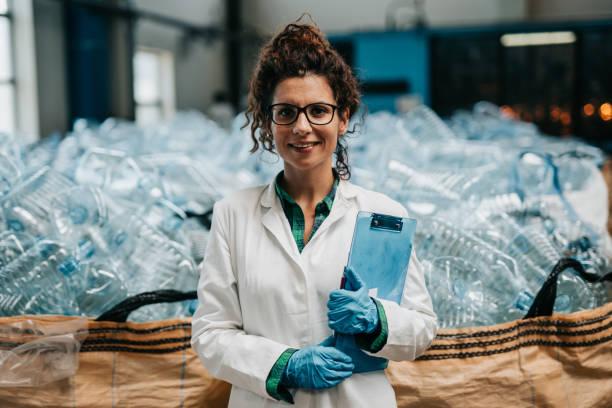
Focuses on developing eco-friendly plastics, recycling technologies, and waste reduction strategies. Works on lifecycle analysis and ensures...

0.0LPA
Manufacturing Engineer

Manufacturing Engineer

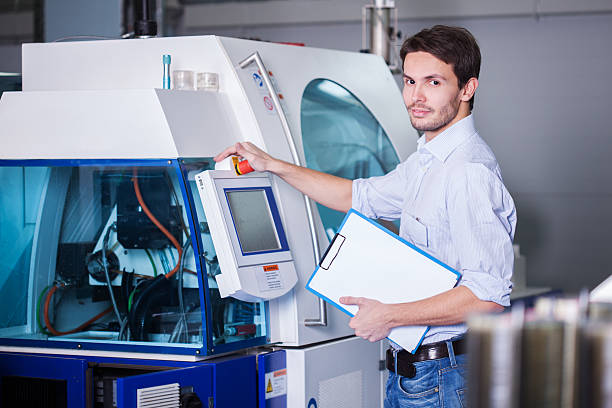
Focuses on optimizing production systems by integrating automation, robotics, and lean manufacturing principles. Improves workflow, reduces...

0.0LPA

Interested in this career?

Take the next step and explore more about Plastic Engineer.