
Physicist

Summary

A Physicist is a scientist who studies the fundamental principles governing matter, energy, space, and time, seeking to understand the laws of nature through theoretical and experimental approaches.

Share :

Physicist Mind Map

Tap any branch to jump straight to the matching accordion sectionโ€”Overview, Education, Career Path, Industry Insights, Resources, or Conclusionโ€”and explore the detailed guidance below.

Interactive map of Physicist learning paths Overview Role, mission, mindset Introduction & Summary Education Study routes & eligibility Courses & specializations Career Path Career progression Employment areas Recruiters Industry Insights Industry trends Future outlook Pros & cons Resources Career media FAQs

Each colorful branch maps to an accordion section belowโ€”click to reveal overview, study plans, role journeys, industry insights, practice resources, or concluding tips.

Overview

A Physicist is a scientist who studies the fundamental principles governing matter, energy, space, and time, seeking to understand the laws of nature through theoretical and experimental approaches. They work in research institutions, universities, government agencies, or private industries such as technology and aerospace, collaborating with engineers, mathematicians, and other scientists. Physicists play a crucial role in advancing technology, solving complex scientific problems, and contributing to innovations in fields like quantum computing, renewable energy, and medical imaging through discovery in a discipline driven by curiosity, precision, and innovation.
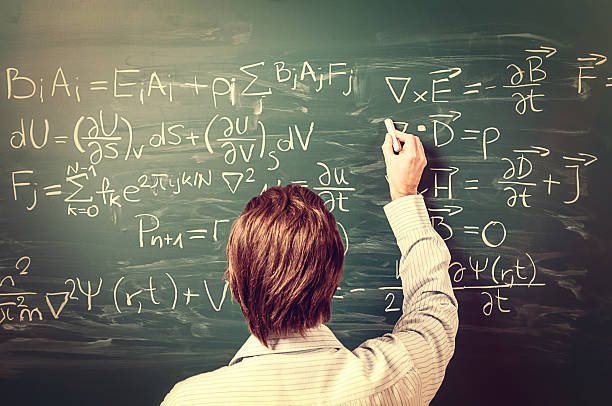
Physicists are analytical and innovative professionals who work in laboratories, computational environments, or field settings, using advanced tools such as particle accelerators, lasers, and simulation software. Their role involves designing experiments, analyzing data, and developing theories or applications like semiconductors or gravitational wave detection, often facing challenges such as experimental limitations or funding constraints. They combine expertise in mathematics, computer science, and experimental techniques to address phenomena ranging from subatomic particles to cosmological events. As key contributors to scientific and technological progress, they help shape the future of energy, communication, and space exploration in an industry increasingly driven by interdisciplinary collaboration, quantum technologies, and sustainability.

Roles and Responsibilities

๐Ÿ’ผ
Physicist
Roles and Responsibilities
Theoretical Research
Develop mathematical models and theories to explain physical phenomena like quantum mechanics or relativity.
Predict outcomes of untested scenarios using simulations and analytical methods.
Experimental Research
Design and conduct experiments to test hypotheses in areas like particle physics or condensed matter.
Use specialized equipment such as spectrometers or telescopes to collect data.
Data Analysis and Interpretation
Analyze experimental or observational data to validate theories or uncover new insights.
Use statistical methods to interpret results and assess uncertainties.
Applied Physics and Technology Development
Apply physical principles to develop innovations like medical imaging devices or renewable energy systems.
Collaborate with engineers to design practical solutions for industrial challenges.
Computational Physics
Use programming and simulations to model complex systems such as climate dynamics or material properties.
Develop algorithms for solving physics problems using high-performance computing.
Teaching and Mentorship
Educate students or junior researchers in fundamental and advanced physics concepts.
Supervise research projects and guide career development in academic settings.
Scientific Communication
Publish research findings in peer-reviewed journals and present at conferences.
Communicate complex ideas to non-specialists through outreach or policy advisory roles.
Interdisciplinary Collaboration
Work with chemists, biologists, or engineers on projects like biophysics or nanotechnology.
Contribute to cross-disciplinary fields such as astrophysics or materials science.
Policy and Ethical Oversight
Advise on the ethical implications of physics research, especially in areas like nuclear technology.
Ensure compliance with safety and regulatory standards in experimental work.
Scientific Foundation:
Strong understanding of physics and mathematics is essential for theoretical and experimental work.
Analytical Skills:
Training in problem-solving and data analysis develops core research competencies.
Specialized Training:
Certifications in computational physics or instrumentation are critical for advanced roles.
Technology Proficiency:
Familiarity with simulation software and lab equipment is vital for modern research.
Interdisciplinary Knowledge:
Understanding chemistry, engineering, and computer science enhances project impact.
Certification Importance:
Specialized courses or certifications boost professional credibility in niche areas.
Continuing Education:
Regular updates on physics advancements and technologies are necessary to stay relevant.
Global Standards:
Familiarity with international research guidelines enhances opportunities for global roles.
Attention to Detail:
Precision in experiments and theoretical calculations is critical for reliable outcomes.
Entrance Examination Success:
Competitive exams are often required for admission to top programs.
International Testing Requirements:
Language proficiency tests like IELTS may be needed for global opportunities.
JEE Main (Joint Entrance Examination):
For admission to B.Tech programs in Engineering Physics at IITs and NITs.
JEE Advanced:
For admission to B.Tech programs in Engineering Physics at Indian Institutes of Technology (IITs).
NEET (National Eligibility cum Entrance Test):
For admission to integrated science programs with physics focus at some institutes.
GATE (Graduate Aptitude Test in Engineering):
For admission to M.Tech or M.Sc programs in Physics at IITs and other top institutes.
JEST (Joint Entrance Screening Test):
For admission to Ph.D. programs in Physics at premier research institutes like TIFR and IISc.
DUET (Delhi University Entrance Test):
For admission to M.Sc programs in Physics at Delhi University.
GRE (Graduate Record Examination):
Required for MS or Ph.D. admissions in Physics at universities in the USA, Canada, and other countries.
GRE Subject Test (Physics):
Often required for graduate programs in Physics in the USA.
TOEFL (Test of English as a Foreign Language):
Minimum score of 80-100 required for non-native speakers applying to programs in English-speaking countries like the USA, Canada, or Australia.
IELTS (International English Language Testing System):
Minimum score of 6.0-7.0 required for admission to universities in the UK, Australia, and other English-speaking regions for Physics courses.
SAT (Scholastic Aptitude Test):
Often required for undergraduate admissions in the USA or Canada for programs leading to Physics studies.
ACT (American College Testing):
An alternative to SAT for undergraduate admissions in the USA for Physics-related programs.
Digital Transformation:
Increasing focus on computational physics and AI for simulations.
Rising Demand:
Growing need for Physicists skilled in quantum technologies and renewable energy.
Technology Impact:
Enhanced use of quantum computing and advanced materials for innovation.
Interdisciplinary Focus:
Emergence of collaboration with computer scientists and engineers.
AI and Physics Tools:
Adoption of AI for data analysis in particle physics and astrophysics.
Global Market Needs:
Development of physics solutions for climate change and space exploration.
Compliance-Centric Market:
Use of data to enhance safety and transparency in nuclear and energy tech.
Skill Development Needs:
Growing necessity for training in quantum algorithms and big data analysis.
Sustainability Focus:
Increased efforts to apply physics in green energy and environmental monitoring.
Hybrid Research Models:
Blending theoretical work with experimental and computational approaches for efficiency.
Albert Einstein (Germany/USA):
Known for the theory of relativity, revolutionizing modern physics with E=mcยฒ. His work reshaped space-time understanding. His impact drives theoretical physics.
Isaac Newton (UK):
Laid the foundation of classical mechanics with laws of motion and gravitation. His principles underpin engineering. His impact shapes fundamental science.
Marie Curie (Poland/France):
Nobel laureate for pioneering research on radioactivity, advancing nuclear physics. Her discoveries influence medical physics. Her impact transforms health tech.
Richard Feynman (USA):
Known for contributions to quantum mechanics and particle physics, including Feynman diagrams. His insights revolutionized theory. His impact advances quantum research.
Stephen Hawking (UK):
Renowned for work on black holes and cosmology, popularizing physics through books. His theories explore singularities. His impact inspires public science.
C.V. Raman (India):
Nobel laureate for discovering the Raman Effect, a breakthrough in light scattering. His work pioneered spectroscopy. His impact boosts optical physics.
Homi J. Bhabha (India):
Father of Indiaโ€™s nuclear program, contributed to quantum theory and cosmic ray research. His vision shaped nuclear science. His impact drives energy research.
SatyendraNath Bose (India):
Known for Bose-Einstein statistics and Bose-Einstein condensate theory with Einstein. His work defines quantum particles. His impact revolutionizes physics.
MeghnadSaha (India):
Developed the Saha ionization equation, crucial for stellar astrophysics. His contributions explain star composition. His impact advances cosmology.
Lisa Randall (USA):
Known for theoretical physics research on extra dimensions and particle interactions. Her ideas explore hidden universes. Her impact shapes modern theory.

Roles and Responsibilities

  • Theoretical Research
    • Develop mathematical models and theories to explain physical phenomena like quantum mechanics or relativity.
    • Predict outcomes of untested scenarios using simulations and analytical methods.
  • Experimental Research
    • Design and conduct experiments to test hypotheses in areas like particle physics or condensed matter.
    • Use specialized equipment such as spectrometers or telescopes to collect data.
  • Data Analysis and Interpretation
    • Analyze experimental or observational data to validate theories or uncover new insights.
    • Use statistical methods to interpret results and assess uncertainties.
  • Applied Physics and Technology Development
    • Apply physical principles to develop innovations like medical imaging devices or renewable energy systems.
    • Collaborate with engineers to design practical solutions for industrial challenges.
  • Computational Physics
    • Use programming and simulations to model complex systems such as climate dynamics or material properties.
    • Develop algorithms for solving physics problems using high-performance computing.
  • Teaching and Mentorship
    • Educate students or junior researchers in fundamental and advanced physics concepts.
    • Supervise research projects and guide career development in academic settings.
  • Scientific Communication
    • Publish research findings in peer-reviewed journals and present at conferences.
    • Communicate complex ideas to non-specialists through outreach or policy advisory roles.
  • Interdisciplinary Collaboration
    • Work with chemists, biologists, or engineers on projects like biophysics or nanotechnology.
    • Contribute to cross-disciplinary fields such as astrophysics or materials science.
  • Policy and Ethical Oversight
    • Advise on the ethical implications of physics research, especially in areas like nuclear technology.
    • Ensure compliance with safety and regulatory standards in experimental work.

ย 

Study Route & Eligibility Criteria

RouteSteps
Route 11. 10+2 in Science stream (with Physics, Chemistry, and Mathematics)
2. Bachelorโ€™s degree in Physics or related field (3-4 years)
3. Internship or research assistant role in physics labs
4. Practice as Junior Physicist or Research Associate
Route 21. 10+2 in Science stream with Physics and Mathematics
2. Bachelorโ€™s degree in Physics or Engineering Physics (3-4 years)
3. Masterโ€™s degree in Physics or specialized area (1-2 years)
4. Gain practical experience through research projects
5. Work as Physicist or Scientist
Route 31. 10+2 in Science with Physics and Mathematics
2. B.Tech in Engineering Physics or related field (4 years)
3. Certification or short-term course in advanced physics topics (3-6 months)
4. Internship in tech or research organizations
5. Practice as Applied Physicist or Technical Specialist
Route 41. 10+2 in Science stream
2. Bachelorโ€™s degree in Physics or related field (3-4 years)
3. Ph.D. in Physics or specialized area (3-5 years)
4. Post-doctoral research or industry role
5. Practice as Senior Physicist or Consultant

ย 

Significant Observations (Academic Related Points)

  • Scientific Foundation:ย Strong understanding of physics and mathematics is essential for theoretical and experimental work.
  • Analytical Skills:ย Training in problem-solving and data analysis develops core research competencies.
  • Specialized Training:ย Certifications in computational physics or instrumentation are critical for advanced roles.
  • Technology Proficiency:ย Familiarity with simulation software and lab equipment is vital for modern research.
  • Interdisciplinary Knowledge:ย Understanding chemistry, engineering, and computer science enhances project impact.
  • Certification Importance:ย Specialized courses or certifications boost professional credibility in niche areas.
  • Continuing Education:ย Regular updates on physics advancements and technologies are necessary to stay relevant.
  • Global Standards:ย Familiarity with international research guidelines enhances opportunities for global roles.
  • Attention to Detail:ย Precision in experiments and theoretical calculations is critical for reliable outcomes.
  • Entrance Examination Success:ย Competitive exams are often required for admission to top programs.
  • International Testing Requirements:ย Language proficiency tests like IELTS may be needed for global opportunities.

ย 

Internships & Practical Exposure

  • Mandatory internships during degree programs at physics labs or research centers for real-world experience.
  • Rotations in experimental or computational teams for hands-on exposure to physics applications.
  • Internships under experienced Physicists for training in advanced techniques like laser spectroscopy or particle detection.
  • Observerships at observatories or tech companies for applied physics insights in astronomy or engineering.
  • Participation in mock research projects for skill development in experimental design and simulation.
  • Training in computational physics tools through real-world projects like quantum simulations.
  • Exposure to regulatory documentation during internships for skills in compliance and safety standards.
  • Volunteer roles in science outreach or educational initiatives to build a portfolio.
  • Community engagement projects for promoting physics awareness in technology or education.
  • International research attachments for global exposure to cutting-edge physics innovations and practices.

ย 

Courses & Specializations to Enter the Field

  • Certificate in Computational Physics or Quantum Mechanics.
  • Bachelorโ€™s in Physics, Engineering Physics, or Applied Physics.
  • Masterโ€™s in Physics, Astrophysics, or Condensed Matter Physics.
  • B.Tech/M.Tech in Engineering Physics or related fields.
  • Specialization in Particle Physics, Nuclear Physics, or Biophysics.
  • Ph.D. in Physics for advanced research roles.
  • Workshops on Quantum Computing, Laser Technology, or Data Analysis in Physics.
  • Training in Medical Physics or Renewable Energy Systems.
  • Specialization in Theoretical Physics or Plasma Physics.
  • Certification in Scientific Computing for Physics Research (e.g., MATLAB, Python).

ย 

Top Institutes for Physics Education (India)

InstituteCourse/ProgramOfficial Link
Indian Institute of Science (IISc), BangaloreB.Sc/M.Sc/Ph.D. in Physicshttps://www.iisc.ac.in/
Indian Institute of Technology (IIT), BombayB.Tech/M.Sc/Ph.D. in Physicshttps://www.iitb.ac.in/
Indian Institute of Technology (IIT), DelhiB.Tech/M.Sc/Ph.D. in Physicshttps://www.iitd.ac.in/
University of Delhi, DelhiB.Sc/M.Sc in Physicshttps://www.du.ac.in/
Jawaharlal Nehru University (JNU), New DelhiM.Sc/Ph.D. in Physicshttps://www.jnu.ac.in/
Banaras Hindu University (BHU), VaranasiB.Sc/M.Sc/Ph.D. in Physicshttps://www.bhu.ac.in/
Tata Institute of Fundamental Research (TIFR), MumbaiPh.D. in Physicshttps://www.tifr.res.in/
University of Hyderabad, HyderabadM.Sc/Ph.D. in Physicshttps://www.uohyd.ac.in/
Indian Institute of Technology (IIT), KanpurB.Tech/M.Sc/Ph.D. in Physicshttps://www.iitk.ac.in/
Chennai Mathematical Institute (CMI), ChennaiB.Sc/M.Sc/Ph.D. in Physicshttps://www.cmi.ac.in/

ย 

Top International Institutes

InstitutionCourseCountryOfficial Link
Massachusetts Institute of Technology (MIT)BS/MS/Ph.D. in PhysicsUSAhttps://www.mit.edu/
University of CambridgeBA/MPhil/Ph.D. in PhysicsUKhttps://www.cam.ac.uk/
Harvard UniversityBS/MS/Ph.D. in PhysicsUSAhttps://www.harvard.edu/
Stanford UniversityBS/MS/Ph.D. in PhysicsUSAhttps://www.stanford.edu/
University of OxfordBA/MS/Ph.D. in PhysicsUKhttps://www.ox.ac.uk/
ETH ZurichBS/MS/Ph.D. in PhysicsSwitzerlandhttps://www.ethz.ch/
California Institute of Technology (Caltech)BS/MS/Ph.D. in PhysicsUSAhttps://www.caltech.edu/
University of TokyoBS/MS/Ph.D. in PhysicsJapanhttps://www.u-tokyo.ac.jp/
University of MelbourneBS/MS/Ph.D. in PhysicsAustraliahttps://www.unimelb.edu.au/
Technical University of Munich (TUM)BS/MS/Ph.D. in PhysicsGermanyhttps://www.tum.de/

ย 

Entrance Tests Required

India:

  • JEE Main (Joint Entrance Examination):ย For admission to B.Tech programs in Engineering Physics at IITs and NITs.
  • JEE Advanced:ย For admission to B.Tech programs in Engineering Physics at Indian Institutes of Technology (IITs).
  • NEET (National Eligibility cum Entrance Test):ย For admission to integrated science programs with physics focus at some institutes.
  • GATE (Graduate Aptitude Test in Engineering):ย For admission to M.Tech or M.Sc programs in Physics at IITs and other top institutes.
  • JEST (Joint Entrance Screening Test):ย For admission to Ph.D. programs in Physics at premier research institutes like TIFR and IISc.
  • DUET (Delhi University Entrance Test):ย For admission to M.Sc programs in Physics at Delhi University.


International:

  • GRE (Graduate Record Examination):ย Required for MS or Ph.D. admissions in Physics at universities in the USA, Canada, and other countries.
  • GRE Subject Test (Physics):ย Often required for graduate programs in Physics in the USA.
  • TOEFL (Test of English as a Foreign Language):ย Minimum score of 80-100 required for non-native speakers applying to programs in English-speaking countries like the USA, Canada, or Australia.
  • IELTS (International English Language Testing System):ย Minimum score of 6.0-7.0 required for admission to universities in the UK, Australia, and other English-speaking regions for Physics courses.
  • SAT (Scholastic Aptitude Test):ย Often required for undergraduate admissions in the USA or Canada for programs leading to Physics studies.
  • ACT (American College Testing):ย An alternative to SAT for undergraduate admissions in the USA for Physics-related programs.

ย 

Ideal Progressing Career Pathย 

Physics Intern โ†’ Junior Physicist โ†’ Research Associate โ†’ Physicist โ†’ Senior Physicist โ†’ Physics Project Manager โ†’ Director of Research & Development โ†’ Chief Scientific Officer โ†’ Physics Consultant โ†’ Physics Professor

ย 

Major Areas of Employment

  • Academic institutions for teaching and fundamental research in physics.
  • Research institutes for theoretical and experimental physics studies.
  • Technology companies for developing innovations in electronics and quantum computing.
  • Aerospace industries for research in propulsion and space exploration technologies.
  • Healthcare sectors for medical physics applications like radiation therapy.
  • Energy sectors for work on renewable energy and nuclear power solutions.
  • Government bodies for policy development and defense research.
  • Environmental agencies for studying climate physics and sustainability solutions.
  • Telecommunications firms for advancements in signal processing and optics.
  • Freelance consulting for specialized physics project advisory services.

ย 

Prominent Employers

IndiaInternational
Indian Space Research Organisation (ISRO)NASA, USA
Bhabha Atomic Research Centre (BARC)CERN, Europe
Tata Institute of Fundamental Research (TIFR)IBM Research, Global
Indian Institute of Science (IISc)Google Quantum AI, Global
Defence Research and Development Organisation (DRDO)Intel, Global
National Physical Laboratory (NPL)Lockheed Martin, USA
Physical Research Laboratory (PRL)SpaceX, USA
Vikram Sarabhai Space Centre (VSSC)Siemens, Global
Council of Scientific and Industrial Research (CSIR)Tesla, USA
Indian Institute of Astrophysics (IIA)Raytheon Technologies, USA

ย 

Pros and Cons of the Profession

ProsCons
Opportunity to contribute to groundbreaking scientific and technological discoveriesOften involves long hours in lab or computational settings
High personal satisfaction in solving fundamental mysteries of the universeCan face slow progress due to complex research timelines
Rewarding impact on technology, energy, and space explorationMay require continuous learning to keep up with rapid advancements
Diverse career paths across academia, industry, and researchRisk of limited funding or experimental constraints
Strong potential for growth with increasing demand in quantum and renewable techHigh pressure to publish and secure research grants

ย 

Industry Trends and Future Outlook

  • Digital Transformation:ย Increasing focus on computational physics and AI for simulations.
  • Rising Demand:ย Growing need for Physicists skilled in quantum technologies and renewable energy.
  • Technology Impact:ย Enhanced use of quantum computing and advanced materials for innovation.
  • Interdisciplinary Focus:ย Emergence of collaboration with computer scientists and engineers.
  • AI and Physics Tools:ย Adoption of AI for data analysis in particle physics and astrophysics.
  • Global Market Needs:ย Development of physics solutions for climate change and space exploration.
  • Compliance-Centric Market:ย Use of data to enhance safety and transparency in nuclear and energy tech.
  • Skill Development Needs:ย Growing necessity for training in quantum algorithms and big data analysis.
  • Sustainability Focus:ย Increased efforts to apply physics in green energy and environmental monitoring.
  • Hybrid Research Models:ย Blending theoretical work with experimental and computational approaches for efficiency.

ย 

Salary Expectations

Career LevelIndia (โ‚น per annum)International (USD per annum)
Physics Intern (Early Career)2,50,000 - 5,00,00030,000 - 50,000
Junior Physicist (Mid-Career)5,00,000 - 10,00,00050,000 - 75,000
Physicist10,00,000 - 18,00,00075,000 - 100,000
Senior Physicist/Project Manager18,00,000 - 30,00,000100,000 - 140,000
Chief Scientific Officer/Expert30,00,000+140,000+
Note: Salaries may vary based on location, employer, experience, and specialization.ย ย 

ย 

Key Software Tools

  • Computational Physics Software (e.g., MATLAB, Mathematica) for simulations and modeling.
  • Data Analysis Tools (e.g., Python, R) for processing experimental data.
  • Simulation Platforms (e.g., COMSOL Multiphysics, ANSYS) for physical systems analysis.
  • Quantum Computing Tools (e.g., Qiskit, Cirq) for quantum algorithm development.
  • Visualization Software (e.g., Origin, Gnuplot) for plotting and data representation.
  • Statistical Software (e.g., SPSS) for uncertainty and error analysis.
  • Lab Management Software (e.g., LabArchives) for experiment tracking.
  • Cloud Collaboration Platforms (e.g., Google Workspace) for team research projects.
  • High-Performance Computing Tools (e.g., MPI, OpenMP) for large-scale simulations.
  • Electronic Lab Notebooks (e.g., ELN by PerkinElmer) for digital record-keeping.

ย 

Professional Organizations and Networks

  • American Physical Society (APS), USA/Global.
  • Indian Physical Society (IPS), India.
  • European Physical Society (EPS), Europe.
  • Institute of Physics (IOP), UK/Global.
  • International Union of Pure and Applied Physics (IUPAP), Global.
  • Australian Institute of Physics (AIP), Australia.
  • Canadian Association of Physicists (CAP), Canada.
  • German Physical Society (DPG), Germany.
  • Japanese Physical Society (JPS), Japan.
  • African Physical Society (AfPS), Africa.

ย 

Notable Physicists and Industry Leaders (Top 10)

  • Albert Einstein (Germany/USA):ย Known for the theory of relativity, revolutionizing modern physics with E=mcยฒ. His work reshaped space-time understanding. His impact drives theoretical physics.
    ย 
  • Isaac Newton (UK):ย Laid the foundation of classical mechanics with laws of motion and gravitation. His principles underpin engineering. His impact shapes fundamental science.
    ย 
  • Marie Curie (Poland/France):ย Nobel laureate for pioneering research on radioactivity, advancing nuclear physics. Her discoveries influence medical physics. Her impact transforms health tech.
    ย 
  • Richard Feynman (USA):ย Known for contributions to quantum mechanics and particle physics, including Feynman diagrams. His insights revolutionized theory. His impact advances quantum research.
    ย 
  • Stephen Hawking (UK):ย Renowned for work on black holes and cosmology, popularizing physics through books. His theories explore singularities. His impact inspires public science.
    ย 
  • C.V. Raman (India):ย Nobel laureate for discovering the Raman Effect, a breakthrough in light scattering. His work pioneered spectroscopy. His impact boosts optical physics.
    ย 
  • Homi J. Bhabha (India):ย Father of Indiaโ€™s nuclear program, contributed to quantum theory and cosmic ray research. His vision shaped nuclear science. His impact drives energy research.
    ย 
  • SatyendraNath Bose (India):ย Known for Bose-Einstein statistics and Bose-Einstein condensate theory with Einstein. His work defines quantum particles. His impact revolutionizes physics.
    ย 
  • MeghnadSaha (India):ย Developed the Saha ionization equation, crucial for stellar astrophysics. His contributions explain star composition. His impact advances cosmology.
    ย 
  • Lisa Randall (USA):ย Known for theoretical physics research on extra dimensions and particle interactions. Her ideas explore hidden universes. Her impact shapes modern theory.
    ย 

Advice for Aspiring Physicists

  • Build a strong foundation in physics and mathematics to understand fundamental principles.
  • Seek early exposure to lab roles through internships to confirm interest in physics.
  • Prepare thoroughly for competitive exams like JEE or GRE with structured study plans.
  • Pursue short courses in computational physics or quantum tech to gain expertise in emerging areas.
  • Stay updated on physics trends by following journals like Physical Review or Nature Physics.
  • Develop hands-on skills in experimental techniques and data analysis through research projects.
  • Engage in practical internships at research institutes or tech firms for real-world experience.
  • Join professional associations like APS or IPS for networking and resources.
  • Work on precision in experiments and calculations to ensure credible research outcomes.
  • Explore international research opportunities for exposure to global physics advancements.
  • Volunteer in science outreach initiatives to understand practical physics challenges.
  • Cultivate adaptability to handle rapid changes in technology and research paradigms.
  • Attend continuing education programs to stay abreast of physics tools and trends.
  • Build a network with researchers, industry leaders, and policymakers for collaborative efforts.
  • Develop resilience to manage the high-pressure demands of research and innovation.
  • Balance scientific rigor with ethical integrity to adapt to evolving physics landscapes.


A career as a Physicist offers a profound opportunity to unravel the mysteries of the universe, driving scientific progress through rigorous research and technological expertise, fostering global well-being with every breakthrough. Physicists are the architects of fundamental understanding, using their skills to develop transformative technologies, address energy challenges, and explore cosmic frontiers across industries. This profession blends scientific curiosity with analytical precision, providing pathways in research, technology, education, and beyond. For those passionate about discovery, driven by a desire to solve complex physical challenges, and eager to embrace the evolving landscape of quantum technologies and interdisciplinary collaboration, becoming a Physicist is a deeply rewarding journey. It empowers individuals to shape scientific outcomes, address critical global issues, and advance human progress through the transformative power of physics.

ย 

Study Route & Eligibility Criteria

Study Route & Eligibility Criteria
Physicist
Route 1
๐ŸŽ“
1
10+2 in Science stream
๐Ÿ›๏ธ
2
Bachelorโ€™s degree in Physics or related field
3-4 years
๐Ÿ’ผ
3
Internship or research assistant role in physics labs
๐Ÿ’ผ
4
Practice as Junior Physicist or Research Associate
Route 2
๐ŸŽ“
1
10+2 in Science stream with Physics and Mathematics
๐Ÿ›๏ธ
2
Bachelorโ€™s degree in Physics or Engineering Physics
3-4 years
๐Ÿ›๏ธ
3
Masterโ€™s degree in Physics or specialized area
1-2 years
๐Ÿ’ผ
4
Gain practical experience through research projects
๐Ÿ’ผ
5
Work as Physicist or Scientist
Route 3
๐ŸŽ“
1
10+2 in Science with Physics and Mathematics
๐Ÿ›๏ธ
2
B.Tech in Engineering Physics or related field
4 years
๐Ÿ“š
3
Certification or short-term course in advanced physics topics
3-6 months
๐Ÿ’ผ
4
Internship in tech or research organizations
๐Ÿ’ผ
5
Practice as Applied Physicist or Technical Specialist
Route 4
๐ŸŽ“
1
10+2 in Science stream
๐Ÿ›๏ธ
2
Bachelorโ€™s degree in Physics or related field
3-4 years
๐Ÿ“š
3
Ph.D. in Physics or specialized area
3-5 years
๐Ÿ’ผ
4
Post-doctoral research or industry role
๐Ÿ’ผ
5
Practice as Senior Physicist or Consultant
๐ŸŽฏ Physicist - Professional

Significant Observations (Academic Related Points)

๐Ÿ’ก
Physicist
Academic Related Points
1
Scientific Foundation:
Strong understanding of physics and mathematics is essential for theoretical and experimental work.
2
Analytical Skills:
Training in problem-solving and data analysis develops core research competencies.
3
Specialized Training:
Certifications in computational physics or instrumentation are critical for advanced roles.
4
Technology Proficiency:
Familiarity with simulation software and lab equipment is vital for modern research.
5
Interdisciplinary Knowledge:
Understanding chemistry, engineering, and computer science enhances project impact.
6
Certification Importance:
Specialized courses or certifications boost professional credibility in niche areas.
7
Continuing Education:
Regular updates on physics advancements and technologies are necessary to stay relevant.
8
Global Standards:
Familiarity with international research guidelines enhances opportunities for global roles.
9
Attention to Detail:
Precision in experiments and theoretical calculations is critical for reliable outcomes.
10
Entrance Examination Success:
Competitive exams are often required for admission to top programs.
11
International Testing Requirements:
Language proficiency tests like IELTS may be needed for global opportunities.
12
JEE Main (Joint Entrance Examination):
For admission to B.Tech programs in Engineering Physics at IITs and NITs.
13
JEE Advanced:
For admission to B.Tech programs in Engineering Physics at Indian Institutes of Technology (IITs).
14
NEET (National Eligibility cum Entrance Test):
For admission to integrated science programs with physics focus at some institutes.
15
GATE (Graduate Aptitude Test in Engineering):
For admission to M.Tech or M.Sc programs in Physics at IITs and other top institutes.
16
JEST (Joint Entrance Screening Test):
For admission to Ph.D. programs in Physics at premier research institutes like TIFR and IISc.
17
DUET (Delhi University Entrance Test):
For admission to M.Sc programs in Physics at Delhi University.
18
GRE (Graduate Record Examination):
Required for MS or Ph.D. admissions in Physics at universities in the USA, Canada, and other countries.
19
GRE Subject Test (Physics):
Often required for graduate programs in Physics in the USA.
20
TOEFL (Test of English as a Foreign Language):
Minimum score of 80-100 required for non-native speakers applying to programs in English-speaking countries like the USA, Canada, or Australia.
21
IELTS (International English Language Testing System):
Minimum score of 6.0-7.0 required for admission to universities in the UK, Australia, and other English-speaking regions for Physics courses.
22
SAT (Scholastic Aptitude Test):
Often required for undergraduate admissions in the USA or Canada for programs leading to Physics studies.
23
ACT (American College Testing):
An alternative to SAT for undergraduate admissions in the USA for Physics-related programs.
24
Digital Transformation:
Increasing focus on computational physics and AI for simulations.
25
Rising Demand:
Growing need for Physicists skilled in quantum technologies and renewable energy.
26
Technology Impact:
Enhanced use of quantum computing and advanced materials for innovation.
27
Interdisciplinary Focus:
Emergence of collaboration with computer scientists and engineers.
28
AI and Physics Tools:
Adoption of AI for data analysis in particle physics and astrophysics.
29
Global Market Needs:
Development of physics solutions for climate change and space exploration.
30
Compliance-Centric Market:
Use of data to enhance safety and transparency in nuclear and energy tech.
31
Skill Development Needs:
Growing necessity for training in quantum algorithms and big data analysis.
32
Sustainability Focus:
Increased efforts to apply physics in green energy and environmental monitoring.
33
Hybrid Research Models:
Blending theoretical work with experimental and computational approaches for efficiency.
34
Albert Einstein (Germany/USA):
Known for the theory of relativity, revolutionizing modern physics with E=mcยฒ. His work reshaped space-time understanding. His impact drives theoretical physics.
35
Isaac Newton (UK):
Laid the foundation of classical mechanics with laws of motion and gravitation. His principles underpin engineering. His impact shapes fundamental science.
36
Marie Curie (Poland/France):
Nobel laureate for pioneering research on radioactivity, advancing nuclear physics. Her discoveries influence medical physics. Her impact transforms health tech.
37
Richard Feynman (USA):
Known for contributions to quantum mechanics and particle physics, including Feynman diagrams. His insights revolutionized theory. His impact advances quantum research.
38
Stephen Hawking (UK):
Renowned for work on black holes and cosmology, popularizing physics through books. His theories explore singularities. His impact inspires public science.
39
C.V. Raman (India):
Nobel laureate for discovering the Raman Effect, a breakthrough in light scattering. His work pioneered spectroscopy. His impact boosts optical physics.
40
Homi J. Bhabha (India):
Father of Indiaโ€™s nuclear program, contributed to quantum theory and cosmic ray research. His vision shaped nuclear science. His impact drives energy research.
41
SatyendraNath Bose (India):
Known for Bose-Einstein statistics and Bose-Einstein condensate theory with Einstein. His work defines quantum particles. His impact revolutionizes physics.
42
MeghnadSaha (India):
Developed the Saha ionization equation, crucial for stellar astrophysics. His contributions explain star composition. His impact advances cosmology.
43
Lisa Randall (USA):
Known for theoretical physics research on extra dimensions and particle interactions. Her ideas explore hidden universes. Her impact shapes modern theory.

Internships & Practical Exposure

๐Ÿ’ผ
Physicist
Internships & Practical Experience
1
Mandatory internships during degree programs at physics labs or research centers for real-world experience.
2
Rotations in experimental or computational teams for hands-on exposure to physics applications.
3
Internships under experienced Physicists for training in advanced techniques like laser spectroscopy or particle detection.
4
Observerships at observatories or tech companies for applied physics insights in astronomy or engineering.
5
Participation in mock research projects for skill development in experimental design and simulation.
6
Training in computational physics tools through real-world projects like quantum simulations.
7
Exposure to regulatory documentation during internships for skills in compliance and safety standards.
8
Volunteer roles in science outreach or educational initiatives to build a portfolio.
9
Community engagement projects for promoting physics awareness in technology or education.
10
International research attachments for global exposure to cutting-edge physics innovations and practices.
11
Certificate in Computational Physics or Quantum Mechanics.
12
Bachelorโ€™s in Physics, Engineering Physics, or Applied Physics.
13
Masterโ€™s in Physics, Astrophysics, or Condensed Matter Physics.
14
B.Tech/M.Tech in Engineering Physics or related fields.
15
Specialization in Particle Physics, Nuclear Physics, or Biophysics.
16
Ph.D. in Physics for advanced research roles.
17
Workshops on Quantum Computing, Laser Technology, or Data Analysis in Physics.
18
Training in Medical Physics or Renewable Energy Systems.
19
Specialization in Theoretical Physics or Plasma Physics.
20
Certification in Scientific Computing for Physics Research (e.g., MATLAB, Python).
21
JEE Main (Joint Entrance Examination):For admission to B.Tech programs in Engineering Physics at IITs and NITs.
22
JEE Advanced:For admission to B.Tech programs in Engineering Physics at Indian Institutes of Technology (IITs).
23
NEET (National Eligibility cum Entrance Test):For admission to integrated science programs with physics focus at some institutes.
24
GATE (Graduate Aptitude Test in Engineering):For admission to M.Tech or M.Sc programs in Physics at IITs and other top institutes.
25
JEST (Joint Entrance Screening Test):For admission to Ph.D. programs in Physics at premier research institutes like TIFR and IISc.
26
DUET (Delhi University Entrance Test):For admission to M.Sc programs in Physics at Delhi University.
27
GRE (Graduate Record Examination):Required for MS or Ph.D. admissions in Physics at universities in the USA, Canada, and other countries.
28
GRE Subject Test (Physics):Often required for graduate programs in Physics in the USA.
29
TOEFL (Test of English as a Foreign Language):Minimum score of 80-100 required for non-native speakers applying to programs in English-speaking countries like the USA, Canada, or Australia.
30
IELTS (International English Language Testing System):Minimum score of 6.0-7.0 required for admission to universities in the UK, Australia, and other English-speaking regions for Physics courses.
31
SAT (Scholastic Aptitude Test):Often required for undergraduate admissions in the USA or Canada for programs leading to Physics studies.
32
ACT (American College Testing):An alternative to SAT for undergraduate admissions in the USA for Physics-related programs.
33
Academic institutions for teaching and fundamental research in physics.
34
Research institutes for theoretical and experimental physics studies.
35
Technology companies for developing innovations in electronics and quantum computing.
36
Aerospace industries for research in propulsion and space exploration technologies.
37
Healthcare sectors for medical physics applications like radiation therapy.
38
Energy sectors for work on renewable energy and nuclear power solutions.
39
Government bodies for policy development and defense research.
40
Environmental agencies for studying climate physics and sustainability solutions.
41
Telecommunications firms for advancements in signal processing and optics.
42
Freelance consulting for specialized physics project advisory services.
43
Digital Transformation:Increasing focus on computational physics and AI for simulations.
44
Rising Demand:Growing need for Physicists skilled in quantum technologies and renewable energy.
45
Technology Impact:Enhanced use of quantum computing and advanced materials for innovation.
46
Interdisciplinary Focus:Emergence of collaboration with computer scientists and engineers.
47
AI and Physics Tools:Adoption of AI for data analysis in particle physics and astrophysics.
48
Global Market Needs:Development of physics solutions for climate change and space exploration.
49
Compliance-Centric Market:Use of data to enhance safety and transparency in nuclear and energy tech.
50
Skill Development Needs:Growing necessity for training in quantum algorithms and big data analysis.
51
Sustainability Focus:Increased efforts to apply physics in green energy and environmental monitoring.
52
Hybrid Research Models:Blending theoretical work with experimental and computational approaches for efficiency.
53
Computational Physics Software (e.g., MATLAB, Mathematica) for simulations and modeling.
54
Data Analysis Tools (e.g., Python, R) for processing experimental data.
55
Simulation Platforms (e.g., COMSOL Multiphysics, ANSYS) for physical systems analysis.
56
Quantum Computing Tools (e.g., Qiskit, Cirq) for quantum algorithm development.
57
Visualization Software (e.g., Origin, Gnuplot) for plotting and data representation.
58
Statistical Software (e.g., SPSS) for uncertainty and error analysis.
59
Lab Management Software (e.g., LabArchives) for experiment tracking.
60
Cloud Collaboration Platforms (e.g., Google Workspace) for team research projects.
61
High-Performance Computing Tools (e.g., MPI, OpenMP) for large-scale simulations.
62
Electronic Lab Notebooks (e.g., ELN by PerkinElmer) for digital record-keeping.
63
American Physical Society (APS), USA/Global.
64
Indian Physical Society (IPS), India.
65
European Physical Society (EPS), Europe.
66
Institute of Physics (IOP), UK/Global.
67
International Union of Pure and Applied Physics (IUPAP), Global.
68
Australian Institute of Physics (AIP), Australia.
69
Canadian Association of Physicists (CAP), Canada.
70
German Physical Society (DPG), Germany.
71
Japanese Physical Society (JPS), Japan.
72
African Physical Society (AfPS), Africa.
73
Albert Einstein (Germany/USA):Known for the theory of relativity, revolutionizing modern physics with E=mcยฒ. His work reshaped space-time understanding. His impact drives theoretical physics.
74
Isaac Newton (UK):Laid the foundation of classical mechanics with laws of motion and gravitation. His principles underpin engineering. His impact shapes fundamental science.
75
Marie Curie (Poland/France):Nobel laureate for pioneering research on radioactivity, advancing nuclear physics. Her discoveries influence medical physics. Her impact transforms health tech.
76
Richard Feynman (USA):Known for contributions to quantum mechanics and particle physics, including Feynman diagrams. His insights revolutionized theory. His impact advances quantum research.
77
Stephen Hawking (UK):Renowned for work on black holes and cosmology, popularizing physics through books. His theories explore singularities. His impact inspires public science.
78
C.V. Raman (India):Nobel laureate for discovering the Raman Effect, a breakthrough in light scattering. His work pioneered spectroscopy. His impact boosts optical physics.
79
Homi J. Bhabha (India):Father of Indiaโ€™s nuclear program, contributed to quantum theory and cosmic ray research. His vision shaped nuclear science. His impact drives energy research.
80
SatyendraNath Bose (India):Known for Bose-Einstein statistics and Bose-Einstein condensate theory with Einstein. His work defines quantum particles. His impact revolutionizes physics.
81
MeghnadSaha (India):Developed the Saha ionization equation, crucial for stellar astrophysics. His contributions explain star composition. His impact advances cosmology.
82
Lisa Randall (USA):Known for theoretical physics research on extra dimensions and particle interactions. Her ideas explore hidden universes. Her impact shapes modern theory.
83
Build a strong foundation in physics and mathematics to understand fundamental principles.
84
Seek early exposure to lab roles through internships to confirm interest in physics.
85
Prepare thoroughly for competitive exams like JEE or GRE with structured study plans.
86
Pursue short courses in computational physics or quantum tech to gain expertise in emerging areas.
87
Stay updated on physics trends by following journals like Physical Review or Nature Physics.
88
Develop hands-on skills in experimental techniques and data analysis through research projects.
89
Engage in practical internships at research institutes or tech firms for real-world experience.
90
Join professional associations like APS or IPS for networking and resources.
91
Work on precision in experiments and calculations to ensure credible research outcomes.
92
Explore international research opportunities for exposure to global physics advancements.
93
Volunteer in science outreach initiatives to understand practical physics challenges.
94
Cultivate adaptability to handle rapid changes in technology and research paradigms.
95
Attend continuing education programs to stay abreast of physics tools and trends.
96
Build a network with researchers, industry leaders, and policymakers for collaborative efforts.
97
Develop resilience to manage the high-pressure demands of research and innovation.
98
Balance scientific rigor with ethical integrity to adapt to evolving physics landscapes.

Courses & Specializations to Enter the Field

๐Ÿ“š
Physicist
Courses & Specializations
๐Ÿ“–
Certificate in Computational Physics or Quantum Mechanics.
๐Ÿ“–
Bachelorโ€™s in Physics, Engineering Physics, or Applied Physics.
๐Ÿ“–
Masterโ€™s in Physics, Astrophysics, or Condensed Matter Physics.
๐Ÿ“–
B.Tech/M.Tech in Engineering Physics or related fields.
๐Ÿ“–
Specialization in Particle Physics, Nuclear Physics, or Biophysics.
๐Ÿ“–
Ph.D. in Physics for advanced research roles.
๐Ÿ“–
Workshops on Quantum Computing, Laser Technology, or Data Analysis in Physics.
๐Ÿ“–
Training in Medical Physics or Renewable Energy Systems.
๐Ÿ“–
Specialization in Theoretical Physics or Plasma Physics.
๐Ÿ“–
Certification in Scientific Computing for Physics Research (e.g., MATLAB, Python).
๐Ÿ“–
JEE Main (Joint Entrance Examination):For admission to B.Tech programs in Engineering Physics at IITs and NITs.
๐Ÿ“–
JEE Advanced:For admission to B.Tech programs in Engineering Physics at Indian Institutes of Technology (IITs).
๐Ÿ“–
NEET (National Eligibility cum Entrance Test):For admission to integrated science programs with physics focus at some institutes.
๐Ÿ“–
GATE (Graduate Aptitude Test in Engineering):For admission to M.Tech or M.Sc programs in Physics at IITs and other top institutes.
๐Ÿ“–
JEST (Joint Entrance Screening Test):For admission to Ph.D. programs in Physics at premier research institutes like TIFR and IISc.
๐Ÿ“–
DUET (Delhi University Entrance Test):For admission to M.Sc programs in Physics at Delhi University.
๐Ÿ“–
GRE (Graduate Record Examination):Required for MS or Ph.D. admissions in Physics at universities in the USA, Canada, and other countries.
๐Ÿ“–
GRE Subject Test (Physics):Often required for graduate programs in Physics in the USA.
๐Ÿ“–
TOEFL (Test of English as a Foreign Language):Minimum score of 80-100 required for non-native speakers applying to programs in English-speaking countries like the USA, Canada, or Australia.
๐Ÿ“–
IELTS (International English Language Testing System):Minimum score of 6.0-7.0 required for admission to universities in the UK, Australia, and other English-speaking regions for Physics courses.
๐Ÿ“–
SAT (Scholastic Aptitude Test):Often required for undergraduate admissions in the USA or Canada for programs leading to Physics studies.
๐Ÿ“–
ACT (American College Testing):An alternative to SAT for undergraduate admissions in the USA for Physics-related programs.
๐Ÿ“–
Academic institutions for teaching and fundamental research in physics.
๐Ÿ“–
Research institutes for theoretical and experimental physics studies.
๐Ÿ“–
Technology companies for developing innovations in electronics and quantum computing.
๐Ÿ“–
Aerospace industries for research in propulsion and space exploration technologies.
๐Ÿ“–
Healthcare sectors for medical physics applications like radiation therapy.
๐Ÿ“–
Energy sectors for work on renewable energy and nuclear power solutions.
๐Ÿ“–
Government bodies for policy development and defense research.
๐Ÿ“–
Environmental agencies for studying climate physics and sustainability solutions.
๐Ÿ“–
Telecommunications firms for advancements in signal processing and optics.
๐Ÿ“–
Freelance consulting for specialized physics project advisory services.
๐Ÿ“–
Digital Transformation:Increasing focus on computational physics and AI for simulations.
๐Ÿ“–
Rising Demand:Growing need for Physicists skilled in quantum technologies and renewable energy.
๐Ÿ“–
Technology Impact:Enhanced use of quantum computing and advanced materials for innovation.
๐Ÿ“–
Interdisciplinary Focus:Emergence of collaboration with computer scientists and engineers.
๐Ÿ“–
AI and Physics Tools:Adoption of AI for data analysis in particle physics and astrophysics.
๐Ÿ“–
Global Market Needs:Development of physics solutions for climate change and space exploration.
๐Ÿ“–
Compliance-Centric Market:Use of data to enhance safety and transparency in nuclear and energy tech.
๐Ÿ“–
Skill Development Needs:Growing necessity for training in quantum algorithms and big data analysis.
๐Ÿ“–
Sustainability Focus:Increased efforts to apply physics in green energy and environmental monitoring.
๐Ÿ“–
Hybrid Research Models:Blending theoretical work with experimental and computational approaches for efficiency.
๐Ÿ“–
Computational Physics Software (e.g., MATLAB, Mathematica) for simulations and modeling.
๐Ÿ“–
Data Analysis Tools (e.g., Python, R) for processing experimental data.
๐Ÿ“–
Simulation Platforms (e.g., COMSOL Multiphysics, ANSYS) for physical systems analysis.
๐Ÿ“–
Quantum Computing Tools (e.g., Qiskit, Cirq) for quantum algorithm development.
๐Ÿ“–
Visualization Software (e.g., Origin, Gnuplot) for plotting and data representation.
๐Ÿ“–
Statistical Software (e.g., SPSS) for uncertainty and error analysis.
๐Ÿ“–
Lab Management Software (e.g., LabArchives) for experiment tracking.
๐Ÿ“–
Cloud Collaboration Platforms (e.g., Google Workspace) for team research projects.
๐Ÿ“–
High-Performance Computing Tools (e.g., MPI, OpenMP) for large-scale simulations.
๐Ÿ“–
Electronic Lab Notebooks (e.g., ELN by PerkinElmer) for digital record-keeping.
๐Ÿ“–
American Physical Society (APS), USA/Global.
๐Ÿ“–
Indian Physical Society (IPS), India.
๐Ÿ“–
European Physical Society (EPS), Europe.
๐Ÿ“–
Institute of Physics (IOP), UK/Global.
๐Ÿ“–
International Union of Pure and Applied Physics (IUPAP), Global.
๐Ÿ“–
Australian Institute of Physics (AIP), Australia.
๐Ÿ“–
Canadian Association of Physicists (CAP), Canada.
๐Ÿ“–
German Physical Society (DPG), Germany.
๐Ÿ“–
Japanese Physical Society (JPS), Japan.
๐Ÿ“–
African Physical Society (AfPS), Africa.
๐Ÿ“–
Albert Einstein (Germany/USA):Known for the theory of relativity, revolutionizing modern physics with E=mcยฒ. His work reshaped space-time understanding. His impact drives theoretical physics.
๐Ÿ“–
Isaac Newton (UK):Laid the foundation of classical mechanics with laws of motion and gravitation. His principles underpin engineering. His impact shapes fundamental science.
๐Ÿ“–
Marie Curie (Poland/France):Nobel laureate for pioneering research on radioactivity, advancing nuclear physics. Her discoveries influence medical physics. Her impact transforms health tech.
๐Ÿ“–
Richard Feynman (USA):Known for contributions to quantum mechanics and particle physics, including Feynman diagrams. His insights revolutionized theory. His impact advances quantum research.
๐Ÿ“–
Stephen Hawking (UK):Renowned for work on black holes and cosmology, popularizing physics through books. His theories explore singularities. His impact inspires public science.
๐Ÿ“–
C.V. Raman (India):Nobel laureate for discovering the Raman Effect, a breakthrough in light scattering. His work pioneered spectroscopy. His impact boosts optical physics.
๐Ÿ“–
Homi J. Bhabha (India):Father of Indiaโ€™s nuclear program, contributed to quantum theory and cosmic ray research. His vision shaped nuclear science. His impact drives energy research.
๐Ÿ“–
SatyendraNath Bose (India):Known for Bose-Einstein statistics and Bose-Einstein condensate theory with Einstein. His work defines quantum particles. His impact revolutionizes physics.
๐Ÿ“–
MeghnadSaha (India):Developed the Saha ionization equation, crucial for stellar astrophysics. His contributions explain star composition. His impact advances cosmology.
๐Ÿ“–
Lisa Randall (USA):Known for theoretical physics research on extra dimensions and particle interactions. Her ideas explore hidden universes. Her impact shapes modern theory.
๐Ÿ“–
Build a strong foundation in physics and mathematics to understand fundamental principles.
๐Ÿ“–
Seek early exposure to lab roles through internships to confirm interest in physics.
๐Ÿ“–
Prepare thoroughly for competitive exams like JEE or GRE with structured study plans.
๐Ÿ“–
Pursue short courses in computational physics or quantum tech to gain expertise in emerging areas.
๐Ÿ“–
Stay updated on physics trends by following journals like Physical Review or Nature Physics.
๐Ÿ“–
Develop hands-on skills in experimental techniques and data analysis through research projects.
๐Ÿ“–
Engage in practical internships at research institutes or tech firms for real-world experience.
๐Ÿ“–
Join professional associations like APS or IPS for networking and resources.
๐Ÿ“–
Work on precision in experiments and calculations to ensure credible research outcomes.
๐Ÿ“–
Explore international research opportunities for exposure to global physics advancements.
๐Ÿ“–
Volunteer in science outreach initiatives to understand practical physics challenges.
๐Ÿ“–
Cultivate adaptability to handle rapid changes in technology and research paradigms.
๐Ÿ“–
Attend continuing education programs to stay abreast of physics tools and trends.
๐Ÿ“–
Build a network with researchers, industry leaders, and policymakers for collaborative efforts.
๐Ÿ“–
Develop resilience to manage the high-pressure demands of research and innovation.
๐Ÿ“–
Balance scientific rigor with ethical integrity to adapt to evolving physics landscapes.

Prominent Employers

๐Ÿข
Physicist
๐ŸŒŸ Top Companies & Organizations
๐Ÿ‡ฎ๐Ÿ‡ณ India
๐Ÿ›๏ธ
Indian Space Research Organisation (ISRO)
๐Ÿ›๏ธ
Bhabha Atomic Research Centre (BARC)
๐Ÿ›๏ธ
Tata Institute of Fundamental Research (TIFR)
๐Ÿ›๏ธ
Indian Institute of Science (IISc)
๐Ÿ›๏ธ
Defence Research and Development Organisation (DRDO)
๐Ÿ›๏ธ
National Physical Laboratory (NPL)
๐Ÿ›๏ธ
Physical Research Laboratory (PRL)
๐Ÿ›๏ธ
Vikram Sarabhai Space Centre (VSSC)
๐Ÿ›๏ธ
Council of Scientific and Industrial Research (CSIR)
๐Ÿ›๏ธ
Indian Institute of Astrophysics (IIA)
๐ŸŒ International
๐ŸŒ
NASA, USA
๐ŸŒ
CERN, Europe
๐ŸŒ
IBM Research, Global
๐ŸŒ
Google Quantum AI, Global
๐ŸŒ
Intel, Global
๐ŸŒ
Lockheed Martin, USA
๐ŸŒ
SpaceX, USA
๐ŸŒ
Siemens, Global
๐ŸŒ
Tesla, USA
๐ŸŒ
Raytheon Technologies, USA

Advice for Aspiring Physicists

๐Ÿ’ก
Physicist
๐ŸŒŸ Tips for Students & Parents
1
Build a strong foundation in physics and mathematics to understand fundamental principles.
2
Seek early exposure to lab roles through internships to confirm interest in physics.
3
Prepare thoroughly for competitive exams like JEE or GRE with structured study plans.
4
Pursue short courses in computational physics or quantum tech to gain expertise in emerging areas.
5
Stay updated on physics trends by following journals like Physical Review or Nature Physics.
6
Develop hands-on skills in experimental techniques and data analysis through research projects.
7
Engage in practical internships at research institutes or tech firms for real-world experience.
8
Join professional associations like APS or IPS for networking and resources.
9
Work on precision in experiments and calculations to ensure credible research outcomes.
10
Explore international research opportunities for exposure to global physics advancements.
11
Volunteer in science outreach initiatives to understand practical physics challenges.
12
Cultivate adaptability to handle rapid changes in technology and research paradigms.
13
Attend continuing education programs to stay abreast of physics tools and trends.
14
Build a network with researchers, industry leaders, and policymakers for collaborative efforts.
15
Develop resilience to manage the high-pressure demands of research and innovation.
16
Balance scientific rigor with ethical integrity to adapt to evolving physics landscapes.
๐ŸŽ“ Final Message
A career as a Physicist offers a profound opportunity to unravel the mysteries of the universe, driving scientific progress through rigorous research and technological expertise, fostering global well-being with every breakthrough. Physicists are the architects of fundamental understanding, using their skills to develop transformative technologies, address energy challenges, and explore cosmic frontiers across industries. This profession blends scientific curiosity with analytical precision, providing pathways in research, technology, education, and beyond. For those passionate about discovery, driven by a desire to solve complex physical challenges, and eager to embrace the evolving landscape of quantum technologies and interdisciplinary collaboration, becoming a Physicist is a deeply rewarding journey. It empowers individuals to shape scientific outcomes, address critical global issues, and advance human progress through the transformative power of physics.
Knowledge & Skills You Will Learn
1
Rising Demand:Growing need for Physicists skilled in quantum technologies and renewable energy.
2
Skill Development Needs:Growing necessity for training in quantum algorithms and big data analysis.
3
Sustainability Focus:Increased efforts to apply physics in green energy and environmental monitoring.
4
Pursue short courses in computational physics or quantum tech to gain expertise in emerging areas.
5
Develop hands-on skills in experimental techniques and data analysis through research projects.
6
Cultivate adaptability to handle rapid changes in technology and research paradigms.
Physics Intern:

Physics Intern:

Entry-level individuals who assist in basic lab tasks like equipment setup or data collection under supervision. They gain hands-on experience...

0.0LPA

Junior Physicist:

Junior Physicist:

Early-career professionals who conduct routine experiments and assist in data analysis in labs or computational settings. They focus on specific...

0.0LPA

Research Associate:

Research Associate:

Mid-level professionals who design and execute experiments, often specializing in areas like quantum physics or astrophysics. They analyze data...

0.0LPA

Interested in this career?

Take the next step and explore more about Physicist.