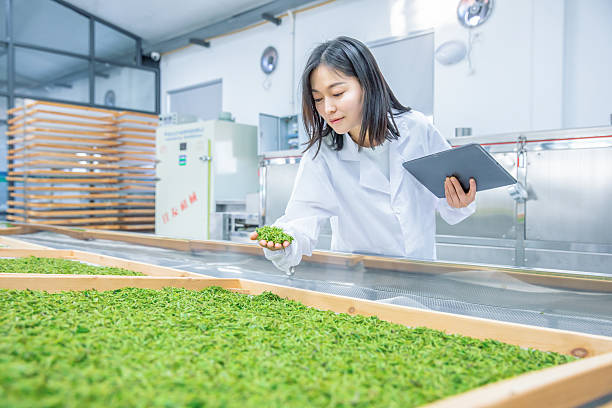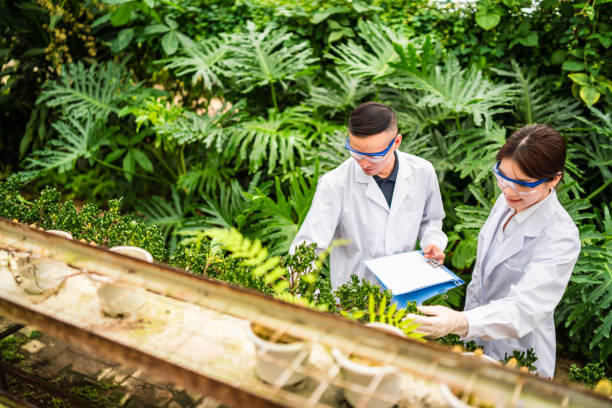
Photobiologist

A Photobiologist is a specialized scientist who studies the interactions between light and living organisms, focusing on the biological, chemical, and physical effects of light on cells, plants, animals, and humans. They work in research institutions, universities, medical facilities, agricultural organizations, and environmental agencies. Photobiologists apply biological, biochemical, and biophysical techniques to understand light-dependent processes such as photosynthesis, photomorphogenesis, and photodynamic therapy, developing solutions for health, agriculture, and environmental sustainability. Combining expertise in biology, physics, and chemistry, they play a crucial role in advancing fields like medicine, crop production, and conservation in a world where light influences every aspect of life, from energy production to therapeutic treatments, ecological balance, and human well-being.
Share :
Career tree mind map (horizontal) — Photobiologist
Colored branches, hub circles, and underlined topics — same style as counselor course classic (types 18–19 in admin).
Loading mind map…

Photobiologists are experts who focus on the study of light's impact on living systems, exploring mechanisms like photosynthesis in plants, vision in animals, and light-induced cellular responses in humans, and applying their findings to solve problems related to health, agriculture, and environmental challenges. Their work involves analyzing light interactions in laboratories, conducting field studies, and translating research into practical applications for industries like healthcare, food production, and renewable energy. They often operate in academic, governmental, or industrial settings, balancing technical research with real-world impact and interdisciplinary collaboration. Photobiologists are essential to fields like photomedicine, plant physiology, and ecosystem management, serving as experts in light biology, contributing to solutions for global challenges, advancing technological innovations, and ensuring scientific integrity. They address critical issues through rigorous research and improve outcomes through evidence-based strategies in a scientific landscape where photobiology's relevance continues to grow due to emerging applications in medicine, biotechnology, and environmental restoration.

  • Light Interaction Analysis
    • Analyze the effects of light on biological systems using techniques like spectroscopy, microscopy, and molecular assays to study processes like photosynthesis or photoreception.
    • Study light-induced responses, gene expression, and cellular damage for scientific and applied purposes.
  • Medical Photobiology Research
    • Investigate light-based therapies such as photodynamic therapy for cancer treatment or UV therapy for skin disorders.
    • Research light's role in circadian rhythms, sleep disorders, and mood regulation for therapeutic applications.
  • Plant Photobiology
    • Study photosynthesis, photomorphogenesis, and light signaling in plants to improve crop yield and resilience.
    • Research light effects on plant growth, flowering, and stress responses for agricultural advancements.
  • Biotechnology and Product Development
    • Utilize light-dependent processes to develop bioengineered solutions like algal biofuels or light-activated drugs.
    • Engineer photoreceptors for industrial applications such as biosensors or optogenetics tools.
  • Environmental Photobiology
    • Study the impact of light on aquatic and terrestrial ecosystems, including UV radiation effects on biodiversity.
    • Research light pollution and its effects on wildlife behavior and ecosystem health.
  • Vision and Photoreception Studies
    • Research the mechanisms of vision and light detection in animals and humans at cellular and molecular levels.
    • Support the development of treatments for vision impairments caused by light damage or genetic conditions.
  • Photoprotection and Safety
    • Study the harmful effects of UV and other light wavelengths on skin and eyes to develop protective strategies.
    • Identify and mitigate risks of light exposure in occupational and environmental settings.
  • Education and Outreach
    • Teach courses on photobiology, plant physiology, or biophysics in academic institutions.
    • Educate communities and policymakers on the importance of light in health and ecosystems.
  • Policy and Regulation
    • Advise on regulations related to light exposure, UV safety, and environmental light pollution.
    • Contribute to guidelines for using light in medical treatments and industrial applications.
  • Interdisciplinary Collaboration
    • Work with physicists, chemists, and ecologists to integrate photobiological data into broader projects.
    • Collaborate with industry to apply research in practical contexts like drug development or sustainable agriculture.

RouteSteps
Route 11. 10+2 with Physics, Chemistry, and Biology (PCB).
2. Bachelor’s degree in Biology, Biophysics, or Life Sciences (3-4 years).
3. Master’s degree in Photobiology or Biophysics (2 years).
4. PhD in Photobiology or related field (3-5 years, optional).
5. Postdoctoral research or lab experience in light biology (optional).
Route 21. 10+2 with Physics, Chemistry, and Biology (PCB).
2. Bachelor’s degree in Biochemistry or Plant Sciences (3-4 years).
3. Master’s degree in Plant Physiology or Photobiology with specialization in light interactions (2 years).
4. Specialized training in photobiological techniques (6 months-1 year).
5. Practical experience in photobiology labs or field studies.
Route 31. 10+2 with Physics, Chemistry, and Biology (PCB).
2. Bachelor’s degree in Environmental Science or Agricultural Sciences (3-4 years).
3. Master’s degree in Photobiology or Plant Physiology (2 years).
4. Internship or fellowship in photobiology research labs (1-2 years).
5. Certification in advanced light analysis techniques (optional).
Route 41. 10+2 with Physics, Chemistry, and Biology (PCB).
2. Bachelor’s degree from India in relevant field (3-4 years).
3. Master’s or PhD in Photobiology abroad (2-5 years).
4. Training or postdoctoral research in international photobiology programs (1-3 years).
5. Certification or licensure for international practice (if applicable).

  • Lab internships in photobiology focusing on light interaction studies and spectroscopy.
  • Research apprenticeships with agricultural organizations for plant photosynthesis studies.
  • Observerships in clinical labs studying light-based therapies and circadian rhythm disorders.
  • Participation in environmental projects assessing light pollution and UV impacts on ecosystems.
  • Training in advanced light analysis technologies like fluorescence microscopy under supervision.
  • Experience in biotechnology companies applying photobiology to biofuel production.
  • Involvement in data collection for crop growth studies under varying light conditions.
  • Attendance at photobiology or biophysics conferences and workshops.
  • Exposure to interdisciplinary projects with physicists or plant scientists.
  • Collaborative research in international photobiology labs for global exposure.

  • Bachelor's in Biology, Biophysics, or Life Sciences.
  • Bachelor's in Biochemistry or Plant Sciences.
  • Master's in Photobiology or Biophysics.
  • PhD in Photobiology or Plant Physiology.
  • Certification courses in Photomedicine and Light Analysis.
  • Training in Environmental Photobiology and UV Impact Studies.
  • Specialized courses in Optogenetics.
  • Master's in Plant Sciences with Photobiology focus.
  • Continuing Education courses in Photosynthesis and Photoreception.
  • Short-term courses in Light-Based Biotechnology and Photodynamic Therapy.

InstituteCourse/ProgramOfficial Link
Indian Institute of Science (IISc), BangaloreMSc/PhD in Biological Scienceshttps://www.iisc.ac.in/
Jawaharlal Nehru University (JNU), New DelhiMSc/PhD in Life Scienceshttps://www.jnu.ac.in/
University of Delhi, DelhiMSc/PhD in Plant Sciences with Photobiologyhttps://www.du.ac.in/
Banaras Hindu University (BHU), VaranasiMSc/PhD in Biophysicshttps://www.bhu.ac.in/
University of Hyderabad, HyderabadMSc/PhD in Plant Scienceshttps://www.uohyd.ac.in/
Savitribai Phule Pune University, PuneMSc/PhD in Biophysicshttps://www.unipune.ac.in/
Indian Agricultural Research Institute (IARI), New DelhiMSc/PhD in Plant Physiologyhttps://www.iari.res.in/
National Centre for Biological Sciences (NCBS), BangaloreResearch in Photobiologyhttps://www.ncbs.res.in/
Indian Institute of Technology (IIT), BombayMSc/PhD in Biophysicshttps://www.iitb.ac.in/
Tata Institute of Fundamental Research (TIFR), MumbaiResearch in Biophysics and Photobiologyhttps://www.tifr.res.in/

InstitutionCourseCountryOfficial Link
University of California, BerkeleyMSc/PhD in PhotobiologyUSAhttps://www.berkeley.edu/
University of OxfordDPhil in Plant SciencesUKhttps://www.ox.ac.uk/
ETH ZurichMSc/PhD in Biophysics and PhotobiologySwitzerlandhttps://www.ethz.ch/
University of HelsinkiMSc/PhD in Plant PhotobiologyFinlandhttps://www.helsinki.fi/en
University of TorontoMSc/PhD in BiophysicsCanadahttps://www.utoronto.ca/
Imperial College LondonMSc/PhD in Plant Sciences and PhotobiologyUKhttps://www.imperial.ac.uk/
Cornell UniversityMSc/PhD in Plant PhysiologyUSAhttps://www.cornell.edu/
University of Western AustraliaMSc/PhD in PhotobiologyAustraliahttps://www.uwa.edu.au/
University of CopenhagenMSc/PhD in Plant Sciences with Photobiology focusDenmarkhttps://www.ku.dk/english/
Max Planck Institute for Developmental BiologyResearch in PhotobiologyGermanyhttps://www.mpg.de/

India:

  • Graduate Aptitude Test in Engineering (GATE) for Master's programs in Biotechnology at IITs and other institutes.
  • Council of Scientific and Industrial Research (CSIR) NET for research fellowships and PhD programs.
  • University-specific entrance exams for Master's and PhD programs in Biophysics or Life Sciences (e.g., JNU CEEB, DUET).
  • State-level entrance examinations for postgraduate programs in Life Sciences.
  • Indian Institute of Science Entrance Test (IISc) for research programs.


International:

  • Graduate Record Examination (GRE) for postgraduate programs in Biological Sciences in the USA and Canada.
  • International English Language Testing System (IELTS) with a minimum score of 6.5-7.0 for international programs.
  • Test of English as a Foreign Language (TOEFL) with a minimum score of 90-100 for programs in English-speaking countries.
  • University-specific entrance exams for international Master's or PhD programs in related fields.
  • Australian Education Assessment Services for programs in Australia.
  • Specific fellowship or scholarship exams for international research opportunities.

Undergraduate Student → Graduate Trainee (Master's) → Junior Photobiologist → Established Photobiologist → Senior Photobiologist/Research Lead → Program Director/Professor

  • Academic institutions conducting research and teaching in photobiology and biophysics.
  • Agricultural organizations improving crop productivity through light-based strategies.
  • Healthcare facilities researching light therapies for medical conditions.
  • Environmental agencies monitoring light pollution and UV radiation impacts.
  • Government bodies overseeing public health and environmental regulations related to light exposure.
  • Research institutions studying photosynthesis, vision, and light signaling.
  • Biotechnology industries developing light-based products like biofuels or biosensors.
  • International collaborations addressing global biodiversity and health challenges.
  • Pharmaceutical companies focusing on photodynamic therapies and light-activated drugs.
  • Renewable energy sectors exploring photosynthetic organisms for sustainable solutions.

IndiaInternational
Indian Council of Agricultural Research (ICAR)National Institutes of Health (NIH), USA
Council of Scientific and Industrial Research (CSIR)Max Planck Institute, Germany
National Centre for Biological Sciences (NCBS)European Molecular Biology Laboratory (EMBL)
Department of Biotechnology (DBT), Government of IndiaNational Science Foundation (NSF), USA
Indian Agricultural Research Institute (IARI)Food and Agriculture Organization (FAO)
Indian Institute of Horticultural Research (IIHR)Centers for Disease Control and Prevention (CDC), USA
Tata Institute of Fundamental Research (TIFR)World Health Organization (WHO)
Biotech Consortium India LimitedBayer CropScience, Germany
National Institute of Plant Genome Research (NIPGR)Syngenta, Switzerland
All India Institute of Medical Sciences (AIIMS)Novartis (Photomedicine Research), Switzerland

ProsCons
Significant contribution to sustainability and health through light-based research.Requires continuous learning to keep up with rapidly evolving light analysis and biotechnological techniques.
Intellectually stimulating work combining biology, physics, and chemistry in photobiological analysis.Competitive field for academic positions, often requiring extensive research and publications.
High impact on agriculture and medicine by contributing to crop improvement and light therapies.Lab-intensive role with potential exposure to hazardous light wavelengths during experiments.
Opportunities for innovation in renewable energy, photomedicine, and environmental conservation.Limited public awareness of photobiology as a career, leading to fewer mainstream opportunities in some regions.
Growing relevance due to increasing concerns over food security, health, and environmental light impacts.Funding constraints for research projects can limit scope and career progression in academia or conservation.

Career LevelIndia (₹ per annum)International (US$ per annum)
Trainee/Graduate Student2,00,000 - 4,00,000$20,000 - $30,000
Junior Photobiologist4,00,000 - 7,00,000$35,000 - $50,000
Established Photobiologist7,00,000 - 12,00,000$50,000 - $70,000
Senior Photobiologist/Research Lead12,00,000 - 20,00,000$70,000 - $90,000
Program Director/Professor20,00,000 - 35,00,000$90,000 - $130,000

  • Spectroscopy Analysis Tools: Software like SpectraSuite for analyzing light absorption and emission in biological samples.
  • Computational Modeling Platforms: Programs for simulating light interactions with biological systems, such as COMSOL Multiphysics.
  • Statistical Analysis Tools: Software like R and SPSS for processing large datasets from photobiological research.
  • Fluorescence Imaging Software: Tools such as ImageJ for analyzing light-induced fluorescence in cells and tissues.
  • Light Mapping Software: Geographic Information Systems (GIS) for mapping light distribution and pollution in environments.
  • Data Visualization Tools: Software like Tableau or MATLAB for presenting photobiological data graphically.
  • Molecular Modeling Software: Tools such as PyMOL for studying light-sensitive proteins and photoreceptors.
  • Database Management Platforms: For organizing extensive records of light interaction data and experimental results.
  • Field Data Collection Apps: Mobile tools for real-time data entry during environmental light surveys.
  • Collaboration Platforms: For interdisciplinary teamwork and data sharing with biophysicists and environmental scientists.

  • International Society for Photobiology (ISP)
  • American Society for Photobiology (ASP)
  • European Society for Photobiology (ESP)
  • International Union of Photobiology (IUP)
  • Society for Light Treatment and Biological Rhythms (SLTBR)
  • Indian Photobiology Society (IPS)
  • Biophysical Society
  • International Commission on Illumination (CIE)
  • Plant Physiology Society
  • Society for Experimental Biology (SEB)

  • Dr.Govindjee (Contemporary, USA/India): Renowned for research on photosynthesis and light reactions in plants, active since the 1950s at the University of Illinois.
     
  • Dr. John Woodland Hastings (Historical, USA): Known for pioneering work on bioluminescence and circadian rhythms, active from the 1950s to 2010s at Harvard University.
     
  • Dr. Winslow Briggs (Historical, USA): Recognized for studies on photomorphogenesis and light signaling in plants, active from the 1950s to 2010s at Stanford University.
     
  • Dr. Elaine Tobin (Contemporary, USA): Noted for research on light-regulated gene expression in plants, active since the 1970s at UCLA.
     
  • Dr. Thomas Sharkey (Contemporary, USA): Known for work on photosynthesis and plant responses to light, active since the 1980s at Michigan State University.
     
  • Dr. Anita Goel (Contemporary, USA/India): Recognized for contributions to biophysics and light-based nanotechnology, active since the 1990s as founder of Nanobiosym.
     
  • Dr. Karl Deisseroth (Contemporary, USA): Noted for developing optogenetics, using light to control neurons, active since the 2000s at Stanford University.
     
  • Dr. Margaret Ahmad (Contemporary, France/USA): Known for research on cryptochromes and light signaling in plants and animals, active since the 1980s at Sorbonne University.

     
  • Dr. Brian Larkins (Contemporary, USA): Recognized for studies on light-dependent plant development, active since the 1970s at the University of Nebraska.
     
  • Dr.Ferenc Nagy (Contemporary, Hungary): Noted for research on photoreceptors and light signaling pathways in plants, active since the 1980s at the Hungarian Academy of Sciences.
     

  • Build a strong foundation in biology, physics, and chemistry during undergraduate studies to prepare for specialized learning.
  • Seek early exposure through internships or lab work in photobiology to gain practical experience in light analysis and photosynthesis studies.
  • Develop technical skills in spectroscopy, imaging, and data analysis during Master's or PhD programs for a competitive edge.
  • Engage in interdisciplinary learning by exploring biophysics, plant physiology, and environmental science alongside photobiology.
  • Pursue research opportunities or fellowships to deepen expertise in niche areas like photomedicine or optogenetics.
  • Cultivate mentoring relationships with established photobiologists for career guidance and networking opportunities.
  • Stay updated with advancements in light-based therapies, photosynthetic research, and environmental light impact studies.
  • Publish research findings or light interaction studies in scientific journals to establish credibility and contribute to the field.
  • Consider international exposure through collaborative projects, conferences, or advanced research abroad to broaden perspectives.
  • Balance technical expertise with practical applications to address real-world challenges like food security and sustainable energy.

A career as a Photobiologist offers a unique opportunity to impact health, agriculture, and environmental sustainability by studying the profound effects of light on living organisms. From conducting detailed laboratory and field research to developing solutions for medical treatments, crop productivity, and ecosystem health, Photobiologists play a pivotal role in addressing some of the world's most pressing challenges related to food security, human well-being, and renewable energy. This field combines rigorous scientific inquiry, interdisciplinary collaboration, and technological innovation, offering diverse paths in academia, industry, and applied research. For those passionate about biological sciences, environmental protection, and scientific discovery, a career as a Photobiologist provides a deeply rewarding journey with significant potential for making meaningful contributions to society in an era where light-based research continues to shape medical advancements, agricultural practices, and ecological priorities.

Knowledge & Skills You Will Learn
1
Technical expertise in using light analysis tools like spectroscopy, fluorescence microscopy, and laser systems with precision
2
Observational accuracy in assessing light-induced biological responses, photosynthetic efficiency, and cellular changes
3
In-depth knowledge of biology, physics, and chemistry related to light-organism interactions
4
Critical thinking to solve complex problems related to light-based therapies and environmental impacts
5
Attention to detail to ensure compliance with scientific standards and data accuracy in photobiological experiments
6
Time management to handle multiple lab and field projects and prioritize seasonal light-dependent studies
7
Adaptability to learn and implement new photobiological technologies and research methods
8
Interpersonal skills for effective collaboration with physicists, chemists, and agricultural scientists
9
Problem-solving ability to address challenges in light interaction research and data interpretation
10
Ethical awareness to manage sensitive issues like light pollution mitigation and safe medical light applications
Junior Photobiologist

Junior Photobiologist

Early-career photobiologists establish roles in research labs, agricultural firms, or medical facilities while developing their expertise and...

0.0LPA
Senior Photobiologist /Research Lead

Senior Photobiologist /Research Lead

Experienced photobiologists often take leadership roles, overseeing research teams or light-based therapy programs while mentoring junior staff...

0.0LPA
Medical Photobiologist (Specialized Role)

Medical Photobiologist (Specialized Role)

Specialists focus exclusively on light applications in human health, developing expertise in diagnostics and therapeutic strategies like...

0.0LPA

Interested in this career?

Take the next step and explore more about Photobiologist.