Performance Artist

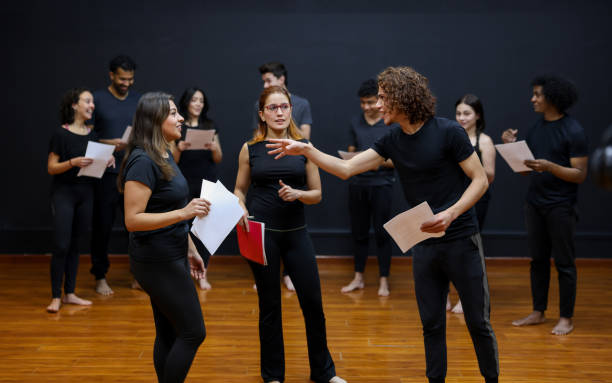
A Performance Artist is a creative professional in the performing arts industry who uses their body, voice, and presence to create live or recorded art that often challenges conventional boundaries of theatre, dance, music, or visual arts. They perform in galleries, public spaces, theatres, or digital platforms, engaging audiences through experimental, conceptual, or interactive works. Performance Artists play a unique role in pushing artistic and cultural discourse, often addressing social, political, or personal themes through their craft. This career falls under the Performing Arts career cluster, emphasizing innovative expression and audience engagement through live or mediated performances.
Share :
Career tree mind map (horizontal) — Performance Artist
Colored branches, hub circles, and underlined topics — same style as counselor course classic (types 18–19 in admin).
Loading mind map…

Performance Artists are visionary creators who craft ephemeral art pieces using their physicality, environment, and multimedia elements to convey messages or evoke emotions, often blending disciplines like acting, dance, spoken word, and visual design. They conceptualize and execute performances that may range from solo acts to collaborative installations, prioritizing originality over traditional performance norms. Beyond artistic creation, they provoke thought, challenge societal norms, and connect with audiences on profound levels. In an era where digital platforms amplify reach and interdisciplinary art gains prominence, Performance Artists adapt by integrating technology and global influences to redefine the boundaries of live expression.

  • Concept Development and Ideation:
    • Create original performance concepts based on personal, cultural, or societal themes.
    • Research and develop narratives or abstract ideas to shape the artistic message of the work.
  • Performance Execution:
    • Perform live or recorded pieces in diverse settings like galleries, streets, or online platforms.
    • Use body movement, voice, props, or multimedia to convey the intended artistic vision.
  • Interdisciplinary Collaboration:
    • Work with other artists, musicians, videographers, or designers to create multidimensional performances.
    • Integrate elements of theatre, dance, visual art, or technology to enhance impact.
  • Audience Engagement:
    • Interact with audiences during or after performances to provoke dialogue or emotional response.
    • Design participatory or immersive experiences to deepen viewer connection to the art.
  • Event and Space Coordination:
    • Organize performance logistics, including venue selection, permits, and technical setup.
    • Adapt performances to suit specific environments, whether public, private, or virtual spaces.
  • Documentation and Archiving:
    • Record performances through video, photography, or written accounts for posterity or promotion.
    • Maintain a portfolio of works to showcase artistic evolution and secure future opportunities.
  • Cultural and Social Commentary:
    • Address pressing issues like identity, politics, or environment through thought-provoking performances.
    • Use art as a medium to challenge norms, inspire change, or reflect on human experiences.
  • Marketing and Networking:
    • Promote performances through social media, artist networks, or gallery partnerships.
    • Build relationships with curators, event organizers, and funding bodies to sustain a career.

RouteSteps
Route 11. Basic education (10+2 or equivalent in any stream)
 2. Short-term courses or workshops in performance art, theatre, or visual arts (3-6 months)
 3. Practical experience through participating in local art events or open mics
 4. Work as a Performance Artist in small-scale or community projects
Route 21. Basic education (10+2 or equivalent in any stream)
 2. Diploma in Performing Arts, Theatre, or Fine Arts (1-2 years)
 3. Hands-on experience in art collectives or experimental theatre groups
 4. Work as a Performance Artist in professional or public settings
Route 31. Basic education (10+2 or equivalent in any stream)
 2. Bachelor’s degree in Fine Arts, Theatre, or Performance Studies (3-4 years)
 3. Internship or assistant roles in art galleries, theatre companies, or performance festivals
 4. Work as a Performance Artist across varied platforms and themes
Route 4 (International)1. Basic education (10+2 or equivalent in any stream)
 2. Diploma or Bachelor’s in Performance Art/Fine Arts from India or abroad (2-4 years)
 3. Advanced certification or Master’s in Performance Studies or Interdisciplinary Arts (1-2 years)
 4. Build experience through international art residencies or biennales
 5. Work as a Performance Artist globally or in India

  • Assisting in art galleries or performance spaces to learn event curation and audience interaction under experienced artists.
  • Involvement in local theatre or art collectives to gain experience with experimental and live performance formats.
  • Internships with performance art festivals or biennales to understand large-scale project execution and networking.
  • Exposure to public art by participating in street performances or community art initiatives for real-world practice.
  • Collaboration in interdisciplinary art projects to work with musicians, dancers, or visual artists on innovative pieces.
  • Training in live improvisation by engaging in open mic events or spontaneous public art interventions.
  • Experience in high-pressure settings by performing at major art exhibitions or cultural festivals.
  • Practical tasks like conceptualizing and documenting performances during residencies or mentorships.
  • Community-based art projects to create socially relevant performances, building adaptability and empathy.
  • International art residencies or workshops for exposure to global performance trends and cross-cultural collaboration.

  • Certificate in Performance Art or Experimental Theatre
  • Diploma in Performing Arts or Fine Arts with Performance Focus
  • Bachelor’s in Performance Studies or Interdisciplinary Arts
  • Master’s in Performance Art or Contemporary Arts Practice
  • Training in Live Art and Conceptual Performance
  • Specialization in Multimedia Performance or Site-Specific Art
  • Certification in Physical Theatre and Movement
  • Workshops on Audience Engagement and Interactive Performance
  • Training in Art History and Cultural Theory for Performance
  • Continuing Education in Digital and Virtual Performance Techniques

InstituteCourse/ProgramOfficial Link
National School of Drama (NSD), New DelhiDiploma in Dramatic Arts (Performance Focus)https://nsd.gov.in/
Srishti Manipal Institute of Art, Design and Technology, BangaloreBachelor’s in Creative Arts (Performance)https://srishtimanipalinstitute.in/
Jawaharlal Nehru University (JNU), New DelhiMA in Arts and Aesthetics (Performance Studies)https://www.jnu.ac.in/
Ambedkar University Delhi (AUD), DelhiMA in Performance Studieshttps://aud.ac.in/
Shiv Nadar University, Greater NoidaBachelor’s in Performing Artshttps://snu.edu.in/
Kala Bhavana, Visva-Bharati University, SantiniketanBachelor’s and Master’s in Fine Arts (Performance)https://www.visvabharati.ac.in/
Faculty of Fine Arts, MS University, BarodaBachelor’s and Master’s in Fine Arts (Performance Focus)https://www.msubaroda.ac.in/
Drama School Mumbai, MumbaiCertificate in Theatre and Performance Arthttps://www.thedramaschoolmumbai.in/
Attakkalari Centre for Movement Arts, BangaloreDiploma in Movement Arts and Mixed Mediahttps://www.attakkalari.org/
Rabindra Bharati University, KolkataBachelor’s and Master’s in Performing Artshttps://rbu.ac.in/

InstitutionCourseCountryOfficial Link
School of the Art Institute of Chicago (SAIC)BFA/MFA in Performance ArtUSAhttps://www.saic.edu/
New York University (NYU) Tisch School of the ArtsMFA in Performance StudiesUSAhttps://tisch.nyu.edu/
Royal College of Art (RCA)MA in Contemporary Art Practice (Performance)UKhttps://www.rca.ac.uk/
California Institute of the Arts (CalArts)BFA/MFA in Performance and Interdisciplinary ArtsUSAhttps://www.calarts.edu/
Goldsmiths, University of LondonMA in Performance MakingUKhttps://www.gold.ac.uk/
University of Southern California (USC) Roski School of Art and DesignMFA in Art (Performance Focus)USAhttps://roski.usc.edu/
Queensland University of Technology (QUT)BFA in Creative Industries (Performance)Australiahttps://www.qut.edu.au/
Concordia UniversityBFA/MFA in Intermedia and Performance ArtCanadahttps://www.concordia.ca/
Gerrit Rietveld AcademieBachelor’s in Fine Arts (Performance Focus)Netherlandshttps://www.rietveldacademie.nl/
University of the Arts HelsinkiMA in Live Art and Performance StudiesFinlandhttps://www.uniarts.fi/en/

India:

  • Portfolio submissions, auditions, or concept proposals for admission to performance art programs like those at Srishti or JNU.
  • Institution-specific entrance exams or interviews to assess artistic vision and performance potential.
  • No mandatory national-level entrance for most programs; admission often based on creativity and prior experience.


International:

  • Portfolio submissions or practical assessments for performance art programs at most international institutes.
  • Specific entrance requirements or prerequisites as per institute guidelines, including prior artistic work or experience.
  • Test of English as a Foreign Language (TOEFL) with a minimum score of 80-100 for non-native speakers (if applicable).
  • International English Language Testing System (IELTS) with a minimum score of 6.0-7.0 (if applicable).
  • Pearson Test of English Academic (PTE Academic) or Duolingo English Test (accepted by some institutions).

Emerging Performance Artist → Independent Performance Artist → Established Performance Artist → Performance Art Curator → Interdisciplinary Art Director

  • Art galleries and museums for presenting performance pieces as part of exhibitions or events.
  • Public spaces for creating site-specific or street performances engaging diverse audiences.
  • Theatre companies for integrating performance art into experimental or avant-garde productions.
  • Performance art festivals for showcasing works at national or international biennales and events.
  • Digital platforms for streaming live performances or creating virtual art experiences online.
  • Cultural organizations for developing performances tied to social, political, or heritage themes.
  • Universities and art schools for performing as guest artists or during residencies.
  • Independent projects for creating self-funded or grant-supported performances in unique venues.
  • Film and media industries for contributing performance elements to experimental films or videos.
  • Community art initiatives for engaging local audiences through participatory or socially relevant performances.

IndiaInternational
Kochi-Muziris Biennale, KochiMuseum of Modern Art (MoMA), USA
India Art Fair, DelhiTate Modern, UK
Serendipity Arts Festival, GoaVenice Biennale, Italy
Kala Ghoda Arts Festival, MumbaiPerformance Space New York, USA
Chennai Photo Biennale, ChennaiPerforma Biennial, USA
Experimenter Gallery, KolkataDocumenta, Germany
Devi Art Foundation, GurgaonArt Basel, Switzerland
Kiran Nadar Museum of Art, DelhiCentre Pompidou, France
Khoj International Artists’ Association, DelhiThe Kitchen, USA
Bangalore International Arts Festival, BangaloreSydney Biennale, Australia

ProsCons
Creative freedom to explore unconventional ideas and push artistic boundariesFinancial instability, as income often depends on grants, commissions, or sporadic gigs
Opportunity to address critical social issues and impact audiences through live artPhysically and emotionally demanding, requiring intense personal investment in performances
Potential for global recognition through festivals, biennales, and digital platformsHighly competitive field with limited mainstream opportunities and recognition
Flexibility to work in diverse settings, from galleries to public spaces or onlineRisk of public misunderstanding or backlash due to provocative or experimental content
Chance to collaborate with other artists and contribute to innovative cultural movementsLack of consistent work, often requiring self-funding or juggling multiple roles to sustain a career

(Figures are approximate and based on latest available data as of 2026, subject to change. Salaries vary based on location, experience, recognition, and project funding.)

Career LevelIndia (₹ per annum)International (US$ per annum)
Emerging Performance Artist (Entry-Level)1,50,000 - 3,00,000$20,000 - $35,000
Independent Performance Artist3,00,000 - 6,00,000$35,000 - $55,000
Established Performance Artist6,00,000 - 12,00,000$55,000 - $80,000
Performance Art Curator12,00,000 - 18,00,000$80,000 - $110,000
Interdisciplinary Art Director18,00,000+$110,000+

  • Video Editing Software like Adobe Premiere for documenting or creating digital performance content.
  • Live Streaming Platforms like OBS Studio for broadcasting performances to online audiences.
  • Multimedia Design Tools like Canva for creating promotional materials or visual performance elements.
  • Project Management Apps like Trello for organizing performance logistics, collaborations, or events.
  • Digital Audio Workstations (DAWs) like Audacity for integrating sound design into performances.
  • Virtual Reality Tools like Unity for experimenting with immersive or interactive performance formats.
  • Social Media Platforms like Instagram for promoting works and engaging with global art communities.
  • Portfolio Platforms like Behance for showcasing past performances to potential collaborators or curators.
  • Online Payment Platforms like PayPal for managing performance fees or crowdfunding campaigns.
  • Content Sharing Platforms like Vimeo for uploading high-quality performance recordings to build a digital presence.

  • Indian People’s Theatre Association (IPTA)
  • Khoj International Artists’ Association, India
  • International Network for Contemporary Performing Arts (IETM)
  • Performance Studies International (PSi)
  • Live Art Development Agency (LADA), UK
  • Asia-Pacific Performance Art Network (APPAN)
  • European Live Art Network (ELAN)
  • Performance Art Network (PAN), USA
  • Australian Network for Art and Technology (ANAT)
  • World Performance Project (WPP)

  • Pushpamala N (India, Contemporary): A pioneering performance artist since the 1990s, known for her photographic and live works exploring gender and cultural identity in India.
     
  • Nikhil Chopra (India, Contemporary): Renowned since the 2000s for durational performances as characters like Yog Raj Chitrakar, addressing memory and colonialism.
     
  • Tejal Shah (India, Contemporary): An influential artist since the 2000s, using performance and video to explore themes of gender, sexuality, and ecology in India.
     
  • Subodh Gupta (India, Contemporary): Known since the 1990s for performances and installations with everyday objects, reflecting on Indian identity and globalization.
     
  • Shilpa Gupta (India, Contemporary): A prominent artist since the 2000s, her interactive performances and installations challenge borders, censorship, and power dynamics.
     
  • Marina Abramović (Serbia/USA, Contemporary): Iconic performance artist since the 1970s, known for durational works like “The Artist is Present,” redefining emotional engagement.
     
  • Yoko Ono (Japan/USA, Contemporary): Legendary artist since the 1960s, her conceptual performances like “Cut Piece” pioneered feminist and participatory art globally.
     
  • Laurie Anderson (USA, Contemporary): Innovative since the 1970s, blending performance, music, and technology in works like “United States,” shaping multimedia art.
     
  • Tino Sehgal (UK/Germany, Contemporary): Known since the 2000s for “constructed situations” like “This Progress,” focusing on human interaction over material objects.
     
  • Anne Imhof (Germany, Contemporary): Rising star since the 2010s, her operatic performances like “Faust” at Venice Biennale explore power, endurance, and spectacle.
     

  • Cultivate a unique artistic voice through experimentation with personal themes and performance mediums.
  • Gain early experience by showcasing work at local art events, open mics, or community spaces.
  • Build a portfolio of documented performances to demonstrate creativity and attract opportunities.
  • Seek mentorship from established artists to refine conceptual skills and navigate the art world.
  • Stay abreast of contemporary art trends and digital tools to expand performance reach and impact.
  • Develop resilience to handle rejection, public critique, or the uncertainty of freelance projects.
  • Network with galleries, curators, and art collectives to secure performance venues or funding.
  • Document every performance meticulously to create a lasting record and promotional material.
  • View challenges as opportunities to innovate and push the boundaries of artistic expression.
  • Merge deep creativity with persistence to sustain a career in a niche and evolving field.

Venturing into the realm of a Performance Artist offers a distinctive privilege to craft fleeting moments of art that challenge, inspire, and resonate with audiences through bold, live expression. These trailblazing creators fuse imagination with raw presence, redefining the possibilities of performance in galleries, streets, and beyond. With trajectories ranging from emerging solo acts to directing groundbreaking interdisciplinary projects within a vibrant, boundary-pushing artistic sphere, this vocation beckons those fueled by originality and connection. For anyone compelled to weave profound narratives through their craft, engage diverse viewers, and carve an indelible mark on the landscape of contemporary art, a career as a Performance Artist promises an exhilarating, unconventional, and deeply fulfilling professional path.

Knowledge & Skills You Will Learn
1
Focus on sustainability in art, with performances addressing environmental concerns or using eco-friendly methods.
Interested in this career?

Take the next step and explore more about Performance Artist.