
Acting Coach

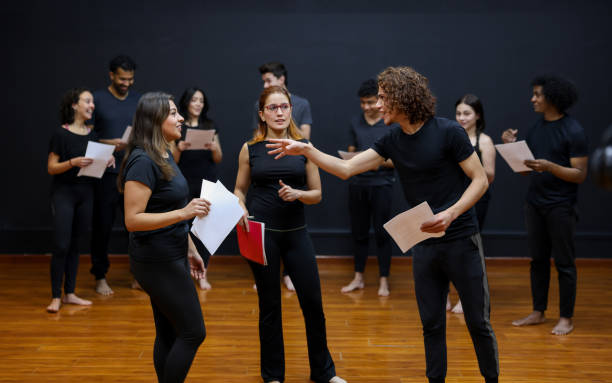
An Acting Coach is a specialized professional in the performing arts industry who trains and mentors actors to enhance their craft, develop characters, and prepare for roles in theatre, film, television, or other performance mediums. They work in acting studios, theatre companies, film sets, or as independent consultants, guiding individuals at various skill levels to refine their emotional depth and technical skills. Acting Coaches are crucial in shaping performers’ abilities, helping them succeed in auditions, productions, and long-term careers. This career falls under the Performing Arts career cluster, focusing on the education and personal growth of actors through dedicated mentorship.
Share :
Career tree mind map (horizontal) — Acting Coach
Colored branches, hub circles, and underlined topics — same style as counselor course classic (types 18–19 in admin).
Loading mind map…

Acting Coaches are passionate educators and seasoned performers who provide personalized instruction in acting techniques, improvisation, voice modulation, and character analysis, tailoring their methods to suit beginners, intermediates, or professional actors. They design training sessions, conduct workshops, and offer one-on-one guidance to help actors unlock their potential, build confidence, and deliver authentic performances. Beyond technical training, they often serve as motivators, supporting actors through the emotional and psychological challenges of the craft. In a landscape where storytelling evolves with digital media and global platforms, Acting Coaches adapt to contemporary demands, incorporating modern techniques and technologies to prepare actors for diverse opportunities.

  • Acting Technique Training:
    • Teach foundational and advanced acting methods such as Stanislavski, Meisner, or Method Acting.
    • Guide actors in mastering skills like emotional recall, physical expression, and scene interpretation.
  • Character Development Support:
    • Assist actors in analyzing scripts and building nuanced, believable characters for specific roles.
    • Help develop backstories, motivations, and physicality to deepen character portrayal.
  • Audition Preparation:
    • Coach actors for auditions by refining monologues, cold readings, and on-camera techniques.
    • Provide feedback on delivery, presence, and adaptability to casting director expectations.
  • Voice and Movement Coaching:
    • Train actors in voice projection, diction, accents, and body language for stage or screen.
    • Focus on physical awareness to enhance non-verbal communication in performances.
  • Performance Feedback and Critique:
    • Evaluate actors’ performances through rehearsals, recorded sessions, or live practice.
    • Offer constructive criticism to improve timing, emotional depth, and overall impact.
  • Emotional and Psychological Support:
    • Support actors in overcoming stage fright, rejection, or self-doubt with encouragement and strategies.
    • Foster a safe space for vulnerability, essential for authentic emotional expression.
  • Workshop and Group Session Leadership:
    • Organize group workshops or classes on specific acting skills, improvisation, or scene study.
    • Facilitate collaborative exercises to build trust and ensemble dynamics among actors.
  • Industry and Trend Awareness:
    • Stay updated on acting trends, casting preferences, and digital performance formats like web series.
    • Adapt coaching to prepare actors for evolving demands in theatre, film, and online content.

RouteSteps
Route 11. Basic education (10+2 or equivalent in any stream)
 2. Short-term courses or workshops in acting, theatre, or coaching techniques (3-6 months)
 3. Practical experience through assisting in acting studios or theatre groups
 4. Work as an Acting Coach for aspiring actors or small groups
Route 21. Basic education (10+2 or equivalent in any stream)
 2. Diploma in Theatre Arts, Acting, or Drama Education (1-2 years)
 3. Hands-on experience in theatre companies or acting workshops
 4. Work as an Acting Coach in professional environments
Route 31. Basic education (10+2 or equivalent in any stream)
 2. Bachelor’s degree in Theatre, Drama, or Performing Arts (3-4 years)
 3. Internship or assistant roles in acting schools or film production houses
 4. Work as an Acting Coach across varied skill levels and media
Route 4 (International)1. Basic education (10+2 or equivalent in any stream)
 2. Diploma or Bachelor’s in Theatre/Acting from India or abroad (2-4 years)
 3. Advanced certification or Master’s in Drama Education or Acting Pedagogy (1-2 years)
 4. Build experience through international theatre or film coaching projects
 5. Work as an Acting Coach globally or in India

  • Assisting in acting studios or theatre companies to learn coaching methods and actor interaction under experienced mentors.
  • Involvement in drama schools or community theatre to gain experience with diverse actor skill levels and aspirations.
  • Internships with film or theatre directors to understand on-set coaching and character preparation processes.
  • Exposure to workshop facilitation by organizing acting classes or improvisation sessions for practical learning.
  • Collaboration in theatre festivals or film projects to coach actors for live performances or screen roles.
  • Training in group dynamics by leading ensemble exercises or scene study groups in local acting circles.
  • Experience in high-pressure settings by preparing actors for major auditions, casting calls, or productions.
  • Practical tasks like designing acting exercises or mock auditions during mentorships or assistant roles.
  • Community outreach initiatives to coach underprivileged aspiring actors, building adaptability and empathy.
  • International acting workshops or residencies for exposure to global coaching techniques and cross-cultural performance styles.

  • Certificate in Acting Coaching or Theatre Education
  • Diploma in Drama Education or Acting Techniques
  • Bachelor’s in Theatre Studies or Performing Arts Education
  • Master’s in Drama Pedagogy or Acting Instruction
  • Training in Specific Acting Methods (Stanislavski, Meisner, etc.)
  • Specialization in Voice and Movement for Actors
  • Certification in On-Camera Acting Techniques
  • Workshops on Improvisation and Scene Study Coaching
  • Training in Theatre History and Script Analysis
  • Continuing Education in Digital Performance Coaching

InstituteCourse/ProgramOfficial Link
National School of Drama (NSD), New DelhiDiploma in Dramatic Arts (Acting Focus)https://nsd.gov.in/
Barry John Acting Studio, Mumbai/DelhiCertificate in Acting and Coachinghttps://www.bjas.in/
Drama School Mumbai, MumbaiCertificate in Theatre and Acting Educationhttps://www.thedramaschoolmumbai.in/
Film and Television Institute of India (FTII), PuneDiploma in Acting and Directionhttps://www.ftii.ac.in/
Whistling Woods International, MumbaiDiploma in Acting and Performance Artshttps://www.whistlingwoods.net/
Satyajit Ray Film & Television Institute (SRFTI), KolkataDiploma in Acting and Productionhttps://srfti.ac.in/
Anupam Kher’s Actor Prepares, MumbaiCertificate in Acting and Coaching Techniqueshttps://www.actorprepares.net/
Roshan Taneja School of Acting, MumbaiDiploma in Acting and Performance Traininghttps://www.roshantaneja.com/
Kreating Charakters, MumbaiCourses in Acting and Coaching Skillshttps://www.kreatingcharakters.com/
Annapurna College of Film and Media, HyderabadCourses in Acting and Media Educationhttps://www.annapurnacollege.edu.in/

InstitutionCourseCountryOfficial Link
Juilliard SchoolMFA in Drama (Acting Focus)USAhttps://www.juilliard.edu/
Royal Academy of Dramatic Art (RADA)MA in Theatre and Acting TrainingUKhttps://www.rada.ac.uk/
New York University (NYU) Tisch School of the ArtsMFA in Acting and CoachingUSAhttps://tisch.nyu.edu/
Lee Strasberg Theatre & Film InstituteCertificate in Method Acting and CoachingUSAhttps://strasberg.edu/
Stella Adler Studio of ActingProfessional Conservatory in ActingUSAhttps://www.stellaadler.com/
Royal Central School of Speech and DramaMA in Actor Training and CoachingUKhttps://www.cssd.ac.uk/
University of Southern California (USC) School of Dramatic ArtsMFA in ActingUSAhttps://dramaticarts.usc.edu/
National Institute of Dramatic Art (NIDA)MFA in Acting and DirectingAustraliahttps://www.nida.edu.au/
Guildhall School of Music & DramaMA in Acting and TrainingUKhttps://www.gsmd.ac.uk/
Toronto Film SchoolDiploma in Acting for Film, TV, and TheatreCanadahttps://www.torontofilmschool.ca/

India:

  • Auditions, practical demonstrations, or portfolio submissions for admission to acting programs like those at NSD or FTII.
  • Institution-specific entrance exams or interviews to assess acting skills and coaching potential.
  • No mandatory national-level entrance for most programs; admission often based on talent and prior experience.


International:

  • Auditions or practical assessments for acting programs at most international institutes.
  • Specific entrance requirements or prerequisites as per institute guidelines, including prior acting or teaching experience.
  • Test of English as a Foreign Language (TOEFL) with a minimum score of 80-100 for non-native speakers (if applicable).
  • International English Language Testing System (IELTS) with a minimum score of 6.0-7.0 (if applicable).
  • Pearson Test of English Academic (PTE Academic) or Duolingo English Test (accepted by some institutions).

Assistant Acting Coach → Acting Coach (Independent) → Senior Acting Coach → Acting Studio Director → Acting Program Coordinator → On-Set Acting Consultant

  • Acting studios for training aspiring actors in various techniques and performance styles.
  • Theatre companies for coaching actors in stage productions and ensemble performances.
  • Film and television production houses for preparing actors for on-camera roles and specific projects.
  • Drama schools for teaching structured acting curricula to students of different levels.
  • Community theatre groups for offering accessible acting training and performance opportunities.
  • Independent consulting for providing personalized coaching to actors preparing for auditions or roles.
  • Online platforms for conducting virtual acting classes or creating instructional content.
  • Casting agencies for helping actors refine skills during casting workshops or auditions.
  • Corporate training programs for coaching professionals in presentation or communication skills using acting techniques.
  • Cultural organizations for mentoring actors in traditional or regional performance arts.

IndiaInternational
National School of Drama (NSD), DelhiLee Strasberg Theatre & Film Institute, USA
Barry John Acting Studio, Mumbai/DelhiStella Adler Studio of Acting, USA
Actor Prepares, MumbaiRoyal Academy of Dramatic Art (RADA), UK
Roshan Taneja School of Acting, MumbaiJuilliard School, USA
Drama School Mumbai, MumbaiNew York University (NYU) Tisch School, USA
Kreating Charakters, MumbaiRoyal Central School of Speech and Drama, UK
Film and Television Institute of India (FTII), PuneAmerican Academy of Dramatic Arts, USA
Whistling Woods International, MumbaiNational Institute of Dramatic Art (NIDA), Australia
CINTAA (Cine & TV Artistes’ Association), MumbaiGuildhall School of Music & Drama, UK
The Jeff Goldberg Studio, MumbaiHB Studio, USA

ProsCons
Gratifying role in shaping actors’ skills and helping them achieve compelling performancesEmotionally taxing, as coaching often involves addressing actors’ insecurities or frustrations
Creative freedom to design unique training methods and explore diverse acting approachesIrregular hours, frequently requiring evening or weekend sessions for rehearsals or workshops
Opportunity to impact storytelling and personal growth through actor developmentCompetitive field with pressure to establish a reputation and attract consistent clients
Flexibility to work in varied environments like studios, sets, or online coaching platformsRisk of burnout due to intense one-on-one sessions or high-stakes production environments
Potential to build a network of performers and contribute to the performing arts communityIncome variability, especially for freelance coaches or those starting independent practices

(Figures are approximate and based on latest available data as of 2026, subject to change. Salaries vary based on location, experience, specialization, and employment type.)

Career LevelIndia (₹ per annum)International (US$ per annum)
Assistant Acting Coach (Entry-Level)2,00,000 - 4,00,000$28,000 - $45,000
Acting Coach (Independent)4,00,000 - 8,00,000$45,000 - $70,000
Senior Acting Coach8,00,000 - 14,00,000$70,000 - $100,000
Acting Studio Director14,00,000 - 22,00,000$100,000 - $140,000
Acting Program Coordinator22,00,000 - 30,00,000$140,000 - $180,000
On-Set Acting Consultant30,00,000+$180,000+

  • Acting Curriculum Software like StudioBinder for managing coaching schedules and actor progress.
  • Video Editing Tools like Final Cut Pro for recording and analyzing actor performances during sessions.
  • Script Analysis Software like Celtx for breaking down scenes and preparing coaching materials.
  • Virtual Classroom Platforms like Zoom for conducting online acting lessons or workshops.
  • Social Media Tools like Canva for promoting coaching services, events, or actor achievements online.
  • Project Management Apps like Trello for organizing workshops, auditions, or training schedules.
  • Voice Recording Software like Audacity for training actors in voice modulation or accent work.
  • Performance Tracking Tools for monitoring actor improvements or preparing audition feedback.
  • Online Payment Platforms like PayPal for managing coaching fees or workshop registrations.
  • Content Sharing Platforms like YouTube for uploading instructional videos and building an online presence.

  • Indian People’s Theatre Association (IPTA)
  • National School of Drama Alumni Association, India
  • International Theatre Institute (ITI)
  • Actors’ Equity Association (AEA), USA
  • Screen Actors Guild‐American Federation of Television and Radio Artists (SAG-AFTRA), USA
  • British Actors’ Equity Association, UK
  • Australian Actors’ Equity, Australia
  • Canadian Actors’ Equity Association (CAEA)
  • European Federation of Dramatic Arts (EFDA)
  • Theatre Communications Group (TCG), USA

  • Barry John (India, Contemporary): A pioneering acting coach since the 1970s, founder of Barry John Acting Studio, known for training Bollywood stars like Shah Rukh Khan.
     
  • Anupam Kher (India, Contemporary): Renowned actor and coach since the 2000s, his Actor Prepares institute has shaped numerous Indian actors for film and theatre.
     
  • Roshan Taneja (India, Historical): Legendary acting coach since the 1960s, founder of Roshan Taneja School, mentored icons like Jaya Bachchan until his passing in 2019.
     
  • Neeraj Kabi (India, Contemporary): Esteemed coach and actor since the 1990s, known for intensive training at Drama School Mumbai and personal mentorship programs.
     
  • Ratna Pathak Shah (India, Contemporary): Veteran actress and coach since the 1980s, associated with NSD, guiding theatre actors with a focus on emotional authenticity.
     
  • Harold Guskin (USA, Historical): Influential acting coach since the 1980s, known for his book “How to Stop Acting” and coaching stars like Kevin Kline until his death in 2018.
     
  • Ivana Chubbuck (USA, Contemporary): Renowned coach since the 1990s, founder of Chubbuck Technique, trained actors like Brad Pitt and Halle Berry for emotional depth.
     
  • Uta Hagen (USA, Historical): Iconic coach and actress from the 1940s to 2004, her HB Studio and books like “Respect for Acting” shaped modern acting pedagogy.
     
  • Sanford Meisner (USA, Historical): Legendary coach from the 1930s to 1990s, developed the Meisner Technique, influencing generations at Neighborhood Playhouse School.
     
  • Declan Donnellan (UK, Contemporary): Acclaimed theatre director and coach since the 1980s, co-founder of Cheek by Jowl, known for coaching through practical performance work.
     

  • Develop a strong base in acting techniques through personal training or professional performance experience.
  • Gain early coaching experience by assisting in acting studios or supporting theatre group rehearsals.
  • Build a portfolio of coached performances or student success stories to demonstrate expertise.
  • Seek mentorship from veteran coaches to master personalized training and feedback methods.
  • Stay informed about industry trends and digital platforms to prepare actors for modern opportunities.
  • Sharpen communication skills to inspire trust and deliver impactful critiques to actors.
  • Network with theatre companies, film schools, and casting professionals to secure coaching roles.
  • Maintain personal acting practice to stay connected to the craft and enhance demonstration ability.
  • View actor challenges as chances to refine coaching strategies and build resilience.
  • Combine a passion for performance with a dedication to nurturing talent in others.

Embarking on the journey of an Acting Coach unveils a remarkable chance to mold the skills of performers, guiding them to captivate audiences through the art of storytelling. These invaluable mentors blend deep expertise with unwavering support, empowering actors to shine in theatre, film, and beyond. With career paths ranging from shaping novices to leading prestigious training programs in a dynamic and ever-changing artistic domain, this role calls to those who thrive on inspiration and development. For individuals driven to elevate dramatic talent, open doors to transformative roles, and make a profound impact on the world of performance, a career as an Acting Coach presents a thrilling, meaningful, and exceptionally rewarding professional adventure.

Knowledge & Skills You Will Learn
1
Expansion of acting in corporate training, using drama techniques for leadership and communication skills.
2
Surge in casting workshops and talent showcases, driving demand for skilled coaches to prepare actors.
Interested in this career?

Take the next step and explore more about Acting Coach.