Aerobiologist
Aerology Research Scholar (PhD)
Explore Career
A Paleontologist is a scientific professional who studies ancient life forms through fossils, rocks, and geological records to understand the history of life on Earth, evolutionary processes, and past environments. They work in academic institutions, museums, research organizations, and government agencies, collaborating with geologists, biologists, and archaeologists to uncover insights into prehistoric ecosystems and contribute to knowledge about biodiversity and climate change over millions of years. Paleontologists are vital in advancing scientific understanding in an era where historical data informs current environmental challenges and conservation efforts.
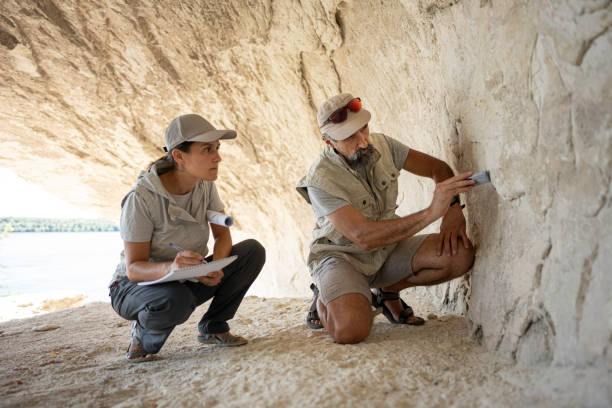
Paleontologists are dedicated researchers who investigate the remains of ancient organisms, such as dinosaurs, plants, and early mammals, using field excavations, laboratory analysis, and advanced imaging technologies to reconstruct past life and environments. Their work involves discovering and cataloging fossils, dating geological strata, and interpreting evolutionary relationships to piece together Earth’s biological timeline. Operating in diverse settings from remote dig sites to modern labs, they combine meticulous observation, analytical rigor, and specialized expertise to reveal the story of life’s development. As key contributors to pure sciences and research, Paleontologists drive discoveries in a landscape increasingly focused on understanding long-term ecological shifts and species adaptation.
| Route | Steps |
| Route 1 | 1. 10+2 in Science stream (Physics, Chemistry, Biology or Geology preferred) |
| 2. Bachelor’s in Geology, Earth Sciences, or Biology with Paleontology focus (3-4 years) | |
| 3. Start as a Field Assistant or Junior Research Assistant in paleontology projects | |
| Route 2 | 1. 10+2 in Science stream (Physics, Chemistry, Biology or Geology preferred) |
| 2. Bachelor’s in Geology, Earth Sciences, or Biology with Paleontology focus (3-4 years) | |
| 3. Master’s in Paleontology, Geology, or Earth Sciences (2 years) | |
| 4. Work as a Research Associate in academic or museum settings | |
| Route 3 | 1. 10+2 in Science stream (Physics, Chemistry, Biology or Geology preferred) |
| 2. Bachelor’s in Geology, Earth Sciences, or Biology with Paleontology focus (3-4 years) | |
| 3. Master’s in Paleontology, Geology, or Earth Sciences (2 years) | |
| 4. Ph.D. in Paleontology or related discipline (3-5 years) | |
| 5. Pursue roles as a Senior Paleontologist or Principal Investigator | |
| Route 4 | 1. 10+2 in Science stream (Physics, Chemistry, Biology or Geology preferred) |
| 2. Bachelor’s in Geology, Earth Sciences, or Biology with Paleontology focus (3-4 years) | |
| 3. Master’s in Paleontology, Geology, or Earth Sciences (2 years) | |
| 4. Ph.D. in Paleontology or related discipline (3-5 years) | |
| 5. Postdoctoral Research (1-3 years) | |
| 6. Serve as a Lead Researcher, Professor, or Museum Curator |
| Institute | Course/Program | Official Link |
| Indian Institute of Science (IISc), Bangalore | B.Sc., M.Sc., Ph.D. in Earth Sciences | https://iisc.ac.in/ |
| Jawaharlal Nehru University (JNU), Delhi | M.Sc., Ph.D. in Environmental Sciences | https://www.jnu.ac.in/ |
| University of Delhi, Delhi | B.Sc., M.Sc., Ph.D. in Geology | https://www.du.ac.in/ |
| Banaras Hindu University (BHU), Varanasi | B.Sc., M.Sc., Ph.D. in Geology | https://www.bhu.ac.in/ |
| University of Hyderabad, Hyderabad | M.Sc., Ph.D. in Earth Sciences | https://uohyd.ac.in/ |
| Indian Institute of Technology (IIT), Kharagpur | B.Tech, M.Tech, Ph.D. in Geology & Geophysics | https://www.iitkgp.ac.in/ |
| University of Calcutta, Kolkata | B.Sc., M.Sc., Ph.D. in Geology | https://www.caluniv.ac.in/ |
| Presidency University, Kolkata | B.Sc., M.Sc. in Geology | https://www.presiuniv.ac.in/ |
| Geological Survey of India Training Institute, Hyderabad | Short Courses in Paleontology | https://www.gsi.gov.in/ |
| Wadia Institute of Himalayan Geology, Dehradun | Research Programs in Paleontology | https://www.wihg.res.in/ |
| Institution | Course | Country | Official Link |
| University of Chicago, Chicago | B.S., M.S., Ph.D. in Paleontology | USA | https://www.uchicago.edu/ |
| University of California, Berkeley | B.A., Ph.D. in Paleontology (Integrative Biology) | USA | https://www.berkeley.edu/ |
| University of Bristol, Bristol | B.Sc., M.Sc., Ph.D. in Paleontology | UK | https://www.bristol.ac.uk/ |
| Yale University, New Haven | B.S., Ph.D. in Geology & Geophysics (Paleontology) | USA | https://www.yale.edu/ |
| University of Oxford, Oxford | B.A., D.Phil. in Earth Sciences (Paleontology Focus) | UK | https://www.ox.ac.uk/ |
| University of Alberta, Edmonton | B.Sc., M.Sc., Ph.D. in Paleontology | Canada | https://www.ualberta.ca/ |
| Australian National University, Canberra | B.Sc., M.Sc., Ph.D. in Earth Sciences (Paleontology) | Australia | https://www.anu.edu.au/ |
| University of Munich (LMU), Munich | B.Sc., M.Sc., Ph.D. in Paleontology | Germany | https://www.en.uni-muenchen.de/ |
| University of Tokyo, Tokyo | B.Sc., M.Sc., Ph.D. in Earth and Planetary Sciences | Japan | https://www.u-tokyo.ac.jp/en/ |
| University of Cape Town, Cape Town | B.Sc., M.Sc., Ph.D. in Geology (Paleontology Focus) | South Africa | https://www.uct.ac.za/ |
India:
International:
Field Assistant → Paleontological Researcher → Senior Paleontologist → Principal Investigator → Museum Curator → Academic Professor → Research Director
| India | International |
| Geological Survey of India (GSI) | Smithsonian Institution, USA |
| Wadia Institute of Himalayan Geology | Natural History Museum, UK |
| Birbal Sahni Institute of Palaeosciences, Lucknow | American Museum of Natural History, USA |
| Indian National Science Academy (INSA) | Royal Tyrrell Museum of Palaeontology, Canada |
| Physical Research Laboratory (PRL), Ahmedabad | Field Museum, USA |
| National Museum of Natural History, Delhi | Museum of the Rockies, USA |
| University of Delhi, Geology Department | Dinosaur National Monument, USA |
| Banaras Hindu University, Geology Department | University of Bristol, UK |
| Jawaharlal Nehru University (JNU) | Australian Museum, Australia |
| Indian Institute of Science (IISc) | Paleontological Institute, Russia |
| Pros | Cons |
| Opportunity to uncover ancient life mysteries and contribute to evolutionary knowledge | Long educational path often requiring advanced degrees for significant research roles |
| Potential to impact science through discoveries about Earth’s history and biodiversity | Limited funding and job opportunities in a niche, competitive scientific field |
| Intellectually stimulating career exploring the past through fossils and geological clues | Physically demanding fieldwork in remote locations with harsh conditions or long durations |
| Diverse work settings from field expeditions to museum curation and academic research | Slow career progression dependent on rare discoveries, publications, or grant success |
| Chance to educate and inspire the public about prehistoric life and environmental history | Risk of working in unstable funding environments, especially in academic or public sectors |
(Figures are approximate and based on latest available data as of 2026, subject to change. Salaries vary based on location, experience, sector (academic vs. industry), and specialization.)
| Career Level | India (₹ per annum) | International (USD per annum) |
| Field Assistant (Early Career) | 2,50,000 - 5,00,000 | 25,000 - 40,000 |
| Paleontological Researcher (Mid-Career) | 5,00,000 - 10,00,000 | 40,000 - 60,000 |
| Senior Paleontologist (Established) | 10,00,000 - 18,00,000 | 60,000 - 90,000 |
| Principal Investigator/Museum Curator | 18,00,000 - 30,00,000 | 90,000 - 120,000 |
| Academic Professor/Research Director | 30,00,000+ | 120,000+ |
Venturing into a career as a Paleontologist offers a unique privilege to unravel the mysteries of Earth’s distant past, piecing together the saga of ancient life through fossils and geological traces. From excavating long-lost species to shedding light on evolutionary pathways, Paleontologists stand as custodians of history’s deepest chapters. This field blends meticulous fieldwork, analytical depth, and a profound dedication to decoding life’s ancient narrative, presenting diverse avenues in research, curation, and education. For those enchanted by the allure of prehistoric worlds, eager to adapt to emerging scientific methodologies, and committed to illuminating humanity’s origins, a career as a Paleontologist promises an intellectually captivating and deeply enriching professional voyage with the power to reshape our understanding of life’s grand timeline.
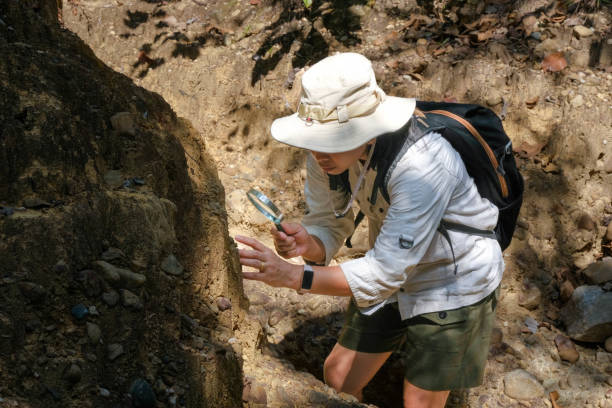
Early-career individuals support fossil excavations and site documentation under supervision, gaining hands-on experience in field techniques....
0.0LPA
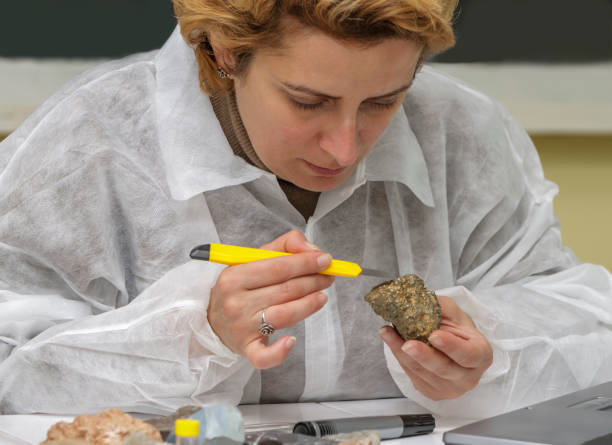
Specialists conduct independent or collaborative studies on fossils, focusing on specific eras or species, contributing to scientific papers or...
0.0LPA
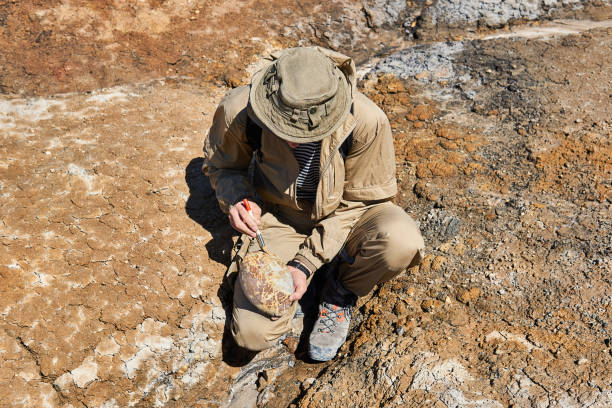
Experienced professionals lead research on complex paleontological questions, often specializing in areas like dinosaur morphology or...
0.0LPA
Take the next step and explore more about Paleontologist.
Explore similar career paths that might interest you