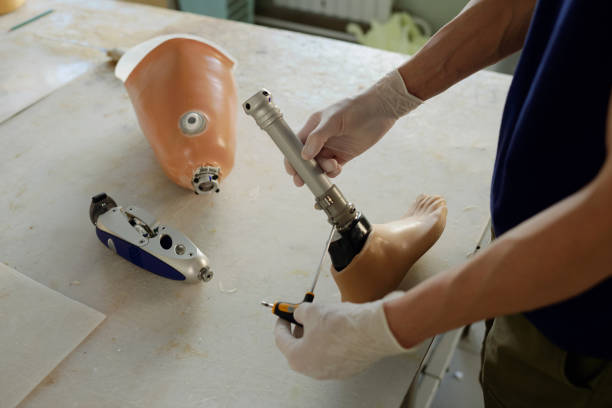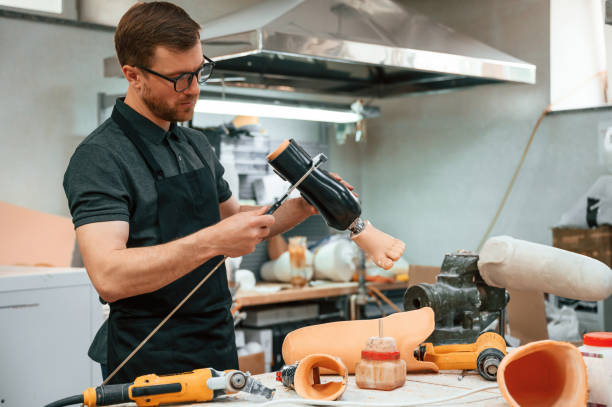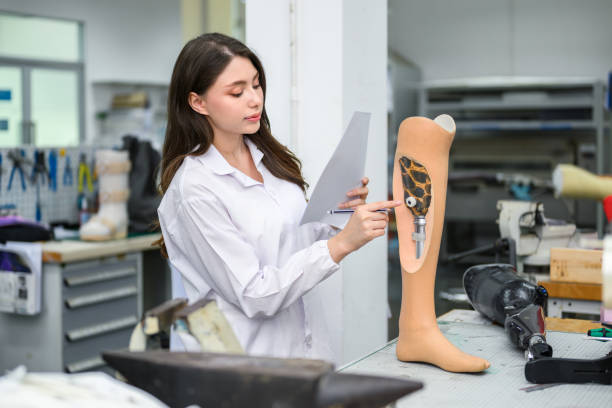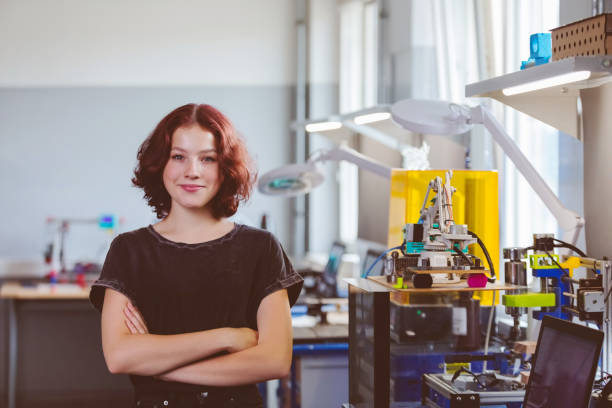
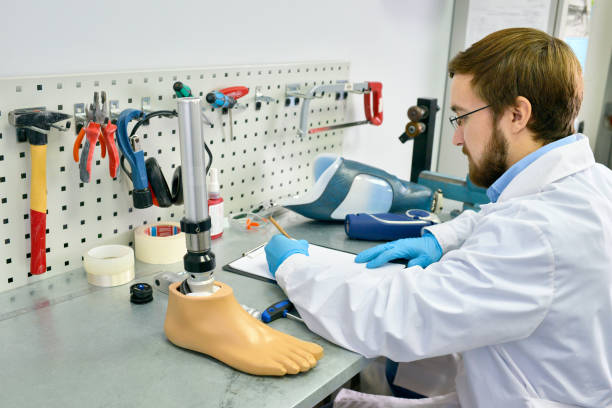
Orthotic Technicians are skilled craftsmen who build custom orthotic devices based on prescriptions from orthotists or physicians. They use a variety of materials like plastics, metals, and fabrics to create braces and supports tailored to patients’ specific anatomical needs. Their work involves taking measurements, creating molds or digital designs, and ensuring a proper fit through adjustments. Additionally, they repair and maintain orthoses to prolong functionality, often interacting with patients to address comfort and usability concerns. Their technical expertise and attention to detail play a critical role in supporting patient recovery and independence across diverse medical settings.
- Design and Fabrication:
- Construct orthotic devices like spinal braces or ankle-foot orthoses based on clinical prescriptions.
- Utilize tools, machinery, and computer-aided design (CAD) software to craft precise supports.
- Fitting and Modification:
- Assist in fitting orthoses to patients, ensuring optimal comfort and biomechanical support.
- Make adjustments during trials to enhance functionality and alignment for individual needs.
- Material Handling and Assembly:
- Select suitable materials such as thermoplastics or leather for durability and patient comfort.
- Assemble components like hinges, straps, and padding to complete the orthotic device.
- Maintenance and Repair:
- Conduct regular maintenance to ensure orthoses remain effective over time.
- Repair damaged or worn parts to restore functionality and extend device lifespan.
- Patient Support:
- Interact with patients to understand their concerns and provide instructions on orthotic use.
- Offer guidance and reassurance during the adaptation phase to wearing supportive devices.
- Team Collaboration:
- Work with orthotists, physiotherapists, and doctors to align devices with treatment plans.
- Provide technical feedback during patient assessments and rehabilitation processes.
- Quality Assurance:
- Inspect finished orthoses to ensure they meet safety and performance standards.
- Test devices for structural reliability and effectiveness before patient delivery.
- Record Management:
- Keep accurate records of designs, materials, and patient adjustments for future reference.
- Document repairs and modifications to monitor the condition of each orthotic device.
| Route | Steps |
| Route 1 | 1. 10+2 with Physics, Chemistry, Mathematics/Biology (PCM/PCB) or any stream |
| 2. Diploma in Prosthetics and Orthotics Technology (2-3 years) | |
| 3. Internship or practical training in an orthotic clinic or hospital (3-6 months) | |
| 4. Optional certification from recognized bodies (e.g., RCI in India) | |
| Route 2 | 1. 10+2 with Physics, Chemistry, Mathematics/Biology (PCM/PCB) or any stream |
| 2. Bachelor’s degree in Prosthetics and Orthotics (BPO) (4 years) | |
| 3. Hands-on training or internship in orthotic fabrication (6-12 months) | |
| 4. Optional advanced certification for specialization | |
| Route 3 | 1. 10+2 in any stream |
| 2. Certificate course in Orthotic Technology (6-12 months) | |
| 3. On-the-job training or apprenticeship in an orthotic workshop (6-12 months) | |
| Route 4 (International) | 1. 10+2 in any stream |
| 2. Diploma or Bachelor’s in Prosthetics and Orthotics from India (2-4 years) | |
| 3. Advanced certification or degree in Orthotic Technology abroad (1-2 years) | |
| 4. Internship in international orthotic clinics or manufacturers (6-12 months) | |
| 5. Licensing or certification as per country requirements (e.g., ABC certification in the USA) |
- Accessible Training Duration: Education ranges from 6 months to 4 years, making entry feasible compared to many clinical roles.
- Hands-On Expertise: Emphasizes practical skills in crafting and fitting rather than direct medical intervention.
- Transformative Impact: Directly improves patient mobility and pain management through custom devices.
- Collaborative Environment: Works alongside orthotists and therapists for comprehensive care.
- Rising Need: Increasing prevalence of musculoskeletal disorders and injuries boosts demand.
- Varied Workplaces: Opportunities span clinical settings, workshops, and manufacturing units.
- Detail-Oriented Work: Requires meticulous precision for effective and comfortable orthotic solutions.
- Growth Potential: Offers advancement to supervisory or specialized roles with experience.
- Technology Adoption: Growing use of digital tools like 3D scanning in orthotic design.
- Worldwide Applicability: Skills are sought after globally with expanding rehabilitation services.
- Internships in orthotic clinics or hospitals to develop skills in device fabrication and fitting.
- Practical training in creating orthoses using materials like thermoplastics and composites.
- Involvement in patient fittings to learn customization and adjustment techniques.
- Exposure to digital tools like 3D scanning and CAD for modern orthotic design.
- Observerships with experienced technicians to master complex brace and support construction.
- Participation in maintenance and repair tasks during rotations in rehabilitation centers.
- Training in patient communication to address concerns and explain orthotic care.
- Attendance at workshops on assistive technology for updates on orthotic innovations.
- Collaboration with therapy teams to integrate orthoses into broader treatment plans.
- Experience in quality control to ensure orthotic devices meet safety and efficacy standards.
- Diploma in Prosthetics and Orthotics Technology
- Bachelor’s Degree in Prosthetics and Orthotics (BPO)
- Certificate Course in Orthotic Technology
- Training in Computer-Aided Design (CAD) for Orthotics
- Certification in Orthotic Fabrication Techniques
- Specialized Course in Spinal Orthotics
- Training in Lower Extremity Orthotic Design
- Certification in Orthotic Material Science
- Workshop on 3D Scanning in Orthotics
- Continuing Education in Advanced Orthotic Technology
| Institute | Course/Program | Official Link |
| All India Institute of Physical Medicine and Rehabilitation (AIIPMR), Mumbai | Diploma/Bachelor’s in Prosthetics and Orthotics | https://www.aiipmr.gov.in/ |
| National Institute for Locomotor Disabilities (NILD), Kolkata | Bachelor’s in Prosthetics and Orthotics (BPO) | https://www.niohkol.nic.in/ |
| Pt. Deendayal Upadhyaya National Institute for Persons with Physical Disabilities, Delhi | Diploma/Bachelor’s in Prosthetics and Orthotics | https://www.iphnewdelhi.in/ |
| Swami Vivekanand National Institute of Rehabilitation Training and Research (SVNIRTAR), Cuttack | Bachelor’s in Prosthetics and Orthotics | https://svnirtar.nic.in/ |
| Christian Medical College (CMC), Vellore | Diploma in Prosthetics and Orthotics | https://www.cmch-vellore.edu/ |
| Indian Spinal Injuries Centre, New Delhi | Diploma in Prosthetics and Orthotics | https://www.isiconline.org/ |
| Mobility India, Bangalore | Diploma/Certificate in Orthotics Technology | https://mobility-india.org/ |
| Apollo College of Physiotherapy, Hyderabad | Diploma in Prosthetics and Orthotics | https://www.apolloiha.ac.in/ |
| Government Institute of Rehabilitation Medicine, Chennai | Diploma in Prosthetics and Orthotics | https://www.tnhealth.tn.gov.in/ |
| Virohan Institute of Health and Management Sciences, Multiple Locations | Certificate in Orthotic Technology | https://virohan.com/ |
| Institution | Course | Country | Official Link |
| Northwestern University Prosthetics-Orthotics Center | Master’s in Prosthetics and Orthotics | USA | https://www.northwestern.edu/ |
| University of Strathclyde Department of Biomedical Engineering | MSc in Prosthetics and Orthotics | UK | https://www.strath.ac.uk/ |
| University of Toronto Rehabilitation Sciences Institute | Certificate in Orthotic Technology | Canada | https://www.utoronto.ca/ |
| University of Melbourne School of Health Sciences | Master of Clinical Prosthetics and Orthotics | Australia | https://www.unimelb.edu.au/ |
| California State University Dominguez Hills | Bachelor’s in Orthotics and Prosthetics | USA | https://www.csudh.edu/ |
| University of British Columbia Faculty of Medicine | Certificate in Orthotic Technology | Canada | https://www.ubc.ca/ |
| University of Salford School of Health and Society | MSc in Prosthetics and Orthotics | UK | https://www.salford.ac.uk/ |
| La Trobe University Department of Allied Health | Graduate Diploma in Prosthetics and Orthotics | Australia | https://www.latrobe.edu.au/ |
| Chalmers University of Technology Department of Mechanics | Master’s in Biomedical Engineering (Orthotics Focus) | Sweden | https://www.chalmers.se/ |
| Georgia Institute of Technology College of Engineering | Master’s in Prosthetics and Orthotics | USA | https://www.gatech.edu/ |
India:
- Institute-specific entrance exams for Bachelor’s or Diploma in Prosthetics and Orthotics (e.g., AIIPMR CET, NILD CET).
- No mandatory national entrance for most certificate or diploma courses; admission often based on 10+2 merit.
- Rehabilitation Council of India (RCI) recognized programs may require additional eligibility screening or interviews.
International:
- Scholastic Aptitude Test (SAT) for undergraduate programs in Orthotics and Prosthetics in the USA or Canada.
- Graduate Record Examination (GRE) for Master’s programs in related fields abroad.
- International English Language Testing System (IELTS) with a minimum score of 6.0-7.0 for non-native speakers in countries like Canada, UK, or Australia.
- Test of English as a Foreign Language (TOEFL) with a minimum score of 80-100 for programs in the USA or Canada.
- Country-specific licensing exams for practicing as a certified technician (e.g., American Board for Certification in Orthotics, Prosthetics & Pedorthics - ABC in the USA)
Orthotic Technician → Senior Orthotic Technician → Orthotic Workshop Supervisor → Orthotic Specialist → Orthotic Technology Manager → Orthotic Consultant
- Hospitals for creating and fitting orthotic devices in rehabilitation and orthopedic departments.
- Rehabilitation centers for supporting patients with injuries or disabilities through custom orthoses.
- Orthotic and prosthetic clinics for designing personalized braces and supports for clients.
- Medical device manufacturing firms for producing orthotic components on a commercial scale.
- Government health initiatives for providing orthotic services to underprivileged communities.
- Non-profit organizations for assisting with orthotic provision in humanitarian or outreach efforts.
- Research facilities for testing and developing advanced orthotic technologies and materials.
- Private orthotic workshops for offering specialized fabrication and repair services.
- Sports medicine centers for designing orthoses to aid athletes in injury recovery and performance.
- Pediatric care facilities for crafting orthotic solutions for children with developmental conditions.
| India | International |
| All India Institute of Physical Medicine and Rehabilitation (AIIPMR) | Össur, Iceland/USA |
| National Institute for Locomotor Disabilities (NILD) | Ottobock, Germany/USA |
| Pt. Deendayal Upadhyaya National Institute | Hanger, Inc., USA |
| Swami Vivekanand National Institute of Rehabilitation (SVNIRTAR) | DJO Global, USA |
| Christian Medical College (CMC), Vellore | Bauerfeind, Germany |
| Indian Spinal Injuries Centre | Thuasne, France/USA |
| Mobility India | Breg, Inc., USA |
| Apollo Hospitals | Aircast, USA |
| Fortis Healthcare | DonJoy Orthopedics, USA |
| Narayana Health | Orthofix, USA/Italy |
| Pros | Cons |
| Significant impact on enhancing patient mobility and reducing pain | Physically taxing due to repetitive manual tasks in workshops |
| Increasing demand with rising musculoskeletal and aging-related issues | Limited recognition compared to clinical or surgical healthcare roles |
| Chance to engage with advanced technologies like 3D scanning | Emotional challenges from supporting patients with chronic conditions |
| Relatively quick entry into the field compared to other medical careers | Potential for repetitive strain injuries from prolonged hands-on work |
| Gratifying work through direct contributions to patient well-being | Continuous need to learn new techniques as orthotic technology evolves |
- Growing use of 3D scanning and printing for precise, cost-effective orthotic production.
- Integration of smart materials and sensors for adaptive, responsive orthotic devices.
- Rising demand due to increasing orthopedic conditions and sports-related injuries.
- Focus on lightweight, durable materials for enhanced patient comfort and compliance.
- Expansion of pediatric orthotics for early intervention in developmental disorders.
- Adoption of telehealth for remote orthotic consultations and follow-up adjustments.
- Emphasis on sustainable practices with eco-friendly materials in orthotic fabrication.
- Development of customizable orthoses tailored to specific activities or lifestyles.
- Collaboration with AI for biomechanical analysis to optimize orthotic performance.
- Global initiatives to improve access to orthotic care in underserved regions.
(Figures are approximate and based on latest available data as of 2026, subject to change.)
| Career Level | India (₹ per annum) | International (US$ per annum) |
| Orthotic Technician (Entry-Level) | 2,00,000 - 3,80,000 | $35,000 - $48,000 |
| Senior Orthotic Technician | 3,80,000 - 6,00,000 | $48,000 - $62,000 |
| Orthotic Workshop Supervisor | 6,00,000 - 8,50,000 | $62,000 - $78,000 |
| Orthotic Specialist | 8,50,000 - 11,50,000 | $78,000 - $95,000 |
| Orthotic Technology Manager | 11,50,000 - 17,00,000 | $95,000 - $125,000 |
| Orthotic Consultant | 17,00,000 - 24,00,000+ | $125,000 - $150,000+ |
- Computer-Aided Design (CAD) Software for designing orthotic components.
- 3D Scanning Software for accurate measurement of patient anatomy.
- 3D Printing Software for producing custom orthotic molds and parts.
- Biomechanical Analysis Tools for simulating orthotic impact on movement.
- Patient Tracking Software for managing fittings, adjustments, and follow-ups.
- Material Selection Software for choosing optimal orthotic materials.
- Orthotic Alignment Software for ensuring precise fit and functionality.
- Inventory Management Systems for organizing workshop supplies and tools.
- Telehealth Platforms for virtual consultations and orthotic support.
- Data Analysis Tools for refining designs based on patient outcomes and feedback.
- Rehabilitation Council of India (RCI)
- Indian Association of Prosthetists and Orthotists (IAPO)
- American Board for Certification in Orthotics, Prosthetics & Pedorthics (ABC), USA
- International Society for Prosthetics and Orthotics (ISPO)
- British Association of Prosthetists and Orthotists (BAPO), UK
- Canadian Association of Prosthetists and Orthotists (CAPO)
- Australian Orthotic Prosthetic Association (AOPA)
- European Orthotic and Prosthetic Association (EOPA)
- Orthotics Prosthetics Canada (OPC)
- Mr.Vinod Kapoor (India): A seasoned orthotic technician at AIIPMR, Mumbai, since the 1980s, Mr. Kapoor has designed countless braces, aiding patients with spinal and limb conditions in India.
- Ms.Rekha Menon (India): Based at NILD, Kolkata, since the 2000s, Ms. Menon has focused on pediatric orthotics, supporting children with developmental challenges across India.
- Mr. Anil Gupta (India): Working with Mobility India, Bangalore, since the 2010s, Mr. Gupta has trained numerous technicians in crafting affordable orthotic solutions for rural areas.
- Ms.Sunita Desai (India): A senior technician at Indian Spinal Injuries Centre, Delhi, since the 1990s, Ms. Desai specializes in spinal orthoses for injury recovery in Indian hospitals.
- Mr. Mohan Reddy (India): Based at SVNIRTAR, Cuttack, since the 2000s, Mr. Reddy has contributed to integrating digital tools into orthotic design for enhanced precision in India.
- Mr. Dennis Janisse (USA): A leader in orthotic technology at ABC since the 1990s, Mr. Janisse has advanced custom foot orthoses, influencing technicians across the USA.
- Ms. Elaine Owen (UK): A renowned orthotic innovator at BAPO since the 2000s, Ms. Owen has shaped pediatric orthotic practices, inspiring technicians globally with her methodologies.
- Mr. Brian Andrews (Canada): A key figure at CAPO since the 1990s, Mr. Andrews has driven advancements in knee-ankle-foot orthoses, impacting Canadian rehabilitation standards.
- Ms. Fiona Davie-Smith (UK): Working with ISPO since the 2000s, Ms. Davie-Smith has focused on evidence-based orthotic design, guiding technicians in the UK and beyond.
- Mr. Peter Smith (Australia): A senior orthotic technician with AOPA since the 1990s, Mr. Smith has specialized in sports orthotics, supporting athletes with tailored devices in Australia.
- Lay a robust foundation in orthotic technology through formal education or practical training.
- Acquire hands-on experience in workshops to excel in fabrication and fitting skills.
- Hone manual precision for crafting orthotic devices that ensure patient comfort.
- Pursue certifications from organizations like RCI or ABC to strengthen professional standing.
- Keep up with technological advancements such as 3D scanning in orthotic production.
- Develop empathy to support patients navigating physical and emotional adjustments.
- Connect with orthotists and rehabilitation specialists for broader industry insights.
- Deepen knowledge of biomechanics to create orthoses that align with natural movement.
- Explore specialization in areas like spinal or pediatric orthotics for niche expertise.
- Commit to enhancing patient lives through reliable and innovative orthotic support.
Stepping into the role of an Orthotic Technician presents a unique opportunity to make a lasting difference by crafting supportive devices that restore mobility and alleviate discomfort for those in need. These skilled individuals are essential contributors to healthcare, merging technical artistry with genuine care to improve patient outcomes. With career opportunities ranging from detailed fabrication to pioneering technological advancements on a global stage, this field calls to those eager to blend craftsmanship with meaningful impact. For anyone motivated to aid others in overcoming physical limitations, a career in orthotic technology offers a profoundly satisfying and evolving professional path.