Nuclear Engineer

A Nuclear Engineer specializes in the research, design, development, and application of nuclear energy and radiation processes. They work on the safe and efficient use of nuclear materials for power generation, medical applications, industrial uses, and national defence. Nuclear Engineers play a vital role in advancing nuclear technology while ensuring safety and regulatory compliance.
Share :
Career tree mind map (horizontal) — Nuclear Engineer
Colored branches, hub circles, and underlined topics — same style as counselor course classic (types 18–19 in admin).
Loading mind map…

Nuclear Engineers develop and oversee processes, instruments, and systems that harness nuclear energy and radiation. Their work includes designing nuclear reactors, improving radiation safety protocols, managing nuclear waste, and developing nuclear propulsion systems. They collaborate with physicists, health physicists, and regulatory agencies to ensure safe operations. Nuclear Engineers contribute to energy production, medical imaging and therapy, industrial radiography, and nuclear weapons development. The field demands a strong understanding of nuclear physics, thermodynamics, materials science, and safety engineering.

  1. Design and Development
    • Design nuclear reactors, fuel cycles, and radiation shielding systems.
  2. Safety Analysis and Compliance
    • Conduct safety assessments and ensure compliance with nuclear regulations.
  3. Research and Innovation
    • Develop new nuclear technologies and improve existing systems.
  4. Operation and Maintenance
    • Oversee the operation and maintenance of nuclear power plants and facilities.
  5. Waste Management
    • Develop strategies for handling, storing, and disposing of nuclear waste safely.
  6. Radiation Protection
    • Monitor and control radiation exposure to workers and the environment.
  7. Nuclear Propulsion
    • Work on nuclear propulsion systems for naval ships and spacecraft.
  8. Consultancy and Training
    • Provide expert advice and training on nuclear technology and safety.

RouteSteps
Route 1: Bachelor’s in Nuclear Engineering / Engineering Physics1. Complete 10+2 with Physics, Chemistry, and Mathematics.
2. Pursue a Bachelor’s degree in Nuclear Engineering or related fields.
3. Gain internships or research experience in nuclear facilities.
4. Seek employment or pursue higher studies (M.Tech, MS, PhD).
Route 2: Mechanical / Electrical / Chemical Engineering + Specialization1. Complete an engineering degree in Mechanical, Electrical, or Chemical Engineering.
2. Specialize in nuclear-related subjects through electives or postgraduate studies.
3. Gain practical experience in nuclear projects or labs.
4. Transition into nuclear engineering roles.
Route 3: Physics Degree + Nuclear Engineering Training1. Obtain a Bachelor’s degree in Physics.
2. Pursue postgraduate specialization in Nuclear Engineering or Nuclear Physics.
3. Engage in research or internships in nuclear technology.
4. Enter nuclear engineering positions in research or industry.
Route 4: Diploma + On-the-Job Training1. Complete a diploma in Nuclear Engineering or related technical fields.
2. Gain on-the-job training in nuclear power plants or research centers.
3. Progress through technical and supervisory roles.
4. Pursue further education for advancement.

  • Nuclear Engineering is a highly specialized and regulated field.
  • Requires strong foundation in physics, mathematics, and engineering principles.
  • Emphasis on safety, risk assessment, and regulatory compliance is critical.
  • Careers span energy, healthcare, defence, and research sectors.
  • Growing interest in nuclear energy as a clean power source globally.
  • Work environments include nuclear power plants, research labs, and government agencies.
  • Continuous learning is essential due to evolving nuclear technologies and policies.
  • Collaboration with multidisciplinary teams including physicists, chemists, and safety experts.
  • Opportunities for international work in nuclear regulatory bodies and global projects.
  • Ethical responsibility and public safety are paramount in this profession.

  • Internships at nuclear power plants, research reactors, and nuclear medicine facilities.
  • Hands-on experience with reactor design, radiation detection, and safety protocols.
  • Participation in nuclear safety drills and emergency response training.
  • Exposure to nuclear waste management and environmental monitoring.
  • Research projects in nuclear physics, materials science, or radiation applications.
  • Training in use of simulation software for reactor modeling and safety analysis.
  • Collaboration with multidisciplinary teams on nuclear technology development.
  • Visits to regulatory agencies and participation in compliance audits.
  • Engagement in public education and outreach about nuclear safety.
  • Attendance at nuclear engineering conferences and workshops.

  • Bachelor’s degrees in Nuclear Engineering, Engineering Physics, Mechanical, Electrical, or Chemical Engineering.
  • Master’s and Doctoral programs specializing in Nuclear Reactor Engineering, Radiation Protection, or Nuclear Materials.
  • Courses in Nuclear Physics, Thermodynamics, Fluid Mechanics, and Materials Science.
  • Training in Radiation Safety, Nuclear Instrumentation, and Waste Management.
  • Software training for reactor design and simulation (MCNP, RELAP, SCALE).
  • Specialization in Nuclear Medicine and Radiological Sciences (optional).
  • Studies in Nuclear Policy, Regulations, and Environmental Impact.
  • Project management and risk assessment courses.
  • Research methodology and experimental nuclear physics.
  • Professional certification programs in nuclear safety and quality assurance.

InstituteCourse / ProgramOfficial Link
Bhabha Atomic Research Centre (BARC), MumbaiTraining and Research in Nuclear Sciencehttps://www.barc.gov.in/
Indian Institute of Technology (IIT) BombayNuclear Engineeringhttps://www.iitb.ac.in/
Indian Institute of Technology (IIT) KharagpurNuclear Engineeringhttps://www.iitkgp.ac.in/
Homi Bhabha National Institute (HBNI)Integrated Nuclear Science Programshttps://www.hbni.ac.in/
University of MumbaiM.Tech Nuclear Engineeringhttps://www.mu.ac.in/
Punjab Engineering College (PEC), ChandigarhNuclear Engineeringhttps://www.pec.ac.in/
Institute of Nuclear Medicine and Allied Sciences (INMAS), DelhiNuclear Medicine and Engineeringhttps://www.inmas.drdo.in/

International

InstitutionCourseCountryOfficial Link
Massachusetts Institute of Technology (MIT)Nuclear Science and EngineeringUSAhttps://mit.edu/
University of California, BerkeleyNuclear EngineeringUSAhttps://www.berkeley.edu/
University of CambridgeNuclear EnergyUKhttps://www.cam.ac.uk/
École Polytechnique Fédérale de Lausanne (EPFL)Nuclear EngineeringSwitzerlandhttps://www.epfl.ch/
Delft University of TechnologyNuclear EngineeringNetherlandshttps://www.tudelft.nl/
National University of SingaporeNuclear EngineeringSingaporehttps://www.nus.edu.sg/
Technical University of Munich (TUM)Nuclear EngineeringGermanyhttps://www.tum.de/
Tokyo Institute of TechnologyNuclear EngineeringJapanhttps://www.titech.ac.jp/
KTH Royal Institute of TechnologyNuclear EngineeringSwedenhttps://www.kth.se/
Seoul National UniversityNuclear EngineeringSouth Koreahttps://en.snu.ac.kr/

India

  • JEE Advanced: For admission to IITs offering Nuclear Engineering.
  • Graduate Aptitude Test in Engineering (GATE): For postgraduate admissions in nuclear engineering.
  • BARC Training School Entrance Exam: For specialized nuclear training.
  • University-specific entrance exams: For M.Tech and PhD programs.


International

  • GRE: For graduate admissions in nuclear engineering programs.
  • TOEFL / IELTS: For English proficiency in international studies.
  • University-specific entrance exams and interviews.

Undergraduate Student → Graduate Student (M.Tech / MS / PhD) → Junior Nuclear Engineer → Nuclear Engineer → Senior Nuclear Engineer → Project Manager / Safety Officer → Nuclear Engineering Consultant → Research Scientist / Academic Professor

  • Nuclear Power Plants and Energy Companies
  • Research Laboratories and Nuclear Facilities
  • Government Regulatory Agencies and Safety Boards
  • Defence and Nuclear Weapons Programs
  • Nuclear Medicine and Healthcare Industry
  • Nuclear Waste Management and Environmental Agencies
  • Academic and Research Institutions
  • Nuclear Equipment Manufacturing and Engineering Firms
  • Space Agencies and Aerospace Companies
  • International Nuclear Organizations (IAEA, WANO)

IndiaInternational
Bhabha Atomic Research Centre (BARC)Westinghouse Electric Company
Nuclear Power Corporation of India Limited (NPCIL)General Electric (GE) Nuclear
Larsen & Toubro (L&T) – Nuclear DivisionAreva / Orano
Indian Space Research Organisation (ISRO)Rolls-Royce Nuclear
Defence Research and Development Organisation (DRDO)EDF Energy
Tata Power Strategic Engineering DivisionRosatom
Indian Institute of Science (IISc)Framatome
Homi Bhabha National Institute (HBNI)Korea Hydro & Nuclear Power (KHNP)
Indian Nuclear SocietyInternational Atomic Energy Agency (IAEA)
Nuclear Fuel Complex (NFC)US Department of Energy (DOE)

ProsCons
Opportunity to work on cutting-edge nuclear technology with societal impactHigh responsibility with strict regulatory oversight
Contribution to clean energy and national securityWork environments can be hazardous if safety protocols lapse
Competitive salary and career growth prospectsRequires continuous education and certification
Diverse roles in energy, healthcare, defence, and researchPublic perception and political issues around nuclear energy
International career opportunities and collaborationComplex problem-solving under high-pressure situations
Involvement in sustainable energy and environmental protectionLong training and qualification process

Career LevelIndia (₹ per annum)International (US$ per annum)
Entry-Level Nuclear Engineer5,00,000 - 10,00,000$70,000 - $90,000
Mid-Level Nuclear Engineer10,00,000 - 20,00,000$90,000 - $130,000
Senior Nuclear Engineer / Project Manager20,00,000 - 40,00,000$130,000 - $180,000
Lead Engineer / Consultant / Research Scientist40,00,000+$180,000 - $250,000+

  • MCNP (Monte Carlo N-Particle Transport Code)
  • RELAP5 (Reactor Excursion and Leak Analysis Program)
  • SCALE (Standardized Computer Analyses for Licensing Evaluation)
  • ANSYS and COMSOL Multiphysics – simulation and modeling
  • AutoCAD and SolidWorks – design and drafting
  • MATLAB and Python – data analysis and computational modeling
  • LabVIEW – instrumentation and control systems
  • Radiation detection and monitoring software
  • Project management tools (MS Project, Primavera)
  • Nuclear regulatory compliance databases

  • American Nuclear Society (ANS)
  • Indian Nuclear Society (INS)
  • International Atomic Energy Agency (IAEA)
  • European Nuclear Society (ENS)
  • Nuclear Energy Institute (NEI)
  • World Nuclear Association (WNA)
  • Society of Nuclear Medicine and Molecular Imaging (SNMMI)
  • Institute of Nuclear Materials Management (INMM)
  • Nuclear Regulatory Commission (NRC) – advisory roles
  • International Youth Nuclear Congress (IYNC)

  • Enrico Fermi (1901-1954, Italy/United States): Led the first controlled nuclear chain reaction in 1942, foundational for nuclear reactors.
  • Hyman G. Rickover (1900-1986, United States): Spearheaded the first nuclear-powered submarine, USS Nautilus, in 1954.
  • Edward Teller (1908-2003, Hungary/United States): Key figure in nuclear weapons development and the Manhattan Project.
  • Alvin M. Weinberg (1915-2006, United States): Pioneered nuclear reactors for peaceful energy at Oak Ridge National Laboratory.
  • Maria Goeppert Mayer (1906-1972, Germany/United States): Developed the nuclear shell model, earning the Nobel Prize in Physics in 1963.
  • Dr. Homi J. Bhabha (1909-1966, India): Established India’s nuclear program and research infrastructure.
  • Dr. Raja Ramanna (1925-2004, India): Directed India’s first nuclear test in 1974 (Smiling Buddha).
  • Dr. Anil Kakodkar (1943-, India): Led India’s nuclear power program and the 1998 nuclear tests.
  • John Cockcroft (1897-1967, United Kingdom): Co-developed the first particle accelerator, earning the Nobel Prize in Physics in 1951.
  • Glenn T. Seaborg (1912-1999, United States): Discovered plutonium, contributing to nuclear energy and weapons.

  • Build a strong foundation in physics, mathematics, and engineering during school.
  • Pursue specialized nuclear engineering courses and internships for practical exposure.
  • Stay updated on nuclear safety standards and technological advancements.
  • Develop proficiency in nuclear simulation and modeling software.
  • Gain experience through research projects and industry collaborations.
  • Network with professionals and join nuclear engineering societies.
  • Maintain a strong commitment to safety and ethical responsibility.
  • Pursue higher education (M.Tech, MS, PhD) for advanced career opportunities.
  • Cultivate problem-solving skills and adaptability to evolving technologies.
  • Be prepared for continuous learning and professional certification requirements.


A career as a Nuclear Engineer offers the chance to contribute to some of the most critical and innovative technologies in energy, healthcare, and defence. It combines deep scientific knowledge with practical engineering skills to develop safe, efficient, and sustainable nuclear solutions. For those passionate about science, technology, and making a global impact, nuclear engineering provides a challenging, rewarding, and dynamic career path with strong future prospects.

Knowledge & Skills You Will Learn
1
Strong foundation in nuclear physics, thermodynamics, and materials science
2
Analytical and problem-solving skills for complex systems
3
Knowledge of radiation safety and regulatory standards
4
Proficiency in nuclear simulation and modelling software
5
Ability to work in multidisciplinary teams and communicate effectively
6
Attention to detail and commitment to safety procedures
7
Research and innovation mindset
8
Project management and organizational skills
9
Adaptability to evolving technologies and regulations
10
Ethical responsibility and public safety awareness
Nuclear Reactor Engineer

Nuclear Reactor Engineer

Specializes in the design, operation, and maintenance of nuclear reactors. They ensure reactor safety, efficiency, and compliance with...

0.0LPA
Radiation Protection Engineer

Radiation Protection Engineer

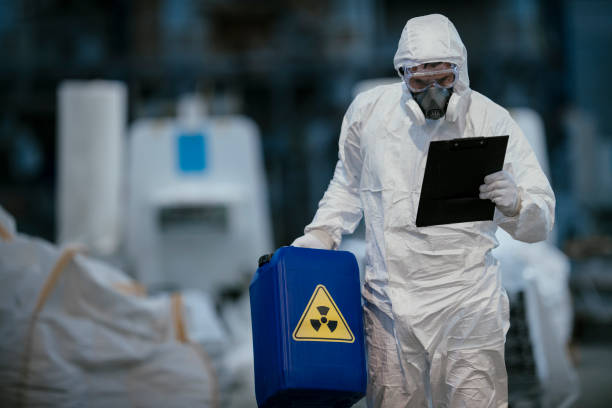
Focuses on protecting workers, the public, and the environment from harmful effects of radiation. They develop safety protocols, monitor radiation...

0.0LPA

Nuclear Safety Engineer

Nuclear Safety Engineer

Responsible for assessing and mitigating risks associated with nuclear facilities. They conduct safety analyses, emergency preparedness planning,...

0.0LPA

Interested in this career?

Take the next step and explore more about Nuclear Engineer.