Indian Railway Service of Mechanical Engineers (IRSME)
Assistant Divisional Mechanical Engineer (Entry Level)
Explore CareerMunicipal Administration within Urban Local Bodies (ULBs) in India involves the management and governance of urban areas through roles in municipal corporations, councils, and committees, ensuring the delivery of civic services, infrastructure development, and urban planning. These roles are critical for maintaining urban livability, addressing sanitation, water supply, waste management, and local taxation, under the framework of the 74th Constitutional Amendment Act, 1992, which empowers ULBs. As of 2023, India has over 4,000 ULBs, including 250+ municipal corporations, serving a population of approximately 40 crore in urban areas (Ministry of Housing and Urban Affairs [MoHUA] data, 2023). Recruitment for these roles is conducted through state-level Public Service Commission (PSC) exams, direct appointments, or internal promotions, often categorized under Group A, B, and C services. The budget for ULBs is substantial, with central schemes like Smart Cities Mission allocating ₹48,000 crore by 2023, alongside state and local funds (MoHUA Annual Report 2022-23). Rooted in principles of local self-governance, public welfare, and sustainable development, and driven by trends like smart urbanization, digital governance, and climate resilience, municipal administration careers are central to India’s urban transformation. Professionals work in municipal offices, urban planning units, and field operations, contributing to civic service delivery, infrastructure projects, and community welfare. This career drives progress through initiatives like Swachh Bharat Mission and AMRUT (Atal Mission for Rejuvenation and Urban Transformation).
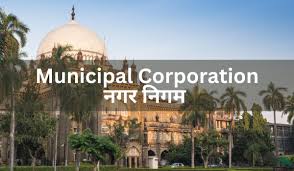
Municipal Administration within Urban Local Bodies (ULBs) in India involves the management and governance of urban areas through roles in municipal corporations, councils, and committees, ensuring the delivery of civic services, infrastructure development, and urban planning. These roles are critical for maintaining urban livability, addressing sanitation, water supply, waste management, and local taxation, under the framework of the 74th Constitutional Amendment Act, 1992, which empowers ULBs. As of 2023, India has over 4,000 ULBs, including 250+ municipal corporations, serving a population of approximately 40 crore in urban areas (Ministry of Housing and Urban Affairs [MoHUA] data, 2023). Recruitment for these roles is conducted through state-level Public Service Commission (PSC) exams, direct appointments, or internal promotions, often categorized under Group A, B, and C services. The budget for ULBs is substantial, with central schemes like Smart Cities Mission allocating ₹48,000 crore by 2023, alongside state and local funds (MoHUA Annual Report 2022-23). Rooted in principles of local self-governance, public welfare, and sustainable development, and driven by trends like smart urbanization, digital governance, and climate resilience, municipal administration careers are central to India’s urban transformation. Professionals work in municipal offices, urban planning units, and field operations, contributing to civic service delivery, infrastructure projects, and community welfare. This career drives progress through initiatives like Swachh Bharat Mission and AMRUT (Atal Mission for Rejuvenation and Urban Transformation).
Municipal Administration professionals in Urban Local Bodies operate in diverse environments, including municipal corporation offices, urban development departments, and on-ground project sites across India. They collaborate with elected representatives (councillors/mayors), engineers, sanitation staff, and central/state government officials within the urban governance ecosystem. Their roles include managing civic services, overseeing urban projects, ensuring regulatory compliance, and addressing challenges such as rapid urbanization, resource constraints, and public grievances. They face issues like balancing budget limitations with service demands, adapting to digital governance tools, and managing urban sprawl. By leveraging expertise in public administration, urban planning, and stakeholder coordination, they ensure effective urban management. As key contributors to India’s urban development and local governance, they propel progress through trends like smart city initiatives, sustainable waste management, and digital platforms for citizen engagement.
Roles and Responsibilities
Study Route & Eligibility Criteria
| Route | Steps |
| Route 1: Entry-Level Roles via State PSC Exams (Graduate Level) | 1. Complete 10+2 in any stream. 2. Pursue a Bachelor’s degree in any discipline (3-4 years). 3. Clear State PSC exams for roles like Municipal Officer. 4. Join after basic training at state institutes. |
| Route 2: Specialized Roles via Direct Recruitment (Graduate/PG Level) | 1. Complete 10+2 in relevant stream. 2. Pursue a specialized degree like B.Tech (Civil), MBA, or MA in Urban Planning (3-5 years). 3. Apply for direct recruitments in ULBs for technical/admin roles. 4. Start after induction training. |
| Route 3: Promotion within Municipal Cadres (Internal Exams) | 1. Join at lower levels (e.g., Clerk) with minimum qualifications. 2. Gain experience and clear internal exams for promotion to higher roles. 3. Transition after additional training. |
| Route 4: Contractual or Deputation Roles for Mid-Level Entry | 1. Complete Bachelor’s/Master’s in relevant field. 2. Gain experience in urban sectors or government roles (3-5 years). 3. Apply for contractual/deputation roles via ULB/state notifications. 4. Start after orientation. |
Significant Observations (Academic Related Points)
Internships & Practical Exposure
Courses & Specializations to Enter the Field
Top Institutes for Municipal Administration (Urban Local Bodies) Preparation and Related Studies (India)
| Institute | Course/Program | Official Link |
| Indian Institute of Public Administration (IIPA), Delhi | Urban Governance and Public Admin Training | https://www.iipa.org.in/ |
| National Institute of Urban Affairs (NIUA), Delhi | Urban Planning and Management Programs | https://niua.in/ |
| School of Planning and Architecture (SPA), Delhi | Urban Planning and Design Courses | https://spa.ac.in/ |
| Centre for Environmental Planning and Technology (CEPT), Ahmedabad | Urban Management and Planning | https://cept.ac.in/ |
| Tata Institute of Social Sciences (TISS), Mumbai | Urban Policy and Governance Programs | https://www.tiss.edu/ |
| IGNOU, Delhi | Diploma/Certificate in Urban Planning | https://www.ignou.ac.in/ |
| Vajiram & Ravi, Delhi | State PSC Coaching for Municipal Roles | https://www.vajiramandravi.com/ |
| Chanakya IAS Academy, Delhi | PSC Preparation for Urban Admin Entry | https://chanakyaiasacademy.com/ |
| Indian Institute of Technology (IIT), Multiple Locations | B.Tech/M.Tech in Civil Engineering | (example) |
| Ministry of Housing and Urban Affairs (MoHUA), Delhi | Recruitment and Training Resources | https://mohua.gov.in/ |
Entrance Tests Required
India:
Ideal Progressing Career Path (for Municipal Administration - Urban Local Bodies)
Junior Level: Junior Municipal Officer/Assistant (Entry Level) → Municipal Officer/Section Officer (Early Level).
Mid-Level: Assistant Commissioner/Deputy Municipal Officer (Early-Mid Level) → Deputy Commissioner/Senior Municipal Officer (Mid-Level).
Senior Level: Additional Commissioner/Senior Administrator (Mid-Senior Level) → Municipal Commissioner (Senior Level) → State Urban Development Secretary (Apex Level, limited scope).
Major Areas of Employment
Prominent Employers/Associated Organizations
| India (Government Bodies/Organizations) | Key Roles/Areas |
| Ministry of Housing and Urban Affairs (MoHUA), Delhi | Urban Policy and Administrative Oversight |
| State Urban Development Departments (e.g., Maharashtra, UP) | Regional Urban Admin and Program Roles |
| Municipal Corporation of Greater Mumbai (BMC) | Civic Service and Infrastructure Roles |
| Municipal Corporation of Delhi (MCD) | Urban Governance and Service Delivery Roles |
| National Institute of Urban Affairs (NIUA), Delhi | Urban Research and Training Roles |
| Smart Cities Mission (MoHUA Initiative) | Technology and Urban Admin Roles |
| Atal Mission for Rejuvenation and Urban Transformation (AMRUT) | Infrastructure Admin Roles |
| Swachh Bharat Mission (Urban) | Sanitation and Waste Management Roles |
| Pradhan Mantri Awas Yojana - Urban (PMAY-U) | Urban Housing Admin Roles |
| Indian Institute of Public Administration (IIPA) | Training in Urban Governance |
Pros and Cons of the Profession
| Pros | Cons |
| High societal impact through improving urban living conditions | High stress due to public expectations and resource constraints |
| Stable government job with benefits like pension and allowances | Frequent political interference in local decision-making |
| Diverse roles across civic services, urban planning, and digital governance | Work-life balance issues during urban crises or project deadlines |
| Opportunity to contribute to national schemes like Smart Cities and Swachh Bharat | Bureaucratic delays and systemic inefficiencies can hinder impact |
| Structured career progression with scope for leadership positions | Risk of public criticism during service failures or urban issues |
Industry Trends and Future Outlook
Salary Expectations
| Career Level (Municipal Administration Roles - Urban Local Bodies) | India (₹ per annum, Approx., as per Pay Matrix) |
| Junior Level - Junior Municipal Officer/Assistant (Entry Level) | 3,00,000 - 5,00,000 (Level 3-5) |
| Junior Level - Municipal Officer/Section Officer (Early Level) | 5,00,000 - 8,00,000 (Level 6-7) |
| Mid-Level - Assistant Commissioner/Deputy Municipal Officer (Early-Mid Level) | 8,00,000 - 11,00,000 (Level 8-9) |
| Mid-Level - Deputy Commissioner/Senior Municipal Officer (Mid-Level) | 11,00,000 - 14,00,000 (Level 10-11) |
| Senior Level - Additional Commissioner/Senior Administrator (Mid-Senior Level) | 14,00,000 - 17,00,000 (Level 12-13) |
| Senior Level - Municipal Commissioner (Senior Level) | 17,00,000 - 20,00,000 (Level 14) |
| Apex Level - State Urban Development Secretary | 20,00,000 - 25,00,000+ (Level 15-17) |
| Note: Salaries include basic pay, dearness allowance (DA), house rent allowance (HRA), and other benefits; they vary based on level, state, city category, and seniority under the 7th Central Pay Commission (CPC) or state pay scales as of 2023. |
Key Software Tools and Resources
Professional Organizations and Networks
Notable Municipal Administration Professionals and Leaders
Advice for Aspiring Municipal Administration Professionals (Urban Local Bodies)
A career in Municipal Administration within Urban Local Bodies offers a transformative opportunity to shape India’s urban landscape by managing critical civic services, ensuring policy alignment, and enhancing livability across diverse urban populations. Municipal administrators are the backbone of local governance systems, using their expertise, strategic skills, and commitment to build a robust foundation for urban welfare, support sustainability, and improve quality of life for millions. This profession blends a passion for public service with leadership in urban governance, providing diverse pathways in civic management, digital urbanization, infrastructure development, crisis response, and beyond. For those passionate about urban development, driven by a desire to serve communities through efficient management, and eager to navigate the evolving landscape of smart cities and sustainable reforms, joining through ULB roles is a deeply rewarding journey. It empowers individuals to address critical urban needs, maintain systemic integrity, and advance national development through the transformative power of responsible, impactful, and accessible municipal administration.


Entry-level staff handling clerical tasks and basic civic service coordination. They build foundational skills. Their role supports operations.
0.0LPA
Early-level staff managing specific municipal sections like revenue or sanitation. Their coordination ensures smoothness. Their impact boosts efficiency.
0.0LPA
Mid-level staff overseeing wards or zones, ensuring service delivery. Their leadership drives results. Their role strengthens systems.
0.0LPA
Take the next step and explore more about Municipal Administration (Urban Local Bodies).
Explore similar career paths that might interest you
Assistant Divisional Mechanical Engineer (Entry Level)
Explore CareerJunior Legal Officer/Assistant Legal Advisor (Junior Level - Entry Level)
Explore CareerAssistant Divisional Railway Manager (ADRM) (Traffic/Operations):
Explore Career