Mining Engineer

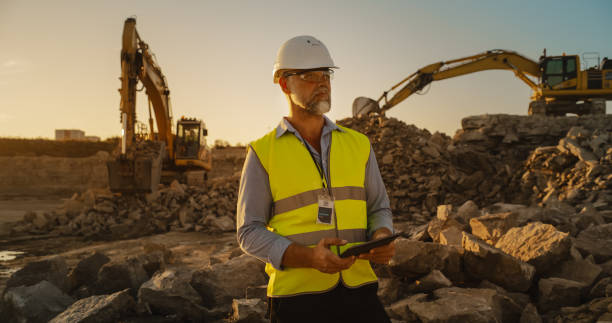
A Mining Engineer specializes in the planning, design, and management of mining operations to extract minerals and resources from the earth efficiently and safely. They apply engineering principles to develop methods for mining, ensure environmental compliance, and optimize production processes. Mining Engineers play a critical role in supplying raw materials essential for industries such as construction, manufacturing, energy, and technology.
Share :
Career tree mind map (horizontal) — Mining Engineer
Colored branches, hub circles, and underlined topics — same style as counselor course classic (types 18–19 in admin).
Loading mind map…

Mining Engineers design and oversee the construction and operation of mines, including open-pit and underground mining methods. They plan extraction procedures, select appropriate equipment, and manage resources to maximize efficiency and safety. Mining Engineers also assess environmental impacts and implement measures to minimize ecological damage. They collaborate with geologists, metallurgists, environmental scientists, and regulatory bodies to ensure sustainable mining practices. Their work supports industries reliant on minerals such as coal, metals, and industrial minerals.

  1. Mine Planning and Design
    • Develop detailed plans for mine layout, extraction methods, and infrastructure.
  2. Resource Estimation and Evaluation
    • Assess mineral deposits and estimate reserves to guide mining operations.
  3. Safety Management
    • Implement and enforce safety protocols to protect workers and equipment.
  4. Equipment Selection and Maintenance
    • Specify, procure, and maintain mining machinery and tools.
  5. Environmental Compliance
    • Ensure mining activities comply with environmental regulations and standards.
  6. Operational Management
    • Supervise mining operations, optimize production schedules, and control costs.
  7. Risk Assessment and Mitigation
    • Identify potential hazards and develop strategies to mitigate risks.
  8. Research and Development
    • Innovate new mining technologies and improve existing processes.

RouteSteps
Route 1: Bachelor’s in Mining Engineering1. Complete a Bachelor’s degree in Mining Engineering or Mineral Engineering.
2. Pursue internships or cooperative education in mining industries.
3. Gain practical experience in mine design, planning, or operations.
4. Seek employment in mining engineering roles or pursue advanced studies.
Route 2: Geological Engineering + Mining Focus1. Obtain a degree in Geological Engineering or Earth Sciences.
2. Specialize in mining and resource evaluation through electives or postgraduate studies.
3. Participate in mine planning and exploration projects.
4. Transition into mining engineering roles.
Route 3: Mechanical / Civil Engineering + Mining Specialization1. Earn a degree in Mechanical or Civil Engineering.
2. Gain mining knowledge through specialized courses or training.
3. Acquire experience in mining equipment or infrastructure projects.
4. Work in mining operations or engineering positions.
Route 4: Environmental Engineering + Mining Management1. Complete a degree in Environmental Engineering.
2. Focus on environmental management and sustainability in mining.
3. Gain exposure to regulatory compliance and impact assessment.
4. Work in environmental consulting or mining companies.

  • Mining Engineering integrates geology, engineering, and environmental science.
  • Requires strong technical, analytical, and leadership skills.
  • Increasing focus on sustainable and safe mining practices.
  • Collaboration with multidisciplinary teams is essential.
  • Work environments include mines, offices, research labs, and field sites.
  • Continuous learning needed due to evolving mining technologies and regulations.
  • Opportunities exist worldwide in resource-rich regions and industries.

  • Internships in mining operations, mine design offices, or mineral processing plants.
  • Hands-on experience with mine surveying, drilling, blasting, and excavation.
  • Training in mine safety audits, risk assessments, and emergency response.
  • Exposure to mining equipment operation and maintenance.
  • Participation in environmental monitoring and compliance projects.
  • Use of mine planning and simulation software.
  • Involvement in cost analysis and production optimization.
  • Collaboration with geologists, metallurgists, and environmental scientists.
  • Attendance at mining engineering conferences and workshops.
  • Preparation of technical reports and regulatory documentation.

  • Bachelor’s degrees in Mining Engineering, Mineral Engineering, Geological Engineering, or related fields.
  • Master’s degrees specializing in Mine Planning, Mine Safety, or Environmental Management in Mining.
  • Courses in Mine Surveying, Drilling, Blasting, and Excavation Techniques.
  • Training in Mine Ventilation, Ground Control, and Rock Mechanics.
  • Studies in Mineral Resource Estimation and Geostatistics.
  • Courses on Environmental Impact Assessment and Sustainable Mining Practices.
  • Software training in mine design and simulation (Surpac, MineSight).
  • Quality control and regulatory compliance in mining operations.
  • Project management and technical communication.
  • Research methodology and data analysis.

InstituteCourse / ProgramOfficial Link
Indian Institute of Technology (IIT) KharagpurMining Engineeringhttps://www.iitkgp.ac.in/
Indian Institute of Technology (IIT) RoorkeeMining Engineeringhttps://www.iitr.ac.in/
National Institute of Technology (NIT) RourkelaMining Engineeringhttps://www.nitrkl.ac.in/
Indian School of Mines (IIT Dhanbad)Mining Engineering / Mineral Engineeringhttps://www.iitism.ac.in/
Birla Institute of Technology and Science (BITS), PilaniMining Engineeringhttps://www.bits-pilani.ac.in/

International

InstitutionCourseCountryOfficial Link
Colorado School of MinesMining EngineeringUSAhttps://www.mines.edu/
University of QueenslandMining EngineeringAustraliahttps://www.uq.edu.au/
University of British Columbia (UBC)Mining EngineeringCanadahttps://www.ubc.ca/
Curtin UniversityMining EngineeringAustraliahttps://www.curtin.edu.au/
University of WitwatersrandMining EngineeringSouth Africahttps://www.wits.ac.za/
Imperial College LondonMining Engineering and Mineral ProcessingUKhttps://www.imperial.ac.uk/
RWTH Aachen UniversityMining EngineeringGermanyhttps://www.rwth-aachen.de/
University of AlbertaMining EngineeringCanadahttps://www.ualberta.ca/
University of New South Wales (UNSW)Mining EngineeringAustraliahttps://www.unsw.edu.au/
Technical University of ClausthalMining EngineeringGermanyhttps://www.tu-clausthal.de/

India

  • JEE Advanced: For admission to IITs for undergraduate engineering programs.
  • GATE (Graduate Aptitude Test in Engineering): For postgraduate admissions and recruitment.
  • State-level engineering entrance exams: For various universities offering mining engineering courses.
  • University-specific entrance exams and interviews: For postgraduate and doctoral programs.


International

  • GRE: For graduate admissions in mining engineering programs.
  • TOEFL / IELTS: For English proficiency in international studies.
  • University-specific entrance exams and interviews.
  • Professional certification exams: In mine safety, operations, or environmental management (optional).

Undergraduate Student → Graduate Student (MSc/PhD) → Junior Mining Engineer / Field Engineer → Mining Engineer → Senior Mining Engineer / Project Manager → Mine Manager / Operations Manager → Director of Mining / Chief Mining Engineer

  • Mining and mineral extraction companies
  • Mineral processing and beneficiation plants
  • Environmental consulting firms
  • Geological survey organizations
  • Manufacturing and metal production industries
  • Energy and power generation companies
  • Research and development laboratories
  • Government regulatory agencies
  • Safety and risk management consultancies
  • Academic and educational institutions

IndiaInternational
Coal India LimitedRio Tinto
National Mineral Development Corporation (NMDC)BHP Billiton
Hindustan Copper LimitedVale S.A.
Indian Bureau of MinesAnglo American
Vedanta ResourcesFreeport-McMoRan
Tata Steel Mining DivisionGlencore
Bharat Gold Mines LimitedBarrick Gold Corporation
Steel Authority of India Limited (SAIL)Newmont Corporation
Geological Survey of IndiaTeck Resources
Indian School of Mines (IIT Dhanbad)Kinross Gold

ProsCons
Opportunity to work in dynamic and resource-rich environmentsWork can involve remote and harsh locations
Contribution to critical raw material supply for industriesExposure to physical hazards and heavy machinery
High demand in global mining and mineral sectorsWork may require shift schedules and extended hours
Involvement in sustainable and eco-friendly mining practicesRegulatory compliance can be complex and stringent
Blend of fieldwork, laboratory, and office rolesEnvironmental and social challenges in mining regions
Potential for career growth in operations, research, and managementSafety risks and emergency situations in mines

Career LevelIndia (₹ per annum)International (US$ per annum)
Entry-Level Mining Engineer3,00,000 - 6,00,000$50,000 - $70,000
Mid-Level Mining Engineer6,00,000 - 12,00,000$70,000 - $100,000
Senior Mining Engineer / Project Manager12,00,000 - 25,00,000$100,000 - $140,000
Director of Mining / Chief Mining Engineer25,00,000 - 50,00,000+$140,000 - $200,000+

  • Surpac / MineSight – mine planning and geological modeling
  • AutoCAD / SolidWorks – design and drafting
  • GIS software – spatial data analysis and mapping
  • MATLAB / Python – data analysis and process modeling
  • Environmental monitoring software
  • Statistical Process Control (SPC) tools
  • Laboratory Information Management Systems (LIMS)
  • Project management software (MS Project, Primavera)
  • Safety and risk assessment tools
  • Equipment maintenance and simulation software

  • Society for Mining, Metallurgy & Exploration (SME)
  • Indian Institute of Mineral Engineers (IIME)
  • International Society of Mine Safety Professionals (ISMPS)
  • The Australasian Institute of Mining and Metallurgy (AusIMM)
  • Geological Society of India (GSI)
  • Canadian Institute of Mining, Metallurgy and Petroleum (CIM)
  • International Council on Mining and Metals (ICMM)
  • Mining and Metallurgical Society of America (MMSA)
  • The Institution of Engineers (India) – Mining Division
  • International Mining Engineers Association (IMEA)

  • Georgius Agricola (1494-1555, Germany): Often called the "Father of Mineralogy," authored De Re Metallica (1556), a seminal work on mining and metallurgy.
     
  • Herbert Hoover (1874-1964, United States): Before becoming the 31st U.S. President, worked on global mining projects and authored Principles of Mining (1909).
     
  • Edmund J. Longyear (1864-1954, United States): Pioneered diamond core drilling, founding the Longyear Company, revolutionizing mineral exploration.
     
  • Daniel Jackling (1869-1956, United States): Known as the "Father of Open-Pit Mining," pioneered large-scale copper mining at Bingham Canyon Mine.
     
  • Sir Laurence Hartnett (1898-1986, Australia): Contributed to mechanized mining operations in Australia, improving efficiency and safety.
     
  • Dr. T. N. Subba Rao (India): Advanced mining education and sustainable practices in India, particularly in coal mining.
     
  • Dr. D. N. Prasad (India): Focused on mine safety and ventilation systems, improving conditions in Indian coal mines.
     
  • Robert Peele (1858-1934, United States): Co-authored the Mining Engineers' Handbook (1918), standardizing mining practices.
     
  • John Hays Hammond (1855-1936, United States): Worked on gold and diamond mines globally, contributing to innovative mining techniques.
     
  • Dr. B. P. Radhakrishna (1918-2012, India): Played a key role in mineral exploration and mining policy in India, advancing sustainable practices.

  • Build a strong foundation in geology, physics, and engineering fundamentals.
  • Gain practical experience through internships and fieldwork in mining operations.
  • Learn to use mine planning and simulation software tools.
  • Stay updated on emerging mining technologies and environmental regulations.
  • Develop strong analytical, problem-solving, and communication skills.
  • Engage with professional societies and attend industry events.
  • Pursue advanced degrees (MSc, PhD) for research and leadership roles.
  • Emphasize safety and sustainability in all aspects of mining operations.
  • Cultivate adaptability and resilience for challenging work environments.
  • Network with industry professionals and seek mentorship opportunities.

A career as a Mining Engineer offers the opportunity to work at the forefront of natural resource extraction, ensuring the efficient, safe, and sustainable supply of minerals vital to modern industry. By applying engineering and scientific principles, mining engineers optimize operations, enhance safety, and minimize environmental impact. For those passionate about geology, engineering, and environmental stewardship, mining engineering provides a challenging, dynamic, and rewarding career path with strong global demand.

Knowledge & Skills You Will Learn
1
Strong understanding of geology, engineering, and mining principles
2
Proficiency in mine planning, safety, and environmental management
3
Analytical and problem-solving skills
4
Knowledge of mining equipment and operational procedures
5
Experience with mine design and simulation software
6
Effective communication and teamwork abilities
7
Ability to work in challenging field and industrial environments
8
Project management and operational optimization skills
9
Commitment to safety and sustainability practices
10
Adaptability and continuous learning mindset
Mining Engineer

Mining Engineer

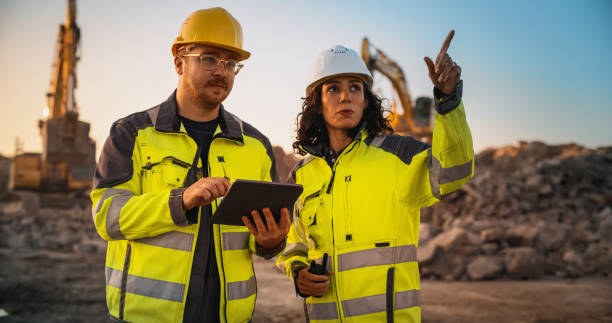
They manage mine layouts, supervise extraction methods, and coordinate with environmental and safety teams to ensure sustainable mining practices....

0.0LPA
Mine Planner

Mine Planner

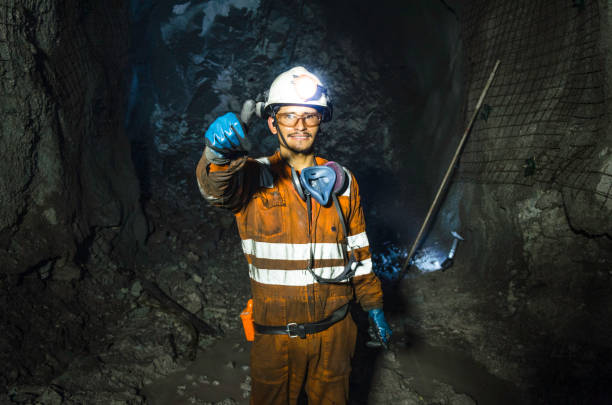
Mine Planners specialize in developing detailed mine plans and schedules. They use geological data and software tools to design extraction...

0.0LPA
Mine Safety Engineer

Mine Safety Engineer

Mine Safety Engineers focus on identifying hazards and implementing safety protocols to protect workers and equipment. They conduct risk...

0.0LPA

Interested in this career?

Take the next step and explore more about Mining Engineer.