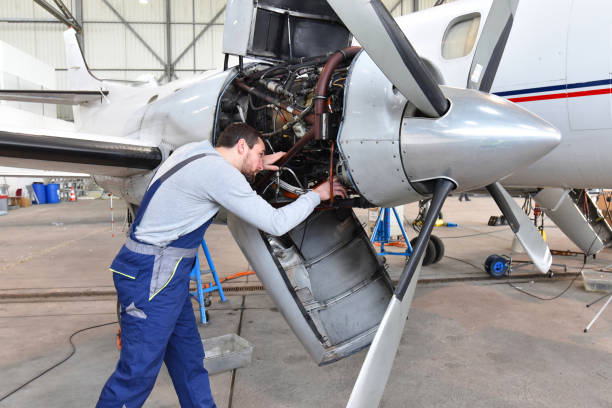
Military Engineer Services

Military Engineer Services (MES) encompass a range of technical and administrative roles dedicated to serving under the Government of India, focusing on the design, construction, and maintenance of military infrastructure, including barracks, roads, airfields, and defense installations as part of the Indian Army’s engineering wing under the Ministry of Defence. Professionals in this field work in sectors such as civil engineering, infrastructure development, project management, and defense logistics, collaborating with the Indian Army, other defense forces, and central government bodies. MES plays a critical role in driving military readiness and national security in a country focused on strengthening defense capabilities, ensuring operational efficiency, and supporting armed forces through robust infrastructure.
Share :
Career tree mind map (horizontal) — Military Engineer Services
Colored branches, hub circles, and underlined topics — same style as counselor course classic (types 18–19 in admin).
Loading mind map…

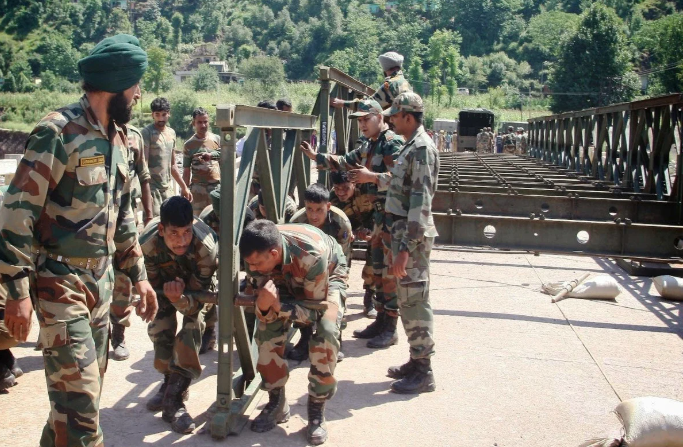
Military Engineer Services (MES) involve professionals responsible for planning, executing, and maintaining critical military infrastructure to support the operational needs of the Indian Armed Forces, addressing challenges like rapid deployment, disaster recovery, and infrastructure durability in strategic and often remote locations. Their role involves technical expertise, project oversight, and logistical coordination, often working in settings such as military bases, border areas, or conflict zones. They combine knowledge of civil engineering, military logistics, and strategic planning to tackle issues like constructing defense facilities, maintaining airfields, and ensuring resource availability during emergencies. As key contributors to national defense, they help the central government and military thrive in an era prioritizing security infrastructure, operational preparedness, and responsive engineering services.

  • Design and Planning of Military Infrastructure
    • Plan and design military facilities such as barracks, hospitals, airfields, and roads to meet strategic defense needs.
    • Prepare blueprints and technical specifications adhering to military standards and environmental considerations.
  • Construction and Project Execution
    • Oversee the construction of defense installations, ensuring timely completion within budget and quality parameters.
    • Manage contractors, labor, and materials to execute projects in diverse and often challenging terrains.
  • Maintenance and Repair of Facilities
    • Maintain and repair existing military infrastructure to ensure operational readiness and safety of personnel.
    • Conduct regular inspections to identify and address structural or functional issues in defense assets.
  • Disaster Recovery and Emergency Response
    • Lead engineering efforts for rapid reconstruction of damaged infrastructure during conflicts or natural disasters.
    • Provide temporary shelters, bridges, or roads to support military operations and humanitarian aid in emergencies.
  • Resource Management and Logistics
    • Manage procurement of construction materials, equipment, and resources for MES projects across military stations.
    • Ensure efficient allocation and transportation of resources to remote or forward areas under tight deadlines.
  • Regulatory Compliance and Safety Standards
    • Ensure compliance with military engineering standards, environmental regulations, and safety protocols in all projects.
    • Conduct risk assessments to mitigate hazards during construction and maintenance activities.
  • Coordination with Military and Civilian Bodies
    • Collaborate with Indian Army units, other defense forces, and civilian authorities for project alignment and security.
    • Provide technical advice to military commanders on infrastructure feasibility and operational support.
  • Training and Technical Oversight
    • Train subordinate engineers and technical staff in military engineering practices and project execution.
    • Supervise teams to ensure adherence to timelines, budgets, and quality in all engineering tasks.

RouteSteps
Route 1

1. 10+2 with Physics, Chemistry, and Mathematics (PCM).

2. Bachelor’s degree in Civil Engineering or related field (B.E./B.Tech) from a recognized university (4 years).

3. Prepare for UPSC Engineering Services Examination (ESE) or direct MES recruitment exams (1-2 years).

4. Clear written, technical, and interview stages to join MES as a junior engineer or equivalent, progressing to higher ranks (3-7 years of service).

Route 2

1. 10+2 with Physics, Chemistry, and Mathematics (PCM).

2. Bachelor’s degree in Civil Engineering or related field (B.E./B.Tech) from a recognized university (4 years).

3. Pursue optional diploma or certificate courses in military engineering or project management (6 months-1 year, optional).

4. Prepare for and clear UPSC ESE or MES direct recruitment exams (1-2 years).

5. Join as a junior engineer and advance through promotions (3-7 years).

Route 3

1. 10+2 with Physics, Chemistry, and Mathematics (PCM).

2. Bachelor’s degree in Civil Engineering or related field (B.E./B.Tech) from a recognized university (4 years).

3. Master’s degree (M.E./M.Tech) in Civil Engineering or Structural Engineering (2 years, optional).

4. Prepare for UPSC ESE or MES exams through self-study or coaching (1-2 years).

5. Secure a position as a junior engineer or higher and rise through experience and seniority (3-7 years).

Route 4

1. 10+2 with Physics, Chemistry, and Mathematics (PCM).

2. Diploma in Civil Engineering from a recognized polytechnic (3 years).

3. Gain experience through entry-level roles like Junior Engineer in civilian sectors (2-3 years, optional).

4. Prepare for and clear MES direct recruitment exams for technical roles (1-2 years).

5. Start as Junior Engineer or equivalent in MES and progress through service tenure (3-7 years).

  • Voluntary work with local public works departments or NGOs for real-world insights into construction and infrastructure management.
  • Participation in field training or construction projects under government or defense contractors for hands-on technical experience.
  • Internships with civil engineering firms or defense-related organizations for exposure to project execution and logistics.
  • Observerships during state-sponsored disaster recovery or infrastructure programs for insights into emergency engineering coordination.
  • Engagement in student-led technical projects or campus infrastructure initiatives for practical skill development in engineering.
  • Training through government schemes like internships at Public Works Department (PWD) or military cantonments for understanding operational workflows.
  • Exposure to construction site management or maintenance activities for grassroots-level technical experience.
  • Fieldwork on rural infrastructure or disaster rehabilitation projects to understand logistical and societal challenges.
  • Community outreach programs to engage with local infrastructure needs and build problem-solving skills.
  • Participation in state-level workshops or seminars on defense engineering for exposure to military infrastructure strategies and challenges.

  • Certificate in Military Engineering and Infrastructure
  • Bachelor’s in Civil Engineering (B.E./B.Tech)
  • Master’s in Civil Engineering or Structural Engineering (M.E./M.Tech)
  • Diploma in Civil Engineering
  • Specialization in Construction Management
  • Certificate in Disaster Recovery Engineering
  • Workshops on Military Logistics and Infrastructure
  • Training in Project Management for Defense Projects
  • Specialization in Geotechnical Engineering for Defense Terrains
  • Certificate in Regulatory Compliance in Military Construction

InstituteCourse/ProgramOfficial Link
Indian Institute of Technology (IIT), DelhiB.Tech/M.Tech in Civil Engineeringhttps://www.iitd.ac.in/
Indian Institute of Technology (IIT), BombayB.Tech/M.Tech in Civil Engineeringhttps://www.iitb.ac.in/
Indian Institute of Technology (IIT), KanpurB.Tech/M.Tech in Civil Engineeringhttps://www.iitk.ac.in/
Indian Institute of Technology (IIT), MadrasB.Tech/M.Tech in Civil Engineeringhttps://www.iitm.ac.in/
National Institute of Technology (NIT), TrichyB.Tech/M.Tech in Civil Engineeringhttps://www.nitt.edu/
National Institute of Technology (NIT), WarangalB.Tech/M.Tech in Civil Engineeringhttps://www.nitw.ac.in/
National Institute of Technology (NIT), SurathkalB.Tech/M.Tech in Civil Engineeringhttps://www.nitk.ac.in/
Delhi Technological University (DTU), DelhiB.Tech/M.Tech in Civil Engineeringhttps://dtu.ac.in/
Anna University, ChennaiB.E./M.E. in Civil Engineeringhttps://www.annauniv.edu/
Jadavpur University, KolkataB.E./M.E. in Civil Engineeringhttps://www.jaduniv.edu.in/

India:

  • UPSC Engineering Services Examination (ESE): Conducted by the Union Public Service Commission for recruitment to engineering roles in MES and other government departments (Prelims, Mains, Interview).
  • MES Direct Recruitment Exams for Junior Engineer: Conducted by Military Engineer Services for direct entry to Junior Engineer roles, with progression to higher ranks (Written, Technical Test, Interview).
  • Staff Selection Commission Junior Engineer (SSC JE) Exam: Conducted by SSC for recruitment to Junior Engineer roles in various government departments, including potential deputation to MES (Written, Technical Test).
  • Combined Defence Services (CDS) Exam by UPSC: For recruitment to defense engineering roles with potential lateral entry or collaboration opportunities in MES (Written, Physical, Interview).
  • Graduate Aptitude Test in Engineering (GATE): For admission to postgraduate programs or as a qualifying criterion for some MES recruitment processes (Written Test).

Note: Eligibility criteria such as age limits (generally 21-30 years for UPSC ESE and 18-27 years for SSC JE with relaxations for reserved categories), educational qualifications (B.E./B.Tech or Diploma in Civil Engineering), and number of attempts vary by exam. Candidates must check specific UPSC, SSC, or MES notifications for details. Progression to higher ranks in MES typically requires 3-7 years of service after initial recruitment as a Junior Engineer or equivalent, depending on performance and seniority.

Junior Engineer → Assistant Engineer → Executive Engineer → Superintending Engineer → Chief Engineer → Additional Director General (ADG) → Director General (DG) → Policy Consultant/Academician

  • Military infrastructure design for planning barracks, airfields, and roads to support defense operations.
  • Construction management for executing defense projects in strategic and remote locations across India.
  • Maintenance engineering for ensuring the upkeep of military facilities and operational readiness.
  • Disaster recovery for rebuilding infrastructure post-conflict or natural calamities in defense zones.
  • Resource logistics for managing materials and equipment for MES projects in military stations.
  • Border infrastructure for developing roads, bridges, and facilities in forward areas under defense needs.
  • Regulatory compliance for adhering to military engineering standards and environmental norms.
  • Project oversight for monitoring budgets, timelines, and quality in defense construction projects.
  • Training and mentorship for preparing technical staff in military engineering practices.
  • Inter-agency coordination for collaborating with Indian Army, Air Force, and Navy on infrastructure needs.

India (Central Government and Defense Departments)

  • Military Engineer Services (MES), Headquarters, New Delhi
  • Ministry of Defence (MoD), Government of India, New Delhi
  • MES Zonal Office, Pune (Maharashtra)
  • MES Zonal Office, Lucknow (Uttar Pradesh)
  • MES Zonal Office, Chennai (Tamil Nadu)
  • MES Zonal Office, Kolkata (West Bengal)
  • MES Zonal Office, Udhampur (Jammu & Kashmir)
  • MES Zonal Office, Shillong (Meghalaya)
  • Indian Army Corps of Engineers, New Delhi
  • Defence Research and Development Organisation (DRDO), New Delhi

ProsCons
Direct impact on society through supporting military readiness and national security with robust infrastructureHigh-pressure role due to accountability for critical defense projects and urgent responses in crises
Job security and prestige due to central government employment and societal respect as a defense engineerChallenges in managing projects in remote, hostile, or conflict-prone areas with limited resources
Opportunity to contribute to national defense by building strategic military facilitiesEmotional and physical stress from prolonged deployments in challenging terrains and high-stake environments
Varied responsibilities in design, construction, maintenance, and disaster recovery for defense needsLong working hours, often requiring field visits or emergency duties during conflicts or disasters
Potential for societal change through disaster recovery and border infrastructure developmentLimited immediate visibility of impact, as large-scale defense projects often take years to complete

Career LevelIndia (₹ per annum)
Junior Engineer (Early Career)4,00,000 - 6,00,000
Assistant Engineer6,00,000 - 8,00,000
Executive Engineer8,00,000 - 10,00,000
Superintending Engineer10,00,000 - 13,00,000
Chief Engineer13,00,000 - 16,00,000
Additional Director General (ADG)16,00,000 - 19,00,000
Director General (DG)/Policy Consultant/Academician19,00,000 - 25,00,000+

Note: Salaries may vary based on rank, seniority, postings, and additional allowances (e.g., HRA, DA, risk allowance). Figures are updated estimates based on current pay scales under the 7th Pay Commission as of 2025, reflecting revisions, inflation, and central government variations for MES professionals in India. Data is sourced from government notifications, UPSC/SSC reports, and public sector trends. These are approximations and may differ based on real-time policy changes or specific rules.

  • Building Information Modeling (BIM) Software (e.g., Autodesk Revit) for designing and managing military infrastructure projects.
  • Computer-Aided Design (CAD) Tools (e.g., AutoCAD) for creating detailed blueprints and technical drawings.
  • Project Management Software (e.g., MS Project, Primavera) for tracking defense project timelines and budgets.
  • Structural Analysis Tools (e.g., STAAD.Pro, ETABS) for evaluating military facility designs and safety.
  • Geographic Information Systems (GIS) (e.g., QGIS, Bhuvan) for mapping terrains and planning strategic infrastructure.
  • Document Management Systems (e.g., e-Office by NIC) for drafting and storing technical and project reports.
  • Data Analysis Tools (e.g., MS Excel) for managing resource allocation and project metrics.
  • Communication Platforms (e.g., NIC Email, Secure Messaging) for coordinating with military and MES teams.
  • Logistics Management Software (e.g., custom defense tools) for tracking materials and equipment in remote areas.
  • Training Platforms (e.g., iGOT Karmayogi) for continuous learning and skill development in defense engineering.

  • Military Engineer Services (MES) Headquarters, Delhi
  • Ministry of Defence (MoD), Delhi
  • Indian Army Corps of Engineers, Delhi
  • Institution of Engineers (India), Kolkata
  • Defence Research and Development Organisation (DRDO), Delhi
  • National Institute for Training in Industrial Engineering (NITIE), Mumbai
  • Indian Society for Technical Education (ISTE), Delhi
  • Defence Infrastructure Planning Network, India
  • Military Engineering Research Forum, India
  • Construction Industry Development Council (CIDC), Delhi

  • Lt. Gen. Harpal Singh (Contemporary, Delhi): Engineer-in-Chief, Indian Army, known for border infrastructure development. His vision drives defense. His leadership builds trust. He shaped military engineering in India.
     
  • Lt. Gen. Rajeev Chaudhry (Contemporary, Delhi): Former Engineer-in-Chief, known for strategic military projects. His strategies ensure readiness. His leadership inspires change. He redefined defense infrastructure in India.
     
  • Lt. Gen. S. Ravi Shankar (Contemporary, Delhi): Former Engineer-in-Chief, known for disaster recovery engineering. His work builds efficiency. His leadership drives impact. He influenced military logistics.
     
  • Lt. Gen. Anil Chait (Contemporary, Delhi): Former Central Command Chief, known for military engineering reforms. His vision shapes stability. His leadership inspires innovation. He reshapes defense projects in India.
     
  • Lt. Gen. P.S. Mehta (Historical, Delhi): Former Engineer-in-Chief, known for operational infrastructure excellence. His initiatives drive progress. His leadership builds trust. He advanced military standards in India.
     
  • Lt. Gen. A.K. Nanda (Contemporary, Delhi): Former Engineer-in-Chief, known for modernizing defense facilities. His vision transforms protection. His leadership drives reform. He influenced military engineering policies.
     
  • Lt. Gen. Suresh Sharma (Contemporary, Delhi): Former Engineer-in-Chief, known for border road projects. His strategies shape safety. His leadership builds impact. He advanced strategic infrastructure in India.
     
  • Lt. Gen. R.K. Anand (Contemporary, Delhi): Former Engineer-in-Chief, known for sustainable military construction. His work ensures stability. His leadership inspires ethics. He reshaped defense engineering in India.
     
  • Lt. Gen. Gautam Banerjee (Contemporary, Delhi): Senior MES official, known for military logistics innovation. His vision pioneers change. His leadership drives progress. He influenced defense reforms in India.
     
  • Lt. Gen. ArvindWalia (Contemporary, Delhi): Former Engineer-in-Chief, known for rapid deployment infrastructure. His platform uplifts security. His leadership inspires engineers. He advanced military readiness in India.
     

  • Build a strong foundation in civil engineering, construction management, and current defense policies to excel in competitive UPSC ESE or MES exams.
  • Seek early exposure to infrastructure projects through internships or technical initiatives to confirm interest in MES roles.
  • Prepare thoroughly for UPSC ESE or MES exams with a focus on technical knowledge, written tests, and interview stages for selection.
  • Pursue structured coaching or self-study plans to gain expertise in military logistics, structural design, and defense infrastructure challenges.
  • Stay updated on India’s defense policies, border infrastructure needs, and current events through technical journals and government portals.
  • Develop hands-on skills in project management, site execution, and crisis engineering through practical engagements.
  • Engage in construction or disaster recovery projects to build real-world experience in addressing military infrastructure needs.
  • Join professional forums like the Institution of Engineers (India) for resources and networking with defense engineering professionals.
  • Work on analytical and ethical skills to ensure impactful infrastructure solutions and military trust in engineering operations.
  • Explore region-specific defense challenges for exposure to strategic terrains and military priorities.
  • Volunteer in local infrastructure or NGO initiatives to understand logistical delivery and societal impacts.
  • Cultivate adaptability to handle remote postings, challenging field environments, and evolving military requirements.
  • Attend state-sponsored technical training or workshops to stay abreast of new engineering tools and defense technologies.
  • Build a network with current MES engineers, mentors, and peers for guidance and collaborative learning opportunities.
  • Develop resilience to manage the high-pressure demands and complex challenges of defense infrastructure projects.
  • Balance technical precision with strategic foresight to drive military readiness and adapt to defense needs.

A career in Military Engineer Services (MES) offers a unique opportunity to contribute to societal progress by supporting national security and military readiness through robust infrastructure across diverse regions of India. From designing strategic airfields to rebuilding disaster-hit defense facilities, MES professionals play a pivotal role in defense logistics and operational efficiency. This field combines expertise in technical leadership, civil engineering, and a commitment to national defense, offering diverse paths in military construction, infrastructure maintenance, disaster recovery, and central defense policy execution. For those passionate about shaping the future of military preparedness, adapting to dynamic strategic challenges, and addressing critical defense infrastructure needs in an era of increasing focus on security, a career in MES provides an intellectually stimulating and professionally rewarding journey with the potential to make significant contributions to society by advancing military capabilities, operational support, and effective infrastructure delivery across India.

Knowledge & Skills You Will Learn
1
Border Security Focus: Growing emphasis on forward area infrastructure in India, necessitating expertise in strategic construction at all levels.
2
Technical Talent Demand: High demand for skilled defense engineers in India, pushing for competitive recruitment to MES roles.
3
Skill Development Needs: Demand for training in digital design tools, military logistics, and crisis engineering for future MES professionals.
Junior Engineer (JE)

Junior Engineer (JE)

Entry-level technical officers assist in military infrastructure maintenance and small-scale projects under MES, often in military stations after...

0.0LPA
Assistant Engineer (AE)

Assistant Engineer (AE)

AEs manage specific military construction or maintenance projects for MES in regional offices or bases after promotions or direct recruitment via...

0.0LPA
Executive Engineer (EE)

Executive Engineer (EE)

EEs handle larger technical and administrative responsibilities under MES, managing multiple projects or bases after experience as AE. They...

0.0LPA

Interested in this career?

Take the next step and explore more about Military Engineer Services.