Indian Railway Service of Mechanical Engineers (IRSME)
Assistant Divisional Mechanical Engineer (Entry Level)
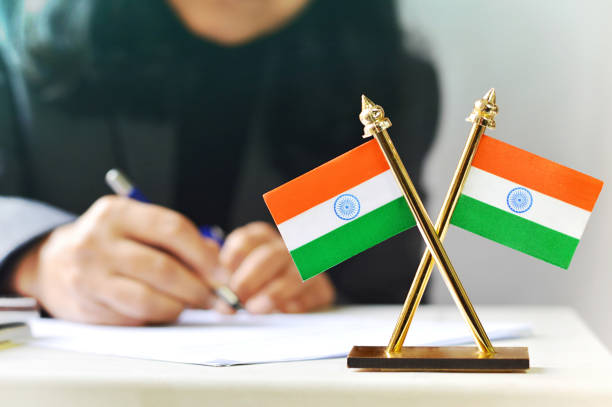
Explore CareerThe Indian Foreign Service (IFS) is a prestigious branch of the Indian Civil Services, specifically an All India Service, dedicated to representing India on the global stage through diplomacy, international relations, and foreign policy implementation. IFS officers serve as diplomats, managing India’s external affairs, promoting national interests, and fostering bilateral and multilateral relationships. With India’s growing global influence—evidenced by its role in forums like the G20, BRICS, and the United Nations—and a population of over 1.4 billion (as of 2023), the demand for skilled diplomats remains critical. Rooted in international law, geopolitics, and cultural diplomacy, and fueled by modern trends such as digital diplomacy, climate negotiations, and economic partnerships, this career is at the forefront of shaping India’s global image. IFS officers are vital in embassies, consulates, the Ministry of External Affairs (MEA), and international organizations, contributing to trade agreements, security collaborations, and cultural exchanges. This career drives progress through trends like soft power diplomacy, technology in foreign relations, and sustainable global development initiatives.

The Indian Foreign Service (IFS) is a prestigious branch of the Indian Civil Services, specifically an All India Service, dedicated to representing India on the global stage through diplomacy, international relations, and foreign policy implementation. IFS officers serve as diplomats, managing India’s external affairs, promoting national interests, and fostering bilateral and multilateral relationships. With India’s growing global influence—evidenced by its role in forums like the G20, BRICS, and the United Nations—and a population of over 1.4 billion (as of 2023), the demand for skilled diplomats remains critical. Rooted in international law, geopolitics, and cultural diplomacy, and fueled by modern trends such as digital diplomacy, climate negotiations, and economic partnerships, this career is at the forefront of shaping India’s global image. IFS officers are vital in embassies, consulates, the Ministry of External Affairs (MEA), and international organizations, contributing to trade agreements, security collaborations, and cultural exchanges. This career drives progress through trends like soft power diplomacy, technology in foreign relations, and sustainable global development initiatives.
Indian Foreign Service officers work in dynamic and diverse environments, including Indian embassies and consulates abroad, the Ministry of External Affairs in New Delhi, and international organizations like the United Nations. They often collaborate with foreign governments, diplomats, international bodies, and Indian diaspora communities across global ecosystems. Their roles encompass formulating and executing foreign policy, managing diplomatic missions, and protecting Indian interests while tackling challenges such as geopolitical tensions, cultural misunderstandings, and the need for adaptability in rapidly changing international scenarios. They face issues like balancing national interests with global commitments, navigating complex negotiations, and ensuring the safety of Indian citizens abroad amidst evolving diplomatic demands. By leveraging expertise in international relations, negotiation, and cross-cultural communication, they strengthen India’s position in the world. As key contributors to India’s global outreach, they propel progress through trends like economic diplomacy, digital engagement, and multilateral cooperation.
Roles and Responsibilities
Study Route & Eligibility Criteria
| Route | Steps |
| Route 1: Undergraduate Degree with UPSC Exam | 1. Complete 10+2 in any stream with minimum passing marks. 2. Pursue a Bachelor’s degree in any discipline (3-4 years). 3. Prepare for and clear the UPSC Civil Services Examination (CSE) with IFS as preference. 4. Undergo training at Lal Bahadur Shastri National Academy of Administration (LBSNAA) and Foreign Service Institute (FSI), starting as a Third Secretary or equivalent. |
| Route 2: Postgraduate Degree with UPSC Exam | 1. Complete a Bachelor’s degree in any discipline. 2. Pursue a Master’s degree in International Relations, Political Science, or related fields (1-2 years) for deeper knowledge. 3. Clear the UPSC CSE with IFS as preferred service. 4. Join IFS after training at LBSNAA and FSI. |
| Route 3: Professional Degree with UPSC Exam | 1. Complete 10+2 in relevant stream with minimum 50-60% marks. 2. Pursue a professional degree like B.Tech, MBBS, or LLB (4-5 years). 3. Prepare for and clear the UPSC CSE with IFS as choice. 4. Start IFS career post-training at LBSNAA and FSI. |
| Route 4: Humanities/Social Sciences Focus with UPSC Exam | 1. Complete 10+2 in Arts or Humanities with minimum 50-60% marks. 2. Pursue a B.A. in Political Science, History, or International Relations (3 years). 3. Clear the UPSC CSE opting for IFS. 4. Begin IFS career after training. |
| Route 5: International Education Path with UPSC Exam | 1. Complete Bachelor’s/Master’s from international universities in International Relations or Public Policy. 2. Return to India and prepare for UPSC CSE (must meet nationality and age criteria). 3. Clear all exam stages. 4. Join IFS with global exposure post-training. |
Significant Observations (Academic Related Points)
Internships & Practical Exposure
Courses & Specializations to Enter the Field
Top Institutes for IFS Preparation and Related Studies (India)
| Institute | Course/Program | Official Link |
| Lal Bahadur Shastri National Academy of Administration (LBSNAA), Mussoorie | IFS Initial Training for Selected Candidates | https://www.lbsnaa.gov.in/ |
| Foreign Service Institute (FSI), New Delhi | Specialized Diplomatic Training for IFS Officers | https://mea.gov.in/fsi.htm |
| Vajiram & Ravi, Delhi | UPSC CSE Coaching and Preparation | https://www.vajiramandravi.com/ |
| Drishti IAS, Delhi | UPSC CSE Coaching (English/Hindi Medium) | https://www.drishtiias.com/ |
| Rau’s IAS Study Circle, Delhi | UPSC CSE Preparation and Mentorship | https://www.rauias.com/ |
| Jawaharlal Nehru University (JNU), New Delhi | M.A. in International Relations, Political Science | https://www.jnu.ac.in/ |
| University of Delhi, Faculty of Social Sciences | B.A./M.A. in Political Science, International Studies | https://www.du.ac.in/ |
| Symbiosis School of International Studies, Pune | M.A. in International Studies | https://www.ssispune.edu.in/ |
| Institute for Defence Studies and Analyses (IDSA), New Delhi | Research and Training in International Security | https://www.idsa.in/ |
| Indian Institute of Foreign Trade (IIFT), New Delhi | Programs in International Trade and Diplomacy | https://www.iift.ac.in/ |
Top International Institutes for International Relations and Diplomacy Studies
| Institution | Course | Country | Official Link |
| Harvard Kennedy School, Harvard University | Master in Public Policy (MPP) with International Focus | USA | https://www.harvard.edu/ |
| London School of Economics and Political Science (LSE) | MSc in International Relations | UK | https://www.lse.ac.uk/ |
| University of Oxford, Department of Politics and International Relations | MPhil in International Relations | UK | https://www.ox.ac.uk/ |
| National University of Singapore, Lee Kuan Yew School of Public Policy | Master in International Affairs (MIA) | Singapore | https://www.nus.edu.sg/ |
| Georgetown University, Walsh School of Foreign Service | Master of Science in Foreign Service (MSFS) | USA | https://www.georgetown.edu/ |
| Australian National University, Coral Bell School of Asia Pacific Affairs | Master of Diplomacy | Australia | https://www.anu.edu.au/ |
| University of Toronto, Munk School of Global Affairs & Public Policy | Master of Global Affairs (MGA) | Canada | https://www.utoronto.ca/ |
| Sciences Po, Paris School of International Affairs (PSIA) | Master in International Affairs | France | https://www.sciencespo.fr/en/ |
| University of Tokyo, Graduate School of Public Policy | Master of Public Policy with Global Focus | Japan | https://www.u-tokyo.ac.jp/en/ |
| Graduate Institute of International and Development Studies, Geneva | MA in International Affairs | Switzerland | https://www.graduateinstitute.ch/ |
Entrance Tests Required
India:
International (for Relevant Studies or Exposure):
Ideal Progressing Career Path (for IFS)
Third Secretary (Entry Level at Embassy/Consulate) → Second Secretary → First Secretary → Counsellor → Minister/Minister-Counsellor → Deputy Chief of Mission/Deputy High Commissioner → Ambassador/High Commissioner → Joint Secretary (MEA) → Additional Secretary → Secretary (MEA)
Major Areas of Employment
Prominent Employers/Associated Organizations
| India (Government Bodies/Organizations) | International Collaborations |
| Ministry of External Affairs (MEA), New Delhi | United Nations (UN), Global |
| Foreign Service Institute (FSI), New Delhi | World Trade Organization (WTO), Switzerland |
| Indian Council for Cultural Relations (ICCR), New Delhi | UNESCO, France |
| Union Public Service Commission (UPSC), Delhi | N/A |
| Department of Personnel and Training (DoPT), New Delhi | N/A |
| Lal Bahadur Shastri National Academy of Administration (LBSNAA), Mussoorie | N/A |
| Indian Missions Abroad (Embassies/Consulates) | Host Country Governments |
| Institute for Defence Studies and Analyses (IDSA), New Delhi | Global Think Tanks |
| NITI Aayog, Delhi (for Economic Diplomacy) | World Bank, IMF, USA |
| Ministry of Commerce and Industry, New Delhi | International Trade Bodies |
Pros and Cons of the Profession
| Pros | Cons |
| High prestige and opportunity to represent India on the global stage | Frequent international postings requiring long periods away from family |
| Exposure to diverse cultures and global issues with international travel | High stress due to geopolitical tensions and complex negotiations |
| Significant impact on India’s foreign policy and national interests | Limited work-life balance during crises or high-level diplomatic events |
| Job security and benefits like diplomatic immunity, housing, and allowances | Risk of operating in politically unstable or conflict-prone regions |
| Diverse career paths in diplomacy, trade, culture, and multilateral affairs | Bureaucratic constraints and slow decision-making in policy implementation |
Industry Trends and Future Outlook
Salary Expectations
| Career Level (IFS - Public Sector) | India (₹ per annum, Approx. as per 7th Pay Commission) | Note on International Postings |
| Third Secretary (Entry Level) | 6,00,000 - 8,00,000 (including allowances) | Additional foreign allowances based on posting location |
| Second/First Secretary (Early-Mid Level) | 8,00,000 - 12,00,000 | Hardship allowances for tough postings |
| Counsellor (Mid-Level) | 12,00,000 - 15,00,000 | Includes housing and education benefits abroad |
| Minister/Deputy Chief of Mission (Mid-Senior) | 15,00,000 - 18,00,000 | Significant perks for family and travel |
| Ambassador/High Commissioner (Senior) | 18,00,000 - 22,50,000 | High allowances in developed countries |
| Joint Secretary/Secretary (MEA - Top Tier) | 22,50,000 - 30,00,000+ | Apex scale with additional benefits |
| Note: Salaries include basic pay, dearness allowance (DA), and other benefits; foreign postings come with additional allowances (Foreign Service Allowance, Hardship Allowance) varying by country and cost of living. Salaries remain aligned with Indian government structures but are supplemented significantly abroad. |
Key Software Tools and Resources
Professional Organizations and Networks
Notable Indian Foreign Service Officers and Leaders
Advice for Aspiring Indian Foreign Service Officers
A career in the Indian Foreign Service offers a transformative opportunity to represent India on the world stage, shape foreign policy, and foster international cooperation for national interests. IFS officers are the architects of India’s diplomatic framework, using their expertise, negotiation skills, and cultural adaptability to enhance India’s global image, protect citizens abroad, and build strategic alliances across diverse contexts. This profession blends a passion for international engagement with strategic leadership, providing pathways in embassies, consulates, multilateral forums, economic diplomacy, and cultural outreach. For those passionate about global affairs, driven by a desire to serve India through diplomacy, and eager to navigate the evolving landscape of international relations, becoming an IFS officer is a deeply rewarding journey. It empowers individuals to address critical global challenges, maintain national integrity, and advance India’s influence through the transformative power of responsible, impactful, and visionary diplomacy.

Entry-level IFS officers posted at embassies or consulates, handling consular services, basic reporting, and assisting senior diplomats. They...
0.0LPA
Early-level officers managing specific portfolios like trade or culture, drafting reports, and supporting diplomatic engagements. They focus on...
0.0LPA
Early-to-mid-level diplomats leading smaller sections in missions, handling bilateral issues, and representing India in local forums. They balance...
0.0LPA
Take the next step and explore more about Indian Foreign Service (IFS).
Explore similar career paths that might interest you
Assistant Divisional Mechanical Engineer (Entry Level)
Explore CareerJunior Legal Officer/Assistant Legal Advisor (Junior Level - Entry Level)
Explore CareerAssistant Divisional Railway Manager (ADRM) (Traffic/Operations):
Explore Career