Hydroponics Engineer

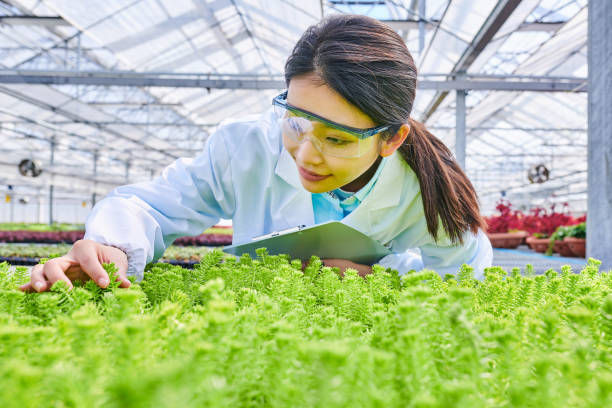
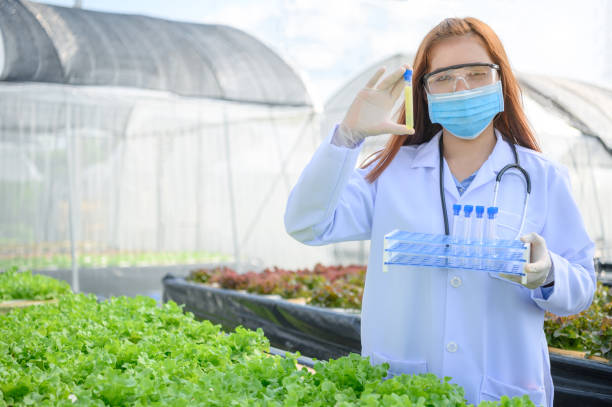
A Hydroponics Engineer is a professional who specializes in designing, implementing, and managing hydroponic systems for soilless crop production, utilizing nutrient-rich water solutions to grow plants in controlled environments. They work in agricultural technology companies, urban farms, research institutions, and commercial greenhouses, collaborating with agronomists, farmers, and sustainability experts. Hydroponics Engineers play a crucial role in advancing sustainable agriculture and food security by optimizing resource-efficient farming methods in a sector focused on innovation, precision, and environmental impact.
Share :
Career tree mind map (horizontal) — Hydroponics Engineer
Colored branches, hub circles, and underlined topics — same style as counselor course classic (types 18–19 in admin).
Loading mind map…

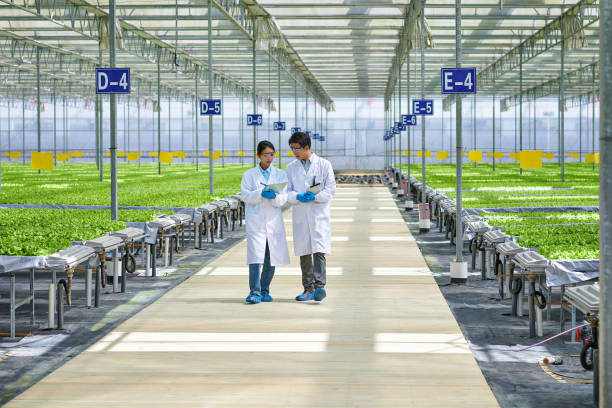
Hydroponics Engineers are technical and agricultural experts responsible for creating and maintaining hydroponic systems that support plant growth without soil, ensuring high yields of crops like vegetables, herbs, and fruits in controlled settings. Their role involves system design, troubleshooting, and research, often working in indoor farms, laboratories, or commercial facilities. They combine knowledge of engineering, plant science, and water chemistry to address challenges like nutrient balance, system efficiency, and scalability. As key contributors to modern agriculture, they help shape sustainable practices in an industry increasingly focused on urban farming, resource conservation, and climate-smart solutions.

  • System Design and Development
    • Design hydroponic systems (e.g., NFT, DWC, drip systems) tailored to specific crops and environments
    • Develop layouts and infrastructure for efficient water and nutrient delivery in controlled settings
  • Nutrient and Water Management
    • Formulate and monitor nutrient solutions to ensure optimal plant growth and health
    • Manage water quality, pH levels, and electrical conductivity (EC) for hydroponic systems
  • Technology Integration
    • Implement automation, sensors, and IoT devices to monitor and control environmental factors like light and temperature
    • Use software and data analytics to optimize system performance and crop productivity
  • Maintenance and Troubleshooting
    • Perform regular maintenance of hydroponic equipment, pumps, and irrigation systems to prevent downtime
    • Diagnose and resolve issues related to nutrient deficiencies, pests, or system failures
  • Crop Monitoring and Optimization
    • Monitor plant growth stages and adjust system parameters for maximum yield and quality
    • Experiment with different crop varieties and growing conditions to improve outcomes
  • Research and Innovation
    • Conduct research on hydroponic techniques, nutrient formulations, and energy-efficient systems
    • Develop innovative solutions to enhance scalability and sustainability in hydroponic farming
  • Training and Advisory Services
    • Train farm staff and clients on hydroponic system operation and best practices
    • Provide technical advice to urban farmers and commercial growers on system setup and optimization
  • Sustainability and Compliance
    • Promote resource-efficient practices to minimize water and energy use in hydroponic operations
    • Ensure compliance with agricultural and environmental regulations for food safety and sustainability

RouteSteps
Route 1

1. 10+2 with Physics, Chemistry, Biology (PCB) or Mathematics (PCM) 

2. Bachelor’s degree in Agricultural Engineering, Horticulture, or Biotechnology (3-4 years) 

3. Internship or field training (3-6 months) 

4. Practice as Junior Hydroponics Engineer

Route 2

1. 10+2 with PCB or PCM 

2. Bachelor’s degree in Agricultural Engineering, Horticulture, or Environmental Science (3-4 years) 

3. Master’s degree in Hydroponics, Agricultural Engineering, or Sustainable Agriculture (2 years) 

4. Work as Hydroponics Engineer

Route 3

1. 10+2 with PCB or PCM 

2. Bachelor’s degree in Agricultural Engineering or Horticulture (3-4 years) 

3. Master’s degree in Hydroponics or Controlled Environment Agriculture (2 years) 

4. Ph.D. in Hydroponics or Agricultural Engineering (3-5 years) 

5. Practice as Senior Researcher or Academic

Route 4

1. 10+2 with PCB or PCM 

2. Advanced international training or certification in Hydroponics (1-2 years) 

3. Master’s or Ph.D. as per country requirements 

4. Practice abroad or in India

  • Mandatory field training during degree programs in hydroponic farms or research facilities
  • Rotations in agricultural technology companies for hands-on experience with hydroponic systems
  • Internships under senior hydroponics engineers for exposure to real-time system design projects
  • Observerships in commercial greenhouses for experience in nutrient management and automation
  • Participation in mock system setup simulations for practical skill development in hydroponics
  • Training in sustainable water and energy use through real-world hydroponic applications
  • Exposure to advanced hydroponic technologies during internships
  • Field projects on nutrient optimization or system scalability during training
  • Community engagement initiatives for educating urban farmers on hydroponic techniques
  • International hydroponics attachments for global exposure to innovative farming practices

  • Certificate in Hydroponics or Controlled Environment Agriculture
  • Bachelor’s in Agricultural Engineering, Horticulture, or Biotechnology
  • Master’s in Hydroponics, Agricultural Engineering, or Sustainable Agriculture
  • Ph.D. in Hydroponics or Controlled Environment Agriculture
  • Specialization in Nutrient Management for Hydroponics
  • Certification in Precision Agriculture for Soilless Systems
  • Workshops on Sustainable Hydroponic Farming
  • Training in Hydroponic System Design and Automation
  • Specialization in IoT for Controlled Environment Agriculture
  • Certification in Water Chemistry for Hydroponics

InstituteCourse/ProgramOfficial Link
Indian Agricultural Research Institute (IARI), New DelhiM.Sc./Ph.D. in Agricultural Engineering (Hydroponics Focus)https://www.iari.res.in/
Tamil Nadu Agricultural University (TNAU), CoimbatoreB.Tech./M.Tech. in Agricultural Engineeringhttps://www.tnau.ac.in/
University of Agricultural Sciences (UAS), BangaloreB.Tech./M.Tech. in Agricultural Engineeringhttps://www.uasbangalore.edu.in/
Punjab Agricultural University (PAU), LudhianaB.Tech./M.Tech. in Agricultural Engineeringhttps://www.pau.edu/
Anand Agricultural University (AAU), GujaratB.Tech./M.Tech. in Agricultural Engineeringhttps://www.aau.in/
Kerala Agricultural University (KAU), ThrissurB.Tech./M.Tech. in Agricultural Engineeringhttps://www.kau.in/
Indian Institute of Technology (IIT), KharagpurB.Tech./M.Tech. in Agricultural and Food Engineeringhttps://www.iitkgp.ac.in/
Banaras Hindu University (BHU), VaranasiB.Tech./M.Tech. in Agricultural Engineeringhttps://www.bhu.ac.in/
Bidhan Chandra Krishi Viswavidyalaya (BCKV), West BengalB.Tech./M.Tech. in Agricultural Engineeringhttps://www.bckv.edu.in/
Amity University, NoidaB.Tech./M.Tech. in Biotechnology/Agricultural Engineeringhttps://www.amity.edu/

InstitutionCourseCountryOfficial Link
Wageningen University & ResearchAgricultural Engineering and Controlled Environment ProgramsNetherlandshttps://www.wur.nl/
University of California, DavisAgricultural Engineering and Horticulture ProgramsUSAhttps://www.ucdavis.edu/
Cornell UniversityControlled Environment Agriculture Engineering ProgramsUSAhttps://www.cornell.edu/
University of ArizonaControlled Environment Agriculture ProgramsUSAhttps://www.arizona.edu/
University of GuelphAgricultural Engineering and Hydroponics ProgramsCanadahttps://www.uoguelph.ca/
University of QueenslandAgricultural Engineering ProgramsAustraliahttps://www.uq.edu.au/
Swedish University of Agricultural Sciences (SLU)Agricultural Engineering and Sustainability ProgramsSwedenhttps://www.slu.se/
University of CopenhagenAgricultural Engineering and Food Systems ProgramsDenmarkhttps://www.ku.dk/
National University of Singapore (NUS)Agricultural Technology and Sustainability ProgramsSingaporehttps://www.nus.edu.sg/
ETH ZurichAgricultural Engineering and Technology ProgramsSwitzerlandhttps://www.ethz.ch/

India:

  • ICAR AIEEA (All India Entrance Examination for Admission): Conducted by the Indian Council of Agricultural Research for admissions in agriculture and engineering programs.
  • JEE Main (Joint Entrance Examination): For admission to B.Tech programs at IITs and other institutes.
  • State-Level Entrance Exams: Various states conduct exams for admission to engineering programs in state universities.

International:

  • TOEFL (Test of English as a Foreign Language): Minimum score of 80-100 required for non-native speakers applying to programs in English-speaking countries.
  • IELTS (International English Language Testing System): Minimum score of 6.0-7.0 required for admission to universities in the UK, Australia, and other English-speaking regions.
  • PTE Academic (Pearson Test of English Academic): Accepted by many international institutes as an alternative to TOEFL or IELTS for English proficiency.
  • Duolingo English Test: Accepted by some institutions as a convenient alternative for English language proficiency testing.

Trainee → Junior Hydroponics Engineer → Senior Hydroponics Engineer → Hydroponics System Designer → Agricultural Technology Specialist → Research Scientist → Academician/Professor → Hydroponics Consultant

  • Agricultural technology companies for designing hydroponic systems
  • Commercial greenhouses for managing large-scale soilless crop production
  • Urban farming startups for implementing hydroponics in confined spaces
  • Government agricultural departments for policy and research in sustainable farming
  • Private food production firms for supplying markets with hydroponically grown produce
  • International sustainability organizations for global hydroponic projects
  • Universities and academic institutions for teaching and research in hydroponics
  • Environmental NGOs for promoting resource-efficient farming practices
  • Extension services for training farmers on hydroponic techniques
  • Biotechnology firms for developing nutrient solutions and crop varieties for hydroponics

IndiaInternational
Indian Council of Agricultural Research (ICAR)AeroFarms, USA
UrbanKisaan, HyderabadPlenty, USA
Kheyti, HyderabadBowery Farming, USA
Clover Agritech, BangaloreInfarm, Germany
BitMantis Innovations, BangaloreGotham Greens, USA
Triton Foodworks, DelhiVertical Harvest, USA
Acqua Farms, MumbaiJones Food Company, UK
Letcetra Agritech, GoaNordic

ProsCons
Opportunity to contribute to sustainable agriculture and food security through innovative hydroponic systemsHigh initial costs for setting up and maintaining hydroponic systems
High demand for experts in urban and controlled environment agriculture due to resource constraintsTechnical complexity requires continuous learning and adaptation to new technologies
Rewarding impact on food production by maximizing yields in limited spacesDependency on electricity and technology, which can lead to system failures during outages
Diverse career paths across agricultural tech, research, and consultingLimited public recognition compared to traditional agricultural engineering fields
Strong potential for growth with increasing focus on sustainable and urban farmingRisk of crop loss due to nutrient imbalances or system malfunctions despite best efforts

Career LevelIndia (₹ per annum)International (USD per annum)
Trainee/Junior Hydroponics Engineer (Early Career)3,00,000 - 5,00,00030,000 - 45,000
Senior Hydroponics Engineer (Mid-Career)5,00,000 - 8,00,00045,000 - 70,000
Hydroponics System Designer8,00,000 - 12,00,00070,000 - 90,000
Agricultural Technology Specialist/Research Scientist12,00,000 - 16,00,00090,000 - 120,000
Academician/Professor/Hydroponics Consultant16,00,000+120,000+
Note: Salaries may vary based on location, employer, experience, and specialization.  

  • Hydroponic Management Software for tracking nutrient cycles and crop growth
  • Geographic Information Systems (GIS) for mapping hydroponic farm layouts
  • Statistical Analysis Software (e.g., R, SPSS) for research data interpretation
  • IoT Platforms for monitoring water quality, pH, and environmental conditions
  • Precision Agriculture Tools for automating irrigation and nutrient delivery
  • Teleconferencing tools like Zoom for stakeholder collaboration and training
  • Remote Sensing Platforms for analyzing hydroponic conditions in large setups
  • Microsoft Office Suite for documentation and operational reporting
  • Project Management Tools for coordinating system design and installation timelines
  • Mobile Apps for real-time monitoring of crop health and system performance

  • Indian Society of Agricultural Engineers (ISAE)
  • Association for Vertical Farming (AVF)
  • Controlled Environment Agriculture Alliance (CEAA)
  • Global Hydroponics Network (GHN)
  • Sustainable Agriculture Research and Education (SARE)
  • American Society of Agricultural and Biological Engineers (ASABE)
  • World Green Infrastructure Network (WGIN)

  • Dickson Despommier (Contemporary, USA): Pioneer of vertical farming and hydroponics concepts, author of "The Vertical Farm." His vision shaped soilless agriculture. His impact drives global trends.
     
  • Caleb Harper (Contemporary, USA): Innovator in controlled environment agriculture and hydroponics at MIT Media Lab. His work advanced system tech. His contributions influence smart farming.
     
  • Marc Oshima (Contemporary, USA): Co-founder of AeroFarms, a leader in hydroponic technology. His innovations improve crop yields. His contributions shape global practices.
     
  • Irving Fain (Contemporary, USA): CEO of Bowery Farming, leading hydroponic innovation in urban settings. His leadership scales soilless systems. His impact drives industry standards.
     
  • Max Loessl (Contemporary, Germany): Co-founder of Infarm, revolutionizing hydroponics with modular systems. His work optimizes resource use. His impact shapes European trends.
     
  • Peggy Bradley (Historical, USA): Early advocate for hydroponics education and small-scale systems. Her efforts popularized soilless farming. Her legacy impacts community agriculture.
     
  • Howard M. Resh (Contemporary, Canada): Renowned hydroponics researcher and author of key texts on soilless culture. His studies guide system design. His contributions influence global education.
     
  • NishantChadha (Contemporary, India): Promoter of hydroponics in India through startups like UrbanKisaan. His initiatives address food needs. His contributions inspire local solutions.
     
  • Sonia Lo (Contemporary, Singapore): Leader in hydroponic farming initiatives in Asia through CropTrader. Her efforts enhance sustainability. Her contributions drive regional innovation.
     
  • Tobias Peggs (Contemporary, UK): Co-founder of Square Mile Farms, integrating hydroponics in urban offices. His efforts boost local systems. His impact shapes urban sustainability.

  • Build a strong foundation in agricultural engineering, water chemistry, and plant science to understand hydroponic systems.
  • Seek early exposure to hydroponic setups through internships to confirm interest in the field.
  • Prepare thoroughly for entrance exams or certification requirements specific to your chosen program or region.
  • Pursue advanced certifications in hydroponics or controlled environment agriculture to gain expertise.
  • Stay updated on advancements in hydroponic technology by attending industry conferences and expos.
  • Develop hands-on skills in system design, nutrient management, and automation through practical training.
  • Engage in research projects or agricultural tech collaborations to build real-world experience.
  • Join professional associations like the Association for Vertical Farming (AVF) for networking and resources.
  • Work on precision and problem-solving to ensure optimal system performance and crop outcomes.
  • Explore international hydroponic initiatives for exposure to diverse techniques and technologies.
  • Volunteer in local hydroponic farms or community projects to understand practical challenges and build experience.
  • Cultivate adaptability to handle technological and environmental constraints in controlled settings.
  • Attend continuing education programs to stay abreast of evolving hydroponic methods and sustainability trends.
  • Build a network with agricultural engineers, farmers, and tech providers for collaborative efforts.
  • Develop resilience to manage the technical and operational pressures of hydroponic system work.
  • Balance scientific skills with practical application to adapt to rapid advancements in soilless agriculture dynamics.

A career as a Hydroponics Engineer offers a unique opportunity to contribute to sustainable agriculture and food security by designing innovative soilless farming systems that address resource constraints in diverse environments. From creating hydroponic setups to integrating smart technologies, Hydroponics Engineers play a pivotal role in modern agriculture and environmental stewardship. This field combines engineering expertise, scientific innovation, and a commitment to sustainability, offering diverse paths in agricultural technology, research, and consulting. For those passionate about shaping hydroponic trends, adapting to global food challenges, and addressing critical sustainability needs in an era of rapid urbanization, a career as a Hydroponics Engineer provides an intellectually stimulating and professionally rewarding journey with the potential to make significant contributions to society by enhancing the efficiency of food production and industry standards worldwide.
Knowledge & Skills You Will Learn
1
Sustainability Focus: Advancements in energy-efficient systems and water recycling for hydroponic setups.
2
Skill Development Needs: Growing necessity for training in system automation and nutrient management.
Trainee

Trainee

Entry-level individuals undergo basic training in hydroponic system setup and operation under supervision. They acquire practical skills through...

0.0LPA
Junior Hydroponics Engineer

Junior Hydroponics Engineer

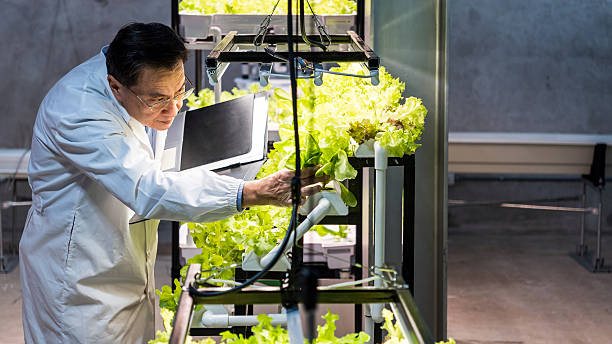
Early-career professionals handle basic system maintenance and nutrient management with increasing autonomy. They hone skills in troubleshooting...

0.0LPA
Senior Hydroponics Engineer

Senior Hydroponics Engineer

Experienced professionals manage complex hydroponic projects with high accuracy, using advanced methodologies. They offer technical expertise in...

0.0LPA

Interested in this career?

Take the next step and explore more about Hydroponics Engineer.