
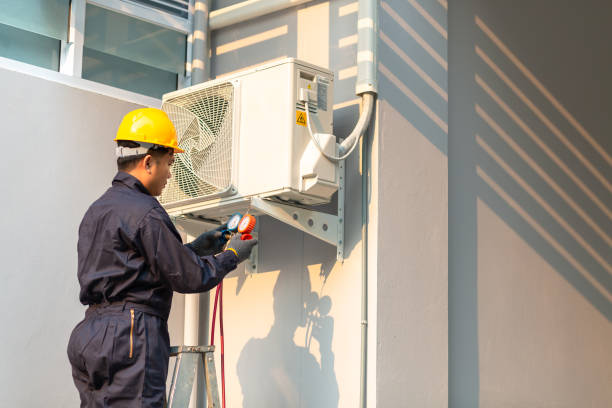
a) Technical and Repair Responsibilities:
- Install HVAC systems, including heating units, air conditioners, ventilation ducts, and related components in buildings and infrastructure projects.
- Diagnose and troubleshoot issues in HVAC systems using testing devices like pressure gauges and thermometers to identify faults in cooling or heating mechanisms.
- Repair or replace faulty components such as compressors, motors, thermostats, and ductwork to restore functionality and ensure energy efficiency.
- Perform routine maintenance of HVAC systems to prevent breakdowns, improve air quality, and extend equipment lifespan.
- Work on specialized systems such as energy-efficient HVAC setups, smart climate control technologies, or industrial refrigeration with additional training.
b) Administrative and Customer Service Responsibilities:
- Read and interpret technical manuals, blueprints, and system diagrams to plan and execute installations or repairs.
- Communicate with clients or supervisors to understand requirements, provide cost estimates, and explain the scope of HVAC work.
- Maintain records of work performed, materials used, and safety inspections for compliance and future reference.
- Ensure adherence to safety standards and environmental regulations, such as proper handling of refrigerants, to prevent hazards like leaks or electrical issues.
- Collaborate with other tradespeople, such as electricians or plumbers, to integrate HVAC systems into broader construction or renovation projects.
| Level | Eligibility |
| Entry-Level (Certificate) | Minimum 8th or 10th standard pass; interest in science or technical subjects is beneficial. |
| Diploma (Optional) | 10th or 12th standard pass, preferably with science or mathematics for advanced training. |
| Advanced Roles (Further Training) | Certificate or diploma in HVAC Technology or Mechanical Engineering; relevant work experience preferred. |
| Route | Focus Area | Duration | Outcome |
| Certificate Programs | Basic HVAC Installation, Repairs | 3-6 months | Entry-level roles in residential or small-scale projects. |
| Diploma Programs | HVAC Technology, Refrigeration | 1-3 years | Positions in government projects, industrial setups, or private firms. |
| ITI (Industrial Training Institute) Courses | Refrigeration and Air Conditioning Mechanic Trade | 1-2 years | Practical skills for immediate employment in maintenance or installation. |
| Short-Term Training (Optional) | Energy-Efficient HVAC Systems, Smart Climate Control | 1-3 months | Specialized skills for emerging fields like sustainable cooling technologies. |
- No National Entrance Tests: Most certificate, ITI, and diploma programs for HVAC technicians do not require national-level exams like JEE or NEET, focusing on direct or merit-based admissions.
- ITI Entrance Exams: Some state-run ITIs may conduct basic entrance tests or interviews for admission to Refrigeration and Air Conditioning Mechanic trade courses.
- Institute-Specific Criteria: Reputed polytechnics or vocational centers may evaluate candidates based on 10th/12th marks or practical aptitude tests.
- Direct Admissions: Many private and government vocational training centers offer admissions based on educational qualifications and personal interviews.
- Technical Skills: Expertise in installing, maintaining, and repairing HVAC systems using tools like multimeters, refrigerant recovery machines, and duct tools.
- Problem-Solving Skills: Ability to diagnose system faults, interpret technical diagrams, and implement safe, effective solutions.
- Physical Skills: Stamina and dexterity to work in confined spaces, at heights, or with heavy equipment for extended periods.
- Soft Skills: Communication skills to explain technical issues to clients and teamwork abilities for collaborative projects.
- Safety Awareness: In-depth knowledge of HVAC safety protocols, proper use of protective gear, and compliance with environmental and electrical regulations.
- Adaptability: Readiness to learn emerging technologies like energy-efficient systems, smart HVAC controls, and eco-friendly refrigerants.
a) Residential and Commercial Settings:
- Government Sector: Roles in public works departments (PWD), municipal corporations, or government hospitals maintaining HVAC systems in public buildings, with fixed hours and benefits.
- Private Sector: Positions with HVAC contractors, real estate developers, or facility management companies; hours may vary based on project deadlines or emergency calls.
b) Industrial and Specialized Settings:
- Government Sector: Work in power plants, defense establishments, or public sector industries maintaining large-scale HVAC or refrigeration systems.
- Private Sector: Roles in manufacturing units, data centers, hospitals, or hospitality sectors focusing on advanced climate control solutions.
| Level | Government Sector (INR Annual) | Private Sector (INR Annual) |
| Entry-Level | ₹2,00,000 - ₹2,80,000 (Pay Scale: Level 2-3 under 7th CPC) | ₹2,20,000 - ₹3,00,000 |
| Mid-Level | ₹2,90,000 - ₹4,00,000 (Pay Scale: Level 4-5) | ₹3,20,000 - ₹4,80,000 |
| Senior-Level | ₹4,20,000 - ₹5,50,000 (Pay Scale: Level 6-7) | ₹5,00,000 - ₹7,00,000 |
Note: Salaries have been updated based on recent data and projections for 2026. The private sector entry-level salary reflects an average monthly pay of approximately ₹18,000 - ₹25,000 scaled annually, with adjustments for inflation and demand growth. Government sector salaries align with the 7th Central Pay Commission (CPC) scales, with potential revisions under consideration by 2026, and include benefits like Dearness Allowance (DA) and House Rent Allowance (HRA). Private sector earnings are higher in urban areas and specialized roles (e.g., industrial HVAC systems), often including bonuses. Data is approximate and may vary based on location, experience, and economic conditions.
- General HVAC Technician Roles: Strong demand continues due to rapid urbanization, infrastructure projects under initiatives like Smart Cities Mission, and the need for climate control in residential and commercial spaces.
- Specialized Roles: Significant growth in opportunities within energy-efficient HVAC systems, data center cooling, and industrial refrigeration, driven by India's focus on sustainable infrastructure and digital growth.
- Emerging Areas: Rising demand for HVAC technicians in hospitality sectors, healthcare facilities, and green building projects supporting energy conservation and urban expansion.
| Institute | Program Focus | Location | Sector Affiliation |
| Industrial Training Institutes (ITIs) | Refrigeration and Air Conditioning Mechanic Trade | Nationwide | Government |
| National Skill Development Corporation (NSDC) Partners | HVAC Technician under Skill India | Nationwide | Government-Private |
| Government Polytechnic Colleges | Diploma in HVAC Technology | Multiple Locations | Government |
| Don Bosco Technical Institute | HVAC Installation and Maintenance | Multiple Locations | Private |
| Tata Skill Development Centers | Refrigeration and HVAC Systems | Multiple Locations | Private |
| IGNOU (Indira Gandhi National Open University) | Certificate in HVAC Technician Trade | Multiple Centers | Government |
Note: Admission requirements vary; government institutes and ITIs often have lower fees but may require basic eligibility checks, while private institutes may charge higher fees with more flexible admission processes. Check specific institute websites or NSDC portals for course details and application processes.
a) Technical and Supervisory Path:
- Government Sector: Progress to roles like Senior HVAC Technician or HVAC Supervisor in public works departments or government facilities; promotions based on seniority and internal exams.
- Private Sector: Move to specialized roles like HVAC System Designer, Project Manager, or Energy Efficiency Specialist with additional certifications and experience.
b) Further Education Path:
- Government and Private Sector: Pursue advanced studies (e.g., Diploma or Bachelor’s in Mechanical Engineering) to transition into roles like HVAC Engineer, Safety Inspector, or Vocational Trainer.
| Pros | Cons |
| High demand due to increasing need for climate control systems in India | Physically demanding work involving heights, confined spaces, and risk of electrical hazards |
| Opportunities for specialization in energy-efficient and smart HVAC systems | Exposure to workplace hazards like refrigerants or high-voltage equipment requiring strict safety adherence |
| Accessible entry through short-term vocational training | Limited decision-making authority in structured settings; often under supervision |
| Stable employment in government roles with benefits like pensions | Private sector roles may involve irregular hours, on-call duties, and project-based instability |
| Societal impact by ensuring comfortable and safe indoor environments | Continuous learning required to keep up with evolving technologies and environmental standards |
- Technology: Accelerated adoption of smart HVAC systems, IoT-enabled climate monitoring, and energy-efficient cooling solutions, necessitating advanced skills in diagnostics and installation for technicians.
- Public Policy Focus: Government initiatives such as the National Cooling Action Plan (NCAP) and green building certifications are significantly boosting demand for HVAC technicians trained in sustainable and energy-efficient systems.
- Digital Integration: Growing reliance on digital tools for system design, predictive maintenance, and remote monitoring, requiring HVAC technicians to develop digital literacy alongside technical expertise.
- Skill Development and Industry Growth: Under Skill India 2.0, partnerships with NSDC and private entities are focusing on upskilling HVAC technicians for futuristic technologies like eco-friendly refrigerants and smart building integrations.
- Education: Enroll in a relevant program (Certificate/Diploma/ITI) from recognized Indian institutes or NSDC-affiliated centers, choosing between government (affordable) or private (flexible) options.
- Certifications: Obtain credentials through NSDC, HVAC Skills Development Council, or company-specific programs (e.g., Daikin, Blue Star) for specialized skills.
- Internships/Apprenticeships: Gain hands-on experience through apprenticeships with HVAC contractors, facility management firms, or equipment manufacturers to build practical expertise.
- Networking: Join associations like the Indian Society of Heating, Refrigerating and Air Conditioning Engineers (ISHRAE) or participate in skill competitions for industry exposure and opportunities.
- Government Job Applications: Apply for roles in public works departments, government hospitals, or public sector industries through notifications from relevant authorities or Staff Selection Commission (SSC).
- Private Sector Opportunities: Seek positions with HVAC contractors, real estate firms, or hospitality companies via job portals like Naukri.com, Indeed, or direct applications.
- Stay Updated: Follow advancements through resources from the Ministry of Environment, HVAC trade magazines, and webinars on trends like energy efficiency and smart climate control.
| Sector | Category | Employers |
| Government Sector | Infrastructure Settings | Public Works Departments (PWD), Municipal Corporations, Government Hospitals |
| Utilities | Indian Railways, Defense Establishments | |
| Private Sector | Construction Settings | Larsen & Toubro (L&T), Shapoorji Pallonji, HVAC Contractors |
| Equipment and Services | Daikin, Blue Star, Voltas, Johnson Controls |
- Skill Gaps: Rapid advancements in HVAC technology (e.g., smart systems, eco-friendly refrigerants) require ongoing training, which may be limited in rural areas.
- Work Conditions: Many HVAC technicians, especially in the unorganized sector, work without adequate safety gear or in hazardous environments, risking injury or exposure to harmful substances.
- Regional Disparities: Advanced training and job opportunities are often concentrated in urban centers (e.g., Delhi, Mumbai), limiting access in rural regions.
- Market Competition: High number of technicians in the informal sector can lead to wage suppression or inconsistent work for independent workers.
A career as an HVAC Technician in India offers a practical and essential opportunity to contribute to the nation’s infrastructure and comfort sectors, with roles in both government and private settings. Supported by national initiatives for skill development and the transition to sustainable climate control solutions, this vocational path is ideal for individuals passionate about technical work, problem-solving, and safety. With accessible training, certifications, hands-on experience, and adaptability to emerging trends, aspiring HVAC technicians can build stable and impactful careers while ensuring comfortable and efficient indoor environments across India.