Glaciologist

A Glaciologist is a specialized scientist who studies glaciers, ice sheets, and other forms of ice to understand their formation, movement, and impact on the environment. They work in research institutions, universities, environmental agencies, and governmental organizations. Glaciologists apply field observations, remote sensing, and modelling techniques to investigate ice dynamics, contributing to fields like climate science, hydrology, and geology. Combining expertise in Earth sciences, physics, and environmental studies, they play a crucial role in addressing climate change, predicting sea level rise, and managing water resources in a world where melting ice is reshaping global ecosystems and human livelihoods.
Share :
Career tree mind map (horizontal) — Glaciologist
Colored branches, hub circles, and underlined topics — same style as counselor course classic (types 18–19 in admin).
Loading mind map…

Glaciologists are experts who focus on the physical properties, behaviour, and history of glaciers and ice sheets, analyzing their response to climate variations. Their work involves conducting fieldwork in remote icy regions, using satellite data for monitoring ice changes, modeling glacier dynamics for predictive studies, and applying findings to assess environmental impacts. They often operate in academic, governmental, or conservation settings, balancing scientific analysis with practical applications and interdisciplinary collaboration. Glaciologists are essential to fields like climate change mitigation, water resource management, and disaster risk assessment, serving as experts in ice science, contributing to solutions for environmental challenges, advancing sea level rise predictions, and protecting scientific integrity, addressing pressing global issues through precise research, and improving outcomes through evidence-based strategies in a scientific landscape where glaciology’s relevance continues to grow due to climate urgency.

  • Study of Glacier Dynamics
    • Investigate the formation, movement, and melting of glaciers and ice sheets using physical measurements.
    • Analyze ice flow patterns to understand glacier behaviour under changing climatic conditions.
  • Field Data Collection
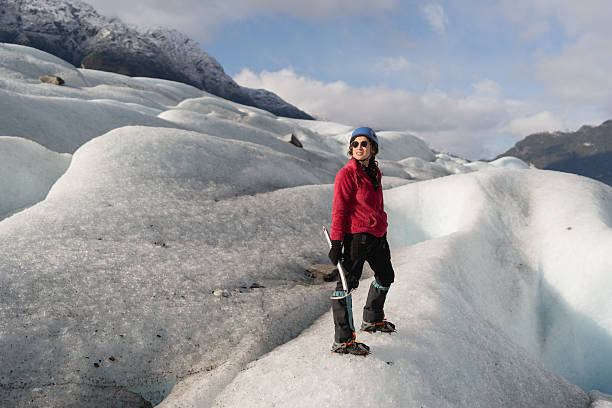
    • Conduct fieldwork in polar and mountainous regions to measure ice thickness, mass balance, and surface features.
    • Collect ice core samples to study historical climate data trapped within layers.
  • Remote Sensing and Monitoring
    • Use satellite imagery and aerial surveys to monitor glacier retreat or advance over time.
    • Apply geospatial technologies to track changes in ice volume and extent.
  • Climate Impact Assessment
    • Assess the contribution of glacier melt to sea level rise and regional water cycles.
    • Study the impact of climate change on glacier stability and predict future scenarios.
  • Modelling and Simulation
    • Develop numerical models to simulate glacier dynamics and forecast long-term changes.
    • Use computational tools to predict ice behaviour under various environmental conditions.
  • Water Resource Analysis
    • Evaluate glacier meltwater contributions to rivers and water supplies in dependent regions.
    • Provide data for managing water resources in areas reliant on glacial runoff.
  • Hazard Assessment
    • Study glacier-related hazards like glacial lake outburst floods (GLOFs) and avalanches.
    • Advise on risk mitigation strategies for communities near glacial environments.
  • Education and Outreach
    • Teach courses on glaciology, climate science, or Earth sciences in academic institutions.
    • Educate policymakers and the public on the significance of glacier research for climate action.
  • Policy and Regulation
    • Advise on environmental policies related to climate change and glacier conservation.
    • Contribute to international agreements on polar and high-altitude region protection.
  • Interdisciplinary Collaboration
    • Work with climatologists, hydrologists, and geologists to integrate glacier data into broader studies.
    • Collaborate with disaster management experts to address glacier-related risks.

RouteSteps
Route 11. 10+2 with Physics, Chemistry, and Mathematics/Biology (PCM/PCB).
2. Bachelor’s degree in Geology, Earth Sciences, or Environmental Science (3-4 years).
3. Master’s degree in Glaciology, Climate Science, or Geophysics (2 years).
4. PhD in Glaciology or related field (3-5 years, optional).
5. Postdoctoral research or field experience in glaciological studies (optional).
Route 21. 10+2 with Physics, Chemistry, and Mathematics/Biology (PCM/PCB).
2. Bachelor’s degree in Physics or Geography (3-4 years).
3. Master’s degree in Earth Sciences or Environmental Science (2 years).
4. Specialized training in glaciology or remote sensing (6 months-1 year).
5. Practical experience in glacier research or environmental projects.
Route 31. 10+2 with Physics, Chemistry, and Mathematics/Biology (PCM/PCB).
2. Bachelor’s degree in Geology or Applied Sciences (3-4 years).
3. Master’s degree in Glaciology or Climate Science (2 years).
4. Internship or fellowship in glaciological research labs or field programs (1-2 years).
5. Certification in remote sensing or modeling techniques (optional).
Route 41. 10+2 with Physics, Chemistry, and Mathematics/Biology (PCM/PCB).
2. Bachelor’s degree from India in relevant field (3-4 years).
3. Master’s or PhD in Glaciology abroad (2-5 years).
4. Training or postdoctoral research in international glacier research programs (1-3 years).
5. Certification or licensure for international practice (if applicable).

  • Fieldwork internships in glacial regions focusing on ice measurement and sampling techniques.
  • Research apprenticeships with glaciological institutes for data collection and analysis.
  • Observerships in climate science labs studying glacier-climate interactions.
  • Participation in environmental projects monitoring glacier melt and water resources.
  • Training in remote sensing and GIS under supervision for glacier mapping.
  • Experience in disaster risk assessment projects related to glacial hazards.
  • Involvement in ice core drilling and analysis for paleoclimate studies.
  • Attendance at climate science or glaciology conferences and workshops.
  • Exposure to interdisciplinary projects with hydrologists or climatologists.
  • Collaborative research in international glacier monitoring programs for global exposure.

  • Bachelor’s in Geology, Earth Sciences, or Environmental Science.
  • Bachelor’s in Physics or Geography.
  • Master’s in Glaciology or Climate Science.
  • PhD in Glaciology or Geophysics.
  • Certification courses in Remote Sensing and GIS for Glaciology.
  • Training in Ice Core Analysis for Paleoclimate Studies.
  • Specialized courses in Glacier Dynamics and Modeling.
  • Master’s in Hydrology with Glaciology focus.
  • Continuing Education courses in Climate Change Impacts.
  • Short-term courses in Environmental Monitoring.

InstituteCourse/ProgramOfficial Link
Indian Institute of Science (IISc), BangaloreMSc/PhD in Earth Scienceshttps://www.iisc.ac.in/
Jawaharlal Nehru University (JNU), New DelhiMSc/PhD in Environmental Scienceshttps://www.jnu.ac.in/
University of Delhi, DelhiMSc/PhD in Geologyhttps://www.du.ac.in/
Banaras Hindu University (BHU), VaranasiMSc/PhD in Earth Scienceshttps://www.bhu.ac.in/
Indian Institute of Technology (IIT), RoorkeeMSc/PhD in Earth Scienceshttps://www.iitr.ac.in/
University of Calcutta, KolkataMSc/PhD in Geologyhttps://www.caluniv.ac.in/
Savitribai Phule Pune University, PuneMSc/PhD in Environmental Sciencehttps://www.unipune.ac.in/
Anna University, ChennaiMSc/PhD in Applied Geologyhttps://www.annauniv.edu/
University of Hyderabad, HyderabadMSc/PhD in Earth Scienceshttps://www.uohyd.ac.in/
National Institute of Oceanography (NIO), GoaResearch Programs in Earth Scienceshttps://www.nio.org/

InstitutionCourseCountryOfficial Link
University of Alaska FairbanksMSc/PhD in Geophysics (Glaciology)USAhttps://www.uaf.edu/
University of WashingtonMSc/PhD in Earth and Space SciencesUSAhttps://www.washington.edu/
University of BristolMSc/PhD in GlaciologyUKhttps://www.bristol.ac.uk/
ETH ZurichMSc/PhD in Earth Sciences (Glaciology)Switzerlandhttps://www.ethz.ch/
University of CopenhagenMSc/PhD in Climate ScienceDenmarkhttps://www.ku.dk/
University of British Columbia (UBC)MSc/PhD in Earth, Ocean and Atmospheric SciencesCanadahttps://www.ubc.ca/
Stockholm UniversityMSc/PhD in Physical Geography (Glaciology)Swedenhttps://www.su.se/
University of OsloMSc/PhD in Geosciences (Glaciology)Norwayhttps://www.uio.no/
Australian National University (ANU)MSc/PhD in Earth SciencesAustraliahttps://www.anu.edu.au/
University of Colorado BoulderMSc/PhD in Atmospheric and Oceanic SciencesUSAhttps://www.colorado.edu/

India:

  • Graduate Aptitude Test in Engineering (GATE) for Master’s programs in Earth Sciences at IITs and other institutes.
  • Council of Scientific and Industrial Research (CSIR) NET for research fellowships and PhD programs.
  • University-specific entrance exams for Master’s and PhD programs in Earth Sciences (e.g., JNU CEEB, DUET).
  • State-level entrance examinations for postgraduate programs in Environmental Science.
  • Indian Institute of Science Entrance Test (IISc) for research programs.


International:

  • Graduate Record Examination (GRE) for postgraduate programs in Earth Sciences in the USA and Canada.
  • International English Language Testing System (IELTS) with a minimum score of 6.5-7.0 for international programs.
  • Test of English as a Foreign Language (TOEFL) with a minimum score of 90-100 for programs in English-speaking countries.
  • University-specific entrance exams for international Master’s or PhD programs in related fields.
  • Australian Education Assessment Services for programs in Australia.
  • Specific fellowship or scholarship exams for international research opportunities.

Undergraduate Student → Graduate Trainee (Master’s) → Junior Glaciologist → Established Glaciologist → Senior Glaciologist/Research Lead → Program Director/Professor
 

  • Academic institutions conducting research and teaching in Earth and climate sciences.
  • Environmental agencies monitoring glacier changes for climate policy.
  • Geological surveys studying ice formations for national environmental databases.
  • Climate research organizations assessing sea level rise and global warming.
  • Water resource management bodies evaluating glacial meltwater contributions.
  • Disaster management agencies addressing glacier-related hazards.
  • Government bodies overseeing environmental and climate policies.
  • International research collaborations focusing on polar and glacial studies.
  • Non-governmental organizations (NGOs) working on climate change mitigation.
  • Private consultancies providing glacier data for infrastructure or tourism projects.

IndiaInternational
Geological Survey of India (GSI)National Snow and Ice Data Center (NSIDC), USA
Ministry of Earth Sciences (MoES)British Antarctic Survey (BAS), UK
National Centre for Polar and Ocean Research (NCPOR)Alfred Wegener Institute (AWI), Germany
Indian Institute of Science (IISc)NASA Earth Science Division, USA
Wadia Institute of Himalayan Geology (WIHG)European Space Agency (ESA)
National Geophysical Research Institute (NGRI)World Glacier Monitoring Service (WGMS), Switzerland
Indian Space Research Organisation (ISRO)International Glaciological Society (IGS)
Tata Institute of Fundamental Research (TIFR)Arctic Monitoring and Assessment Programme (AMAP)
Jawaharlal Nehru University (JNU)Norwegian Polar Institute
Centre for Science and Environment (CSE)Greenland Institute of Natural Resources

ProsCons
Significant contribution to understanding climate change and its global impacts through glacier research.Requires continuous learning to keep up with evolving remote sensing technologies and climate models.
Intellectually stimulating work combining Earth sciences, physics, and environmental studies in glaciological analysis.Competitive field for academic and research positions, often requiring extensive education and publications.
High impact on global policy by contributing to climate mitigation and water resource strategies.Physically demanding fieldwork in harsh, remote environments, posing health and logistical challenges.
Opportunities for innovation in glacier monitoring technologies and predictive modeling.Limited public awareness of glaciology as a career, leading to fewer mainstream opportunities in some regions.
Growing relevance due to increasing urgency of climate change and sea level rise issues.Funding constraints for research projects can limit scope and career progression in academia.

Career LevelIndia (₹ per annum)International (US$ per annum)
Trainee/Graduate Student3,00,000 - 5,00,000$30,000 - $40,000
Junior Glaciologist5,00,000 - 10,00,000$45,000 - $60,000
Established Glaciologist10,00,000 - 18,00,000$60,000 - $85,000
Senior Glaciologist/Research Lead18,00,000 - 30,00,000$85,000 - $120,000
Program Director/Professor30,00,000 - 50,00,000$120,000 - $160,000

  • Remote Sensing Software: Tools like ENVI and ERDAS Imagine for processing satellite imagery of glaciers.
  • Geographic Information Systems (GIS): Software such as ArcGIS for mapping glacier extent and changes over time.
  • Glacier Modelling Software: Programs like Elmer/Ice and COMSOL Multiphysics for simulating ice flow dynamics.
  • Climate Data Analysis Tools: Software like MATLAB and R for analyzing historical climate data from ice cores.
  • Laboratory Information Management Systems (LIMS): For tracking and managing ice core samples and field data.
  • Visualization Software: Tools like Surfer or ParaView for presenting glacier data and simulation results graphically.
  • Database Management Platforms: For organizing extensive records of glacier measurements and climate metadata.
  • Field Data Collection Apps: For recording and geotagging glacier observations during fieldwork.
  • Simulation Software: For modelling glacier response to climate scenarios and testing predictive hypotheses.
  • Collaboration Platforms: For interdisciplinary teamwork and data sharing with climate scientists and policy stakeholders.

  • International Glaciological Society (IGS)
  • American Geophysical Union (AGU)
  • European Geosciences Union (EGU)
  • World Glacier Monitoring Service (WGMS)
  • Geological Society of India (GSI)
  • International Union of Geodesy and Geophysics (IUGG)
  • Arctic Monitoring and Assessment Programme (AMAP)
  • Scientific Committee on Antarctic Research (SCAR)
  • Indian Geophysical Union (IGU)
  • Association of Polar Early Career Scientists (APECS)

  • Dr. Lonnie Thompson (Contemporary, USA): Renowned for pioneering ice core research in tropical glaciers, active since the 1970s at Ohio State University.
     
  • Dr. Ellen Mosley-Thompson (Contemporary, USA): Known for contributions to paleoclimate studies through ice cores, active since the 1970s at Ohio State University.
     
  • Dr. John Nye (Historical, UK): Noted for foundational work on glacier flow dynamics, active from the 1950s to 1990s at the University of Bristol.
     
  • Dr. Richard Alley (Contemporary, USA): Recognized for research on ice sheet stability and climate change, active since the 1980s at Penn State University.
     
  • Dr.Dorthe Dahl-Jensen (Contemporary, Denmark): Known for leading ice core drilling projects in Greenland, active since the 1980s at the University of Copenhagen.
     
  • Dr. Eric Rignot (Contemporary, USA/France): Noted for studies on glacier melt and sea level rise using remote sensing, active since the 1990s at NASA Jet Propulsion Laboratory.
     
  • Dr.Anupam Kher (Contemporary, India): Recognized for research on Himalayan glaciers and climate impacts, active since the 1990s at the Wadia Institute of Himalayan Geology.
     
  • Dr.Konrad Steffen (Historical/Contemporary, Switzerland/USA): Known for research on Greenland ice sheet melt, active from the 1980s to 2020 at the University of Colorado Boulder.
     
  • Dr. Julie Palais (Contemporary, USA): Noted for contributions to Antarctic glaciology and ice core analysis, active since the 1980s with the National Science Foundation.
     
  • Dr. Anil V. Kulkarni (Contemporary, India): Recognized for studies on Himalayan glacier retreat and remote sensing applications, active since the 1980s at the Indian Institute of Science (IISc).
     

  • Build a strong foundation in Earth sciences, physics, and environmental studies during undergraduate education to prepare for specialized learning.
  • Seek early exposure through internships or fieldwork in glacial regions to gain practical experience in ice measurement techniques.
  • Develop technical skills in remote sensing, GIS, and glacier modeling during Master’s or PhD programs for a competitive edge.
  • Engage in interdisciplinary learning by exploring climatology, hydrology, and geology alongside glaciology.
  • Pursue research opportunities or fellowships to deepen expertise in niche areas like ice core analysis or glacier hazards.
  • Cultivate mentoring relationships with established glaciologists for career guidance and networking opportunities.
  • Stay updated with advancements in glacier monitoring technologies, climate models, and interdisciplinary applications.
  • Publish research findings or case studies in scientific journals to establish credibility and contribute to the field.
  • Consider international exposure through collaborative projects, conferences, or advanced research abroad to broaden perspectives.
  • Balance technical expertise with practical applications to address real-world challenges like climate change and water resource management.


A career as a Glaciologist offers a unique opportunity to impact climate science, environmental policy, and water resource management by studying the planet’s ice systems. From conducting fieldwork in remote glacial regions to modelling ice dynamics for climate predictions, Glaciologists play a pivotal role in addressing some of the world’s most pressing environmental challenges. This field combines rigorous research, technological innovation, and interdisciplinary collaboration, offering diverse paths in academia, government, and environmental organizations. For those passionate about Earth’s climate, ice science, and scientific discovery, a career as a Glaciologist provides a deeply rewarding journey with significant potential for making meaningful contributions to society in an era where understanding glacier behaviour continues to shape global priorities.
Knowledge & Skills You Will Learn
1
Sustainability Focus: Emphasis on applying glaciological data to support sustainable environmental policies and conservation efforts.
Senior Glaciologist/Research Lead

Senior Glaciologist/Research Lead

Experienced glaciologists often take leadership roles, overseeing research teams or field programs while mentoring junior staff and shaping...

0.0LPA

Glaciology Program Director/Professor

Glaciology Program Director/Professor

Top-level glaciologists may direct research programs or lead academic departments, combining technical expertise with administrative leadership...

0.0LPA
Paleoclimatologist (Specialized Role)

Paleoclimatologist (Specialized Role)

Specialists focus exclusively on ice core analysis, developing expertise in reconstructing past climate conditions from glacial records. They...

0.0LPA

Interested in this career?

Take the next step and explore more about Glaciologist.