
Geophysicist

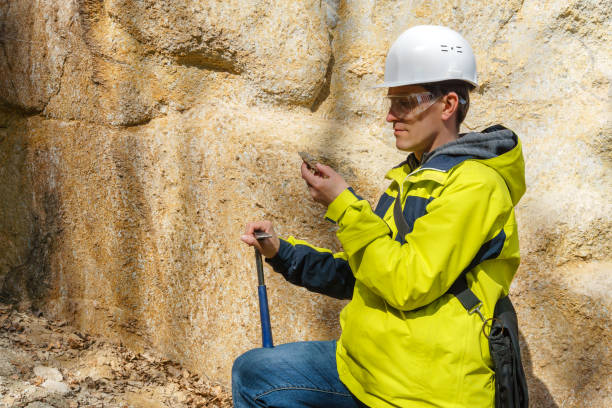
A Geophysicist is a scientific professional who studies the physical properties and processes of the Earth, using advanced techniques to investigate its structure, composition, and dynamics, such as seismic activity, gravitational fields, and magnetic anomalies. They work in academic institutions, government agencies, energy industries, and environmental consultancies, collaborating with geologists, engineers, and policymakers to address challenges in natural resource exploration, disaster prediction, and climate studies. Geophysicists are essential in advancing scientific knowledge and practical solutions in an era where understanding Earth’s systems is critical for sustainable development and mitigating natural hazards. Their contributions help in safeguarding communities and optimizing resource management on a global scale.
Share :
Career tree mind map (horizontal) — Geophysicist
Colored branches, hub circles, and underlined topics — same style as counselor course classic (types 18–19 in admin).
Loading mind map…

Geophysicists are analytical researchers who apply principles of physics and mathematics to explore the Earth’s interior and surface phenomena, employing tools like seismic imaging, magnetometers, and computational modeling to uncover insights into geological structures, tectonic movements, and resource deposits. Their work involves collecting field data, analyzing complex datasets, and interpreting results to predict earthquakes, locate oil and gas reserves, or assess environmental impacts. Operating in diverse environments from remote field sites to high-tech laboratories, they integrate precision, problem-solving, and specialized expertise to reveal hidden aspects of the planet. As pivotal contributors to pure sciences and research, Geophysicists propel advancements in a landscape increasingly shaped by the need for energy solutions, disaster preparedness, and ecological conservation. Their efforts often bridge theoretical science with real-world applications, ensuring safer infrastructures and informed policy decisions.

  • Field Data Collection:
    • Conduct geophysical surveys in varied terrains using instruments like seismographs, gravimeters, and ground-penetrating radar to gather data on Earth’s physical properties.
    • Map subsurface structures by deploying equipment in remote or challenging locations to study geological formations.
  • Data Analysis and Modeling:
    • Analyze geophysical data to interpret Earth’s structure, identifying fault lines, mineral deposits, or oil reservoirs through computational tools.
    • Develop models to simulate geological processes like plate tectonics or volcanic activity for predictive purposes.
  • Seismic and Hazard Assessment:
    • Study seismic waves to predict earthquakes and assess risks for infrastructure planning and disaster mitigation.
    • Evaluate volcanic or landslide potential by analyzing geophysical signals in hazard-prone regions.
  • Collaboration with Multidisciplinary Teams:
    • Work alongside geologists, engineers, and environmental scientists to integrate geophysical findings into broader research or industrial projects.
    • Partner on initiatives like resource exploration or climate change studies with diverse scientific expertise.
  • Publication and Reporting:
    • Publish research outcomes in scientific journals and prepare reports or grant proposals to secure funding for geophysical studies.
    • Present findings at conferences or to stakeholders to inform policy or industry decisions.
  • Resource Exploration and Environmental Impact:
    • Apply geophysical methods to locate and assess natural resources such as oil, gas, or groundwater while minimizing environmental disruption.
    • Conduct studies to monitor subsurface changes due to human activity, aiding sustainable resource management.
  • Technological Development and Innovation:
    • Utilize or develop advanced geophysical tools and software to enhance data accuracy and exploration efficiency.
    • Stay updated on emerging technologies like satellite geodesy or machine learning for geophysical applications.
  • Public Safety and Policy Advisory:
    • Advise governments or organizations on geophysical risks, contributing to building codes or disaster preparedness plans.
    • Provide expertise on environmental policies related to mining, drilling, or land use based on subsurface data.

RouteSteps
Route 11. 10+2 in Science stream (Physics, Mathematics mandatory; Chemistry or Geology preferred)
 2. Bachelor’s in Geophysics, Geology, or Earth Sciences (3-4 years)
 3. Start as a Junior Geophysicist or Field Technician in research or industry projects
Route 21. 10+2 in Science stream (Physics, Mathematics mandatory; Chemistry or Geology preferred)
 2. Bachelor’s in Geophysics, Geology, or Earth Sciences (3-4 years)
 3. Master’s in Geophysics or Applied Geophysics (2 years)
 4. Work as a Geophysicist in academic, government, or industry settings
Route 31. 10+2 in Science stream (Physics, Mathematics mandatory; Chemistry or Geology preferred)
 2. Bachelor’s in Geophysics, Geology, or Earth Sciences (3-4 years)
 3. Master’s in Geophysics or Applied Geophysics (2 years)
 4. Ph.D. in Geophysics or related discipline (3-5 years)
 5. Pursue roles as a Senior Geophysicist or Principal Investigator
Route 41. 10+2 in Science stream (Physics, Mathematics mandatory; Chemistry or Geology preferred)
 2. Bachelor’s in Geophysics, Geology, or Earth Sciences (3-4 years)
 3. Master’s in Geophysics or Applied Geophysics (2 years)
 4. Ph.D. in Geophysics or related discipline (3-5 years)
 5. Postdoctoral Research (1-3 years)
 6. Serve as a Lead Researcher, Professor, or Industry Consultant

  • Participation in geophysical field surveys during or after academic programs for hands-on experience with seismic or magnetic data collection.
  • Involvement in university research projects focusing on earthquake monitoring or subsurface imaging for practical learning.
  • Assisting senior researchers in government or industry projects to gain insights into geophysical data processing and interpretation.
  • Observerships with geological surveys or energy companies for exposure to applied geophysics in resource exploration.
  • Participation in scientific conferences or geophysics workshops for skill enhancement and professional networking.
  • Training through collaborative projects like geothermal assessments or environmental impact studies for diverse technical exposure.
  • Exposure to industry-standard practices such as using geophysical software or operating field instruments.
  • Project-based learning in specialized areas like marine geophysics, seismology, or exploration geophysics for focused experience.
  • Community or environmental initiatives to apply geophysical knowledge in practical settings like hazard mapping.
  • International research programs or online geophysics courses for exposure to global geophysical challenges and methodologies.

  • Bachelor of Science (B.Sc.) in Geophysics, Geology, or Earth Sciences.
  • Master of Science (M.Sc.) in Geophysics or Applied Geophysics.
  • Ph.D. in Geophysics or related disciplines.
  • Specialization in Seismology or Exploration Geophysics.
  • Certification in Geophysical Data Processing or Remote Sensing.
  • Training in Marine Geophysics or Geothermal Exploration.
  • Workshops on Seismic Imaging and Interpretation.
  • Short Courses in Gravimetry and Magnetometry.
  • Advanced Training in Environmental Geophysics.
  • Courses in Computational Geophysics and Modeling.

InstituteCourse/ProgramOfficial Link
Indian Institute of Technology (IIT), KharagpurB.Tech, M.Tech, Ph.D. in Geology & Geophysicshttps://www.iitkgp.ac.in/
Indian Institute of Technology (IIT), BombayB.Tech, M.Tech, Ph.D. in Earth Scienceshttps://www.iitb.ac.in/
Indian Institute of Science (IISc), BangaloreB.Sc., M.Sc., Ph.D. in Earth Scienceshttps://iisc.ac.in/
University of Delhi, DelhiB.Sc., M.Sc., Ph.D. in Geologyhttps://www.du.ac.in/
Banaras Hindu University (BHU), VaranasiB.Sc., M.Sc., Ph.D. in Geophysicshttps://www.bhu.ac.in/
University of Hyderabad, HyderabadM.Sc., Ph.D. in Earth Scienceshttps://uohyd.ac.in/
Anna University, ChennaiB.E., M.E. in Geology and Geophysicshttps://www.annauniv.edu/
Osmania University, HyderabadM.Sc. in Geophysicshttps://www.osmania.ac.in/
Geological Survey of India Training Institute, HyderabadShort Courses in Geophysicshttps://www.gsi.gov.in/
National Geophysical Research Institute (NGRI), HyderabadResearch Programs in Geophysicshttps://www.ngri.res.in/

InstitutionCourseCountryOfficial Link
Massachusetts Institute of Technology (MIT), CambridgeB.S., Ph.D. in Earth, Atmospheric & Planetary SciencesUSAhttps://www.mit.edu/
Stanford University, StanfordB.S., M.S., Ph.D. in GeophysicsUSAhttps://www.stanford.edu/
University of Cambridge, CambridgeB.A., M.Phil., Ph.D. in Earth SciencesUKhttps://www.cam.ac.uk/
California Institute of Technology (CalTech), PasadenaB.S., Ph.D. in GeophysicsUSAhttps://www.caltech.edu/
University of Oxford, OxfordB.A., D.Phil. in Earth Sciences (Geophysics Focus)UKhttps://www.ox.ac.uk/
ETH Zurich, ZurichB.Sc., M.Sc., Ph.D. in GeophysicsSwitzerlandhttps://ethz.ch/en.html
University of Alberta, EdmontonB.Sc., M.Sc., Ph.D. in GeophysicsCanadahttps://www.ualberta.ca/
Australian National University, CanberraB.Sc., M.Sc., Ph.D. in Earth Sciences (Geophysics)Australiahttps://www.anu.edu.au/
University of Tokyo, TokyoB.Sc., M.Sc., Ph.D. in Earth and Planetary SciencesJapanhttps://www.u-tokyo.ac.jp/en/
University of Oslo, OsloB.Sc., M.Sc., Ph.D. in GeophysicsNorwayhttps://www.uio.no/english/

India:

  • JEE (Joint Entrance Examination): For admission to IITs offering geophysics or earth sciences programs.
  • GATE (Graduate Aptitude Test in Engineering): For postgraduate programs in geophysics or earth sciences at premier institutes.
  • CSIR-UGC NET: For research fellowships and Ph.D. programs in geophysics and related fields.
  • University-Specific Exams: Institutes like BHU, University of Delhi, or Osmania University conduct their own entrance tests for M.Sc. or Ph.D. programs.
  • No Mandatory National-Level Entrance for Undergraduates: Admission to B.Sc. programs often based on 10+2 merit or institution-specific criteria.


International:

  • SAT (Scholastic Assessment Test): Required for undergraduate admissions in the USA and some other countries.
  • ACT (American College Testing): Alternative to SAT for undergraduate admissions in the USA.
  • GRE (Graduate Record Examination): Required for postgraduate and Ph.D. programs in geophysics or earth sciences globally.
  • TOEFL (Test of English as a Foreign Language): Minimum score of 80-100 required for non-native speakers applying to programs in English-speaking countries.
  • IELTS (International English Language Testing System): Minimum score of 6.5-7.0 required for admission to universities in the UK, Australia, and other English-speaking regions.

Junior Geophysicist → Geophysicist → Senior Geophysicist → Project Lead Geophysicist → Chief Geophysicist → Research Director → Academic Professor → Geophysical Consultant

  • Academic institutions for teaching and conducting geophysical research.
  • Government agencies for geophysical surveys related to natural hazards or resource mapping.
  • Energy industries for exploration of oil, gas, and mineral resources using geophysical methods.
  • Environmental consultancies for assessing subsurface impacts of human activity or climate change.
  • Research organizations for studying Earth’s structure, seismic activity, or geomagnetic fields.
  • Mining companies for locating and evaluating mineral deposits through geophysical data.
  • Engineering firms for geophysical assessments in infrastructure or construction projects.
  • Non-profit organizations for research on environmental sustainability or disaster risk reduction.
  • International geophysical collaborations for global projects on tectonics or climate history.
  • Defense and security sectors for geophysical applications in subsurface detection or monitoring.

IndiaInternational
Geological Survey of India (GSI)United States Geological Survey (USGS), USA
National Geophysical Research Institute (NGRI), HyderabadBritish Geological Survey (BGS), UK
Oil and Natural Gas Corporation (ONGC)Chevron, USA
Indian Institute of Geomagnetism (IIG), MumbaiExxonMobil, USA
Indian National Centre for Ocean Information Services (INCOIS)Shell, Netherlands
Central Ground Water Board (CGWB)BP (British Petroleum), UK
Indian Space Research Organisation (ISRO)Schlumberger, USA
Bharat Petroleum Corporation Limited (BPCL)TotalEnergies, France
Reliance Industries Limited (RIL), Exploration DivisionHalliburton, USA
Physical Research Laboratory (PRL), AhmedabadGeoscience Australia, Australia

ProsCons
Opportunity to contribute to critical discoveries about Earth’s structure and resourcesLong educational journey often requiring advanced degrees for high-impact roles
Potential for societal impact through disaster prediction and sustainable resource usePhysically demanding fieldwork in remote or hazardous locations for extended periods
Intellectually engaging career solving complex problems about Earth’s physical processesCompetitive field with limited funding for pure research outside industry applications
Diverse career paths across academia, energy sectors, environmental studies, and policySlow career progression in academia, reliant on publications or securing grants
Strong demand in industries like oil and gas, offering lucrative opportunitiesHigh pressure to deliver accurate data in industry roles with significant financial stakes

(Figures are approximate and based on latest available data as of 2026, subject to change. Salaries vary based on location, experience, sector (academic vs. industry), and specialization.)

Career LevelIndia (₹ per annum)International (USD per annum)
Junior Geophysicist (Early Career)4,00,000 - 8,00,00035,000 - 55,000
Geophysicist (Mid-Career)8,00,000 - 15,00,00055,000 - 80,000
Senior Geophysicist (Established)15,00,000 - 25,00,00080,000 - 110,000
Project Lead Geophysicist/Chief Geophysicist25,00,000 - 40,00,000110,000 - 150,000
Research Director/Academic Professor40,00,000+150,000+
Geophysical Consultant40,00,000+150,000+

  • Seismic Data Processing Software like SeisUnix or Petrel for analyzing subsurface seismic data.
  • Geophysical Modeling Tools like Oasis Montaj for gravity and magnetic field simulations.
  • Geographic Information Systems (GIS) like ArcGIS for mapping geophysical survey results.
  • Statistical Tools like MATLAB or R for processing and interpreting large geophysical datasets.
  • Ground-Penetrating Radar (GPR) Software for subsurface imaging and data visualization.
  • Satellite Data Analysis Tools like ENVI for processing remote sensing geophysical data.
  • Data Visualization Tools like Surfer or Tableau for presenting geophysical research findings.
  • Reservoir Characterization Software like Kingdom Suite for oil and gas exploration analysis.
  • Online Research Databases like GeoRef or Scopus for accessing geophysical literature.
  • Collaboration Platforms like Slack or Microsoft Teams for coordinating field and research teams.

  • Society of Exploration Geophysicists (SEG), India Chapter.
  • Geological Society of India (GSI), India.
  • American Geophysical Union (AGU), USA.
  • European Association of Geoscientists and Engineers (EAGE), Europe.
  • International Union of Geodesy and Geophysics (IUGG), Global.
  • Indian National Science Academy (INSA), India.
  • Society of Petroleum Geophysicists (SPG), India.
  • Australian Society of Exploration Geophysicists (ASEG), Australia.
  • Canadian Society of Exploration Geophysicists (CSEG), Canada.
  • Geophysical Society of Japan (GSJ), Japan.

  • Harsh K. Gupta (India, Contemporary): Geophysicist since the 1960s, renowned for research on earthquake prediction and reservoir-induced seismicity, former Director of NGRI, Hyderabad.
     
  • Vinod K. Gaur (India, Contemporary): Geophysicist since the 1970s, known for contributions to geodesy and tectonics in the Indian subcontinent, shaping geophysical studies in India.
     
  • Shyam Sundar Rai (India, Contemporary): Geophysicist since the 1980s, recognized for seismic imaging of the Indian lithosphere at the Indian Institute of Science Education and Research (IISER), Pune.
     
  • Brijesh K. Bansal (India, Contemporary): Geophysicist since the 1980s, noted for work on seismic hazard assessment and earthquake monitoring at the Ministry of Earth Sciences, India.
     
  • Ravi P. Singh (India, Contemporary): Geophysicist since the 1990s, celebrated for research on geomagnetic fields and crustal studies at the Indian Institute of Geomagnetism, Mumbai.
     
  • Maurice Ewing (USA, Historical): Geophysicist from the 1930s to 1970s, pioneered marine seismic studies, founding modern ocean floor geophysics until his death in 1974.
     
  • Inge Lehmann (Denmark, Historical): Geophysicist from the 1920s to 1980s, discovered Earth’s inner core through seismic wave analysis, a landmark in geophysics until her death in 1993.
     
  • Frank Press (USA, Historical): Geophysicist from the 1950s to 2000s, known for seismic wave research and contributions to earthquake science, influential until his passing in 2020.
     
  • Susan Solomon (USA, Contemporary): Geophysicist since the 1980s, recognized for groundbreaking work on atmospheric geophysics and the ozone hole, shaping environmental policy.
     
  • Keiiti Aki (Japan/USA, Historical): Geophysicist from the 1950s to 2000s, developed seismic moment theory for earthquake magnitude, revolutionizing seismology until his death in 2005.
     

  • Build a solid foundation in physics, mathematics, and earth sciences to tackle intricate geophysical challenges.
  • Gain early field exposure through surveys or university projects to solidify interest in geophysics.
  • Prepare rigorously for entrance exams like JEE, GATE, or GRE to secure admission to leading programs.
  • Seek specialized training in areas like seismology or exploration geophysics for a competitive advantage.
  • Stay updated on scientific progress by attending conferences and engaging with geophysical publications.
  • Develop technical skills by assisting in small-scale geophysical surveys or data analysis roles.
  • Participate in community or environmental projects to apply geophysical expertise in real-world scenarios.
  • Join professional associations like SEG or AGU for networking and access to industry resources.
  • Cultivate resilience to handle fieldwork difficulties, funding constraints, or research uncertainties.
  • Explore international research opportunities to engage with diverse geophysical issues and methodologies.
  • Volunteer in geological surveys or field expeditions to grasp practical research dynamics.
  • Enhance analytical abilities to solve complex questions about Earth’s physical processes and structures.
  • Engage in continuing education to keep abreast of cutting-edge geophysical tools and techniques.
  • Build connections with researchers, industry professionals, and academics for collaborative prospects.
  • Maintain determination to navigate the unpredictability of research outcomes and funding availability.
  • Harmonize academic pursuits with continuous learning to adapt to rapid advancements in geophysical science.

Embarking on a career as a Geophysicist unveils a remarkable opportunity to probe the hidden depths of our planet, decoding Earth’s physical mysteries to address pressing global needs in resource management and hazard mitigation. From mapping subsurface treasures to forecasting natural disasters, Geophysicists play a crucial role in safeguarding and understanding our world. This discipline fuses analytical precision, innovative technology, and an enduring commitment to exploring Earth’s dynamic systems, offering varied pathways in research, industry, and policy. For those fascinated by the forces shaping our planet, ready to embrace evolving scientific tools, and driven to contribute to sustainable solutions, a career as a Geophysicist presents an intellectually invigorating and profoundly impactful professional journey with the potential to influence humanity’s interaction with the Earth for generations.
Knowledge & Skills You Will Learn
1
Expertise in geophysical techniques like seismic imaging, gravity surveys, and magnetic field analysis with accuracy
2
Analytical proficiency to interpret complex geophysical datasets and model Earth processes
3
In-depth understanding of Earth’s physical properties, tectonics, and subsurface structures for comprehensive research
4
Computational skills to use specialized software for data processing and geophysical simulations
5
Critical thinking to develop hypotheses about geological phenomena based on limited or noisy data
6
Physical endurance for fieldwork in challenging environments during surveys or data collection
7
Adaptability to incorporate emerging technologies like satellite geodesy or AI into geophysical workflows
8
Collaboration skills for working with multidisciplinary teams of scientists, engineers, and field staff
9
Problem-solving ability to address challenges in data acquisition or instrument performance in the field
10
Communication skills to present technical findings through reports, papers, or stakeholder briefings
Senior Geophysicist

Senior Geophysicist

Experienced professionals lead complex geophysical studies, often specializing in seismology or resource exploration, guiding teams and ensuring...

0.0LPA

Project Lead Geophysicist

Project Lead Geophysicist

High-level scientists oversee specific geophysical projects, managing budgets, timelines, and teams while integrating data for actionable...

0.0LPA
Chief Geophysicist

Chief Geophysicist

Senior leaders manage geophysical operations across multiple projects in organizations, setting strategic directions for research or exploration....

0.0LPA

Interested in this career?

Take the next step and explore more about Geophysicist.