
Geohydrologist

Summary

A Geohydrologist studies the distribution, movement, and quality of groundwater in the Earth's crust. They analyze how water interacts with geological formations and assess the availability and sustainability of groundwater resourc...

Share :
✨ Radial Mind Map - Geohydrologist
Nodes arranged in concentric circles

Loading radial mind map...

Overview

A Geohydrologist studies the distribution, movement, and quality of groundwater in the Earth's crust. They analyze how water interacts with geological formations and assess the availability and sustainability of groundwater resources. Geohydrologists apply principles of geology, hydrology, and environmental science to solve problems related to water supply, contamination, and resource management.
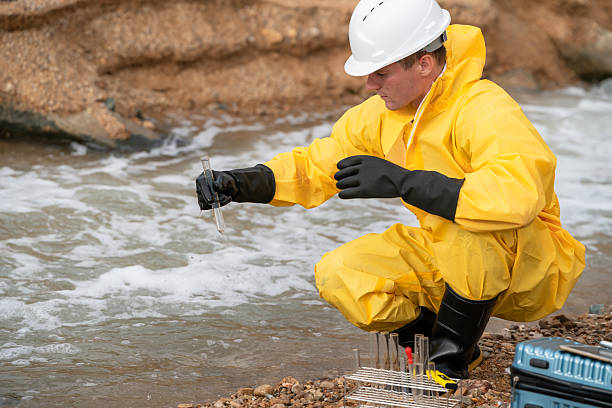
Geohydrologists investigate groundwater systems by studying aquifers, soil permeability, and rock formations to understand how water flows underground. They collect and analyze data through field surveys, drilling, sampling, and geophysical techniques. Their work involves assessing groundwater quality, predicting the impact of human activities, and designing sustainable water management plans. Geohydrologists play a key role in environmental protection, urban planning, agriculture, and disaster management by ensuring safe and reliable water resources. They collaborate with environmental scientists, engineers, policymakers, and communities to address water-related challenges.

Roles and Responsibilities

💼
Geohydrologist
Roles and Responsibilities
Groundwater Exploration and Mapping
Conduct field surveys and use geophysical methods to locate and map aquifers.
Data Collection and Analysis
Collect water samples and analyze chemical, physical, and biological properties.
Hydrological Modeling
Develop models to simulate groundwater flow and predict future availability.
Environmental Impact Assessment
Assess effects of industrial, agricultural, and urban activities on groundwater quality.
Groundwater Resource Management
Design sustainable extraction and recharge strategies to prevent depletion.
Contamination Investigation and Remediation
Identify sources of pollution and recommend cleanup or prevention measures.
Report Preparation and Documentation
Prepare technical reports, maps, and presentations for stakeholders.
Collaboration and Consultation
Work with government agencies, environmental organizations, and private firms.
JEE Advanced:
For admission to IITs for undergraduate engineering and earth science programs.
GATE (Graduate Aptitude Test in Engineering):
For postgraduate admissions and recruitment in engineering, earth sciences, and environmental science fields.
CSIR-UGC NET (Council of Scientific & Industrial Research - University Grants Commission National Eligibility Test):
For research fellowships and junior research positions in earth and environmental sciences.
IIT JAM (Joint Admission Test for M.Sc.):
For admission to MSc programs in earth sciences and related fields.
State-level Engineering and Science Entrance Exams:
Various state-specific exams for admission to universities offering geology, hydrogeology, and environmental science courses.
University-specific Entrance Exams and Interviews:
For postgraduate and doctoral programs in hydrogeology and geosciences.
GRE (Graduate Record Examination):
For admission to graduate programs in earth sciences, environmental science, and engineering worldwide.
TOEFL (Test of English as a Foreign Language):
For English language proficiency required by many international universities.
IELTS (International English Language Testing System):
Another widely accepted English proficiency test for international admissions.
University-specific Entrance Exams and Interviews:
Some universities require additional assessments or interviews for graduate admissions.
Professional Certification Exams:
In hydrogeology or environmental management, offered by international bodies or institutions, depending on career focus.
Henry Darcy (1803-1858, France):
Considered the "Father of Hydrogeology," formulated Darcy's Law in 1856, describing water flow through porous media.
Charles V. Theis (1900-1987, United States):
Developed the Theis Equation in 1935 for analyzing groundwater flow during pumping tests.
John Cherry (1941-, Canada):
Pioneered research on groundwater contamination and co-authored the textbookGroundwater(1979).
Oscar E. Meinzer (1876-1948, United States):
Standardized hydrogeological terminology and methods through USGS work.
Robert E. Horton (1875-1945, United States):
Influenced geohydrology with concepts of infiltration and surface water-groundwater interactions.
Dr. B. P. Radhakrishna (1918-2012, India):
Contributed to groundwater exploration in hard rock terrains in India.
Mary P. Anderson (United States):
Advanced numerical modelling of groundwater flow withApplied Groundwater Modelling(1992).
Dr. Himanshu Kulkarni (India):
Focused on community-based groundwater management in India through ACWADAM.
Jacob Bear (1929- Israel):
Authored foundational texts likeDynamics of Fluids in Porous Media(1972) on groundwater flow.
Shirley J. Dreiss (1949-1993, United States):
Known for work on karst hydrogeology and groundwater modelling in complex aquifers.

Roles and Responsibilities

  1. Groundwater Exploration and Mapping
    • Conduct field surveys and use geophysical methods to locate and map aquifers.
  2. Data Collection and Analysis
    • Collect water samples and analyze chemical, physical, and biological properties.
  3. Hydrological Modeling
    • Develop models to simulate groundwater flow and predict future availability.
  4. Environmental Impact Assessment
    • Assess effects of industrial, agricultural, and urban activities on groundwater quality.
  5. Groundwater Resource Management
    • Design sustainable extraction and recharge strategies to prevent depletion.
  6. Contamination Investigation and Remediation
    • Identify sources of pollution and recommend cleanup or prevention measures.
  7. Report Preparation and Documentation
    • Prepare technical reports, maps, and presentations for stakeholders.
  8. Collaboration and Consultation
    • Work with government agencies, environmental organizations, and private firms.


Study Route & Eligibility Criteria

Alternate Routes

RouteSteps
Route 1: Bachelor’s in Geology / Earth Sciences1. Complete a Bachelor’s degree in Geology, Earth Sciences, or Environmental Science.
2. Pursue Master’s specializing in Hydrogeology or Geohydrology.
3. Gain fieldwork and laboratory research experience.
4. Seek employment in environmental consultancies, government agencies, or research institutes.
Route 2: Civil Engineering + Water Resources1. Obtain a degree in Civil Engineering with focus on water resources.
2. Specialize in groundwater hydrology through postgraduate studies.
3. Participate in projects related to water management and environmental engineering.
4. Advance into hydrogeological roles in engineering firms or public sector.
Route 3: Environmental Science + Hydrology1. Earn a degree in Environmental Science or Hydrology.
2. Focus on groundwater studies and environmental impact assessments.
3. Engage in internships with environmental agencies.
4. Pursue advanced research and consultancy roles.
Route 4: Geophysics + Hydrology1. Complete a degree in Geophysics or Applied Geophysics.
2. Develop skills in geophysical survey methods and groundwater modeling.
3. Conduct interdisciplinary research projects.
4. Pursue graduate degrees and field specialization.


Significant Observations

  • Fieldwork-intensive profession requiring physical and analytical skills.
  • Interdisciplinary knowledge combining geology, hydrology, chemistry, and environmental science.
  • Increasing importance due to global water scarcity and pollution issues.
  • Requires proficiency in GIS, hydrological modeling software, and geophysical tools.
  • Collaboration with policymakers and community stakeholders is essential.
  • Growing demand in environmental consulting, government water management, and research sectors.
  • Involves addressing critical challenges like groundwater contamination and sustainable use.
  • Opportunities for international work in water resource management and environmental protection.


Internships & Practical Exposure

  • Field internships involving groundwater sampling, drilling supervision, and site surveys.
  • Laboratory experience in water quality testing and chemical analysis.
  • Training in hydrological and groundwater modeling software (MODFLOW, ArcGIS).
  • Participation in environmental impact assessment projects.
  • Exposure to geophysical survey techniques like resistivity, seismic, and ground-penetrating radar.
  • Collaboration with environmental agencies and water resource departments.
  • Engagement in research projects on groundwater recharge and contamination.
  • Involvement in policy formulation and community water management programs.
  • Use of remote sensing and GIS for groundwater mapping.
  • Attendance at workshops and conferences on hydrogeology and environmental science.


Courses & Specializations to Enter the Field

  • Bachelor’s degrees in Geology, Earth Sciences, Environmental Science, Civil Engineering.
  • Master’s programs specializing in Hydrogeology, Groundwater Hydrology, Environmental Geology.
  • Courses in Hydrogeology, Geochemistry, Environmental Chemistry, and Soil Science.
  • Training in Groundwater Modeling (MODFLOW), Geographic Information Systems (GIS).
  • Courses on Water Resource Management, Environmental Impact Assessment, and Pollution Control.
  • Geophysical survey methods and data interpretation.
  • Research methodology and scientific writing.
  • Hydrological data analysis and statistical methods.
  • Regulatory frameworks and environmental law related to water resources.
  • Field methods in groundwater exploration and sampling.


Top Institutes for Geohydrology Education and Research

In India

InstituteCourse / ProgramOfficial Link
Indian Institute of Technology (IIT) RoorkeeHydrogeology and Water Resourceshttps://www.iitr.ac.in/
National Institute of Hydrology (NIH), RoorkeeHydrogeology and Groundwater Studieshttps://nihroorkee.gov.in/
Indian Institute of Science (IISc), BangaloreEarth Sciences and Environmental Sciencehttps://iisc.ac.in/
Banaras Hindu University (BHU)Geology and Hydrogeologyhttps://www.bhu.ac.in/
Jawaharlal Nehru University (JNU), DelhiEnvironmental Scienceshttps://www.jnu.ac.in/
University of HyderabadEarth and Environmental Scienceshttps://www.uohyd.ac.in/
Aligarh Muslim University (AMU)Geology and Hydrogeologyhttps://www.amu.ac.in/
Central University of RajasthanEnvironmental Science and Hydrogeologyhttps://www.curaj.ac.in/
Anna UniversityCivil Engineering – Water Resourceshttps://www.annauniv.edu/
Tata Institute of Fundamental Research (TIFR)Earth Scienceshttps://www.tifr.res.in/


International

InstitutionCourseCountryOfficial Link
Stanford UniversityEarth System Science and HydrogeologyUSAhttps://stanford.edu/
Massachusetts Institute of Technology (MIT)Earth, Atmospheric, and Planetary SciencesUSAhttps://mit.edu/
University of California, BerkeleyHydrology and Water ResourcesUSAhttps://berkeley.edu/
University of CambridgeEarth Sciences and HydrogeologyUKhttps://cam.ac.uk/
ETH ZurichEnvironmental GeosciencesSwitzerlandhttps://ethz.ch/
University of OxfordEarth SciencesUKhttps://www.ox.ac.uk/
University of TorontoEarth Sciences and HydrologyCanadahttps://www.utoronto.ca/
Delft University of TechnologyWater Management and HydrogeologyNetherlandshttps://www.tudelft.nl/
University of MelbourneEnvironmental Science and HydrogeologyAustraliahttps://www.unimelb.edu.au/
Technical University of Munich (TUM)Environmental Engineering and HydrogeologyGermanyhttps://www.tum.de/


Entrance Tests Required

India

  • JEE Advanced: For admission to IITs for undergraduate engineering and earth science programs.
  • GATE (Graduate Aptitude Test in Engineering): For postgraduate admissions and recruitment in engineering, earth sciences, and environmental science fields.
  • CSIR-UGC NET (Council of Scientific & Industrial Research - University Grants Commission National Eligibility Test): For research fellowships and junior research positions in earth and environmental sciences.
  • IIT JAM (Joint Admission Test for M.Sc.): For admission to MSc programs in earth sciences and related fields.
  • State-level Engineering and Science Entrance Exams: Various state-specific exams for admission to universities offering geology, hydrogeology, and environmental science courses.
  • University-specific Entrance Exams and Interviews: For postgraduate and doctoral programs in hydrogeology and geosciences.


International

  • GRE (Graduate Record Examination): For admission to graduate programs in earth sciences, environmental science, and engineering worldwide.
  • TOEFL (Test of English as a Foreign Language): For English language proficiency required by many international universities.
  • IELTS (International English Language Testing System): Another widely accepted English proficiency test for international admissions.
  • University-specific Entrance Exams and Interviews: Some universities require additional assessments or interviews for graduate admissions.
  • Professional Certification Exams: In hydrogeology or environmental management, offered by international bodies or institutions, depending on career focus.


Ideal Progressing Career Path

Undergraduate Student → Graduate Student (MSc/PhD) → Junior Geohydrologist / Research Assistant → Geohydrologist / Hydrogeologist → Senior Consultant / Project Manager → Principal Hydrogeologist / Lead Scientist → Director / Head of Water Resource Management


Major Areas of Employment

  • Environmental consulting firms
  • Government water resource and environmental agencies
  • Research institutions and universities
  • Mining and petroleum industries
  • Agricultural and irrigation departments
  • Urban and regional planning organizations
  • Water treatment and remediation companies
  • Non-governmental organizations (NGOs) focused on water and environment
  • International development and aid organizations
  • Geotechnical and civil engineering firms
  • Hydropower and infrastructure development companies


Prominent Employers

IndiaInternational
Central Ground Water Board (CGWB)United States Geological Survey (USGS)
National Institute of Hydrology (NIH)Environment Agency (UK)
Indian Space Research Organisation (ISRO)Environment Canada
Central Pollution Control Board (CPCB)Australian Bureau of Meteorology
Geological Survey of India (GSI)UNESCO International Hydrological Programme
Tata Consultancy Services (TCS) – Environmental DivisionWorld Bank Water Global Practice
WAPCOS LimitedInternational Water Management Institute (IWMI)
National Environmental Engineering Research Institute (NEERI)European Environment Agency
Larsen & Toubro (L&T) – Environmental ServicesShell Global Solutions
Indian Agricultural Research Institute (IARI)Chevron Corporation


Pros and Cons of the Profession

ProsCons
Opportunity to contribute to sustainable water resource managementFieldwork can be physically demanding and in remote locations
Growing global demand due to water scarcity and environmental concernsWork may involve complex data analysis and modeling
Interdisciplinary and diverse career opportunitiesSometimes requires working under regulatory and political constraints
Ability to impact public health and environmental protectionProject funding can be competitive and uncertain
Opportunities for international collaboration and researchSeasonal and weather-dependent field activities
Combines outdoor fieldwork with laboratory and office-based researchLong-term monitoring projects can be time-intensive


Industry Trends and Future Outlook

  • Increasing focus on sustainable groundwater management amid climate change.
  • Advances in remote sensing and geophysical survey technologies.
  • Growing use of AI and machine learning in hydrological modeling and data analysis.
  • Enhanced regulatory frameworks for groundwater protection and pollution control.
  • Rising demand for integrated water resource management approaches.
  • Development of innovative remediation technologies for contaminated groundwater.
  • Expansion of groundwater recharge and conservation projects worldwide.
  • Greater emphasis on community involvement and participatory water management.
  • Increasing interdisciplinary research linking hydrogeology with ecology and urban planning.
  • Enhanced international cooperation on transboundary groundwater issues.


Salary Expectations

Career LevelIndia (₹ per annum)International (US$ per annum)
Entry-Level Geohydrologist3,00,000 - 6,00,000$45,000 - $65,000
Mid-Level Hydrogeologist6,00,000 - 12,00,000$65,000 - $90,000
Senior Consultant / Project Manager12,00,000 - 25,00,000$90,000 - $130,000
Principal Scientist / Director20,00,000 - 40,00,000+$130,000 - $180,000+


Key Software Tools

  • MODFLOW – groundwater flow modelling
  • ArcGIS / QGIS – geographic information systems for mapping and spatial analysis
  • AutoCAD – for site layout and design
  • Surfer – contouring and 3D surface mapping
  • RockWorks – geological and hydrogeological data management
  • MATLAB – data analysis and simulation
  • Groundwater Vistas – graphical user interface for MODFLOW
  • HEC-RAS – hydrologic and hydraulic modelling
  • Geosoft Oasis montaj – geophysical data processing
  • Python / R – programming for data analysis and modelling

Professional Organizations and Networks

  • International Association of Hydrogeologists (IAH)
  • Geological Society of America (GSA) – Hydrogeology Division
  • American Geophysical Union (AGU) – Hydrology Section
  • Indian Geological Congress (IGC)
  • Environmental and Water Resources Institute (EWRI)
  • Society of Environmental Toxicology and Chemistry (SETAC)
  • International Water Association (IWA)
  • Geological Society of India (GSI)
  • National Ground Water Association (NGWA)
  • International Union of Geological Sciences (IUGS)


Notable Geohydrologists and Their Contributions

  • Henry Darcy (1803-1858, France): Considered the "Father of Hydrogeology," formulated Darcy's Law in 1856, describing water flow through porous media.
     
  • Charles V. Theis (1900-1987, United States): Developed the Theis Equation in 1935 for analyzing groundwater flow during pumping tests.
     
  • John Cherry (1941-, Canada): Pioneered research on groundwater contamination and co-authored the textbook Groundwater (1979).
     
  • Oscar E. Meinzer (1876-1948, United States): Standardized hydrogeological terminology and methods through USGS work.
     
  • Robert E. Horton (1875-1945, United States): Influenced geohydrology with concepts of infiltration and surface water-groundwater interactions.
     
  • Dr. B. P. Radhakrishna (1918-2012, India): Contributed to groundwater exploration in hard rock terrains in India.
     
  • Mary P. Anderson (United States): Advanced numerical modelling of groundwater flow with Applied Groundwater Modelling (1992).
     
  • Dr. Himanshu Kulkarni (India): Focused on community-based groundwater management in India through ACWADAM.
     
  • Jacob Bear (1929- Israel): Authored foundational texts like Dynamics of Fluids in Porous Media (1972) on groundwater flow.
     
  • Shirley J. Dreiss (1949-1993, United States): Known for work on karst hydrogeology and groundwater modelling in complex aquifers.


Advice for Aspiring Geohydrologists

  • Build a strong foundation in geology, hydrology, chemistry, and environmental science.
  • Gain practical fieldwork experience and laboratory skills early on.
  • Develop proficiency in groundwater modelling and GIS software.
  • Pursue internships and research projects in hydrogeology and environmental consulting.
  • Stay updated with advancements in remote sensing and geophysical survey techniques.
  • Cultivate communication skills for effective reporting and stakeholder engagement.
  • Consider advanced degrees (MSc, PhD) for research and leadership roles.
  • Network with professionals through conferences and professional societies.
  • Engage in interdisciplinary learning to address complex water resource challenges.
  • Maintain ethical standards and a commitment to sustainable water management.


A career as a Geohydrologist offers the opportunity to play a vital role in managing one of the Earth’s most precious resources—groundwater. This dynamic and interdisciplinary field combines fieldwork, laboratory analysis, and advanced modelling to ensure sustainable water supply and environmental protection. For those passionate about geology, water, and environmental stewardship, geohydrology provides a rewarding and impactful career path with growing global relevance.


Study Route & Eligibility Criteria

Study Route & Eligibility Criteria
Geohydrologist
Bachelor’s in Geology / Earth Sciences
🏛️
1
Complete a Bachelor’s degree in Geology, Earth Sciences, or Environmental Science.
🎓
2
Pursue Master’s specializing in Hydrogeology or Geohydrology.
💼
3
Gain fieldwork and laboratory research experience.
💼
4
Seek employment in environmental consultancies, government agencies, or research institutes.
Civil Engineering + Water Resources
🏛️
1
Obtain a degree in Civil Engineering with focus on water resources.
🎓
2
Specialize in groundwater hydrology through postgraduate studies.
📚
3
Participate in projects related to water management and environmental engineering.
💼
4
Advance into hydrogeological roles in engineering firms or public sector.
Environmental Science + Hydrology
🏛️
1
Earn a degree in Environmental Science or Hydrology.
🏛️
2
Focus on groundwater studies and environmental impact assessments.
💼
3
Engage in internships with environmental agencies.
💼
4
Pursue advanced research and consultancy roles.
Geophysics + Hydrology
🏛️
1
Complete a degree in Geophysics or Applied Geophysics.
🏛️
2
Develop skills in geophysical survey methods and groundwater modeling.
📚
3
Conduct interdisciplinary research projects.
🏛️
4
Pursue graduate degrees and field specialization.
🎯 Geohydrologist - Professional

Significant Observations (Academic Related Points)

💡
Geohydrologist
Academic Related Points
1
JEE Advanced:
For admission to IITs for undergraduate engineering and earth science programs.
2
GATE (Graduate Aptitude Test in Engineering):
For postgraduate admissions and recruitment in engineering, earth sciences, and environmental science fields.
3
CSIR-UGC NET (Council of Scientific & Industrial Research - University Grants Commission National Eligibility Test):
For research fellowships and junior research positions in earth and environmental sciences.
4
IIT JAM (Joint Admission Test for M.Sc.):
For admission to MSc programs in earth sciences and related fields.
5
State-level Engineering and Science Entrance Exams:
Various state-specific exams for admission to universities offering geology, hydrogeology, and environmental science courses.
6
University-specific Entrance Exams and Interviews:
For postgraduate and doctoral programs in hydrogeology and geosciences.
7
GRE (Graduate Record Examination):
For admission to graduate programs in earth sciences, environmental science, and engineering worldwide.
8
TOEFL (Test of English as a Foreign Language):
For English language proficiency required by many international universities.
9
IELTS (International English Language Testing System):
Another widely accepted English proficiency test for international admissions.
10
University-specific Entrance Exams and Interviews:
Some universities require additional assessments or interviews for graduate admissions.
11
Professional Certification Exams:
In hydrogeology or environmental management, offered by international bodies or institutions, depending on career focus.
12
Henry Darcy (1803-1858, France):
Considered the "Father of Hydrogeology," formulated Darcy's Law in 1856, describing water flow through porous media.
13
Charles V. Theis (1900-1987, United States):
Developed the Theis Equation in 1935 for analyzing groundwater flow during pumping tests.
14
John Cherry (1941-, Canada):
Pioneered research on groundwater contamination and co-authored the textbookGroundwater(1979).
15
Oscar E. Meinzer (1876-1948, United States):
Standardized hydrogeological terminology and methods through USGS work.
16
Robert E. Horton (1875-1945, United States):
Influenced geohydrology with concepts of infiltration and surface water-groundwater interactions.
17
Dr. B. P. Radhakrishna (1918-2012, India):
Contributed to groundwater exploration in hard rock terrains in India.
18
Mary P. Anderson (United States):
Advanced numerical modelling of groundwater flow withApplied Groundwater Modelling(1992).
19
Dr. Himanshu Kulkarni (India):
Focused on community-based groundwater management in India through ACWADAM.
20
Jacob Bear (1929- Israel):
Authored foundational texts likeDynamics of Fluids in Porous Media(1972) on groundwater flow.
21
Shirley J. Dreiss (1949-1993, United States):
Known for work on karst hydrogeology and groundwater modelling in complex aquifers.

Internships & Practical Exposure

💼
Geohydrologist
Internships & Practical Experience
1
Field internships involving groundwater sampling, drilling supervision, and site surveys.
2
Laboratory experience in water quality testing and chemical analysis.
3
Training in hydrological and groundwater modeling software (MODFLOW, ArcGIS).
4
Participation in environmental impact assessment projects.
5
Exposure to geophysical survey techniques like resistivity, seismic, and ground-penetrating radar.
6
Collaboration with environmental agencies and water resource departments.
7
Engagement in research projects on groundwater recharge and contamination.
8
Involvement in policy formulation and community water management programs.
9
Use of remote sensing and GIS for groundwater mapping.
10
Attendance at workshops and conferences on hydrogeology and environmental science.
11
Bachelor’s degrees in Geology, Earth Sciences, Environmental Science, Civil Engineering.
12
Master’s programs specializing in Hydrogeology, Groundwater Hydrology, Environmental Geology.
13
Courses in Hydrogeology, Geochemistry, Environmental Chemistry, and Soil Science.
14
Training in Groundwater Modeling (MODFLOW), Geographic Information Systems (GIS).
15
Courses on Water Resource Management, Environmental Impact Assessment, and Pollution Control.
16
Geophysical survey methods and data interpretation.
17
Research methodology and scientific writing.
18
Hydrological data analysis and statistical methods.
19
Regulatory frameworks and environmental law related to water resources.
20
Field methods in groundwater exploration and sampling.
21
JEE Advanced:For admission to IITs for undergraduate engineering and earth science programs.
22
GATE (Graduate Aptitude Test in Engineering):For postgraduate admissions and recruitment in engineering, earth sciences, and environmental science fields.
23
CSIR-UGC NET (Council of Scientific & Industrial Research - University Grants Commission National Eligibility Test):For research fellowships and junior research positions in earth and environmental sciences.
24
IIT JAM (Joint Admission Test for M.Sc.):For admission to MSc programs in earth sciences and related fields.
25
State-level Engineering and Science Entrance Exams:Various state-specific exams for admission to universities offering geology, hydrogeology, and environmental science courses.
26
University-specific Entrance Exams and Interviews:For postgraduate and doctoral programs in hydrogeology and geosciences.
27
GRE (Graduate Record Examination):For admission to graduate programs in earth sciences, environmental science, and engineering worldwide.
28
TOEFL (Test of English as a Foreign Language):For English language proficiency required by many international universities.
29
IELTS (International English Language Testing System):Another widely accepted English proficiency test for international admissions.
30
University-specific Entrance Exams and Interviews:Some universities require additional assessments or interviews for graduate admissions.
31
Professional Certification Exams:In hydrogeology or environmental management, offered by international bodies or institutions, depending on career focus.
32
Environmental consulting firms
33
Government water resource and environmental agencies
34
Research institutions and universities
35
Mining and petroleum industries
36
Agricultural and irrigation departments
37
Urban and regional planning organizations
38
Water treatment and remediation companies
39
Non-governmental organizations (NGOs) focused on water and environment
40
International development and aid organizations
41
Geotechnical and civil engineering firms
42
Hydropower and infrastructure development companies
43
Increasing focus on sustainable groundwater management amid climate change.
44
Advances in remote sensing and geophysical survey technologies.
45
Growing use of AI and machine learning in hydrological modeling and data analysis.
46
Enhanced regulatory frameworks for groundwater protection and pollution control.
47
Rising demand for integrated water resource management approaches.
48
Development of innovative remediation technologies for contaminated groundwater.
49
Expansion of groundwater recharge and conservation projects worldwide.
50
Greater emphasis on community involvement and participatory water management.
51
Increasing interdisciplinary research linking hydrogeology with ecology and urban planning.
52
Enhanced international cooperation on transboundary groundwater issues.
53
MODFLOW – groundwater flow modelling
54
ArcGIS / QGIS – geographic information systems for mapping and spatial analysis
55
AutoCAD – for site layout and design
56
Surfer – contouring and 3D surface mapping
57
RockWorks – geological and hydrogeological data management
58
MATLAB – data analysis and simulation
59
Groundwater Vistas – graphical user interface for MODFLOW
60
HEC-RAS – hydrologic and hydraulic modelling
61
Geosoft Oasis montaj – geophysical data processing
62
Python / R – programming for data analysis and modelling
63
International Association of Hydrogeologists (IAH)
64
Geological Society of America (GSA) – Hydrogeology Division
65
American Geophysical Union (AGU) – Hydrology Section
66
Indian Geological Congress (IGC)
67
Environmental and Water Resources Institute (EWRI)
68
Society of Environmental Toxicology and Chemistry (SETAC)
69
International Water Association (IWA)
70
Geological Society of India (GSI)
71
National Ground Water Association (NGWA)
72
International Union of Geological Sciences (IUGS)
73
Henry Darcy (1803-1858, France):Considered the "Father of Hydrogeology," formulated Darcy's Law in 1856, describing water flow through porous media.
74
Charles V. Theis (1900-1987, United States):Developed the Theis Equation in 1935 for analyzing groundwater flow during pumping tests.
75
John Cherry (1941-, Canada):Pioneered research on groundwater contamination and co-authored the textbookGroundwater(1979).
76
Oscar E. Meinzer (1876-1948, United States):Standardized hydrogeological terminology and methods through USGS work.
77
Robert E. Horton (1875-1945, United States):Influenced geohydrology with concepts of infiltration and surface water-groundwater interactions.
78
Dr. B. P. Radhakrishna (1918-2012, India):Contributed to groundwater exploration in hard rock terrains in India.
79
Mary P. Anderson (United States):Advanced numerical modelling of groundwater flow withApplied Groundwater Modelling(1992).
80
Dr. Himanshu Kulkarni (India):Focused on community-based groundwater management in India through ACWADAM.
81
Jacob Bear (1929- Israel):Authored foundational texts likeDynamics of Fluids in Porous Media(1972) on groundwater flow.
82
Shirley J. Dreiss (1949-1993, United States):Known for work on karst hydrogeology and groundwater modelling in complex aquifers.
83
Build a strong foundation in geology, hydrology, chemistry, and environmental science.
84
Gain practical fieldwork experience and laboratory skills early on.
85
Develop proficiency in groundwater modelling and GIS software.
86
Pursue internships and research projects in hydrogeology and environmental consulting.
87
Stay updated with advancements in remote sensing and geophysical survey techniques.
88
Cultivate communication skills for effective reporting and stakeholder engagement.
89
Consider advanced degrees (MSc, PhD) for research and leadership roles.
90
Network with professionals through conferences and professional societies.
91
Engage in interdisciplinary learning to address complex water resource challenges.
92
Maintain ethical standards and a commitment to sustainable water management.

Courses & Specializations to Enter the Field

📚
Geohydrologist
Courses & Specializations
📖
Bachelor’s degrees in Geology, Earth Sciences, Environmental Science, Civil Engineering.
📖
Master’s programs specializing in Hydrogeology, Groundwater Hydrology, Environmental Geology.
📖
Courses in Hydrogeology, Geochemistry, Environmental Chemistry, and Soil Science.
📖
Training in Groundwater Modeling (MODFLOW), Geographic Information Systems (GIS).
📖
Courses on Water Resource Management, Environmental Impact Assessment, and Pollution Control.
📖
Geophysical survey methods and data interpretation.
📖
Research methodology and scientific writing.
📖
Hydrological data analysis and statistical methods.
📖
Regulatory frameworks and environmental law related to water resources.
📖
Field methods in groundwater exploration and sampling.
📖
JEE Advanced:For admission to IITs for undergraduate engineering and earth science programs.
📖
GATE (Graduate Aptitude Test in Engineering):For postgraduate admissions and recruitment in engineering, earth sciences, and environmental science fields.
📖
CSIR-UGC NET (Council of Scientific & Industrial Research - University Grants Commission National Eligibility Test):For research fellowships and junior research positions in earth and environmental sciences.
📖
IIT JAM (Joint Admission Test for M.Sc.):For admission to MSc programs in earth sciences and related fields.
📖
State-level Engineering and Science Entrance Exams:Various state-specific exams for admission to universities offering geology, hydrogeology, and environmental science courses.
📖
University-specific Entrance Exams and Interviews:For postgraduate and doctoral programs in hydrogeology and geosciences.
📖
GRE (Graduate Record Examination):For admission to graduate programs in earth sciences, environmental science, and engineering worldwide.
📖
TOEFL (Test of English as a Foreign Language):For English language proficiency required by many international universities.
📖
IELTS (International English Language Testing System):Another widely accepted English proficiency test for international admissions.
📖
University-specific Entrance Exams and Interviews:Some universities require additional assessments or interviews for graduate admissions.
📖
Professional Certification Exams:In hydrogeology or environmental management, offered by international bodies or institutions, depending on career focus.
📖
Environmental consulting firms
📖
Government water resource and environmental agencies
📖
Research institutions and universities
📖
Mining and petroleum industries
📖
Agricultural and irrigation departments
📖
Urban and regional planning organizations
📖
Water treatment and remediation companies
📖
Non-governmental organizations (NGOs) focused on water and environment
📖
International development and aid organizations
📖
Geotechnical and civil engineering firms
📖
Hydropower and infrastructure development companies
📖
Increasing focus on sustainable groundwater management amid climate change.
📖
Advances in remote sensing and geophysical survey technologies.
📖
Growing use of AI and machine learning in hydrological modeling and data analysis.
📖
Enhanced regulatory frameworks for groundwater protection and pollution control.
📖
Rising demand for integrated water resource management approaches.
📖
Development of innovative remediation technologies for contaminated groundwater.
📖
Expansion of groundwater recharge and conservation projects worldwide.
📖
Greater emphasis on community involvement and participatory water management.
📖
Increasing interdisciplinary research linking hydrogeology with ecology and urban planning.
📖
Enhanced international cooperation on transboundary groundwater issues.
📖
MODFLOW – groundwater flow modelling
📖
ArcGIS / QGIS – geographic information systems for mapping and spatial analysis
📖
AutoCAD – for site layout and design
📖
Surfer – contouring and 3D surface mapping
📖
RockWorks – geological and hydrogeological data management
📖
MATLAB – data analysis and simulation
📖
Groundwater Vistas – graphical user interface for MODFLOW
📖
HEC-RAS – hydrologic and hydraulic modelling
📖
Geosoft Oasis montaj – geophysical data processing
📖
Python / R – programming for data analysis and modelling
📖
International Association of Hydrogeologists (IAH)
📖
Geological Society of America (GSA) – Hydrogeology Division
📖
American Geophysical Union (AGU) – Hydrology Section
📖
Indian Geological Congress (IGC)
📖
Environmental and Water Resources Institute (EWRI)
📖
Society of Environmental Toxicology and Chemistry (SETAC)
📖
International Water Association (IWA)
📖
Geological Society of India (GSI)
📖
National Ground Water Association (NGWA)
📖
International Union of Geological Sciences (IUGS)
📖
Henry Darcy (1803-1858, France):Considered the "Father of Hydrogeology," formulated Darcy's Law in 1856, describing water flow through porous media.
📖
Charles V. Theis (1900-1987, United States):Developed the Theis Equation in 1935 for analyzing groundwater flow during pumping tests.
📖
John Cherry (1941-, Canada):Pioneered research on groundwater contamination and co-authored the textbookGroundwater(1979).
📖
Oscar E. Meinzer (1876-1948, United States):Standardized hydrogeological terminology and methods through USGS work.
📖
Robert E. Horton (1875-1945, United States):Influenced geohydrology with concepts of infiltration and surface water-groundwater interactions.
📖
Dr. B. P. Radhakrishna (1918-2012, India):Contributed to groundwater exploration in hard rock terrains in India.
📖
Mary P. Anderson (United States):Advanced numerical modelling of groundwater flow withApplied Groundwater Modelling(1992).
📖
Dr. Himanshu Kulkarni (India):Focused on community-based groundwater management in India through ACWADAM.
📖
Jacob Bear (1929- Israel):Authored foundational texts likeDynamics of Fluids in Porous Media(1972) on groundwater flow.
📖
Shirley J. Dreiss (1949-1993, United States):Known for work on karst hydrogeology and groundwater modelling in complex aquifers.
📖
Build a strong foundation in geology, hydrology, chemistry, and environmental science.
📖
Gain practical fieldwork experience and laboratory skills early on.
📖
Develop proficiency in groundwater modelling and GIS software.
📖
Pursue internships and research projects in hydrogeology and environmental consulting.
📖
Stay updated with advancements in remote sensing and geophysical survey techniques.
📖
Cultivate communication skills for effective reporting and stakeholder engagement.
📖
Consider advanced degrees (MSc, PhD) for research and leadership roles.
📖
Network with professionals through conferences and professional societies.
📖
Engage in interdisciplinary learning to address complex water resource challenges.
📖
Maintain ethical standards and a commitment to sustainable water management.

Prominent Employers

🏢
Geohydrologist
🌟 Top Companies & Organizations
🇮🇳 India
🏛️
Central Ground Water Board (CGWB)
🏛️
National Institute of Hydrology (NIH)
🏛️
Indian Space Research Organisation (ISRO)
🏛️
Central Pollution Control Board (CPCB)
🏛️
Geological Survey of India (GSI)
🏛️
Tata Consultancy Services (TCS) – Environmental Division
🏛️
WAPCOS Limited
🏛️
National Environmental Engineering Research Institute (NEERI)
🏛️
Larsen & Toubro (L&T) – Environmental Services
🏛️
Indian Agricultural Research Institute (IARI)
🌍 International
🌐
United States Geological Survey (USGS)
🌐
Environment Agency (UK)
🌐
Environment Canada
🌐
Australian Bureau of Meteorology
🌐
UNESCO International Hydrological Programme
🌐
World Bank Water Global Practice
🌐
International Water Management Institute (IWMI)
🌐
European Environment Agency
🌐
Shell Global Solutions
🌐
Chevron Corporation

Advice for Aspiring Geohydrologists

💡
Geohydrologist
🌟 Tips for Students & Parents
1
Build a strong foundation in geology, hydrology, chemistry, and environmental science.
2
Gain practical fieldwork experience and laboratory skills early on.
3
Develop proficiency in groundwater modelling and GIS software.
4
Pursue internships and research projects in hydrogeology and environmental consulting.
5
Stay updated with advancements in remote sensing and geophysical survey techniques.
6
Cultivate communication skills for effective reporting and stakeholder engagement.
7
Consider advanced degrees (MSc, PhD) for research and leadership roles.
8
Network with professionals through conferences and professional societies.
9
Engage in interdisciplinary learning to address complex water resource challenges.
10
Maintain ethical standards and a commitment to sustainable water management.
🎓 Final Message
A career as a Geohydrologist offers the opportunity to play a vital role in managing one of the Earth’s most precious resources—groundwater. This dynamic and interdisciplinary field combines fieldwork, laboratory analysis, and advanced modelling to ensure sustainable water supply and environmental protection. For those passionate about geology, water, and environmental stewardship, geohydrology provides a rewarding and impactful career path with growing global relevance.
Knowledge & Skills You Will Learn
1
Gain practical fieldwork experience and laboratory skills early on.
2
Develop proficiency in groundwater modelling and GIS software.
3
Cultivate communication skills for effective reporting and stakeholder engagement.
Geohydrologist

Geohydrologist

• : Geohydrologists specialize in studying groundwater systems, including aquifer characteristics, recharge rates, and contamination risks. They...

0.0LPA

Hydrogeologist

Hydrogeologist

• : Hydrogeologists focus on the geological aspects of groundwater, studying rock formations, soil permeability, and subsurface water flow. They...

0.0LPA

Environmental Consultant (Water Resources)

Environmental Consultant (Water Resources)

• : Environmental Consultants assess the impact of industrial, agricultural, and urban activities on groundwater quality and availability. They...

0.0LPA

Interested in this career?

Take the next step and explore more about Geohydrologist.