
Furniture Designer

Summary

A Furniture Designer is a creative professional who conceptualizes, designs, and develops furniture pieces that are functional, aesthetically pleasing, and suitable for various environments, such as homes, offices, or public spaces.

Share :
✨ Radial Mind Map - Furniture Designer
Nodes arranged in concentric circles

Loading radial mind map...

Overview

A Furniture Designer is a creative professional who conceptualizes, designs, and develops furniture pieces that are functional, aesthetically pleasing, and suitable for various environments, such as homes, offices, or public spaces. They work for furniture manufacturing companies, design studios, interior design firms, or as independent freelancers, collaborating with manufacturers, architects, and clients. Furniture Designers play a crucial role in shaping everyday living and working spaces by creating innovative and practical designs in a sector focused on craftsmanship, sustainability, and modern aesthetics.
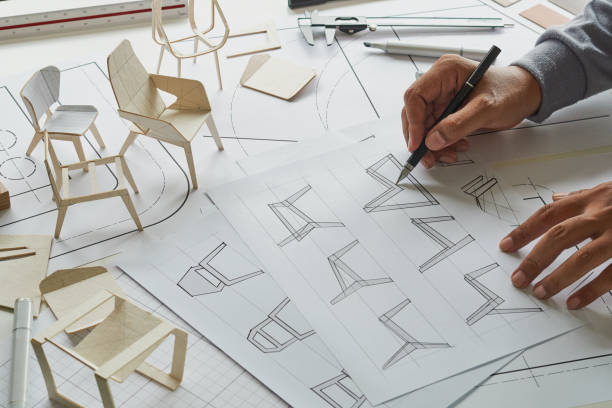
Furniture Designers are artistic and technical experts responsible for creating furniture that balances form, function, and user needs while considering materials, production processes, and market trends. Their role involves sketching concepts, prototyping, and overseeing production, often working in studios, workshops, or offices. They combine knowledge of design principles, ergonomics, and material science to address challenges like durability, cost-efficiency, and environmental impact. As key contributors to interior aesthetics and functionality, they help shape sustainable practices in an industry increasingly focused on eco-friendly materials, modular designs, and personalized solutions.

Roles and Responsibilities

💼
Furniture Designer
Roles and Responsibilities
Concept Development and Sketching
Create original furniture designs based on client needs, market trends, or personal inspiration
Develop detailed sketches and renderings to visualize concepts for stakeholders
Material Selection and Research
Research and choose appropriate materials (wood, metal, fabric, etc.) for durability and aesthetics
Stay updated on sustainable and innovative materials to enhance design quality
Prototyping and Testing
Build prototypes or models to test functionality, comfort, and structural integrity
Refine designs based on feedback and testing results to meet user requirements
Ergonomic and Functional Design
Ensure furniture designs prioritize user comfort and usability through ergonomic principles
Adapt designs to fit specific spaces or purposes, such as compact or multifunctional furniture
Collaboration with Manufacturers
Work with manufacturers to ensure designs are feasible for mass production or custom builds
Oversee production processes to maintain design integrity and quality standards
Client Interaction and Customization
Consult with clients to understand their preferences, budget, and space constraints
Provide tailored solutions for bespoke furniture or large-scale projects
Market Analysis and Trend Awareness
Analyze current design trends and consumer preferences to create marketable products
Incorporate cultural or stylistic elements to appeal to diverse audiences
Sustainability and Cost Management
Design with eco-friendly practices, minimizing waste and using recyclable materials
Balance creativity with cost-effective solutions to meet budget constraints
Creative Foundation
: Strong knowledge of design principles, aesthetics, and functionality is essential for innovative furniture creation.
Practical Skills
: Hands-on training in prototyping and material handling develops core competencies in design execution.
Specialized Training
: Certifications in industrial design or sustainable materials offer niche expertise.
Technology Proficiency
: Mastery of CAD and 3D modeling software is vital for precise design visualization.
Interdisciplinary Knowledge
: Understanding ergonomics, interior design, and manufacturing improves product outcomes.
Certification Importance
: Some roles may require certifications from design bodies for credibility.
Continuing Education
: Regular workshops are necessary to stay updated on design trends and sustainable practices.
Global Standards
: Familiarity with international design standards enhances opportunities for global markets.
Attention to Detail
: Precision in measurements and material selection is critical for quality and usability.
Entrance Examination Success
: Certain programs may require entrance tests for admission.
International Testing Requirements
: For global practice, certifications or qualifications from recognized design bodies may be needed.
UCEED (Undergraduate Common Entrance Examination for Design)
: For admission to B.Des programs at IITs and other design institutes.
CEED (Common Entrance Examination for Design)
: For admission to M.Des programs at IITs and other institutes.
NIFT Entrance Exam
: For admission to accessory or product design programs at NIFT.
SAT (Scholastic Assessment Test)
: Required for undergraduate admissions in countries like the USA.
TOEFL (Test of English as a Foreign Language)
: Minimum score of 80-100 required for non-native speakers applying to programs in English-speaking countries.
IELTS (International English Language Testing System)
: Minimum score of 6.0-7.0 required for admission to universities in the UK, Australia, and other English-speaking regions.
PTE Academic (Pearson Test of English Academic)
: Accepted by many international institutes as an alternative to TOEFL or IELTS for English proficiency.
Sustainable Design
: Growing emphasis on eco-friendly materials and manufacturing processes.
Rising Demand
: Increasing need for furniture designers due to urbanization and interior design growth.
Digital Tools Integration
: Adoption of 3D modeling and AR for virtual design previews.
Modular Furniture
: Expansion of compact and multifunctional designs for urban living.
Personalization Focus
: Emergence of bespoke and customizable furniture for niche markets.
E-commerce Growth
: Use of online platforms to reach wider audiences with innovative designs.
Policy Emphasis
: Government support for craftsmanship and sustainable production initiatives.
Global Collaboration
: Enhanced focus on international partnerships for design inspiration and markets.
Skill Development Needs
: Growing necessity for training in digital design and sustainability practices.
Cultural Revival
: Increased efforts to incorporate traditional and cultural elements in modern designs.
Charles and Ray Eames (Historical, USA)
: Pioneers of modern furniture design with iconic pieces like the Eames Lounge Chair. Their work redefined functionality. Their impact shapes mid-century design.
Le Corbusier (Historical, France/Switzerland)
: Architect and designer known for minimalist furniture like the LC4 Chaise Longue. His vision merged form and function. His legacy influences modern aesthetics.
Dieter Rams (Contemporary, Germany)
: Industrial designer for Braun, whose principles inspired minimalist furniture design. His work emphasizes simplicity. His impact drives functional design.
Patricia Urquiola (Contemporary, Spain/Italy)
: Designer known for innovative furniture for brands like Moroso and Kartell. Her creations blend tradition and modernity. Her contributions inspire versatility.
Marcel Breuer (Historical, Hungary/USA)
: Bauhaus designer of the Wassily Chair, pioneering tubular steel furniture. His designs revolutionized materials. His impact endures in industrial design.
Arne Jacobsen (Historical, Denmark)
: Creator of the Egg Chair, blending sculptural form with functionality. His work epitomizes Scandinavian design. His contributions shape timeless style.
Eero Saarinen (Historical, Finland/USA)
: Designer of the Tulip Chair and Table, focusing on organic forms. His vision pushed boundaries. His impact influences modern furniture.
Philippe Starck (Contemporary, France)
: Known for bold, accessible designs like the Ghost Chair for Kartell. His work democratizes design. His contributions drive innovation.
Nendo (Oki Sato) (Contemporary, Japan)
: Japanese design studio known for minimalist, playful furniture. Their creations merge art and utility. Their impact shapes global trends.
Tom Dixon (Contemporary, UK)
: Self-taught designer known for industrial furniture like the Wingback Chair. His work blends craftsmanship and modernity. His contributions inspire bold aesthetics.

Roles and Responsibilities

  • Concept Development and Sketching
    • Create original furniture designs based on client needs, market trends, or personal inspiration
    • Develop detailed sketches and renderings to visualize concepts for stakeholders
  • Material Selection and Research
    • Research and choose appropriate materials (wood, metal, fabric, etc.) for durability and aesthetics
    • Stay updated on sustainable and innovative materials to enhance design quality
  • Prototyping and Testing
    • Build prototypes or models to test functionality, comfort, and structural integrity
    • Refine designs based on feedback and testing results to meet user requirements
  • Ergonomic and Functional Design
    • Ensure furniture designs prioritize user comfort and usability through ergonomic principles
    • Adapt designs to fit specific spaces or purposes, such as compact or multifunctional furniture
  • Collaboration with Manufacturers
    • Work with manufacturers to ensure designs are feasible for mass production or custom builds
    • Oversee production processes to maintain design integrity and quality standards
  • Client Interaction and Customization
    • Consult with clients to understand their preferences, budget, and space constraints
    • Provide tailored solutions for bespoke furniture or large-scale projects
  • Market Analysis and Trend Awareness
    • Analyze current design trends and consumer preferences to create marketable products
    • Incorporate cultural or stylistic elements to appeal to diverse audiences
  • Sustainability and Cost Management
    • Design with eco-friendly practices, minimizing waste and using recyclable materials
    • Balance creativity with cost-effective solutions to meet budget constraints


Study Route & Eligibility Criteria

RouteSteps
Route 11. 10+2 in any stream (preferably Arts or Science with Mathematics)
2. Bachelor’s degree in Industrial Design, Furniture Design, or Architecture (3-5 years)
3. Internship or field training (3-6 months)
4. Practice as Junior Furniture Designer
Route 21. 10+2 in any stream
2. Bachelor’s degree in Industrial Design or related field (3-5 years)
3. Master’s degree in Furniture Design, Industrial Design, or Product Design (2 years)
4. Work as Furniture Designer
Route 31. 10+2 in any stream
2. Bachelor’s degree in Industrial Design or Furniture Design (3-5 years)
3. Master’s degree in Furniture Design or Product Design (2 years)
4. Ph.D. in Design or Material Science (3-5 years)
5. Practice as Senior Researcher or Academic
Route 41. 10+2 in any stream
2. Advanced international training or certification in Furniture Design (1-2 years)
3. Master’s or Ph.D. as per country requirements
4. Practice abroad or in India


Significant Observations (Academic Related Points)

  • Creative Foundation: Strong knowledge of design principles, aesthetics, and functionality is essential for innovative furniture creation.
  • Practical Skills: Hands-on training in prototyping and material handling develops core competencies in design execution.
  • Specialized Training: Certifications in industrial design or sustainable materials offer niche expertise.
  • Technology Proficiency: Mastery of CAD and 3D modeling software is vital for precise design visualization.
  • Interdisciplinary Knowledge: Understanding ergonomics, interior design, and manufacturing improves product outcomes.
  • Certification Importance: Some roles may require certifications from design bodies for credibility.
  • Continuing Education: Regular workshops are necessary to stay updated on design trends and sustainable practices.
  • Global Standards: Familiarity with international design standards enhances opportunities for global markets.
  • Attention to Detail: Precision in measurements and material selection is critical for quality and usability.
  • Entrance Examination Success: Certain programs may require entrance tests for admission.
  • International Testing Requirements: For global practice, certifications or qualifications from recognized design bodies may be needed.


Internships & Practical Exposure

  • Mandatory field training during degree programs in furniture design or manufacturing firms
  • Rotations in design studios for hands-on experience with concept development
  • Internships under senior designers for exposure to real-time client projects
  • Observerships in interior design firms for experience in integrating furniture with spaces
  • Participation in mock furniture design challenges for practical skill development
  • Training in sustainable materials through real-world eco-friendly projects
  • Exposure to CAD and prototyping tools during internships
  • Field projects on ergonomic design or material testing during training
  • Community engagement initiatives for designing affordable furniture solutions
  • International design attachments for global exposure to advanced furniture trends


Courses & Specializations to Enter the Field

  • Certificate in Furniture Design or Industrial Design
  • Bachelor’s in Industrial Design, Furniture Design, or Architecture
  • Master’s in Furniture Design, Industrial Design, or Product Design
  • Ph.D. in Design, Material Science, or Sustainable Design
  • Specialization in Ergonomic Furniture Design
  • Certification in Computer-Aided Design (CAD) for Furniture
  • Workshops on Sustainable Furniture Design
  • Training in Woodworking and Material Innovation
  • Specialization in Modular or Multifunctional Furniture
  • Certification in Interior Product Design


Top Institutes for Furniture Designer Education (India)

InstituteCourse/ProgramOfficial Link
National Institute of Design (NID), AhmedabadB.Des./M.Des. in Furniture Designhttps://www.nid.edu/
Indian Institute of Technology (IIT), BombayB.Des./M.Des. in Industrial Designhttps://www.iitb.ac.in/
Srishti Manipal Institute of Art, Design and Technology, BangaloreB.Des. in Industrial Arts and Designhttps://www.srishti.ac.in/
Pearl Academy, DelhiB.Des. in Product Designhttps://www.pearlacademy.com/
Symbiosis Institute of Design (SID), PuneB.Des. in Industrial Designhttps://www.sid.edu.in/
MIT Institute of Design, PuneB.Des./M.Des. in Product Designhttps://www.mitid.edu.in/
NIFT (National Institute of Fashion Technology), New DelhiAccessory Design Programhttps://www.nift.ac.in/
CEPT University, AhmedabadM.Des. in Furniture Designhttps://www.cept.ac.in/
Amity School of Design, NoidaB.Des. in Product Designhttps://www.amity.edu/
Christ University, BangaloreB.Des. in Industrial Designhttps://www.christuniversity.in/


Top International Institutes

InstitutionCourseCountryOfficial Link
Royal College of Art (RCA)MA in Design ProductsUKhttps://www.rca.ac.uk/
Rhode Island School of Design (RISD)BFA/MFA in Furniture DesignUSAhttps://www.risd.edu/
Parsons School of Design, The New SchoolBFA/MFA in Product DesignUSAhttps://www.newschool.edu/parsons/
Politecnico di MilanoMSc in Product Service System DesignItalyhttps://www.polimi.it/
Aalto UniversityMA in Collaborative and Industrial DesignFinlandhttps://www.aalto.fi/
Design Academy EindhovenBA/MA in Product DesignNetherlandshttps://www.designacademy.nl/
University of the Arts London (UAL)BA/MA in Product and Furniture DesignUKhttps://www.arts.ac.uk/
Savannah College of Art and Design (SCAD)BFA/MFA in Furniture DesignUSAhttps://www.scad.edu/
RMIT UniversityBA/MA in Industrial DesignAustraliahttps://www.rmit.edu.au/
Konstfack University of Arts, Crafts and DesignMA in DesignSwedenhttps://www.konstfack.se/


Entrance Tests Required

India:

  • UCEED (Undergraduate Common Entrance Examination for Design): For admission to B.Des programs at IITs and other design institutes.
  • CEED (Common Entrance Examination for Design): For admission to M.Des programs at IITs and other institutes.
  • NIFT Entrance Exam: For admission to accessory or product design programs at NIFT.


International:

  • SAT (Scholastic Assessment Test): Required for undergraduate admissions in countries like the USA.
  • TOEFL (Test of English as a Foreign Language): Minimum score of 80-100 required for non-native speakers applying to programs in English-speaking countries.
  • IELTS (International English Language Testing System): Minimum score of 6.0-7.0 required for admission to universities in the UK, Australia, and other English-speaking regions.
  • PTE Academic (Pearson Test of English Academic): Accepted by many international institutes as an alternative to TOEFL or IELTS for English proficiency.


Ideal Progressing Career Path 

Trainee → Junior Furniture Designer → Senior Furniture Designer → Design Lead → Product Design Manager → Creative Director → Academician/Professor → Furniture Design Consultant


Major Areas of Employment

  • Furniture manufacturing companies for designing mass-produced or custom pieces
  • Design studios for creating innovative and bespoke furniture solutions
  • Interior design firms for integrating furniture with overall space aesthetics
  • Retail brands for developing furniture lines for commercial sale
  • Architectural firms for collaborating on furniture as part of building projects
  • Freelance or independent practice for personalized client projects
  • Universities and academic institutions for teaching and research in furniture design
  • E-commerce platforms for designing furniture for online markets
  • Hospitality industry for creating furniture for hotels and restaurants
  • Sustainability-focused organizations for eco-friendly furniture initiatives


Prominent Employers

IndiaInternational
Godrej Interio, MumbaiIKEA, Sweden
Pepperfry, MumbaiHerman Miller, USA
Urban Ladder, BangaloreKnoll, USA
Nilkamal, MumbaiVitra, Switzerland
Durian, MumbaiCassina, Italy
Featherlite, BangaloreB&B Italia, Italy
Hettich India, MumbaiPoltrona Frau, Italy
Spacewood Furnishers, NagpurKartell, Italy
Zuari Furniture, ChennaiSteelcase, USA
Wipro Furniture, BangaloreHaworth, USA


Pros and Cons of the Profession

ProsCons
Opportunity to contribute to everyday functionality and aesthetics through creative designsHigh pressure to meet client expectations and tight deadlines for custom projects
High demand for innovative designers due to growing interior design and e-commerce marketsRequires continuous learning to keep up with evolving design trends and technologies
Rewarding impact on society through creating comfortable and sustainable living spacesFieldwork or prototyping can be physically demanding and time-intensive
Diverse career paths across manufacturing, retail, and freelance opportunitiesRisk of project rejection or redesigns due to client dissatisfaction or market shifts
Strong potential for growth with increasing focus on eco-friendly and modular furnitureLimited immediate financial returns for freelancers until a strong portfolio is established


Industry Trends and Future Outlook

  • Sustainable Design: Growing emphasis on eco-friendly materials and manufacturing processes.
  • Rising Demand: Increasing need for furniture designers due to urbanization and interior design growth.
  • Digital Tools Integration: Adoption of 3D modeling and AR for virtual design previews.
  • Modular Furniture: Expansion of compact and multifunctional designs for urban living.
  • Personalization Focus: Emergence of bespoke and customizable furniture for niche markets.
  • E-commerce Growth: Use of online platforms to reach wider audiences with innovative designs.
  • Policy Emphasis: Government support for craftsmanship and sustainable production initiatives.
  • Global Collaboration: Enhanced focus on international partnerships for design inspiration and markets.
  • Skill Development Needs: Growing necessity for training in digital design and sustainability practices.
  • Cultural Revival: Increased efforts to incorporate traditional and cultural elements in modern designs.


Salary Expectations

Career LevelIndia (₹ per annum)International (USD per annum)
Trainee/Junior Furniture Designer (Early Career)2,50,000 - 5,00,00025,000 - 40,000
Senior Furniture Designer (Mid-Career)5,00,000 - 8,00,00040,000 - 60,000
Design Lead8,00,000 - 12,00,00060,000 - 80,000
Product Design Manager/Creative Director12,00,000 - 18,00,00080,000 - 110,000
Academician/Professor/Furniture Design Consultant18,00,000+110,000+
Note: Salaries may vary based on location, employer, experience, and specialization.  


Key Software Tools

  • CAD Software (e.g., AutoCAD, SolidWorks) for precise furniture design and drafting
  • 3D Modeling Tools (e.g., SketchUp, Rhino) for visualizing furniture concepts
  • Rendering Software (e.g., V-Ray, Lumion) for creating realistic design presentations
  • Graphic Design Tools (e.g., Adobe Illustrator, Photoshop) for concept sketches
  • Prototyping Software (e.g., Fusion 360) for testing and refining designs
  • Teleconferencing tools like Zoom for client collaboration and meetings
  • Augmented Reality (AR) Tools (e.g., IKEA Place) for virtual furniture placement
  • Microsoft Office Suite for documentation and project reporting
  • Project Management Software (e.g., Trello, Asana) for scheduling and coordination
  • Mobile Apps for real-time design inspiration and client communication

Professional Organizations and Networks

  • Association of Furniture Manufacturers of India (AFMI)
  • Indian Institute of Interior Designers (IIID)
  • Industrial Designers Society of America (IDSA)
  • International Federation of Interior Architects/Designers (IFI)
  • Furniture Design Association (FDA)
  • World Design Organization (WDO)
  • European Furniture Industries Confederation (EFIC)
  • American Society of Interior Designers (ASID)
  • Design Council, UK
  • International Council of Societies of Industrial Design (ICSID)


Notable Furniture Designers and Industry Leaders (Top 10)

  • Charles and Ray Eames (Historical, USA): Pioneers of modern furniture design with iconic pieces like the Eames Lounge Chair. Their work redefined functionality. Their impact shapes mid-century design.
     
  • Le Corbusier (Historical, France/Switzerland): Architect and designer known for minimalist furniture like the LC4 Chaise Longue. His vision merged form and function. His legacy influences modern aesthetics.
     
  • Dieter Rams (Contemporary, Germany): Industrial designer for Braun, whose principles inspired minimalist furniture design. His work emphasizes simplicity. His impact drives functional design.
     
  • Patricia Urquiola (Contemporary, Spain/Italy): Designer known for innovative furniture for brands like Moroso and Kartell. Her creations blend tradition and modernity. Her contributions inspire versatility.
     
  • Marcel Breuer (Historical, Hungary/USA): Bauhaus designer of the Wassily Chair, pioneering tubular steel furniture. His designs revolutionized materials. His impact endures in industrial design.
     
  • Arne Jacobsen (Historical, Denmark): Creator of the Egg Chair, blending sculptural form with functionality. His work epitomizes Scandinavian design. His contributions shape timeless style.
     
  • Eero Saarinen (Historical, Finland/USA): Designer of the Tulip Chair and Table, focusing on organic forms. His vision pushed boundaries. His impact influences modern furniture.
     
  • Philippe Starck (Contemporary, France): Known for bold, accessible designs like the Ghost Chair for Kartell. His work democratizes design. His contributions drive innovation.
     
  • Nendo (Oki Sato) (Contemporary, Japan): Japanese design studio known for minimalist, playful furniture. Their creations merge art and utility. Their impact shapes global trends.
     
  • Tom Dixon (Contemporary, UK): Self-taught designer known for industrial furniture like the Wingback Chair. His work blends craftsmanship and modernity. His contributions inspire bold aesthetics.
     

Advice for Aspiring Furniture Designers

  • Build a strong foundation in design principles, ergonomics, and material science to create functional furniture.
  • Seek early exposure to design studios through internships to confirm interest in the field.
  • Prepare thoroughly for entrance exams or certification requirements specific to your chosen program or region.
  • Pursue advanced certifications in industrial design or sustainable materials to gain expertise.
  • Stay updated on design trends and technologies by attending industry exhibitions and fairs.
  • Develop hands-on skills in prototyping, CAD, and material handling through practical training.
  • Engage in real-world furniture design projects or competitions to build a strong portfolio.
  • Join professional associations like the Industrial Designers Society of America (IDSA) for networking and resources.
  • Work on creativity and problem-solving to ensure innovative and practical furniture solutions.
  • Explore international design initiatives for exposure to diverse aesthetic and functional standards.
  • Volunteer in community or sustainable design projects to understand practical user needs.
  • Cultivate adaptability to handle client preferences and production constraints in design projects.
  • Attend continuing education programs to stay abreast of evolving design methods and sustainability practices.
  • Build a network with interior designers, manufacturers, and retailers for collaborative efforts.
  • Develop resilience to manage the creative and commercial pressures of design projects.
  • Balance artistic vision with technical skills to adapt to rapid advancements in furniture design dynamics.


A career as a Furniture Designer offers a unique opportunity to contribute to everyday functionality and beauty by creating innovative furniture that addresses critical user and environmental challenges. From designing ergonomic chairs to sustainable modular pieces, Furniture Designers play a pivotal role in modern interior and industrial design. This field combines artistic creativity, technical expertise, and a commitment to user-centric solutions, offering diverse paths in manufacturing, retail, and freelance design. For those passionate about shaping design trends, adapting to global aesthetic challenges, and addressing critical sustainability needs in an era of personalized living spaces, a career as a Furniture Designer provides an intellectually stimulating and professionally rewarding journey with the potential to make significant contributions to society by enhancing the comfort of spaces and industry standards worldwide.


Study Route & Eligibility Criteria

Study Route & Eligibility Criteria
Furniture Designer
Route 1
🎓
1
10+2 in any stream
🏛️
2
Bachelor’s degree in Industrial Design, Furniture Design, or Architecture
3-5 years
💼
3
Internship or field training
3-6 months
💼
4
Practice as Junior Furniture Designer
Route 2
🎓
1
10+2 in any stream
🏛️
2
Bachelor’s degree in Industrial Design or related field
3-5 years
🏛️
3
Master’s degree in Furniture Design, Industrial Design, or Product Design
2 years
💼
4
Work as Furniture Designer
Route 3
🎓
1
10+2 in any stream
🏛️
2
Bachelor’s degree in Industrial Design or Furniture Design
3-5 years
🏛️
3
Master’s degree in Furniture Design or Product Design
2 years
💼
4
Ph.D. in Design or Material Science
3-5 years
💼
5
Practice as Senior Researcher or Academic
Route 4
🎓
1
10+2 in any stream
🏛️
2
Advanced international training or certification in Furniture Design
1-2 years
🎓
3
Master’s or Ph.D. as per country requirements
💼
4
Practice abroad or in India
🎯 Furniture Designer - Professional

Significant Observations (Academic Related Points)

💡
Furniture Designer
Academic Related Points
1
Creative Foundation
Strong knowledge of design principles, aesthetics, and functionality is essential for innovative furniture creation.
2
Practical Skills
Hands-on training in prototyping and material handling develops core competencies in design execution.
3
Specialized Training
Certifications in industrial design or sustainable materials offer niche expertise.
4
Technology Proficiency
Mastery of CAD and 3D modeling software is vital for precise design visualization.
5
Interdisciplinary Knowledge
Understanding ergonomics, interior design, and manufacturing improves product outcomes.
6
Certification Importance
Some roles may require certifications from design bodies for credibility.
7
Continuing Education
Regular workshops are necessary to stay updated on design trends and sustainable practices.
8
Global Standards
Familiarity with international design standards enhances opportunities for global markets.
9
Attention to Detail
Precision in measurements and material selection is critical for quality and usability.
10
Entrance Examination Success
Certain programs may require entrance tests for admission.
11
International Testing Requirements
For global practice, certifications or qualifications from recognized design bodies may be needed.
12
UCEED (Undergraduate Common Entrance Examination for Design)
For admission to B.Des programs at IITs and other design institutes.
13
CEED (Common Entrance Examination for Design)
For admission to M.Des programs at IITs and other institutes.
14
NIFT Entrance Exam
For admission to accessory or product design programs at NIFT.
15
SAT (Scholastic Assessment Test)
Required for undergraduate admissions in countries like the USA.
16
TOEFL (Test of English as a Foreign Language)
Minimum score of 80-100 required for non-native speakers applying to programs in English-speaking countries.
17
IELTS (International English Language Testing System)
Minimum score of 6.0-7.0 required for admission to universities in the UK, Australia, and other English-speaking regions.
18
PTE Academic (Pearson Test of English Academic)
Accepted by many international institutes as an alternative to TOEFL or IELTS for English proficiency.
19
Sustainable Design
Growing emphasis on eco-friendly materials and manufacturing processes.
20
Rising Demand
Increasing need for furniture designers due to urbanization and interior design growth.
21
Digital Tools Integration
Adoption of 3D modeling and AR for virtual design previews.
22
Modular Furniture
Expansion of compact and multifunctional designs for urban living.
23
Personalization Focus
Emergence of bespoke and customizable furniture for niche markets.
24
E-commerce Growth
Use of online platforms to reach wider audiences with innovative designs.
25
Policy Emphasis
Government support for craftsmanship and sustainable production initiatives.
26
Global Collaboration
Enhanced focus on international partnerships for design inspiration and markets.
27
Skill Development Needs
Growing necessity for training in digital design and sustainability practices.
28
Cultural Revival
Increased efforts to incorporate traditional and cultural elements in modern designs.
29
Charles and Ray Eames (Historical, USA)
Pioneers of modern furniture design with iconic pieces like the Eames Lounge Chair. Their work redefined functionality. Their impact shapes mid-century design.
30
Le Corbusier (Historical, France/Switzerland)
Architect and designer known for minimalist furniture like the LC4 Chaise Longue. His vision merged form and function. His legacy influences modern aesthetics.
31
Dieter Rams (Contemporary, Germany)
Industrial designer for Braun, whose principles inspired minimalist furniture design. His work emphasizes simplicity. His impact drives functional design.
32
Patricia Urquiola (Contemporary, Spain/Italy)
Designer known for innovative furniture for brands like Moroso and Kartell. Her creations blend tradition and modernity. Her contributions inspire versatility.
33
Marcel Breuer (Historical, Hungary/USA)
Bauhaus designer of the Wassily Chair, pioneering tubular steel furniture. His designs revolutionized materials. His impact endures in industrial design.
34
Arne Jacobsen (Historical, Denmark)
Creator of the Egg Chair, blending sculptural form with functionality. His work epitomizes Scandinavian design. His contributions shape timeless style.
35
Eero Saarinen (Historical, Finland/USA)
Designer of the Tulip Chair and Table, focusing on organic forms. His vision pushed boundaries. His impact influences modern furniture.
36
Philippe Starck (Contemporary, France)
Known for bold, accessible designs like the Ghost Chair for Kartell. His work democratizes design. His contributions drive innovation.
37
Nendo (Oki Sato) (Contemporary, Japan)
Japanese design studio known for minimalist, playful furniture. Their creations merge art and utility. Their impact shapes global trends.
38
Tom Dixon (Contemporary, UK)
Self-taught designer known for industrial furniture like the Wingback Chair. His work blends craftsmanship and modernity. His contributions inspire bold aesthetics.

Internships & Practical Exposure

💼
Furniture Designer
Internships & Practical Experience
1
Mandatory field training during degree programs in furniture design or manufacturing firms
2
Rotations in design studios for hands-on experience with concept development
3
Internships under senior designers for exposure to real-time client projects
4
Observerships in interior design firms for experience in integrating furniture with spaces
5
Participation in mock furniture design challenges for practical skill development
6
Training in sustainable materials through real-world eco-friendly projects
7
Exposure to CAD and prototyping tools during internships
8
Field projects on ergonomic design or material testing during training
9
Community engagement initiatives for designing affordable furniture solutions
10
International design attachments for global exposure to advanced furniture trends
11
Certificate in Furniture Design or Industrial Design
12
Bachelor’s in Industrial Design, Furniture Design, or Architecture
13
Master’s in Furniture Design, Industrial Design, or Product Design
14
Ph.D. in Design, Material Science, or Sustainable Design
15
Specialization in Ergonomic Furniture Design
16
Certification in Computer-Aided Design (CAD) for Furniture
17
Workshops on Sustainable Furniture Design
18
Training in Woodworking and Material Innovation
19
Specialization in Modular or Multifunctional Furniture
20
Certification in Interior Product Design
21
UCEED (Undergraduate Common Entrance Examination for Design): For admission to B.Des programs at IITs and other design institutes.
22
CEED (Common Entrance Examination for Design): For admission to M.Des programs at IITs and other institutes.
23
NIFT Entrance Exam: For admission to accessory or product design programs at NIFT.
24
SAT (Scholastic Assessment Test): Required for undergraduate admissions in countries like the USA.
25
TOEFL (Test of English as a Foreign Language): Minimum score of 80-100 required for non-native speakers applying to programs in English-speaking countries.
26
IELTS (International English Language Testing System): Minimum score of 6.0-7.0 required for admission to universities in the UK, Australia, and other English-speaking regions.
27
PTE Academic (Pearson Test of English Academic): Accepted by many international institutes as an alternative to TOEFL or IELTS for English proficiency.
28
Furniture manufacturing companies for designing mass-produced or custom pieces
29
Design studios for creating innovative and bespoke furniture solutions
30
Interior design firms for integrating furniture with overall space aesthetics
31
Retail brands for developing furniture lines for commercial sale
32
Architectural firms for collaborating on furniture as part of building projects
33
Freelance or independent practice for personalized client projects
34
Universities and academic institutions for teaching and research in furniture design
35
E-commerce platforms for designing furniture for online markets
36
Hospitality industry for creating furniture for hotels and restaurants
37
Sustainability-focused organizations for eco-friendly furniture initiatives
38
Sustainable Design: Growing emphasis on eco-friendly materials and manufacturing processes.
39
Rising Demand: Increasing need for furniture designers due to urbanization and interior design growth.
40
Digital Tools Integration: Adoption of 3D modeling and AR for virtual design previews.
41
Modular Furniture: Expansion of compact and multifunctional designs for urban living.
42
Personalization Focus: Emergence of bespoke and customizable furniture for niche markets.
43
E-commerce Growth: Use of online platforms to reach wider audiences with innovative designs.
44
Policy Emphasis: Government support for craftsmanship and sustainable production initiatives.
45
Global Collaboration: Enhanced focus on international partnerships for design inspiration and markets.
46
Skill Development Needs: Growing necessity for training in digital design and sustainability practices.
47
Cultural Revival: Increased efforts to incorporate traditional and cultural elements in modern designs.
48
CAD Software (e.g., AutoCAD, SolidWorks) for precise furniture design and drafting
49
3D Modeling Tools (e.g., SketchUp, Rhino) for visualizing furniture concepts
50
Rendering Software (e.g., V-Ray, Lumion) for creating realistic design presentations
51
Graphic Design Tools (e.g., Adobe Illustrator, Photoshop) for concept sketches
52
Prototyping Software (e.g., Fusion 360) for testing and refining designs
53
Teleconferencing tools like Zoom for client collaboration and meetings
54
Augmented Reality (AR) Tools (e.g., IKEA Place) for virtual furniture placement
55
Microsoft Office Suite for documentation and project reporting
56
Project Management Software (e.g., Trello, Asana) for scheduling and coordination
57
Mobile Apps for real-time design inspiration and client communication
58
Association of Furniture Manufacturers of India (AFMI)
59
Indian Institute of Interior Designers (IIID)
60
Industrial Designers Society of America (IDSA)
61
International Federation of Interior Architects/Designers (IFI)
62
Furniture Design Association (FDA)
63
World Design Organization (WDO)
64
European Furniture Industries Confederation (EFIC)
65
American Society of Interior Designers (ASID)
66
Design Council, UK
67
International Council of Societies of Industrial Design (ICSID)
68
Charles and Ray Eames (Historical, USA): Pioneers of modern furniture design with iconic pieces like the Eames Lounge Chair. Their work redefined functionality. Their impact shapes mid-century design.
69
Le Corbusier (Historical, France/Switzerland): Architect and designer known for minimalist furniture like the LC4 Chaise Longue. His vision merged form and function. His legacy influences modern aesthetics.
70
Dieter Rams (Contemporary, Germany): Industrial designer for Braun, whose principles inspired minimalist furniture design. His work emphasizes simplicity. His impact drives functional design.
71
Patricia Urquiola (Contemporary, Spain/Italy): Designer known for innovative furniture for brands like Moroso and Kartell. Her creations blend tradition and modernity. Her contributions inspire versatility.
72
Marcel Breuer (Historical, Hungary/USA): Bauhaus designer of the Wassily Chair, pioneering tubular steel furniture. His designs revolutionized materials. His impact endures in industrial design.
73
Arne Jacobsen (Historical, Denmark): Creator of the Egg Chair, blending sculptural form with functionality. His work epitomizes Scandinavian design. His contributions shape timeless style.
74
Eero Saarinen (Historical, Finland/USA): Designer of the Tulip Chair and Table, focusing on organic forms. His vision pushed boundaries. His impact influences modern furniture.
75
Philippe Starck (Contemporary, France): Known for bold, accessible designs like the Ghost Chair for Kartell. His work democratizes design. His contributions drive innovation.
76
Nendo (Oki Sato) (Contemporary, Japan): Japanese design studio known for minimalist, playful furniture. Their creations merge art and utility. Their impact shapes global trends.
77
Tom Dixon (Contemporary, UK): Self-taught designer known for industrial furniture like the Wingback Chair. His work blends craftsmanship and modernity. His contributions inspire bold aesthetics.
78
Build a strong foundation in design principles, ergonomics, and material science to create functional furniture.
79
Seek early exposure to design studios through internships to confirm interest in the field.
80
Prepare thoroughly for entrance exams or certification requirements specific to your chosen program or region.
81
Pursue advanced certifications in industrial design or sustainable materials to gain expertise.
82
Stay updated on design trends and technologies by attending industry exhibitions and fairs.
83
Develop hands-on skills in prototyping, CAD, and material handling through practical training.
84
Engage in real-world furniture design projects or competitions to build a strong portfolio.
85
Join professional associations like the Industrial Designers Society of America (IDSA) for networking and resources.
86
Work on creativity and problem-solving to ensure innovative and practical furniture solutions.
87
Explore international design initiatives for exposure to diverse aesthetic and functional standards.
88
Volunteer in community or sustainable design projects to understand practical user needs.
89
Cultivate adaptability to handle client preferences and production constraints in design projects.
90
Attend continuing education programs to stay abreast of evolving design methods and sustainability practices.
91
Build a network with interior designers, manufacturers, and retailers for collaborative efforts.
92
Develop resilience to manage the creative and commercial pressures of design projects.
93
Balance artistic vision with technical skills to adapt to rapid advancements in furniture design dynamics.

Courses & Specializations to Enter the Field

📚
Furniture Designer
Courses & Specializations
📖
Certificate in Furniture Design or Industrial Design
📖
Bachelor’s in Industrial Design, Furniture Design, or Architecture
📖
Master’s in Furniture Design, Industrial Design, or Product Design
📖
Ph.D. in Design, Material Science, or Sustainable Design
📖
Specialization in Ergonomic Furniture Design
📖
Certification in Computer-Aided Design (CAD) for Furniture
📖
Workshops on Sustainable Furniture Design
📖
Training in Woodworking and Material Innovation
📖
Specialization in Modular or Multifunctional Furniture
📖
Certification in Interior Product Design
📖
UCEED (Undergraduate Common Entrance Examination for Design): For admission to B.Des programs at IITs and other design institutes.
📖
CEED (Common Entrance Examination for Design): For admission to M.Des programs at IITs and other institutes.
📖
NIFT Entrance Exam: For admission to accessory or product design programs at NIFT.
📖
SAT (Scholastic Assessment Test): Required for undergraduate admissions in countries like the USA.
📖
TOEFL (Test of English as a Foreign Language): Minimum score of 80-100 required for non-native speakers applying to programs in English-speaking countries.
📖
IELTS (International English Language Testing System): Minimum score of 6.0-7.0 required for admission to universities in the UK, Australia, and other English-speaking regions.
📖
PTE Academic (Pearson Test of English Academic): Accepted by many international institutes as an alternative to TOEFL or IELTS for English proficiency.
📖
Furniture manufacturing companies for designing mass-produced or custom pieces
📖
Design studios for creating innovative and bespoke furniture solutions
📖
Interior design firms for integrating furniture with overall space aesthetics
📖
Retail brands for developing furniture lines for commercial sale
📖
Architectural firms for collaborating on furniture as part of building projects
📖
Freelance or independent practice for personalized client projects
📖
Universities and academic institutions for teaching and research in furniture design
📖
E-commerce platforms for designing furniture for online markets
📖
Hospitality industry for creating furniture for hotels and restaurants
📖
Sustainability-focused organizations for eco-friendly furniture initiatives
📖
Sustainable Design: Growing emphasis on eco-friendly materials and manufacturing processes.
📖
Rising Demand: Increasing need for furniture designers due to urbanization and interior design growth.
📖
Digital Tools Integration: Adoption of 3D modeling and AR for virtual design previews.
📖
Modular Furniture: Expansion of compact and multifunctional designs for urban living.
📖
Personalization Focus: Emergence of bespoke and customizable furniture for niche markets.
📖
E-commerce Growth: Use of online platforms to reach wider audiences with innovative designs.
📖
Policy Emphasis: Government support for craftsmanship and sustainable production initiatives.
📖
Global Collaboration: Enhanced focus on international partnerships for design inspiration and markets.
📖
Skill Development Needs: Growing necessity for training in digital design and sustainability practices.
📖
Cultural Revival: Increased efforts to incorporate traditional and cultural elements in modern designs.
📖
CAD Software (e.g., AutoCAD, SolidWorks) for precise furniture design and drafting
📖
3D Modeling Tools (e.g., SketchUp, Rhino) for visualizing furniture concepts
📖
Rendering Software (e.g., V-Ray, Lumion) for creating realistic design presentations
📖
Graphic Design Tools (e.g., Adobe Illustrator, Photoshop) for concept sketches
📖
Prototyping Software (e.g., Fusion 360) for testing and refining designs
📖
Teleconferencing tools like Zoom for client collaboration and meetings
📖
Augmented Reality (AR) Tools (e.g., IKEA Place) for virtual furniture placement
📖
Microsoft Office Suite for documentation and project reporting
📖
Project Management Software (e.g., Trello, Asana) for scheduling and coordination
📖
Mobile Apps for real-time design inspiration and client communication
📖
Association of Furniture Manufacturers of India (AFMI)
📖
Indian Institute of Interior Designers (IIID)
📖
Industrial Designers Society of America (IDSA)
📖
International Federation of Interior Architects/Designers (IFI)
📖
Furniture Design Association (FDA)
📖
World Design Organization (WDO)
📖
European Furniture Industries Confederation (EFIC)
📖
American Society of Interior Designers (ASID)
📖
Design Council, UK
📖
International Council of Societies of Industrial Design (ICSID)
📖
Charles and Ray Eames (Historical, USA): Pioneers of modern furniture design with iconic pieces like the Eames Lounge Chair. Their work redefined functionality. Their impact shapes mid-century design.
📖
Le Corbusier (Historical, France/Switzerland): Architect and designer known for minimalist furniture like the LC4 Chaise Longue. His vision merged form and function. His legacy influences modern aesthetics.
📖
Dieter Rams (Contemporary, Germany): Industrial designer for Braun, whose principles inspired minimalist furniture design. His work emphasizes simplicity. His impact drives functional design.
📖
Patricia Urquiola (Contemporary, Spain/Italy): Designer known for innovative furniture for brands like Moroso and Kartell. Her creations blend tradition and modernity. Her contributions inspire versatility.
📖
Marcel Breuer (Historical, Hungary/USA): Bauhaus designer of the Wassily Chair, pioneering tubular steel furniture. His designs revolutionized materials. His impact endures in industrial design.
📖
Arne Jacobsen (Historical, Denmark): Creator of the Egg Chair, blending sculptural form with functionality. His work epitomizes Scandinavian design. His contributions shape timeless style.
📖
Eero Saarinen (Historical, Finland/USA): Designer of the Tulip Chair and Table, focusing on organic forms. His vision pushed boundaries. His impact influences modern furniture.
📖
Philippe Starck (Contemporary, France): Known for bold, accessible designs like the Ghost Chair for Kartell. His work democratizes design. His contributions drive innovation.
📖
Nendo (Oki Sato) (Contemporary, Japan): Japanese design studio known for minimalist, playful furniture. Their creations merge art and utility. Their impact shapes global trends.
📖
Tom Dixon (Contemporary, UK): Self-taught designer known for industrial furniture like the Wingback Chair. His work blends craftsmanship and modernity. His contributions inspire bold aesthetics.
📖
Build a strong foundation in design principles, ergonomics, and material science to create functional furniture.
📖
Seek early exposure to design studios through internships to confirm interest in the field.
📖
Prepare thoroughly for entrance exams or certification requirements specific to your chosen program or region.
📖
Pursue advanced certifications in industrial design or sustainable materials to gain expertise.
📖
Stay updated on design trends and technologies by attending industry exhibitions and fairs.
📖
Develop hands-on skills in prototyping, CAD, and material handling through practical training.
📖
Engage in real-world furniture design projects or competitions to build a strong portfolio.
📖
Join professional associations like the Industrial Designers Society of America (IDSA) for networking and resources.
📖
Work on creativity and problem-solving to ensure innovative and practical furniture solutions.
📖
Explore international design initiatives for exposure to diverse aesthetic and functional standards.
📖
Volunteer in community or sustainable design projects to understand practical user needs.
📖
Cultivate adaptability to handle client preferences and production constraints in design projects.
📖
Attend continuing education programs to stay abreast of evolving design methods and sustainability practices.
📖
Build a network with interior designers, manufacturers, and retailers for collaborative efforts.
📖
Develop resilience to manage the creative and commercial pressures of design projects.
📖
Balance artistic vision with technical skills to adapt to rapid advancements in furniture design dynamics.

Prominent Employers

🏢
Furniture Designer
🌟 Top Companies & Organizations
🇮🇳 India
🏛️
Godrej Interio, Mumbai
🏛️
Pepperfry, Mumbai
🏛️
Urban Ladder, Bangalore
🏛️
Nilkamal, Mumbai
🏛️
Durian, Mumbai
🏛️
Featherlite, Bangalore
🏛️
Hettich India, Mumbai
🏛️
Spacewood Furnishers, Nagpur
🏛️
Zuari Furniture, Chennai
🏛️
Wipro Furniture, Bangalore
🌍 International
🌐
IKEA, Sweden
🌐
Herman Miller, USA
🌐
Knoll, USA
🌐
Vitra, Switzerland
🌐
Cassina, Italy
🌐
B&B Italia, Italy
🌐
Poltrona Frau, Italy
🌐
Kartell, Italy
🌐
Steelcase, USA
🌐
Haworth, USA

Advice for Aspiring Furniture Designers

💡
Furniture Designer
🌟 Tips for Students & Parents
1
Build a strong foundation in design principles, ergonomics, and material science to create functional furniture.
2
Seek early exposure to design studios through internships to confirm interest in the field.
3
Prepare thoroughly for entrance exams or certification requirements specific to your chosen program or region.
4
Pursue advanced certifications in industrial design or sustainable materials to gain expertise.
5
Stay updated on design trends and technologies by attending industry exhibitions and fairs.
6
Develop hands-on skills in prototyping, CAD, and material handling through practical training.
7
Engage in real-world furniture design projects or competitions to build a strong portfolio.
8
Join professional associations like the Industrial Designers Society of America (IDSA) for networking and resources.
9
Work on creativity and problem-solving to ensure innovative and practical furniture solutions.
10
Explore international design initiatives for exposure to diverse aesthetic and functional standards.
11
Volunteer in community or sustainable design projects to understand practical user needs.
12
Cultivate adaptability to handle client preferences and production constraints in design projects.
13
Attend continuing education programs to stay abreast of evolving design methods and sustainability practices.
14
Build a network with interior designers, manufacturers, and retailers for collaborative efforts.
15
Develop resilience to manage the creative and commercial pressures of design projects.
16
Balance artistic vision with technical skills to adapt to rapid advancements in furniture design dynamics.
🎓 Final Message
A career as a Furniture Designer offers a unique opportunity to contribute to everyday functionality and beauty by creating innovative furniture that addresses critical user and environmental challenges. From designing ergonomic chairs to sustainable modular pieces, Furniture Designers play a pivotal role in modern interior and industrial design. This field combines artistic creativity, technical expertise, and a commitment to user-centric solutions, offering diverse paths in manufacturing, retail, and freelance design. For those passionate about shaping design trends, adapting to global aesthetic challenges, and addressing critical sustainability needs in an era of personalized living spaces, a career as a Furniture Designer provides an intellectually stimulating and professionally rewarding journey with the potential to make significant contributions to society by enhancing the comfort of spaces and industry standards worldwide.
Knowledge & Skills You Will Learn
1
Skill Development Needs: Growing necessity for training in digital design and sustainability practices.
2
Pursue advanced certifications in industrial design or sustainable materials to gain expertise.
3
Develop hands-on skills in prototyping, CAD, and material handling through practical training.
4
Cultivate adaptability to handle client preferences and production constraints in design projects.
5
Attend continuing education programs to stay abreast of evolving design methods and sustainability practices.
6
Balance artistic vision with technical skills to adapt to rapid advancements in furniture design dynamics.
Trainee

Trainee

Entry-level individuals undergo basic training in furniture design and prototyping under supervision. They acquire practical skills through...

0.0LPA

Junior Furniture Designer

Junior Furniture Designer

Early-career professionals handle basic design and research tasks with increasing autonomy. They hone skills in material selection and prototyping...

0.0LPA

Senior Furniture Designer

Senior Furniture Designer

Experienced professionals manage complex furniture projects with high accuracy, using advanced methodologies. They offer technical expertise in...

0.0LPA

Interested in this career?

Take the next step and explore more about Furniture Designer.