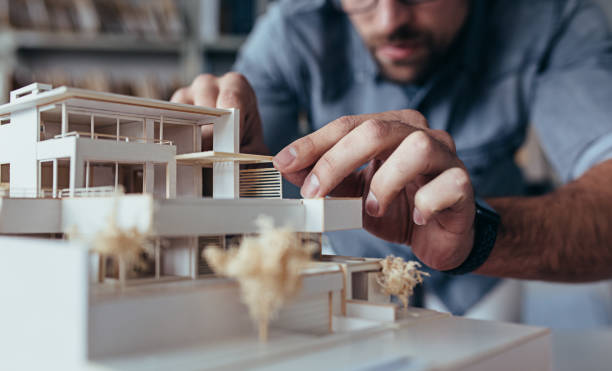
Restoration Architect

A Restoration Architect is a specialized professional who focuses on the preservation, conservation, and restoration of historic buildings, monuments, and cultural heritage sites, ensuring their structural integrity and historical authenticity. They work for government agencies, heritage organizations, architectural firms, or as independent consultants, collaborating with historians, archaeologists, and engineers. Restoration Architects play a crucial role in safeguarding cultural heritage by balancing modern needs with historical preservation in a sector focused on heritage conservation, sustainable restoration, and cultural tourism.

Share :
Career tree mind map (horizontal) — Restoration Architect
Colored branches, hub circles, and underlined topics — same style as counselor course classic (types 18–19 in admin).
Loading mind map…

Restoration Architects are technical and cultural experts responsible for assessing, repairing, and conserving historic structures while maintaining their original design, materials, and cultural significance. Their role involves fieldwork at heritage sites, research into historical construction techniques, and collaboration with multidisciplinary teams, often working in both field and office settings. They combine knowledge of architecture, history, and materials science to address challenges like structural decay, environmental damage, and modern adaptation. As key contributors to cultural preservation, they help sustain historical narratives in an industry increasingly focused on heritage tourism, adaptive reuse, and sustainable conservation practices.

  • Historical Research and Documentation
    • Conduct detailed studies on the history, design, and construction methods of heritage structures
    • Document existing conditions through surveys, drawings, and photographic records for preservation
  • Condition Assessment and Analysis
    • Evaluate structural integrity, material degradation, and environmental impacts on historic buildings
    • Identify areas of damage or decay requiring intervention or repair
  • Restoration Planning and Design
    • Develop restoration plans that preserve historical authenticity while meeting modern safety standards
    • Design interventions using traditional materials and techniques matched to the original structure
  • Conservation and Repair Implementation
    • Oversee the restoration process, ensuring adherence to conservation guidelines and ethical standards
    • Supervise repairs to elements like masonry, woodwork, or decorative features with precision
  • Adaptive Reuse and Modern Integration
    • Adapt historic buildings for contemporary use while preserving their cultural value
    • Integrate modern systems like HVAC or accessibility features without compromising heritage
  • Collaboration with Stakeholders
    • Work with historians, archaeologists, and local communities to ensure culturally sensitive restoration
    • Liaise with government bodies for approvals, permits, and funding for heritage projects
  • Policy and Guideline Adherence
    • Follow international and national conservation charters, such as the Venice Charter or ASI guidelines
    • Ensure compliance with heritage protection laws and building codes during restoration
  • Education and Advocacy
    • Educate the public and stakeholders on the importance of heritage preservation
    • Advocate for funding and policies to protect endangered historic structures

RouteSteps
Route 11. 10+2 in Science stream (preferably with Mathematics and Physics)
2. Bachelor’s degree in Architecture (B.Arch) (5 years)
3. Internship or field training in heritage conservation (3-6 months)
4. Practice as Junior Restoration Architect
Route 21. 10+2 in Science stream
2. Bachelor’s degree in Architecture (B.Arch) (5 years)
3. Master’s degree in Architectural Conservation, Heritage Management, or Restoration (2 years)
4. Work as Restoration Architect
Route 31. 10+2 in Science stream
2. Bachelor’s degree in Architecture (B.Arch) (5 years)
3. Master’s degree in Architectural Conservation or related field (2 years)
4. Ph.D. in Heritage Conservation or Architectural History (3-5 years)
5. Practice as Senior Researcher or Academic
Route 41. 10+2 in Science stream
2. Advanced international training or certification in Heritage Conservation (1-2 years)
3. Master’s or Ph.D. as per country requirements
4. Practice abroad or in India

  • Mandatory field training during degree programs at historic sites or conservation projects
  • Rotations in heritage restoration projects for hands-on experience with traditional techniques
  • Internships under senior restoration architects for exposure to real-time conservation challenges
  • Observerships in heritage organizations for experience in policy and documentation
  • Participation in mock restoration simulations for practical skill development
  • Training in traditional craftsmanship through real-world conservation projects
  • Exposure to 3D scanning and documentation tools during internships
  • Field projects on heritage site assessments or adaptive reuse during training
  • Community engagement initiatives for understanding cultural contexts in restoration
  • International conservation attachments for global exposure to advanced preservation practices

  • Certificate in Heritage Conservation or Architectural Restoration
  • Bachelor’s in Architecture (B.Arch)
  • Master’s in Architectural Conservation, Heritage Management, or Restoration Architecture
  • Ph.D. in Heritage Conservation, Architectural History, or Building Preservation
  • Specialization in Traditional Building Materials
  • Certification in 3D Documentation and Laser Scanning for Heritage
  • Workshops on Conservation Ethics and Guidelines
  • Training in Adaptive Reuse of Historic Structures
  • Specialization in Cultural Heritage Management
  • Certification in Structural Analysis for Historic Buildings

InstituteCourse/ProgramOfficial Link
School of Planning and Architecture (SPA), New DelhiM.Arch in Architectural Conservationhttps://www.spa.ac.in/
CEPT University, AhmedabadM.Arch in Conservation and Regenerationhttps://www.cept.ac.in/
Indian Institute of Technology (IIT), KharagpurB.Arch/M.Arch in Architecturehttps://www.iitkgp.ac.in/
Sir JJ College of Architecture, MumbaiB.Arch/M.Arch in Architecturehttps://www.sirjjarchitecture.org/
National Institute of Technology (NIT), TrichyB.Arch/M.Arch in Architecturehttps://www.nitt.edu/
Anna University, ChennaiM.Arch in Conservationhttps://www.annauniv.edu/
Jadavpur University, KolkataB.Arch/M.Arch in Architecturehttps://www.jaduniv.edu.in/
Deccan College Post Graduate and Research Institute, PuneMA in Archaeology and Heritage Managementhttps://www.deccancollegepune.ac.in/
University of Mumbai, MumbaiCertificate in Heritage Conservationhttps://www.mu.ac.in/
Rizvi College of Architecture, MumbaiB.Arch/M.Arch in Urban Conservationhttps://www.rizviarchitecture.edu.in/

InstitutionCourseCountryOfficial Link
University College London (UCL), BartlettMA in Historic Urban EnvironmentsUKhttps://www.ucl.ac.uk/bartlett/
University of YorkMA in Conservation Studies (Historic Buildings)UKhttps://www.york.ac.uk/
Columbia University, GSAPPMS in Historic PreservationUSAhttps://www.arch.columbia.edu/
Politecnico di MilanoMSc in Architecture for HeritageItalyhttps://www.polimi.it/
KU LeuvenMaster of Conservation of Monuments and SitesBelgiumhttps://www.kuleuven.be/
University of EdinburghMSc in Architectural ConservationUKhttps://www.ed.ac.uk/
Technical University of Munich (TUM)MA in Architecture with focus on HeritageGermanyhttps://www.tum.de/
University of SydneyMaster of Heritage ConservationAustraliahttps://www.sydney.edu.au/
University of TokyoMaster’s in Cultural Heritage StudiesJapanhttps://www.u-tokyo.ac.jp/
National University of Singapore (NUS)M.Arch in Urban Design and ConservationSingaporehttps://www.nus.edu.sg/

India:

  • NATA (National Aptitude Test in Architecture): For admission to B.Arch programs at various institutes.
  • JEE Main (Paper 2): For admission to B.Arch programs at IITs and NITs.
  • GATE (Graduate Aptitude Test in Engineering): For admission to M.Arch programs at IITs and other institutes.
  • CEED (Common Entrance Examination for Design): For admission to design-related postgraduate programs in architecture.


International:

  • TOEFL (Test of English as a Foreign Language): Minimum score of 80-100 required for non-native speakers applying to programs in English-speaking countries.
  • IELTS (International English Language Testing System): Minimum score of 6.0-7.0 required for admission to universities in the UK, Australia, and other English-speaking regions.
  • PTE Academic (Pearson Test of English Academic): Accepted by many international institutes as an alternative to TOEFL or IELTS for English proficiency.

Trainee → Junior Restoration Architect → Senior Restoration Architect → Restoration Project Lead → Heritage Conservation Director → Policy Advisor → Academician/Professor → Independent Heritage Consultant

  • Government heritage departments for conserving national monuments and sites
  • Archaeological Survey of India (ASI) for restoration of historic structures
  • Non-profit heritage organizations for advocacy and conservation projects
  • Architectural firms specializing in restoration and adaptive reuse
  • Museums and cultural institutions for preserving architectural artifacts
  • International conservation bodies for global heritage initiatives
  • Urban planning agencies for integrating heritage into city development
  • Universities and academic institutions for teaching and research in conservation
  • Private consultancies for heritage assessments and restoration planning
  • Tourism boards for promoting and preserving cultural heritage sites

IndiaInternational
Archaeological Survey of India (ASI), New DelhiUNESCO World Heritage Centre, France
Indian National Trust for Art and Cultural Heritage (INTACH), New DelhiInternational Council on Monuments and Sites (ICOMOS), France
Ministry of Culture, Government of IndiaGetty Conservation Institute, USA
School of Planning and Architecture (SPA), New DelhiWorld Monuments Fund (WMF), USA
CEPT University, AhmedabadEnglish Heritage, UK
Charles Correa Foundation, MumbaiHistoric England, UK
Urban Design Research Institute (UDRI), MumbaiNational Trust for Historic Preservation, USA
Aga Khan Trust for Culture (India Chapter), New DelhiICCROM (International Centre for the Study of the Preservation and Restoration of Cultural Property), Italy
Heritage Conservation Committee (HCC), DelhiHeritage Conservation Network, Global
State Departments of Archaeology (e.g., Rajasthan, Tamil Nadu)European Heritage Association, Europe

ProsCons
Opportunity to contribute to cultural heritage preservation and historical authenticityHigh pressure to balance modern needs with historical integrity under strict guidelines
High demand for restoration architects due to growing focus on heritage conservationRequires continuous learning to keep up with evolving conservation techniques and policies
Rewarding impact on society through safeguarding cultural narratives for future generationsFieldwork can be physically demanding and involve working in challenging site conditions
Diverse career paths across government, non-profits, and international heritage projectsRisk of limited funding or bureaucratic delays in executing restoration projects
Strong potential for growth with increasing emphasis on cultural tourism and adaptive reuseEmotional toll of witnessing neglected or deteriorating heritage sites over time

Career LevelIndia (₹ per annum)International (USD per annum)
Trainee/Junior Restoration Architect (Early Career)3,00,000 - 5,00,00025,000 - 40,000
Senior Restoration Architect (Mid-Career)5,00,000 - 8,00,00040,000 - 60,000
Restoration Project Lead8,00,000 - 12,00,00060,000 - 80,000
Heritage Conservation Director/Policy Advisor12,00,000 - 18,00,00080,000 - 100,000
Academician/Professor/Independent Consultant18,00,000+100,000+
Note: Salaries may vary based on location, employer, experience, and specialization.  

  • CAD Software (e.g., AutoCAD, Revit) for precise architectural drafting and restoration planning
  • 3D Scanning and Modeling Tools (e.g., Faro Focus, SketchUp) for documenting historic structures
  • Building Information Modeling (BIM) Tools (e.g., Autodesk BIM 360) for integrated project management
  • Geographic Information Systems (GIS) (e.g., ArcGIS) for mapping heritage sites
  • Photogrammetry Software (e.g., Agisoft Metashape) for creating detailed 3D models from photographs
  • Teleconferencing tools like Zoom for virtual meetings and stakeholder collaboration
  • Data Analysis Tools (e.g., Excel) for processing structural and historical data
  • Microsoft Office Suite for documentation and project reporting
  • Visualization Tools (e.g., Lumion) for presenting restoration concepts to stakeholders
  • Mobile Apps for real-time data collection and site assessments during field visits

  • Indian National Trust for Art and Cultural Heritage (INTACH)
  • Council of Architecture (COA), India
  • Indian Institute of Architects (IIA)
  • International Council on Monuments and Sites (ICOMOS)
  • UNESCO World Heritage Centre
  • World Monuments Fund (WMF)
  • Getty Conservation Institute
  • Architectural Heritage Society of Scotland (AHSS)
  • Society for the Protection of Ancient Buildings (SPAB), UK
  • National Trust for Historic Preservation, USA

  • Sir Bernard Feilden (Historical, UK): Renowned conservation architect known for restoring St. Paul’s Cathedral. His work set global standards. His impact shapes modern conservation.
     
  • John Ruskin (Historical, UK): Influential thinker whose writings on architectural preservation inspired conservation ethics. His ideas protect heritage. His legacy guides restoration.
     
  • Violeta Autumn (Contemporary, Peru/USA): Architect known for restoring historic Latin American structures with cultural sensitivity. Her projects preserve identity. Her contributions inspire globally.
     
  • AnupamSah (Contemporary, India): Head of Art Conservation at INTACH, focusing on heritage site restoration in India. His expertise saves monuments. His impact strengthens cultural preservation.
     
  • BrindaSomaya (Contemporary, India): Architect and conservationist restoring historic structures like the Bombay House. Her designs balance heritage. Her influence promotes adaptive reuse.
     
  • Nimish Patel (Contemporary, India): Co-founder of Abhikram, known for sustainable restoration of havelis and forts in Rajasthan. His work revives traditions. His contributions protect history.
     
  • Ratish Nanda (Contemporary, India): CEO of Aga Khan Trust for Culture in India, leading restoration of Humayun’s Tomb. His projects restore legacy. His impact enhances heritage tourism.
     
  • Paolo Marconi (Historical, Italy): Italian architect who pioneered scientific restoration methods for Renaissance buildings. His techniques ensure authenticity. His legacy influences Europe.
     
  • David Chipperfield (Contemporary, UK): Architect known for sensitive restoration of the Neues Museum in Berlin. His approach respects history. His work redefines conservation.
     
  • Andrea Bruno (Contemporary, Italy): Expert in restoring medieval structures, blending modern needs with historical integrity. His projects preserve culture. His impact spans continents.
     

  • Build a strong foundation in architectural history, conservation ethics, and traditional building techniques to preserve heritage authentically.
  • Seek early exposure to heritage sites through internships to confirm interest in the field.
  • Prepare thoroughly for entrance exams or certification requirements specific to your chosen program or region.
  • Pursue advanced certifications in heritage conservation or materials analysis to gain expertise.
  • Stay updated on conservation trends by attending industry conferences and workshops.
  • Develop hands-on skills in documentation, structural analysis, and traditional craftsmanship through practical training.
  • Engage in real-world restoration projects or volunteer initiatives to build experience.
  • Join professional associations like ICOMOS or INTACH for networking and resources.
  • Work on precision and problem-solving to ensure authentic and ethical restoration outcomes.
  • Explore international conservation initiatives for exposure to diverse heritage frameworks.
  • Volunteer in local heritage preservation projects to understand practical challenges.
  • Cultivate adaptability to handle physical and policy constraints in restoration efforts.
  • Attend continuing education programs to stay abreast of evolving conservation methods and technologies.
  • Build a network with historians, archaeologists, and policymakers for collaborative efforts.
  • Develop resilience to manage the emotional and logistical pressures of heritage work.
  • Balance historical authenticity with modern needs to adapt to rapid advancements in conservation dynamics.

A career as a Restoration Architect offers a unique opportunity to contribute to cultural heritage by preserving historic structures and addressing critical conservation challenges. From restoring ancient monuments to adapting buildings for modern use, Restoration Architects play a pivotal role in modern heritage stewardship. This field combines technical expertise, historical knowledge, and a commitment to societal well-being, offering diverse paths in government, non-profits, and international conservation. For those passionate about shaping cultural narratives, adapting to global heritage challenges, and addressing critical preservation needs in an era of urbanization and climate impact, a career as a Restoration Architect provides an intellectually stimulating and professionally rewarding journey with the potential to make significant contributions to society by enhancing the longevity of cultural landmarks and industry standards worldwide.

Knowledge & Skills You Will Learn
1
Skill Development Needs: Growing necessity for training in digital documentation and sustainable restoration.
Junior Restoration Architect

Junior Restoration Architect

Early-career professionals handle basic restoration and documentation tasks with increasing autonomy. They hone skills in material analysis and...

0.0LPA

Senior Restoration Architect

Senior Restoration Architect

Experienced professionals manage complex restoration projects with high accuracy, using advanced methodologies. They offer technical expertise in...

0.0LPA

Restoration Project Lead

Restoration Project Lead

Specialists oversee specific restoration projects with exceptional competence. They integrate deep historical knowledge with expertise in...

0.0LPA

Interested in this career?

Take the next step and explore more about Restoration Architect.