Food Production Manager

A Food Production Manager is a professional dedicated to overseeing the production processes in food manufacturing or processing facilities, ensuring efficiency, quality, and safety of food products while meeting regulatory and consumer standards. They work in food processing industries, agricultural cooperatives, catering services, and multinational food corporations, collaborating with quality control teams, supply chain managers, and regulatory bodies. Food Production Managers play a critical role in maintaining food supply chains, optimizing production, and ensuring product consistency in a world increasingly focused on food security, sustainability, and consumer satisfaction.
Share :
Career tree mind map (horizontal) — Food Production Manager
Colored branches, hub circles, and underlined topics — same style as counselor course classic (types 18–19 in admin).
Loading mind map…

Food Production Managers are experts in food technology and operations management, responsible for planning, coordinating, and supervising the production of food products to ensure they meet quality, safety, and efficiency standards. Their role involves managing production schedules, overseeing staff, and implementing process improvements, often working in diverse settings such as food processing plants, bakeries, dairy units, or corporate offices. They combine expertise in food science, industrial processes, and regulatory compliance to address issues like production delays, quality deviations, and resource wastage. As key contributors to the food industry, they help ensure consistent food supply in an era prioritizing scalability, safety, and sustainable production practices.

  • Production Planning and Scheduling
    • Develop production schedules to meet demand while optimizing resource use and minimizing downtime.
    • Plan raw material procurement and inventory levels to ensure uninterrupted production.
  • Quality Control Oversight
    • Monitor production processes to ensure food products meet quality, safety, and consistency standards.
    • Collaborate with quality assurance teams to implement and maintain quality control protocols.
  • Staff Management and Training
    • Supervise production staff, assign tasks, and ensure adherence to safety and hygiene protocols.
    • Train employees on equipment operation, safety standards, and production techniques.
  • Process Optimization
    • Identify inefficiencies in production processes and implement improvements to enhance productivity.
    • Introduce automation or technology to streamline operations and reduce costs.
  • Regulatory Compliance
    • Ensure production processes comply with national and international food safety regulations, such as FSSAI standards in India.
    • Prepare for and manage audits by regulatory bodies or certification agencies.
  • Budget and Cost Management
    • Manage production budgets, control operational costs, and reduce wastage without compromising quality.
    • Negotiate with suppliers for cost-effective raw material procurement.
  • Equipment and Facility Maintenance
    • Oversee maintenance of production equipment to prevent breakdowns and ensure operational safety.
    • Ensure cleanliness and hygiene of production facilities to meet sanitation standards.
  • Supply Chain Coordination
    • Coordinate with suppliers, logistics teams, and distributors to ensure timely delivery of raw materials and finished products.
    • Address supply chain disruptions to maintain production continuity.

RouteSteps
Route 1

1. 10+2 with Physics, Chemistry, Biology (PCB) or Mathematics (PCM).

2. Bachelor’s degree in Food Technology, Food Science, or Industrial Engineering (3-4 years).

3. Gain practical experience through internships or training in food production facilities (3-6 months).

4. Pursue entry-level roles like Production Supervisor or Quality Control Assistant (1-2 years).

Route 2

1. 10+2 with PCB or PCM.

2. Bachelor’s degree in Agricultural Engineering, Biotechnology, or Food Processing (3-4 years).

3. Master’s degree in Food Technology, Operations Management, or MBA in Agribusiness (2 years, optional).

4. Work in food production or operations roles to gain experience (1-2 years).

5. Transition to Food Production Manager roles with enhanced skills and knowledge.

Route 3

1. 10+2 with PCB or PCM.

2. Bachelor’s degree in Food Science, Food Technology, or related field (3-4 years).

3. Pursue professional certifications like Certified Food Production Manager or Lean Six Sigma in Manufacturing (1-2 years).

4. Gain hands-on experience through roles in food manufacturing or process optimization (1-2 years).

5. Establish a career as a Food Production Manager in food industries or cooperatives.

Route 4

1. 10+2 with PCB or PCM.

2. Bachelor’s degree from India in Food Technology, Food Science, or related field (3-4 years).

3. Pursue international certifications or advanced degrees in food production management abroad (1-2 years).

4. Gain exposure through roles in global food production projects or multinational companies (1-2 years).

5. Work as a Food Production Manager in international markets or global food corporations.

  • Mandatory practical training during degree programs in food processing plants or manufacturing units.
  • Rotations in food production companies for hands-on experience in production line management.
  • Internships under senior production managers for exposure to real-time scheduling and quality control projects.
  • Observerships in food regulatory or quality assurance departments for insights into compliance requirements.
  • Participation in production simulations and process optimization exercises for practical skill development.
  • Training in food manufacturing equipment operation through real-world engagements.
  • Exposure to tools like ERP systems, quality testing equipment, and production software during internships.
  • Field projects on production efficiency or waste reduction during training.
  • Industry outreach programs to understand supply chain coordination with farmers or suppliers.
  • International food production attachments for global exposure to advanced manufacturing practices and standards.

  • Certificate in Food Production Management
  • Bachelor’s in Food Technology, Food Science, or Industrial Engineering
  • Master’s in Food Technology, Food Process Engineering, or Operations Management
  • Ph.D. in Food Production or Food Engineering
  • Specialization in Food Manufacturing Process Optimization
  • Certification in Lean Six Sigma for Food Industry
  • Workshops on Food Safety and Quality in Production
  • Training in Supply Chain Management for Food Production
  • Specialization in Sustainable Food Production Systems
  • Certification in ERP Systems for Food Manufacturing

InstituteCourse/ProgramOfficial Link
National Institute of Food Technology Entrepreneurship and Management (NIFTEM), SonepatB.Tech/M.Tech in Food Technology and Managementhttps://www.niftem.ac.in/
Punjab Agricultural University (PAU), LudhianaB.Tech/M.Tech in Food Science and Technologyhttps://www.pau.edu/
Indian Agricultural Research Institute (IARI), New DelhiM.Sc. in Food Science and Technologyhttps://www.iari.res.in/
Tamil Nadu Agricultural University (TNAU), CoimbatoreB.Tech/M.Tech in Food Process Engineeringhttps://www.tnau.ac.in/
Amity University, NoidaB.Tech/M.Tech in Food Technologyhttps://www.amity.edu/
University of Delhi, DelhiM.Sc. in Food and Nutritionhttps://www.du.ac.in/
Banaras Hindu University (BHU), VaranasiM.Sc. in Food Science and Technologyhttps://www.bhu.ac.in/
Savitribai Phule Pune University, PuneM.Sc. in Food Sciencehttps://www.unipune.ac.in/
Anna University, ChennaiB.Tech/M.Tech in Food Technologyhttps://www.annauniv.edu/
Harcourt Butler Technical University (HBTU), KanpurB.Tech in Food Technologyhttps://www.hbtu.ac.in/

InstitutionCourseCountryOfficial Link
Cornell UniversityFood Science and TechnologyUSAhttps://www.cornell.edu/
University of California, DavisFood Science and TechnologyUSAhttps://www.ucdavis.edu/
Wageningen University & ResearchFood Technology and Production ManagementNetherlandshttps://www.wur.nl/
University of ReadingFood Science and ProductionUKhttps://www.reading.ac.uk/
Massachusetts Institute of Technology (MIT)Food Systems and EngineeringUSAhttps://www.mit.edu/
University of MelbourneFood Science and AgribusinessAustraliahttps://www.unimelb.edu.au/
University of British ColumbiaFood Science and TechnologyCanadahttps://www.ubc.ca/
ETH ZurichFood Science and EngineeringSwitzerlandhttps://www.ethz.ch/
University of CopenhagenFood Science and ProductionDenmarkhttps://www.ku.dk/
National University of Singapore (NUS)Food Science and TechnologySingaporehttps://www.nus.edu.sg/

India:

  • NIFTEM Entrance Exam: For admission to B.Tech/M.Tech programs in Food Technology at National Institute of Food Technology Entrepreneurship and Management.
  • ICAR AIEEA (All India Entrance Examination for Admission): For admissions in food science programs at agricultural universities like IARI.
  • JEE Main: For admission to B.Tech programs in food technology at institutes like NIFTEM or HBTU.
  • State-Level Entrance Exams: Various states conduct exams for admission to food technology programs in state universities.
  • GATE (Graduate Aptitude Test in Engineering): For admission to M.Tech programs in food technology or related fields.

International:

  • TOEFL (Test of English as a Foreign Language): Minimum score of 80-100 required for non-native speakers applying to programs in English-speaking countries.
  • IELTS (International English Language Testing System): Minimum score of 6.0-7.0 required for admission to universities in the UK, Australia, and other regions.
  • PTE Academic (Pearson Test of English Academic): Accepted by many international institutes as an alternative to TOEFL or IELTS for English proficiency.

Production Supervisor → Assistant Food Production Manager → Food Production Manager → Senior Food Production Manager → Plant Operations Director → Food Industry Consultant → Academician/Researcher

  • Food processing industries for managing production of packaged and processed foods.
  • Dairy and agricultural cooperatives for overseeing milk, grain, or fruit processing operations.
  • Beverage manufacturing companies for managing production of soft drinks, juices, or alcoholic beverages.
  • Bakery and confectionery industries for supervising production of baked goods and sweets.
  • Meat and poultry processing units for managing safe and efficient production processes.
  • Academic institutions for teaching and researching food production technologies.
  • Catering and hospitality sectors for managing large-scale food production for events or institutions.
  • International food corporations for global food production and supply chain roles.
  • Food technology startups for innovating and scaling new food production methods.
  • Consultancy firms for providing expertise on food production optimization and compliance.

IndiaInternational
Nestlé IndiaNestlé, Global
Hindustan Unilever Limited (HUL)Unilever, Global
Amul (Gujarat Cooperative Milk Marketing Federation)Mondelez International, USA
ITC Limited (Foods Division)PepsiCo, Global
Mother DairyCoca-Cola Company, Global
Parle AgroKraft Heinz, USA
Britannia IndustriesDanone, France
PepsiCo IndiaGeneral Mills, USA
Dabur IndiaMars, Incorporated, USA
Godrej AgrovetArcher Daniels Midland (ADM), USA

ProsCons
Direct impact on ensuring consistent food supply and quality for consumersHigh-pressure role due to tight production deadlines and quality expectations
Growing demand due to expanding food processing industry in India and globallyPhysically demanding with long hours, often in factory or plant environments
Opportunity to contribute to innovation in food production and sustainabilityStress from managing large teams and handling production disruptions
Varied career paths in industry, consultancy, operations, and researchNeed to balance cost-cutting with maintaining high safety and quality standards
Potential for societal change through efficient and safe food production systemsConstant need to adapt to new technologies and regulatory changes

Career LevelIndia (₹ per annum)International (USD per annum)
Production Supervisor (Early Career)3,00,000 - 5,50,00045,000 - 60,000
Assistant Food Production Manager (Mid-Career)5,50,000 - 9,00,00060,000 - 80,000
Food Production Manager9,00,000 - 14,00,00080,000 - 100,000
Senior Food Production Manager14,00,000 - 18,00,000100,000 - 120,000
Plant Operations Director/Food Industry Consultant/Academician/Researcher18,00,000 - 25,00,000120,000 - 150,000+

Note: Salaries may vary based on location, employer, experience, and specialization. Indian figures are updated estimates based on current industry trends, private sector data, and corporate pay scales as of 2025, reflecting inflation and demand growth in the food processing sector. International figures are based on data from the U.S., Canada, and Europe as of 2025, adjusted for market trends in food production roles, sourced from industry reports and salary surveys like Glassdoor and PayScale. Due to the speculative nature of future data, these are approximations and may differ based on real-time economic factors.

  • Enterprise Resource Planning (ERP) Software (e.g., SAP, Oracle) for production planning and inventory management.
  • Production Management Software (e.g., MES, FoodLogiQ) for monitoring food manufacturing processes.
  • Data Analytics Tools (e.g., Tableau, Excel) for analyzing production efficiency and quality metrics.
  • Quality Control Software (e.g., SafetyChain, QCBD) for ensuring compliance with food safety standards.
  • Supply Chain Management Tools (e.g., TraceLink, IBM Food Trust) for coordinating raw material and product logistics.
  • Teleconferencing tools like Zoom for collaboration with production teams and suppliers.
  • Cloud Platforms (e.g., Google Cloud) for storing and sharing production data and reports.
  • Microsoft Office Suite for documentation and production planning presentations.
  • Project Management Tools (e.g., Trello, Monday.com) for coordinating production schedules and projects.
  • Statistical Software (e.g., Minitab, SPSS) for advanced analysis of production and quality data.

  • Association of Food Scientists and Technologists India (AFSTI)
  • Food Safety and Standards Authority of India (FSSAI)
  • Institute of Food Technologists (IFT), USA
  • International Food and Agribusiness Management Association (IFAMA)
  • Food Processing Suppliers Association (FPSA), USA
  • Global Food Safety Initiative (GFSI)
  • Food Industry Technology (FIT), Global
  • World Association of Chefs' Societies (WACS)
  • International Union of Food Science and Technology (IUFoST)

  • Sanjeev Chadha (Contemporary, India): Former CEO of PepsiCo India, known for scaling food and beverage production in India. His strategies boosted market share. His leadership drove innovation. He shaped regional production models.
     
  • Gunjan Shah (Contemporary, India): CEO of Britannia Industries, focusing on production efficiency and product innovation in baked goods. His work expanded production capacity. His policies enhance quality. He drives sustainable practices.
     
  • R.S. Sodhi (Contemporary, India): Former Managing Director of Amul, instrumental in dairy production management and cooperative models. His leadership scaled milk processing. His innovations shaped the industry. He authored key dairy texts.
     
  • Saumitra Kumar (Contemporary, India): Managing Director of Mother Dairy, known for managing large-scale dairy and food production. His strategies ensure supply chain efficiency. His work supports farmers. He drives operational excellence.
     
  • Achal Anil Bakeri (Contemporary, India): Founder of Symphony Limited, with contributions to food production through agribusiness ventures. His innovations improve processing. His leadership shapes efficiency. He supports food industry growth.
     
  • Indra Nooyi (Contemporary, USA/India Origin): Former CEO of PepsiCo, known for global food and beverage production strategies. Her leadership transformed production scalability. Her policies drove sustainability. She authored key business texts.
     
  • Denise Morrison (Contemporary, USA): Former CEO of Campbell Soup Company, focusing on food production innovation and efficiency. Her strategies modernized production. Her leadership shaped quality. She advocated for health-focused foods.
     
  • Emmanuel Faber (Contemporary, France): Former CEO of Danone, known for sustainable food production and global supply chain management. His policies prioritized eco-friendly production. His work influenced health foods. He drove corporate responsibility.
     
  • Irene Rosenfeld (Contemporary, USA): Former CEO of Mondelez International, focusing on snack food production scalability. Her leadership expanded global operations. Her strategies shaped innovation. She transformed food manufacturing.
     
  • Paul Bulcke (Contemporary, Belgium/Switzerland): Chairman of Nestlé, known for overseeing global food production and sustainability initiatives. His policies enhance efficiency. His leadership drives quality. He shaped modern food systems.
     

  • Build a strong foundation in food technology, engineering, and operations management to understand production dynamics.
  • Seek early exposure to food manufacturing or processing units through internships to confirm interest in the field.
  • Prepare thoroughly for entrance exams or certification requirements specific to your chosen program or industry role.
  • Pursue certifications in production management, Lean Six Sigma, or food safety to gain expertise in operations.
  • Stay updated on advancements in food production technologies by attending industry conferences and workshops.
  • Develop hands-on skills in production scheduling, quality control, and process optimization through practical training.
  • Engage in food production or supply chain projects to build real-world experience in managing operations.
  • Join professional associations like the Association of Food Scientists and Technologists India (AFSTI) for resources and networking.
  • Work on precision and strategic planning to ensure consistent product quality and operational efficiency.
  • Explore international food production projects for exposure to global manufacturing standards and challenges.
  • Volunteer in food industry initiatives or cooperatives to understand local production and supply chain needs.
  • Cultivate adaptability to handle diverse food products, market fluctuations, and technological shifts.
  • Attend continuing education programs to stay abreast of new production technologies and industry regulations.
  • Build a network with food industry experts, suppliers, and quality assurance professionals for collaborative efforts.
  • Develop resilience to manage the high-pressure demands and operational challenges of food production work.
  • Balance technical production skills with leadership to manage teams and adapt to rapid changes in industry priorities.

A career as a Food Production Manager offers a unique opportunity to contribute to food security and consumer satisfaction by overseeing efficient and high-quality food manufacturing across diverse production environments. From managing production lines to shaping scalable food systems, Food Production Managers play a pivotal role in modern food industry operations and supply chain stability. This field combines technical expertise, operational management, and a commitment to societal well-being, offering diverse paths in industry, consultancy, operations, and research. For those passionate about optimizing food production, adapting to global industry challenges, and addressing critical operational needs in an era of increasing food demand, a career as a Food Production Manager provides an intellectually stimulating and professionally rewarding journey with the potential to make significant contributions to society by enhancing food supply and quality standards worldwide.

Knowledge & Skills You Will Learn
1
Automation in Production: Growing adoption of automation and IoT in food manufacturing for precision and efficiency, creating new skill demands.
2
Sustainability Focus: Rising emphasis on sustainable production practices, like reducing waste and energy use in food processing plants.
3
Skill Development Needs: Demand for training in advanced food processing technologies and sustainable production management.
Production Supervisor

Production Supervisor

Entry-level professionals oversee specific production lines or shifts under guidance in companies like Amul or Nestlé India, managing day-to-day...

0.0LPA
Assistant Food Production Manager

Assistant Food Production Manager

Mid-level specialists assist in planning production schedules, monitoring quality, and managing staff in organizations like ITC Foods or Hindustan...

0.0LPA
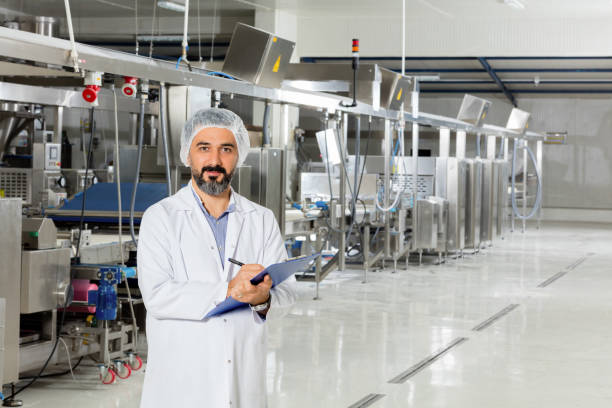
Food Production Manager

Food Production Manager

Professionals manage entire production processes, ensuring quality and efficiency, working in entities like Mother Dairy or Parle Agro. They...

0.0LPA

Interested in this career?

Take the next step and explore more about Food Production Manager.