Film & Video Editor


A Film & Video Editor is a creative and technical professional who specializes in assembling and refining raw footage into cohesive, engaging stories for films, television shows, advertisements, and digital content. They work in industries such as entertainment, media production, advertising, and online platforms, collaborating with directors, cinematographers, and producers. Film & Video Editors play a crucial role in modern storytelling by shaping narratives through pacing, transitions, and visual effects in an era where video content dominates cultural expression and audience engagement.
Share :
Career tree mind map (horizontal) — Film & Video Editor
Colored branches, hub circles, and underlined topics — same style as counselor course classic (types 18–19 in admin).
Loading mind map…

  • Footage Assembly
    • Organize and assemble raw footage into a coherent sequence based on the script or director’s vision.
    • Trim and rearrange clips to create a seamless narrative flow for the final product.
  • Pacing and Timing
    • Adjust the rhythm and pacing of scenes to evoke the desired emotional impact or storytelling effect.
    • Ensure timing aligns with dialogue, music, and visual elements for maximum engagement.
  • Trend Research and Analysis
    • Stay updated on editing styles, audience preferences, and platform-specific trends to create relevant content.
    • Analyze successful video formats to ensure edits appeal to target demographics.
  • Technical Editing and Effects
    • Apply transitions, color grading, and visual effects to enhance the aesthetic quality of the footage.
    • Sync audio tracks, sound effects, and background music with visuals for a polished output.
  • Collaboration with Teams
    • Work with directors, cinematographers, and sound designers to ensure edits align with the overall creative vision.
    • Collaborate with producers to meet project goals, budgets, and deadlines.
  • Narrative Consistency
    • Ensure continuity in storytelling by maintaining logical progression and visual consistency across scenes.
    • Address plot holes or pacing issues through strategic cuts and rearrangements.
  • Project Management
    • Manage editing timelines and deliverables to ensure content is ready for release or review.
    • Organize and archive project files for future reference or re-edits.
  • Innovation and Experimentation
    • Incorporate cutting-edge editing techniques or software tools to enhance storytelling quality.
    • Experiment with new visual styles or formats to push creative boundaries in video content.

RouteSteps
Route 11. 10+2 in any stream (preferably with Media or Arts subjects)
2. Bachelor’s degree in Film Editing, Media Production, or related field (3-4 years)
3. Internship or practical training (3-6 months)
4. Practice as Junior Editor or Assistant Editor
Route 21. 10+2 in any stream
2. Diploma or Certificate in Film & Video Editing (6 months-2 years)
3. Build hands-on experience through projects
4. Work as Freelance or Junior Editor
Route 31. 10+2 in any stream
2. Bachelor’s degree in Film Studies or Multimedia (3-4 years)
3. Master’s degree in Film Editing or Post-Production (2 years)
4. Work as Senior Editor or Creative Lead
Route 41. 10+2 in any stream
2. Advanced international training or certification in Film Editing (1-2 years)
3. Master’s or specialized courses as per country requirements
4. Practice abroad or in India

  • Mandatory practical training during degree or diploma programs in film or media departments.
  • Rotations in film studios, post-production houses, or advertising agencies for hands-on experience with real-world projects.
  • Internships under senior editors or post-production supervisors for exposure to professional workflows.
  • Observerships in editing suites or production units for experience in video content creation.
  • Participation in mock film or video projects for practical skill development.
  • Training in collaborative projects through real-world client briefs or studio initiatives.
  • Exposure to industry-standard editing software and hardware during internships.
  • Project-based learning focusing on diverse editing challenges across genres and formats.
  • Public outreach initiatives like assisting in community media or educational video projects.
  • International attachments or online collaborations for global exposure to editing practices.

  • Certificate in Film & Video Editing Techniques.
  • Bachelor’s in Film Editing and Post-Production.
  • Master’s in Film Studies with Editing Specialization.
  • Specialization in Color Grading and Correction.
  • Certification in Visual Effects (VFX) for Editing.
  • Workshops on Non-Linear Editing Techniques.
  • Training in Audio-Visual Synchronization.
  • Specialization in Editing for Digital Platforms.
  • Certification in Motion Graphics for Video Editing.
  • Short Courses in Editing Trends and Software Mastery.

InstituteCourse/ProgramOfficial Link
Film and Television Institute of India (FTII), PuneDiploma in Film Editinghttps://www.ftii.ac.in/
Satyajit Ray Film & Television Institute (SRFTI), KolkataDiploma in Film & Video Editinghttps://srfti.ac.in/
Whistling Woods International, MumbaiBA/MA in Film & Video Editinghttps://www.whistlingwoods.net/
Annapurna College of Film and Media, HyderabadDiploma in Film Editinghttps://www.annapurnacollege.com/
LV Prasad Film & TV Academy, ChennaiDiploma in Film & Video Editinghttps://www.prasadacademy.com/
Zee Institute of Media Arts (ZIMA), MumbaiDiploma in Film Editing & Post-Productionhttps://www.zimainstitute.com/
Srishti Manipal Institute of Art, Design and Technology, BangaloreB.Des in Film & Video Communicationhttps://srishti.ac.in/
Symbiosis Institute of Media & Communication, PuneBA in Film & Video Editinghttps://simc.edu/
Amity School of Film & Drama, NoidaB.Sc in Film & Video Editinghttps://www.amity.edu/
Digital Academy - The Film School, MumbaiDiploma in Film Editinghttps://www.dafilmschool.com/

InstitutionCourseCountryOfficial Link
American Film Institute (AFI)MFA in Film EditingUSAhttps://www.afi.com/
New York University (NYU) Tisch School of the ArtsMFA in Film & Video EditingUSAhttps://tisch.nyu.edu/
University of Southern California (USC) School of Cinematic ArtsMFA in Film & Video EditingUSAhttps://cinema.usc.edu/
National Film and Television School (NFTS)MA in Film & Video EditingUKhttps://nfts.co.uk/
Vancouver Film School (VFS)Diploma in Film & Video EditingCanadahttps://vfs.edu/
La FémisDiploma in Film EditingFrancehttps://www.femis.fr/
Australian Film, Television and Radio School (AFTRS)MA in Film & Video EditingAustraliahttps://www.aftrs.edu.au/
Toronto Film SchoolDiploma in Film & Video EditingCanadahttps://www.torontofilmschool.ca/
Chapman University - Dodge College of Film and Media ArtsMFA in Film & Video EditingUSAhttps://www.chapman.edu/dodge/
London Film SchoolMA in Filmmaking (Editing Specialization)UKhttps://lfs.org.uk/

India:

  • FTII Entrance Exam (Film and Television Institute of India): Conducted for admission to FTII for film editing programs.
  • SRFTI Entrance Exam (Satyajit Ray Film & Television Institute): Conducted for admission to SRFTI for film editing programs.
  • Whistling Woods Entrance Exam: For admission to film and video editing programs at Whistling Woods International.
  • Annapurna College Entrance Test: For admission to film editing programs at Annapurna College.


International:

  • SAT (Scholastic Aptitude Test): Required for undergraduate programs in countries like the USA.
  • TOEFL (Test of English as a Foreign Language): Minimum score of 80-100 required for non-native speakers applying to programs in English-speaking countries.
  • IELTS (International English Language Testing System): Minimum score of 6.0-7.0 required for admission to universities in the UK, Australia, and other English-speaking regions.
  • PTE Academic (Pearson Test of English Academic): Accepted by many international institutes as an alternative to TOEFL or IELTS for English proficiency.
  • Duolingo English Test: Accepted by some institutions as a convenient alternative for English language proficiency testing.

Ideal Progressing Career Path Junior Editor → Film & Video Editor → Senior Editor → Lead Editor → Post-Production Supervisor → Creative Director → Independent Filmmaker → Studio Executive

  • Film studios for editing feature films and short films.
  • Television industry for editing series, shows, and news segments.
  • Advertising agencies for editing commercials and promotional videos.
  • Digital media platforms for editing content for YouTube, Instagram, and other social media.
  • Freelance opportunities for independent editing projects.
  • Streaming platforms like Netflix and Amazon for editing original content.
  • Corporate sector for editing training videos and branded content.
  • Documentary production for editing factual and narrative-driven content.
  • Event management for editing live event footage and highlights.
  • Non-profit organizations for editing educational or advocacy videos.

IndiaInternational
Yash Raj FilmsWarner Bros. Entertainment, USA
Dharma ProductionsUniversal Pictures, USA
Red Chillies EntertainmentParamount Pictures, USA
Eros InternationalWalt Disney Studios, USA
Reliance EntertainmentSony Pictures Entertainment, USA
Balaji TelefilmsNetflix, USA
Zee Entertainment EnterprisesAmazon Studios, USA
Star IndiaBBC Studios, UK
Viacom18HBO, USA
Rajshri ProductionsA24, USA

ProsCons
Opportunity to work on creative and impactful storytelling projectsHigh-pressure environment due to tight deadlines and director expectations
High demand for editors in film, TV, and digital mediaLong hours, especially during post-production crunch periods
Rewarding impact through shaping narratives and audience engagementRisk of creative burnout from constant revisions and technical demands
Diverse career paths across film, advertising, and online contentLimited job security in freelance or project-based roles
Strong potential for personal branding with signature editing stylesDependency on hardware and software costs impacting workflow

Career LevelIndia (₹ per annum)International (USD per annum)
Junior Editor (Early Career)3,00,000 - 6,00,00030,000 - 50,000
Film & Video Editor (Mid-Career)6,00,000 - 12,00,00050,000 - 80,000
Senior Editor/Lead Editor12,00,000 - 20,00,00080,000 - 120,000
Post-Production Supervisor/Creative Director20,00,000 - 30,00,000120,000 - 180,000
Independent Filmmaker/Studio Executive30,00,000+180,000+
Note: Salaries vary based on location, experience, employer, and specialization. International figures are approximate and depend on the country and sector.  

  • Adobe Premiere Pro for professional video editing and assembly.
  • Final Cut Pro for high-end video editing on macOS platforms.
  • DaVinci Resolve for advanced color grading and editing.
  • Avid Media Composer for industry-standard film and TV editing.
  • After Effects for motion graphics and visual effects integration.
  • Audacity for audio editing and synchronization.
  • Blender for 3D elements and basic video editing.
  • Project Management Tools like Trello or Asana for project coordination.
  • Microsoft Office Suite for documentation and planning.
  • Cloud Storage Tools like Google Drive or Dropbox for file sharing and backups.

  • Indian Film & Television Directors’ Association (IFTDA), India.
  • Film Employees Federation of Kerala (FEFKA), India.
  • American Cinema Editors (ACE), USA.
  • British Film Editors (BFE), UK.
  • European Film Academy (EFA), Europe.
  • International Alliance of Theatrical Stage Employees (IATSE), Global.
  • Women in Film & Television (WIFT), Global.
  • Motion Picture Editors Guild (MPEG), USA.
  • Editors Guild of India, India.
  • Academy of Motion Picture Arts and Sciences (AMPAS), Global.

  • Thelma Schoonmaker (Contemporary, USA): Film Editor since the 1960s. Her work on Martin Scorsese’s films like Raging Bull earned multiple Oscars. Her vision drives cinematic depth. Her impact shapes modern editing.
     
  • Walter Murch (Contemporary, USA): Film Editor since the 1970s. His editing for Apocalypse Now and The Godfather redefined sound and visual storytelling. His artistry inspires innovation. His contributions influence film theory.
     
  • Anne V. Coates (Historical, UK): Film Editor since the 1950s. Her work on Lawrence of Arabia set editing benchmarks with iconic cuts. Her creativity fosters legacy. Her impact shapes historical cinema.
     
  • Sally Menke (Contemporary, USA): Film Editor since the 1990s. Her collaboration with Quentin Tarantino on Pulp Fiction crafted unique pacing. Her vision drives narrative flair. Her work impacts indie filmmaking.
     
  • Margaret Sixel (Contemporary, Australia): Film Editor since the 2000s. Her editing of Mad Max: Fury Road won an Oscar for dynamic action cuts. Her creativity inspires intensity. Her contributions influence action cinema.
     
  • A. Sreekar Prasad (Contemporary, India): Film Editor since the 1980s. His work on Indian films like DilChahtaHai and Talvar is celebrated nationally. His vision shapes storytelling. His impact influences Indian cinema.
     
  • Antony Gibbs (Historical, UK): Film Editor since the 1960s. His editing for Fiddler on the Roof and Dune showcased narrative precision. His artistry drives emotion. His contributions impact classic cinema.
     
  • Jennifer Lame (Contemporary, USA): Film Editor since the 2010s. Her work on Hereditary and Tenet blends horror and complexity. Her creativity fosters tension. Her impact shapes modern thrillers.
     
  • Renu Saluja (Historical, India): Film Editor since the 1980s. Her editing for Indian classics like JaaneBhi Do Yaaro redefined satire in cinema. Her vision drives humor. Her work influences parallel cinema.
     
  • Joe Walker (Contemporary, UK): Film Editor since the 2000s. His editing for Blade Runner 2049 and Arrival creates immersive worlds. His artistry inspires atmosphere. His contributions impact sci-fi editing.
     

  • Build a strong foundation in storytelling and visual pacing to understand video editing.
  • Seek early exposure to film studios or post-production houses through internships to confirm interest in the field.
  • Prepare thoroughly for entrance exams or portfolio requirements specific to your chosen program or region.
  • Pursue advanced certifications in specific editing areas like color grading or VFX to gain technical expertise.
  • Stay updated on editing trends and platform-specific content styles by attending webinars and industry events.
  • Develop hands-on skills in editing through personal projects or client commissions.
  • Engage in film or video challenges or online communities to build real-world experience.
  • Join professional associations like American Cinema Editors for networking and resources.
  • Work on precision and creative thinking to ensure high-quality video edits.
  • Explore international editing programs for exposure to diverse standards.
  • Volunteer in community media or educational video projects to understand client needs and build experience.
  • Cultivate adaptability to handle complex creative and technical challenges.
  • Attend continuing education programs to stay abreast of evolving editing methodologies.
  • Build a network with editors and film professionals for collaborative efforts.
  • Develop resilience to manage the creative and deadline demands of editing projects.
  • Balance project work with continuous learning to adapt to rapid advancements in editing technology.

A career as a Film & Video Editor offers a unique opportunity to contribute to storytelling, cinematic innovation, and cultural expression by crafting compelling narratives through edited video content for diverse applications. From enhancing films and advertisements to revolutionizing digital media, Film & Video Editors play a pivotal role in modern visual and emotional landscapes. This field combines artistic expertise, technical skills, and a commitment to solving complex narrative challenges, offering diverse paths in film, television, advertising, and beyond. For those passionate about creativity, adapting to evolving trends, and addressing storytelling needs in an era of rapid media evolution, a career as a Film & Video Editor provides an intellectually stimulating and professionally rewarding journey with the potential to make significant contributions to society by advancing the art and application of video editing worldwide.

Knowledge & Skills You Will Learn
1
Creative expertise in storytelling and visual pacing with precision
2
Observational accuracy in capturing narrative nuances and audience emotions
3
In-depth knowledge of editing software, color grading, and audio integration
4
Critical thinking to solve complex narrative and technical challenges
5
Attention to detail to ensure quality in cuts, transitions, and continuity
6
Time management to handle multiple projects and meet production deadlines
7
Adaptability to work across diverse genres, formats, and client visions
8
Interpersonal skills for effective collaboration with directors and production teams
9
Problem-solving ability to address editing issues or footage limitations
10
Business acumen to manage budgets, timelines, and client relations
Junior Editor

Junior Editor

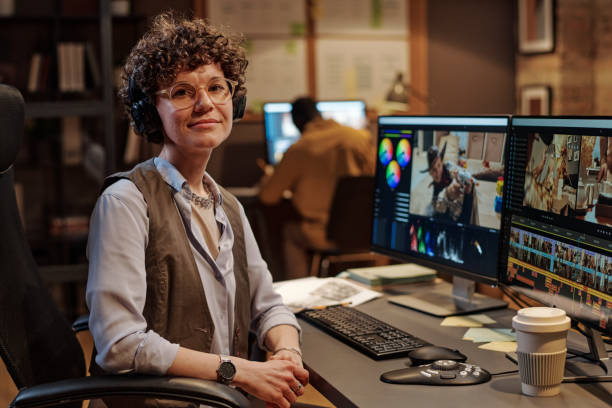
Early-career professionals assist in basic editing tasks with increasing autonomy. They hone skills in specific areas while ensuring project...

0.0LPA
Senior Editor

Senior Editor

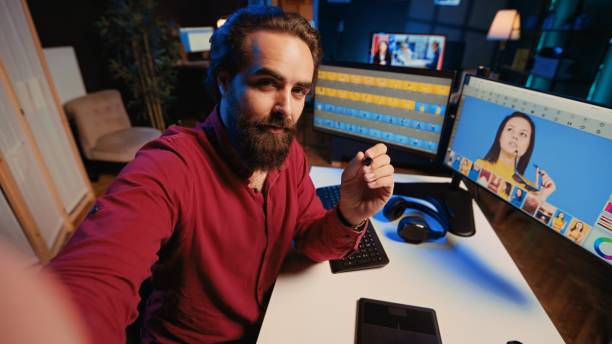
Specialists oversee complex editing projects with exceptional competence. They integrate deep narrative knowledge with expertise in specific...

0.0LPA
Post-Production Supervisor

Post-Production Supervisor

Leaders focus on overseeing entire post-production processes and shaping final outputs. They provide strategic oversight by aligning edits with...

0.0LPA

Interested in this career?

Take the next step and explore more about Film & Video Editor.