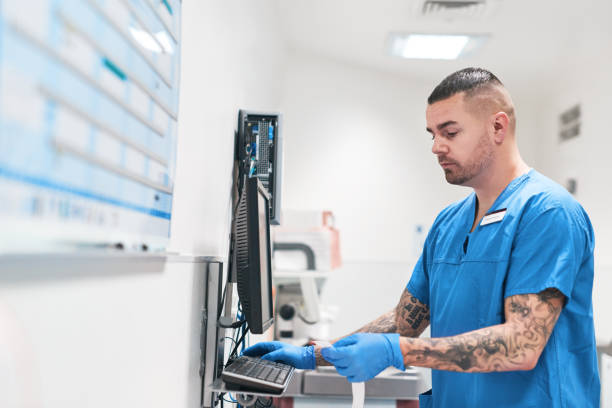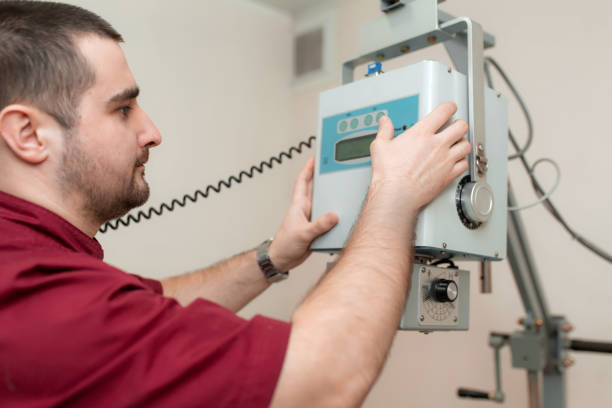
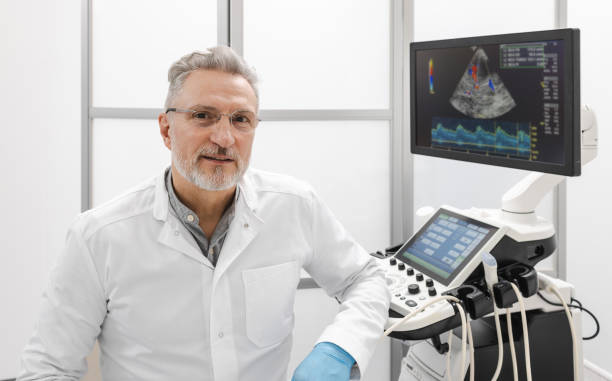
ECHO Technologists are skilled professionals responsible for conducting echocardiograms, which are non-invasive tests that use sound waves to create images of the heart’s structure and function. Their role includes preparing patients for procedures, operating ultrasound equipment, and capturing detailed images of the heart’s chambers, valves, and blood flow. They combine technical expertise with patient care skills, often working in dynamic environments to support cardiac health assessments. As key contributors to cardiovascular diagnostics, they enable accurate diagnoses and effective treatment plans in a landscape increasingly focused on early detection and management of heart conditions.
- Patient Preparation
- Prepare patients for echocardiograms by explaining procedures and taking medical histories
- Position patients correctly to obtain optimal images during the examination
- Diagnostic Imaging
- Perform echocardiograms using ultrasound equipment to visualize the heart’s anatomy and function
- Capture images of the heart in various views, including transthoracic, transesophageal, or stress echocardiograms
- Equipment Operation
- Operate and maintain ultrasound machines, ensuring proper calibration for accurate imaging
- Adjust settings to optimize image quality based on patient needs and physician requirements
- Data Analysis Support
- Identify and document abnormalities in heart structures or blood flow for cardiologist review
- Measure cardiac dimensions and assess valve function using specialized software tools
- Patient Monitoring
- Monitor patients’ comfort and vital signs during procedures, especially during stress tests
- Recognize and report any adverse reactions or emergencies to medical staff immediately
- Data Recording
- Record and store echocardiogram images and data in electronic medical records
- Prepare preliminary reports summarizing findings for cardiologists’ interpretation
- Safety and Sterility
- Follow infection control protocols to maintain hygiene during procedures
- Ensure proper sterilization of equipment, especially for transesophageal echocardiography (TEE)
- Patient Education
- Educate patients on the purpose of the echocardiogram and provide post-procedure instructions
- Address patient concerns to ensure a comfortable and informed experience
| Route | Steps |
| Route 1 | 1. 10+2 with Physics, Chemistry, Biology (PCB) 2. Certificate in Echocardiography Technology (6 months-1 year) 3. Internship or clinical training (3-6 months) 4. Practice as ECHO Technician |
| Route 2 | 1. 10+2 with PCB 2. Diploma in Echocardiography or Cardiac Technology (1-2 years) 3. Hands-on training or internship in cardiology units 4. Work as ECHO Technologist |
| Route 3 | 1. 10+2 with PCB 2. Bachelor’s degree in Cardiac Technology (B.Sc. CT) (3-4 years) 3. Training in echocardiography procedures 4. Practice as ECHO Technologist |
| Route 4 | 1. 10+2 with PCB 2. Master’s degree or international certification in Cardiac Technology or Echocardiography (2-3 years) 3. Licensure as per country regulations 4. Practice abroad or in India |
- Mandatory clinical training during certificate or degree programs in cardiology units
- Rotations in echocardiography labs for hands-on experience with ultrasound imaging
- Internships under senior technologists or cardiologists for exposure to real-time cardiac assessments
- Observerships in cardiac diagnostic centers for experience in diverse imaging techniques
- Participation in echocardiography simulations for practical skill development
- Training in stress testing protocols through real-world case studies and mock scenarios
- Exposure to high-acuity scenarios during internships in hospital cardiology departments
- Clinical projects on improving imaging accuracy or patient comfort during training
- Public health initiatives for assisting in cardiovascular health awareness programs
- International hospital attachments for global exposure to echocardiography practices
- Certificate in Echocardiography Technology
- Diploma in Echocardiography or Cardiac Technology
- Bachelor’s in Cardiac Technology (B.Sc. CT)
- Training in Transthoracic and Transesophageal Echocardiography
- Specialization in Stress Echocardiography
- Certification in Pediatric Echocardiography
- Workshops on Cardiac Imaging and Patient Safety
- Training in Doppler Ultrasound for Blood Flow Analysis
- Specialization in Fetal Echocardiography
- Certification in Basic Life Support (BLS) for emergency response
| Institute | Course/Program | Official Link |
| All India Institute of Medical Sciences (AIIMS), New Delhi | Diploma in Cardiac Technology | https://www.aiims.edu/ |
| Christian Medical College (CMC), Vellore | Diploma and B.Sc. in Cardiac Technology | https://www.cmch-vellore.edu/ |
| Manipal Academy of Higher Education, Manipal | B.Sc. in Cardiac Technology | https://www.manipal.edu/ |
| Sri Ramachandra Institute of Higher Education and Research, Chennai | B.Sc. in Cardiac Technology | https://www.sriramachandra.edu.in/ |
| Kasturba Medical College (KMC), Mangalore | Diploma and Degree in Cardiac Technology | https://manipal.edu/kmc-mangalore.html |
| Amrita Institute of Medical Sciences, Kochi | B.Sc. in Cardiac Technology | https://www.amrita.edu/ |
| Jawaharlal Institute of Postgraduate Medical Education & Research (JIPMER), Puducherry | Diploma in Cardiac Technology | https://www.jipmer.edu.in/ |
| King George’s Medical University (KGMU), Lucknow | Diploma and B.Sc. in Cardiac Technology | https://www.kgmu.org/ |
| Nizam’s Institute of Medical Sciences (NIMS), Hyderabad | Diploma in Cardiac Technology | https://www.nims.edu.in/ |
| Postgraduate Institute of Medical Education and Research (PGIMER), Chandigarh | Diploma in Cardiac Technology | https://pgimer.edu.in/ |
| Institution | Course | Country | Official Link |
| Johns Hopkins University | Cardiac Sonography Training | USA | https://www.jhu.edu/ |
| University of Toronto | Cardiac Technology Programs | Canada | https://www.utoronto.ca/ |
| University College London (UCL) | Biomedical Science with Cardiac Focus | UK | https://www.ucl.ac.uk/ |
| University of Melbourne | Cardiac Technology | Australia | https://www.unimelb.edu.au/ |
| Mayo Clinic College of Medicine and Science | Echocardiography Program | USA | https://www.mayo.edu/ |
| King’s College London | Biomedical Science (Cardiac Technology) | UK | https://www.kcl.ac.uk/ |
| University of British Columbia | Cardiac Technology Programs | Canada | https://www.ubc.ca/ |
| Monash University | Cardiac Technology | Australia | https://www.monash.edu/ |
| Karolinska Institutet | Cardiac Imaging Science Training | Sweden | https://www.ki.se/ |
| University of California, San Francisco | Echocardiography Programs | USA | https://www.ucsf.edu/ |
India:
- All India Institute of Medical Sciences (AIIMS) Paramedical Entrance Exam
- National Eligibility cum Entrance Test (NEET-UG) for some undergraduate allied health programs
- State-level paramedical entrance exams for diploma or degree admissions
- University-specific entrance tests for cardiac technology programs
International:
- Specific entrance exams or prerequisites as per institute for echocardiography programs
- Test of English as a Foreign Language (TOEFL) with a minimum score of 80-100 for non-native speakers
- International English Language Testing System (IELTS) with a minimum score of 6.0-7.0
- Pearson Test of English Academic (PTE Academic)
- Duolingo English Test (accepted by some institutions)
- Graduate Record Examinations (GRE) for certain international postgraduate programs
Trainee → Certified ECHO Technician → Senior ECHO Technologist → Lead Cardiac Sonographer → Cardiology Lab Supervisor/Manager → Echocardiography Educator → Cardiology Lab Director → Echocardiography Consultant
- Hospitals for cardiac diagnostics and imaging
- Cardiology clinics for specialized heart assessments
- Diagnostic imaging centers for non-invasive cardiac testing
- Outpatient clinics for routine echocardiograms
- Government health facilities for public cardiac health programs
- Private cardiology practices for advanced diagnostic services
- Academic medical centers for training future technologists
- Mobile cardiac imaging units for community health programs
- Research institutions for studies on echocardiography technology
- Rehabilitation centers for post-cardiac event monitoring
| India | International |
| Apollo Hospitals | Mayo Clinic, USA |
| Fortis Healthcare | Cleveland Clinic, USA |
| Max Healthcare | Johns Hopkins Hospital, USA |
| Medanta - The Medicity | Royal Brompton Hospital, UK |
| Narayana Health | Toronto General Hospital, Canada |
| Manipal Hospitals | St Vincent’s Hospital, Australia |
| AIIMS (All India Institute of Medical Sciences) | Karolinska University Hospital, Sweden |
| CMC (Christian Medical College), Vellore | Mount Sinai Hospital, USA |
| Lilavati Hospital, Mumbai | Guy’s and St Thomas’ NHS Foundation Trust, UK |
| Kokilaben Dhirubhai Ambani Hospital | Massachusetts General Hospital, USA |
| Pros | Cons |
| Opportunity to contribute to life-saving cardiac diagnostics | High-pressure environment due to the critical nature of heart conditions |
| High demand for ECHO Technologists in hospitals and diagnostic centers | Emotional strain from handling patients with severe cardiac issues |
| Rewarding impact on patient outcomes through accurate imaging | Repetitive nature of imaging tasks can lead to physical strain over time |
| Diverse career paths across hospitals, clinics, and research settings | Risk of workplace stress due to the need for precision in diagnostics |
| Strong potential for growth with advanced certifications in cardiac imaging | Need for continuous learning to keep up with evolving ultrasound technologies |
- Growing adoption of advanced cardiac imaging technologies like 3D echocardiography for precise diagnostics
- Rising demand for ECHO Technologists due to increasing prevalence of cardiovascular diseases globally
- Advancements in portable ultrasound devices for use in remote or emergency settings
- Heightened focus on telemedicine for remote cardiac imaging consultations and follow-ups
- Expansion of AI-driven echocardiography tools for automated image analysis and reporting
- Development of wearable cardiac monitoring systems integrated with imaging technology
- Increased emphasis on specialized training for pediatric or fetal echocardiography
- Enhanced collaboration between technologists and cardiologists for optimized patient outcomes
- Growing need for continuous education to master advanced cardiac imaging systems
- Focus on global certification standards to align echocardiography practices internationally
| Career Level | India (₹ per annum) | International (USD per annum) |
| Trainee/Certified ECHO Technician (Early Career) | 2,00,000 - 3,50,000 | 35,000 - 50,000 |
| Senior ECHO Technologist (Mid-Career) | 3,50,000 - 6,00,000 | 50,000 - 65,000 |
| Lead Cardiac Sonographer | 6,00,000 - 9,00,000 | 65,000 - 80,000 |
| Cardiology Lab Supervisor/Manager | 9,00,000 - 12,00,000 | 80,000 - 95,000 |
| Educator/Cardiology Lab Director | 12,00,000+ | 95,000+ |
Note: Salaries vary based on location, experience, employer, and specialization. International figures are approximate and depend on the country and healthcare sector.
- Echocardiography Imaging Software for analyzing heart structures and blood flow
- Electronic Medical Records (EMR) for patient and imaging data tracking
- Equipment Management Software for calibrating and troubleshooting ultrasound devices
- Telemedicine Platforms for remote consultation with cardiologists
- Cardiac Measurement Tools for assessing heart dimensions and valve function
- Teleconferencing tools like Zoom for remote collaboration with medical teams
- Clinical databases for staying updated on cardiac diagnostic protocols
- Microsoft Office Suite for documentation and report preparation
- Secure messaging tools for coordinating with cardiology lab staff
- Simulation software for training on echocardiography scenarios and patient care
- Indian Academy of Echocardiography (IAE)
- American Society of Echocardiography (ASE)
- European Association of Cardiovascular Imaging (EACVI)
- British Society of Echocardiography (BSE)
- Cardiological Society of India (CSI)
- International Society of Cardiovascular Ultrasound (ISCU)
- American Registry for Diagnostic Medical Sonography (ARDMS)
- Canadian Society of Echocardiography (CSE)
- Australasian Sonographers Association (ASA)
- World Health Organization (WHO) Cardiovascular Health Programs
- Dr. Harvey Feigenbaum (Historical, USA): Pioneer of echocardiography since the 1960s. His development of clinical echocardiography revolutionized cardiac diagnostics. His contributions impact the field globally.
- Dr.IngeEdler (Historical, Sweden): Innovator in cardiac ultrasound since the 1950s. His early work on echocardiography laid the foundation for modern imaging. His impact influences diagnostics worldwide.
- Dr.LivHatle (Historical, Norway): Leader in Doppler echocardiography since the 1970s. Her research on blood flow assessment enhanced diagnostic precision. Her work impacts echocardiography globally.
- Dr. James Seward (Contemporary, USA): Expert in echocardiography since the 1970s. His contributions to 3D imaging techniques improve diagnostic accuracy. His efforts influence cardiac care standards worldwide.
- Dr.Navin Nanda (Contemporary, USA/India): Renowned cardiologist and echocardiographer since the 1970s. His work on transesophageal echocardiography advances diagnostic capabilities in India and beyond. His contributions impact the field regionally and internationally.
- Dr.BijoyKhandheria (Contemporary, USA/India): Specialist in echocardiography since the 1980s. His focus on advanced imaging techniques strengthens cardiac diagnostics. His efforts support echocardiography practices nationally and globally.
- Dr.ParthoSengupta (Contemporary, USA/India): Leader in AI and echocardiography since the 2000s. His innovations in automated cardiac imaging enhance diagnostic efficiency. His impact elevates echocardiography standards worldwide.
- Dr. Rebecca Hahn (Contemporary, USA): Expert in structural heart imaging since the 1990s. Her contributions to echocardiography for valve interventions improve patient outcomes. Her work influences cardiac diagnostics regionally and internationally.
- Dr. Roberto Lang (Contemporary, USA): Innovator in 3D echocardiography since the 1980s. His research on advanced imaging shapes modern cardiac assessments. His impact enhances diagnostic technology globally.
- Dr.MadhavSwaminathan (Contemporary, USA/India): Pioneer in perioperative echocardiography since the 1990s. His studies on intraoperative imaging influence surgical outcomes. His contributions impact cardiac care internationally.
- Build a strong foundation in biology, anatomy, and cardiovascular physiology to understand cardiac diagnostics.
- Seek early exposure to cardiology clinics or diagnostic centers through volunteer programs to confirm interest in the field.
- Prepare thoroughly for entrance exams or certification requirements specific to your chosen program or region.
- Pursue advanced certifications in stress or pediatric echocardiography to gain expertise.
- Stay updated on advancements in cardiac imaging technology by attending workshops and seminars.
- Develop hands-on skills in operating ultrasound equipment through practical training.
- Engage in clinical or cardiac health projects to build real-world experience.
- Join professional associations like the Indian Academy of Echocardiography (IAE) for networking and resources.
- Work on precision and attention to detail to ensure accurate imaging and patient safety.
- Explore international training programs for exposure to diverse echocardiography practices and standards.
- Volunteer in cardiology units or diagnostic centers to understand patient needs and build experience.
- Cultivate patience and empathy to support patients with sensitive cardiac concerns.
- Attend continuing education programs to stay abreast of evolving cardiac imaging methods and technologies.
- Build a network with cardiologists, nurses, and other technologists for collaborative patient care efforts.
- Develop resilience to handle patient anxieties and high-stakes diagnostic scenarios.
- Balance clinical work with continuous learning to adapt to rapid advancements in echocardiography systems.
A career as an ECHO Technologist offers a unique opportunity to contribute to patient care and cardiovascular health by supporting the diagnosis and management of heart conditions through advanced imaging technology. From performing critical echocardiograms to ensuring accurate data for cardiologists in dynamic environments, ECHO Technologists play a pivotal role in modern healthcare systems. This field combines technical expertise, attention to detail, and a commitment to patient well-being, offering diverse paths in hospitals, cardiology clinics, and diagnostic centers. For those passionate about advancing cardiac care, supporting diagnostic precision, and addressing the growing prevalence of heart diseases in an era of advanced technology and patient-centered care, a career as an ECHO Technologist provides an intellectually stimulating and professionally rewarding journey with the potential to make significant contributions to society by enhancing the quality of cardiovascular diagnostic services and patient outcomes worldwide.