District Magistrate (DM) or Collector

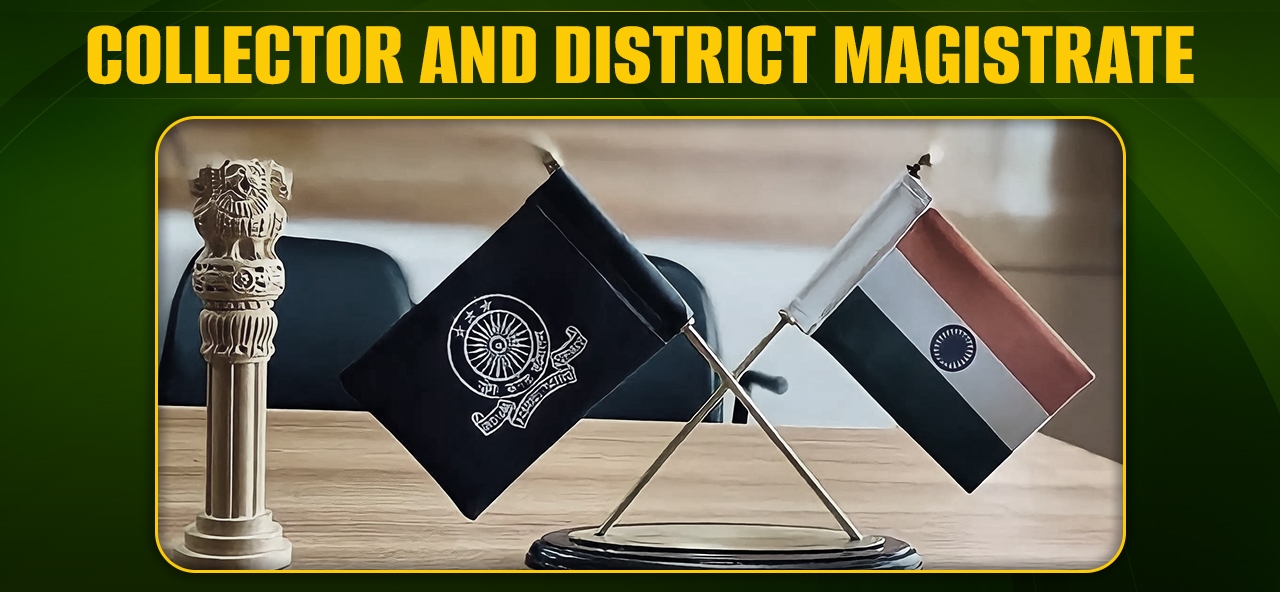
A District Magistrate (DM)/Collector is a senior administrative officer dedicated to serving as the chief executive and judicial authority of a district under the Government of India, overseeing governance, law and order, revenue administration, and public welfare at the district level. They work in sectors such as district administration, disaster management, public health, and rural development, collaborating with state government officials, local bodies, and law enforcement agencies. District Magistrates/Collectors play a critical role in driving effective governance and societal development in a country focused on policy implementation, public safety, and equitable progress at the grassroots level.
Share :
✨ Radial Mind Map - District Magistrate (DM) or Collector
Nodes arranged in concentric circles

Loading radial mind map...

Overview

A District Magistrate (DM)/Collector is a senior administrative officer dedicated to serving as the chief executive and judicial authority of a district under the Government of India, overseeing governance, law and order, revenue administration, and public welfare at the district level. They work in sectors such as district administration, disaster management, public health, and rural development, collaborating with state government officials, local bodies, and law enforcement agencies. District Magistrates/Collectors play a critical role in driving effective governance and societal development in a country focused on policy implementation, public safety, and equitable progress at the grassroots level.

District Magistrates (DMs)/Collectors are senior civil servants responsible for managing all aspects of district administration, ensuring the implementation of state and central government policies, maintaining law and order, and addressing challenges like poverty, infrastructure deficits, and public grievances within their jurisdiction. Their role involves strategic decision-making, field oversight, and public engagement, often working in settings such as district collectorates, field offices, or during emergency operations. They combine expertise in governance, legal authority, and crisis management to tackle issues like bureaucratic inefficiencies, resource disparities, and disaster response. As key contributors to societal advancement, they help state governments and communities thrive in an era prioritizing inclusive development, transparency, and responsive public administration.

Roles and Responsibilities

💼
District Magistrate (DM) or Collector
Roles and Responsibilities
District Administration and Policy Implementation
Oversee the overall administration of the district, ensuring effective implementation of state and central government policies.
Supervise the execution of development schemes, welfare programs, and infrastructure projects for public benefit.
Revenue and Land Management
Act as the chief revenue officer of the district, managing land records, tax collection, and property dispute resolutions.
Conduct inspections and hearings to ensure compliance with revenue laws and accurate documentation.
Law and Order Maintenance
Maintain public safety and order as the chief magistrate, coordinating with police and other agencies during crises, elections, or festivals.
Issue orders under legal provisions like the CrPC (Criminal Procedure Code) to prevent unrest or enforce curfews.
Public Welfare and Development
Ensure delivery of essential services like education, healthcare, and sanitation across rural and urban areas of the district.
Address public grievances and oversee equitable distribution of government subsidies, benefits, and relief measures.
Disaster Management and Crisis Response
Lead disaster preparedness, relief, and rehabilitation efforts during natural calamities like floods, droughts, or pandemics.
Coordinate with state agencies, NGOs, and local bodies to mobilize resources for emergency response and recovery.
Election Management
Supervise the conduct of free and fair elections at the district level as the District Election Officer.
Ensure compliance with Election Commission guidelines and manage voter registration, polling, and result declarations.
Inter-Departmental Coordination
Facilitate collaboration among various district-level departments like health, education, and agriculture for integrated governance.
Act as a bridge between state government policies and local implementation through regular reviews and reporting.
Community Engagement and Conflict Resolution
Engage with local communities, elected representatives, and civil society to understand needs and mediate disputes.
Organize public hearings, camps, and forums to address citizen concerns and promote social harmony.

Roles and Responsibilities

  • District Administration and Policy Implementation
    • Oversee the overall administration of the district, ensuring effective implementation of state and central government policies.
    • Supervise the execution of development schemes, welfare programs, and infrastructure projects for public benefit.
  • Revenue and Land Management
    • Act as the chief revenue officer of the district, managing land records, tax collection, and property dispute resolutions.
    • Conduct inspections and hearings to ensure compliance with revenue laws and accurate documentation.
  • Law and Order Maintenance
    • Maintain public safety and order as the chief magistrate, coordinating with police and other agencies during crises, elections, or festivals.
    • Issue orders under legal provisions like the CrPC (Criminal Procedure Code) to prevent unrest or enforce curfews.
  • Public Welfare and Development
    • Ensure delivery of essential services like education, healthcare, and sanitation across rural and urban areas of the district.
    • Address public grievances and oversee equitable distribution of government subsidies, benefits, and relief measures.
  • Disaster Management and Crisis Response
    • Lead disaster preparedness, relief, and rehabilitation efforts during natural calamities like floods, droughts, or pandemics.
    • Coordinate with state agencies, NGOs, and local bodies to mobilize resources for emergency response and recovery.
  • Election Management
    • Supervise the conduct of free and fair elections at the district level as the District Election Officer.
    • Ensure compliance with Election Commission guidelines and manage voter registration, polling, and result declarations.
  • Inter-Departmental Coordination
    • Facilitate collaboration among various district-level departments like health, education, and agriculture for integrated governance.
    • Act as a bridge between state government policies and local implementation through regular reviews and reporting.
  • Community Engagement and Conflict Resolution
    • Engage with local communities, elected representatives, and civil society to understand needs and mediate disputes.
    • Organize public hearings, camps, and forums to address citizen concerns and promote social harmony.


Study Route & Eligibility Criteria

Study Route & Eligibility Criteria
District Magistrate (DM) or Collector
Route 1
🎓
1
10+2 in any stream .
🏛️
2
Bachelor’s degree in any discipline from a recognized university .
3-5 years
📚
3
Prepare for civil services exams conducted by UPSC or State Public Service Commissions .
1-2 years
💼
4
Clear preliminary, mains, and interview stages to secure entry-level roles in IAS or State Civil Services, progressing to DM/Collector .
Route 2
🎓
1
10+2 in any stream .
🏛️
2
Bachelor’s degree in any discipline from a recognized university .
3-5 years
🎓
3
Pursue optional diploma or certificate courses in public administration or governance .
📚
4
Prepare for and clear UPSC Civil Services Exam or State PSC exams .
1-2 years
🌍
5
Join as an IAS or State Civil Services Officer and advance to DM/Collector through promotions .
5-10 years
Route 3
🎓
1
10+2 in any stream .
🏛️
2
Bachelor’s degree in any discipline from a recognized university .
3-5 years
🏛️
3
Master’s degree in Public Administration, Political Science, or related field .
📚
4
Prepare for UPSC or state civil services exams through self-study or coaching .
1-2 years
💼
5
Secure a position in IAS or State Civil Services and rise to DM/Collector with experience and seniority .
5-10 years
Route 4
🎓
1
10+2 in any stream .
🏛️
2
Bachelor’s degree in any discipline from a recognized university .
3-5 years
📚
3
Join coaching institutes for structured preparation for UPSC or State PSC exams .
1-2 years
💼
4
Gain practical exposure through voluntary work or local governance projects .
📚
5
Clear civil services exams, start as an officer, and progress to DM/Collector through service tenure .
5-10 years
🎯 District Magistrate (DM) or Collector - Professional

Significant Observations (Academic Related Points)

💡
District Magistrate (DM) or Collector
Academic Related Points
1
Broad Academic Base
A degree in any discipline is acceptable, but subjects like Public Administration, Law, or Political Science provide an advantage in exams and roles.
2
Practical Preparation
Hands-on understanding of governance, current affairs, and district-level issues through self-study or coaching is critical for success.
3
Specialized Coaching
Joining reputed coaching institutes enhances preparation for highly competitive civil services exams.
4
Industry Knowledge
Familiarity with state-specific policies, legal frameworks, and local challenges is crucial for effective district administration.
5
Analytical Focus
Strong comprehension and strategic thinking skills are necessary for managing diverse administrative and crisis challenges.
6
Exam Relevance
Clearing the UPSC Civil Services Exam or State PSC exams is mandatory for entry into roles leading to DM/Collector.
7
Continuous Learning
Regular updates on government policies, legal provisions, and current events are essential for exam success and service delivery.
8
Regional Awareness
Knowledge of district-specific culture, language, and administrative nuances aids in effective governance.
9
Precision Focus
Attention to detail is vital for managing revenue records, legal orders, and public welfare reports.
10
Entrance Exam Preparation
Rigorous preparation for prelims, mains, and interviews is necessary to qualify for civil services leading to DM/Collector.
11
State-Specific Standards
Understanding the specific requirements, postings, and promotion criteria of state governments is critical for career progression.

Internships & Practical Exposure

💼
District Magistrate (DM) or Collector
Internships & Practical Experience
1
Voluntary work with NGOs or local government bodies for real-world insights into district administration and community issues.
2
Participation in field surveys or data collection under district collectorates for hands-on governance experience.
3
Internships with state government departments or public welfare organizations for exposure to policy implementation at the district level.
4
Observerships during state-sponsored development programs or disaster management drills for insights into administrative coordination.
5
Engagement in student-led governance initiatives or mock parliaments for practical skill development in leadership and decision-making.
6
Training through government schemes like internships at district collectorates for understanding bureaucratic processes and public interaction.
7
Exposure to rural development projects or Gram Panchayat activities for grassroots-level administrative experience.
8
Fieldwork on public health or education campaigns to understand district-level citizen needs and government service delivery.
9
Community outreach programs to engage with local issues like sanitation or literacy and build problem-solving skills.
10
Participation in state-level workshops or seminars on governance for exposure to district policy-making and administrative challenges.

Courses & Specializations to Enter the Field

📚
District Magistrate (DM) or Collector
Courses & Specializations
📖
Certificate in Public Administration
📖
Bachelor’s in Public Administration, Political Science, or Law
📖
Master’s in Public Administration (MPA) or Political Science
📖
Diploma in Governance and Public Policy
📖
Specialization in District Administration and Revenue Laws
📖
Certificate in Disaster Management and Crisis Response
📖
Workshops on Rural Development and Local Governance
📖
Training in Public Grievance Redressal Systems
📖
Specialization in Election Management and Legal Frameworks
📖
Certificate in Ethics and Integrity in Public Service

Advice for Aspiring District Magistrate (DM) or Collectors

💡
District Magistrate (DM) or Collector
🌟 Tips for Students & Parents
1
Build a strong foundation in general studies, current affairs, and district-specific knowledge to excel in competitive civil services exams.
2
Seek early exposure to governance or public service through voluntary work to confirm interest in district administration.
3
Prepare thoroughly for UPSC or State PSC exams with a focus on prelims, mains, and interview stages for selection and progression.
4
Pursue structured coaching or self-study plans to gain expertise in public administration, law, and district-level policy issues.
5
Stay updated on national and state-specific policies, schemes, and current events through newspapers and government portals.
6
Develop hands-on skills in crisis management, decision-making, and public interaction through community engagement.
7
Engage in rural or urban development projects to build real-world experience in addressing district citizen needs.
8
Join professional forums like the Indian Institute of Public Administration for resources and networking.
9
Work on strategic and ethical skills to ensure impactful district governance solutions and public trust.
10
Explore state-specific administrative challenges for exposure to local governance structures and cultural nuances.
11
Volunteer in local governance or NGO initiatives to understand district service delivery and societal impacts.
12
Cultivate adaptability to handle diverse postings, challenging environments, and evolving policy requirements.
13
Attend state-sponsored training or workshops to stay abreast of new governance tools and legal frameworks.
14
Build a network with current officers, mentors, and peers for guidance and collaborative learning opportunities.
15
Develop resilience to manage the high-pressure demands and complex challenges of district administration.
16
Balance administrative precision with empathy to drive district governance impact and adapt to societal changes.
🎓 Final Message
A career as a District Magistrate (DM)/Collector offers a unique opportunity to contribute to societal progress by leading district-level policies that transform public welfare and governance across diverse regions of India. From managing revenue administration to spearheading disaster response, DMs/Collectors play a pivotal role in grassroots governance and citizen-centric development. This field combines expertise in strategic leadership, legal authority, and a commitment to societal advancement, offering diverse paths in district administration, law enforcement, welfare, and state policy execution. For those passionate about shaping the future of district governance, adapting to dynamic challenges, and addressing critical public needs in an era of increasing focus on inclusive growth, a career as a District Magistrate (DM)/Collector provides an intellectually stimulating and professionally rewarding journey with the potential to make significant contributions to society by advancing equitable development, public safety, and effective service delivery across India.
Knowledge & Skills You Will Learn
1
Rural Development Focus: Growing emphasis on rural upliftment schemes in India, necessitating expertise in grassroots governance at the district level.
2
Law and Order Needs: Heightened focus on public safety and election management, enhancing DMs’ roles in maintaining district stability.
3
Administrative Talent Demand: High demand for skilled civil servants in India, pushing for competitive recruitment and promotions to DM/Collector roles.
4
Skill Development Needs: Demand for training in digital tools, crisis management, and public policy for future DMs/Collectors.
Assistant Collector/Trainee IAS Officer

Assistant Collector/Trainee IAS Officer

Entry-level officers assist senior administrators in district tasks, often under UPSC IAS or State PSC postings during training at LBSNAA or state...

0.0LPA
Sub-Divisional Magistrate

Sub-Divisional Magistrate

SDMs manage sub-divisions within districts, handling law and order, revenue, and development for the state government in district headquarters or...

0.0LPA

Additional District Magistrate

Additional District Magistrate

ADMs support the DM in district administration, overseeing specific portfolios like revenue or development under state government jurisdiction in...

0.0LPA

Interested in this career?

Take the next step and explore more about District Magistrate (DM) or Collector.